Dear Reader,
In 2008—nine months before the Great Financial Crisis—JC Parets warned his hedge fund clients and business partners the market was rolling over.
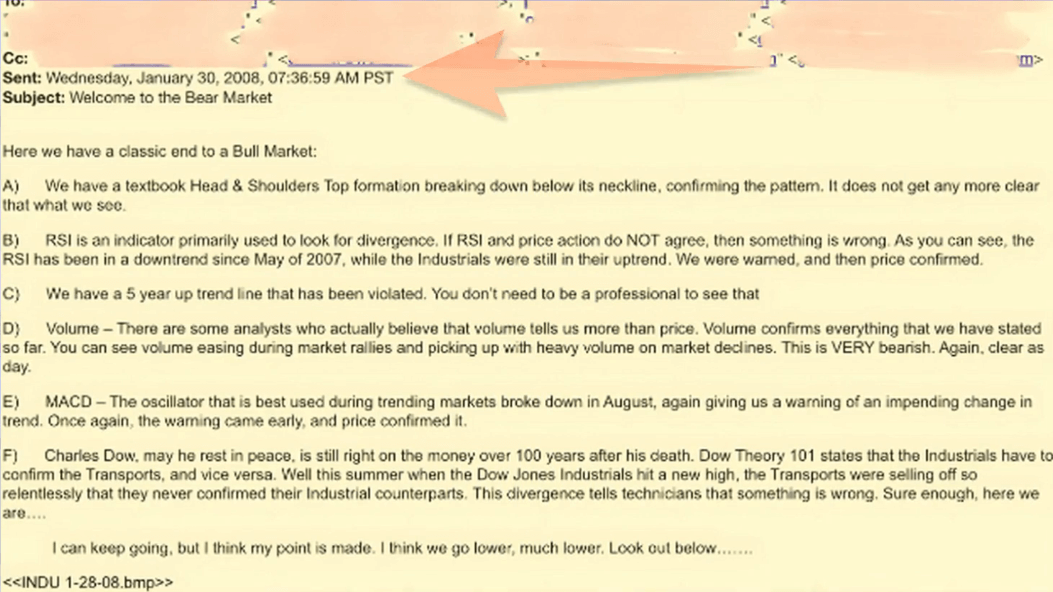
He did it again in 2018.
And again in 2020.
Then in 2022—while markets were collapsing live on Fox Business—he looked straight into the camera and told Maria Bartiromo:
“We’ve hit bottom. It’s time to buy.”
The reaction? Disbelief.
Even Maria gave him that look.
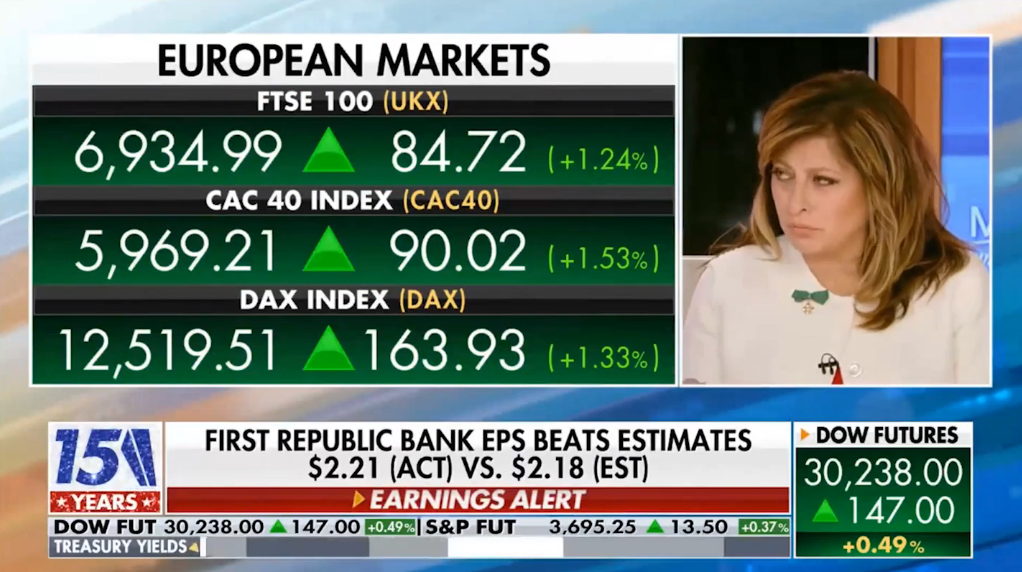
The clip later went viral on X.
But then…
Homebuilders surged 60%. Nvidia exploded 669%. MicroStrategy climbed 1,245%.
What sounded outrageous in the moment… became one of the most profitable calls of the decade.
Now—after more than 800 days of silence—JC is back.
And what he’s saying today may be even more consequential.
If you have money in the market… you’ll want to hear this.
All the best,
Pete Campbell
Publisher, TrendLabs
P.S. 13 billionaires — including Warren Buffett and Jeff Bezos — have already shifted their money.
Just For You
Meta and Rocket Lab Insiders Sell Shares—So Why Is Wall Street Buying?
Reported by Jeffrey Neal Johnson. Article Published: 3/3/2026.

Key Points
- Institutional investors continue to pour capital into Meta Platforms and Rocket Lab despite high-profile insider selling by executives.
- Meta Platforms continues to demonstrate operational efficiency with strong revenue growth and healthy profit margins that attract smart money.
- Rocket Lab maintains a massive backlog of government contracts, which provides long-term revenue visibility and stability for shareholders.
- Special Report: [Sponsorship-Ad-6-Format3]
It’s a confusing time for retail investors. Markets are trading near record highs, companies are reporting massive revenue gains, and excitement around technology and space exploration is palpable. Yet a troubling trend has emerged in the headlines: the people running these successful companies — CEOs, CFOs, and COOs — are selling stock at an aggressive pace.
When executives sell millions of dollars worth of shares, alarm bells naturally ring. Investors worry the insiders know something the public does not. Is the top in? Are growth prospects slowing? Watching a chief financial officer dump stock can feel like seeing the captain put on a life vest while assuring passengers the ship is unsinkable.
Skip Headlines Straight to Original Research (Ad)
Our investment research analysts are going to be releasing their next investment idea tomorrow morning, around 10:00 AM Eastern time.Add yourself to the distribution list here.
But panic is rarely a profitable strategy. While insider selling creates fear, a deeper look at the data often reveals a counter-signal: institutional accumulation. Hedge funds, pension funds, and investment banks frequently buy the same shares executives are selling. This divergence between individual profit-taking and institutional conviction can offer opportunities for investors who know where to look.
Zuckerberg’s Team Cashes Out, But Wall Street Buys In
Meta Platforms (NASDAQ: META) has been a dominant market force, with its stock trading around $655 as of early March 2026. That level represents a significant rally from prior years, driven by the integration of artificial intelligenceand robust advertising revenue.
Recent filings show Meta’s executives taking substantial chips off the table. In Feb. 2026 alone, CFO Susan Li sold roughly $35 million of stock, and COO Javier Olivan executed multiple sell orders throughout the month. In total, eight insiders have sold over the past 12 months, with no insider buys recorded. To an outsider, seeing senior leadership reduce holdings can look like a lack of confidence.
Understanding Rule 10b5-1 Trading Plans
It’s important to understand how these trades are often executed. Many of the sales occurred under Rule 10b5-1 trading plans — pre-scheduled arrangements that automatically sell stock at set times or prices and are typically established months in advance.
- Legal protection: These plans shield executives from insider trading allegations. They can’t simply decide to sell based on nonpublic information because the sale schedule was likely set well before any recent developments.
- Diversification: Executives are frequently paid in stock. Selling is the only practical way to convert that paper wealth into cash for taxes, real estate, or portfolio diversification.
- Rational behavior: With the stock near all-time highs, locking in gains is a normal part of financial planning and does not necessarily signal a bearish outlook on the company’s future.
Fundamentals Override Insider Fears
While insiders sell, the smart money is often buying. Data from the last 12 months shows a net institutional inflow of more than $100 billion into Meta stock. Recently, billionaire investor Bill Ackman reportedly acquired a multi-billion-dollar stake, arguing the company remains undervalued despite its rally.
Institutions are focusing on fundamentals rather than the optics of insider trades:
- Earnings beat: In late Jan. 2026, Meta reported earnings per share (EPS) of $8.88, well above estimates of $8.16.
- Revenue growth: Revenue rose 23.8% year-over-year, showing that the company’s core advertising engine is accelerating.
- Margins: Despite heavy AI infrastructure spending, Meta maintained net margins above 30%, indicating operational efficiency.
- Valuation: Trading at a price-to-earnings ratio (P/E) near 27.90, Meta’s valuation is reasonable for a company growing revenue at over 20%.
For Meta’s institutional investors, the thesis is straightforward: Meta is a cash-flow machine with a dominant position, and the current price looks like a stepping stone to higher valuations rather than an endpoint.
Blast Off: Why Institutions Are Chasing a Space Stock
The insider selling versus institutional buying dynamic is even more pronounced at Rocket Lab USA (NASDAQ: RKLB). The aerospace company saw its stock surge from the mid-teens to over $70 in a year, creating sizable liquidity events for leadership.
In Dec. 2025, CEO Peter Beck sold more than $140 million in stock, and CFO Adam Spice sold over $100 million in Jan. 2026. Those are large figures that can spook retail investors.
Context matters. Rocket Lab’s leadership spent years building the company from a startup to a $37 billion industry player. For founders and early executives, selling after a roughly 400% run-upcan be a life-changing financial event. It often reflects the realization of past success rather than a loss of faith in the company’s future — if they thought the company was doomed, they likely would have sold much earlier at lower prices.
Why Wall Street Loves Rocket Lab
Wall Street clearly doesn’t view these insider sales as a red flag. Institutional ownership in Rocket Lab has climbed to nearly 72%. Over the past 12 months, institutions bought $4.96 billion in shares while selling only $1.51 billion. Major funds like Vanguard and Baillie Gifford are absorbing much of the supply created by insiders.
Institutions are buying based on three key catalysts:
- Massive backlog: Rocket Lab sits on a $1.85 billion backlog, providing multi-year revenue visibility. Much of this work comes from the Space Development Agency (SDA), so revenue is supported by government contracts.
- Record revenue: The company closed 2025 with record revenue of $602 million, validating its business model.
- Strategic position: Rocket Lab has effectively cornered the small-to-medium launch market outside of SpaceX.
Even the recent Neutron rocket delay to Q4 2026 — caused by a manufacturing defect in a tank test — hasn’t stopped accumulation. Analysts view the delay as a temporary setback. The size of the SDA contracts and the company’s satellite production capabilities keep the long-term growth narrative intact.
The Bigger Picture: Wealth Transfer
When evaluating names like Meta Platforms and Rocket Lab, it’s easy to get swept up in dramatic headlines. Insider selling makes for attention-grabbing stories, but it rarely tells the whole picture. Executives sell for personal reasons; institutions buy for profit.
The divergence we see today is a classic case of wealth transfer: insiders are cashing out on a decade of growth, while institutions position for the next decade.
Actionable takeaways:
- Meta Platforms: The “AI fatigue” narrative appears to be mostly noise. Strong institutional support suggests the stock remains appropriate for long-term portfolios.
- Rocket Lab: The large backlog and the company’s dominant position in the space economy outweigh the optics of insider selling. Institutional accumulation implies the Neutron delay may be a buying opportunity rather than a reason to exit.
Ultimately, while insiders may be taking profits, the market’s largest players are betting heavily that the rally is far from over. Following the flow of institutional capital often provides a clearer signal of value than reading into the tax planning or diversification decisions of a few executives.
Investors seeking long-term growth may want to keep Meta Platforms on their watchlist for potential dips caused by insider-selling headlines, while aggressive growth investors might view Rocket Lab’s pullback as an entry point given the strong institutional support and $1.85 billion backlog.
More Reading from MarketBeat
ZIM’s $35 Buyout: An Arbitrage Play With a Solid Floor
Written by Jeffrey Neal Johnson. Publication Date: 3/9/2026.

Key Points
- The company demonstrated significant operational strength by posting a surprise profit despite challenging market conditions.
- A pending all-cash acquisition by a major shipping line has created a clear and significant valuation gap for the company’s shares.
- The deal includes a well-defined plan to secure regulatory approval, increasing the likelihood of a successful transaction completion.
- Special Report: [Sponsorship-Ad-6-Format3]
In a global shipping industry defined by geopolitical crosscurrents and economic uncertainty, identifying value requires focusing on companies that demonstrate operational resilience and clear catalysts. While market volatility has kept many investors on the sidelines, ZIM Integrated Shipping Services Ltd. (NYSE: ZIM) has emerged with a compelling case.
ZIM recently navigated a challenging market to post a surprise fourth-quarter profit, underscoring a healthy business model. More significantly, ZIM is at the center of a multibillion-dollar acquisition that creates a sizeable valuation gap, presenting a noteworthy situation for investors watching the transportation and logistics sector.
A Surprise Profit in Choppy Waters
Skip Headlines Straight to Original Research (Ad)
Our investment research analysts are going to be releasing their next investment idea tomorrow morning, around 10:00 AM Eastern time.Add yourself to the distribution list here.
A company’s ability to generate profit during market normalization is a strong indicator of fundamental health. For the fourth quarter of 2025, ZIM delivered an earnings surprise that defied expectations. ZIM reported a net profit of $0.32 per share versus the consensus analyst estimate of a $1.01 per share loss. This outperformance reflects ZIM’s strategic and operational discipline.
This bottom-line strength came even as record-high freight rates cooled. ZIM’s quarterly revenue was $1.48 billion, and the average freight rate per twenty-foot equivalent unit (TEU) settled at $1,333. Turning a profit in this environment points to a proactive operational strategy.
One key driver of this efficiency is ZIM’s fleet modernization program, which focuses on integrating newer, more cost-effective and fuel-efficient liquefied natural gas (LNG) vessels. These ships use cleaner fuel and are designed for greater efficiency, helping ZIM lower voyage costs and protect margins.
This operational strength is supported by a complex macro backdrop. Ongoing geopolitical tensions and disruptions in the Red Sea have forced many carriers to reroute vessels around the Cape of Good Hope. These longer transit times effectively absorb excess global shipping capacity, creating a functional floor for freight rates and preventing a market collapse.
ZIM’s performance shows its ability not only to withstand these headwinds but also to leverage its efficient fleet to benefit from resulting market stability. For investors, this proven profitability provides a solid fundamental backstop, reducing downside risk as ZIM moves toward the next major chapter in its corporate story.
A $35 Cash Buyout and the Valuation Gap
While ZIM’s operational health is impressive, the most significant catalyst shaping its investment profile is a pending acquisition by German shipping giant Hapag-Lloyd (OTCMKTS: HPGLY). On Feb. 16, 2026, the two companies announced a definitive agreement under which Hapag-Lloyd would acquire ZIM for $35 per share in an all-cash transaction. The deal values ZIM at roughly $4.2 billion and reframes its valuation for the foreseeable future. The move is expected to strengthen Hapag-Lloyd’s market position, particularly on trans-Pacific routes where ZIM is well represented.
This acquisition creates a classic merger arbitrage scenario. The strategy involves buying the stock of a company being acquired to profit from the spread between the current trading price and the acquisition price. With ZIM’s stocktrading around $28 per share, a clear valuation gap exists. If the deal closes as planned, this spread represents a potential upside of more than 20% from current levels. That potential return is tied to the successful completion of the transaction rather than future freight rates or earnings.
As an additional return, ZIM has declared a fourth-quarter dividend of $0.88 per share, payable to shareholders of record in late March 2026. ZIM has not yet declared an ex-dividend date for the quarter. Investors should note the merger agreement restricts future special dividend distributions, putting the primary focus on the $35 acquisition price as the main driver of shareholder returns.
In effect, the buyout offer acts as a strong magnet for the stock price. The central question for investors is no longer the direction of the shipping market, but the likelihood that the acquisition will close.
A Clear Path to Merger Completion
In any cross-border acquisition, regulatory approval is a critical checkpoint. For the Hapag-Lloyd–ZIM merger, the most significant issue involves the Golden Share held by the State of Israel. Israel relies heavily on maritime trade for economic stability and national security, and the Golden Share gives the government special rights to protect strategic shipping interests and vital supply chains.
Rather than leaving this as a potential deal breaker, the companies built a proactive solution into the agreement. To secure regulatory approval and address Israel’s national security concerns, the deal includes formation of a new, independent Israeli entity called New ZIM. FIMI Opportunity Funds will acquire the Golden Share from the state and operate New ZIM, which will maintain a dedicated fleet of 16 modern vessels to service critical trade routes, ensuring Israel’s supply chain integrity remains intact after the acquisition.
Hapag-Lloyd has also committed to providing commercial support to New ZIM, facilitating a stable operational transition. This clear and functional structure was designed to satisfy regulatory requirements from the outset. By addressing the primary potential roadblock directly, the companies have materially increased the likelihood the deal will close, strengthening the case for the merger arbitrage opportunity.
Why ZIM Warrants Investor Attention
ZIM Integrated Shipping’s recent performance confirms its status as a resilient, efficient operator in a complex global market. The surprise fourth-quarter profit demonstrates a fundamental strength that underpins the company’s current valuation. That operational health is a de-risking factor as shareholders focus on the pending all-cash acquisition by Hapag-Lloyd. The structured plan to resolve Israeli regulatory concerns creates a clear path toward deal completion.
For investors, the situation presents a unique convergence of factors. The company’s proven profitability supports the investment thesis, while the fixed $35-per-share buyout offer provides a defined upside. Investors interested in merger arbitrage may find the current spread in ZIM shares compelling. The combination of a fixed-price cash buyout and solid underlying performance offers a well-defined risk-reward profile worth monitoring.
Thank you for subscribing to The Early Bird, MarketBeat’s 7:00 AMnewsletter that covers stories that will impact the stock market each day.
This email communication is a paid sponsorship from Trend Labs, a third-party advertiser of The Early Bird and MarketBeat.
If you have questions or concerns about your account, please don’t hesitate to contact our U.S. based support team at contact@marketbeat.com.
If you no longer wish to receive email from The Early Bird, you can unsubscribe.
Copyright 2006-2026 MarketBeat Media, LLC. All rights reserved.
345 N Reid Place, Sixth Floor, Sioux Falls, S.D. 57103-7078. USA..
Today’s Featured Link: Before Tomorrow’s Open: 3 Quiet Setups You Should Review (Click to Opt-In)

 RJ Hamster