The Crypto J.P. Morgan Chose (Under $1)
Dear Investor,
While crypto investors panic-sell into the worst fear streak since 2022…
J.P. Morgan (the largest bank on the planet) is quietly building on ONE specific blockchain.
Not Bitcoin. Not Ethereum. Not Solana.
A coin most retail investors have never heard of.
This isn’t a “partnership announcement” or some vague pilot program. This is production-level infrastructure going live this year… designed to move trillions in traditional assets onto blockchain rails.
And here’s what makes this urgent…
On January 1st, this coin’s new supply was cut in half. At the same time, every transaction on the network permanently destroys coins. More volume means fewer coins in existence.
Institutional volume is about to explode. Supply is getting squeezed from both ends.
The coin is currently under $1.00.
With Bitcoin down 45% and the Fear Index stuck at 10 for weeks, this is the kind of setup where fortunes are built.
My team and I wrote a full report on it. It usually costs $97—today it’s just $3.
Get my #1 coin for March 2026 before this window closes.
To your massive success,
Bryce Paul
Crypto 101
Additional Reading from MarketBeat Media
The $650 Billion AI Surge Is Here—2 Semiconductor ETFs to Play It
Authored by Jeffrey Neal Johnson. Published: 3/4/2026.
Key Points
- Massive corporate investment in artificial intelligence data centers is directly fueling sustained demand for high-performance semiconductor components.
- The VanEck Semiconductor ETF is strategically structured to provide investors with powerful, concentrated exposure to the industry’s most dominant companies.
- By including chip designers and equipment makers, the iShares Semiconductor ETF offers resilient participation in the long-term semiconductor supercycle.
- Special Report: Elon’s “Hidden” Company
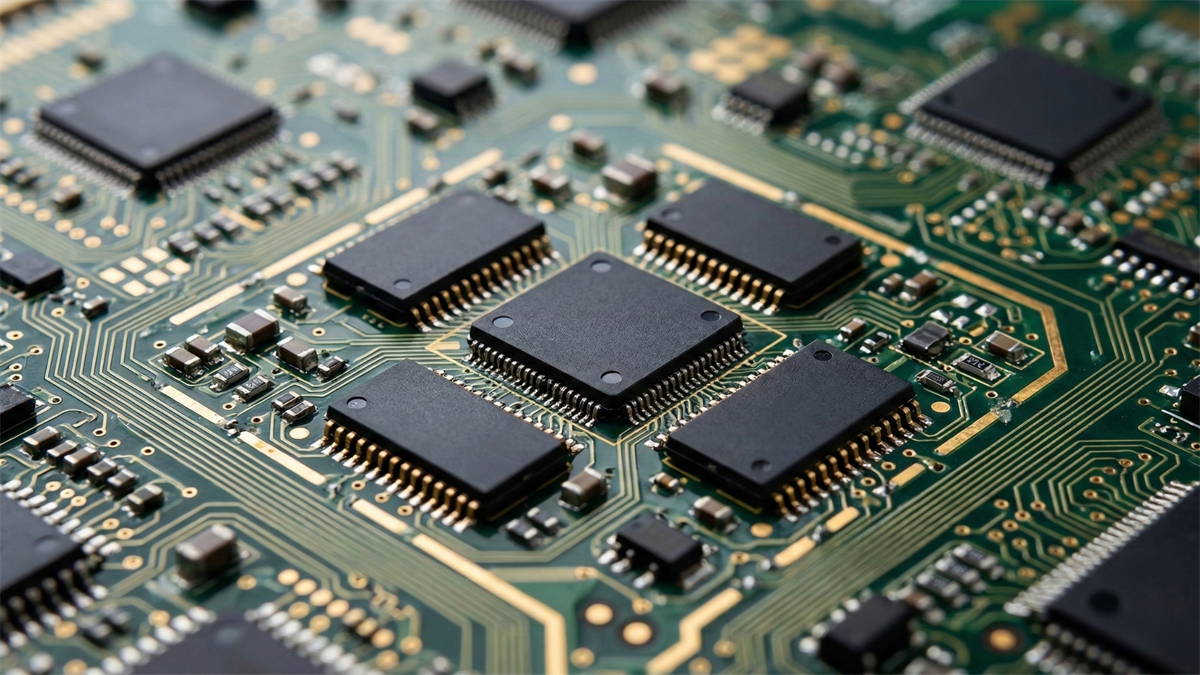
The semiconductor industry is foundational technology that powers the global economy and drives innovation across growth sectors, from artificial intelligence to high-performance data centers. After a period of substantial gains, recent market volatility has created a moment for strategic reassessment.
This environment presents a compelling opportunity for investors looking to establish or increase exposure to the industry. For many, the choice comes down to two leading semiconductor exchange-traded funds (ETFs): the VanEck Semiconductor ETF (NASDAQ: SMH) and the iShares Semiconductor ETF (NASDAQ: SOXX). Deciding between them reflects a fundamental difference in investment approach.
The Multi-Billion Dollar Reason the Chip Rally Isn’t Over
Silicon Valley Bank was just a warning (Ad)
In 2023, Silicon Valley Bank collapsed in just 48 hours with panicked customers draining $42 billion in a single day, but it could be nothing compared to what’s coming next—through Federal Reserve Docket No. OP-1670, the government is rolling out FedNow, an instant 24/7 payment hub that over 1,500 banks have already connected to, and when money moves at the speed of light, a modern bank run won’t take days. By routing every transaction through a single centralized hub, the Fed is building the ultimate kill switch for the American banking system, and when the next financial crisis hits, the Federal Reserve could instantly freeze all transfers, withdrawals, and payments nationwide to protect the system, trapping your life savings inside.Get the 4 steps to Fed-proof your savings now
The primary tailwind for the semiconductor sector is massive global investment in AI infrastructure. Major technology companies such as Microsoft (NASDAQ: MSFT) and Amazon (NASDAQ: AMZN) are forecast to invest more than $650 billion in AI-related capital expenditures in 2026 alone. That unprecedented spending is being used to build massive data centers filled with tens of thousands of specialized graphics processing units (GPUs), custom AI accelerators, and high-speed networking equipment.
That buildout directly fuels demand for high-performance chips, advanced memory, and sophisticated manufacturing equipment — the core components of the AI revolution. It represents a sustained growth driver for the companies held in both funds and supports a bullish outlook for the industry as a whole.
Why SMH Is Designed for the NVIDIA Bull
The VanEck Semiconductor ETF (SMH) is structured to deliver concentrated exposure to the industry’s most influential companies. By tracking the MVIS US Listed Semiconductor 25 Index, it emphasizes the largest and most liquid firms shaping the future of technology.
Its defining characteristic is concentration. Industry leader NVIDIA Corporation (NASDAQ: NVDA), the dominant provider of GPUs for AI, represents more than 18% of the fund’s assets. Taiwan Semiconductor Manufacturing (NYSE: TSM), the world’s premier chip foundry that produces advanced chips for companies like NVIDIA and Apple (NASDAQ: AAPL), holds about an 11% weighting.
Together, those two companies account for nearly one-third of the fund.
This concentration means SMH’s performance is strongly influenced by a small number of names. The ETF suits investors who believe a handful of dominant companies will continue to out-innovate peers and capture the majority of profits from the technology boom. For investors with high conviction in the sector’s frontrunners, SMH offers focused upside.
How SOXX Captures the Full Semiconductor Value Chain
The iShares Semiconductor ETF (SOXX) takes a broader approach. Tracking the NYSE Semiconductor Index, SOXX emphasizes diversification through weighting caps that prevent any single company from dominating the portfolio. NVIDIA is still a top holding, but at a more modest 6.88% weight.
That balance provides comprehensive exposure across the industry value chain: chip designers, memory and storage producers like Micron Technology (NASDAQ: MU) — whose products are crucial for large AI datasets — and equipment and components suppliers such as Applied Materials (NASDAQ: AMAT) and Broadcom (NASDAQ: AVGO), which produce the tools and networking chips that power data centers.
This structure creates a resilient foundation that captures the collective strength of the industry. SOXX is well-suited for investors who are bullish on a long-term semiconductor supercycle and prefer broad participation in the sector’s advance.
Concentration vs. Diversification: A Look at the Trade-Offs
The structural differences between SMH and SOXX lead to distinct trade-offs. SMH’s heavy concentration in top performers like NVIDIA can produce significant outperformance when those names lead the market, but it also increases exposure to company-specific risk. Adverse developments at one of its top holdings will have a larger impact on SMH’s value.
By contrast, SOXX’s diversified approach buffers single-stock volatility. When one company faces headwinds, the overall ETF is cushioned by its other 30+ holdings, which can result in steadier performance. The trade-off is that during rallies driven by a few mega-cap names, SOXX may not capture as much upside as a more concentrated fund. The choice ultimately reflects whether an investor prefers to pursue higher potential returns through concentration or seek stability through diversification.
Your Strategy, Your ETF: A Strategic Choice for a High-Growth Future
Both SMH and SOXX are powerful tools to capture long-term growth tied to the expansion of artificial intelligence. Choosing between them is a strategic decision based on conviction and risk tolerance, not a declaration that one fund is categorically better. SMH provides amplified exposure to the sector’s leading companies, while SOXX delivers broad, resilient participation across the industry.
Investors who understand these differences can better align their ETF selection with their market thesis and position their portfolios to capitalize on the semiconductor sector’s opportunities ahead.
Additional Reading from MarketBeat Media
Rivian Is About to Challenge Tesla Where It Hurts Most
Authored by Jeffrey Neal Johnson. Published: 3/11/2026.

Key Points
- A series of significant analyst upgrades indicates growing Wall Street confidence in Rivian’s strategic direction and future growth prospects.
- The upcoming launch of the R2 platform is set to propel Rivian into the mass market, offering a fresh and compelling alternative in a key vehicle segment.
- Demonstrating a clear path to profitability, Rivian achieved its first full year of positive gross profit and is leveraging high-value technology.
- Special Report: Elon’s “Hidden” Company
A distinct chill has settled over the electric vehicle(EV) market. After years of supercharged, triple-digit growth, the industry is navigating a period of slowing sales and heightened investor caution. This EV winter has prompted automakers to recalibrate ambitious production targets and engage in aggressive price competition to spur demand.
Yet amid this cooling sentiment, a countercurrent is forming around Rivian Automotive, Inc. (NASDAQ: RIVN). The electric adventure-vehicle maker is drawing renewed attention from Wall Street analysts, suggesting it may decouple from broader industry trends. The source of that optimism is straightforward: the imminent launch of the R2 platform, a vehicle designed to move Rivian from a niche player into the mass market — a development that could reshape the investment narrative around the company.
The Rivian R2 Could Be a Defining Moment for Rivian Automotive
Silicon Valley Bank was just a warning (Ad)
In 2023, Silicon Valley Bank collapsed in just 48 hours with panicked customers draining $42 billion in a single day, but it could be nothing compared to what’s coming next—through Federal Reserve Docket No. OP-1670, the government is rolling out FedNow, an instant 24/7 payment hub that over 1,500 banks have already connected to, and when money moves at the speed of light, a modern bank run won’t take days. By routing every transaction through a single centralized hub, the Fed is building the ultimate kill switch for the American banking system, and when the next financial crisis hits, the Federal Reserve could instantly freeze all transfers, withdrawals, and payments nationwide to protect the system, trapping your life savings inside.Get the 4 steps to Fed-proof your savings now
Growing confidence in Rivian’s trajectory sharpened on March 10, 2026, when TD Cowen upgraded the stock to Buy and raised its price target to $20. That move follows a broader trend of positive revisions from firms such as Deutsche Bank (NYSE: DB) and UBS (NYSE: UBS). For investors, these upgrades signal that analysts, after reviewing the data, see a clearer path to future growth that the stock price may not yet reflect.
The conviction behind those calls centers on the strategic importance of the R2 platform. The new midsize SUV is aimed at the heart of the consumer market with a targeted starting price around $45,000, positioning it as a direct competitor to vehicles like the Tesla Model Y. Many analysts view the R2 as Rivian’s “Model 3 moment” — a product that could transform the company from a premium niche automaker into a higher-volume, mainstream player.
Before the Model 3, Tesla was a high-risk, unprofitable company selling a small number of expensive cars. The Model 3’s production ramp proved Tesla could scale, generate billions in revenue, and achieve sustained profitability — an inflection point that permanently changed its valuation.
Wall Street is now betting the R2 can serve a similar role for Rivian. A successful launch would not only add a new revenue stream but also expand Rivian’s total addressable market and provide a near-term catalyst for growth.
Product Cycle Divergence: New Metal vs. Next-Gen Tech
Part of the bullish thesis for Rivian comes from a divergence in near-term strategies compared with the current market leader. The R2 is a new physical vehicle entering a high-demand segment, with customer deliveries expected to begin in the second quarter of 2026. That gives investors a clear, measurable driver for revenue growth in the near term and injects excitement into a market hungry for compelling alternatives.
Tesla’s narrative, by contrast, is increasingly long-term. Its dominant Model 3 and Model Y lineup is several years into its lifecycle and facing more competition. Tesla’s investor messaging is focused on harder-to-value, future-facing projects such as full self-driving, the Optimus robot, and broader applications of artificial intelligence (AI). While those initiatives could deliver massive value, their revenue timelines are measured in years rather than quarters. That difference creates a strategic opening: for investors seeking near-term growth tied directly to vehicle manufacturing and sales, Rivian’s product cycle presents a compelling alternative and the basis for a potential anti-Tesla trade.
How Rivian Plans to Win
For any growth company, the path to profitability is the central question — and Rivian is beginning to show tangible progress. Although the company posted a net loss in 2025, its full-year results reveal a turning point: for the first time, Rivian delivered a year of positive consolidated gross profit, improving more than $1.3 billion versus the prior year. That reflects disciplined execution; automotive cost of goods sold per vehicle improved by roughly $9,500 year over year, showing gains in manufacturing efficiency and supply-chain management.
That financial foundation is being reinforced by a multi-pronged strategy. The high-volume R2 platform is built to capture economies of scale, lowering per-unit costs as production ramps.
Rivian is also diversifying revenue through its software and services segment. Its joint venture with the Volkswagen Group (OTCMKTS: VWAGY)contributed meaningfully, generating $447 million in revenue in the fourth quarter of 2025 and providing a steadier income stream beyond vehicle sales.
The value of Rivian’s technology was underscored when Mind Robotics, a spinout built on its AI and robotics IP, raised $500 million at a $2 billion valuation. Taken together, these data points suggest Rivian is not just selling an attractive product but is actively building a more sustainable, diversified business model.
The R2 Reveal: Rivian’s Moment of Truth
Analyst optimism around Rivian is not pure conjecture; it is tied to measurable cost improvements and the strategic rollout of a potentially category-defining vehicle. The R2 launch positions Rivian as a product-led growth story at a time when the market leader’s focus is increasingly on longer-term technology bets.
The upcoming R2 reveal will be more than a product unveiling — it’s a critical data point for investors. How the market receives the R2, and how well Rivian executes its production ramp, will go a long way toward determining whether this wave of bullish sentiment can push Rivian into the next tier of global automakers.
Thank you for subscribing to The Early Bird, MarketBeat’s 7:00 AMnewsletter that covers stories that will impact the stock market each day.
This email content is a sponsored message from Crypto 101 Media, a third-party advertiser of The Early Bird and MarketBeat.
© 2026 Boardwalk Flock LLC. All Rights Reserved.
2382 Camino Vida Roble, Suite I
Carlsbad, CA 92011, United States
The advice and strategies contained herein may not be suitable for your situation. You should consult with a professional where appropriate.
Readers acknowledge that the authors are not engaging in the rendering of legal, financial, medical, or professional advice. The reader agrees that under no circumstances Boardwalk Flock, LLC is responsible for any losses, direct or indirect, which are incurred as a result of the use of the information contained within this, including, but not limited to, errors, omissions, or inaccuracies.
Results may not be typical and may vary from person to person. Making money trading digital currencies takes time and hard work. There are inherent risks involved with investing, including the loss of your investment. Past performance in the market is not indicative of future results. Any investment is at your own risk.
If you need help with your account, please don’t hesitate to contact our U.S. based support team at contact@marketbeat.com.
If you no longer wish to receive email from The Early Bird, you can unsubscribe.
© 2006-2026 MarketBeat Media, LLC. All rights reserved.
345 North Reid Place, Sixth Floor, Sioux Falls, South Dakota 57103. USA..
Today’s Featured Content: Early The Safest Investment Right Now? (It’s NOT Gold) (From Weiss Ratings)

 RJ Hamster