

Jonathan Rose’s POET trade keeps climbing… he expects a multi-bagger… copper versus fiber in datacenters… Luke Lango with the datacenter investing sequence… why Eric Fry keeps urging investors to look at copper… how to take advantage of bottlenecks
In our February 12 Digest, we highlighted a trading idea from veteran Jonathan Rose – POET Technologies Inc. (POET), a small semiconductor company positioned at the center of the AI infrastructure boom.
If you acted on that idea, you’re likely up around 20% today.
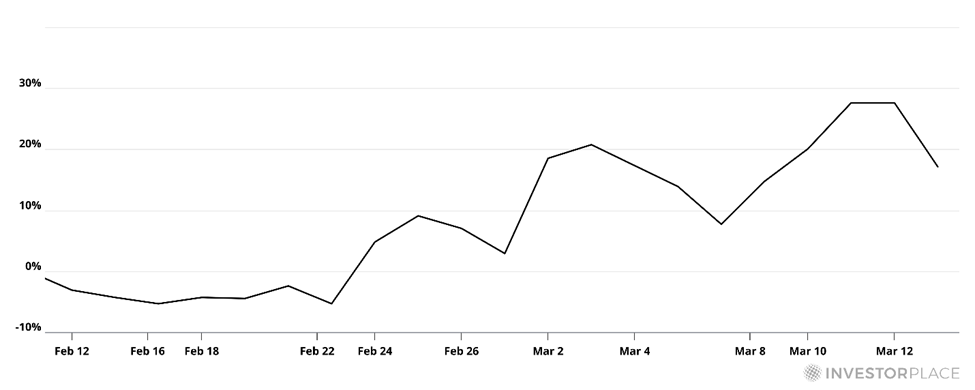
Jonathan’s subscribers who jumped into POET even earlier, and followed his suggestion to use calls, are up closer to 50%.
Now, if you missed this move, you still have time. Jonathan believes POET remains in the early stages of its broader advance.
To understand why, you must look at a problem developing deep inside the world’s AI data centers. Here’s Jonathan to explain:
Copper creates heat. Heat demands power. Power is becoming the constraint inside modern data centers.
The solution the industry is racing toward is optical interconnect – moving information with light instead of electricity. Faster, dramatically more efficient, and far cheaper at scale.
That’s where POET Technologies comes in.
POET designs optical engines that move data using light rather than traditional electrical signals. As AI clusters grow larger and faster, the connections linking thousands of processors together are becoming a bottleneck.
Back to Jonathan:
AI data centers are hitting a wall with electrical interconnects, and POET’s Optical Interposer platform is the solution the industry is racing toward.
Jonathan notes that Marvell Technology’s (MRVL) multibillion-dollar acquisition of Celestial AI helped validate the optical-interconnect theme, particularly because Celestial’s technology was built on POET’s platform.
The next catalyst driving POET’s next leg higher could arrive quickly
Last week, Jonathan sent me a “catalyst calendar” with six different events happening between now and the end of the year – the first of which arrives this week at OFC 2026. That’s the optical-networking industry’s flagship conference, where POET will have its largest booth ever.
But whenever the next leg higher begins – and for whatever reason – Jonathan expects a major move:
We remain extremely bullish.
The catalyst calendar is the richest it’s ever been, and POET has $400M+ cash to execute.
If adoption materializes as we believe, this remains a multi-bagger opportunity.
If you’re interested in how Jonathan finds trades like this – and you want to catch them from the very beginning – he walks through his process and flags trading ideas every weekday during his Masters in Trading Live broadcasts.
In those free videos, he breaks down market trends, explains entries and exits, and discusses the opportunities he’s watching in real time. You can sign up right here.
Now, POET is just one stock within a much bigger, interconnected story that’s unfolding right now…
Recommended Link
Get out of “The World’s Most Crowded Trade” Now
Megacap tech stocks – like Nvidia and Microsoft – are the most popular trade in the world. Yet, 78% of Wall Street fund managers believe an event is coming that could kill this trade and incite total “regime change” in the stock market. Watch Futurist Eric Fry’s “Sell This, Buy That” broadcast for 7 alternative plays to help protect yourself from big tech’s potential downturn. Get all the analysis, names and tickers FREE right here.
The bottleneck slowing the AI boom
Our hypergrowth expert Luke Lango, editor of Innovation Investor, recently explained that the AI bull market has unfolded in a series of infrastructure bottlenecks.
In fact, the optical-networking opportunity Jonathan sees in POET is simply the latest example of this pattern.
Each time hyperscalers run into a constraint – whether it’s computing power, cooling systems, energy supply, or memory bandwidth – capital floods into the companies that solve it.
As Luke explains:
The massive buildout of AI infrastructure isn’t a single race – it’s a rolling gold rush driven by a sequence of AI infrastructure bottlenecks.
We’ve already seen several of these phases play out.
The first major constraint was compute power, which helped propel Nvidia (NVDA) into the most valuable company in the world. Then came the server build-out, which sent companies like Super Micro Computer (SMCI) soaring as hyperscalers scrambled to assemble massive GPU clusters.
Cooling systems and electricity supply soon became new bottlenecks, as dense AI clusters generate enormous amounts of heat and require extraordinary levels of power.
Now another constraint is emerging – and this is exactly where optical networking technologies like the ones Jonathan described earlier come into play.
Here’s Luke to explain…
The next bottleneck is already visible.
It sits deep inside the data center itself: the network plumbing that moves data between GPUs.
And this is where an important technological debate is unfolding…
Copper today… optics tomorrow
Right now, many short-distance connections within AI clusters rely on copper cables.
Copper remains cheap, efficient, and extremely fast over short distances, which is why hyperscalers still rely on it heavily when linking GPUs inside server racks.
But as Jonathan flagged earlier in this Digest, copper has a limitation…
As data speeds increase and clusters grow larger, electrical signals degrade quickly over distance. Optical networking – which transmits information using pulses of light – solves that problem.
To illustrate, here’s Jonathan again, spotlighting POET:
POET designs optical engines that move data with light instead of copper – faster, 90% less power, and far cheaper at scale.
For now, the industry is using both technologies – depending on the application.
Luke summarizes the dynamic this way:
Copper wins in scale-up today. Optics wins in scale-out today.
Once co-packaged optics technology matures…optics will likely win both eventually.
Bottom line: Copper dominates many connections in today’s data centers, but optical technologies will likely play a larger role in tomorrow’s bigger and faster data centers.
For investors looking to put money to work, this isn’t an “either/or” investment choice; it’s more of a sequence.
So, let’s zero in on the first part of that sequence…
Why copper still matters today
Luke’s point about copper dominating today’s data-center architecture reinforces a much larger trend that our macro expert Eric Fry has been tracking for years – the critical role copper plays in AI infrastructure and next-generation technologies of all kinds.
Based on the massive demand from these uses, here’s Eric from back in January with his forecast for copper prices this year:
Copper prices will reach at least $8.00 per pound sometime in 2026 – driven by structural supply constraints and accelerating demand for electrification, AI infrastructure, renewables, grid expansion, and industrial modernization.
For context, as I write on Monday morning, copper trades at $5.83.
Independent research firms are reaching similar conclusions about the tightening supply picture…
S&P Global projects global copper demand could rise roughly 50% by 2040 as electrification accelerates and AI infrastructure expands. Yet the pipeline of new mines capable of meeting that demand remains thin.
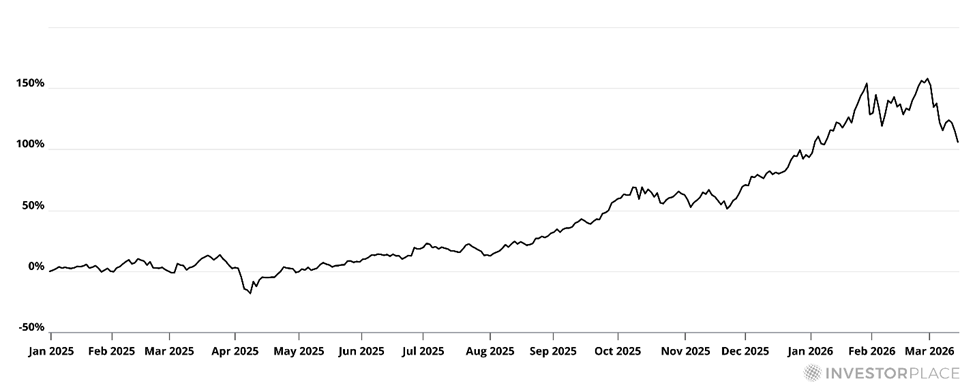
This has been driving big gains in the Global X Copper Miners ETF (COPX). As you can see below, COPX has more than doubled since the beginning of 2025.
This shortage is likely to continue.
As Eric explains:
The copper market is tilting toward long-term deficits.
The International Copper Study Group expects today’s refined-copper balance to flip into a deficit of roughly 150,000 tonnes next year, as mine production growth slows and concentrate availability tightens.
UBS anticipates an even larger deficit of roughly 400,000 tonnes.
Even under optimistic assumptions, the supply outlook remains challenging.
According to the International Energy Agency, even if every currently announced copper project advances into production, global supply could still fall roughly 30% short of projected demand by 2035.
Eric summarizes the scale of the challenge this way:
To sustain the current pace of AI expansion, we would need to mine as much copper over the next 18 years as humanity has mined in the last 10,000 years combined.
But notice what Eric wrote – “AI expansion.”
His bullishness isn’t limited to copper’s use inside data centers today. Copper sits at the center of the wider AI infrastructure build-out – from power grids and transformers to electric vehicles and renewable energy systems and beyond…
Nearly all that infrastructure depends heavily on copper.
So, while the same AI boom driving demand for optical networking technologies will likely push data centers toward fiber-optic connections over time, it will still keep copper under enormous pressure for years to come, driven by a variety of needs.
I’ll add that while Eric is bullish on copper today, he isn’t ignoring the technology shifts that could shape the next phase of the AI infrastructure build-out.
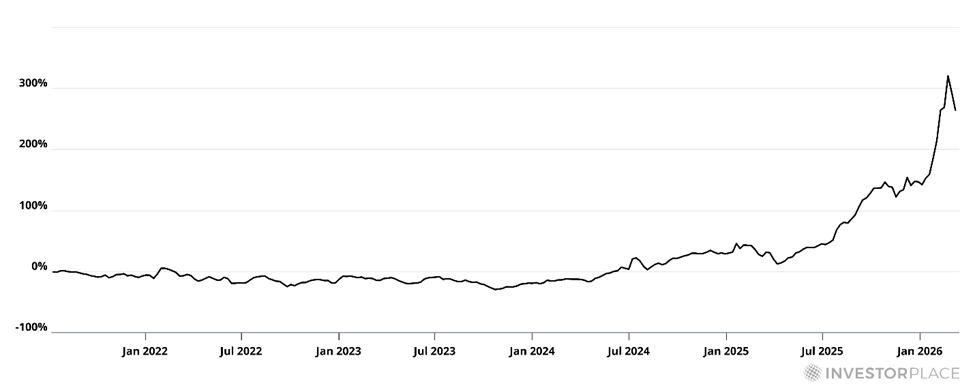
In fact, he has already positioned his Investment Report subscribers to benefit from the networking transition Luke described earlier – the same one that Jonathan is trading with POET – by recommending Corning (GLW). It’s the global leader in fiber-optic infrastructure that powers much of the internet’s physical backbone.
Since that recommendation, the stock has surged 242%.
Bottom line: whether the constraint is copper or fiber, the pressure points forming across the AI supply chain are creating significant opportunities for investors who understand what’s happening.
Where the next bottlenecks are forming
Copper is just one example…
Eric just flagged two other huge bottlenecks: energy and memory (DRAM).
If you’re less familiar with memory, here’s Eric with a quick explanation:
Without enough DRAM, AI systems simply run out of room to process information.
Without memory, artificial intelligence quite literally can’t think.
Nearly 100 gigawatts of new data centers are scheduled to come online over the next four years. But there’s only enough DRAM to support roughly 15 gigawatts over the next two years.
Nvidia CEO Jensen Huang put it plainly: “The memory bottleneck is severe.”
We’re running long in today’s Digest, so we’ll dig into this more tomorrow.
And for the full story on bottlenecks, Eric will explain everything during a special online event called FutureProof 2026, thisWednesday, March 18 at 1 p.m. ET.
He’ll walk through the industries and supply chains now emerging as the next chokepoints in the AI economy – and reveal 15 companies already positioned to benefit from these developing constraints.
You can reserve your spot for the broadcast right here.
The bottom line
Jonathan’s POET trade, Luke’s research on AI infrastructure, and Eric’s macro thesis on copper and bottlenecks are all part of the same story…
The enormous investment opportunity in the physical layer that’s powering today’s AI buildout.
Full disclosure – I’m a big believer here, so I’m invested. I own COPX to play copper, and I took a small position in Jonathan’s POET trade to get fiber optics exposure.
After all, it’s hard to look at the data and supply/demand imbalance and not see an opportunity. So, we’ll be tracking these positions together over time.
Bottom line: When today’s AI systems run into bottlenecks – whether in networking hardware, energy supply, metals, or memory – the companies solving those constraints can become some of the biggest winners in the market. And if Eric is right, the next wave of bottlenecks is already taking shape.
Have a good evening,
Jeff Remsburg
(Disclaimer: I own COPX, POET, GLW.)


 RJ Hamster