

Read Online | April 6, 2026 | E-Paper | 🎧 Listen
“Fallacies do not cease to be fallacies because they become fashions.”
— G. K. Chesterton

Ivan Pentchoukov
National Editor
Good morning! It’s Monday. Here are today’s top stories:
- 🚀 The four Artemis II astronauts will today break the distance record set by Apollo 13 for the farthest humans have traveled from Earth. This will happen during their seven-hour lunar flyby, when the astronauts will also get to enjoy views of the moon’s far side, which has never been seen before with human eyes.
- President Donald Trump has given Iran until Tuesday, 8 p.m. ET, to reopen the Strait of Hormuz, or the U.S. might launch strikes on power plants and bridges. The ratcheted-up threat was made after Trump announced the rescue of a second U.S. aviator downed in Iran.
- For many firefighters, the fires outside are not in fact the deadliest threat. It’s the invisible toxins and carcinogens from the flames slipping through their gear, burrowing into skin and lungs. After losing two fellow firefighters to cancer, a Phoenix deputy fire chief decided to build a solution.
- 🍵 The push to prevent heart disease earlier in life has led to more testing–often in visits too short to fully weigh the trade-offs.

A view of Earth taken by NASA astronaut and Artemis II Commander Reid Wiseman from the Orion spacecraft’s window after completing the translunar injection burn on April 2, 2026. (NASA)
Artemis II Astronauts Set for Historic Lunar Flyby: What to Know
Today, the crew of Artemis II will swing around the moon and head back to Earth in a seven-hour lunar flyby.
The crew is scheduled to wake up at 10:50 a.m. ET, when a historic day of firsts, records, and opportunities for discoveries lay before them.
They will be the largest crew yet to fly around the moon, and they are expected to set a new distance record for the farthest human beings have ever traveled from the surface of the Earth. They are also expected to observe areas of the lunar surface that have never been seen firsthand by human eyes, and a complete solar eclipse, before lunar gravity essentially throws their spacecraft on a course back home.
NASA’s live coverage is expected to begin at 1 p.m. ET. Here is what to know about the day’s events.
1:30 p.m.—The crew will have a conversation with the science officer in Mission Control for final review and solidification of the surface targets for observation and other objectives.
2:45 p.m.—Artemis II’s seven-hour lunar flyby will officially begin.
Integrity’s course will send the crew behind the moon, passing on looker’s left, and swinging around to reemerge on looker’s right.
From their vantage point, the crew will be able to see elements of both the near and far sides, with about 20 percent of the far side illuminated, with plenty of opportunities to see things for the first time with human eyes.
The crew will work in pairs, observing the moon in 55-to-85-minute shifts due to Integrity’s limited window space.
Juliane Gross, Artemis sample curation lead who was tasked with helping choose sites targeted for observation, praised in-person human observation as being best for being able to provide immediate descriptions compared to robotic spacecraft.
“The human brain is so good at looking at a surface and immediately picking out … those changes in the blink of an eye,” she told The Epoch Times. “Orbiters and spacecraft, they will take months and years to get their data.”
Lunar scientists told The Epoch Times that there are spots on both the far and near sides that they are excited to observe.
On the far side, those targets include Orientale Basin and an older basin called Hertzsprung. On the near side, Gross said she was most excited to observe the Aristarchus Plateau. (More)
IRAN WAR
- Iranian officials said the country would carry out more forceful attacks on targets if the U.S. and Israel target the country’s civilian infrastructure in an apparent response to warnings issued by President Donald Trump over the weekend.
- Trump told Fox News that the United States had tried to arm Iranian protesters and sent them guns via Kurdish groups, but that he believes the Kurds kept the guns for themselves.
LATEST NEWS
- A federal judge blocked the Trump administration from enforcing a requirement that colleges submit admissions data to show they are not considering race, calling the rollout “rushed and chaotic.”
- A Chinese man has pleaded guilty after trying to board a flight while carrying trade secrets from his Kansas-based employer, an aviation company, to China, according to federal prosecutors.
Sponsored By VantagePoint AI
Your Trading Needs AI Now. Forecast Market Moves Before They Happen
The market rewards precision, not effort. Are you using patented AI to stay ahead? VantagePoint forecasts stock and options direction 3 days in advance with up to 87.4% proven accuracy analyzing millions of data points to reveal smarter entries, exits, and timing.LEARN FREE ➜
WORLD
- Pope Leo XIV shared a message of peace in his first Easter Mass as pontiff, calling on nations in global wars to lay down their weapons and seek peace through dialogue.
- China and Pakistan’s peace plan reflects the Chinese regime’s drive to secure energy supplies from Iran. Still, experts say Beijing lacks the clout to mediate the conflict, and its support for Tehran will likely overshadow the upcoming Trump–Xi summit.
OPINION
- The Cost of Breaking Cycles—by Tamuz Itai (Read)
- NATO Was a Big Loser in the Iran War—by Victor Davis Hanson (Read)
- American Classics Worth Celebrating This July—by Mark Bauerlein (Read)

A New Jersey State Police officer holds a bear cub that was rescued from a ditch alongside a busy interstate highway in northern New Jersey on April 1, 2026. (New Jersey State Police via AP)
📸 America in Photos: Artemis II Mission, Birthright Citizenship Arguments, and Cub Rescue (Look)
❓ Explainer: The Epoch Times’s Pentagon correspondent Ryan Morgan looks at how recent ground troop deployments have fueled speculation of ground combat operations in Iran.
🍿 Movie: ‘A Great Awakening’: Ben Franklin’s Most Important Contribution (Read)
🎵 Music: Mozart’s Divertimento (String Trio) In E Flat, KV 563 (Listen)
🚻 (Sponsored) Urologist: Seniors With Bladder Problems Should Try This Simple Routine — Many older adults may be low in a key mineral tied to hydration, muscle function, and energy. A simple “salty drink” is gaining attention for daily balance—without sugar or artificial ingredients. See why doctors are talking about it.*
HEALTH
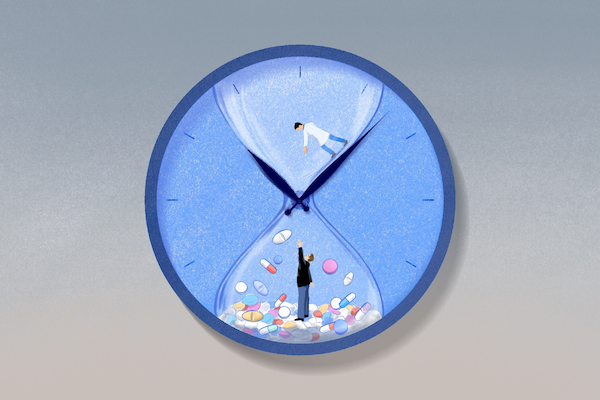
(Illustration by The Epoch Times, Shutterstock)
Starting Statins: New Guidelines Aim at Prevention but Create More Patients
You can now be treated for heart disease decades before you have symptoms.
You go in for a routine physical, feeling healthy. Your cholesterol comes back a little high, not alarming, just above the cutoff. In the past, your doctor might have said, “Let’s recheck next year.”
Under the 2026 cholesterol guidelines, you may be sent for more tests. You could leave with a statin, not because you are sick today, but because you might develop heart disease in 30 years.
The goal is to push prevention earlier and make it more precise, treating risk long before symptoms appear. Supporters say this “lower-for-longer” approach could prevent tens of thousands of heart attacks and strokes by catching disease earlier.
For many otherwise healthy adults, especially those in their 30s and 40s with modestly elevated cholesterol, the shift is far more complicated. The benefits are distant and statistical. The burdens—more tests, more appointments, a daily pill that could last decades—arrive now.
For decades, decisions about cholesterol treatment hinged on a simple question: What is this person’s risk of a heart attack or stroke in the next 10 years? The answer usually mattered most in midlife.
Now, clinicians are being asked to consider longer-term risk—sometimes starting in a person’s 30s.
The 2026 guidelines add layers to what was once a simpler decision. Instead of focusing mainly on short-term risk, doctors are asked to calculate both 10- and 30-year risk, weigh “risk enhancers,” such as family history or inflammation, and, in some cases, add tests such as lipoprotein(a) or coronary calcium scans. (More)

🎲 Games
Spot the Difference is our readers’ favorite. Play it here.

Play more games at Epoch Fun ➞


♥️ Support our mission and donate.
🎧 Prefer to listen? Get the Morning Brief podcast.
💬 Feedback? Reply to this email or write to ivanmb@epochtimes.nyc
👋 New to Morning Brief? Subscribe.
💡 Got a news tip? Connect with us confidentially.
▶️ Follow The Epoch Times on Facebook, X, Instagram, or Truth Social
📫 Forward this email to a friend and tell them to subscribe. (Here)
☕ Show us your love with coffee, mugs, stickers, and clothes. Check out the shop.
💼 Own a business? Reach millions of engaged readers by advertising in our newsletters.
Thanks for reading 🙏
Have a wonderful day!
—Ivan Pentchoukov, Madalina Hubert, and Kenzi Li.
Copyright © 2026 The Epoch Times, All rights reserved.
Our mailing address is: The Epoch Times, 129 West 29th Street, Fl 8, New York, NY 10001 | Contact Us
Our Morning Brief newsletter is one of the best ways to catch up with the news. Manage your email preferences here or unsubscribe from Morning Brief here.
*Disclaimer: The opinions expressed in this advertisement are exclusively those of the advertiser and do not represent our views or positions. This material is promotional in nature and should not be mistaken for news, research or editorial content.

 RJ Hamster