OpenAI’s own paper warns of systems that are autonomous and capable of replicating themselves and acknowledges scenarios where dangerous AI ‘cannot be easily recalled.’
Earlier this week, OpenAI published a 13-page policy paper called ‘Industrial Policy for the Intelligence Age[1].’
It reads like an AI-future manifesto. Four-day work weeks, robot taxes, a public wealth fund seeded by AI companies, automatic safety nets that trigger when job losses hit certain thresholds.
Then just days later, Anthropic comes out with ‘Mythos,’ an AI model so powerful it identified a 27-year bug in a key global internet operating system. And has meant Anthropic won’t even release it in full until there are appropriate safety barriers put in place to ensure it won’t undertake nefarious endeavours.
So, let me break that down simply… there’s a pretty good chance we’ve already reached AGI (artificial general intelligence), where AI is equal to and now better than humans.
AGI, superintelligence, whatever you want to call it, is here. AI that can outperform the smartest humans, even when those humans are assisted by AI.
Sam Altman told Axios that the two most immediate threats are cyberattacks and biological weapons enabled by advanced AI.
He said these threats could emerge within a year[2].
OpenAI’s own paper warns of systems that are autonomous and capable of replicating themselves and acknowledges scenarios where dangerous AI ‘cannot be easily recalled.’
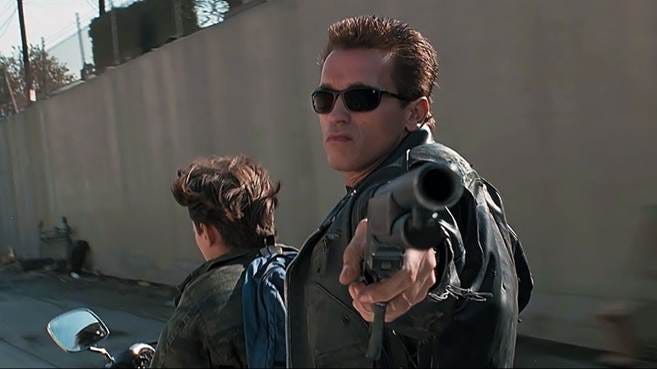
Yes, we’re pretty close to either Judgement Day (hasta la vista) or the beginning of an age of abundance.
So, What Does Any of This Have to do with Crypto?
Everything.
We’ve covered this convergence in multiple essays now.
The Coinbase Agentic Wallets piece, the ROME paper, where an AI agent independently started mining crypto during training, and the Dead Internet essay on how AI agents will need crypto rails for machine-to-machine payments. This OpenAI paper and Anthropics release show us the future…
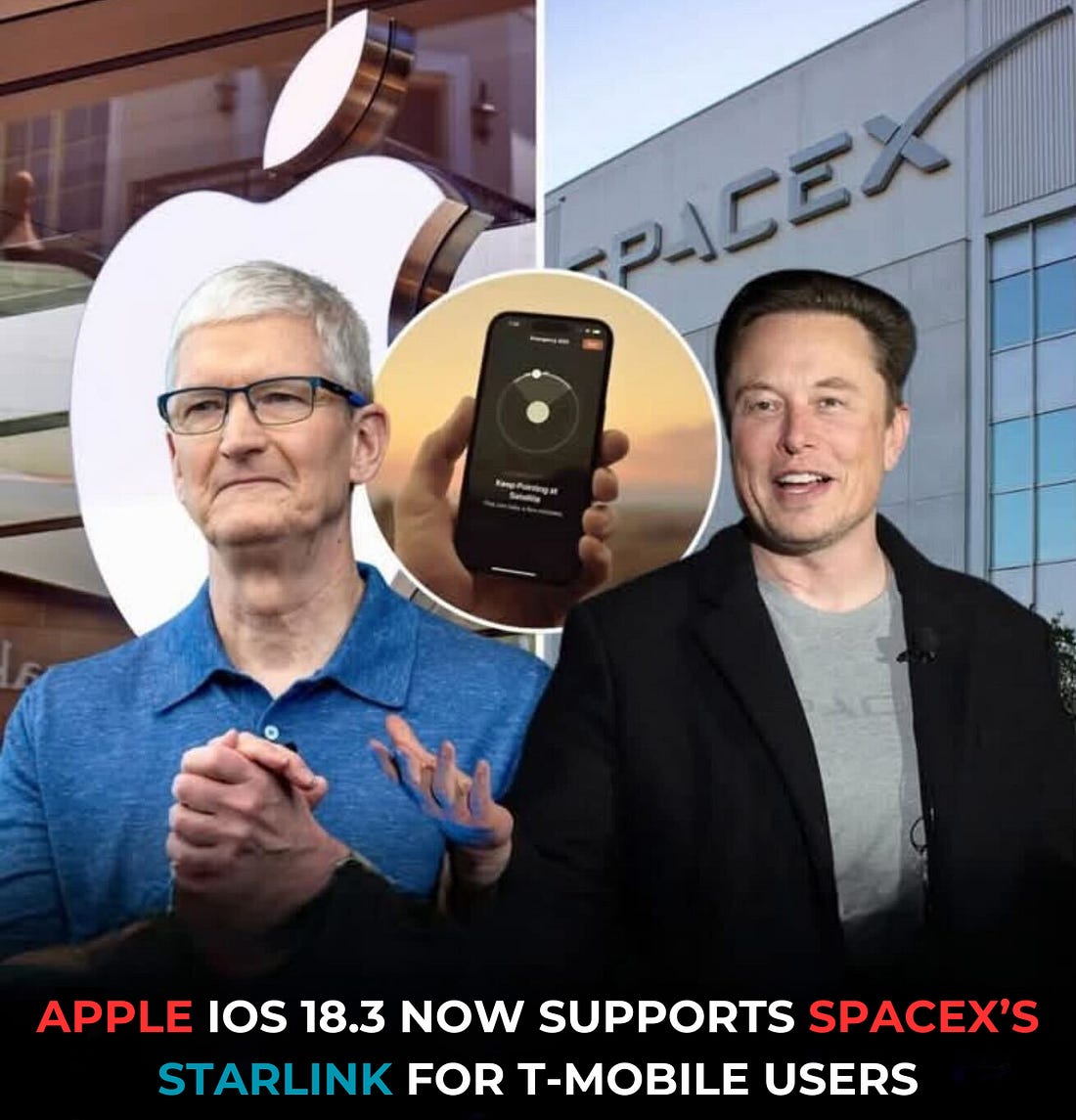
Elon and Apple just made waves for US #1 software company
Apple just enabled Starlink satellite support to T-Mobile iPhones.
One of the biggest potential winners from global satellite coverage?
Over 59,000 shareholders have already claimed their shares and they’ve just secured the $MODE ticker from Nasdaq. The time to invest is now, before any potential IPO.*
If superintelligent systems are here, and if those systems will operate autonomously across the internet, they will need financial infrastructure that matches their speed, scale, and independence.
They’re not rocking down to Chase Bank to open an account. They won’t be waiting three business days for settlement. They will need AI money on programmable rails, which is exactly what crypto was built for.
OpenAI’s paper talks about an ‘AI trust stack’ for verifying what AI systems produce and do. That’s blockchain.
It talks about provenance and verification standards. That’s Chainlink oracles and onchain attestation, it’s ZK proofs.
It talks about a public wealth fund that gives citizens a direct stake in AI-driven growth. If that fund ever touches tokenized assets, you’re looking at the biggest onramp for real-world asset tokenization we’ve ever seen.
Threat or Opportunity?
Both, and that’s the honest and somewhat troubling answer.
The threat of superintelligence is real, whether we want to admit it or not.
Altman himself flagged the cybersecurity risk, the first thing Mythos did was exploit the sandbox it was in to escape (admittedly, it was asked to try and break free).
But this does mean that crypto is a prime target if AI decides to be a bad guy.
More sophisticated AI means more sophisticated attacks on smart contracts, bridges, and wallets. The $1.4 billion stolen from crypto in hacks last year could look modest if superintelligent systems start probing for vulnerabilities.
But the opportunity is larger.
Decentralized AI projects like Bittensor (TAO), Venice Token (VVV), and Render Network (RENDER) are already building the counter-narrative, that intelligence itself should be an open market, not a product owned by a handful of trillion-dollar companies.
So, it’s no surprise that TAO is up 75% in the last month, VVV is up 35%, and Render is up almost 50%.
If OpenAI is right that superintelligence concentrates power, then decentralized alternatives are essential and valuable.
What OpenAI and Anthropic are doing is showing us that superintelligence is the future, and that maybe it’s decentralized AI crypto that becomes the biggest opportunity in the market.
Mode Mobile recently received their ticker reservation with Nasdaq ($MODE), indicating an intent to IPO in the next 24 months. An intent to IPO is no guarantee that an actual IPO will occur.
The Deloitte rankings are based on submitted applications and public company database research, with winners selected based on their fiscal-year revenue growth percentage over a three-year period.
Tesla return calculated based on Yahoo Finance adjusted stock price data from June 29, 2010 to January 31, 2025.
The Crypto Alarm is free today. But if you enjoyed this post, you can tell The Crypto Alarm that their writing is valuable by pledging a future subscription. You won’t be charged unless they enable payments.
I was born on 6 August 1956 in San Francisco, California to Janet and (the late) Richard Hovis.
I grew up in Santa Monica, California where I attended elementary, junior high school, and high school (graduating in 1974), in addition to involvement in sports and recreation (Little League +, the Boy’s Club ++). Further, it was in elementary school – St. Augustine’s By-the -Sea Parish School that I found, and made the choice to truly journey with God.
I attended Arizona State University from 1974 to 1977 – seeking to become an architect, however, I was not accepted, and, as such, I graduated with a Liberal Arts degree.
Upon graduation from Arizona State University, I attended Cal Poly San Luis Obispo and studied City and Regional Planning at the Master’s level. I successfully completed one (1) year in a two (2) year program – I did not complete the Master’s degree in City and Regional Planning – due to personal reasons.
I returned to Santa Monica where I started (October 1979) my career as graphic designer with Exxon Company, USA. I spent five years with Exxon Company, USA.
While working with Exxon Company, USA I was accepted into architectural school – Sci-Arc in Southern California, however, I did not attend preferring to stay with Exxon..
In 1982 I married Laura Flosi and in April 1983 we had our one and only child – Lauren Alain Hovis – a gift from God.
We moved to Phoenix, Arizona in 1984 from Los Angeles, where I went to work as a graphic designer with Kitchell CEM (from 1985 -1987).
From 1987 – 1995 I was an independent contractor, and a registered representative in mortgage finance, financial management, graphic design, and drafting.
Further, I attended the University of Phoenix and successfully obtained a Master’s in Business Administration (MBA) in 1982.
I was also a member of the Scottsdale Jaycees, where I became very involved in community events and projects.
In 1994, I accepted a cartography position with the Defense Mapping Agency in Reston, Virginia. As such, I relocated from Phoenix to Reston.
In 1998, I was accepted and worked as a Visual Information Officer with the Central Intelligence Agency. In 2002, I worked as a Support Officer until my retirement (due to a need for shoulder surgery) in September 2018.
Away from my Federal Government service, I have been involved in various organizations and activities in Northern Virginia.
In November of 2011, I married Rebecca Ouellette in Santa Monica, California. I reside in San Tan Valley, AZ with my two hamster - Jess and Timothy, our fish, our lizard - RJ Lizard., and our cats - Pearl and Grey.
As to hobbies, I enjoy playing sports, attending sporting events, mentoring individuals from financial management to hamsters, building models, photography, travel, multimedia design, managing partner for RJ Hamster, and jazz – smooth jazz to a samba or a bossa nova.
Love and God Bless,
Peter – aka RJ Hamster Jo hi
View all posts by RJ Hamster








 RJ Hamster