Hello,
Thanks for signing up for MarketBeat Daily Ratings—we’re excited to have you on board.
Every weekday, you’ll get a curated summary of new “Buy” and “Sell” ratings from Wall Street’s top-rated analysts, the latest stock news, and bonus investing content—all delivered straight to your inbox.
You’re just two quick steps away from completing your sign-up:
1. Make sure our emails go to your inbox
Gmail users:
Mobile: Tap the three dots (…) in the top right and select Move to Inbox or Move to Primary
Desktop: Click the folder icon at the top and select Move to Inbox or Primary
Apple Mail users:
Tap our email address at the top (next to From: on mobile), then select Add to VIP
Other providers:
Reply to this message and add newsletters@analystratings.net to your contacts
2. Confirm your subscription
Click this link to confirm your subscription. This verifies your account and ensures you receive your newsletters without interruption instead of getting stuck in your spam filter.
Confirm your subscription here.
After you confirm, feel free to download our popular free report, “7 Stocks to Buy and Hold Forever” with this link.
Thanks again for subscribing—we look forward to being part of your investing journey.

Matthew Paulson
Founder and CEO, MarketBeat.
P.S. If you didn’t mean to subscribe, no problem—you can unsubscribe here.
More Reading from MarketBeat
Valuation to the Moon? SpaceX Gears Up for IPO Liftoff With a Confidential Filing
Written by Jessica Mitacek. First Published: 4/2/2026.
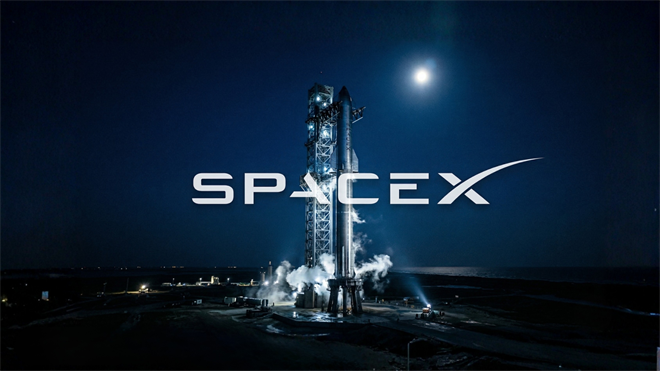
Key Points
- Elon Musk has confidentially filed for a SpaceX IPO that could debut as early as June 2026, seeking to raise up to $75 billion.
- Following a February 2026 merger with xAI, SpaceX is valued at $1.25 trillion alongside a vertically integrated model combining its dominant launch services and Starlink’s recurring subscription revenue with advanced AI-powered computing.
- The company boasts a robust balance sheet with minimal debt, over $15 billion in remaining government contract obligations through 2030, and a Starlink division projected to generate $8.1 billion in pro forma free cash flow by the end of 2026.
- Special Report: Elon’s “Hidden” Company
All eyes are on the initial public offering (IPO) calendar as one of 2026’s most highly anticipated debuts prepares for liftoff.
On April 1, CNBC reported that Tesla (NASDAQ: TSLA) and Neuralink CEO Elon Musk confidentially filed an IPO for SpaceX with the U.S. Securities and Exchange Commission. The company could be listed on an exchange as soon as June.
Iran War Shakes Up Wall Street, Here’s How to Profit… (Ad)
Since 2009, the Dividend Machine has posted a total return of 7,056.47% – turning a $10,000 stake into more than $700,000 while the broader market struggled through multiple downturns.
With a 93% win rate since launch, this dividend-focused strategy has kept investors cashing steady checks through every crash. Bill Spetrino has released a free report outlining how to position for income no matter what the market does next.Claim your free report and see how the Dividend Machine works
Founded in 2002, the aerospace manufacturerand space-transport services company is best known for deploying its subsidiary Starlink’s satellites.
SpaceX is reportedly seeking to raise up to $75 billion in its IPO, which would be roughly three times the size of the largest U.S. IPO to date. That record currently belongs to Alibaba Group (NYSE: BABA), which went public in September 2014 after raising $21.8 billion.
At that valuation, Musk would become the first CEO of two trillion-dollar publicly traded companies.
Here is what potential investors and Musk enthusiasts need to know.
A Massive Valuation and Vertically Integrated Business Model
While the satellite stock space may seem as crowded as low-Earth orbit (LEO), the combined market caps of publicly traded peers pale in comparison to SpaceX. Much of the gap reflects the company’s multi-layered, vertically integrated business model.
Following the company’s Feb. 2 merger with xAI—the artificial intelligence (AI) and tech firm also led by Musk—SpaceX’s valuation was placed at $1.25 trillion. Its core launch services business has positioned the company as the world’s leading launch provider, including the SmallSat Rideshare Program, which offers cost-effective access to space by launching multiple small payloads together on a single Falcon 9 rocket.
At the same time, SpaceX has garnered attention for deploying more than 10,000 Starlink satellites into LEO since May 2019, delivering high-speed, low-latency internet globally. Starlink, unlike launch services, provides subscription-based recurring revenue that can produce the steady cash flow investors reward.
Analysts’ year-end forecasts for Starlink in 2026 include:
- 16.8 million subscribers, implying more than 33% year-over-year (YOY) growth
- $11.3 billion in consumer revenue, implying more than 10% YOY growth, with roughly 85% recurring revenue
- About 133 Starlink mission launches, up more than 11% YOY, deploying a total of 3,500 satellites—more than 23% YOY growth
- $20 billion in total revenue, $14 billion in earnings before interest, taxes, depreciation, and amortization (EBITDA), and $8.1 billion in pro forma free cash flow
The merger with xAI adds another element: a potential unified balance sheet for prospective investors ahead of the IPO. The combined company gives xAI access to SpaceX’s infrastructure and cash flow, while allowing SpaceX to accelerate integration of AI-powered, space-based computing.
SpaceX’s Massive Government Contracts Provide a Baseline of Revenue
Beyond Starlink and its recurring-revenue model, SpaceX has grown into a large defense contractor.
Since 2008, the company has been awarded more than $24.4 billion in federal government contracts. Of that total, roughly $9 billion has been paid out so far, leaving about $15.4 billion in remaining obligations for missions through 2030.
Many of those contracts come from NASA and the Department of Defense, including work for the Space Force, Air Force, and several U.S. intelligence agencies.
SpaceX’s NASA work includes the commercial crew program, which transports astronauts to the International Space Station (ISS) via Crew Dragon, participation in the Artemis Program, commercial resupply services to the ISS, and development of the ISS deorbit vehicle, which is scheduled to escort the research laboratory safely into the Pacific Ocean in 2031.
Wall Street’s SpaceX Expectations
Despite the size of the IPO, SpaceX’s public valuation could be more than 90 times its 2025 revenue. Early estimates suggest a debut per-share price around the $400 level, or possibly higher.
That stock price could be justified if SpaceX maintains a low debt load. After the xAI merger, the company has emphasized presenting a clean balance sheet leading up to the IPO. That approach, combined with the company’s diversified business model, could support strong margins and healthy cash flow—unlike some of Musk’s other firms that have carried large amounts of debt.
Thank you for subscribing to MarketBeat!
MarketBeat empowers investors to make better financial decisions by delivering real-time financial information and objective investment research.
If you have questions about your account, please feel free to email our U.S. based support team at contact@marketbeat.com.
If you would like to unsubscribe or change which emails you receive, you can manage your mailing preferences or unsubscribe from these emails.
Copyright 2006-2026 MarketBeat Media, LLC.
345 North Reid Place #620, Sioux Falls, S.D. 57103. United States..

 RJ Hamster