Our neighborhood grocery stores offer thousands of natural, organic & gluten-free foods. Discover fresh produce, meats, vitamins, supplements & more.
— Read on www.sprouts.com/
Author Archives: RJ Hamster
I was born on 6 August 1956 in San Francisco, California to Janet and (the late) Richard Hovis.
I grew up in Santa Monica, California where I attended elementary, junior high school, and high school (graduating in 1974), in addition to involvement in sports and recreation (Little League +, the Boy’s Club ++). Further, it was in elementary school – St. Augustine’s By-the -Sea Parish School that I found, and made the choice to truly journey with God.
I attended Arizona State University from 1974 to 1977 – seeking to become an architect, however, I was not accepted, and, as such, I graduated with a Liberal Arts degree.
Upon graduation from Arizona State University, I attended Cal Poly San Luis Obispo and studied City and Regional Planning at the Master’s level. I successfully completed one (1) year in a two (2) year program – I did not complete the Master’s degree in City and Regional Planning – due to personal reasons.
I returned to Santa Monica where I started (October 1979) my career as graphic designer with Exxon Company, USA. I spent five years with Exxon Company, USA.
While working with Exxon Company, USA I was accepted into architectural school – Sci-Arc in Southern California, however, I did not attend preferring to stay with Exxon..
In 1982 I married Laura Flosi and in April 1983 we had our one and only child – Lauren Alain Hovis – a gift from God.
We moved to Phoenix, Arizona in 1984 from Los Angeles, where I went to work as a graphic designer with Kitchell CEM (from 1985 -1987).
From 1987 – 1995 I was an independent contractor, and a registered representative in mortgage finance, financial management, graphic design, and drafting.
Further, I attended the University of Phoenix and successfully obtained a Master’s in Business Administration (MBA) in 1982.
I was also a member of the Scottsdale Jaycees, where I became very involved in community events and projects.
In 1994, I accepted a cartography position with the Defense Mapping Agency in Reston, Virginia. As such, I relocated from Phoenix to Reston.
In 1998, I was accepted and worked as a Visual Information Officer with the Central Intelligence Agency. In 2002, I worked as a Support Officer until my retirement (due to a need for shoulder surgery) in September 2018.
Away from my Federal Government service, I have been involved in various organizations and activities in Northern Virginia.
In November of 2011, I married Rebecca Ouellette in Santa Monica, California. I reside in San Tan Valley, AZ with my two hamster - Jess and Timothy, our fish, our lizard - RJ Lizard., and our cats - Pearl and Grey.
As to hobbies, I enjoy playing sports, attending sporting events, mentoring individuals from financial management to hamsters, building models, photography, travel, multimedia design, managing partner for RJ Hamster, and jazz – smooth jazz to a samba or a bossa nova.
Love and God Bless,
Peter – aka RJ Hamster Jo hi
The Machines Are Already Trading
Anthropic’s CEO just made headlines.
He told the world his company is no longer sure whether Claude — their flagship AI — is conscious.
Think about that for a second. The people who BUILT the machine aren’t sure if it’s alive.
Now imagine what’s already running loose inside the stock market.
Wall Street didn’t wait for a philosophical debate. They didn’t wait for regulators. They didn’t wait for anyone’s permission.
They unleashed AI across the markets years ago — and it’s been quietly hijacking stocks, funneling billions into the pockets of the biggest firms on the planet, every single trading day.
Up to 90% of all trades are now placed by algorithms.
Not people. Machines. And most traders are completely blind to it.
Professor Jeff Bierman isn’t.
In fact, he’s the reason those algorithms exist.
He helped build the foundational technology — what he calls The Genesis Cog — that powers virtually every major Wall Street algo running today.
Now he’s doing something Wall Street never expected.
He’s teaching regular traders how to spot these AI-powered hijacks as they happen… and potentially ride them for consistent profits.
Get Access to Genesis Cog Alerts.
Whether it’s a one-hour spike or a multi-week move — the opportunity is real, it’s recurring, and most traders will never know it exists.
Jeff does. And now you can too.
The AI revolution is already here.
The only question is whether it runs you over — or hands you a paycheck.
Join Professor Bierman inside The Genesis Cog.
To Your Success,
Don Kaufman
Chief Strategist, TheoTRADE
Helping You Become a Better Trader…it’s What We Do. Experience TheoTrade® Today!
Whether you are a beginning, intermediate, or active trader, you will find a treasure chest of valuable trading education resources, both free and paid, that will help take your trading to the next level. We are committed to helping you become the best trader you can be.
Disclaimer: Neither TheoTrade.com or any of its officers, directors, employees, other personnel, representatives, agents or independent contractors is, in such capacities, a licensed financial adviser, registered investment adviser, registered broker-dealer or FINRA |SIPC |NFA-member firm. TheoTrade does not provide investment or financial advice or make investment recommendations. TheoTrade is not in the business of transacting trades, nor does TheoTrade agree to direct your brokerage accounts or give trading advice tailored to your particular situation. Nothing contained in our content constitutes a solicitation, recommendation, promotion, or endorsement of any particular security, other investment product, transaction or investment.Trading Futures, Options on Futures, and retail off-exchange foreign currency transactions involves substantial risk of loss and is not suitable for all investors. You should carefully consider whether trading is suitable for you in light of your circumstances, knowledge, and financial resources. You may lose all or more of your initial investment. Opinions, market data, and recommendations are subject to change at any time. Past Performance is not necessarily indicative of future results.
TheoTrade
PO Box 24790 Christiansted, Virgin Islands 00824
1 (800) 256-8876
Want to change how you receive these emails?
You can Update your preferences
Terms of Service | Privacy Policy
If you no longer wish to receive our emails Unsubscribe
Sunday Night’s Crash Was a Trap
Tuesday, March 10, 2026
Volatility is not done. But corrections end. And that could come spooner then you realize…
When this one does, the move back into growth will be fast. The traders who are positioned before that turn will not need to chase it after.
Gianni Di Poce just revealed the proprietary indicator he uses to time that exact moment — the signal that marks the bottom, the Nasdaq target he is watching, and a step-by-step positioning strategy you can act on the same week.
The response was so strong TheoTRADE is running one final encore tomorrow at 2PM ET.
This is the last time he is walking through the full system. There will not be another session after this.
👉 ADD THE ENCORE TO YOUR CALENDAR →
Don here…
Sunday night futures opened down big and retested the late November lows. Gianni just flagged that move as a false breakdown, and the implications are massive.
The dip got bought. The S&P 500 is up around half a percent on the day, and the NASDAQ bounced hard off support after briefly taking out its early February low.
But the real story is underneath the surface.
Last week, defensive sectors sold off harder than growth. Consumer staples, healthcare, and utilities all dropped more than technology, consumer discretionary, and communication services.
Gianni says that pattern is the textbook signal of a market trying to carve out a bottom. Sellers in growth names are exhausted, and capital is rotating back toward offense.
Technology is now the top performing sector this week. If it holds that position through Friday, Gianni expects a squeeze that will leave most traders scrambling to catch up.
Here is what Gianni is watching in tonight’s video:
- Broadcom beat earnings expectations last week, announced a $10 billion buyback, and confirmed the AI trade is still alive. The stock gapped up and closed near its weekly highs while almost nobody talked about it.
- NVIDIA has traded in a 50 point range for eight months, correcting through time instead of price. It just took out last week’s high and is sitting at the highs of the day.
- The Mag 10 names are showing broad strength. Meta looks excellent, Tesla looks strong, and AMD is seeing a solid bid. The only weak link is Microsoft, which may have just formed a lower high.
- Crude oil saw a 30% plus correction from yesterday’s high to today’s low. Gianni calls the move historic by every measure and expects prices to settle in the 70 to 75 zone.
- Gold looks ready for another leg higher. Gianni is coming around to the idea that gold could rally to 6,000 to 6,200.
The Sunday night flush reminds Gianni of election night 2016. The initial crash gave way to a parabolic move higher that lasted months. He sees the same setup forming right now.
The VIX is still in backwardation, meaning near term volatility is priced higher than volatility a few months out. Gianni says it is too late to panic and that betting on more downside from here is not the wise trade.
To your success,
Don Kaufman
Chief Market Strategist, TheoTRADE
The Market’s No. 1 Trading Guide, Free
This is the perfect time to make sure you’re up to speed on your trading know-how. So I want to ensure you’ve read our free Rebel’s Guide to Trading Options – it covers all the basics of trading options. Like everything we do, the course is in plain English. It’s specially geared toward beginners but all traders will get something out of it. Yours absolutely free, of course – right here…
Recent Media Appearances by TheoTrade
Jeff Bierman talks A.I. with YahooFinance LIVE
Click here to watch and read the interview >>>
Follow Us on Twitter for Free Market Updates Throughout the Day: https://twitter.com/TheoTrade
NEW MEDIA CHANNEL – JOIN TheoTRADE on RUMBLE
NEED HELP? LOOKING FOR MORE ADVANCED TRAINING? CALL OUR VIP CONCIERGE SUPPORT TEAM: (623) 244-5657
For live updates throughout the week join the TotalTheo® Unlimited Monthly Streaming: https://theotrade.com/all/
Get 6 Months Membership Access for FREE
Click Here to Open and Fund a NEW tastytrade Account
Follow these step by step directions:
1. To open an account with tastytrade and enjoy an additional 6 months of TheoTRADE membership, start by clicking the button below..
2. Follow the directions on that page to open a new account.
3. Fund the account with a minimum of $2,000 in the next 30 days and keep open for at least 6 months.
4. IMPORTANT: After the new account is open AND funded email support@theotrade.com so we can verify your new account. Please note it may take us up to one week to verify your account from the time you email us.
5. TheoTrade will then provide you membership access for 6 months!
Click here to get started now…
NEED HELP? LOOKING FOR MORE ADVANCED TRAINING? CALL OUR VIP CONCIERGE TEAM: (623) 244-5657
Warm regards,
Don Kaufman
Disclaimer: Neither TheoTrade or any of its officers, directors, employees, other personnel, representatives, agents or independent contractors is, in such capacities, a licensed financial adviser, registered investment adviser, registered broker-dealer or FINRA|SIPC|NFA-member firm. TheoTrade does not provide investment or financial advice or make investment recommendations. TheoTrade is not in the business of transacting trades, nor does TheoTrade agree to direct your brokerage accounts or give trading advice tailored to your particular situation. Nothing contained in our content constitutes a solicitation, recommendation, promotion, or endorsement of any particular security, other investment product, transaction or investment. Trading Futures, Options on Futures, and retail off-exchange foreign currency transactions involves substantial risk of loss and is not suitable for all investors. You should carefully consider whether trading is suitable for you in light of your circumstances, knowledge, and financial resources. You may lose all or more of your initial investment. Opinions, market data, and recommendations are subject to change at any time. Past Performance is not necessarily indicative of future results.
WARNING: If you UNSUBSCRIBE, you will be removed from ALL email lists, including any paid subscription emails. To opt out of this list only and keep other access, forward this email to support@theotrade.com and say “remove me from this particular email list.” Unsubscribe
TheoTrade
16427 N Scottsdale Rd
Suite # 410
Scottsdale, Arizona 85254
United States
1 (800) 256-8876
San Tan Valley – English Dermatology
San Tan Valley – English Dermatology
— Read on www.englishdermatology.com/location/san-tan-valley/
Homepage | The Wilderness Society
Our Mission: United people to protect our wild places. Our Work: Climate Solutions, Landscape Connectivity, Community Led Conservation Each day thousands of acres of wild places are lost to mining, drilling, logging and other development. But we don’t have to give it all away. Together, we can save our wildest lands for future generations.
— Read on www.wilderness.org/
For All The World To See

Issue #31, Volume #3For All The World To SeeBy Porter Stansberry • Tuesday 10, March 2026View in browser
Inside today’s Daily Journal…
- Essay: Plucking Out Reports Of Financial Irregularities
- Oil production plummets
- “Help with mortgage” cries for help
- Debt service over bullets
- Chart Of The Day… Amrize
- Today’s Mailbag
Only Those With Keen Eyes Notice Public Reports Of Financial Irregularities
Editor’s note: Today, Porter turns the Journal over to Marty Fridson, lead analyst for Porter & Co.’s Distressed Investing. Marty has seen it all – from the legendary bond-trading floor of Salomon Brothers to working with the high-yield research teams at leading Wall Street investment banks. For nine consecutive years he was ranked No. 1 in high-yield strategy in the Institutional Investor All America Research Survey. He’s also written eight books, the most recent of which is The Little Book Of Picking Top Stocks… and Marty is such a legend that there is a recently published book about corporate finance that devotes an entire chapter to him. We excerpted last year in the Daily Journal.
Today, Marty reflects on the fact that so much financial chicanery – which the mainstream press tags as a hidden secret when they eventually discover it – has often been fully revealed in financial disclosures that few bother even to look at.
Here’s Marty…
Details of many financial scandals are often hiding in plain sight.
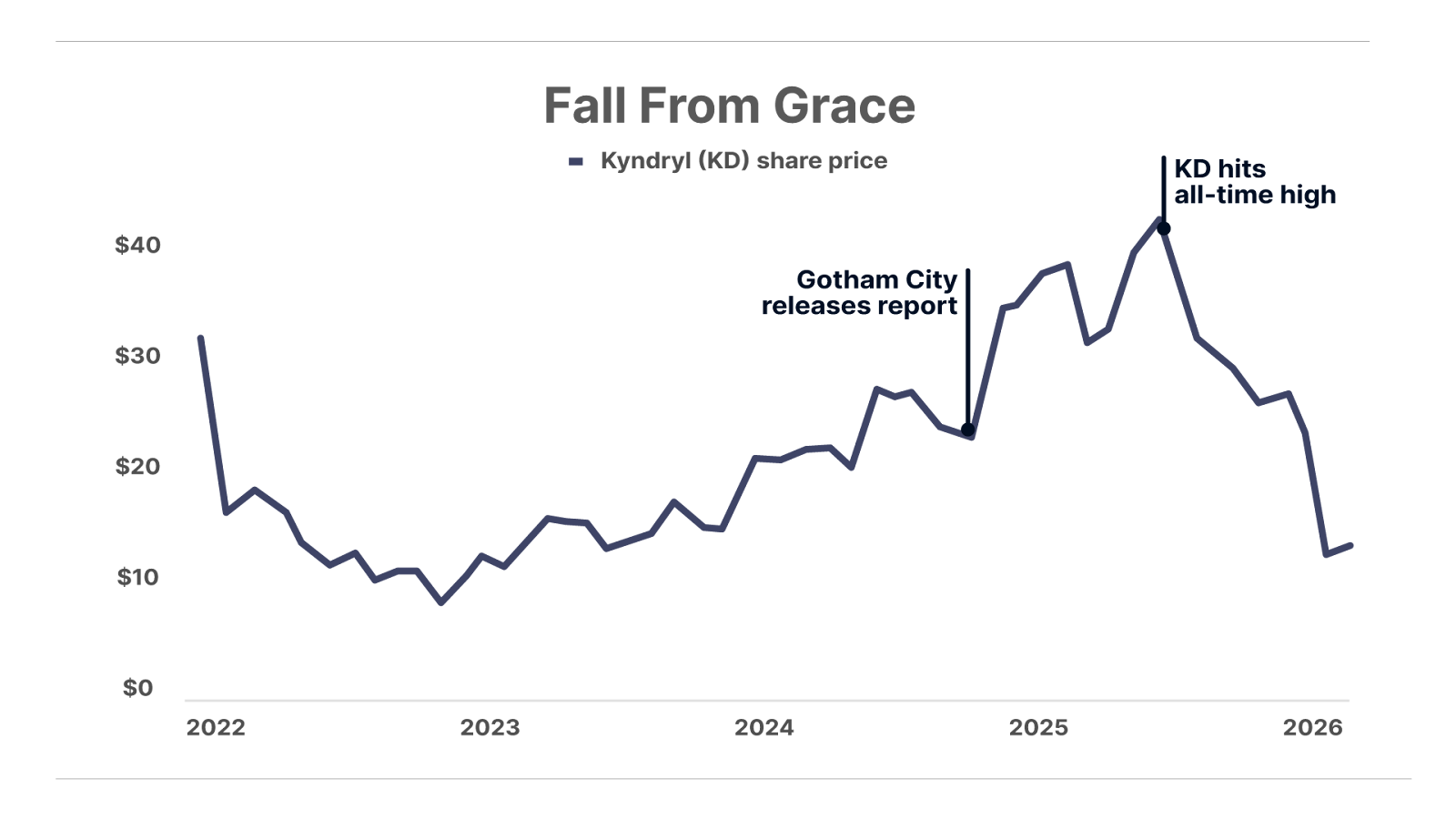
On February 9, shareholders of IT services provider Kyndryl (KD) – a spin-off of the century-old computer-services giant IBM – received a rude shock: a one-day 55% price drop. A tidal wave of disturbing company announcements prompted the selloff:
- Revenue and profits fell short of analyst expectations
- Forward guidance was cut
- The report for the quarter that ended December 31, 2025, would not be filed on schedule
- Kyndryl’s CFO and general counsel resigned
- The board’s audit committee was examining the company’s cash management practices, related disclosures (including how adjusted free cash flow is presented), and the effectiveness of internal controls over financial reporting
- The Securities And Exchange Commission (“SEC”) made a document request to the company
The plunge in Kyndryl’s share price was accompanied by another standard response to those disclosures: Several law firms announced that they were investigating Kyndryl for possible violations of federal securities laws and urged shareholders who lost money in the stock to join the effort by providing information.
Kyndryl’s investor calamity had something else in common with other price collapses triggered by hints of possible financial reporting irregularities: The shock should not have been a shock at all.
More than 10 months earlier, on March 27, 2025, Gotham City Research published analysis claiming to identify improper accounting and disclosure involving Kyndryl’s payments to its former parent IBM (IBM). Gotham City, a money manager noted for its high-profile short sales, pointed out several troubling items in the company’s public financial statements. Among them:
- In the 2024 SEC Form 10K, Kyndryl’s auditor cited a material reporting weakness related to revenue recognition
- Kyndryl reported that its Total Signings – the aggregate, estimated value of customer contract commitments obtained – grew 21% over the past few years, yet total revenue declined
- Accounting measures such as accounts receivable days sales outstanding and capitalized costs were far out of line with peer companies
These were red flags hiding in plain sight, accessible to any investor willing to dig a little deeper than most. Nevertheless, three months after Gotham City’s report came out – with all the allegations of financial chicanery – shares of Kyndryl reached a new all-time high, at around $42.63.
Kyndryl’s management responded to Gotham City’s report with the customary tone of outrage employed in such cases:
Kyndryl rejects in the strongest possible terms the conclusion reached within the report, which was clearly designed to manipulate the company’s stock for the short seller’s benefit.
With that phrasing, Kyndryl’s management was effectively accusing Gotham City Research of a felony punishable by up to 20 years in prison.
The company’s protesting of its injured innocence continued,
Had we been afforded the opportunity to speak to this firm, we would have pointed out the many inaccuracies and falsehoods contained in this so-called analysis.
That statement is hard to reconcile with Gotham Research’s own:
We attempted to contact the company. KD refused to respond to our request to discuss our questions.
Shareholders’ unfortunate experience with Kyndryl is not out of the ordinary. Ever since publishing the first edition of my book, Financial Statement Analysis: A Practitioner’s Guide (co-authored in later editions by Fernando Alvarez), I’ve documented numerous instances of this pattern. A company’s stock price craters in reaction to revelations of suspected or actual financial reporting violations, yet it turns out that evidence of accounting hanky-panky was brought to light much earlier.
The most famous case is that of the rapid fall of energy-trading company Enron from Wall Street darling to bankruptcy in 2001. The outright fraud in its accounting was well concealed. But more than a year before the company went bust, The Wall Street Journal raised concerns about the high concentration of its reported earnings in unrealized, noncash gains. Michigan State University accounting professor Tom Linsmeier opined at the time, “There could be a quality-of-earnings issue.” Later on, McCullough Research spotted a discrepancy between Enron’s reported net income minus dividends and its additions to retained earnings.
These accounting terms may sound esoteric to investors whose deepest level of financial knowledge is EBITDA. Even those who watch CNBC religiously are unlikely to hear a discussion of anything like a worrisome rise in a movie studio’s ratio of capitalized production costs to its revenue. Yet analysts who have paid attention to that sort of thing have helped investors avoid many foreseeable stock calamities over the years.
At Porter & Co. we avidly look for situations with big upside, but we take care not to overlook signs of potential downside: finding trouble in the financial statements that are visible to anyone paying close attention.
Tell us what you think: porterstansberrydirect@gmail.com
Good investing,
Martin Fridson
New York, New York
[WATCH NOW] The All-In Summit – Your Next Move
Paradigm Press top three experts – Jim Rickards, James Altucher, and Enrique Abeyta – just went live with an URGENT briefing, where they revealed the #1 idea that they’re going ALL-IN on. This single idea in the coming weeks, beginning with a new initiative from President Trump, represents a major transformation of the U.S. economy. Make sure you are caught up on everything ASAP. >> Click here for the details<<<
Editor’s Note: Keep in mind, we only accept advertising from publishers we know to offer well-researched ideas vetted by a legal team, excellent customer service, and reasonable refund policies. Paradigm Press is one such partner. We do not, however, under any circumstances make any representations about their investment ideas or strategies, nor will we warrant them as equal to our own. We do recognize that the markets are tempestuous and, at times, ideas that we may not endorse prove valuable.
3 Things To Know Before We Go…
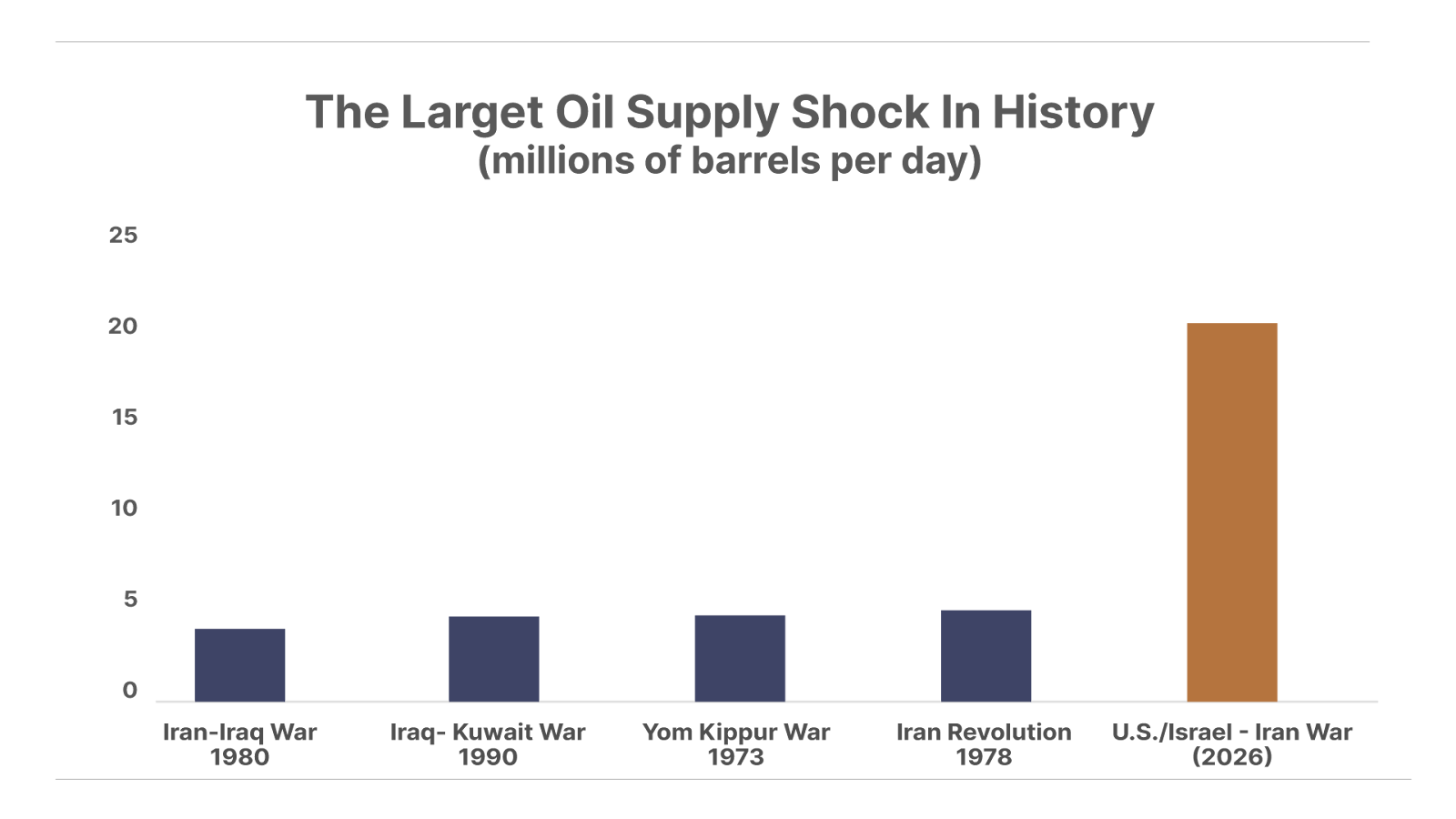
1. Historic oil-supply shock continues. With the Strait of Hormuz still (mostly) closed for business, Middle East oil-storage facilities are reaching capacity, forcing shut-ins: production cuts from Saudi Arabia, Iraq, Kuwait, and the UAE have now reached 6.7 million barrels per day (b/d). And the total loss volumes from the Strait of Hormuz closure, at 20 million b/d, represents the largest oil-supply shock in history. And despite claims from President Donald Trump that the war is nearly over, Iranian officials responded that they “have no plans for a ceasefire.”
2. The only force outpacing the U.S. military: interest on debt. As the U.S. military devastates Iran with its massive arsenal of weapons, the only federal budget line item larger than the military’s $843 billion is interest on the overall U.S. government debt… coming in at $880 billion per year. The U.S. national debt approaches $39 trillion with an average interest rate of 3.35% – more than double 2020 rates. According to the Congressional Budget Office, net interest is now the fastest-growing category in the federal budget, projected to reach $2.1 trillion by 2036. When you’re spending money you don’t have, there’s really no limit to what you can do.
3. “Help with mortgage” Google searches hit 20-year high. Mortgage delinquency rates have surged to a staggering 11.52%, their highest since 2021. This coincides with a housing market where homeowners are unwilling to trade low, pandemic-era rates for today’s 6% average. For many, the American dream is stuck in a search bar, as rising costs of living outpace paychecks.
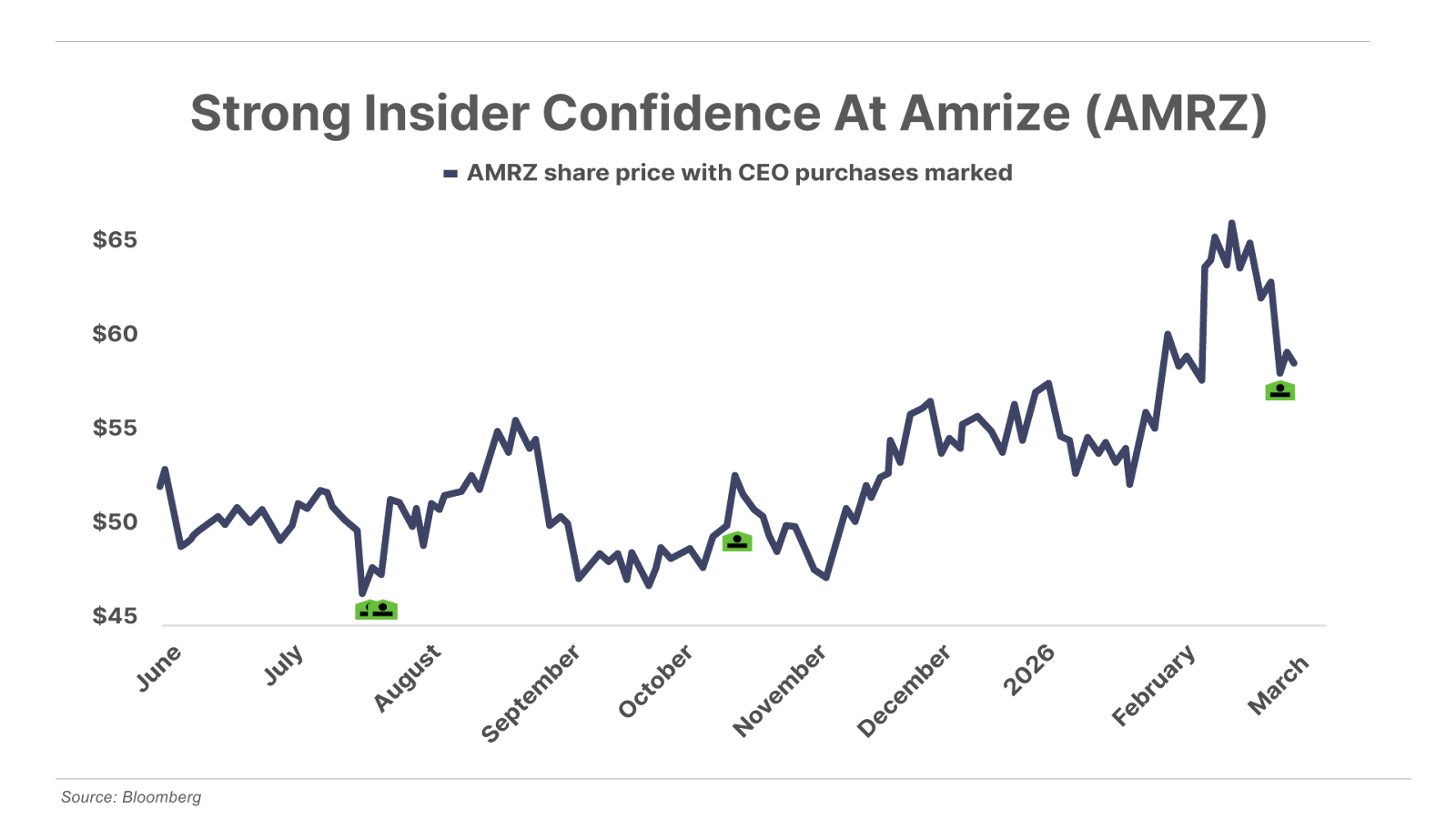
Chart Of The Day… Insider High Conviction At Amrize (AMRZ)
CEO Jan Jenisch of building-solutions leader Amrize (AMRZ) – whose shares have increased 13% since our December Complete Investor recommendation – purchased $3.5 million in shares on March 6… adding to the $99 million in direct purchases he’s already made.
Mailbag
“Iran – The Problem Will Only Get Worse”
David L. writes:
The problem will only get worse. I am not certain Porter is correct in the latter part of his analysis concerning Muslims and our sketchy history in terms of converting them to democracy and Christianity. I believe the majority of Iranians are Persians, and if anything, follow Zoroastrianism. Most of the Persians want nothing to do with these autocratic Muslim fanatics who rule their country. Their only problem is that, unlike in the U.S., where every citizen has a gun and can at least start a revolutionary movement, they do not have such a path to resistance. So while most of them would welcome regime change, they do not have the wherewithal to achieve it.
Porter Comment: Appreciate your note, but you’re absolutely wrong about the population. It’s 100% a Muslim nation.
“Thank You For Your Journal Articles”
Robert H. writes:
I am in awe that in this age where eight billionaires own and control all the print media, the broadcast news, and even the social media, that you are able to expose the inconvenient truths of the world as it is, not as our government leadership wishes it to be. In the February 27 Journal “Beware the True Believers,” you show the reader that the government has met the enemy and he is their constituency. If you can’t control your protesting-for-regime-change public with 40 million troops, you keep a few, or 77,000, nuclear-tipped bombs on hand to keep them in line. Yesterday’s article, “The Worst Is Yet To Come” – where you attempt to show the deaf, dumb, and blind American public that the U.S. can’t give a country, whose inhabitants have centuries-old entrenched beliefs, a Coke, a Big Mac, and a Walmart on every corner and expect them to abandon the beliefs that they have held dear for centuries. How it ends reminds me of the old Arabic joke:
Two Muslim friends meet and Abdul tells Ismael: “Remember that infidel that insulted my family 20 years ago? I killed him today.” To which Ismael replies, “What was your hurry?”
Thank you for attempting to educate your readership, and keep shining the light of truth through your Daily Journal: not only in how to make money from those who will not see, but also to show your reader the world as it truly is, not how their country’s propagandic press wishes them to believe.
“Your Comments On The Gulf War”
Ed A. writes:
Hi Porter,
Your observations and comments are all valid, but perhaps myopic. This war is definitely one of choice and opportunity. Iran was arguably at a relative weak point as far as their ability to resist a degradation of their ability to wage war. The question is not whether their threat was imminent. The question is: was the conflict inevitable? If inevitable, then the war should commence at the opportunity of greatest potential success, defined as the most to gain for the least cost. Waiting until Iran had more firepower, including Chinese hypersonic cruise missiles, which recent reports were that they had contracted to buy, in addition to nuclear weapons, only raises the potential cost of the inevitable conflict to unacceptable levels.
The mullahs and Islamic Revolutionary Guard have made it clear that they have been at war against the U.S. for the last 47 years. We are the Great Satan, to be destroyed along with Israel. The fact that we don’t believe this about ourselves means nothing to the religious fanatics ruling Iran. The American public and elected leaders have been playing the ostrich about Iran’s intentions for most of my lifetime. I am no fan of Mr. Trump. And I doubt he’ll have the patience to succeed with what he has started. But wiser men than him could make this a strategic victory.
Here is what I would do:The U.S. needs to take advantage of the hatred and fear of the predominantly Sunni Gulf Arab States toward Iran. We must be their allies and protectors in their conflict with Iran. The Gulf States should pay for this protection.We, with our Gulf allies, should take the southeast corner of Iran to permanently open the Strait of Hormuz, allowing commercial traffic that is amenable to U.S. strategic objectives. No dark fleet oil from Iran to China. Government of the conquered space would be the responsibility of a coalition of the Gulf allies. Military matters directed by the USA.The U.S. should resist every temptation to conquer the rest of Iran by land invasion. Only the southeast corner. Let the Iranians come to us and have a “no go” zone in front of us that will be suicidal to cross.Embargo Iranian exports/imports and wait for the resultant stress to degrade the mullahs / Islamic Guard to the point that the balance of the population will be willing to overthrow them.
Porter Comment: My comments are myopic?
Interesting.
There are 500 million (!) legally owned firearms in the United States. There is zero probability that any nation on Earth could possibly invade our country and conquer us. Zero. Military doctrine says even trying it would require 50 million or more ground troops and that’s more troops than exist in every army (including ours) in the world.
There is no war against us. Forty-seven years ago, we started a war against them – for absolutely no reason.
If we had any sense at all, we’d sell arms to both sides – the Israelis and the Iranians. We’d keep them fighting each other for decades and make trillions in profit.
They have been fighting each other for almost 2,000 years.
They aren’t going to stop.
And it’s not our problem.
– Porter
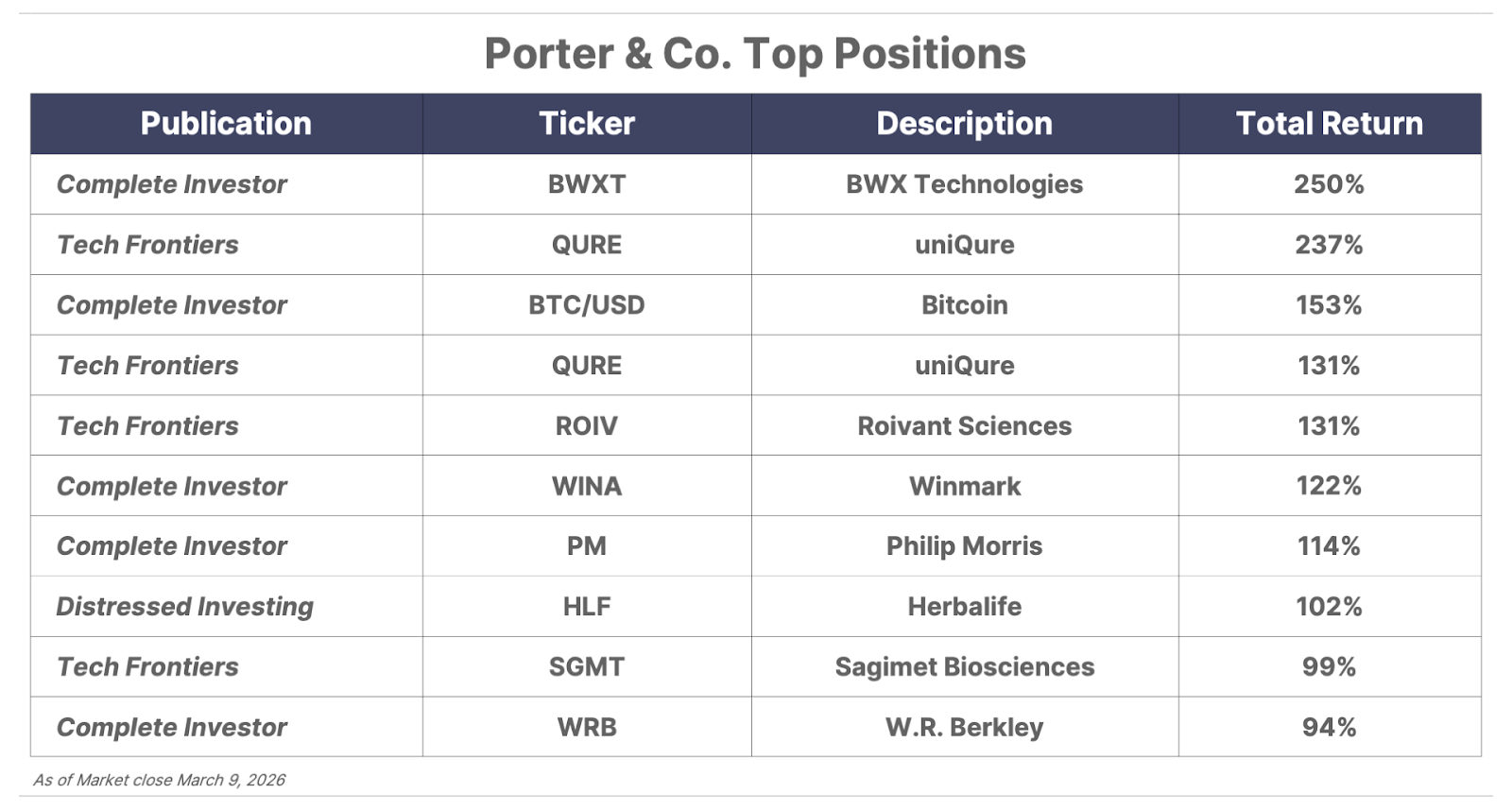
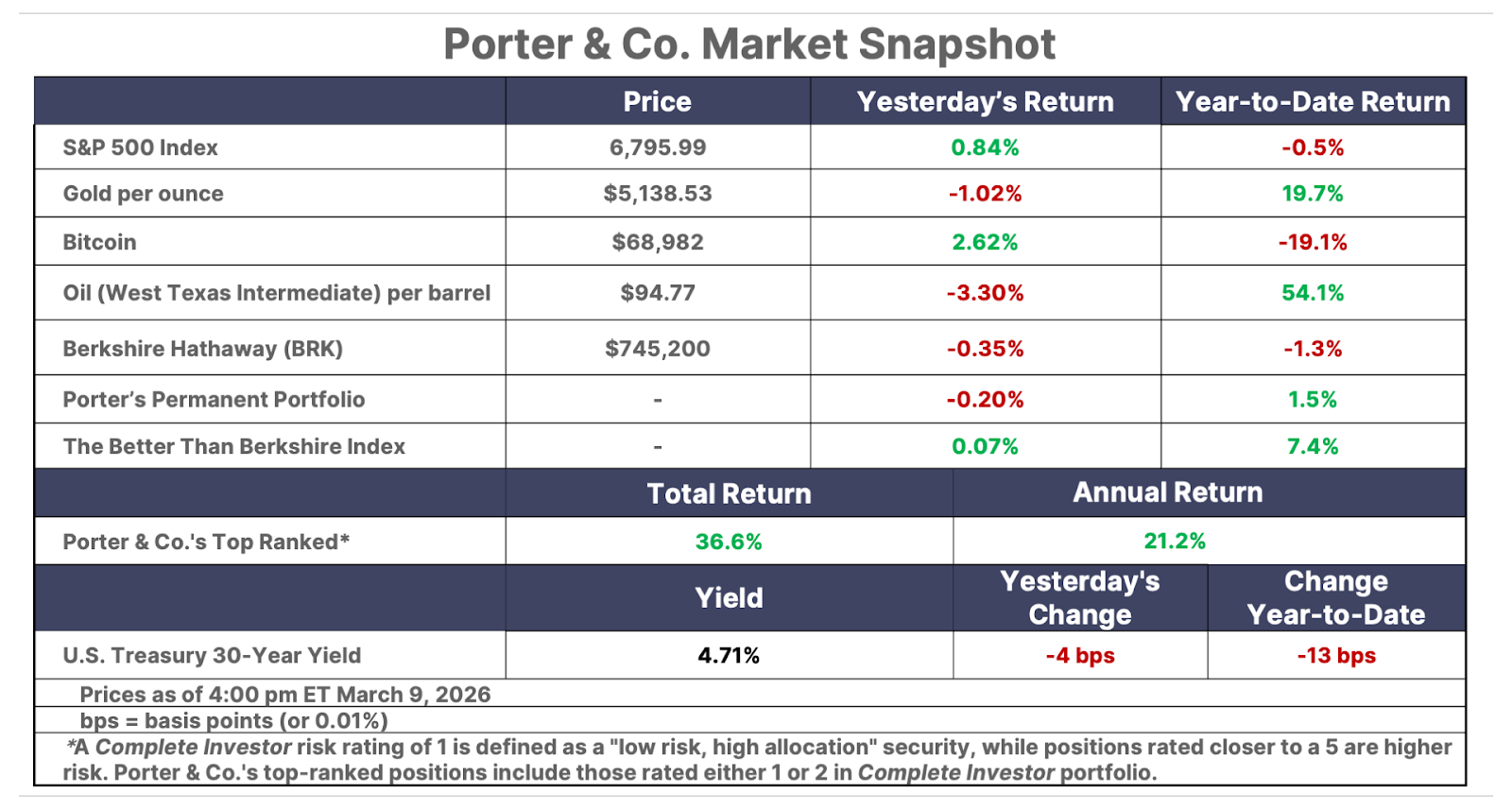
Please note: The investments in our “Porter & Co. Top Positions” should not be considered current recommendations. These positions are the best performers across our publications – and the securities listed may (or may not) be above the current buy-up-to price. To learn more, visit the current portfolio page of the relevant service, here. To gain access or to learn more about our current recommendations, call our Customer Care team at 888-610-8895 or internationally at +1 443-815-4447.
www.PorterandCompany.com | support@porterandcompanyresearch.com | 888-610-8895
You have received this e-mail as part of your subscription with Porter & Company, LLC. If you no longer want to receive any emails, unsubscribe.
Porter & Company, LLC welcomes comments or suggestions at support@porterandcompanyresearch.com. For questions about your account or to speak with customer service, call 888-610-8895 Monday-Friday, 9 a.m.-5 p.m. Eastern time.
Please note: The law prohibits us from giving personalized financial advice.
© 2026 Porter & Company, LLC,. All rights reserved. Any reproduction, copying, or redistribution, in whole or in part, is prohibited without written permission from Porter & Company, LLC.
Disclaimer: Nothing in this email should be considered personalized financial advice. Do not consider any communication between you and Porter & Company, and its employees or writers as financial advice. This work is based on SEC filings, current events, interviews, corporate press releases, and what we’ve learned as financial journalists. It may contain errors, and you shouldn’t make any investment decision based solely on what you read here. Insight is provided to help readers gain knowledge and experience. All investments carry risk. Readers should not trade if they cannot handle a loss and should not trade more than they can afford to lose. Consider consulting with a professional before making investment decisions. Please be aware that by accessing this publication, you acknowledge and agree that Porter & Co. and its editors and affiliates may, at any time, buy or sell securities discussed in this publication without prior notice. This may result in potential conflicts of interest, as Porter & Co., its editors, and affiliates may have a financial interest in the securities mentioned. The views expressed in this publication are subject to change without notice and reflect the personal opinions of the authors and speakers.
By submitting a response or feedback, you hereby grant Porter & Co. the right to use, reproduce, and publish your feedback in any and all marketing materials, including but not limited to online platforms, print advertisements, and promotional content. Your review may be edited for clarity and length, but the substance of your feedback will remain unchanged. Please note that your personal information will be kept confidential and will not be disclosed without your explicit consent. If you have any questions or concerns regarding this agreement, please contact us at support@porterandcompanyresearch.com or to speak with customer service, call 888-610-8895 Monday-Friday, 9 a.m.-5 p.m. Eastern time.
insidescooppolitics.org
insidescooppolitics.org
Who will replace Marjorie Taylor Greene in Georgia?


Follow @FlipboardSee More in The Daily EditionDownload App




Stay informed and inspired!
Download Flipboard to get the latest news and stories on the topics you care about.






Was this sent to you by a friend? For more like it, subscribe here.BLOG · CAREERS · ADVERTISEUpdate your email preferences or unsubscribe here.View our privacy policy here.©2026 Flipboard, Inc. Made with love at 555 Bryant St #352 Palo Alto, CA 94301
Must Read: Why “Just Hold” Doesn’t Feel Safe Anymore

.png)
Why “Just Hold” Doesn’t Feel Safe Anymore
Editor’s Note: For many years, investors were told to buy strong companies and hold them for the long run. In my experience, that approach can still work. But the market doesn’t always make it easy.
Stocks move faster than they used to. It’s common now to see big swings – sometimes 30% or more – even in companies that are doing well.
My friend and colleague Luke Langobelieves this is the result of deeper changes in the market. Algorithms, high-frequency trading, and heavy retail participation have made volatility a regular part of investing.
In the essay below, Luke explains why these shifts matter and how investors can look for stocks that may be ready to move higher.
He also explains the approach in a free presentation, where he walks through the system his team uses to scan thousands of stocks for potential breakouts.
You can watch the full presentation here.
Now, here’s Luke…
There’s a quiet panic spreading through the investing world.
It doesn’t show up in headlines. But you hear it in planning offices and investor forums:
“Why doesn’t this make sense anymore?”
It’s that moment when your watchlist is green at 10:30… red by lunch… and back to flat by the close — and you can’t even point to a single piece of news that explains the entire round trip.
Or when a stock reports “good” earnings, sells off anyway, then rips higher two days later — not because anything changed in the business, but because money moved.
That disconnect is what’s unnerving people. Not volatility by itself… but volatility that feels unmoored, like the market is reacting to forces most investors can’t see.
The media focuses on AI companies and job disruption. But the deeper shift is happening inside the market itself.
Stocks move faster. They reverse harder. And they disconnect from fundamentals more violently than at any point in modern history. The strategies that built wealth for decades can still work — but they no longer work the way investors remember.
Markets that once moved in days now move in minutes. Sometimes seconds.
“Buy great businesses and wait” still works over long stretches. But it now requires enduring drawdowns many investors simply can’t stomach.
Algorithms are now the market.
They account for roughly 70% to 90% of daily U.S. equity volume. Add a surge in retail participation — with stock cash flows running more than 50% higher last year — and you get a system wired for speed and sharp swings.
The human beings you picture on a trading floor — reading tape, making calls, “deciding” what happens next — are mostly the last visible layer of the system.
The real decision-making is increasingly automated, happening in data centers where machines react to headlines, prices, and order flow faster than any person can process.
That doesn’t mean “humans don’t matter.” It means the first move often happens before humans even agree on what the story is.
The average holding period has collapsed from roughly eight years in the 1950s to about five months today.
Since COVID, we’ve experienced three bear markets — roughly one every two years.
That’s not a temporary phase. It’s structural.
And it may intensify. Markets are evolving beyond rule-based algorithms toward agentic AI systems that react to data — and to one another — in real time.
So what happens when price and fundamentals drift apart?
Blue-chip stocks like Netflix Inc. (NFLX)and Nvidia Corp. (NVDA) have lost 35%, 50%, even 60%+ before recovering.
Nvidia alone has endured four major crashes in eight years. The stock ultimately advanced — but holding through those drops required unusual discipline.
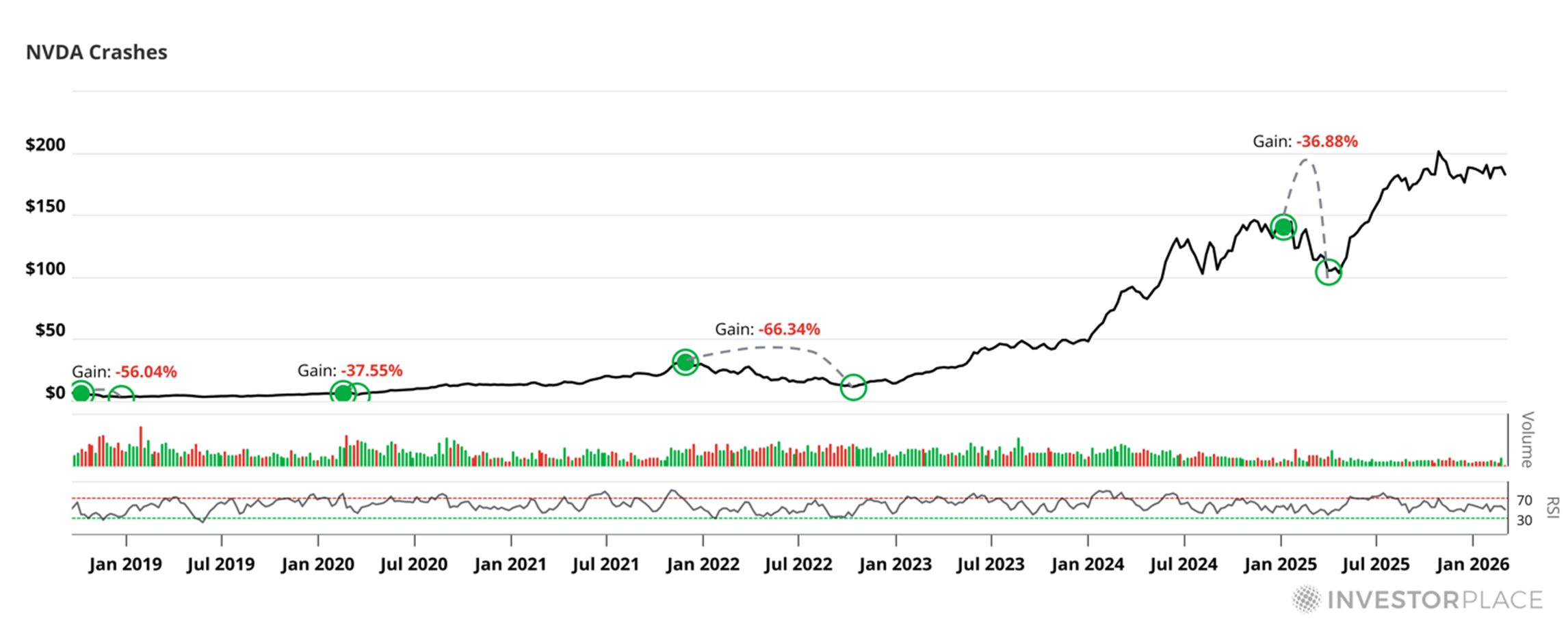
Most investors don’t “just hold.” They sell low and buy back higher. Loss aversion is powerful — and expensive.
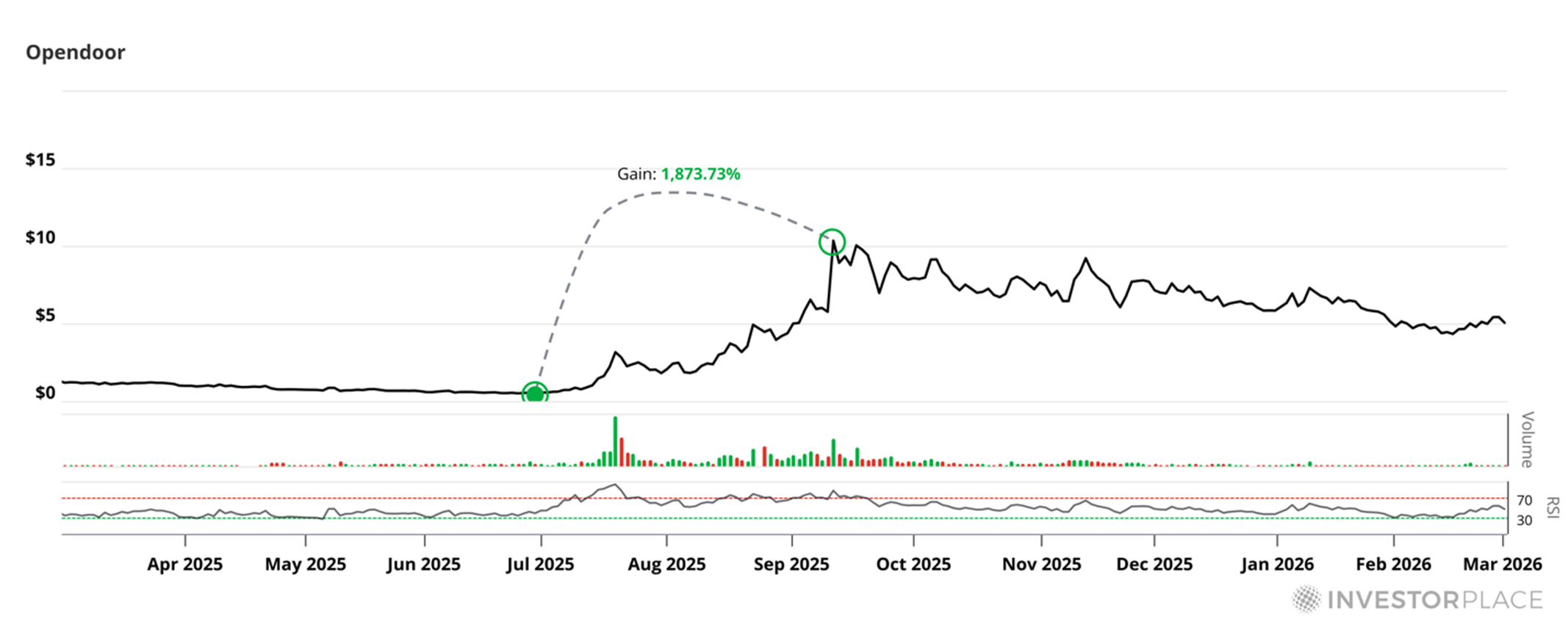
Meanwhile, price behavior has grown increasingly detached from business performance. Opendoor Technologies Inc. (OPEN) rallied nearly 1,900% in two months despite deteriorating fundamentals.
Zillow Group Inc. (Z), another real estate tech firm with stronger revenue and market position, barely moved.
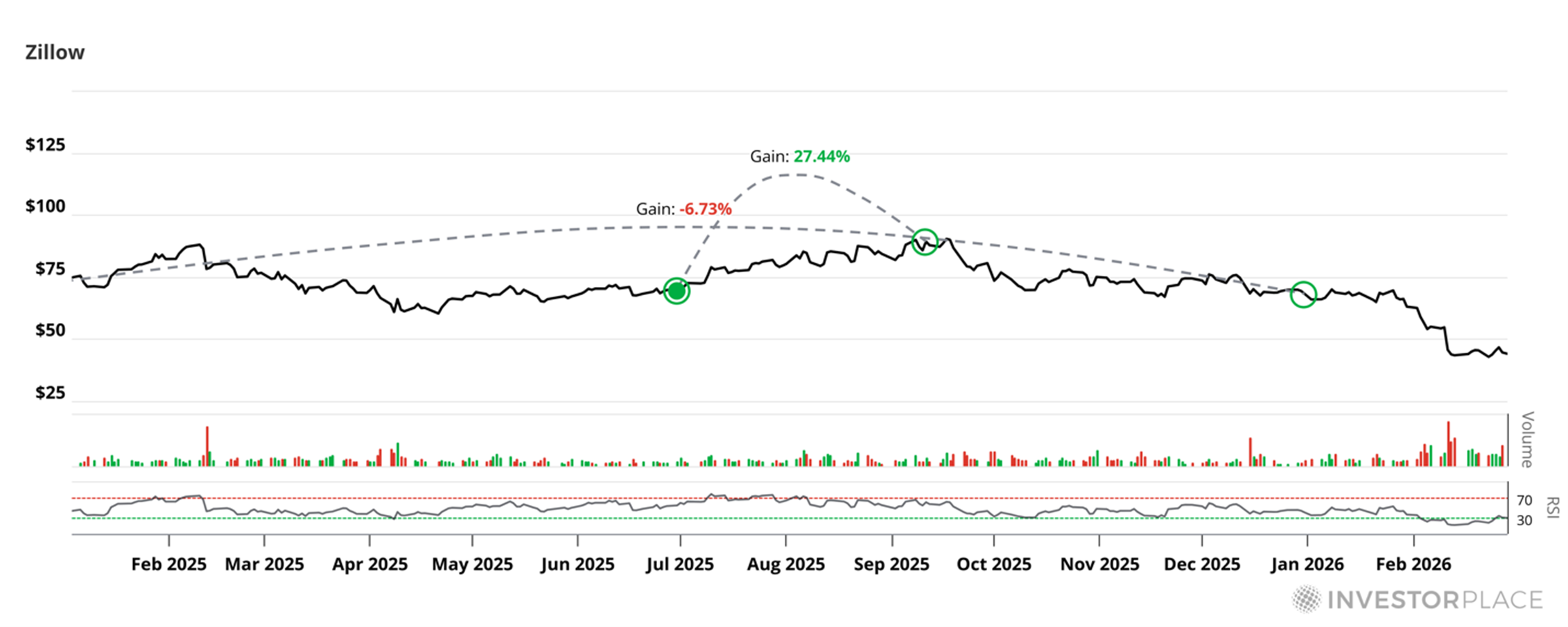
When price decouples from fundamentals, traditional analysis becomes unreliable.
Here’s how you operate in a market like this…
Recommended Link
Buy a pre-IPO stake in OpenAI with $10
OpenAI is gearing up for a historic IPO, and Silicon Valley insider Luke Lango has found a way for you to invest BEFORE the announcement is even made. You don’t need to file any special paperwork… buy shares from a former employee… have a source on the inside – or jump through any other hurdles. Best of all, all you need is just $10 to get started.
Stage Analysis: Built for Fast Markets
In a high-volatility environment, valuation alone isn’t enough. What matters is where capital is flowing now.
That’s the foundation of stage analysis, popularized by Stan Weinstein.
Every stock moves through four recurring stages:
- Stage 1: Sideways consolidation
- Stage 2: Breakout and sustained advance
- Stage 3: Distribution
- Stage 4: Decline
Stage 2 is where the money is made.
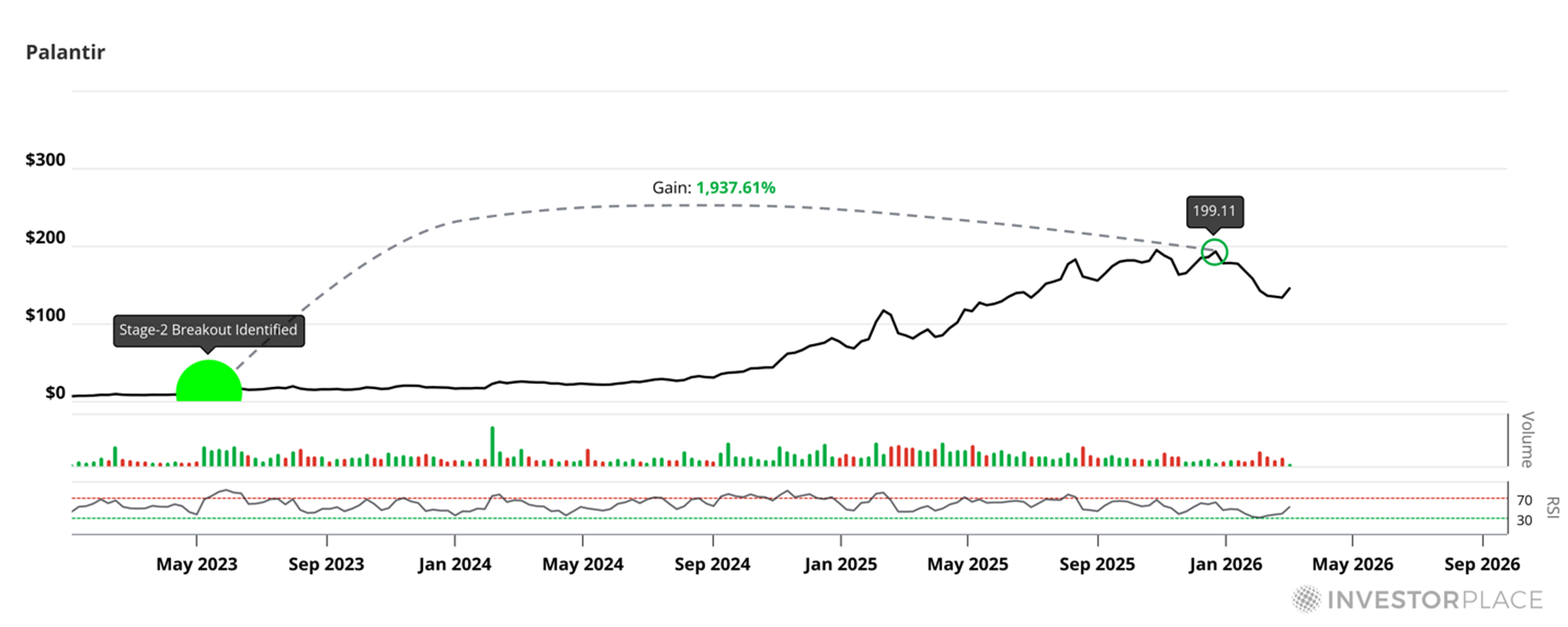
Palantir Technologies Inc. (PLTR) moved from $9 to over $200 after entering Stage 2.
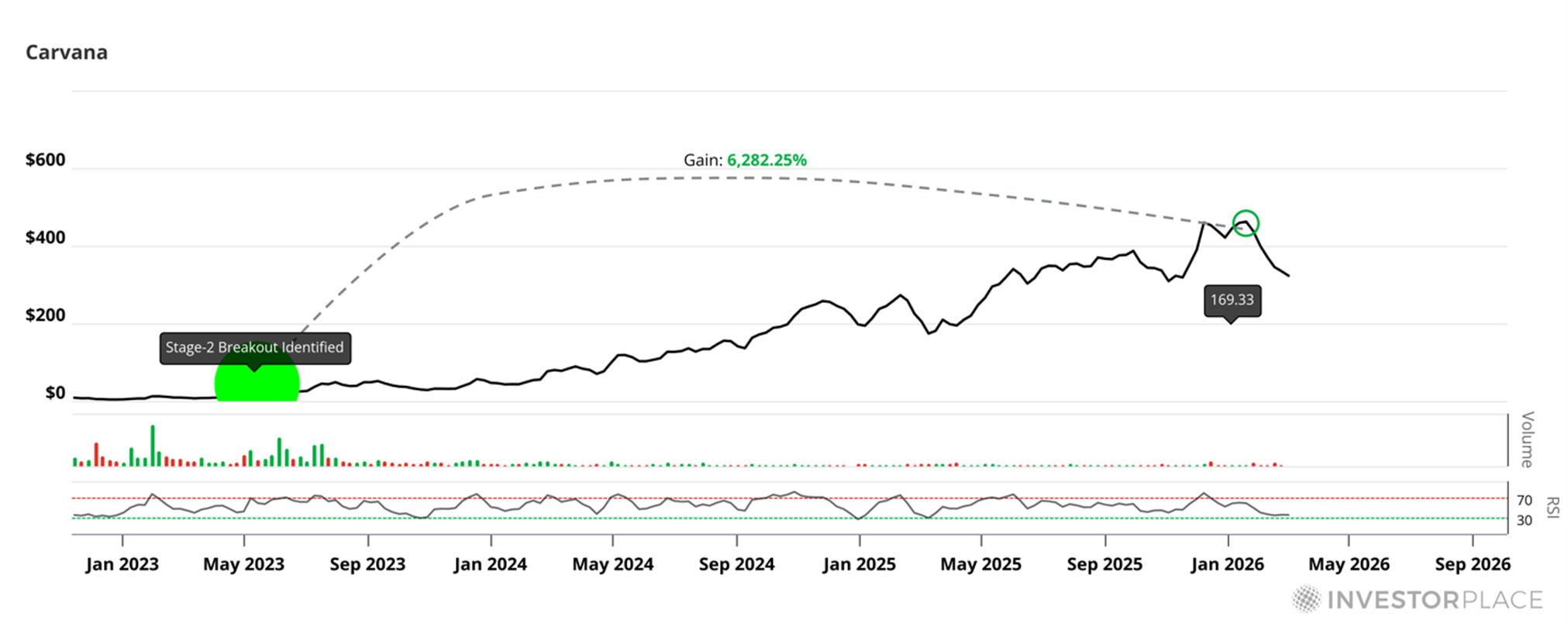
Carvana Co. (CVNA) surged more than 6,000% from its breakout.
Stage analysis doesn’t forecast earnings. It identifies when accumulation is already happening and momentum is building.
In a market defined by rapid rotations, recognizing a Stage 2 breakout early can mean the difference between chasing a move and positioning ahead of it.
The Real Problem: You Can’t Do This Manually
There are thousands of publicly traded stocks. At any moment, a small number are transitioning from consolidation into breakout mode.
That’s where major gains begin.
You won’t catch them by flipping through earnings reports or waiting for a TV segment. By the time they trend on social media, the move is already underway.
That’s why my team built a systematic breakout screener, which I reveal during my new free broadcast. It scans more than 3,000 stocks and assigns each a 0-to-5 breakout score based on momentum strength.
In historical testing, it flagged eight of 2025’s top-performing stocks before their major advances — including:
- Hycroft Mining Holding Corp. (HYMC) before a 1,100% run
- Terns Pharmaceuticals Inc. (TERN)before an 865% surge
- And Palantir long before it became a mainstream AI story
The objective is simple: identify stocks as institutional momentum builds — when price and volume confirm something meaningful is happening.
Volatility isn’t going away. Leadership will continue to rotate quickly.
You can try to keep up manually.
Or you can use a system designed for the market we actually have.
In my latest free presentation, I walk through how it works, what Stage 2 looks like on a chart, and which stocks are scoring highest right now. I give the name and ticker of one of those stocks away for free. Plus, folks who join me will gain unlimited access to my new breakout stock screener, which they can use to find their own Stage 2 stocks.
The market won’t slow down.
But you don’t have to fall behind.
Luke Lango
Editor, Hypergrowth Investing

What Do Higher Oil Prices Mean for Stocks?

AN OXFORD CLUB PUBLICATION
Loyal reader since August 2025
SPONSORED
Join Wall Street Legend Alexander Green Tomorrow (March 11) at 2 p.m. ET BEFORE Nvidia’s $56 Trillion Market Shock…
In 2004 Alex Green made a big prediction regarding Nvidia’s chip technology at $1.10… Don’t miss Alex’s SECOND BIG Nvidia call. (Plus his #1 stock pick to play it… FREE of charge.)Click Here to RSVP
MARKET TRENDS
What Do Higher Oil Prices Mean for Stocks?
Marc Lichtenfeld, Chief Income Strategist, The Oxford Club
Energy has been the story in the markets for at least the past year.
Prior to last week, when investors talked about the energy sector, it was in relation to how it would feed AI.
But now, because of the war in the Middle East, the main topic on everyone’s mind when it comes to energy is the surge in oil prices.
On February 20, I told readers in my Technical Pattern Profits VIP Trading Service that if oil got above $65, it was likely going to $80 quickly – and after it reached $80, I said it would go on to $95.
Yesterday, just 17 days after my initial prediction, it crossed $100.
There have only been three times in the past 44 years that oil has spiked above $100 per barrel. It happened in 2008, from 2011 to 2014, and in 2022 coming out of the pandemic.
Oil is back down in the low $80s as I write, but it’s still markedly higher than the mid-$50s prices we saw near the end of last year.
That obviously causes pain at the pump and raises inflation, as everything gets more costly to ship.
But what does it mean for stocks?
Let’s look at five previous periods when oil spiked.
In 1990, when Iraq invaded Kuwait, oil prices quickly doubled from around $20 per barrel to more than $40. You can see that during that move in oil, the S&P 500 had a nearly identical inverse reaction.View larger image
Nine years later, as the dot-com boom was entering its final phase, oil surged from about $10 per barrel to nearly $40 a year and a half later.
Interestingly, as oil rose, the S&P – caught in the final throes of dot-com mania – did not slide immediately. In fact, it continued to rise even though the rally was clearly running out of gas (pun intended).
Then, just as oil peaked, the market began its plummet.View larger image
SPONSORED
Trump’s Favorite AI Energy Stock??
It’s wildly profitable – Over $3 billion in operating income. It has a partnership with the hottest AI stock on Wall Street.
And Trump has publicly backed it? Get the details on #1 AI energy stock here.
$100 Oil
The first time oil broke above $100 was January 2, 2008.
Like we saw during the dot-com boom, as oil began its rise, the market didn’t drop immediately. But that $100 level proved too much. In conjunction with the global financial crisis, the market melted down. Oil ascending to $145 put additional pressure on stocks.View larger image
The global recession brought oil prices back in check, but they quickly began surging again when the Arab Spring uprisings began in December 2010. Oil bounced around between roughly $75 and $110 for the next three years.
After the pounding from the financial crisis, stocks got up off the mat, even as oil prices doubled between 2009 and 2011 and then stayed elevated for several years. The S&P continued higher despite the high price of oil.View larger image
The COVID crash in 2020 obliterated both oil prices and stock prices. They quickly recovered together until oil hit $100, which was around the same time that stocks topped out and the 2022 bear market began.View larger image
So what have we learned?
Investing when oil prices are rising is like driving during a bad storm. It doesn’t necessarily mean that a crash is coming and it’s time to panic. But you should be paying closer attention and proceeding more carefully.
Good investing,
MarcLeave a Comment
BUILD AND PROTECT YOUR WEALTH
The World’s Most Annoying Superpower
This Tiny Biotech’s Blood Test Catches Cancer at Stage One
The Uglier the Market Gets, the More I Smile – Here’s Why
MORE FROM WEALTHY RETIREMENT
2 New Threats to Wealth and Prosperity
Are Women Better Investors Than Men?
Northrop Grumman: Is This Defense Titan Worth Buying?
Investors in This Hotel REIT May Need a Wake-Up Call
FacebookLinkedInEmail SharePush Alert
SPONSORED
Claim Your FREE Ultimate Dividend Package
(Seriously, put your wallet away!)
You are receiving this email because you subscribed to Wealthy Retirement.
Wealthy Retirement is published by The Oxford Club.
Questions? Check out our FAQs. Trying to reach us? Contact us here.
Please do not reply to this email as it goes to an unmonitored inbox.
Privacy Policy | Whitelist Wealthy Retirement | Unsubscribe
© 2026 The Oxford Club, LLC All Rights Reserved
The Oxford Club | 105 West Monument Street | Baltimore, MD 21201
North America: 866.237.0436 | International: +1.443.353.4540
Oxfordclub.com
Nothing published by The Oxford Club should be considered personalized investment advice. Although our employees may answer your general customer service questions, they are not licensed under securities laws to address your particular investment situation. No communication by our employees to you should be deemed personalized investment advice. We allow the editors of our publications to recommend securities that they own themselves. However, our policy prohibits editors from exiting a personal trade while the recommendation to subscribers is open. In no circumstance may an editor sell a security before subscribers have a fair opportunity to exit. The length of time an editor must wait after subscribers have been advised to exit a play depends on the type of publication. All other employees and agents must wait 24 hours after publication before trading on a recommendation.
Any investments recommended by The Oxford Club should be made only after consulting with your investment advisor and only after reviewing the prospectus or financial statements of the company.
Protected by copyright laws of the United States and international treaties. The information found on this website may only be used pursuant to the membership or subscription agreement and any reproduction, copying or redistribution (electronic or otherwise, including on the world wide web), in whole or in part, is strictly prohibited without the express written permission of The Oxford Club, LLC, 105 West Monument Street, Baltimore, MD 21201.
REF: 000142349377
 RJ Hamster