I was born on 6 August 1956 in San Francisco, California to Janet and (the late) Richard Hovis.
I grew up in Santa Monica, California where I attended elementary, junior high school, and high school (graduating in 1974), in addition to involvement in sports and recreation (Little League +, the Boy’s Club ++). Further, it was in elementary school – St. Augustine’s By-the -Sea Parish School that I found, and made the choice to truly journey with God.
I attended Arizona State University from 1974 to 1977 – seeking to become an architect, however, I was not accepted, and, as such, I graduated with a Liberal Arts degree.
Upon graduation from Arizona State University, I attended Cal Poly San Luis Obispo and studied City and Regional Planning at the Master’s level. I successfully completed one (1) year in a two (2) year program – I did not complete the Master’s degree in City and Regional Planning – due to personal reasons.
I returned to Santa Monica where I started (October 1979) my career as graphic designer with Exxon Company, USA. I spent five years with Exxon Company, USA.
While working with Exxon Company, USA I was accepted into architectural school – Sci-Arc in Southern California, however, I did not attend preferring to stay with Exxon..
In 1982 I married Laura Flosi and in April 1983 we had our one and only child – Lauren Alain Hovis – a gift from God.
We moved to Phoenix, Arizona in 1984 from Los Angeles, where I went to work as a graphic designer with Kitchell CEM (from 1985 -1987).
From 1987 – 1995 I was an independent contractor, and a registered representative in mortgage finance, financial management, graphic design, and drafting.
Further, I attended the University of Phoenix and successfully obtained a Master’s in Business Administration (MBA) in 1982.
I was also a member of the Scottsdale Jaycees, where I became very involved in community events and projects.
In 1994, I accepted a cartography position with the Defense Mapping Agency in Reston, Virginia. As such, I relocated from Phoenix to Reston.
In 1998, I was accepted and worked as a Visual Information Officer with the Central Intelligence Agency. In 2002, I worked as a Support Officer until my retirement (due to a need for shoulder surgery) in September 2018.
Away from my Federal Government service, I have been involved in various organizations and activities in Northern Virginia.
In November of 2011, I married Rebecca Ouellette in Santa Monica, California. I reside in San Tan Valley, AZ with my two hamster - Jess and Timothy, our fish, our lizard - RJ Lizard., and our cats - Pearl and Grey.
As to hobbies, I enjoy playing sports, attending sporting events, mentoring individuals from financial management to hamsters, building models, photography, travel, multimedia design, managing partner for RJ Hamster, and jazz – smooth jazz to a samba or a bossa nova.
Love and God Bless,
Peter – aka RJ Hamster Jo hi
You’re always one blessing away from a brighter day… and a bigger life. May these stories, affirmations, prayers, and insights lift your spirits and inspire you to lift others.
Milan Cortina Opening Ceremony Paraded the Wonder of Italy to the World
Andrew Gastelum
The 2026 Winter Olympics are officially underway with a rousing display of Italian culture in a nation that is constantly struggling with letting go of fond memories from its past.
Albert Breer’s NFL Awards Ballot: Drake Maye for MVP, Matthew Stafford for First-Team All-Pro
Albert Breer
In the wake of the Bill Belichick Hall of Fame controversy, it’s best to be transparent about votes for individual honors. Plus, the Nick Emmanwori injury could be cause for concern in Seattle.
We may receive compensation for some links to products and services included in this email.
Sports Publishing Solutions Inc. 625 Broadway, 10th floor New York, NY. 10012 You are receiving this email because you are subscribed to the Sports Illustrated newsletter.
Did you know it takes 10,000 iPhone batteries worth of lithium to make one EV battery pack? With 350M+ EVs projected to be sold globally by 2030, lithium demand is looking steep.
Current recovery methods involve waiting for liquids to evaporate in ponds the size of 100 football fields. This inefficiency can’t keep up with forecasted demand. But EnergyX’s technology can recover up to 3X more lithium than traditional methods.
Here’s how they’re redefining the $546B energy storage market:
Disruption: EnergyX’s GET-LiT™ technology recovers lithium from brine at the lowest cost when benchmarked against industry leaders, and it’s protected by 120+ patents.
Ecosystem: From recovery to deployment, EnergyX is building a vertically integrated platform to power the global transition to EVs, backed by investment from leaders like General Motors and Eni.
A third-party pre-feasibility study recently confirmed EnergyX’s Project Black Giant™ in Chile has the potential to generate over $1.1B annually at projected market prices once fully operational.
On top of that, their nearly 50,000 acres of land in Texas and Arkansas has some of the highest lithium concentrations ever recorded in the U.S.
This is a paid advertisement for EnergyX’s Regulation A+ Offering. Please read the offering circular at invest.energyx.com. Under Regulation A+, a company has the ability to change its share price by up to 20%, without requalifying the offering with the SEC.
Peter Anthony, Valentine’s Day has long been linked to birds—some scholars even suggest the holiday’s February timing connects to birds’ mating season. So this month, we’re celebrating a feathered classic that feels like a love note in flight: the Northern Cardinal.
But thanks to support from generous people like you, there are real solutions to the crisis birds are facing. For 120 years and counting, we have preserved habitats, conducted scientific research, influenced policymakers to enact commonsense conservation laws, and engaged communities across the hemisphere to protect the natural resources upon which birds—and we—depend.
National Audubon SocietyDonate NowPhoto: Michele Black/Audubon Photography AwardsNational Audubon Society 225 Varick Street, New York, NY 10014 USA (844) 428-3826audubon.org
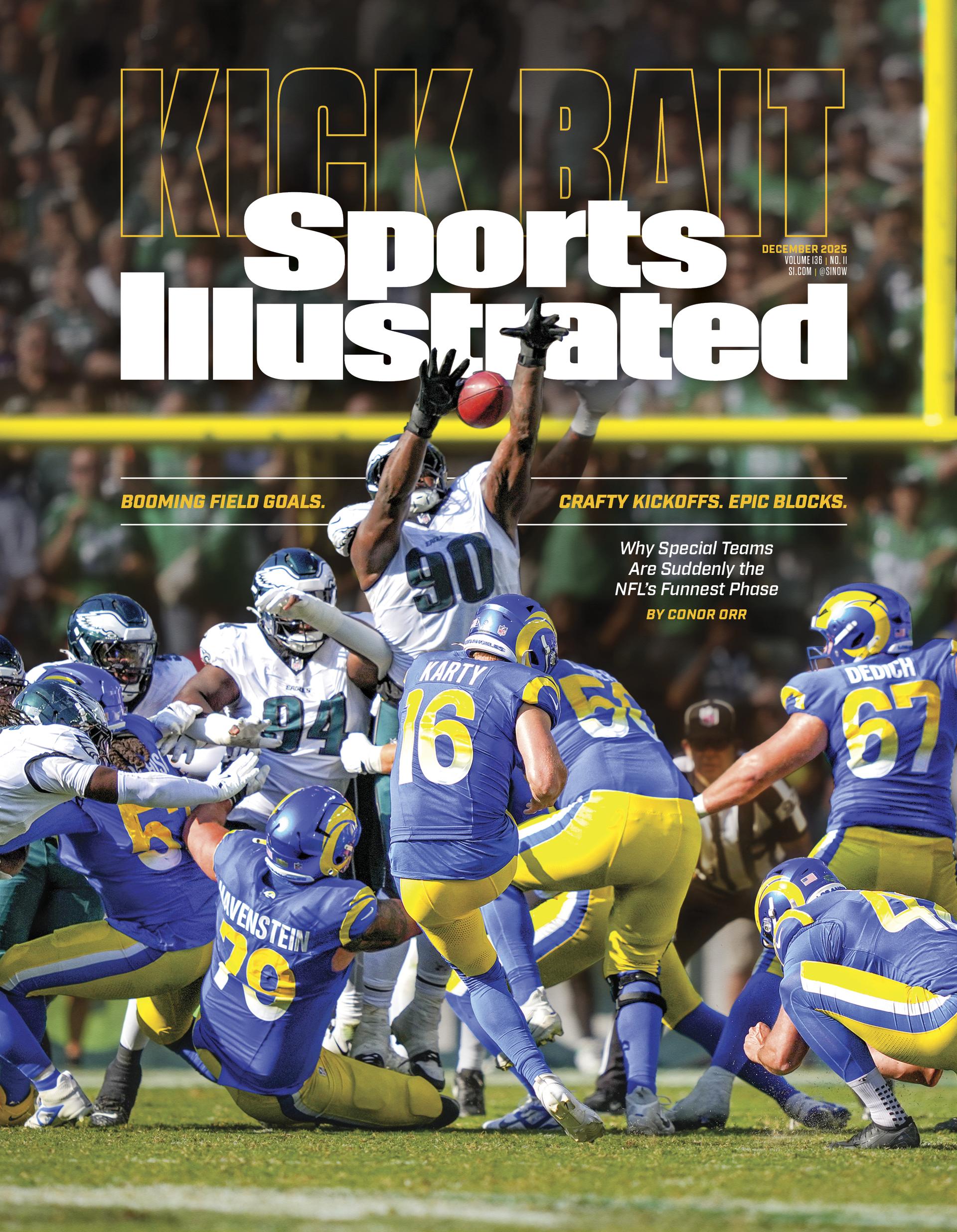
Tomorrow, the New England Patriots and Seattle Seahawks will vie for the NFL Championship in Super Bowl LX (60 for those who don’t regularly use Roman numerals).
But you might not know that it was called “The Super Bowl” only in 1969, for the third annual game.
It was originally called the AFL–NFL World Championship Game. The game was created as part of the merger between the National Football League and the competing American Football League to determine a single champion for the two different leagues.
Even today, both teams are already champions. The Patriots are the American Football Conference champions, and the Seahawks are the National Football Conference champions.
Every year, the Super Bowl brings together two teams that have already proven themselves champions. They survived a long season. They beat elite competition. And yet, when the final whistle blows, only one walks away with the trophy.
That’s the part most fans forget: By the time the Super Bowl kicks off, both teams are winners. But in the final stage, past success matters far less than execution, matchups, and preparation.
One champion advances. The other is left watching history from the sidelines.
The stock market is entering a similar moment right now – especially in technology.
For years, simply owning tech stocks was enough. The entire sector surged, and nearly every name benefited from the rising tide.
But that easy phase is over.
Today, tech is no longer competing against the rest of the market. It’s competing against itself.
And just like the Super Bowl, this next phase won’t reward popularity or past dominance. It will reward selectivity. Precision. And owning the right champions – not just yesterday’s winners.
So, how can investors stay on the richer side of this new technochasm? I’ll share insight today from legendary investor Louis Navellier, one big winner he has already found, and how it is all reflected in his Stock Grader system.
Renowned Futurist, Eric Fry, has been seen on CNBC repeatedly recently voicing a highly contrarian call. “Nvidia, Amazon and Tesla are ticking time bombs in investors’ portfolios,” he says. Instead, he’s sharing three NEW stocks positioned to take over as the tech kingpins of tomorrow. Get Eric’s full “Sell This, Buy That” list right here.
A New Phase for an Old Market Trend
My colleague Jeff Remsburg and I have written a lot in the Digest about the “technochasm.” That’s the idea that the stock market created a new wealth divide.
Folks who invested in technology stocks accelerated their wealth, while those who did not were likely to end up on the wrong side of a divide and worse off.
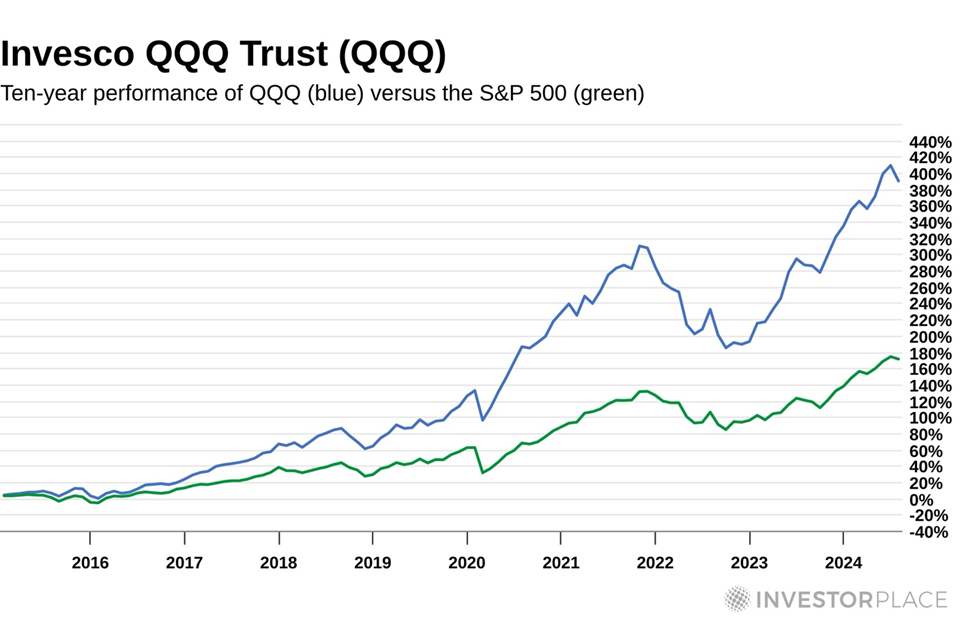
Just looking at the technology-focused Invesco QQQ Trust (QQQ) ETF versus the overall S&P 500 over the past decade shows how much better tech stocks have treated investors.
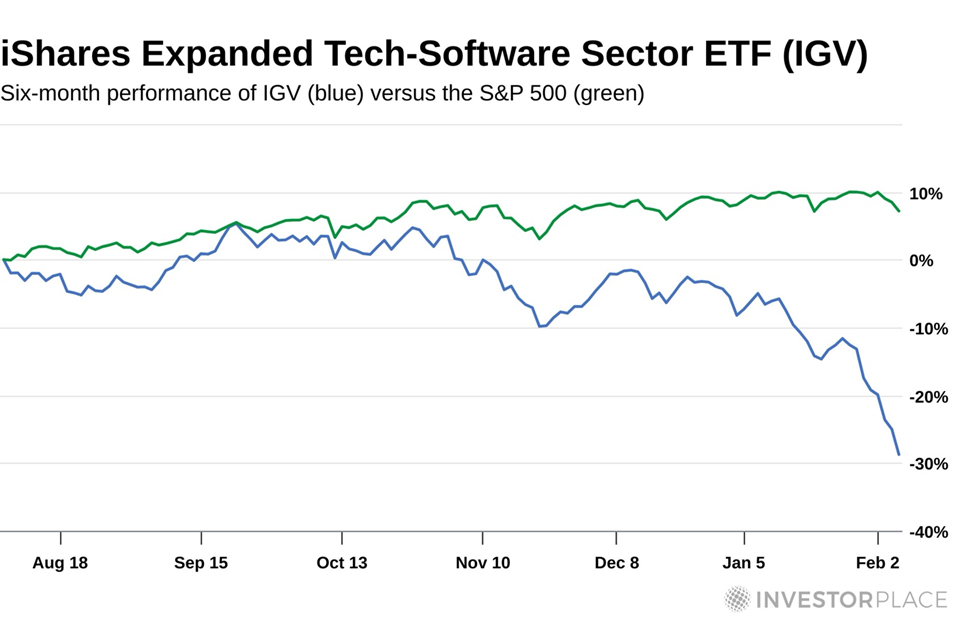
This week’s software meltdown shows that even tech stocks are now feeling the AI disruption. One glance at the iShares Expanded Tech-Software Sector ETF (IGV) compared to the general market over the last six months shows a new market reality.
When markets transition from one phase of growth to the next, leadership changes – and often it changes quickly.
Large, well-known stocks tend to dominate early in a cycle. Stocks such as Nvidia Corp. (NVDA) and Amazon.comInc. (AMZN) grab all the headlines and buying pressure in the market.
But as confidence builds and earnings momentum broadens, smaller, faster-growing companies begin to assert their market leadership.
Louis believes that rotation is underway.
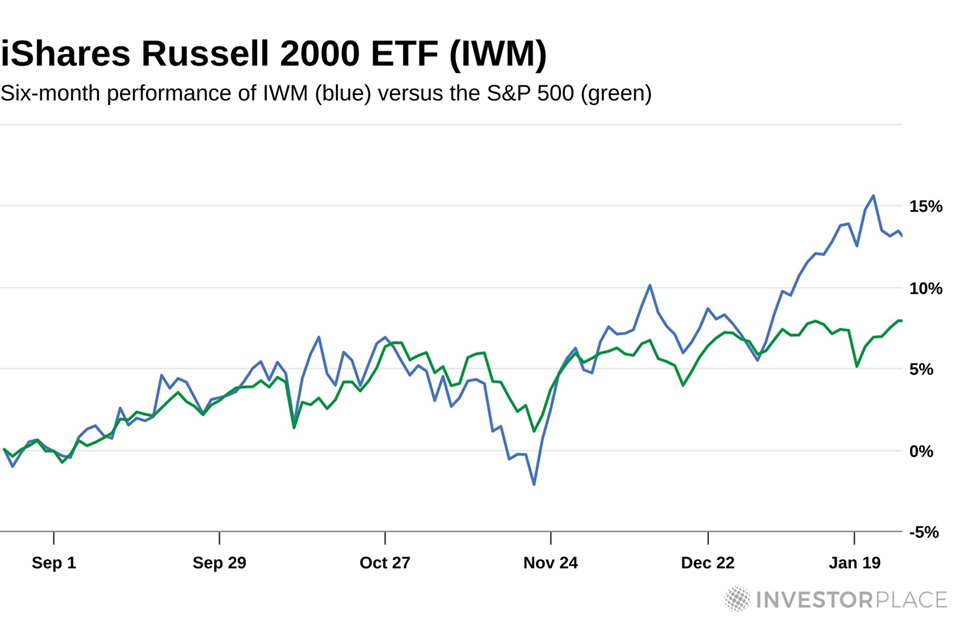
Over the last six months, small-cap stocks moved decisively higher. The Russell 2000 surged almost 14%, far outpacing the S&P 500’s 8% gain.
Here is what Louis wrote about why this is happening now.
Small caps tend to be more domestic in nature, which means they benefit directly from U.S. economic growth. They also tend to move first when investors begin looking beyond yesterday’s winners and toward where the next phase of growth is likely to emerge.
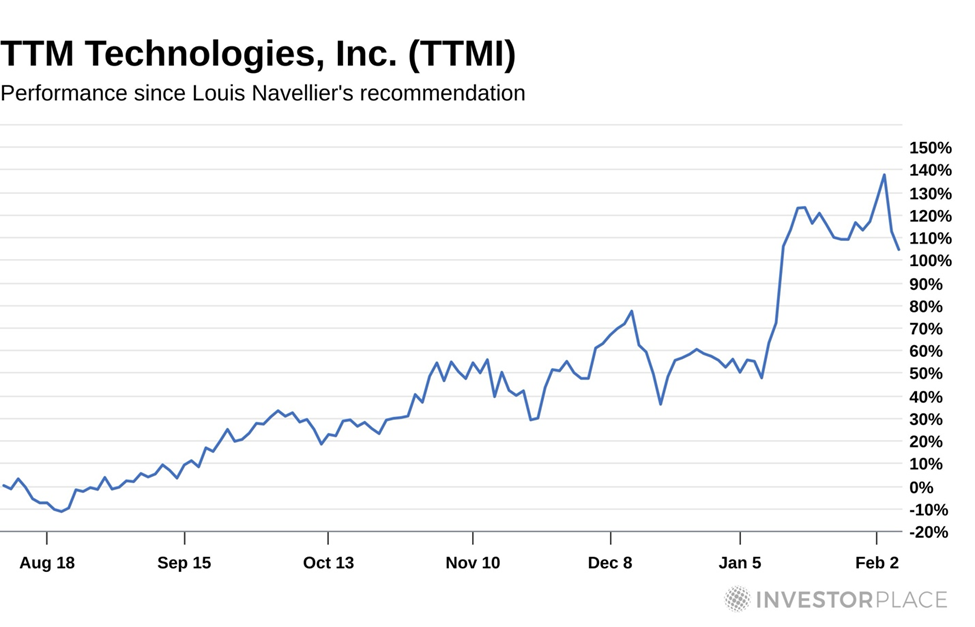
One example is Louis’ recent recommendation of TTM Technologies Inc. (TTMI).
TTM is a top-tier manufacturer of advanced printed circuit boards (PCBs) and radio frequency (RF) components essential for AI data centers, networking, and high-speed computing infrastructure.
The company is experiencing significant demand growth driven by AI-related hardware needs, positioning it as a key supplier in the AI technology supply chain. And it’s current market cap is below $10 billion.
Since Louis’ recommendation in his Breakthrough Stocks service last August, the stock is up more than 100%.
Now, Louis isn’t saying it’s time to buy small caps indiscriminately.
But market leadership is changing, and companies positioned on the right side of this change are beginning to be rewarded.
The AI Dislocation Is Coming
Louis believes the markets are experiencing what he calls the “AI Dislocation.”
The first phase of the AI boom rewarded a narrow group of mega-cap leaders.
Those gains were powerful, but obvious. Everyone knew the names. Everyone crowded into the same trades. And expectations rose accordingly.
That was Stage 1.
What’s happening now is different.
As scrutiny increases and capital spending intensifies, the market is beginning to look deeper into the AI ecosystem – toward the smaller companies building the power systems, networking infrastructure, and enabling technologies that make AI scalable and profitable.
That’s Stage 2 – where the next wave of opportunity is taking shape.
This AI Dislocation isn’t the end of the AI boom. It’s a changing of the guard.
How to Position Yourself for What’s Next
Louis is using his time-tested Stock Grader to help him identify the stocks best positioned to benefit from this market transition.
These are not obvious names from Phase 1 of the AI megatrend, such as Nvidia and Microsoft Corp. (MSFT).
Louis is finding smaller companies – companies most investors have never heard of.
These are the kinds of setups that historically produce the biggest gains – not because the companies are flashy, but because expectations are still low while fundamentals are improving rapidly.
I’ll also show you how I’m positioning ahead of that shift, using my system to focus on fundamentally superior companies with the potential to deliver outsized gains as this next phase unfolds.
If you want a clearer roadmap for where the next AI-driven opportunities could come from – the market champions of the future, not the past – go here now for more details.
Enjoy your weekend,
Luis Hernandez Editor in Chief, InvestorPlace
Manage your account We hope this timely investment research is valuable to you. As you know the markets move fast and conditions change frequently. So please check the current issue for the most recent advice. Please note that we cannot be liable for any missed bulletins caused by overzealous filters. To ensure that you continue to receive this valuable part of your service please take a moment to add services@exct.investorplace.comto your address book.
Tomorrow, the New England Patriots and Seattle Seahawks will vie for the NFL Championship in Super Bowl LX (60 for those who don’t regularly use Roman numerals).
But you might not know that it was called “The Super Bowl” only in 1969, for the third annual game.
It was originally called the AFL–NFL World Championship Game. The game was created as part of the merger between the National Football League and the competing American Football League to determine a single champion for the two different leagues.
Even today, both teams are already champions. The Patriots are the American Football Conference champions, and the Seahawks are the National Football Conference champions.
Every year, the Super Bowl brings together two teams that have already proven themselves champions. They survived a long season. They beat elite competition. And yet, when the final whistle blows, only one walks away with the trophy.
That’s the part most fans forget: By the time the Super Bowl kicks off, both teams are winners. But in the final stage, past success matters far less than execution, matchups, and preparation.
One champion advances. The other is left watching history from the sidelines.
The stock market is entering a similar moment right now – especially in technology.
For years, simply owning tech stocks was enough. The entire sector surged, and nearly every name benefited from the rising tide.
But that easy phase is over.
Today, tech is no longer competing against the rest of the market. It’s competing against itself.
And just like the Super Bowl, this next phase won’t reward popularity or past dominance. It will reward selectivity. Precision. And owning the right champions – not just yesterday’s winners.
So, how can investors stay on the richer side of this new technochasm? I’ll share insight today from legendary investor Louis Navellier, one big winner he has already found, and how it is all reflected in his Stock Grader system.
Renowned Futurist, Eric Fry, has been seen on CNBC repeatedly recently voicing a highly contrarian call. “Nvidia, Amazon and Tesla are ticking time bombs in investors’ portfolios,” he says. Instead, he’s sharing three NEW stocks positioned to take over as the tech kingpins of tomorrow. Get Eric’s full “Sell This, Buy That” list right here.
A New Phase for an Old Market Trend
My colleague Jeff Remsburg and I have written a lot in the Digest about the “technochasm.” That’s the idea that the stock market created a new wealth divide.
Folks who invested in technology stocks accelerated their wealth, while those who did not were likely to end up on the wrong side of a divide and worse off.
Just looking at the technology-focused Invesco QQQ Trust (QQQ) ETF versus the overall S&P 500 over the past decade shows how much better tech stocks have treated investors.
This week’s software meltdown shows that even tech stocks are now feeling the AI disruption. One glance at the iShares Expanded Tech-Software Sector ETF (IGV) compared to the general market over the last six months shows a new market reality.
When markets transition from one phase of growth to the next, leadership changes – and often it changes quickly.
Large, well-known stocks tend to dominate early in a cycle. Stocks such as Nvidia Corp. (NVDA) and Amazon.comInc. (AMZN) grab all the headlines and buying pressure in the market.
But as confidence builds and earnings momentum broadens, smaller, faster-growing companies begin to assert their market leadership.
Louis believes that rotation is underway.
Over the last six months, small-cap stocks moved decisively higher. The Russell 2000 surged almost 14%, far outpacing the S&P 500’s 8% gain.
Here is what Louis wrote about why this is happening now.
Small caps tend to be more domestic in nature, which means they benefit directly from U.S. economic growth. They also tend to move first when investors begin looking beyond yesterday’s winners and toward where the next phase of growth is likely to emerge.
One example is Louis’ recent recommendation of TTM Technologies Inc. (TTMI).
TTM is a top-tier manufacturer of advanced printed circuit boards (PCBs) and radio frequency (RF) components essential for AI data centers, networking, and high-speed computing infrastructure.
The company is experiencing significant demand growth driven by AI-related hardware needs, positioning it as a key supplier in the AI technology supply chain. And it’s current market cap is below $10 billion.
Since Louis’ recommendation in his Breakthrough Stocks service last August, the stock is up more than 100%.
Now, Louis isn’t saying it’s time to buy small caps indiscriminately.
But market leadership is changing, and companies positioned on the right side of this change are beginning to be rewarded.
The AI Dislocation Is Coming
Louis believes the markets are experiencing what he calls the “AI Dislocation.”
The first phase of the AI boom rewarded a narrow group of mega-cap leaders.
Those gains were powerful, but obvious. Everyone knew the names. Everyone crowded into the same trades. And expectations rose accordingly.
That was Stage 1.
What’s happening now is different.
As scrutiny increases and capital spending intensifies, the market is beginning to look deeper into the AI ecosystem – toward the smaller companies building the power systems, networking infrastructure, and enabling technologies that make AI scalable and profitable.
That’s Stage 2 – where the next wave of opportunity is taking shape.
This AI Dislocation isn’t the end of the AI boom. It’s a changing of the guard.
How to Position Yourself for What’s Next
Louis is using his time-tested Stock Grader to help him identify the stocks best positioned to benefit from this market transition.
These are not obvious names from Phase 1 of the AI megatrend, such as Nvidia and Microsoft Corp. (MSFT).
Louis is finding smaller companies – companies most investors have never heard of.
These are the kinds of setups that historically produce the biggest gains – not because the companies are flashy, but because expectations are still low while fundamentals are improving rapidly.
I’ll also show you how I’m positioning ahead of that shift, using my system to focus on fundamentally superior companies with the potential to deliver outsized gains as this next phase unfolds.
If you want a clearer roadmap for where the next AI-driven opportunities could come from – the market champions of the future, not the past – go here now for more details.
Enjoy your weekend,
Luis Hernandez Editor in Chief, InvestorPlace
Manage your account We hope this timely investment research is valuable to you. As you know the markets move fast and conditions change frequently. So please check the current issue for the most recent advice. Please note that we cannot be liable for any missed bulletins caused by overzealous filters. To ensure that you continue to receive this valuable part of your service please take a moment to add services@exct.investorplace.comto your address book.
Energy stocks aren’t simply limited to oil, gas, and coal. Renewable energy, through solar and wind power, are fast becoming appealing sources. Here are some current bargain stocks for this resource that are always in demand.
California Gov. Gavin Newsom announced the state will become the first in the U.S. to join the WHO’s Global Outbreak Alert and Response Network, calling President Donald Trump’s decision to withdraw the country from the organization “reckless” and pledging to keep California engaged in global public health efforts. Continue reading ➔You Voted for Trump. You Didn’t Vote for This… – Ad
A small government task force just finished a 20-year project. They probably didn’t realize their findings would allow everyday citizens to stake a claim on a $500 trillion national treasure. But they did. And under U.S. law your birthright claim is now active. This opportunity won’t stay under the radar for long. See the full briefing here.Is Broadcom Stock A Buy Now? Analysts See AI Demand Powering AVGO Higher
Sen. Ted Cruz privately warned donors that President Trump’s tariffs could damage the economy and cost Republicans power while sharply criticizing Vice President JD Vance and linking him to Tucker Carlson, revealing deep GOP divisions as Cruz positions himself for a possible 2028 run. Continue reading ➔After 200 years, the Farmers’ Almanac bets on a digital reboot and new owner
PORTLAND, Maine (AP) — The isn’t going out of business after all, but it is leaving Maine for the bright lights of New York City and a new owner. Continue reading ➔
Information, charts, or examples contained in this email are for illustration and educational purposes only and not for individualized investment management. This message contains commercial elements, such as advertising and partner offers for which we may receive affiliate compensation. We only send these offers to those who have opted into our newsletter.
If you wish to no longer receive these offers, click on the unsubscribe link at the bottom of this email. Past performance is not indicative of future results. For these reasons, we strongly suggest trading in a DEMO/Simulated account.
The information provided by us is for educational and informational purposes only. We make no representations or warranties concerning the products, practices, or procedures of any company or entity mentioned or recommended in this email and have not determined if the statements and opinions of the advertiser are accurate, correct, or truthful.
If you use, act upon, or make decisions in reliance on information contained in this email or any external source linked within it, you do so at your own peril and agree to hold us, our officers, directors, shareholders, affiliates, and agents without fault.
2967 Dundas St. W. #990, Toronto, ON M6P 1Z2 | Phone Number: 917.672.7040
Nvidia’s shares climbed sharply after CEO Jensen Huang addressed what’s becoming the defining question for tech investors in 2026: Can the industry sustain its unprecedented infrastructure…
The Dow Jones Industrial Average pushed past 50,000 for the first time this week, marking another psychological milestone that’ll dominate headlines. But here’s what most coverage won’t tell…
Spotting early trends could change your portfolio forever. Discover how pros identify coins with 1,000%+ potential and position early. This free summit delivers expert-level insight.
The recent sharp decline in Bitcoin’s value represents more than just another bout of volatility in the crypto markets. This downturn cuts to the heart of a question many investors have been…
Everyone’s betting on which AI company dominates. Smart investors are collecting income from the infrastructure they all need. Every AI system requires massive electricity. Trump’s $500B Project Stargate is accelerating the buildout. Pipeline companies distribute cash flow by requirement. Could pay whether tech stocks rise or fall. Monthly income from what AI can’t function without.
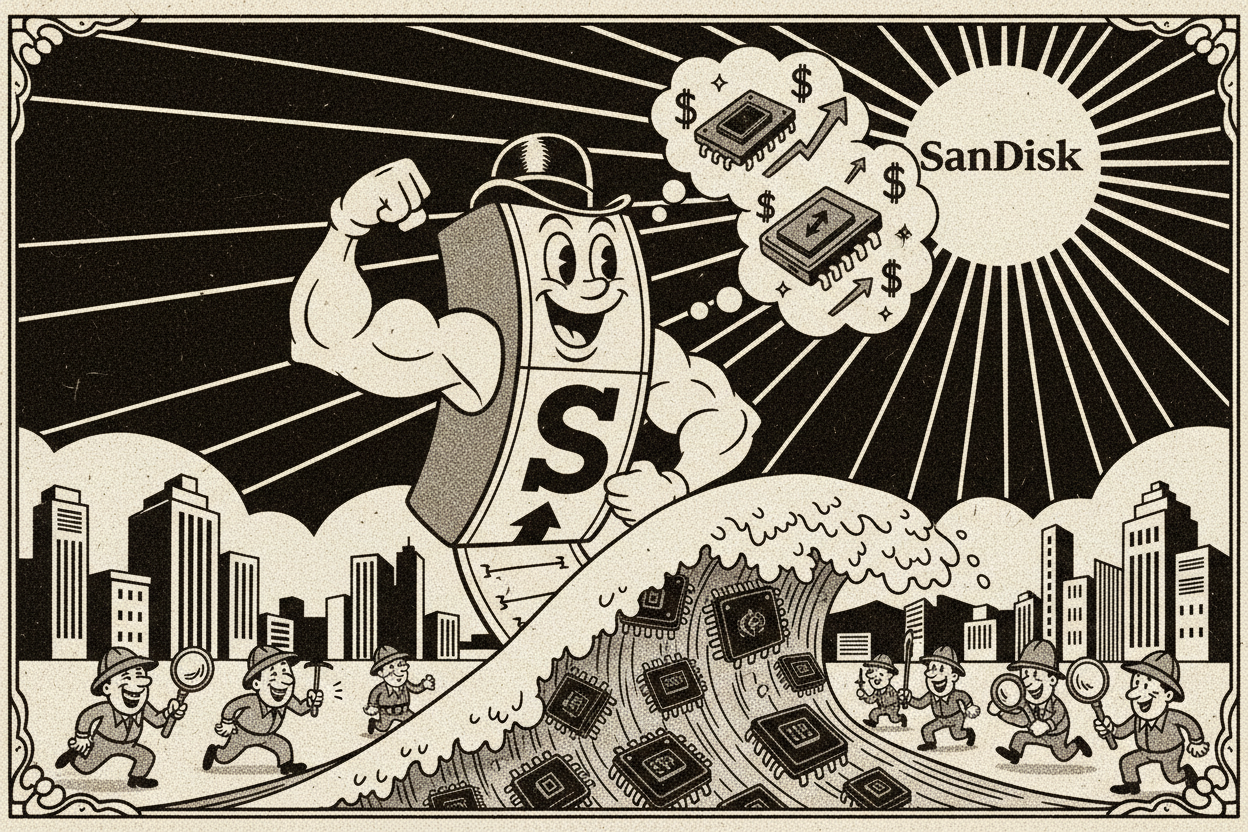
When a stock jumps several hundred percent in a year, most investors assume they’ve missed the boat. But in the memory chip sector, we’re watching something different unfold. SanDisk’s remarkable surge…
(Privacy Policy/Disclosures)Advertising Disclosure: This email contains paid advertisements. This email is from our associates at Investment News Daily.
Legal Entity Information: Investing Ideas Daily is owned and operated by Darwin Investor Network, a DBA of The Darwin Agency, Inc.
Disclaimer: Nothing in this email should be considered personalized financial advice. Always conduct your own due diligence when investing. We urge you to read our full disclaimer by clicking on the terms of use link below.
Unsubscribe: You are receiving this email as part of your complimentary subscription to the Investing Ideas Daily E-Letter. If you would like to unsubscribe, you can do so by clicking on the unsubscribe link below.Darwin Investor Network 2319 N Andrews Avenue, Fort Lauderdale, FL 33311 support@investingideasdaily.com | 1-800-496-9838Investing Ideas Daily | Privacy Policy | Terms of Use Unsubscribe | View Online
This isn’t just another book about investing in gold.
This is a classified-level survival blueprint from a man who’s been trained to stay alive when everything else falls apart.
In his new tell-all exposé, Operation Gold Rush, former CIA officer Jason Hanson reveals how gold and silver saved his life—and how they could save yours when America’s next crisis hits.
How to hide gold on your person like a covert operative
Little-known places to stash precious metalswhere no one will find them
The 2-tier system Jason uses to protect and multiply his wealth
How to move your 401(k) or IRA into a Gold IRA—100% tax-free and penalty-free
What to do when the system fails, the grid goes down, or the markets crash
This is not theory. These are real-world tacticsfrom a man who’s been behind enemy lines, seen countries collapse, and helped Americans prepare for the worst.
And now, he’s partnered with Advantage Gold—the #1 rated precious metals firm in America—to give away this book for FREE.
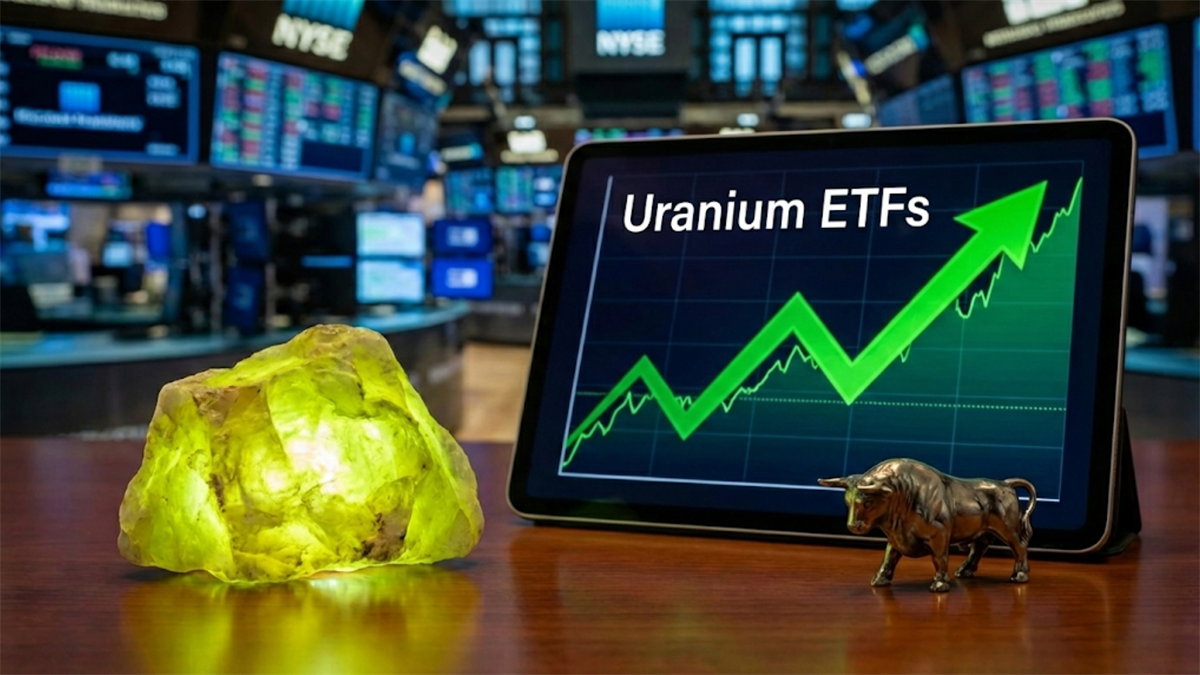
Why These 3 Uranium ETFs Could Be 2026’s Most Overlooked Winners
Written by Nathan Reiff. Posted: 1/27/2026.
Summary
Many uranium mining companies have seen shares more than double in the last year amid easing regulations and a supply squeeze.
To capitalize on continued strong demand, investors might consider an ETF like URNJ or URNM, each of which provides access to a variety of uranium producers and offers an attractive dividend yield.
For a more mainstream uranium investment, URA is among the oldest and largest uranium ETFs, but its recent performance record, fees, and dividend yield all continue to justify its appeal.
With favorable regulations encouraging a boom in domestic nuclear power, several prominent uranium miners have seen their shares surge over the past year. Canadian outfit Cameco Corp. (NYSE: CCJ), one of the world’s largest uranium producers, has gained about 161% in the last 12 months.
In 2026, the uranium industry faces a supply/demand imbalance: demand has outpaced production. Uranium production in the United States remains far smaller than domestic consumption. That supply squeeze could keep upward pressure on uranium prices even as producers work to ramp up output. In other words, investors in uranium stocks could benefit both from the direct business gains of miners and from higher commodity prices.
The exchange-traded funds (ETFs) below could emerge as attractive ways to capitalize on those trends while reducing single-stock risk through diversified portfolios.
Unique Focus on Smaller Uranium Companies Poised For Growth
The Sprott Junior Uranium Miners ETF (NASDAQ: URNJ) is up an impressive 89% over the last year and is one of the few ways to build broad exposure to smaller uranium miners (mid-cap and below). These smaller producers may be well positioned to benefit from easing regulations that make expansion more attainable.
URNJ can be a useful vehicle for accessing lesser-known uranium firms, such as Energy Fuels Inc. (NYSEAMERICAN: UUUU), a U.S. producer with operations in Wyoming and Texas. The pool of smaller uranium companies is limited, however, so URNJ isn’t the most diversified uranium ETF. Still, its 35 holdings are fairly evenly weighted, aside from a few larger positions like UUUU, which accounts for more than 14% of the portfolio.
Investors bullish on uranium may appreciate URNJ’s emphasis on companies with growth potential. The fund also pays an attractive dividend yield of 2.25%. Given that focus, the ETF’s expense ratio of 0.80%—while higher than some peers—may be reasonable for the exposure it provides.
Because the two Sprott funds overlap, investors may prefer one or the other rather than holding both. One distinctive feature of URNM is its exposure to physical uranium, which provides more direct commodity exposure. At roughly 11.6% of the portfolio, the physical holding is a meaningful but not dominant allocation, appealing to investors who want closer alignment with uranium prices.
URNM has slightly outperformed URNJ over the last year, rising more than 93%, while charging a slightly lower expense ratio of 0.75%. It also pays a dividend, though its yield of 1.69% is lower than URNJ’s, which may matter to investors prioritizing income.
Strong Portfolio, Performance, and Fees
By far the largest of these funds by assets and trading volume, the Global X Uranium ETF (NYSEARCA: URA) is one of the oldest and best-established uranium ETFs. It has also posted the strongest performance among the three, rising about 110% in the last year, and offers the highest dividend yield at 3.65%.
URA’s 49 holdings provide broad exposure across the uranium industry and related supply chains, spanning different market caps and developed markets. Some holdings are major electronics and automotive companies that, while not traditional nuclear firms, participate in manufacturing components or are otherwise involved in nuclear supply chains. Cameco remains a large weight in URA, representing nearly a quarter of the portfolio.
For investors seeking a single uranium investment that delivers broad exposure, a track record of strong performance, and relatively low costs—URA’s expense ratio is 0.69%—URA is hard to beat.













 National Audubon Society



 Discover precise price-action strategies and insights to sharpen your trading decisions.




 RJ Hamster