I was born on 6 August 1956 in San Francisco, California to Janet and (the late) Richard Hovis.
I grew up in Santa Monica, California where I attended elementary, junior high school, and high school (graduating in 1974), in addition to involvement in sports and recreation (Little League +, the Boy’s Club ++). Further, it was in elementary school – St. Augustine’s By-the -Sea Parish School that I found, and made the choice to truly journey with God.
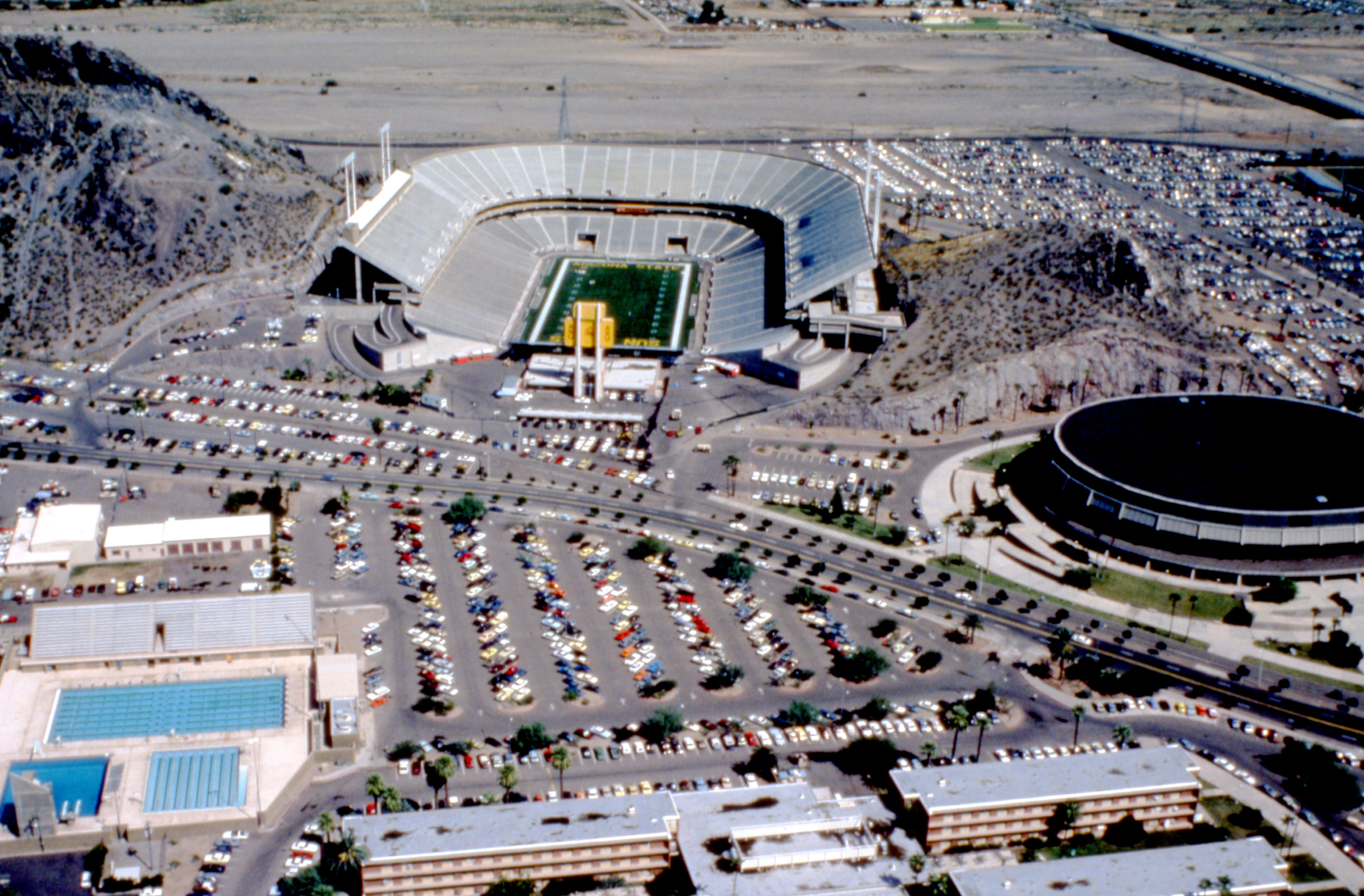
I attended Arizona State University from 1974 to 1977 – seeking to become an architect, however, I was not accepted, and, as such, I graduated with a Liberal Arts degree.
Upon graduation from Arizona State University, I attended Cal Poly San Luis Obispo and studied City and Regional Planning at the Master’s level. I successfully completed one (1) year in a two (2) year program – I did not complete the Master’s degree in City and Regional Planning – due to personal reasons.
I returned to Santa Monica where I started (October 1979) my career as graphic designer with Exxon Company, USA. I spent five years with Exxon Company, USA.
While working with Exxon Company, USA I was accepted into architectural school – Sci-Arc in Southern California, however, I did not attend preferring to stay with Exxon..
In 1982 I married Laura Flosi and in April 1983 we had our one and only child – Lauren Alain Hovis – a gift from God.
We moved to Phoenix, Arizona in 1984 from Los Angeles, where I went to work as a graphic designer with Kitchell CEM (from 1985 -1987).
From 1987 – 1995 I was an independent contractor, and a registered representative in mortgage finance, financial management, graphic design, and drafting.
Further, I attended the University of Phoenix and successfully obtained a Master’s in Business Administration (MBA) in 1982.
I was also a member of the Scottsdale Jaycees, where I became very involved in community events and projects.
In 1994, I accepted a cartography position with the Defense Mapping Agency in Reston, Virginia. As such, I relocated from Phoenix to Reston.
In 1998, I was accepted and worked as a Visual Information Officer with the Central Intelligence Agency. In 2002, I worked as a Support Officer until my retirement (due to a need for shoulder surgery) in September 2018.
Away from my Federal Government service, I have been involved in various organizations and activities in Northern Virginia.
In November of 2011, I married Rebecca Ouellette in Santa Monica, California. I reside in San Tan Valley, AZ with my two hamster - Jess and Timothy, our fish, our lizard - RJ Lizard., and our cats - Pearl and Grey.
As to hobbies, I enjoy playing sports, attending sporting events, mentoring individuals from financial management to hamsters, building models, photography, travel, multimedia design, managing partner for RJ Hamster, and jazz – smooth jazz to a samba or a bossa nova.
Love and God Bless,
Peter – aka RJ Hamster Jo hi
There is no better way to celebrate life’s milestones than with a transformative travel experience in one of the world’s most remarkable places. Whether you’re marking a retirement, big birthday, anniversary, graduation or reunion, a National Geographic-Lindblad Expeditions voyage brings your loved ones together for an unforgettable adventure. With special offers, such as 10% savings on groups of six or more and a $1,000 air credit per guest, now is the perfect time to plan your milestone celebration with the pioneers of expedition cruising.
*Air Offer: Book by April 15, 2026 and receive air credit of $1,000 per person, deducted from air fare with the purchase of cabin fare on select 2026 departures. To qualify for the offer, airfare must be ticketed by Lindblad Expeditions. In the case that airfare at the time of booking is higher than $1,000 per person, guest will be required to pay any amount in excess of $1,000 per person. Valid for new bookings only on select 2026 departures, subject to availability, not applicable on extensions. Not combinable with any other offers. Baggage fees may incur additional costs and seat assignments may not be guaranteed. Valid for US and Canadian residents only.
*Kids Offer: Book from March 18 to April 30, 2026 and receive savings of 50% deducted from cabin fare on select 2026 voyages for children 18 and under at time of travel. Applicable savings will be deducted from cabin fare after any additional savings with the purchase of cabin fare. Additional restrictions may apply. Promotional offer valid on new bookings only for select 2026 departures, subject to availability and offer may be withdrawn at any time without prior notice, not applicable on airfare or extensions, and may not be combined with other promotions. Call to book or for additional details.
*Group Offer: Book from March 18 to May 6, 2026: Receive savings of 10% deducted from cabin fare when you book a party of 6 or more on voyages departing on or after April 1, 2026, through 2028. To qualify for the offer, parties must be 6 or more across a minimum of 3 cabins. Applicable savings will be deducted from cabin fare after any additional savings with the purchase of cabin fare. Discount is subject to be removed upon cancellation of party members if group drops below 6. Additional restrictions may apply. Savings offer valid on new bookings only, subject to availability, and offer may be withdrawn at any time without prior notice, not applicable on airfare or extensions, and may not be combined with other promotions. Call to book or for additional details.
Love New Times? Thanks to a recent Google update, you can now select us as a preferred source to see our stories first in search results. Thank you in advance for your ongoing support of local journalism.
Welcome to The Pregame Lineup, a weekday newsletter that gets you up to speed on everything you need to know for today’s games, while catching you up on fun and interesting stories you might have missed. Today’s edition is brought to you by David Adler.
The new City Connect jerseys just dropped. And they’re sick.
The City Connects are on sale at MLBShop.com, nike.com and fanatics.com, and at the MLB Flagship Store in New York and team stadium stores.
The Braves, Brewers, Orioles, Padres, Reds and Royals will all debut their City Connects on the field this weekend, while the Pirates will wear theirs for the first time next Friday, April 17, and the Rangers will wear theirs the Friday after that, April 24.
All eight teams will wear their City Connect uniforms regularly throughout the season, mainly for certain weekend home games.
This is the second edition of City Connects for these teams — call it City Connect 2.0. Here’s the full lineup of the new looks:
Braves: Atlanta’s new City Connects were inspired by the Braves’ powder blue jerseys of the ’80s, but have a new modernized design. More >
Brewers: The Brew Crew’s new blue-and-cream jerseys read “Wisco” across the chest and evoke Wisconsin’s lakes, shores and bluffs, while the state’s outline surrounds the “W” on the cap and the Barrelman sleeve patch. More >
Orioles: “BMORE” is front and center on the O’s new jerseys (with the Oriole bird perching on top), while the old-school “B” on their caps is a throwback to the 1890s. More >
Padres: San Diego’s bi-national culture is the inspiration for the Padres’ Día de los Muertos-themed City Connects, which include marigold-patterned trim on the uniform, a bone-colored hat and pants and a beautiful La Catrina sleeve patch. More >
Pirates: Pittsburgh’s black-and-gold City Connects are, naturally, all about piracy, from the Jolly Roger on the cap and sleeve to the pirate-style “Pirates” font on the front of the jersey. More >
Rangers: The Rangers’ City Connects are big and bold, with a bright red jersey and cap and “Tejas” emblazoned across the front in a white outline. More >
Reds: Cincinnati’s unis are a nod to the vest-style jersey the Reds last wore more than two decades ago … and they’re bringing back the pinstripes. More >
Royals: Kansas City, the City of Fountains, is using a fuchsia-to-blue uniform color gradient as an homage to its waterways, with an “R” logo that’s a twist on the team’s original 1969 mark. More >
A CLASSIC CHAMPIONSHIP REMATCH IN NY
If you miss the World Baseball Classic already, we don’t blame you. But don’t worry — we get a rematch of the USA-Venezuela championship game tonight.
McLean, who looks like the ace of the future for the Mets, had electric stuff in that game, with four strikeouts over 4 2/3 innings of two-run ball for Team USA. But the wily veteran Rodriguez pitched the game of his life for Venezuela, holding the juggernaut U.S. lineup to just one hit over 4 1/3 scoreless innings with four K’s.
Venezuela ultimately won the game, and the WBC championship, but McLean has the chance for a small bit of revenge tonight if he can outpitch E-Rod in the rubber game of the series in New York. The 24-year-old is 2-0 with a 0.92 ERA in five career starts at Citi Field.
REMEMBERING DAVEY LOPES
Baseball lost one of the greatest basestealers in history yesterday. Let’s take a moment to remember Davey Lopes, who died Wednesday at age 80.
Lopes was a four-time All-Star second baseman who was part of the vaunted Dodgers infield of the 1970s. He won a World Series with Los Angeles in 1981, defeating the rival Yankees.
Lopes stole 557 bases in his 16-year MLB career, including a Major League-leading 77 steals in 1975 and an NL-best 63 steals in 1976. He stole bases at a higher success rate than legends like Rickey Henderson and Lou Brock.
After his playing days were over, Lopes continued to pass on his baserunning knowledge as a coach in the Majors for many years.
Shohei Ohtani entered yesterday’s two-way start against the Blue Jays with the longest active on-base streak of any hitter in MLB and the longest active scoreless-inning streak of any MLB starting pitcher.
Shohei’s pitching streak finally came to an end during the game (although the run he allowed was unearned, leaving him with a perfect 0.00 ERA through two starts in 2026). But his on-base streak as a hitter is still going strong. And it’s getting into rare territory.
Ohtani has reached base safely in 43 consecutive games going back to last season — tied with none other than Ichiro himself for the longest on-base streak ever for a Japanese-born player. Ohtani is also tied for the Dodgers’ sixth-longest on-base streak of the Modern Era (since 1900). But he still has a long way to go to catch Ted Williams and his all-time record of 84 games.
The Blue Jays did get the last laugh yesterday with a comeback win in the series finale of the World Series rematch against L.A., but Ohtani and the Dodgers took two of the three games.
They’re giving away Pope hats before their game on Aug. 11 against the Reds in honor of Robert Prevost — aka, Pope Leo XIV — a Chicago native and White Sox fan.
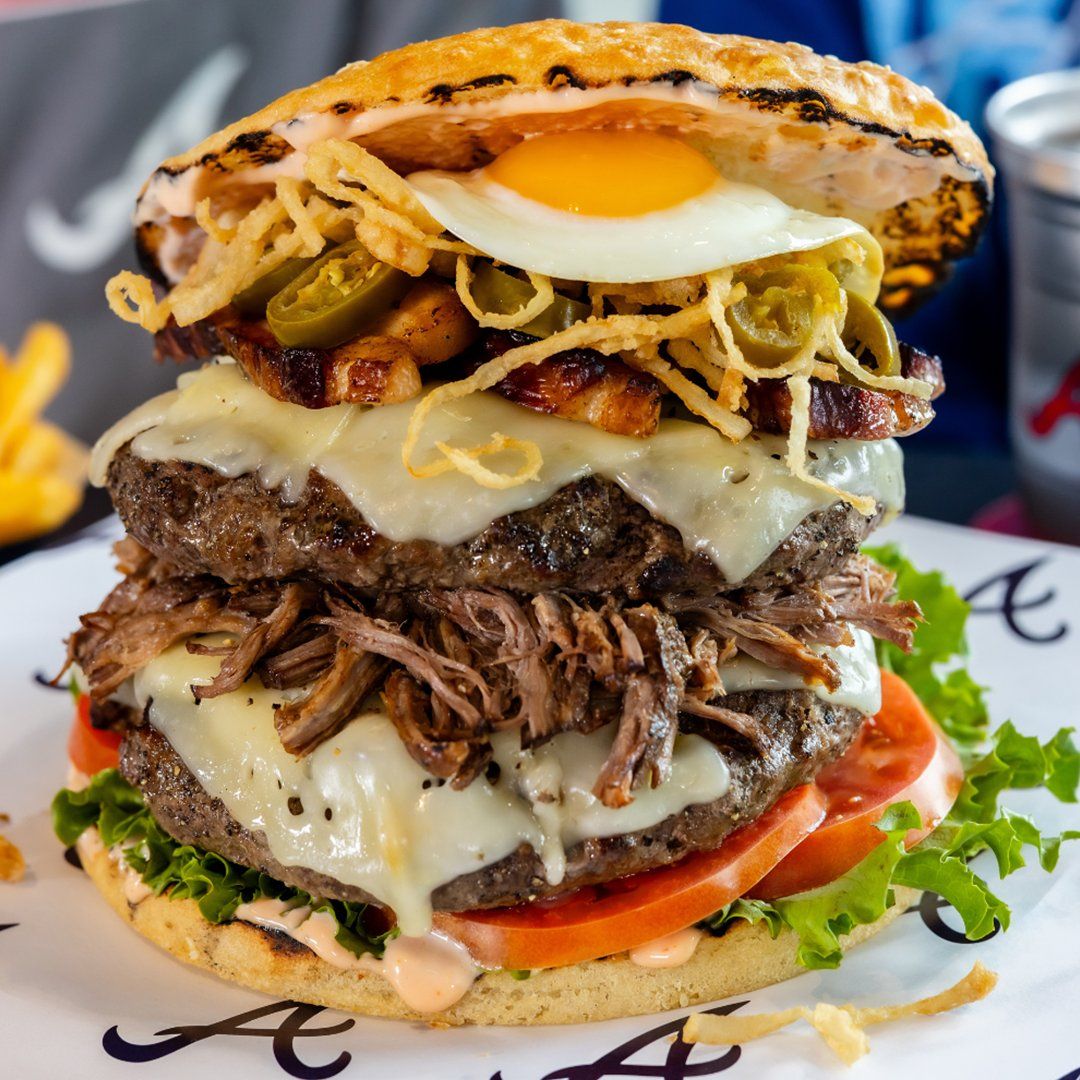
What’s in it? Two pounds of beef, for starters … plus braised short rib, crispy pork belly, melted cheese, jalapenos, fried crispy onions, lettuce, tomatoes, chipotle aioli and a fried egg … all between a toasted brioche bun.
Can you even open your mouth wide enough to eat it? Find out at the 1871 Grille in Section 113 at Truist Park.
The Braves return to Atlanta tomorrow to face the Guardians at 7:15 p.m. ET in the first game of a six-game homestand.
Love New Times? Thanks to a recent Google update, you can now select us as a preferred source to see our stories first in search results. Thank you in advance for your ongoing support of local journalism.
Please read the message below from our paid sponsor. Occasional paid messages like these help us continue bringing you Not The Bee content you love.
What Is the Antidote to Fear?Days before Pastor Richard Wurmbrand was arrested by secret police in Communist Romania, he learned that the Bible had 366 passages to help Christians overcome their fears — one passage for each day of the year, including leap year.
A few days later, on February 29, Pastor Wurmbrand was arrested. His careful study of God’s Word gave him the strength he needed to stand strong in the face of a total of 14 years of imprisonment and torture.
Most of us won’t be thrown into prison by secret police, but that doesn’t mean our lives are without fear and worry. Whom Shall I Fear? is a daily devotional with 366 Bible passages that can take you beyond anxiety, fear and doubt. By focusing on God’s character, you will be encouraged and strengthened to live obediently for Christ in the face of any opposition.
Today, The Voice of the Martyrs is pleased to offer you a complimentary copy of Whom Shall I Fear? 366 Scriptures for Following Christ and Facing Persecution for a gift of any amount. Your gift will be used to serve persecuted Christians in hostile areas and restricted nations and be their voice to other members of the body of Christ. The testimonies in this unique devotional will encourage you to remain firm in your faith, just like our persecuted brothers and sisters around the world.
The call of God that Isaiah heard centuries ago is echoing in our world today. The Jewish people are suffering greatly. I am asking you to help us reach out to meet their urgent needs and show them true Christian love in action. Together we are telling, and more importantly showing, the people of Israel that they are not alone. We have received a generous matching gift challenge that will double your gift to help twice as many people—so please be as generous as you can when you send your gift today.
Your support of the Friends of Zion today allows us to comfort the people of Israel who have been devastated by the war, continue to purchase and deliver food, medicine, clothing, and other necessities of life for the poor Holocaust survivors and refugees of Ukraine, continue to operate the Friends of Zion Museum, and to meet urgent humanitarian needs among the poor Jewish people living in Israel.
Thank you so much for being part of this vital worldwide prayer movement.DONATE NOW
Pray For The Peace Of Jerusalem
“Lord turn the Holy City to be a place of praise for Your Name. Cause those who would rise against Israel to stumble and break them into pieces. Establish Your purpose and guide those who stand upon the walls of Zion as ready servants to defend Israel.”
To declare the name of the LORD in Zion, and his praise in Jerusalem. Psalm 102:21
Join with us and millions of others around the world in prayer for Israel:PRAY WITH US
Northern Israel hit by fresh rocket sirens as Hezbollah fires from Lebanon
Air-raid sirens continued to blare throughout northern Israel on Thursday, warning of incoming rocket and missile fire from Hezbollah, Iran’s terrorist proxy in Lebanon. READ MORE
Netanyahu: Iran’s enriched uranium will be removed, by agreement or in resumed fighting
Full text of PM’s address after Trump announced ceasefire; says move was coordinated, campaign not over, he insisted fight against Hezbollah continue, Iran battered and weaker than ever READ MORE
Stay Connected
There is no better way to keep up with what is really happening in Israel and the world—the truth the liberal media won’t tell you—than with the redesigned and upgraded FOZ app. We have prepared this app to allow us to stay in touch with you and provide the most up-to-date news and prayer requests. This powerful tool will help you shape and focus your prayers, receive updates from Dr. Evans, and so much more. It is a must-have for every friend of Israel.APPLE APP ANDROID APP DONATE NOW
AAdvantage Gold® 0E3**** Exclusive match ticket access is here Great news — your access to FIFA World Cup 26™match tickets is now open. As an AAdvantage Gold®status member, you have exclusive access to match tickets with your AAdvantage® miles.
This email has been sent on behalf of American Airlines. We are happy to help you with any questions or concerns you may have. For all inquiries about American Airlines or the AAdvantage®program, visit aa.com/contactaa or contact us in writing at American Airlines, 1 Skyview Dr. Fort Worth, TX 76155-2503.
American Airlines reserves the right to change the AAdvantage®program and its terms and conditions at any time with or without notice, and to end the AAdvantage® program with six months’ notice. Any such changes may affect your ability to use AAdvantage® Rewards and Benefits that you have already accumulated. American Airlines is not responsible for products or services offered by other participating companies. All third-party provider terms and conditions apply. For more information on miles and Loyalty Points, visit aa.com/loyaltypoints. For complete details about the AAdvantage® program, visit aa.com/aadvantage. For the AAdvantage® terms and conditions, visit aa.com/aadvantageterms.
Travel booked on American Airlines may be American Eagle®service, operated by Envoy Air Inc., Republic Airways Inc., SkyWest Airlines, Inc., PSA Airlines, Inc., or Piedmont Airlines, Inc.
American Airlines®, American Eagle®, AAdvantage®, AAdvantage BusinessSM, AAdvantage Million MilerSM, ConciergeKey®, AAdvantage Executive Platinum®, AAdvantage Platinum Pro®, AAdvantage Platinum®, AAdvantage Gold®, American Airlines VacationsSM, AAdvantage Cars®, AAdvantage Cruises®, AAdvantage DiningSM, AAdvantage eShopping®, AAdvantage EventsSM, AAdvantage ExchangeSM, AAdvantage Hotels®, AAdvantage Pass™, AAdvantage PerksSM, SimplyMiles®, Flagship®, Admirals Club®, AA.com®, the Flight Symbol logo and the Tail Design are marks of American Airlines, Inc.
oneworld® is a registered trademark of oneworld Alliance, LLC.
This email and any information or files transmitted with it are solely for the confidential use of the recipient. This message contains confidential and proprietary information of American Airlines (such as American employee, customer and business data) that may not be read, searched, distributed or otherwise used by anyone other than the intended recipient. If you have received this email in error please notify the sender and promptly delete this message and its attachments.

































































 Please forward this email to Christian friends who will be inspired to pray for and support our persecuted Christian family. This email was sent by