Thanks for writing… here’s my reply

InvestorPlace
InvestorPlace logo

Dear ,

Yesterday, we put out a call for all questions and feedback related to my FutureProof 2026 event on Wednesday.

What came back showed me two things…

First, the folks who attended FutureProof 2026 are taking my prediction very seriously — both the warning and the opportunity that the Market Shock will bring.

Also, I knew I needed to get back to you as quickly as I could, because these questions really get to the heart of why it’s critical to get your next move right in this moment in time…

Read on for my favorite four questions…


Q: Eric, I hear you using the terms “Market Shock” and “Regime Change” when you talk about what’s about to happen to the stock market. Are those the same thing? Or what’s the difference?

A: Good place to start. They’re related, but they’re not the same thing.

The Market Shock is the trigger. On April 24th, a wave of Silicon Valley announcements will begin spilling out of Microsoft, Apple, Meta, Alphabet, Amazon.

All within about a week of each other. They will expose, for the first time publicly, a fatal flaw in the AI buildout that no amount of money can fix quickly.

That’s the moment $10 trillion in capital starts looking for the exit.

The Regime Change is what follows. It’s the full reorganization of stock market winners and losers — capital rotating out of the Magnificent 7 and into the companies supplying what I call AI’s “Golden Rivets.”

Every great technology boom eventually collides with reality. It led to the dot-com crash of 2000. The railroad panic of 1873. The aviation bust of 1929.

The companies that created the hype collapse.

The companies that do the hard work of building the vision thrive.

Watch the replay now to see the full list of Golden Rivets companies positioned to thrive when the Regime Change begins.

FutureProof 2026 replay

Q: You’re saying stocks like Microsoft, Apple, Meta, Alphabet, Amazon could lose 50% of their value! Won’t that crash the entire market? If so, have a hard time imagining anything will go up.

A: It’s a fair concern. The Magnificent 7 make up roughly a third of the S&P 500. If they go, the index goes with them. So, trying to “diversify” into an S&P 500 fund would be a lateral move — not a safe one.

After the dot-com crash, the S&P 500 fell more than 40% peak to trough.

But here’s what most people don’t remember about that same period: energy, insurance, base metals stocks all posted triple-digit gains. You could have enjoyed over 500% gains on precious metals in the same time frame.

As an analyst, I was recommending sells on dot-com darlings and buys on stocks almost no one was paying attention to. While the broader market was falling, the stocks I recommended offered gains ranging from 159% to more than 1,000% over the following five years.

That’s the opportunity inside the chaos. The fall of the current leaders and the rise of a new ruling class.

When the Market Shock hits… if you panic, you lose. For disciplined investors who know where to look, it could be one of the most exciting periods of the decade.

Watch the replay now and get the names of 15 stocks that could soar while the S&P falls — and the 7 stocks I’m saying to sell — before April’s Market Shock.


Q: Big Tech has unlimited money. So why can’t they write checks to solve their own supply bottlenecks?

A: Money can do many things, but it cannot alter physical reality.

An AI hyperscaler could write a $10 billion check tomorrow to open a new copper mine.

But it would take seven to ten years minimum until the first copper nugget was extracted. Nuclear is more like a 15-year timeline.

The more Big Tech competes for the same limited resources, the more they bid up prices.

This creates a highly asymmetric investment opportunity once you know where all the money is flowing — and will continue to flow for years (and sometime decades) to come.

Watch FutureProof 2026 to see exactly which companies are set up to collect the checks Big Tech has no choice but to write.


Q: You’ve put a lot of emphasis on April 24th. What if nothing happens — does your whole “Market Shock” thesis fall apart?

A: April 24th isn’t a magic date where the sky falls. It’s a catalyst window — when Microsoft, Apple, Meta, Alphabet, and Amazon all come forward with announcements that I believe will alter the trajectory of the stock market going forward.

Listen carefully to what they say and you’ll hear the first hints of cracks in the AI story that money and hype cannot patch.

Could my timing be off? Possibly. Based on comments Elon Musk recently let slip, I believe the Market Shock may already be unfolding in earnest. Meaning the time to take action and switch up your holdings is NOW.

If you are holding AI companies when the Market Shock hits, you will end up holding the bag. Simple as that.

FutureProof 2026 is the only event I know of to help get you ahead of this before the crowd figures it out.

Watch FutureProof 2026 now — and position yourself while there’s still time.

The replay of FutureProof 2026 is still up, but only for a few more days.

Every day you wait is a day closer to when the window for taking meaningful action closes and the Market Shock arrives.

Watch it now. Get positioned. Don’t be the investor who heard the warning but had “better things to do.”

Watch the FutureProof 2026 Replay Here.

Sincerely,

Eric Fry's signature

Eric Fry
Senior Macro-Investment Analyst, InvestorPlace

P.S. I also received a question about how the Iran War stands to affect my April 24th Market Shock thesis. That’s a big question that deserves a thorough answer, so I’ll be addressing that one in an email to you tomorrow… Catch the event replay right here if you haven’t done so yet.


To ensure that you continue to receive marketing emails from InvestorPlace, please add info@exct.investorplace.com to your address book.

If you no longer want to receive marketing emails from InvestorPlace, please click here to unsubscribe

If you have any questions, please don’t hesitate to contact Customer Service at feedback@investorplace.com or by calling 1-800-219-8592.

© 2026 InvestorPlace, LLC. All Rights Reserved. 1125 N. Charles Street, Baltimore, MD 21201

Terms of Use  |  Privacy Policy  |   Unsubscribe

🎧 Iran Steps Up Attacks on Gulf Oil Facilities, Sending Crude Prices Soaring

March 20, 2026  |  Read Online  |  Send Feedback

Good morning. Here’s your Friday playlist:

Morning Brief

MORNING BRIEF

Iran Steps Up Attacks on Gulf Oil Facilities, Sending Crude Prices Soaring

🎧 Listen on Apple Podcasts

What could make your listening experience better? Send us a line at podcasts@epochtimes.us

New to our newsletter? Subscribe here to listen to our reporters on the ground. 

Prefer a different podcast platform? Pick one here.

🎙️ MORE PODCASTS

The nation’s pressing topics deciphered by our journalists from the podcast desk.

FACTS MATTER

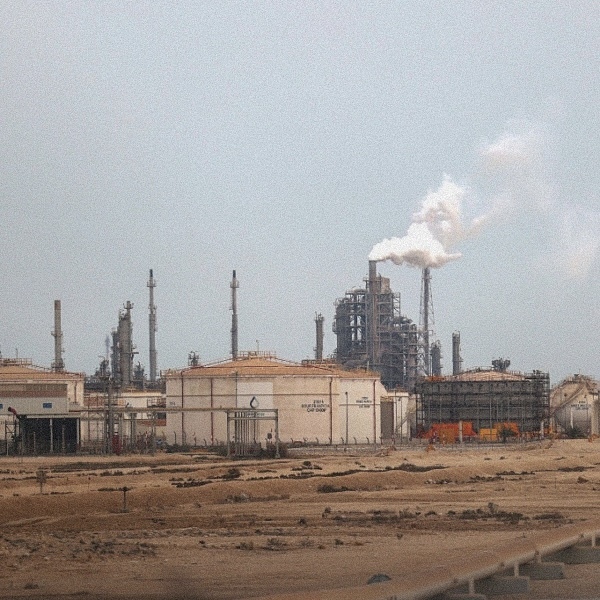
COVID-Style Lockdowns Making a Comeback Amid Energy Shortages From Iran War

This time, though, it’s not because of some virus—but rather, it’s due to the Iran War. Or more specifically, it’s because of the situation currently unfolding with the Strait of Hormuz: Tankers carrying oil and gas are being blocked by the IRGC.

   🎧 Listen →   

THE REPORT

What to Know About the Tiny Iranian Island That the US Bombed

The U.S. has reportedly destroyed military assets on Iran’s Kharg Island. But Iran still controls the island’s massive oil infrastructure there. President Trump has said he would bomb its oil infrastructure if Iran continues to block the Strait of Hormuz.

   🎧 Listen →   

Thanks for tuning in!

Today’s newsletter was put together by Ivan Pentchoukov, Lina Skorbach and Kenzi Li. Send them your feedback at podcasts@epochtimes.us.

📅 Podcast Schedule:

☝ Click on the links above to pick your favorite podcast platform.

Did someone forward this newsletter to you? Subscribe here.

Copyright © 2026 The Epoch Times, All rights reserved. 

Our mailing address is: The Epoch Times, 129 West 29th Street, Fl 8, New York, NY 10001 | Contact Us

The Audio Room newsletter is one of the best ways to receive the most up-to-date information. Manage your email preferences here or unsubscribe from The Audio Room here.

Romans 12:1 – The Cost of Discipleship: Sacrifices of a True Follower of Christ

Having trouble reading this email? View it in your browser

Share this on Facebook
Pinterest
View as PDF

Romans 12:1

(1) I beseech you therefore, brethren, by the mercies of God, that you present your bodies a living sacrifice, holy, acceptable to God, which is your reasonable service. 
New King James Version   Change email Bible version

The reality of the New Testament’s teaching is that becoming a true disciple of Jesus Christ obligates a person to a great deal of sacrifice—even to the point of becoming what the apostle Paul calls being “a living sacrifice.” The disciple of Christ is clearly the sacrifice. Why do the sanctified ones make these sacrifices since the price they pay for forgiveness is dedicated, obedient devotion to the leadership of Jesus Christ?

This price requires the sacrifice of every function of a Christian’s body, mind, and spirit to the way of God. It can be very costly. It may cost the Christian his employment because of work requirements on the Sabbath. He may lose his family attachments because the family may not accept his beliefs. He may lose his general acceptance within a community for the same reason.

We commit to Christ for two primary reasons. The first is personal and somewhat self-centered: We want to be delivered from the burden of the death penalty, and we desire the awesome rewards God promises like everlasting life and, sharing eternity with our Creator and Savior. The second is generally slower to grow within us but proves far more critical in the end: We love God and desire the completion of His purpose in us. Through baptism, we want the means to express that love for God and for others as He continues with His creative purposes, preparing us for active participation in His Family in the Kingdom of God.

We should never let the encouraging Romans 5:1-5 slip from our minds:

Therefore, having been justified by faith, we have peacewith God through our Lord Jesus Christ, through whom also we have access by faith into this grace in which we stand, and rejoice in the hope of the glory of God. And not only that, but we also glory in tribulations, knowing that tribulation produces perseverance; and perseverance, character; and character, hope. Now hope does not disappoint, because the love of God has been poured out in our hearts, by the Holy Spirit who was given to us.

These verses, naming gifts God gives us upon our agreeing to the New Covenant, remain as a brief but constant reminder of how the New Covenant enables us. They inspire and empower our faith in ways no prior covenant, even with God, has. But the New Covenant does not erase God’s laws, just the penalty we have incurred by breaking them. Even the sacrificial laws involving animals, though they no longer have to be physically made, remain part of the Word of God because we can learn so much from them. They deepen and broaden our understanding of the sacrifices we must make under the New Covenant to show love to both God and men.

— John W. Ritenbaugh

To learn more, see:
Why Hebrews Was Written (Part One)

Topics:

Animal Sacrifices

Animal Sacrifices, Symbolism of

Costliness of Sacrifice

Death Penalty

Death Penalty, Deliverance from

Family Disturbances

Family Members as Enemies

Justification

Justification as a Gift

Justification by Faith

Living Sacrifice

New Covenant Does Not Erase God’s Laws

Why Hebrews Was Written

Commentary copyright © 1992-2026  Church of the Great God
New King James Version copyright © 1982 by Thomas Nelson, Inc.

Facebook

 ‌

Instagram

 ‌

YouTube

 ‌

Spotify

 ‌


Subscription Information

This daily newsletter was sent to you at pahovis@aol.com because you subscribed at www.bibletools.org on Jan 30, 2011.

Email Preferences  |  Unsubscribe

Church of the Great God
P.O. Box 471846
Charlotte, NC 28247
803-802-7075

About The Berean | Archives | Random Berean | Subscriptions

Bold (but maybe possible!) predictions for ‘26

Friday, March 20

View In Browser 

TOP NEWS

Paul Skenes, Juan Soto, Tarik Skubal, Bobby Witt Jr., Junior Caminero and Julio Rodríguez

10 bold predictions that aren’t as crazy as you might think

From a first-time World Series champion to a blockbuster trade, here are 10 predictions for the upcoming season that seem unlikely but are definitely possible. 

Minor League Baseball

Spring Breakout results and what to watch on Day 2

Arizona Diamondbacks

Soroka sharp in return from Classic as D-backs’ rotation takes shape

Blue Jays

Yesavage to open season on IL with shoulder impingement

Yankees

Yankees make ‘difficult decision’ to send Lagrange to Minor League camp

Minor League Baseball

101 mph (from an 18-year-old!) blows away MLB’s No. 5 prospect — and his helmet

Brewers

From rare disease to Spring Breakout, Dinges’ comeback fight continues

Cardinals

Wetherholt makes Opening Day case with strong Spring Breakout performance

Pirates

Did you expect someone else? Skenes to get Opening Day nod

Phillies

After close call with Team USA, Harper ready to finish the job with Phillies

Yankees

Fried’s final spring tuneup wasn’t perfect, and that was perfect for him 

MORE TOP NEWS

PERSONALIZE STORIES

PLAY A SPORCLE BASEBALL QUIZ!

Play Quiz

MORE FREE GAMES AT MLB PLAY

STAFF PICKS

Shohei Ohtani, Aaron Judge and Juan Soto

Ranking the best hitters entering the 2026 season — with one tie!

The first Hitter Power Rankings of the year feature almost exclusively players we just saw in the World Baseball Classic, and No. 1 on the list is also a pitcher (guess who). 

Baby gets a nap — and a foul ball

Holding his friend’s sleeping 10-week-old son in his right arm, Padres fan Matt Rendina reached up with his left hand to cleanly snag a foul ball. And he is giving the ball to the baby.

A Padres fan holding a baby

How building from within could pay off

Sometimes teams improve not because of additions, but because returning players reach another level. These are the clubs projected to see the most improvement from their internal options.

A designed image showing seven players inside the frames of a house

Skubal not the only Cy contender in AL Central

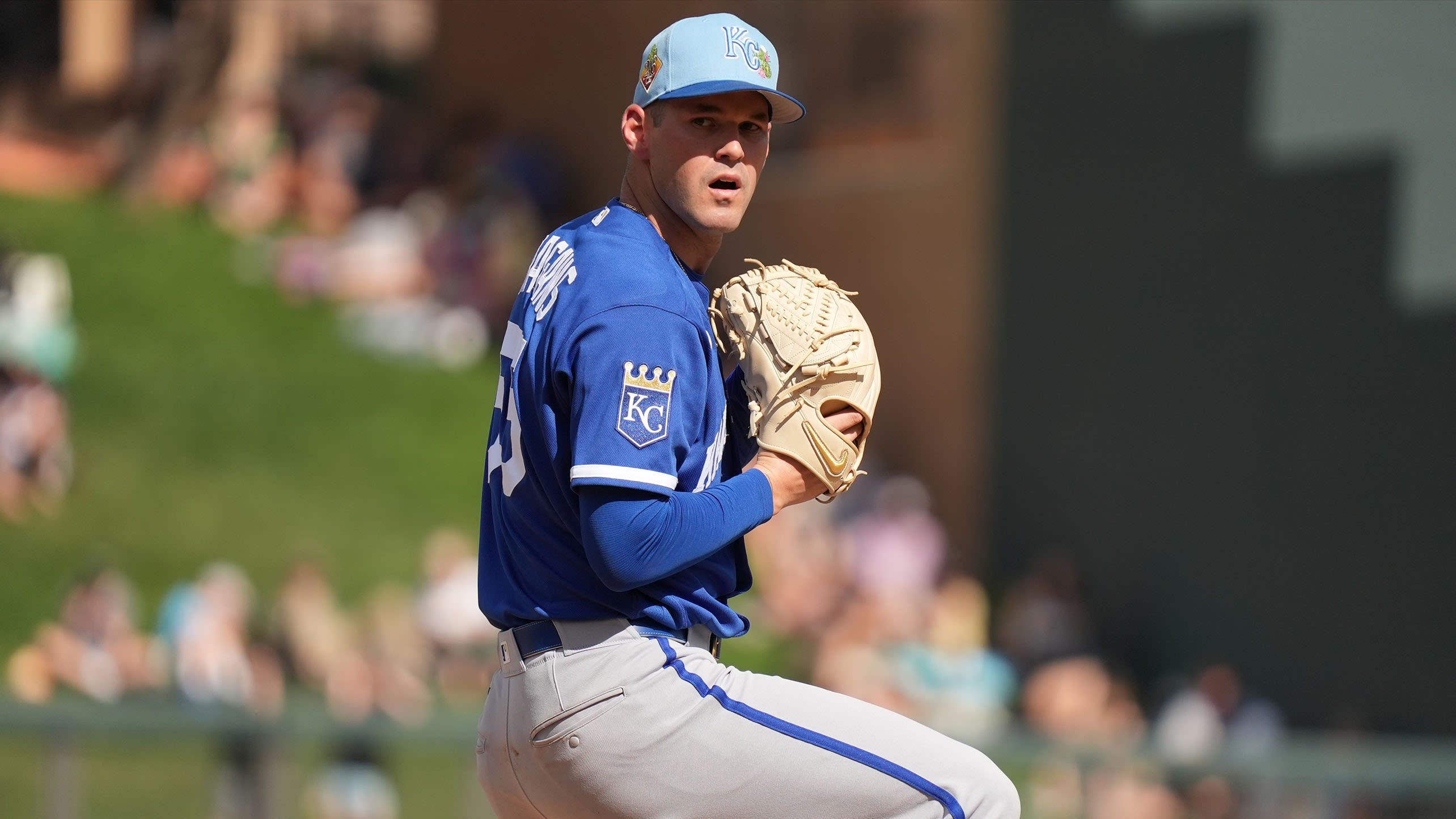
Cole Ragans was much better than his 4.67 ERA last season, and here is why he could make a run at denying Tarik Skubal a third consecutive Cy Young Award.

Cole Ragans

A dessert made for heavy hitters

What’s better than watching Kyle Schwarber mash a home run? Watch him do it while eating a Schwarbomb Sundae, soft-serve ice cream topped with a strawberry Uncrustable, strawberry sauce and fruity cereal pieces.

The Phillies' new Schwarbomb Sundae menu item

Cardinals vs. Mets on MLB Network

In their penultimate home game before heading back to New York for next week’s opener, the Mets host the Cardinals in Grapefruit League action at 1 p.m. ET.

Logos for Spring Training and MLB Network

Spring Breakout on MLB Network

The 2026 Spring Breakout Series continues when Colt Emerson and the Mariners prospects take on Jesús Made and the Brewers prospects at 5 p.m. ET, followed by the conclusion of the Tigers prospects vs. Pirates prospects.

Logos for Spring Breakout 2026 and MLB Network

MORE STORIES

SCOREBOARD

WSH 1
STL 5

TB 2
PHI 8

BAL 4
NYY 5

NYY 0
TOR 11

NYM 6
HOU 2

PIT 2
BAL 5

MIN 2
BOS 4

LAA 4
KC 3

KC 5
CLE 6

AZ 2
CWS 4

SEA 6
ATH 4

SF 14
COL 11

CWS 6
SD 13

TEX 4
MIL 11

Facebook
Instagram
Twitter
YouTube
TikTok
Snapchat

© 2026 MLB Advanced Media, L.P. MLB trademarks and copyrights are used with permission of Major League Baseball. Visit MLB.com. Any other marks used herein are trademarks of their respective owners.

Please review our Privacy Policy.

You (pahovis@aol.com) received this message because you registered to receive commercial email messages from MLB.com.

Please add info@marketing.mlbemail.com to your address book to ensure our messages reach your inbox. If you no longer wish to receive commercial email messages from MLB.com, please unsubscribe  or log in and manage your email subscriptions.

Postal Address: MLB.com, c/o MLB Advanced Media, L.P., 1271 Avenue of the Americas, New York, NY 10020.

You Can Be Wrong About Market Direction…

Dear Reader,

Not sure if you missed this chance to collect big money in one day…

But on January 7, the very first “AI Chaos-to-Cash” opportunity of 2026 opened up…

And anyone who followed Larry’s trade alert that morning could have pocketed $149 with one contract… $745 with five… even $1,490 with ten.

All by 4 p.m.

Then, on February 2…

Another opportunity opened up right on schedule.

And anyone who made that trade could have collected $190…

$950…

Even $1,900 and more.

To kick off 2026, Larry went 14 for 14 on these trades.

Most people have no idea this is even possible…

Because this is completely different than the way most people trade.

You’re not trying to predict the market’s big trends…

You’re not chasing moonshots…

And you’re not gambling on penny stocks or risky options plays, either.

With Larry’s system, you can even be WRONG about which way the market is headed… and still collect consistent triple- and quadruple-digit paydays.

All you have to do is place a simple trade on ONE ticker while sipping your morning coffee…

Go about your day…

And if the trade works in your favor, you’ll see hundreds or even thousands hit your account automatically by 4 p.m. ET.

If you’d like to see how this works so you can profit when the NEXT opportunity opens (just a few days from today)…

Larry’s showing you how his low-stress system works THIS THURSDAY, March 26, at 2 p.m. ET sharp.

Click here to save your seat now.
(When you click the link, your email address will automatically be added to Larry’s guest list.)

Regards,

Lauren Wingfield
Managing Editor, The Opportunistic Trader

P.S. Most investors are chasing the next hot AI stock. Always trying to guess when the next big rally will happen… spreading themselves thin watching dozens of tickers… glued to their screen all day… stressed out and exhausted.

But with Larry’s system and his AI Chaos-to-Cash Calendar… you always know when the next profit opportunity is coming.

That’s why Larry says this is as predictable as anything he’s seen in his legendary 40-year career.

Click here now to reserve your spot for THIS THURSDAY, March 26, at 2 p.m. ET sharp.

© Omnia Research, LLC. All Rights Reserved.
1125 N Charles St, Baltimore, MD 21201

To ensure our emails continue reaching your inbox,
please add our email address to your address book.

If you no longer wish to hear about this opportunity you can unsubscribe here.

How to Play This High-Oil, High-Inflation Market

Image
Ad Image
TradeSmith Daily logo

How to Play This High-Oil, High-Inflation Market

VIEW IN BROWSER

BY KEITH KAPLAN 
CEO, TRADESMITH

Todd Littleton’s family has been farming in Gibson County, Tennessee, for three generations.

These days, he grows corn, soybeans, and wheat.

And according to an Associated Press report, he’s paying $100,000 more for fertilizer than he did last year – a 40% jump.

The reason is a narrow waterway off the southern coast of Iran that’s been all over the news – the Strait of Hormuz.

You’ve probably heard that the Strait normally carries roughly a fifth of the world’s oil and a fifth of its liquefied natural gas. But about one-third of global seaborne trade in fertilizers also normally passes through it.

Then there’s polyethylene – the clear, flexible plastic in the bag your groceries came home in, the lining inside your milk carton, and the tubing in an IV drip. Eighty-five percent of Middle East polyethylene exports move through the same channel.

So does about a third of the world’s helium. It’s the gas semiconductor factories use to make the chips inside every phone, laptop, and AI server on the planet.

None of those critical commodities are moving right now. Any ship that passes through the Strait risks becoming a target of missile and drone attacks by Iran’s Islamic Revolutionary Guard Corps.

As I detailed on my quarterly call with TradeSmith’s top-tier Platinum members earlier this week, it’s one of four major challenges facing the bull market on Wall Street.

Taken together, they explain why the market has been swinging hundreds of points on single headlines… and why it’s gotten a lot of investors feeling twitchy.

Which brings me to the question I kept hearing on the call: “Should I sell?”

Most folks will answer that question the wrong way. They let the headlines decide for them and panic sell. Or they freeze and watch a manageable loss become a serious one.

Neither is a plan. Today, I’ll give you one. Including the sectors to look at that actually thrive in this kind of market.

First, let’s take a look at the other factors pressuring this bull market.

Recommended Link

Log into our New $5,000 Forecast Calendar

Today, we’re sharing a “forecast calendar” for 2026. It shows you when the biggest stock jumps could occur this year – to the day – with an 83% backtested accuracy. Last year alone, you could have doubled your money 13 times with it across our work. We urge you to use it by April 15 to prepare for a colossal event coming to stocks. 

Three Other Major Challenges to the Bull Market

The Strait of Hormuz is the most visible pressure point for this market. But it isn’t the only one. On my call with Platinum members, I walked through three others.

1. The Fed Is Trapped

When oil prices spike, inflation follows. Every 10% rise in oil adds about 0.4 percentage points to global inflation, according to the International Monetary Fund.

WTI crude – the U.S. benchmark – has shot up roughly 40% since the strikes on Iran began on Feb. 28. That means this oil spike alone is pushing up inflation by more than 1.5 percentage points.

That puts the Fed in a tough spot. Cut rates to support a slowing economy, and you risk an even bigger inflation spike. Hold rates – or raise them – and you risk choking off growth, right when the stock market is spluttering.

2. The Consumer Gets Squeezed

Consumer spending is roughly 70% of the U.S. economy. When gas prices rise, there’s less in the wallet for everything else.

That money doesn’t get spent at restaurants, clothing stores, or car dealerships. It goes into the gas tank instead.

Higher fuel costs also push up utility bills and airfares. Groceries cost more. Consumers – already carrying record credit card debt – have less room to maneuver.

And when spending slows, corporate revenues slow. When revenues slow, earnings disappoint. And when earnings disappoint, investors reprice stocks.

3. The AI Paradox

This one is more nuanced. It’s also even more important for understanding where we are in this cycle.

AI is transforming how businesses operate. That’s real. But the market has been pricing in the upside without fully reckoning with the downside.

Take the mass layoffs at payments company Block (XYZ). It’s the firm behind Square and Cash App that Twitter cofounder Jack Dorsey now runs.

Last month, he announced he was cutting 4,000 staff – 40% of his workforce. In his letter to shareholders, he didn’t mince his words. “Intelligence tools,” he wrote, “have changed what it means to build and run a company.”

The press ran this as an AI disruption story. And it is. But it also has knock-on effects for the economy.

Those laid-off workers are also consumers. They have mortgages…. car payments…. grocery bills. They also eat in restaurants… go to the mall… and go on vacations. When they lose their jobs, they pull back on spending.

Multiply that across the economy and the consumer engine powering economic growth will stall.

That’s the AI paradox. The same efficiency gains that send individual stocks soaring are eroding the consumer base that the economy runs on.

It’s a troubling picture. And I get why folks are worried. But there’s a way to handle this without letting your emotions get the better of you.

Panic Is Not a Strategy

When headlines are this loud, the instinct is to sell your stocks and move to cash. I’ve been investing long enough to know that instinct is usually wrong.

My approach: Don’t sell based on headlines or on emotions. Instead, be systematic, and let the data decide.

That’s the whole point of the tools we’ve built at TradeSmith. They exist to keep your emotions from running the show.

Here’s the framework I use.

Step 1: Check Long-Term Health.

This is your first and most important question for your long-term holdings. Is a stock you own still in a Green Zone?

Long-Term Health measures whether a stock is moving within its normal range of behavior – its individual volatility “fingerprint.” As long as it’s in the Green Zone, the long-term trend is intact. Temporary drawdowns, however gut-wrenching, are not a reason to sell.

If a stock you own has entered a Red Zone, that’s a different story. The trend has broken down. That’s when you sell – not because the headlines scared you, but because the data confirms the move is real.

Right now, none of the major U.S. indexes are in Long-Term Health Red Zones. But the Dow has entered a Yellow Zone. 

chart

That’s a sign that a momentum shift is underway in the 30 industrial stocks that make up the Dow. But a bearish trend hasn’t been confirmed.

Think of it like the warning light on your car’s dashboard. The engine isn’t broken yet. But something’s changed, and it’s worth paying attention.

Step 2: Check your VQ Stop Loss.

If you’re already a TradeSmith subscriber, every position in your portfolio should have a stop loss set at its Volatility Quotient (VQ) – the level at which a pullback stops being normal and starts being a warning sign.

If your stop hasn’t been hit, you have no reason to sell. The VQ is designed to keep you in winning positions through the inevitable turbulence while protecting you from the losses that can permanently impair a portfolio.

If your stop has been hit, sell – and don’t second-guess it.

Step 3: Check Short-Term Health for what to do next.

Once you’ve assessed what you own, the next question is where to look for opportunity.

Short-Term Health helps you spot stocks and sectors where short-term momentum is breaking down. It also shows you the stocks and sectors where it’s turning positive – the early movers in a new cycle.

Right now, that’s key. This environment is genuinely challenging for many parts of the market. But it’s a powerful tailwind for others.

Where to Buy Now

Not all stocks suffer in a high-oil, high-inflation environment. Some thrive. Here’s where TradeSmith’s signals are pointing.

The sectors with the wind at their backs:

  • Energy producers – ExxonMobil (XOM)Chevron (CVX)ConocoPhillips (COP). When oil prices rise, their revenues rise with them. These are direct beneficiaries.
  • Oilfield services – Halliburton (HAL) and Schlumberger (SLB). Higher prices mean more drilling. More drilling means more demand for the equipment and expertise these companies provide.
  • Defense – Defense spending is already elevated, and it tends to stay that way. Defense contractors are a natural port in this particular storm.
  • Domestic LNG exporters – The U.S. is the world’s largest liquefied natural gas exporter. With global gas prices spiking, U.S. exporters are selling into a very hungry market.
  • Uranium and nuclear – When oil and gas supplies are disrupted and prices spike, energy alternatives get repriced. Nuclear is no exception.

The key point: You don’t need to make big macro bets to navigate this environment. You just need to know which parts of your portfolio are exposed – and which aren’t.

That’s what our tools are designed to tell you.

All the best,

Keith Kaplan signature

Keith Kaplan
CEO, TradeSmith

P.S. I’ve been tracking a broader set of warning signs in the market, based on our Short-Term Health indicator. And I’ve put together a presentation that every investor should see laying out what comes next – and how to position yourself ahead of the market’s next big moves.

It isn’t all about protecting your downside risk – although that’s key. As I showed you today, Short-Term Health can also help you make smarter moves ahead of emerging bullish trends.

Energy and defense are among those bullish outliers. But they’re not alone.

To find out what other sectors should be in now, follow this link.

A Crime No One Wants to Talk About

A Crime No One Wants to Talk About

You think you know what China’s forced organ harvesting is about—think twice

Most people don’t know when it all began. They don’t know how many lives have been lost. And they never heard one single testimony.

Now, there’s a chance to reconsider. 

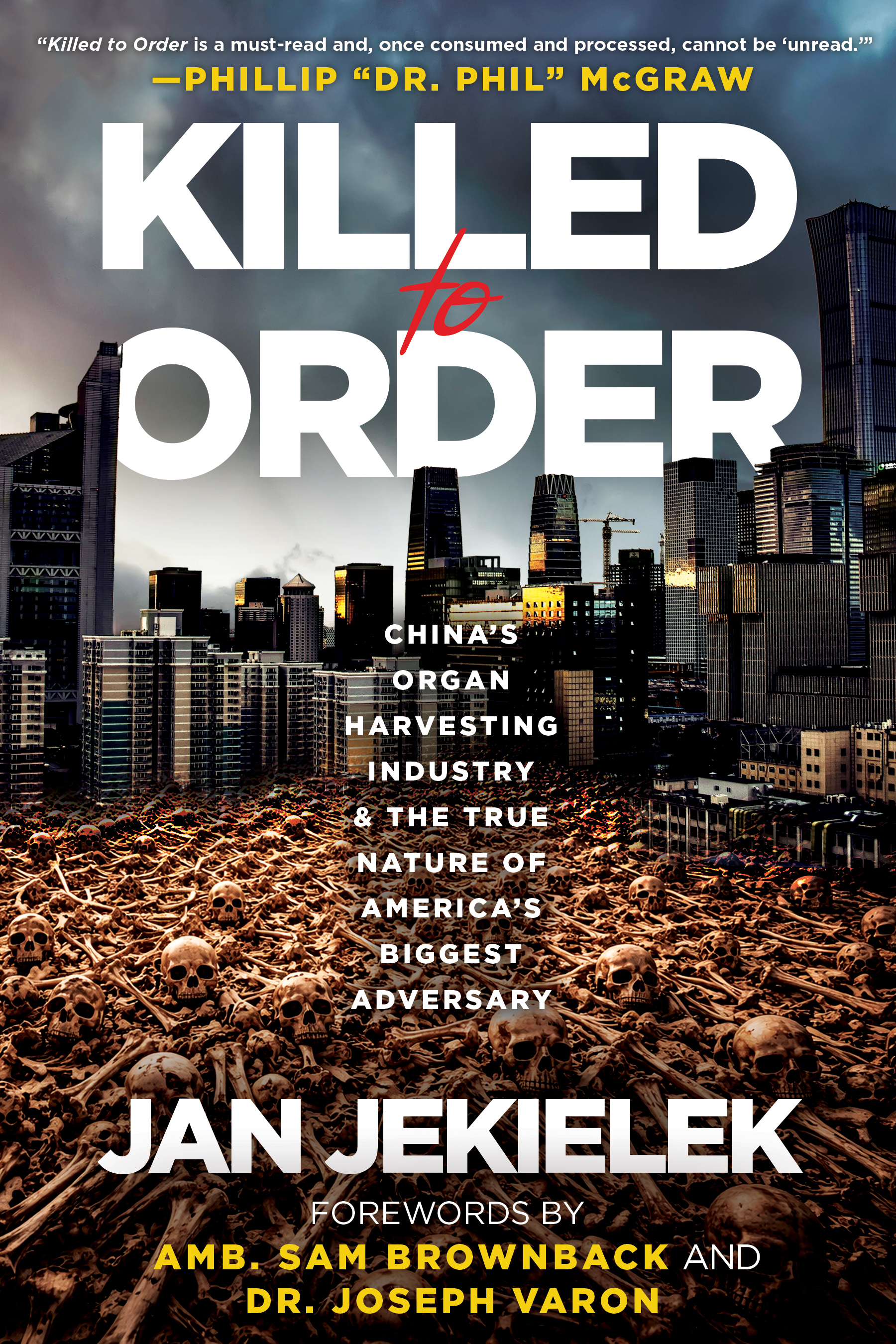
After spending two decades researching, interviewing, and documenting evidence from the earliest available testimonies to the latest ‘impossible’ survivor, Jan Jekielek, Epoch Times’s senior editor, has built a compelling case. He’s ready to share with the world—through his new book: Killed to Orderpoised to be one of the most important nonfiction books of the year.

In Jan’s own words, “My goal is to get Killed to Order onto the NYT bestseller list. Not for vanity, but because it forces national attention. It gets this story onto shelves, into libraries, and into conversations that otherwise wouldn’t happen.”

Remember World War II? Despite growing evidence of the Holocaust, many people remained indifferent or unaware of the full scale of the mass murder. Had the circumstances been different, the story might have ended differently.

The moment of truth has once again arrived.

The world is now waiting for you to respond. 

Killed to Order was released on March 17, 2026. Order yours today!

Order on Amazon

Latest comment from Killed to Order’s book release event:

“It began with waging a war on their ancestors. That’s what the Cultural Revolution was. Then it was a war on their posterity. That’s their children. That’s what the one-child policy was. And what is organ harvesting? It’s cannibalism. They ate their ancestors. They ate their children. And now the CCP is eating itself.”

Jason Jones

filmmaker; human rights activist; president and founder of HERO, Inc.

Watch news clip of the book release event at the Trump–Kennedy Center on March 16 here:

New Book ‘Killed to Order’ Seeds a Movement

Order your copy on Amazon. 

Copyright © 2026 The Epoch Times, All rights reserved.

The Epoch Times. 129 West 29th Street, Fl 8, New York, NY 10001

You are receiving this email because you subscribed to Epoch Special Offers email list. 
Manage your email preferences here or unsubscribe here

Iran Uranium Program Depleted; Comey Subpoenaed

Breaking News from Newsmax.com

• Netanyahu Says Iran No Longer Has Uranium Enrichment Capacity

Special: RFK Jr. Just Exposed a National Brain Scandal

• Feds Subpoena Comey Over Trump-Era Probes


SPONSOR


PAID ADVERTISEMENT

RFK Jr. is finally sounding the alarm:

Americans are being “MASS POISONED.”

And it’s worse than you think…

Click here to see the secret RFK Jr. is exposing…

And why this might be the biggest cover-up yet.


This ad is sent on behalf of NewMarket Health Publishing, LLC. P.O. Box 913, Frederick, MD 21705, USA. If you would like to unsubscribe from receiving offers from NewMarket Health Publishing, LLC, please click here.

This email is never sent unsolicited. You have received this Newsmax email because you subscribed to it or someone forwarded it to you. To opt out, see the links below.

Remove your email address from our list or modifyyour profile. We respect your right to privacy. Viewour policy.

This email was sent by:
Newsmax.com
362 N. Haverhill Road
West Palm Beach, FL 33415 USA

DM936972
010504uwhldq

Must Read: NVIDIA Proved the AI Boom Is Far From Over

Ad Image

Market360 logo

NVIDIA Proved the AI Boom Is Far From Over

VIEW IN BROWSER

For one weekend in August 1969, Woodstock looked like the start of something big.

Sure, it was messy. It was loud. It was far from polished. But the vibe people felt was unmistakable.

It felt like the future had arrived. The possibilities were endless.

Then, later that year, came Altamont.

What was supposed to be another landmark concert turned into something much darker. So dark, in fact, that many historians still call it “the day the 1960s died.”

Every great boom has skeptics waiting for a moment like that. The moment when the dream cracks. The moment when the hype gives way to disappointment.

For the past year or so, plenty of doubters have been looking for that moment in artificial intelligence. They have called it a bubble. They have warned that spending on chips and data centers has peaked. They have argued that the AI boom is already running out of road.

I bring this up because NVIDIA Corporation’s (NVDA) annual GTC conference has been referred to as the “Woodstock of AI.”

And this week, the company delivered a very strong message to the doubters.

Instead of showing cracks in the AI story, NVIDIA showed that the buildout is getting bigger, broader and more deeply embedded in the economy than most investors realize.

Founder and CEO Jensen Huang used the event to make a simple point: The next phase of AI will not be smaller than the first. It could be much bigger, especially as inference and so-called agentic AI begin to scale.

In today’s Market 360, I’ll explain why the “peak AI” crowd still has this story wrong, why NVIDIA remains one of the great companies of our time, and why the biggest profits in the next phase of this boom may go not just to the household names, but also to the companies controlling the key bottlenecks.

Why the “Peak AI” Crowd Is Wrong

The “peak AI” crowd is looking at the wrong thing.

They are still focused on training. They are still asking whether the Big Tech hyperscalers will keep spending at the same pace to build the next giant model. For the record, they are. Estimates peg their spending to amount to somewhere between $600 billion and $750 billion this year alone.

But that is yesterday’s question.

This is why Huang went on to deliver a prediction that would sound absolutely shocking if it came from anyone else (or any other company).

NVIDIA says it sees at least $1 trillion in revenue from its Blackwell and Rubin chips through 2027.

Why? Because, at GTC, NVIDIA made clear that the new battleground is inference. In plain English, that means running AI models in the real world, at scale, over and over again.

So, NVIDIA did not just show off a faster chip. It rolled out the Vera Rubin platform as a full AI factory, with racks for GPUs, CPUs, storage and networking. It talked about AI as a complete system, not a single product.

That is not the language of a company preparing for a slowdown. It is the language of a company that believes demand is still accelerating.

The company is pushing deeper into inference, enterprise software and networking. It is also locking up key parts of the next supply chain through multiyear optics partnerships with companies like Lumentum Holdings Inc.(LITE) and Coherent Corp. (COHR).

Recommended Link

He Called NVIDIA at split-adjusted $1.50. Oracle at split-adjusted 51 Cents. Amazon at $2.32. Now He’s Releasing His Most Urgent Research in 47 Years.

Louis Navellier says a massive wealth transfer is underway — and it’s accelerating faster than anything he’s seen in nearly five decades on Wall Street. He’s named the 10 companies positioned to capture it. Watch His Briefing Now.

The Rise of Agentic AI

Now, GTC also highlighted something else.

One of the biggest themes at GTC was agentic AI.

This is the idea that AI will not just answer a question and stop. It will take a goal, break it into steps, use tools, make decisions, monitor results and keep working in the background.

An open-sourced AI assistant called OpenClaw is leading the way.

It has become wildly popular among the tech community, allowing users to create and deploy AI agents — digital assistants that can do more than answer a single prompt.

Jensen Huang put it this way: “Every company in the world today needs to have an OpenClaw strategy, an agentic system strategy. This is the new computer.” He also said OpenClaw “made it possible for us to create personal agents” and that “the implication is incredible.”

That is a big statement. But it helps explain why NVIDIA is so bullish. They are giving you a glimpse of the future.

The company introduced NemoClaw as a way to help the fast-growing OpenClaw ecosystem become more useful and more secure for business users. NVIDIA says NemoClaw adds privacy and security controls for those always-on agents.

That may sound like a software story.

And it is, in the long run. But right now, it is really an infrastructure story.

Because AI agents are hungry. They do not just answer one question and stop. They keep running. They pull data. They make decisions. They trigger follow-up actions. They create a much larger and more persistent inference load.

So, if agentic AI takes off the way NVIDIA believes it will, then demand for compute, storage, networking and reliable power could rise a lot further from here.

Preparing for the Next Phase of AI

The big takeaway here is that GTC was not AI’s Altamont moment.

It was another reminder that this boom is alive and well.

But it was also a reminder that the next phase may not look exactly like the first. NVIDIA will remain one of the great winners. But as this buildout spreads, investors should keep a close eye on the chokepoints – the places where demand is exploding, supply is tight and pricing power can shift in a hurry.

That is often where the real money gets made.

Because AI runs on more than just GPUs. It runs on electricity, memory, networking, cooling, interconnects and raw materials. And the parts of that supply chain that cannot be scaled overnight may become some of the most profitable places to invest.

You can throw money at a problem. But you cannot instantly create more grid capacity. You cannot magically eliminate networking constraints. You cannot wish away shortages in memory, optics, cooling equipment or other critical inputs.

Those bottlenecks matter because they can shape who wins, who loses and where the next outsized profits show up.

That is exactly why I want to point you to a special presentation from my InvestorPlace colleague Eric Fry.

Eric believes the next wave of AI profits may not go where most investors expect. Instead, they could flow to a handful of companies tied to the hidden bottlenecks that every major AI player now depends on.

In his presentation, Eric lays out the full case for where these chokepoints are forming, why they matter and how investors may be able to profit from them.

To watch Eric’s special presentation now, click here.

Sincerely,

Louis Navellier's signature

Louis Navellier
Editor, Market360

The Editor hereby discloses that as of the date of this email, the Editor, directly or indirectly, owns the following securities that are the subject of the commentary, analysis, opinions, advice, or recommendations in, or which are otherwise mentioned in, the essay set forth below:

Coherent Corp. (COHR) and NVIDIA Corporation (NVDA)

InvestorPlace