I was born on 6 August 1956 in San Francisco, California to Janet and (the late) Richard Hovis.
I grew up in Santa Monica, California where I attended elementary, junior high school, and high school (graduating in 1974), in addition to involvement in sports and recreation (Little League +, the Boy’s Club ++). Further, it was in elementary school – St. Augustine’s By-the -Sea Parish School that I found, and made the choice to truly journey with God.
I attended Arizona State University from 1974 to 1977 – seeking to become an architect, however, I was not accepted, and, as such, I graduated with a Liberal Arts degree.
Upon graduation from Arizona State University, I attended Cal Poly San Luis Obispo and studied City and Regional Planning at the Master’s level. I successfully completed one (1) year in a two (2) year program – I did not complete the Master’s degree in City and Regional Planning – due to personal reasons.
I returned to Santa Monica where I started (October 1979) my career as graphic designer with Exxon Company, USA. I spent five years with Exxon Company, USA.
While working with Exxon Company, USA I was accepted into architectural school – Sci-Arc in Southern California, however, I did not attend preferring to stay with Exxon..
In 1982 I married Laura Flosi and in April 1983 we had our one and only child – Lauren Alain Hovis – a gift from God.
We moved to Phoenix, Arizona in 1984 from Los Angeles, where I went to work as a graphic designer with Kitchell CEM (from 1985 -1987).
From 1987 – 1995 I was an independent contractor, and a registered representative in mortgage finance, financial management, graphic design, and drafting.
Further, I attended the University of Phoenix and successfully obtained a Master’s in Business Administration (MBA) in 1982.
I was also a member of the Scottsdale Jaycees, where I became very involved in community events and projects.
In 1994, I accepted a cartography position with the Defense Mapping Agency in Reston, Virginia. As such, I relocated from Phoenix to Reston.
In 1998, I was accepted and worked as a Visual Information Officer with the Central Intelligence Agency. In 2002, I worked as a Support Officer until my retirement (due to a need for shoulder surgery) in September 2018.
Away from my Federal Government service, I have been involved in various organizations and activities in Northern Virginia.
In November of 2011, I married Rebecca Ouellette in Santa Monica, California. I reside in San Tan Valley, AZ with my two hamster - Jess and Timothy, our fish, our lizard - RJ Lizard., and our cats - Pearl and Grey.
As to hobbies, I enjoy playing sports, attending sporting events, mentoring individuals from financial management to hamsters, building models, photography, travel, multimedia design, managing partner for RJ Hamster, and jazz – smooth jazz to a samba or a bossa nova.
Love and God Bless,
Peter – aka RJ Hamster Jo hi
Identity politics have been merged into American law. This led to issues where race or gender were used to weigh guilt or innocence, and even the severity of punishment.
Health Secretary Robert F. Kennedy Jr.’s new vaccine advisory panel recommends delaying the first vaccine that’s given to many children, the Hepatitis B vaccine that’s administered pretty much as soon as they’re born.
Restorative justice policies are being practiced in schools all over the U.S. Advocates say they break the “school-to-prison” pipeline by using compassion and accountability rather than punishment for offending students.
Amidst ongoing U.S. efforts to mediate a Russia–Ukraine peace and the release of a new U.S. national security strategy that has sent shockwaves through Europe, I’m sitting down with the foreign minister of Latvia, Baiba Braze, to get her unique perspective.
Our mailing address is: The Epoch Times. 229 W. 28 St. Fl. 7 New York, NY 10001 | Contact Us
The Audio Room newsletter is one of the best ways to receive the most up-to-date information. Manage your email preferences here or unsubscribe from The Audio Room here.
By the late 1990s, Apple already had a reputation for brilliance.
Its engineers had built the Macintosh, helped spark the desktop-publishing boom, and redefined personal computing.
Then a designer named Jony Ive stepped forward – and took Apple’s products, and its business, to the next level.
Ive had a way of stripping an object to its essence. He sketched devices as if they were carved from a single block: clean lines, hidden screws, shapes so simple they felt inevitable once you saw them.
It was a new design language, and it ran through Apple’s most iconic products – the iMac, the iPod, the iPhone.
Ive showed how a great organization can become even greater when it partners with the right person at the right time.
And at TradeSmith, we’re making our own version of that leap.
We’ve had one of our strongest years ever – launching tools that track seasonality patterns in thousands of stocks… uncovering hidden value in the options market… and using AI to forecast short-term trading opportunities.
Now, we’re teaming up with one of Wall Street’s most respected “quant” investors, Marc Chaikin, for another important breakthrough.
Marc is a legend on Wall Street and a pioneer of the kind of data-driven analysis we excel at here at TradeSmith.
His first day on Wall Street was Oct. 7, 1966. Back then, the term “quant investor” didn’t even exist.
Today, Bloomberg and Reuters carry his Chaikin Money Flow indicator on their terminals. And hedge funds and banks around the world use it to spot shifts in institutional buying and selling pressure.
Thanks to the success of these tools, Marc has advised Steve Cohen, George Soros, and Paul Tudor Jones – guys who don’t return your call unless you bring a real edge.
Even more impressive, his public warnings about the 2020 crash, the 2022 bear market, and this year’s tariff shock all came before the damage hit. Now, he’s partnering with TradeSmith on what may be the most important prediction of his career.
Marc says 2026 will be the Year of the Bear, with an average stock market loss of about 20%. And he warns that popular AI-related stocks – the kind that are flying high now – could get hit even harder.
My mission as TradeSmith CEO is to make sure you have hedge-fund-level tools to help you spot opportunities and protect your downside risk.
So, together with Marc, my team and I are launching a set of new tools to help you lock in gains… and avoid sudden losses… in the type of market he sees coming.
It’s an advancement in investment tech that could save tens of thousands of dollars in potential losses when we reach the next market tipping point.
I’ll get into more details in a moment. First, more on what makes Marc the perfect partner for TradeSmith and why, after years of AI-fueled euphoria, he sees a bear market coming in 2026.
What I’ve uncovered about the true impact of President Trump’s tariffs and DOGE initiative has left me deeply troubled. As someone who worked inside the Federal Reserve system and managed billions for America’s wealthiest families, I recognize the warning signs others miss. I urge you to see my urgent message immediately. The window for preparation isn’t just closing – it’s slamming shut. Watching this may be the most consequential few minutes you spend this year.
The Perfect Partnership
At TradeSmith, our mission is to take the kind of software tools elite money managers use – and put them in the hands of everyday investors.
That’s why we built TradeStops 20 years ago. Instead of relying on emotions and gut feelings, it gave our subscribers a quantitative way to know when to sell their stocks based on their historical volatility.
It’s also why we released our Seasonality software, our suite of options tools, and our Predictive Alpha AI-powered trading model. We want to give regular folks the kind of edge Wall Street takes for granted.
And Marc’s career mirrors that mission.
In 1966, he started on Wall Street with nothing but a phone, a notepad, and a desire to understand what truly drove stock prices. And he went on to build something few others have: a quantitative system trusted across the industry.
Bloomberg and Reuters carry his Chaikin Money Flow on their terminals all over the world. Banks, hedge funds, and other institutional investors use it to measure where the big money is going and to react accordingly.
Later, Marc built the Power Gauge. It’s a 20-factor model that evaluates stocks the same way institutions do: by blending fundamentals, technicals, and real-world money flows.
Marc has also shared a series of timely predictions about the market with his more than 800,000 followers. And he’s helped them not only avoid big losses, but also capture big gains.
In early 2022, he sounded the alarm on the post-COVID bull run, just 90 days before stocks fell into a bear market.
In early 2023, he said stocks were about to kick off an extraordinary recovery and shoot up 20% or more – right before the S&P 500 gained 26% that year alone.
And earlier this year, he warned of a violent market shift, just before the S&P 500 plunged 19% following the Liberation Day tariffs.
Nobody has called the twists and turns of this market quite like Marc has.
He’s worked on Wall Street for 50 years, survived 10 bear markets, built three new indexes for the Nasdaq, and created his own quantitative indicator that’s still used on Wall Street. I don’t know any other investor who matches his record.
Now, he’s warning that another sudden drop is coming… one that will take a lot of bulls by surprise.
2026 – Year of the Bear
Marc says 2026 will be a tipping-point year for the stock market. Not because of valuations… or sentiment… or anything you’ll hear about on CNBC.
It’s because the stock market is entering a pattern that shows up again and again across more than a century of data. Based on his analysis, Marc puts the odds at 65% that this surprise downturn will begin by March 2026.
And his concern isn’t just about the broad market. It’s about how uneven the returns on individual stocks will become.
During the 2022 downturn, for example, the S&P 500 fell 20%. But because the stocks most investors were holding fell much farther, much faster, the average investor was down closer to 40%.
That’s why Marc believes 2026 requires a different kind of playbook. One built for fast markets, sharp reversals, and sudden breakpoints. One that lets you step out early to avoid losses – and step back in again after sharp drops, before the crowd gets back in.
That’s exactly what we designed our new sell-alert system to do.
A New Kind of Alert for a New Kind of Market
For years, I’ve pounded the table on the importance of using some form of stop loss.
If you’re not familiar with the term, a stop loss is a line in the sand you set below a stock’s highest price. If the stock falls through that line, you sell automatically. It’s designed to protect your profits and prevent a drop from turning into a portfolio-wrecking loss.
And the kind of “smart” stop losses we’ve developed at TradeSmith help you maximize your gains while keeping your winners from turning into losses.
They’ve helped tens of thousands of investors stay in winners longer and avoid catastrophic wipeouts.
But for the first time since I’ve been TradeSmith’s CEO, I’m telling you NOT to lean on our smart stops to protect you. They’re a powerful tool – but we didn’t engineer them for the kind of fast, reactive environment Marc expects in 2026.
Instead, we’ve created a new kind of “early-warning system” built specifically for volatility shocks, fast trend breaks, and tipping-point conditions Marc sees ahead.
It’s sensitive to even the slightest bearish tremor in a stock.
You can set one up to monitor every stock you follow. If one of them begins to experience abnormal short-term volatility, you’ll automatically be alerted.
In our backtests, you would have been able to get out of:
Freshpet (FRPT) before a 74% crash
Lifetime Brands (LCUT) before a 77% crash
Bloomin’ Brands (BLMN) before a 72% crash
Funko (FNKO) before an 86% crash
Rocky Brands (RCKY) before a 75% crash
American Eagle Outfitters (AEO) before a 69% crash
The Buckle (BKE) before a 21% crash
Levi Strauss & Co. (LEVI) before a 49% crash
Shoe Carnival (SCVL) before a 42% crash
The Gap (GAP) before a 72% crash
QVC Group (QVCGA) before a 99% crash
And if Marc’s prediction about 2026 is as accurate as his past calls, next year will be mainly about playing defense. You’ve got to protect your capital and recognize the stocks in your portfolio that are going to cause you problems.
To do that effectively, you need a disciplined, quantitative approach. If you’re relying on your gut… news headlines… or “gurus” on social media to alert you to these drops, you’re not going to be able to keep up.
And you’re not going to know when the next tipping point is coming for the stock market, either.
Marc will walk you through the data he’s looking at that led him to make his bear market call for 2026. And I’ll be showing you the groundbreaking new technology we’ve designed, developed, and meticulously tested to help you position yourself for what’s ahead.
When you see what it can do for you… on any stock you own… you’ll understand it’s the best way to safeguard your holdings in 2026.
P.S. As a thank-you for joining us on Tuesday, Marc and I will be sharing the name and ticker of a stock we believe every investor in America should steer clear of after Jan. 1.We’ll also share the ticker of a stock we believe every investor should buy before Jan. 1.
And when you register, you’ll get immediate access to a trial version of our new sell-alert system. You can check on up to 10 tickers from your portfolio to see if it’s picking up on bearish tremors you should be aware of. Here’s that link again to secure your spot now.
This editorial email containing advertisements was sent to pahovis@aol.com because you are subscribed to this service. To unsubscribe or change your email preferences, please click here.
To contact Customer Service, call toll free: 866-385-2076, Mon–Fri, 9am–5pm ET, or email support@tradesmith.com.
A crowd of crypto diehards packed the New York Stock Exchange this week as Jack Mallers rang the opening bell for Twenty One Capital.
The symbolism felt slippery. Bitcoin had arrived on Wall Street again… Not as a token, not as an ETF or a miner, but as something far stranger: a Digital Asset Treasury company, or DAT.
Not surprisingly, by the closing bell the cheering turned into jeering.
SPONSORED
Reagan’s Tech Prophet Issues Warning
George Gilder handed President Reagan the first microchip that helped create $6.5 trillion in wealth over the last 40 years. Now he’s stepping forward with an even bigger prediction about what’s being built in the Arizona desert.
He believes 3 little-known companies will explode when a bombshell announcement just days from now. Smart investors are already positioning themselves.
Twenty One Capital’s stock dropped nearly 20% on Day 1 following its SPAC merger with Cantor Equity Partners. Even after a modest bounce, shares sit more than 75% below the post-announcement highs from April.
That stumble wasn’t unique. ProCap Financial, another newly minted Bitcoin treasury vehicle, fell more than 14% on its first trading day. Even Strategy, the blueprint for executing the DAT model and Michael Saylor’s mothership, is down over 35% this year, dramatically underperforming Bitcoin itself, which is roughly flat.
So what are DATs, and why are they suddenly everywhere?
At their core, DATs are Bitcoin balance sheets with stock tickers. They don’t produce software, mine coins, or run exchanges. Their business model is simple in theory: raise capital, buy Bitcoin, hold it, and use public markets to turn volatility into fuel.
Years ago, Strategy proved that investors would pay a premium for levered Bitcoin exposure wrapped in a tradable equity ticker. The DAT boom is everyone else trying to repeat that trick.
DATs don’t make money by generating revenue – they’re financial engineering outfits.
When a DAT trades above the value of its crypto holdings, a metric known as mNAV, management can issue stock at a premium and buy more Bitcoin. If Bitcoin per share rises, they wash, rinse, and repeat. They can also add cheap convertible debt, issue preferred shares, or structured equity, and suddenly, like magic, a treasury strategy looks like a growth story.
Until mNAV breaks…
Don’t Ignore This Stress Fracture
That’s the stress fracture running through the entire DAT model. Once a listed DAT’s market cap drops below the value of its underlying tokens, the magic stops. Issuing shares becomes dilutive. Debt becomes an albatross – basically, the strategy eats itself.
That’s already happening.
Bloomberg reports that several DATs have seen mNAV sink below the all-important flatline this year, turning their equity into a discounted wrapper around assets investors could buy directly.
Strategy has tried to stay ahead of that curve with multiple preferred stock offerings and a reported $1.4 billion cash reserve. Hyperliquid Strategies, chaired by former Barclays CEO Bob Diamond, announced a $30 million buyback within days of its December debut to try to stabilize its stock.
Mallers says Twenty One plans to lend cash and explore Bitcoin-backed credit products. That may generate income. It may also turn a treasury vehicle into a shadow bank tied to one of the most volatile assets on Earth.
Looming behind all of this is an uncomfortable truth. DATs aren’t businesses…
They’re bets.
A Symptom of Something Larger
They are leveraged wagers on a manufactured asset class narrative – one that works only when capital is cheap, liquidity is abundant, risk appetites are high, and the underlying bet on Bitcoin is working. When those conditions change, DATs don’t gently deflate. They burst.
That’s why this trend matters beyond crypto…
DATs are a symptom of something larger and uglier: the transformation of modern capital markets into a casino where balance sheets are chips, volatility is an edge, and storytelling substitutes for cash flow.
When companies stop pretending to run businesses and start monetizing price movements instead, they are no longer good investments. They’re gambles.
And Wall Street, as always, is happy to deal the cards.
Shah Gilani is the Chief Investment Strategist of Manward Press. Shah is a sought-after market commentator… a former hedge fund manager… and a veteran of the Chicago Board Options Exchange. He ran the futures and options division at the largest retail bank in Britain… and called the implosion of U.S. financial markets (AND the mega bull run that followed). Now at the helm of Manward, Shah is focused tightly on one goal: to do his part to make subscribers wealthier, happier, and freer.
You are receiving this email because you subscribed to Total Wealth. To unsubscribe from Total Wealth, click here.
Need help with your account? Click here. Have a question or comment for the editor? Click here. Please do not reply to this email as it goes to an unmonitored inbox.
Nothing published by Manward Press, LLC should be considered personalized investment advice. Although our employees may answer your general customer service questions, they are not licensed under securities laws to address your particular investment situation. No communication by our employees to you should be deemed personalized investment advice. We allow the editors of our publications to recommend securities that they own themselves. However, our policy prohibits editors from exiting a personal trade while the recommendation to subscribers is open. In no circumstance may an editor sell a security before subscribers have a fair opportunity to exit. The length of time an editor must wait after subscribers have been advised to exit a play depends on the type of publication. All other employees and agents must wait 24 hours after publication before trading on a recommendation.
Any investments recommended by Manward Press, LLC should be made only after consulting with your investment advisor and only after reviewing the prospectus or financial statements of the company.
Protected by copyright laws of the United States and international treaties. The information found on this website may only be used pursuant to the membership or subscription agreement and any reproduction, copying or redistribution (electronic or otherwise, including on the world wide web), in whole or in part, is strictly prohibited without the express written permission of Manward Press, LLC, 14 West Mount Vernon Place, Baltimore, MD 21201.
Two Billionaires Just Bet on Scorpio Gold (OTCQB: SRCRF) — Now This Nevada Explorer Could Define the Next Great American Gold Discovery.
When two of the most legendary names in mining — Ross Beaty and Eric Sprott — commit millions to a single junior explorer, investors pay attention. Their CAD$8 million private placement into Scorpio Gold Corporation (OTCQB: SRCRF)underscores powerful confidence in the company’s Manhattan District Project, a newly consolidated, 100%-owned land package in Nevada’s Walker Lane Trend — one of the world’s richest gold belts.
Located just 15 km south of Kinross Gold’s 15-million-ounce Round Mountain Mine, Scorpio Gold’s project shares the same geological setting and has already delivered a Maiden Resource of 740,000 ounces grading 1.26 g/t gold, with expansion potential across multiple past-producing zones.
Add to that a historic high-grade inventory of 303,949 ounces grading 5.89 g/t gold, an active 2025 drilling program, and gold trading above $4,000 per ounce, and Scorpio Gold is uniquely positioned to capture market attention.
Backed by a veteran management team led by CEO Zayn Kalyan, and with billionaire investors fueling its growth, SRCRF stands on the verge of transforming a historic Nevada district into a modern multi-million-ounce discovery story.
This message is a paid advertisement for Scorpio Gold Corporation (OTCQB: SRCRF) from Huge Alerts and Sideways Frequency. MarketBeat Media, LLC receives a fixed fee for each subscriber that clicks on a link in this email, totaling up to $12,500. Other than the compensation received for this advertisement sent to subscribers, MarketBeat and its principals are not affiliated with either Huge Alerts or Sideways Frequency. MarketBeat and its principals do not own any of the stocks mentioned in this email or in the article that this email links to. Neither MarketBeat nor its principals are FINRA-registered broker-dealers or investment advisers. The content of this email should not be taken as advice, an endorsement, or a recommendation from MarketBeat to buy or sell any security. MarketBeat has not evaluated the accuracy of any claims made in this advertisement. MarketBeat recommends that investors do their own independent research and consult with a qualified investment professional before buying or selling any security. Investing is inherently risky. Past-performance is not indicative of future results. Please see the disclaimer regarding Scorpio Gold Corporation (OTCQB: SRCRF) on Sideways Frequency’ website for additional information about the relationship between Sideways Frequency and Scorpio Gold Corporation (OTCQB: SRCRF).
If you have questions or concerns about your account, please feel free to contact MarketBeat’s South Dakota based support team at contact@marketbeat.com.
As we enter the Christmas season, we remember Jesus as Emmanuel—God with us—who meets us in our weariness. This December, Hour of Power reflects on four biblical stories of God lifting the weary, then and now.
1. Hannah at Shiloh: God Lifts the Downcast Soul (1 Samuel 2:1)
Hannah’s years of grief ended when she brought her sorrow to God, who lifted her with joy and purpose. Her story reminds us that God meets us in our pain. Hour of Powershares that same hope with all who feel forgotten
2. David in the Cave of Adullam: God Lifts the Fearful Heart (Psalm 142:3)
David fled to a cave in fear, yet there God renewed his spirit and strengthened his trust. Through your partnership, we help people find peace in their darkest moments by pointing them to the faithful Shepherd who is always by their side.
3. Mary of Nazareth: God Lifts the Humble with Purpose (Luke 1:52, 49)
Mary, a humble girl from Nazareth, was chosen to carry the Light of the World. Her song declares that God lifts the humble. Through your support, we remind ordinary people that God uses their lives in extraordinary ways as part of His larger plan.
4. The Shepherds Outside Bethlehem: God Lifts the Ordinary with Glory (Luke 2:20)
Jesus’ birth was first announced to humble shepherds, lifted by God with angelic joy. That is Christmas—God raising the lowly and shining light into darkness. Your support helps us share this Good News with a world longing for hope.
Begin Your 365-Day Journey of Faith, Purpose, and Service
At Hour of Power, we share the strength that God provides through our broadcasts, pastoral care, and global outreach—partner with us by requesting our exclusiveLifting Spirits, Serving Hearts: A 365-Day Journey of Faith, Purpose, and Service.Your support helps us extend Christ’s love and healing to hearts around the world. By requesting this devotional, you’re investing in the ministry’s growth and helping us share the transformative truth of God’s goodness with others.
God loves you and so do I,
Bobby Schuller
P.S. Click here to read inspirational messages in this month’s issue of Powerlines Newsletter. If you have already requested the Lifting Spirits, Serving Hearts: A 365-Day Journey of Faith, Purpose, and Service daily devotional book and would like to support with an additional gift, you can do so here.
2026 Comeback Picks: 3 S&P Laggards Poised to Break Out
Written by Chris Markoch on December 11, 2025
At a Glance
Historical reversal patterns suggest FI, TTD, and DECK could swing from 2025 laggards to 2026 outperformers as leadership broadens beyond AI.
Rate cuts, election ad spending, and cyclical mean reversion create favorable setup conditions for fintech, ad tech, and discretionary rebounds.
Analysts project significant upside for Fiserv and The Trade Desk, with Deckers delivering quieter but consistent earnings-driven recovery potential.
There are no sure things in investing. However, reliable patterns can help investors make informed decisions. One such pattern is that stocks that underperform a market index in one year tend to outperform in the following year.
That may seem simplistic, but experienced traders know that the trend is often their friend. The same can apply to long-term investors. Applying the concept of buying low and selling high can unlock asymmetric opportunities in sectors that have fallen out of favor.
Still, investors should demand more than a contrarian narrative. In this case, several macroeconomic and sector-specific signals suggest that 2026 could be a comeback year for some of 2025’s biggest losers.
Many AI stocks have stretched multiples; meanwhile, cyclical stocks look undervalued
Election spending accelerates ad budgets
Rate cuts reposition financial and payments leadership
If history repeats itself, the bottom quartile of 2025 performance may drive the top quartile of 2026 results. Here are three stocks to consider.
Fiserv Inc. (NASDAQ: FISV) is down 67% in 2025, trading at 2017 levels despite relatively stable fundamentals. Revenue and earnings are flat to slightly lower year-over-year (YOY), but not alarmingly so.
Rather, the reason for the sharp drop is a rotation away from payment networks and into financial stocks that covered artificial intelligence, cryptocurrency rails, and buy now pay later solutions.
But Fiserv remains a key player with sticky banking software revenue, deep merchant penetration, and strong free cash flow.
Fiserv’s potential for a recovery may hinge on more aggressive rate cuts, as history shows that payment volume and transaction growth both accelerate when monetary policy gets easier for consumers.
FISV stock looks fundamentally undervalued with a forward price-to-earnings (P/E) ratio around 6.4x. Analysts project 16.9% earnings growth in the next 12 months, assigning FISV a consensus price target of $121.08, which would represent upside of 82%.
The Trade Desk: Ad Cycle Reset = Rebound Setup
The Trade Desk Inc. (NASDAQ: TTD) is down 66% in 2025 and over 70% in the last 12 months, but the reasons are murky. Ad revenue may be softening, but the company’s revenue came in 18% higher YOY in its latest earnings report, suggesting the business is performing better than the stock price implies.
The Trade Desk is seeing significant adoption of its AI platform, Kokai. Also, the company’s connected TV business continues to be its fastest-growing channel.
Fueling the bull case, the stock is trading around its 2020 level, but revenue has more than tripled. That’s a textbook case of asymmetric risk-reward.
Analysts expect the company’s earnings to increase by 35% in the next year. That supports a consensus price target of $76.88 on TTD stock, which would represent 95% upside.
Shocking news has flown under the radar that is critical for you, your family, and your retirement savings. Ignoring this is like saying you’re okay with inflation. But you’re NOT okay with it. Nobody is.Send Me the Free 2025 Gold & Silver Kit Now
Deckers Outdoor: Earnings Strength Hiding Under Rotation
Deckers Outdoor Corp. (NYSE: DECK) is the “best” of this bunch—in the sense that DECK stock has only dropped about 50% in 2025. The decline appears to be more about capital rotation into AI-focused growth stocks than any fundamental issue.
However, investors may not be taking into account Deckers’ revenue and earnings per share (EPS), which have been growing YOY.
Much of that is attributable to the company’s HOKA brand, which continues to outgrow the footwear category, and the company’s margins remain among the best in premium discretionary apparel.
From a sector perspective, consumer discretionary stocks often exhibit sharp rebounds after down years. Deckers’ fundamentals support that historical trend.
Analysts have a consensus price target of $117.58 on DECK stock, which is about 16% above the stock’s closing price on Dec. 9. That aligns with projected earnings growth of over 12% in the next 12 months.
Thank you for subscribing to Insider Trades Daily, which covers the most recent insider buying and selling activity from Wall Street CEO’s, CFO’s, COO’s and other insiders.
If you have questions about your subscription, feel free to contact MarketBeat’s U.S. based support team at contact@marketbeat.com.
If you no longer wish to receive email from InsiderTrades.com, you can unsubscribe.
Copyright 2006-2025 MarketBeat Media, LLC. All rights protected. 345 N Reid Place, Suite 620, Sioux Falls, S.D. 57103-7078. U.S.A..
AI-powered marketing platform Banzai International (NASDAQ: BNZI) just delivered a standout Q3, reporting $2.8 million in revenue (+163% YoY) and $11 million in ARR (+168%), while expanding gross margins to 82% and sharply reducing losses. With more than 90,000 customers — including Cisco, HP, and New York Life — BNZI is seeing accelerating adoption of its AI-driven tools like Curate, Demio, and Superblocks. Strengthened equity, a scalable recurring-revenue model, and strategic acquisitions position the company to capitalize on the $1.5 trillion marketing technology market as demand for automation surges.
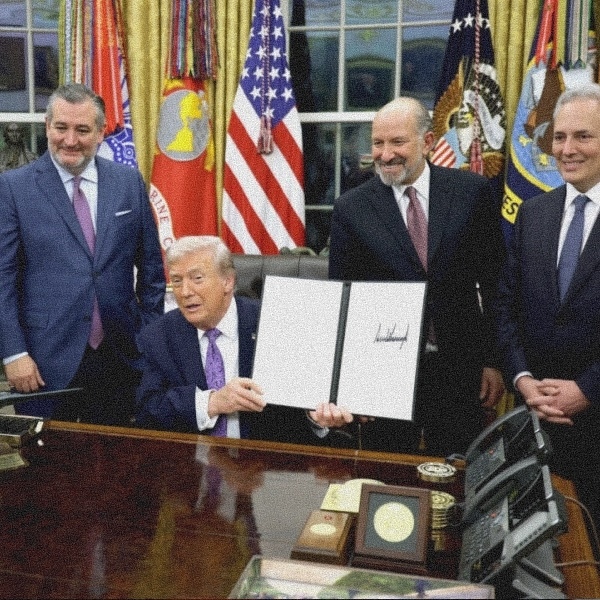
While President Trump’s official salary is $400,000 per year… his tax returns reveal he’s been collecting up to $250,000 PER MONTH from one hidden source. Until recently, most Americans couldn’t touch the type of investment that makes up this investment. But thanks to Executive Order 14330, that just changed. If you love investing in disruptive new companies…
Warren Buffett is the greatest value investor of all time. But even the Oracle of Omaha has limits.
Because of Berkshire Hathaway’s size, Buffett simply can’t invest in small-cap stocks without taking controlling stakes. That means some of the market’s most promising companies are completely off his radar.
But they don’t have to be off yours.
We’ve put together a brand-new report profiling 5 small-cap stocks that check all the boxes of Buffett’s investing criteria solid financials, durable business models, strong management, and clear growth catalysts.
The only difference?
These stocks are flying under Wall Street’s radar and still accessible to individual investors like you.
CompanyShare PriceAmount / PeriodYieldPrevious AmountPayout RatioPayable DateAIGAmerican International Group$84.29$0.45 quarterly2.23%$0.4532.7%12/30/25 AINAlbany International$52.21$0.28 quarterly2.26%$0.27-55.7%1/8/26 ALLEAllegion$160.65$0.51 quarterly1.27%$0.5127.6%12/31/25 APHAmphenol$130.99$0.25 quarterly0.78%$0.1722.0%1/7/26 BBARBBVA Banco Frances$17.09$0.03 monthly2.40%$0.0341.1%12/23/25 BBYBest Buy$73.86$0.95 quarterly4.76%$0.95125.8%1/6/26 BMAMacro Bank$88.40$0.36 monthly5.01%$0.35189.1%12/23/25 BNBrookfield$45.51$0.06 quarterly0.55%$0.0666.7%12/31/25 BNTBrookfield Wealth Solutions$45.55$0.06- – 104.3%12/31/25 ECLEcolab$262.45$0.73 quarterly1.10%$0.6537.4%1/15/26 HIHillenbrand$31.88$0.23 quarterly2.86%$0.23147.5%12/31/25 ICEIntercontinental Exchange$163.71$0.48 quarterly1.10%$0.4835.0%12/31/25 JJSFJ & J Snack Foods$94.07$0.80 quarterly3.51%$0.8095.5%1/6/26 PHMPulteGroup$126.37$0.26 quarterly0.91%$0.226.8%1/6/26 PLDPrologis$130.47$1.01 quarterly3.13%$1.01117.8%12/31/25 STMSTMicroelectronics$26.40$0.09 quarterly1.30%$0.0953.4%12/23/25 Please note you must purchase shares of these companies by the market close tomorrow to receive the next dividend payment.How the Rich Retire (ad)
While President Trump’s official salary is $400,000 per year… his tax returns reveal he’s been collecting up to $250,000 PER MONTH from one hidden source. Until recently, most Americans couldn’t touch the type of investment that makes up this investment. But thanks to Executive Order 14330, that just changed. If you love investing in disruptive new companies…
This is a list of companies that meet common criteria that investors use to evaluate dividend stocks. This list contains companies that have dividend yields greater than 3%, payout ratios of less than 75% (or less than 100% for REITs), five-year average annual dividend growth of at least 1.5% and a minimum market cap of $1 billion.CompanyDividend YieldAnnual PayoutPayout RatioAnnual Dividend GrowthP/E RatioMarket CapTBCGTBC Bank Group PLC7.10%GBX 711.1329.26%5.29%1.65£2.21KLYBLyondellBasell Industries N.V.12.08%$5.48N/A4.89%N/A$14.42KKRPKimbell Royalty11.13%$1.40N/A2.06%N/A$1.33KUKWGreencoat UK Wind PLC10.66%GBX 10.09N/A1.86%N/A£2.08KWUThe Western Union Company9.78%$0.9441.05%3.28%4.25$3.09K
Thank you for subscribing to DividendStocks.com’s daily newsletter!
DividendStocks.com provides a daily email newsletter for dividend and income investors that covers ex-dividend stocks, new dividend declarations, dividend stock ideas, and the latest market news. DividendStocks.com is a subsidiary of MarketBeat Media, LLC and MarketBeat.com.
If you need help with your subscription, please feel free to contact MarketBeat’s U.S. based support team at contact@marketbeat.com.
A Catholic church’s Nativity display criticizing the administration’s immigration policies was ordered to be removed by the Boston Archdiocese, but church leaders are trying to stall the decision. The Saint Susanna Parish in Dedham, Massachusetts, has … Read more
Healing isn’t linear, and that’s okay. Some days you’ll feel strong, others you’ll need to rest. Both are part of the process, and both are valid.HONOR YOUR HEALING
You’re always one blessing away from a brighter day… and a bigger life. May these stories, affirmations, prayers, and insights lift your spirits and inspire you to lift others.































 RJ Hamster