I was born on 6 August 1956 in San Francisco, California to Janet and (the late) Richard Hovis.
I grew up in Santa Monica, California where I attended elementary, junior high school, and high school (graduating in 1974), in addition to involvement in sports and recreation (Little League +, the Boy’s Club ++). Further, it was in elementary school – St. Augustine’s By-the -Sea Parish School that I found, and made the choice to truly journey with God.
I attended Arizona State University from 1974 to 1977 – seeking to become an architect, however, I was not accepted, and, as such, I graduated with a Liberal Arts degree.
Upon graduation from Arizona State University, I attended Cal Poly San Luis Obispo and studied City and Regional Planning at the Master’s level. I successfully completed one (1) year in a two (2) year program – I did not complete the Master’s degree in City and Regional Planning – due to personal reasons.
I returned to Santa Monica where I started (October 1979) my career as graphic designer with Exxon Company, USA. I spent five years with Exxon Company, USA.
While working with Exxon Company, USA I was accepted into architectural school – Sci-Arc in Southern California, however, I did not attend preferring to stay with Exxon..
In 1982 I married Laura Flosi and in April 1983 we had our one and only child – Lauren Alain Hovis – a gift from God.
We moved to Phoenix, Arizona in 1984 from Los Angeles, where I went to work as a graphic designer with Kitchell CEM (from 1985 -1987).
From 1987 – 1995 I was an independent contractor, and a registered representative in mortgage finance, financial management, graphic design, and drafting.
Further, I attended the University of Phoenix and successfully obtained a Master’s in Business Administration (MBA) in 1982.
I was also a member of the Scottsdale Jaycees, where I became very involved in community events and projects.
In 1994, I accepted a cartography position with the Defense Mapping Agency in Reston, Virginia. As such, I relocated from Phoenix to Reston.
In 1998, I was accepted and worked as a Visual Information Officer with the Central Intelligence Agency. In 2002, I worked as a Support Officer until my retirement (due to a need for shoulder surgery) in September 2018.
Away from my Federal Government service, I have been involved in various organizations and activities in Northern Virginia.
In November of 2011, I married Rebecca Ouellette in Santa Monica, California. I reside in San Tan Valley, AZ with my two hamster - Jess and Timothy, our fish, our lizard - RJ Lizard., and our cats - Pearl and Grey.
As to hobbies, I enjoy playing sports, attending sporting events, mentoring individuals from financial management to hamsters, building models, photography, travel, multimedia design, managing partner for RJ Hamster, and jazz – smooth jazz to a samba or a bossa nova.
Love and God Bless,
Peter – aka RJ Hamster Jo hi
We’re coming to the end of the line for the traditional energy grid.
Look what’s happening in California.
It’s a ‘basket case’ these days.
Dangerously hot temperatures, wildfires, and an electric grid that’s like 100 years old is causing people to wonder if it’s safe to switch on the A/C in their homes.
The grid’s so bad that folks can’t even charge their state-of-the-art electric cars.
Hey, I’m not asking you to shed a tear for some liberal snowflakes…
I sure won’t.
I’m just telling you that California is the tip of the iceberg.
And now that AI is adding additional stress to an aging network…
The “A.I. Apocalypse” is closer than you think.
If a solution isn’t found soon, this unprecedented demand for electricity could lead to SEVERE consequences… like:
Rolling blackouts from coast to coast…
No heat for homes during 15-degree winter freezes…
No air conditioning in 100-degree summers…
Soaring prices at the gas pump…
And exploding costs of food and medicine.
That’s why I’m ADAMANT that you hear about it from me today.
Especially because I’ve found one unusual A.I. “Savior Stock” that can potentially save the day if momentum continues to build…
Who knows? It could become the “New Nvidia”…
And help fast-track the NEXT tranche of A.I. millionaires.
Researchers at Rockefeller University are reporting encouraging results from an early clinical trial of a redesigned cancer immunotherapy that is injected directly into tumors.
In the small study, six of 12 patients experienced tumor shrinkage, and two patients went into complete remission, according to findings published in the journal Cancer Cell.
And remarkably, the treatment not only affected the injected tumors but those located in other areas of the body shrank or were eliminated by immune cells.
The therapy is based on a class of drugs known as CD40, which stimulate the immune system to recognize and attack cancer cells. Traditionally, these drugs have been given through the bloodstream, which can lead to widespread side effects such as inflammation and liver damage.
To reduce those risks, researchers modified the drug — called 2141-V11 — and changed how it is delivered. Instead of intravenous infusion, the treatment is injected directly into tumors.
“When we did that, we saw only mild toxicity,” said study author Jeffrey V. Ravetch of Rockefeller University.
In addition to shrinking the treated tumors, the therapy appeared to trigger a broader immune response throughout the body — an effect that surprised researchers.
“This effect — where you inject locally but see a systemic response — that’s not something seen very often in any clinical treatment,” Ravetch said. “It’s another very dramatic and unexpected result from our trial.”
In some cases, tumors that were not directly injected also shrank or disappeared. This occurred in two patients with advanced cancers — one with melanoma and another with breast cancer.
“The melanoma patient had dozens of metastatic tumors on her leg and foot, and we injected just one tumor up on her thigh,” Ravetch said. “After multiple injections of that one tumor, all the other tumors disappeared.”
“The same thing happened in the patient with metastatic breast cancer, who also had tumors in her skin, liver, and lung,” he added. “And even though we only injected the skin tumor, we saw all the tumors disappear.”
Researchers say the treatment works by activating T cells — immune cells that can seek out and destroy cancer throughout the body once they recognize it.
While the results are promising, the study was small, and more research is needed. Larger clinical trials are already underway, with nearly 200 patients enrolled.
This email is never sent unsolicited. You have received this Newsmax email because you subscribed to it or someone forwarded it to you. To opt out, see the links below.
Remove your email address from our list or modifyyour profile. We respect your right to privacy. Viewour policy.
This email was sent by: Newsmax.com 362 N. Haverhill Road West Palm Beach, FL 33415 USA
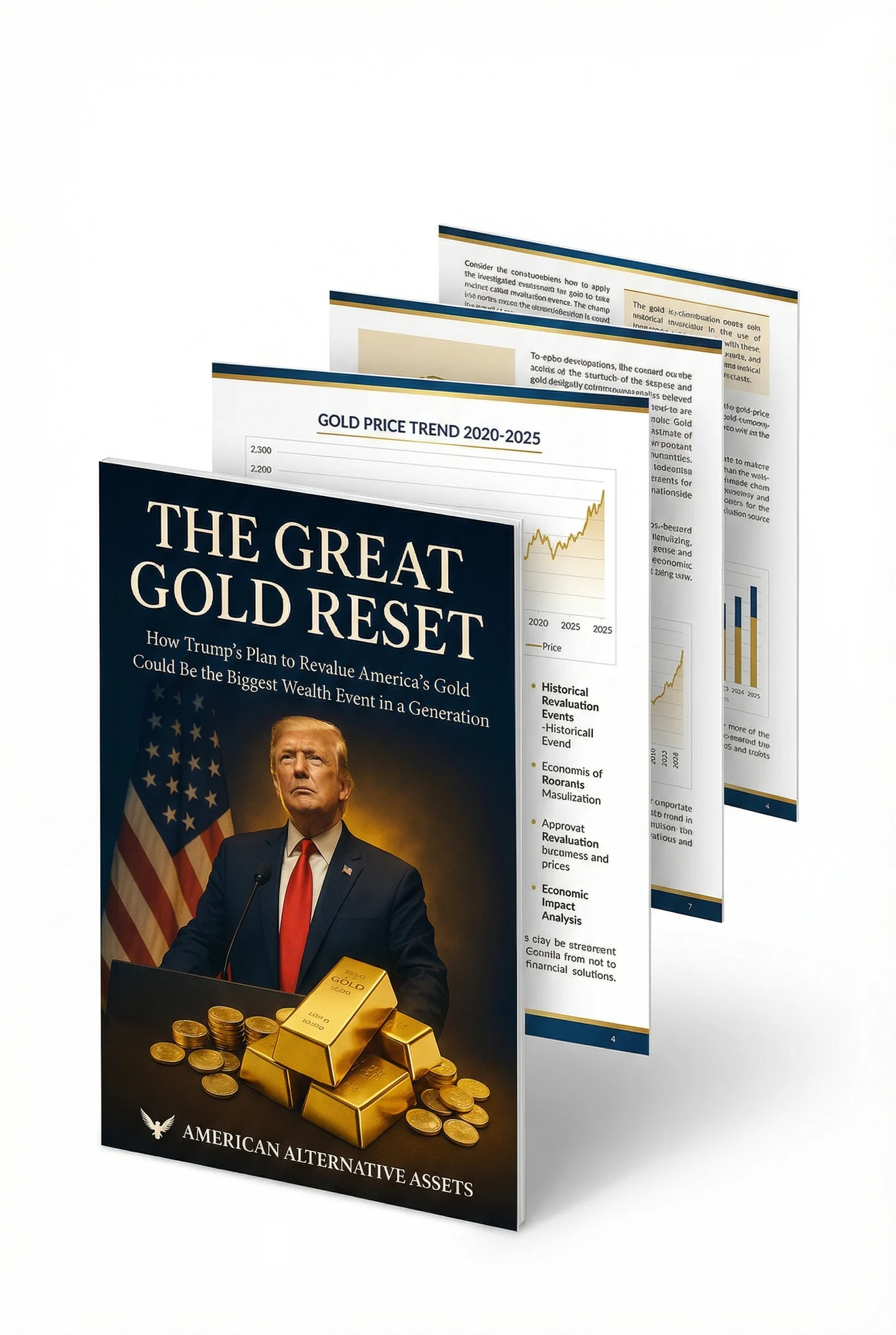
When the last one goes out, we’re pulling it offline — the information inside is too sensitive to leave up indefinitely.
Here’s what’s inside the remaining copies:
The executive order Trump can sign tomorrow — the same legal authority FDR used in 1934 to move billions in wealth overnight — and exactly how to position before it happens.
This isn’t a newsletter. It’s not evergreen content.
It’s a window. And 688 people already jumped through it.
Palantir’s New Partnership Continues Separating Fact From Fiction
Reported by Chris Markoch. Article Published: 3/17/2026.
Key Points
Palantir and NVIDIA are launching a sovereign AI architecture that allows governments and enterprises to run AI infrastructure while maintaining full control of their data and systems.
The partnership strengthens Palantir’s position with government customers while potentially expanding its reach with international governments and large enterprises.
Customer examples from AIPCon show real-world adoption, reinforcing the case that Palantir’s AI platform is becoming deeply embedded in mission-critical operations.
Several headlines are taking a backseat to more pressing geopolitical concerns, but the announcement that Palantir Technologies (NASDAQ: PLTR) and NVIDIA (NASDAQ: NVDA) are teaming up to launch a sovereign artificial intelligence (AI) OS reference architecture deserves more attention.
This partnership will deliver customers a pre-packaged, turnkey AI system: NVIDIA provides the hardware, and Palantir supplies the software that enables customers to deploy and secure production-ready AI infrastructure at scale.
The Fed is counting on the fact that ordinary Americans won’t read a 93-page document until it’s too late. I’ve read it and that’s why I’m begging you to act while you still can.Get the 4 “Fed-proof” steps right now.
The “so what” moment for those who aren’t technically inclined is the term “Sovereign AI.” A primary concern for governments, municipalities, the military, and large enterprises is the ability to retain full control over their data, AI models, and applications (the AI stack).
Today, that often requires sending data to a third-party cloud provider such as Amazon Web Services, Google Cloud, or Azure, which theoretically increases exposure to breaches. A sovereign AI stack removes that worry because organizations fully own and control the entire architecture.
What This Deal Means for Palantir
Palantir has its naysayers, and this announcement won’t silence everyone. One recurring concern is that Palantir is “too dependent” on government revenue.
For context, about 55% of Palantir’s revenue comes from public-sector customers. These contracts share three attributes investors like: large dollar value, multi-year terms, and stickiness — meaning once Palantir is in place, switching costs are prohibitive.
This partnership should enhance those attributes with the U.S. government, for which Palantir is becoming a de facto operating system. It may also extend Palantir’s reach into international governments, an area where critics say the firm has been less entrenched.
AIPCon 9: Let the Customers Provide the Proof
Palantir’s AIPCon has become a showcase for the company’s Artificial Intelligence Platform (AIP). The mid-March event continued that pattern, with real customers sharing real-world results delivered by Palantir.
The session’s lineup reinforced how Palantir continues to expand across both government and commercial customers. For example:
Centrus Energy (NYSE: LEU) is using Palantir’s platform to stitch together classified and unclassified systems as part of the effort to restart domestic nuclear enrichment in the United States. This is active infrastructure work tied directly to American energy independence and national security — a tangible example of high-stakes, long-duration contracts that make Palantir a one-of-a-kind company.
That’s the thread investors should remember. Critics argue Palantir is too reliant on government revenue, but events like AIPCon provide concrete examples that Palantir is growing both sides of its business — in revenue and in the number of customers.
The takeaway is that Palantir isn’t selling a distant vision. It’s building a track record of long-term contractual partnerships with customers that have deeply integrated Palantir’s software into mission-critical workflows. Once customers realize those benefits, they are unlikely to move away from Palantir’s platforms.
PLTR Stock Remains a Solid Long-Term Buy
Palantir stock is up nearly 500% over the past five years. While some may attribute that rise to retail enthusiasm, the company continues to demonstrate substantial potential for future growth.
Some investors, however, remain concerned about valuation — a reasonable, personal judgment each investor must make. Over the past six months, a defensive approach to PLTR has often paid off. Many skeptics argue that, as with other technology stocks, the long-term benefits of this partnership are already priced into the shares.
For long-term investors, the dip near $130 represented an attractive buying opportunity; if the stock returns to that level, it may be attractive again.
The NVIDIA deal strengthens Palantir’s moat, suggesting that, regardless of current valuation, PLTR stock could rise significantly over the next three to five years.
Thank you for subscribing to StockReport.com, our daily newsletter that highlights a new stock each day.
This email content is a sponsored email sent on behalf of American Alternative, a third-party advertiser of StockReport.com and MarketBeat.
If you need help with your subscription, please don’t hesitate to contact our team at contact@stockreport.com.
If you no longer wish to receive email from StockReport.com, you can unsubscribe.
The Fed is in a bind on rates, but we can profit regardless
15 tickers solving three key AI bottlenecks
Three seasonality patterns with a perfect track record are kicking off now
The Fed is in a lose-lose position on interest rates…
Most eyes these days are on the war in the Middle East.
And that’s understandable with oil topping $100 a barrel… key fertilizer ingredients unable to pass through the Strait of Hormuz… and about one-fifth of the world’s natural gas supply trapped.
But as you read this, something else is happening close to home that also impacts the markets.
The Fed is releasing its decision on whether to cut rates or keep them steady. And odds are near unanimous that rates will stay right where they are, in a range of 3.5% to 3.75%.
In a normal market, this would be so un-newsworthy that I probably wouldn’t mention it. But the backdrop makes it just as interesting as what’s coming in the next two months.
Due to the disruption to oil markets, prices at the pump here in America are up roughly 17% over the past two weeks.
That’s a direct hit to consumers’ wallets – and an inflation risk. And it’s nothing compared to what a prolonged war will do to prices for residential energy, food, and consumer goods.
When inflation risks are high, the Fed tends to raise interest rates to cool the economy. But Fed chair nominee Kevin Warsh – President Trump’s nominee to replace Jerome Powell when his term expires in May – says he wants lower rates.
He argues that AI is making the economy more productive – and that a more productive economy doesn’t need high rates to keep inflation in check. Trump picked him because of this stance.
That leaves Warsh with a dilemma. If his Fed lowers rates in the face of rising prices, inflation could rip again. Raise rates, and he’s sure to draw the ire of a president all too willing to throw grenades at the Fed.
Fortunately, as a TradeSmith reader, you don’t have to worry about interest rates whether they go up, down, or around in circles.
With our tools, you’re spoiled for choice on great investment ideas, regardless of where rates go next.
Today, we’ll look at a few more of those ideas – specifically through the lens of our short-term momentum tools, our quantitative stock ratings system, and our seasonality pattern tracker.
But first, let me tell you how to get 15 stock recommendations to play the multitrillion-dollar AI infrastructure buildout for the low price of free.
Elon Musk is about to take SpaceX public in what’s set to be the biggest IPO ever. But there’s no need to wait for the company to go public. You can claim your stake today. The New York Times predicted it “will unleash gushers of cash for Silicon Valley and Wall Street.” If you click here and learn what to do, some of that cash could end up in your pocket.
How to profit from this $10 trillion AI “regime change”…
Eric Fry is an award-winning stock picker, futurist, and analyst at our sister company, InvestorPlace. He’s spent more than three decades watching the market cycle through booms and busts.
And he has a proven track record of nailing big calls…
He warned of the dot-com crash early enough to help his readers escape with gains as high as 5,997% in the wreckage.
He went on CNBC in 2005 to publicly call the housing bubble.
He even published a book in 2019 warning of an imminent crash – months before COVID hit.
And last July, he recommended his readers “sell Nvidia, buy Corning.”
Since then, Corning (GLW) – the maker of the super-tough Gorilla glass for phone screens as well as fiber-optic cable needed for AI data centers – is up more than 100%. And Nvidia (NVDA), the golden boy of the AI megatrend, is up less than 7%.
Eric made this call because he saw months ago that the AI trade was going through a “regime change.” And that change is accelerating now.
AI hyperscalers like Amazon (AMZN), Microsoft (MSFT), Meta Platforms (META), and Google parent Alphabet (GOOGL) are set to spend $635 billion on AI infrastructure in 2026.
But they’re running into three bottlenecks that can’t be solved with money alone: raw materials, energy, and memory chips.
Eric released a presentation today that walks you through what’s going on – including 15 tickers of stocks tied to these three supply chains that are set to be the next round of AI winners.
The broadcast aired an hour ago. But the replay is available now, and everyone who watches will get the full list of stocks for free.
Whether or not you agree with Eric’s timeline, the underlying supply constraint story connects directly to what our own data is showing. So, I recommend you check it out here.
If nothing else, you’ll learn a ton about what’s going on under the surface of what’s shaping up to be the biggest stock boom in history.
These software stocks are bucking the bearish trend in the sector…
If you’ve been following TradeSmith Daily this year, you’ll know the software sector has been getting hammered.
The iShares Expanded Tech-Software Sector ETF (IGV) is down nearly 17% since January… and that’s after rallying 11% from its February low.
Investors have fled every company that sells software as a service, out of fear that AI tools like Claude Code will let businesses fulfill those needs in-house.
This is a key reason why the tech-packed Nasdaq 100 index recently entered our Short-Term Health Red Zone. It’s the first sell signal since last March, two weeks before the Liberation Day tariff crash.
But buried among the wreckage, a small pocket of software stocks is actually doing well.
And beyond strong price momentum, they’re showing high-quality, growing fundamentals and the telltale signs of institutional buying.
These two signals point the way…
We found them by combining two TradeSmith tools: Short-Term Health and the Quantum Score.
Short-Term Health tracks the kind of momentum shifts that can last a few weeks to a few months. When a stock’s Short-Term Health is in a Green Zone, it’s a buy. When its momentum starts to break down, it goes Yellow for caution. Red is a sell signal.
The Quantum Score combines fundamental strength – earnings, revenue, and profit margin growth – with a technical read on institutional money flows. Anything above 80 means a highly ranked stock is seeing unusually large inflows from Big Money investors and is a buy.
Used together, these two signals act as confirming filters. A stock has to be in a healthy uptrend and attracting serious institutional capital to make the list. That cuts out a lot of stocks.
Right now, only nine software stocks pass both tests…
Here are the three most recent to flash a new Short-Term Health Green signal, all with Quantum Scores above 80:
Clear Secure (YOU) makes the biometric identity verification systems used at airports, stadiums, and sports arenas. It scans your fingerprint or iris instead of making you show an ID. Its Quantum Score is 92.6, and it’s up 44.9% over the past month, with its Green signal active for more than two weeks.
RingCentral (RNG) provides cloud-based business communications – phone, video, messaging, and internet-based tools. Its Quantum Score is 86.9, and it’s up 24.0% over the past month, with its Green signal also more than two weeks old.
Fastly (FSLY) runs a platform that speeds up and secures how websites and applications load. Its Quantum Score is 85.8, and it’s up 24.8% over the past month, with its Green signal now three weeks old.
None of these stocks are household names. And all three are smaller companies, valued between $2.8 billion and $4.4 billion and operate in software niches that aren’t directly in the crosshairs of the AI disruption.
While the software carnage is real, it isn’t universal. Some software stocks are performing well.
And the ones surviving share two things in common: niche, defensible businesses and institutional money flowing in, despite the broader carnage.
These three seasonal patterns have never missed…
One tool always worth watching in the TradeSmith toolkit is our Seasonality system.
In our research, we’ve found every stock has a behavioral fingerprint built up over years of trading. Certain windows produce consistently strong performance in the same calendar periods, year after year.
TradeSmith’s Seasonality tool identifies these patterns by looking at a stock’s price action across years, and even decades, of data. Then, it flags windows where the probability of a positive move has been especially high.
When the historical accuracy on a pattern is 100%, that means it’s worked every single time in the past when the window triggered. Those are the trades to pay attention to.
Right now, three patterns are kicking off – and every one of them carries a perfect track record.
Grupo Cibest Bancolombia (CIB), the parent holding company of Bancolombia, Colombia’s largest bank, with operations across Latin America – enters its seasonal window today, running through April 16. Historically, this pattern has produced an average return of 8.8% over the window, every single time.
Cohen & Steers Infrastructure (UTF) is a closed-end fund that holds infrastructure-related stocks across utilities, pipelines, and communications. It enters its seasonal window on March 24, running through April 29. It’s always been higher through this window and has posted an average return of 9%. But keep in mind that an anomalous spike during the 2020 pandemic crash recovery drags that average return higher.
Encompass Health (EHC) operates a national network of inpatient rehabilitation hospitals. It enters its window on March 25, running through April 30. Its average return over the period is 10.2% at 100% accuracy.
To be clear, seasonality is not a crystal ball. Even a perfect historical accuracy rate doesn’t guarantee a future result.
Patterns that held for 15 years can break down, particularly in unusual markets like this one. But when a setup has never missed across more than a decade of data, it deserves a spot on your watchlist.
And in a market where most of the familiar trades have stopped working, high-probability seasonal windows are exactly the kind of setup worth having in your corner.
The throughline today…
The Fed is stuck. Oil is high, inflation is sticky, and even a rate-cut-friendly incoming chair can’t change the math right now.
But TradeSmith’s tools don’t wait for the Fed to act. Short-Term Health and the Quantum Score are already surfacing the handful of software stocks holding up in a broken sector.
Meanwhile, Seasonality is flagging three perfect-record windows kicking off this week.
And Eric Fry’s AI regime change thesis maps directly onto the energy and materials signals we’ve been tracking for months.
That’s the edge TradeSmith’s data gives you. Instead of relying on guesswork and gut feel, it gives you a real-time read on what’s working right now.
To building wealth beyond measure,
Michael Salvatore Editor, TradeSmith Daily
Disclosures: Michael Salvatore held shares of Alphabet (GOOGL) at the time of this writing.
This editorial email containing advertisements was sent to pahovis@aol.com because you are subscribed to this service. To unsubscribe or change your email preferences, please click here.
To contact Customer Service, call toll free: 866-385-2076, Mon–Fri, 9am–5pm ET, or email support@tradesmith.com.
We’re coming to the end of the line for the traditional energy grid.
Look what’s happening in California.
It’s a ‘basket case’ these days.
Dangerously hot temperatures, wildfires, and an electric grid that’s like 100 years old is causing people to wonder if it’s safe to switch on the A/C in their homes.
The grid’s so bad that folks can’t even charge their state-of-the-art electric cars.
Hey, I’m not asking you to shed a tear for some liberal snowflakes…
I sure won’t.
I’m just telling you that California is the tip of the iceberg.
And now that AI is adding additional stress to an aging network…
The “A.I. Apocalypse” is closer than you think.
If a solution isn’t found soon, this unprecedented demand for electricity could lead to SEVERE consequences… like:
Rolling blackouts from coast to coast…
No heat for homes during 15-degree winter freezes…
No air conditioning in 100-degree summers…
Soaring prices at the gas pump…
And exploding costs of food and medicine.
That’s why I’m ADAMANT that you hear about it from me today.
Especially because I’ve found one unusual A.I. “Savior Stock” that can potentially save the day if momentum continues to build…
Who knows? It could become the “New Nvidia”…
And help fast-track the NEXT tranche of A.I. millionaires.
President Trump is pouring trillions into a new kind of infrastructure. And there’s one fund positioned to profit from every dollar that flows through it — the same way McDonald’s profited from every car on the highway…
In fact, Trump put up to $25 million of his own money into this fund… and it pays him as much as $250,000 a month.
Alexander Green Chief Investment Strategist,The Oxford Club
This ad is sent on behalf of The Oxford Club, 105 W. Monument Street Baltimore, MD 21201. If you would like to opt out from receiving offers from The Oxford Club, please click here
And I’ll show you exactly what I’m doing with my own money.
Let The Game Come To You!
Big T
In case you missed it, here’s Big T’s Digital Asset Daily
Why EVERYONE Needs a Crypto Emergency Fund
In the 1970s, American Express launched one of the most famous advertising campaigns in history.
“Don’t leave home without it.”
The slogan referred to travelers’ cheques. And the pitch was simple: Wherever you went in the world, American Express made sure you could still access your money.
For decades, that promise held true…
Until one day… it didn’t.
I (Houston) was sweating bullets in a 7-Eleven checkout line in Singapore. My credit card kept getting declined. My embarrassment grew as the line behind me got longer.
I was there for Breakpoint 2024, the world’s largest Solana conference. I stopped at a 7-Eleven for some food… Only to find I couldn’t access my own bank account.
That’s when the guy behind me quipped: “American credit cards don’t work here.”
I had $20 cash. But the cashier wouldn’t take U.S. dollars. After three failed attempts with two different cards, I gave up hungry and humiliated.
No problem, I thought. I’d just call the credit card company and ask them to unlock the account.
Boy, was I wrong.
My cell provider didn’t offer Singapore plans. My hotel blocked international calls. I was stranded in a foreign country with no banking access and nothing but a crumpled greenback in my pocket.
I learned a valuable lesson that day: It doesn’t matter if you have $20 or $20 million. If you’re locked out of the traditional financial system, you’re finished.
Fortunately, I eventually solved the problem. And as you’ll see below, the solution involved crypto.
This ties into the massive crypto transformation I’ve highlighted over the past week (here and here). It’s unfolding even in the middle of this bear market, and most of the world is missing it…
How Crypto Rescued Me
Since the outbreak of the war in the Middle East, we’ve seen real-world use cases for digital assets appear almost overnight. My situation in Singapore was just an early glimpse of what’s happening now on a global scale.
I’ll explain how crypto is becoming a financial lifeline in a moment. But first, let me show you how I got out of my jam… Because it reveals just how powerful this solution is.
Since I couldn’t use cash or my credit cards, the hotel desk clerk suggested a ridesharing app called Grab. It’s like Singapore’s version of Uber.
So I downloaded the app.
That’s when I discovered something extraordinary. Grab accepts crypto payments… and instantly converts them into Singaporean dollars for the driver.
I had about $50 sitting in a digital wallet on my phone. My frustration quickly turned to relief, and within minutes I ordered a ride to the conference.
When I told the driver I had paid in crypto, he pulled over. He was worried I hadn’t paid with “real” money.
But after checking his phone, he looked back and said: “You’re good. You already paid. What’s crypto?”
And that’s the game-changer.
He had no idea I used blockchain technology. He didn’t care. All he knew was that Singaporean dollars showed up instantly in his account.
I sent a dollar-denominated stablecoin over the blockchain. He received local currency. And the transaction fee was only $0.0098. That’s less than a penny.
On top of that, there are no conversion fees… no waiting in line at the bank… and no delays.
At that moment, crypto stopped being just an investment idea to me. It proved something far more important: Stablecoins can also be a lifesaver.
And today we’re watching that same technology solve problems where the stakes are far higher than just booking a taxi ride.
Why Stablecoins Are Surging During This Global Crisis
Let me be clear about something. Conflict is tragic for everyone involved. And we all hope this war with Iran ends quickly.
My job is to help you understand how markets react during moments of uncertainty – and how you can protect and grow your wealth during the volatility that follows.
Right now, one of the biggest financial shifts in the world involves stablecoins. And the mainstream media is completely missing it.
Teeka and I have been following this trend closely to keep you up to date…
When the Iran war erupted over the weekend of February 28, traditional markets were closed. But as we told you, decentralized exchanges like Hyperliquid kept operating.
They began providing real-time price discovery. Traders flocked to the platform to hedge geopolitical risk and trade oil-linked contracts… all while the traditional financial system was asleep.
I also showed you how I generated profits using tokenized gold – even as the price of physical gold started rolling over. Instead of buying bullion, I purchased tokenized gold and allowed other traders to transact against it on-chain, earning yields of 10–20%.
And we haven’t kept these ideas to ourselves.
Subscribers to Big T’s Crypto Incomereceived our tokenized gold recommendation on February 12, when gold was trading below $5,000.
Since then, gold is essentially flat. But our readers have had the chance to capture 10-20% in income on their staked tokens… turning an asset that normally generates no yield into an income-producing one. (Crypto Incomesubscribers can read that issue right here.)
A week later, we positioned subscribers of Big T’s Inside Crypto in one of the hottest stablecoin plays on the planet. On Tuesday, we sent out a profit sell alert on this idea, and our readers had the chance to double their money in less than 30 days. (Inside Crypto subscribers can read the profit sell alert right here.)
Below, I’ll show you how to set up your own stablecoin emergency fund. But first, you need to see just how quickly stablecoins are gaining adoption.
How Stablecoins Are Holding Up in the Middle of a War Zone
I’m not making a political argument here. I’m just pointing out the facts. Fiat currencies are tied to governments. So governments can freeze them, ban them, or seize them.
Decentralized digital currencies are different. They’re completely agnostic. They don’t care about your race, religion, gender, or where you live… whether that’s Moscow, Russia or Moscow, Texas.
In my view, they represent one of the greatest tools of financial freedom ever created.
That’s because unlike fiat currencies, decentralized cryptocurrencies move instantly across borders without banks or governments – providing financial lifelines when traditional money systems fail during crises.
This isn’t just hypothetical…
Earlier this month, The Wall Street Journal reported the United Arab Emirates is considering freezing billions in Iranian assets. Just think about that: With the push of a button, some foreign bureaucrat can cut off access to people’s money.
Since last year, Iran’s currency – the rial – has collapsed roughly 75%. As sanctions tighten and traditional financial channels freeze, many Iranians are losing access to the global banking system.
In response, millions are turning to crypto.
According to blockchain data firm Chainalysis, Iran’s crypto ecosystem has already grown to roughly $8 billion. And stablecoins like USDT are becoming a key financial lifeline.
In fact, blockchain analytics firm Elliptic estimates that Iran’s central bank accumulated at least $507 million in the USDT stablecoin last year alone to support international trade.
Meanwhile, ordinary citizens are using crypto for survival.
Hours after U.S. and Israeli airstrikes, outflows from Nobitex – Iran’s largest crypto exchange – surged 700% in a single day. Within the first hour after the attacks began, more than $2 million flowed out of Iranian exchanges.
These people weren’t speculating. They were protecting their savings. And Iran isn’t the only country where stablecoins are filling the gaps left by broken financial systems.
We’ve seen this story play out again and again.
In Lebanon, when the banking system collapsed in 2019, citizens turned to the blockchain for daily transactions. In 2022, research from Chainalysis showed that Lebanon’s crypto transaction volume was up 120% year-over-year.
In 2023, the World Economic Forum reported over $212 million in crypto donations to Ukrainian war efforts, including $80 million directly to the government. Traditional banks couldn’t move money this fast across borders.
In Argentina, where financial instability is the status quo, crypto adoption is soaring. Exchange Lemon reported 5.4 million crypto app downloads in 2025. Monthly active users were four times higher than during 2021’s bull run and 20% higher than 2024. Argentines vacationing in Brazil now download apps that use USDT stablecoins to interact with Pix, Brazil’s payment platform. They’re using crypto without even realizing it.
The trend is undeniable: As of April 2025, there were roughly 650 million active crypto users worldwide.
Meanwhile, global stablecoin transaction volumes jumped from $16 trillion in 2024 to more than $34 trillion last year. The stablecoin market has ballooned from less than $50 billion to $300 billion in the past five years.
And that’s just the beginning. There’s $117 trillion sitting in global bank accounts. That entire market is ripe for disruption.
How to Set Up Your Own Stablecoin Lifeline
Whether you’re stuck without cash or credit cards in a foreign country… or the traditional financial system freezes during a conflict… the ability to move money instantly becomes priceless. And that’s exactly what stablecoins provide.
The “Amex” convenience of the traditional system is disappearing now. In its place, people across the Middle East, Southeast Asia, Eastern Europe, and South America are turning to stablecoins.
Now ask yourself this: As an American, can you trust the banking system will always work?
Customers at Silvergate Bank and Signature Bank learned the hard way in 2023 when those banks imploded and key services halted temporarily.
What if you’re traveling abroad and find yourself financially stranded, like I did? Or worse… What if you’re trapped in a warzone – like many U.S. expats and officials stuck in Doha and Dubai – with no access to your bank account?
That’s why I believe it’s critical to set up a digital wallet. You can load it with just $20-$50 to start. It’s like having some emergency cash in your pocket.
Setting up a digital wallet where youhave full control over your money might save you, like it saved me.
My favorite digital wallet is called Phantom. It lets you access and manage your crypto assets across multiple blockchains. We’ve put together instructional videos to set up your own Phantom Wallet in our Big T’s Inside Crypto research service.
If you’ve never touched crypto, don’t worry. We’ve helped everyone from cops to ranchers to grandmothers learn how to set up crypto wallets and accounts in a few hours using our step-by-step guides. You can learn how to become a member right here.
In that presentation, you’ll also learn more about the $117 trillion stablecoin trend…. including details from Teeka on six projects trading at deep discount right now. One play is a company he believes will be the gateway between Wall Street and stablecoins.
When the market finally awakens to this trend and reprices these altcoins higher, those positioned in the ideas could see 10x, 15x, or even 20x gains from here.
The bottom line is this: The financial landscape is shifting beneath our feet. From Tehran to Buenos Aires, millions are discovering what I learned that day in Singapore…
Crypto isn’t the future of money… It’s the present. The only question is whether you’ll be ready when you need it.
Is Your TSP Ready for a 20% Drop? A sharp market decline near retirement can permanently impact income. Timing matters more than returns when retirement is at stake. What federal retirees are reviewing now can change everything. Learn More
Imagine opening your retirement statement this year…
And realizing that a simple decision – one most retirees never even think about – could reshape your taxes, your diversification, and even your long-term financial stability.
Every year, Americans over age 73 are forced to withdraw tens of billions of dollars from their retirement accounts. And year after year, most people follow the same path:
Take the RMD in cash and move on.
Not because it’s the best choice.
But because no one ever tells them there’s another way.
*The free gold coin offer is available only while supplies last and is subject to change or withdrawal at any time. The coin shown in promotional materials is for illustrative purposes only; the actual coin received may vary in design, condition, and value. This offer is valid for qualified customers who open a Gold IRA through Allegiance Gold and meet all eligibility requirements. Additional terms and conditions may apply. Please contact us for full details. UnsubscribeOur faith and inspirational newsletters are supported by our advertising sponsors. Beliefnet does not necessarily endorse the views they express or the products/services they offer.
This email was sent because pahovis@aol.com has opted-in to receive special offers from Beliefnet.com. You may opt-out at any time by clicking the unsubscribe link above. Please allow up to 10 days for your email to be removed.
Please direct privacy concerns to abuse@beliefnetstaff.com. Mailing Address: PO Box 219, Gloucester, VA 23061.
Love New Times? Thanks to a recent Google update, you can now select us as a preferred source to see our stories first in search results. Thank you in advance for your ongoing support of local journalism.
























 RJ Hamster