I was born on 6 August 1956 in San Francisco, California to Janet and (the late) Richard Hovis.
I grew up in Santa Monica, California where I attended elementary, junior high school, and high school (graduating in 1974), in addition to involvement in sports and recreation (Little League +, the Boy’s Club ++). Further, it was in elementary school – St. Augustine’s By-the -Sea Parish School that I found, and made the choice to truly journey with God.
I attended Arizona State University from 1974 to 1977 – seeking to become an architect, however, I was not accepted, and, as such, I graduated with a Liberal Arts degree.
Upon graduation from Arizona State University, I attended Cal Poly San Luis Obispo and studied City and Regional Planning at the Master’s level. I successfully completed one (1) year in a two (2) year program – I did not complete the Master’s degree in City and Regional Planning – due to personal reasons.
I returned to Santa Monica where I started (October 1979) my career as graphic designer with Exxon Company, USA. I spent five years with Exxon Company, USA.
While working with Exxon Company, USA I was accepted into architectural school – Sci-Arc in Southern California, however, I did not attend preferring to stay with Exxon..
In 1982 I married Laura Flosi and in April 1983 we had our one and only child – Lauren Alain Hovis – a gift from God.
We moved to Phoenix, Arizona in 1984 from Los Angeles, where I went to work as a graphic designer with Kitchell CEM (from 1985 -1987).
From 1987 – 1995 I was an independent contractor, and a registered representative in mortgage finance, financial management, graphic design, and drafting.
Further, I attended the University of Phoenix and successfully obtained a Master’s in Business Administration (MBA) in 1982.
I was also a member of the Scottsdale Jaycees, where I became very involved in community events and projects.
In 1994, I accepted a cartography position with the Defense Mapping Agency in Reston, Virginia. As such, I relocated from Phoenix to Reston.
In 1998, I was accepted and worked as a Visual Information Officer with the Central Intelligence Agency. In 2002, I worked as a Support Officer until my retirement (due to a need for shoulder surgery) in September 2018.
Away from my Federal Government service, I have been involved in various organizations and activities in Northern Virginia.
In November of 2011, I married Rebecca Ouellette in Santa Monica, California. I reside in San Tan Valley, AZ with my two hamster - Jess and Timothy, our fish, our lizard - RJ Lizard., and our cats - Pearl and Grey.
As to hobbies, I enjoy playing sports, attending sporting events, mentoring individuals from financial management to hamsters, building models, photography, travel, multimedia design, managing partner for RJ Hamster, and jazz – smooth jazz to a samba or a bossa nova.
Love and God Bless,
Peter – aka RJ Hamster Jo hi
Welcome to The Pregame Lineup, a weekday newsletter that gets you up to speed on everything you need to know in baseball, while catching you up on fun and interesting stories you might have missed. Thanks for being here.
While both teams boast formidable lineups, their starting pitchers couldn’t be more different when it comes to experience. Venezuela will go with Eduardo Rodriguez, who has more than a decade of big league service time and a World Series ring, against Team USA’s Nolan McLean, who will enter the 2026 season with his rookie eligibility still intact after making eight starts down the stretch for the Mets.
1. Ronald Acuña Jr., RF 2. Maikel Garcia, 3B 3. Luis Arraez, 1B 4. Eugenio Suárez, DH 5. Gleyber Torres, 2B 6. Ezequiel Tovar, SS 7. Wilyer Abreu, LF 8. Salvador Perez, C 9. Jackson Chourio, CF
USA
1. Bobby Witt Jr., SS 2. Bryce Harper, 1B 3. Aaron Judge, RF 4. Kyle Schwarber, DH 5. Alex Bregman, 3B 6. Roman Anthony, LF 7. Will Smith, C 8. Brice Turang, 2B 9. Byron Buxton, CF
— Ed Eagle
A TIP OF THE CAP
We’ve seen some stellar games during this WBC. Clutch hits, big plays and electric crowds have made for top-shelf entertainment, and we tip our caps to all the teams involved — even those that didn’t go all the way.
A few of those deserve a special shoutout, before we get on with the task of crowning a champion tonight.
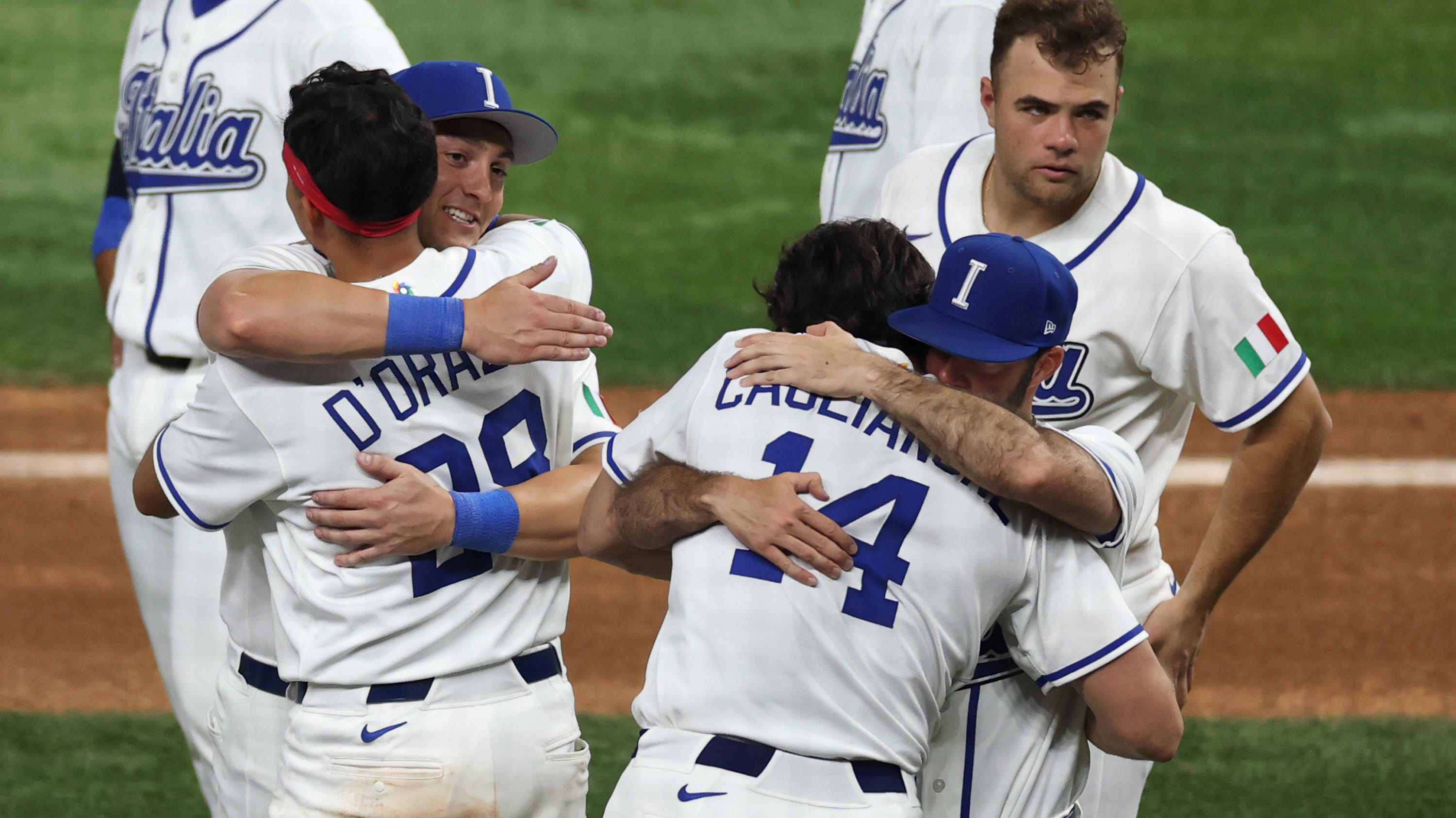
Italy: This espresso-powered squad went farther than anyone imagined, making it all the way to the semifinals and, hopefully, inspiring a new generation. Led by ebullient manager Francisco Cervelli and team captain Vinnie Pasquantino, Italy gave its opponents all they could handle, including a stunning upset of Team USA, and showed that it could be a force in future Classics.
Dominican Republic: There’s a strong argument that the D.R. was the most talented team in the Classic. Its lineup was absolutely stacked, a literal All-Star team: Fernando Tatis Jr., Ketel Marte, Juan Soto, Vladimir Guerrero Jr. And that’s just the top four! They played with passion and joy, both of which proved infectious to anyone who watched.
Canada: This team took a major step forward, winning three games and advancing to the quarterfinals for the first time with a roster filled with Major and Minor League talent. Led by standouts Owen Caissie, Abraham Toro and the Naylor brothers, Canada set the tone for future appearances on the international stage.
— Jason Foster
THE FINAL COUNTDOWN
Tonight will bring us the sixth championship game in Classic history, and it will have a lot to live up to. Before we find out how Venezuela-USA stacks up, let’s rank each of the first five WBC finals. And for a more in-depth look back, click here.
2023: Japan 3, United States 2
You could not have possibly scripted this any better, with Shohei Ohtani pitted against his then-Angels teammate Mike Trout with the game on the line in the ninth inning. The four-time MVP struck out the three-time MVP in an epic six-pitch at-bat to clinch Japan’s third WBC title.
2009: Japan 5, Korea 3 (10 innings)
Korea forced extra innings with a furious ninth-inning rally against Yu Darvish, but Ichiro Suzuki recorded the decisive blow for Japan in the 10th inning. His two-out, two-strike single helped Japan win its second of back-to-back championships.
2006: Japan 10, Cuba 6
Classic legend Daisuke Matsuzaka all but clinched his first of two World Baseball Classic MVP awards by tossing four innings of one-run ball against Cuba, propelling Samurai Japan to the inaugural WBC title.
2013: Dominican Republic 3, Puerto Rico 0
Edwin Encarnacion’s two-run double in the first inning helped the D.R. finish the 2013 tournament with an 8-0 record, clinching the national team’s only WBC title so far.
2017: United States 8, Puerto Rico 0
Marcus Stroman tossed six innings of one-hit ball while the U.S. jumped all over Puerto Rico starter Seth Lugo, starting with Ian Kinsler’s two-run homer in the third inning.
— Jared Greenspan
CLASSIC HOST SERVING UP SWAG
Sure, there’s a ton of excitement in Miami right now, but with Opening Day less than two weeks away, the fun is just getting started. To celebrate one of the best days on the baseball calendar, the Marlins are handing out their first-ever Opening Day Bobblehead, featuring All-Star Kyle Stowers, when they host the Rockies on March 27. The gate giveaway is for the first 25,000 fans, and it will include 50 randomly distributed golden-colored bobbleheads.
Two days later, on March 29, the Marlins will give away a reversible bucket hat, with one side featuring the club’s classic teal colorway,to the first 10,000 fans in attendance. More >>
PLAY DAILY WALKOFF
Put your baseball brain to the test with Daily Walkoff, where you can find 30 brand-new trivia puzzles every day, one for each team. Play Daily Walkoff >>
Revenue for the quarter came in at $38.50 million, topping the forecast of $36.44 million by 5.65%. The bigger story, however, was the company’s bottom line. Adjusted earnings per share came in at 6 cents, well ahead of expectations for a loss of 8 cents per share.
Investors seem to be taking a wait-and-see approach. EVLV stock was up modestly in the session following the report, recovering from a loss of more than 2% at the open. It’s not unusual for a stock that trades near $5 per share to see significant volatility in either direction. That’s been the case for EVLV stock, which is up more than 60% in the past 12 months but was down over 25% in 2026 heading into earnings.
At a time when many technology stocks, particularly those related to AI, are getting battered, it’s important to understand what Evolv does and why AI isn’t just an add-on service; it’s an integral part of the business case.
Fierce Investor tracks the early tremors inside emerging sectors where momentum often starts. Get alerts built around real-time shifts—not hype cycles.Join Free — Start Tracking New Sector Moves
How Evolv Uses AI to Modernize Security Screening
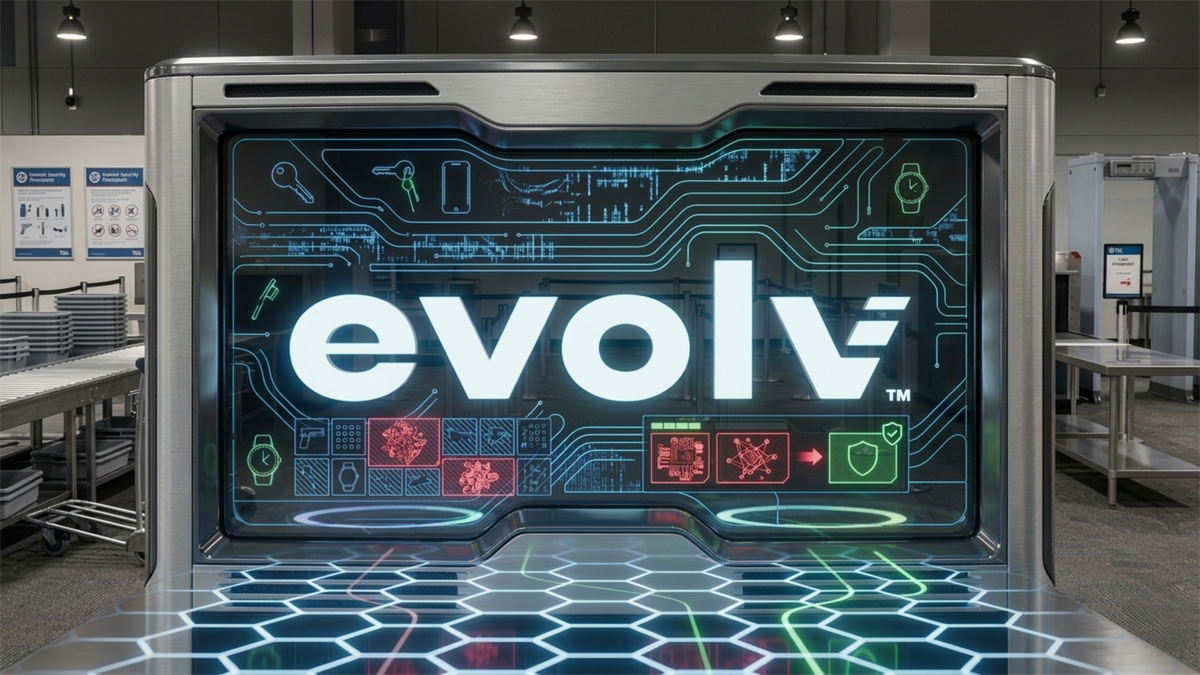
The keyword to understanding Evolv’s approach is frictionless. Evolv builds AI-powered weapons-detection systems that let people walk through security checkpoints without stopping to empty their pockets or bags. This replaces the old metal-detector experience with fast, frictionless entry at places like schools, stadiums, hospitals, and theme parks.
Its systems combine advanced sensors with AI to analyze the signatures of guns, knives, and other weapons as people move through, then highlight potential threats, showing security personnel exactly where to check instead of triggering a generic alarm.
Evolv differentiates itself by focusing on speed, letting crowds flow at much higher throughput than traditional checkpoints while using AI pattern recognition to distinguish likely weapons from everyday items, which is designed to cut false alarms and add context, including some non-metal threats and richer situational awareness.
Strong Revenue Growth and Recurring Revenue Momentum
The proof is in the company’s growth. Quarterly revenue was up 32% year-over-year (YOY). This growth was driven by new customers and the expansion of deployments across its existing customer base.
That growth is also reflected in the company’s annual recurring revenue (ARR), which came in at $120.5 million in the quarter, an increase of 21% YOY.
Evolv also raised its 2026 full-year guidance. The company is forecasting total revenue in the range of $172 million to $178 million, which would be YOY growth of around 20% at the mid-point. Of that revenue, Evolv forecasts $145 million to $150 million in ARR, representing YOY growth of around 22.5% at the midpoint.
One driver of that growth is the company’s two-pronged business model. Customers can choose a pure subscription model or a purchase-subscription model. The pure subscription model keeps customers from buying the hardware outright; instead, they pay an all-in recurring fee that bundles the equipment, software, updates, service, and maintenance into one contract.
In the purchase-subscription model, customers still pay recurring software and service fees, but the commercial structure can separate or front-load more of the hardware cost, making the subscription portion relatively lower and more software-like.
In 2026, Evolv expects approximately 50% of its new unit deployments to be under the pure subscription model, with the remaining 50% deployed through its purchase-subscription model.
EVLV Stock Is a Speculative Play That Could Still Work Out
Investors should have absolute clarity about what they own with EVLV stock. Revenue is growing, but can be lumpy. Evolv delivered profitable earnings this quarter and expects to have its first full year of positive adjusted EBITDA, with margins in the high single digits. But the company will have to prove it can be consistently profitable for the stock to gain traction.
Adding to the headwinds is the competitive landscape. It’s fair to question the company’s moat. There are several companies competing in the AI-enabled weapons-detection and security-screening sector.
However, the need for the company’s products and services is, sadly, increasing. Evolv generated $145.90 million in revenue for all of 2025. The total addressable market for the company is forecast to be between $2 billion and $3 billion by 2030, depending on how the AI weapons/gun/concealed weapon detection area is defined by scope and methodology.
That leaves enough room for multiple names, and much of Evolv’s revenue comes from ARR, which is contracted over long periods.
Put it all together, and this is a speculative stock that is valued correctly at this time. Investors should be aware of the risks, but risk-tolerant investors may have a long-term opportunity.
Thank you for subscribing to Insider Trades Daily, which covers the most recent insider buying and selling activity from Wall Street CEO’s, CFO’s, COO’s and other insiders.
If you have questions about your account, please don’t hesitate to email our South Dakota based support team at contact@marketbeat.com.
If you no longer wish to receive email from InsiderTrades.com, you can unsubscribe.
This ad is sent on behalf of TradeSmith at 1125 N. Charles Street, Baltimore, Maryland 21201. If you’re not interested in this opportunity, please click here.Stockguru LLC (dba InvestingDistrict), 2563 cherry hill ln, Hermitage, PA 16148, United StatesYou may unsubscribe or change your contact details at any time.
The math is simple: When a $5 stock hits its analyst target of $11, you’re looking at 100%+ gains. When a $500 stock doubles, you need it to hit $1,000. Which seems more achievable?
Right now, three overlooked companies under $10 are getting aggressive price targets from major Wall Street firms. These aren’t penny stock pump-and-dumps. These are real businesses with:
One fintech processor handling $270+ million in quarterly revenue across 190 countries
One biotech whose flagship product just posted 92% year-over-year sales growth
One Southeast Asian “super-app” generating $873 million in Q3 revenue alone
The average upside across these three stocks? Between 30% and 100%, according to consensus analyst targets.
Smart money is accumulating these positions while retail investors chase overpriced tech giants. The question is: Will you grab your share before the crowd catches on?
This is a paid advertisement provided to customers of Schaeffer’s Investment Research. Although we have sent you this email, Schaeffer’s does not necessarily endorse this product nor is it responsible for the content of this advertisement. Schaeffer’s makes no guarantee or warranty about what is advertised above.
…and when it hits, it’s going to move money out of those crowded trades and into a ticker almost nobody’s watching right now.
Larry gave me an overview of his research.
And he has such a sharp eye for opportunities like this.
After all, he went 13 for 13 at the start of Trump’s presidency.
Now he’s spotted what could be a huge opportunity for you.
He’s put together a full briefing on it, where he shares his research, how he plans to play “Project 2026,” and the ticker of the ONE opportunity he’s watching right now.
Oil, fertilizer, and now these critical AI commodities are held up in the Persian Gulf
Bitcoin just flashed a buy signal – just mind the bear market
As software and the Mag 7 struggle, these infrastructure stocks sit at all-time highs
America’s allies aren’t coming to the rescue…
President Trump spent the weekend pressing “about seven” countries to send warships to help escort ships through the Strait of Hormuz.
The response was lukewarm at best.
Britain’s Prime Minister, Keir Starmer, signaled willingness to help, with the Royal Navy destroyer HMS Dragonalready deployed. But Germany, Italy, Japan, and Australia have all said no.
Then, Trump posted earlier today on Truth Social that he’s no longer seeking the help, and the U.S. doesn’t need it.
No matter what happens next, the global energy market is in a serious bind with no easy way out.
Iranian forces have effectively shut down the narrow waterway through which about 20% of global oil consumption normally passes.
Now, it’s under constant threat by Iranian drone and missile fire. And if those don’t sink an oil tanker or shipping vessel, the underwater mines will.
So with the war entering its third week, oil from Saudi Arabia, the UAE, Iraq, Kuwait, and Iran is sitting stranded.
And with no place to store newly pumped oil, production is rapidly in decline. That means higher oil prices. It also means countries aren’t importing the oil they need.
Natural gas could be an even bigger problem. About a fifth of the world’s liquefied natural gas (LNG) – nearly all of it from Qatar – flows through the Strait.
Qatar has halted production after Iranian drone strikes hit its facilities. And unlike oil, there’s no pipeline alternative and no way to quickly restart a shuttered LNG plant.
Analysts say a full restart could take weeks.
Fertilizer is another problem. Roughly a third of the world’s fertilizer chemicals are now stranded in the Middle East.
“I recently visited Mar-a-Lago… And now I’m prepared to put my reputation on the line. One investment I just uncovered could be my biggest winner of all… It involves President Trump, Elon Musk, trillions of dollars, China… And a MAJOR upgrade to the artificial intelligence revolution. If you buy just one stock in 2026, I urge you to make it this one.” – Louis Navellier Click here to see the name and ticker symbol of the company at the center of it all.
There are other key shortages that aren’t making the headlines…
Even before the U.S. and Israeli strike on Iran, there was a supply crunch building in the global commodities market.
These shortages didn’t make headlines the way $100 oil does. But they’re arguably more impactful… because they slow down the multitrillion-dollar AI infrastructure buildout.
Normally, we dedicate these Dailiesto bringing you insights from the TradeSmith platform and our team of analysts.
But today, we’re shining the spotlight on an analyst from our sister company InvestorPlace… someone who’s been warning of this for months.
Eric Fry has a remarkable track record of staying one step ahead of the market.
In 2019, he published a book predicting the 2020 bear market.
In 2005, he went on CNBC to argue that a housing bubble was forming – when less than 1% of U.S. households were in foreclosure.
He recommended selling Cisco on Oct. 10, 2000. The stock fell more than 80% over the following two years.
And last July, he told his subscribers to sell AI chipmaker Nvidia (NVDA)and buy glass, ceramics, and fiber-optic cable maker Corning (GLW).
Since that call, Corning is up more than 100%, while Nvidia has barely budged.
Eric understood that the biggest roadblock to AI wasn’t computing power, but what he calls the technology’s “Golden Rivets” – the copper, energy capacity, and memory chips AI needs to scale.
Consider copper…
To maintain the pace of AI infrastructure growth, the world needs to mine as much copper in the next 18 years as it mined over the last 10,000 years combined.
And a new copper mine takes seven to 10 years to bring online. You can’t close that gap with money – only with time. And there just isn’t enough of it.
Energy is a similar story. Data centers consume about 4% of all U.S. electricity. By 2030, that figure could hit a 22% increase in power grid demand.
And the energy infrastructure in place is already strained, with residential energy prices up as much as 14% since 2023.
But nuclear plants take 10 to 15 years to build. Natural gas plants take three to five. So it’s unclear where that new energy is going to come from.
And then there’s DRAM – the short-term memory chips that AI systems use to process information.
Nvidia CEO Jensen Huang has called the shortage “severe” as prices have more than tripled over the past year. That sent the stocks of Micron Technology (MU), Seagate (STX), and SanDisk (SNDK) up 328%, 340%, and 1,164% over the same time.
The problem facing the AI trade is clear. But what stocks do you buy to profit?
That’s where Eric’s research comes in…
In a presentation he’s airing tomorrow at 1 p.m. ET, Eric is sharing his full forecast on the AI supply crunch and how he recommends playing it.
He’ll also share with all attendees 15 free stock picks across raw materials companies, energy producers, infrastructure plays, and memory chip companies.
If you’re looking for a way to profit from the AI boom that doesn’t involve already-popular stocks like Nvidia and Microsoft (MSFT), I highly recommend Eric’s event.
He’s not only one of the smartest investors I know. He’s also a fantastic educator and explainer. So this is a must-see event if you’re interested in developing a deeper understanding of the ever-shifting AI trade.
Bitcoin is flashing green – here’s how to play it…
On Friday, March 13, our Short-Term Health indicator flashed its first Green signal on Bitcoin since January.
It looks at how a stock, ETF, or cryptocurrency typically moves and flags the kind of abnormal movement that signals a trend shift. Green means buy, Yellow means caution, and Red means sell.
Bitcoin prices have tended to peak in the last quarter of the year after the halving – a regular, programmed event that cuts the supply of new coins in half. The last one occurred in April 2024.
The year after Bitcoin’s peak, a bear market has always hit. The data shows it clear as day:
Bitcoin’s $1,250 price peak in December 2013 was a year after the November 2012 halving. Then it dropped 85% in 2014.
The $20,000 peak in December 2017 was the year after its July 2016 halving. It fell 84% the next year.
The $69,000 highs in November 2021 came the year after the May 2020 halving. Then Bitcoin crashed 77% in 2022.
Last October, Bitcoin peaked at more than $125,000. And it’s down 45% from that high.
But if you had access to TradeSmith’s tools, you didn’t need to even know what the halving was… much less care what it meant. You could have followed our Short-Term Health indicator instead. It showed Bitcoin was a sell on Oct. 5 before it crashed as much as 49%.
Now, here’s a look at the Short-Term Health chart for Bitcoin going back to 2023. I’ve circled areas of major buy and sell signals from the indicator on the bottom.
When it flashed Red on Oct. 10, 2025, Bitcoin was trading at $122,358. What followed was one of the most punishing declines in recent crypto history, eventually taking the price down to the low $60,000 range – a drop of more than 50% from where the signal fired.
That exit point protected against the bulk of the decline.
Then in January, Short-Term Health flashed Green again. Bitcoin was trading near $89,951. Over the next 11 days, it ran as high as $97,704 – a gain of nearly 9% – before rolling back over.
The signal eventually went Red. Readers who followed both trades captured the bounce and avoided the continued slide that brought Bitcoin back to current levels.
So, Bitcoin is a buy here as long as Short-Term Health stays green.
But treat it like a trade. The January signal lasted just 11 days before reversing. And the backdrop of all of this is the fact that Bitcoin is in a bear market during the worst year of its cycle.
Look at late 2021 and 2022, the last time Bitcoin peaked before a bear market.
Bitcoin went Green on Oct. 1, 2021 at a price of just over $48,000. When it next flashed Red, it was at $60,000.
Then, just like now, another Green signal fired in mid-March 2022 at $41,845 and went Red again on April 8 at $42,403. It barely got off the ground before Bitcoin resumed its bear market and fell another 48%.
If you want to buy Bitcoin here, just don’t overstay your welcome and watch our indicators. Short-Term Health will tell you when it’s time to exit – just like it did at $122,000.
These AI infrastructure stocks haven’t blinked…
If you weren’t following TradeSmith CEO Keith Kaplan on X this weekend, you missed something…
The broader market has been struggling through the volatility triggered by the Iran war, rising oil prices, and continued AI disruption fears.
But Keith pointed out that three AI infrastructure stocks had barely moved from their all-time highs.
GEV powers data centers. VRT cools them. And BE provides the clean, on-site power generation that Big Tech is racing to lock up under long-term contracts.
These companies collect real revenue from customers who have no alternative.
Google, Microsoft, Amazon, and Meta are still committed to spending over a trillion dollars on AI infrastructure in 2026 and 2027.
That capital has to go somewhere physical – and a significant portion of it flows directly to companies like these.
Relative strength in a weak market tells you where the durable money is. And these three are a big tell.
Keith posts insights like this regularly on X – unfiltered, ahead of the news cycle, direct from the CEO of one of the most data-driven investing platforms in the business. If you want to see what he’s watching before it shows up anywhere else, follow him at @KeithTradeSmith.
To building wealth beyond measure,
Michael Salvatore Editor, TradeSmith Daily
Disclosures: Michael Salvatore held shares of GE Vernova (GEV) and Alphabet (GOOGL) at the time of this writing.
This editorial email containing advertisements was sent to pahovis@aol.com because you are subscribed to this service. To unsubscribe or change your email preferences, please click here.
To contact Customer Service, call toll free: 866-385-2076, Mon–Fri, 9am–5pm ET, or email support@tradesmith.com.
Insider Trades for Warner Bros. Discovery, AXT, Lineage, Bancorp, Huntington Bancshares, MBX Biosciences and more…VIEW LATEST INSIDER TRADESMarch 17th, 2026 | Unsubscribe
Why the Fed’s new 24/7 banking system is a trap (ad)The Federal Reserve is selling banks their new FedNow system with one major promise: transfers will happen instantly, 24/7/365 with no more weekend or holiday delays—but when your money moves instantly through a centralized government hub, it can also be frozen instantly by automated algorithms inside the Fed’s new network. Imagine it’s 6:00 p.m. on a Friday when your account is instantly locked by a faceless government computer in Washington because an algorithm flagged a recent purchase or donation as suspicious, cutting you off from your own money until Monday morning or later with no way to pay for anything.
Nvidia CEO Issues Bold Tesla Call (ad)While headlines focus on Tesla’s car sales, tech analyst Jeff Brown says the real story is Tesla’s role in a $25 trillion AI revolution — one that Nvidia’s CEO himself has called a “multi-trillion-dollar future industry” — and he’s uncovered a little-known stock 168 times smaller than Nvidia that could be positioned to ride this breakthrough.
Recent U.S. Insider BuyingCompanyInsider NameBuy/SellSharesTotal TransactionTransaction DateCurrent PriceSEC FilingABSI AbsciAndreas Busch InsiderBuy100,000 shares @ $2.29$229,000.003/12/2026$2.84AIRS AirSculpt TechnologiesJorey Chernett Major ShareholderBuy105,848 shares @ $2.43$257,210.643/16/2026$2.43ALKT Alkami TechnologyAtlantic Genpar (Bermu General DirectorBuy500,000 shares @ $18.33$9,165,000.003/12/2026$17.90ALTG Alta Equipment GroupMill Road Capital Iii, L.P. Major ShareholderBuy58,162 shares @ $6.10$354,788.203/12/2026$6.07AMRZ AmrizeMario Gross InsiderBuy3,200 shares @ $55.29$176,928.003/13/2026$56.51BBSI Barrett Business ServicesGary Kramer CEOBuy8,370 shares @ $26.89$225,069.303/13/2026$28.69BETR Better Home & FinanceVentures Iv L.P. Framework Major ShareholderBuy25,000 shares @ $29.55$738,750.003/16/2026$30.95BLDR Builders FirstSourcePaul S Levy DirectorBuy50,000 shares @ $87.73$4,386,500.003/13/2026$91.31CASY Casey’s General StoresMike Spanos DirectorBuy300 shares @ $665.43$199,629.003/13/2026$693.37CTEV ClaritevMichael Kim EVPBuy15,000 shares @ $16.50$247,500.003/12/2026$17.60FLNT FluentGlobal Value Investment Corp. Major ShareholderBuy65,148 shares @ $3.47$226,063.563/13/2026$3.78FLNT FluentJames Geygan DirectorBuy65,148 shares @ $3.47$226,063.563/13/2026$3.78IFF International Flavors & FragrancesPaul J Fribourg DirectorBuy142,000 shares @ $70.13$9,958,460.003/12/2026$71.65KGS Kodiak Gas ServicesAlexander Newsom Darden DirectorBuy5,000 shares @ $54.75$273,750.003/13/2026$56.07KGS Kodiak Gas ServicesRandall J Hogan DirectorBuy6,000 shares @ $54.81$328,860.003/13/2026$56.07LINE LineageKevin Patrick Marchetti ChairmanBuy13,300 shares @ $37.50$498,750.003/12/2026$39.00MBX MBX BiosciencesP. Kent Hawryluk CEOBuy18,500 shares @ $28.41$525,585.003/13/2026$29.11MTN Vail ResortsRobert A Katz CEOBuy37,500 shares @ $131.81$4,942,875.003/16/2026$141.99RPC Ridgepost CapitalCharles K. Huebner Trust InsiderBuy20,000 shares @ $8.68$173,600.002/19/2026$7.76SRZN SurrozenTcg Crossover Gp Ii, Llc Major ShareholderBuy12,374 shares @ $24.99$309,226.263/12/2026$25.94SRZN SurrozenTcg Crossover Gp Ii, Llc Major ShareholderBuy35,433 shares @ $24.88$881,573.043/13/2026$25.94SUMAU SUMAUNaseem Saloojee InsiderBuy316,875 shares @ $10.00$3,168,750.003/12/2026$10.02TGLS TecnoglassHolding Corp Energy Major ShareholderBuy107,600 shares @ $45.28$4,872,128.003/12/2026$45.26TGLS TecnoglassHolding Corp Energy Major ShareholderBuy107,629 shares @ $45.11$4,855,144.193/13/2026$45.26TRIN Trinity CapitalSteve Louis Brown ChairmanBuy27,109 shares @ $14.75$399,857.753/12/2026$14.55VANI Vivani MedicalGregg Williams DirectorBuy1,575,231 shares @ $1.07$1,685,497.173/15/2026$1.23VRTS Virtus Investment PartnersW Howard Morris DirectorBuy1,900 shares @ $129.62$246,278.003/12/2026$132.83VRTS Virtus Investment PartnersW Howard Morris DirectorBuy2,150 shares @ $129.34$278,081.003/12/2026$132.83WEST Westrock CoffeeJoe T Ford DirectorBuy45,000 shares @ $3.92$176,400.003/13/2026$4.55Free Guide: How Experts Are Protecting Retirement (ad)In 2024 alone, central banks added more than 1,037 tonnes of gold to their reserves—one of the largest gold accumulation periods in modern history—while U.S. national debt has surpassed $38 trillion, inflation continues eroding purchasing power, and most retirement accounts remain 100% tied to paper assets like stocks, bonds, and mutual funds. That’s not diversification, that’s concentration risk, which is why more Americans approaching retirement are beginning to explore holding a portion of their retirement savings in physical precious metals inside a tax-advantaged Gold IRA.
Top Insider-Buying Stocks (Last 30 Days)CompanyShares PurchasedTotal Cost of Shares PurchasedNumber of Insider PurchasesNumber of Insiders BuyingCurrent Share PriceMarketBeat Consensus RatingMarketBeat Consensus Price TargetRead MoreSSP E.W. Scripps1,332,085$5,733,766.003416$3.68Reduce$6.95HTGC Hercules Capital117,015$1,749,620.00139$14.55Moderate Buy$18.71KRRO Korro Bio1,656,800$18,407,048.0088$12.39Moderate Buy$44.50NCDL Nuveen Churchill Direct Lending47,547$635,105.0077$13.17Hold$15.40CWBC Community West Bancshares2,570$54,518.0066$22.58Moderate Buy$24.33AVBC Avidia Bancorp9,683$183,467.0076$19.24Sell$0.00CNVS Cineverse187,500$375,000.0066$2.58Hold$9.00COFS ChoiceOne Financial Services7,800$216,832.0055$27.47Hold$36.00BWFG Bankwell Financial Group25,216$1,179,898.0095$46.96Moderate Buy$52.00AMRZ Amrize77,834$4,511,344.0085$56.51Moderate Buy$64.14
Top Insider-Selling Stocks (Last 30 Days)CompanyShares SoldTotal Cost of Shares SoldNumber of Insider SalesNumber of Insiders SellingCurrent Share PriceMarketBeat Consensus RatingMarketBeat Consensus Price TargetRead MoreVICR Vicor306,513$54,579,418.002113$192.29Buy$118.33FSLR First Solar47,761$9,276,424.002711$199.79Moderate Buy$248.17MKSI MKS68,503$17,288,099.001310$227.57Moderate Buy$273.46SFM Sprouts Farmers Market2,996$237,822.001010$82.36Moderate Buy$101.75WM Waste Management47,490$11,416,338.00149$237.54Moderate Buy$253.55LSCC Lattice Semiconductor37,614$3,548,028.00159$92.30Moderate Buy$102.64MATX Matson42,550$7,034,602.0099$153.34Hold$156.25IRTC iRhythm Technologies94,509$12,734,195.00179$116.37Moderate Buy$209.46ADUS Addus HomeCare16,610$1,768,970.00189$101.21Moderate Buy$134.33CSTM Constellium214,543$5,565,129.00139$25.22Buy$29.00More Calendars from MarketBeat and InsiderTrades.comToday’s Insider Trades CEO Purchases CFO Purchases COO Purchases Top Insider Buying Stocks Top Insider Selling Stocks Insider Trades Screener MarketBeat All Access
Thank you for subscribing to InsiderTrades.com’s Insider Trades Daily Newsletter!
We are committed to providing the most complete and most accurate coverage of corporate insider buying and selling activity disclosed to the Securities and Exchange Commission. InsiderTrades.com is a subsidiary of MarketBeat Media, LLC and MarketBeat.com.
If you need assistance with your subscription, please feel free to contact our South Dakota based support team at contact@marketbeat.com.
You are receiving this email because you subscribed to Wealthy Retirement. Wealthy Retirement is published by The Oxford Club.
To stop receiving special invitations and offers from Wealthy Retirement, please click here. Please note: This will not impact the fulfillment of your subscription in any way.
Questions? Check out our FAQs. Trying to reach us? Contact us here. Please do not reply to this email as it goes to an unmonitored inbox.
Nothing published by The Oxford Club should be considered personalized investment advice. Although our employees may answer your general customer service questions, they are not licensed under securities laws to address your particular investment situation. No communication by our employees to you should be deemed personalized investment advice. We allow the editors of our publications to recommend securities that they own themselves. However, our policy prohibits editors from exiting a personal trade while the recommendation to subscribers is open. In no circumstance may an editor sell a security before subscribers have a fair opportunity to exit. The length of time an editor must wait after subscribers have been advised to exit a play depends on the type of publication. All other employees and agents must wait 24 hours after publication before trading on a recommendation.
Any investments recommended by The Oxford Club should be made only after consulting with your investment advisor and only after reviewing the prospectus or financial statements of the company.
Protected by copyright laws of the United States and international treaties. The information found on this website may only be used pursuant to the membership or subscription agreement and any reproduction, copying or redistribution (electronic or otherwise, including on the world wide web), in whole or in part, is strictly prohibited without the express written permission of The Oxford Club, LLC, 105 West Monument Street, Baltimore, MD 21201.
I hear it constantly. A trader got the direction right, the market moved exactly where they said it would, and they still lost money. They are frustrated. Confused. And usually convinced they did something wrong.
They did not do anything wrong. They just learned one of the most important lessons in options trading the hard way.
Here is what actually happened to them.
They bought a call. A call option is a bet that something goes up. The market went up. But short-term options are brutally sensitive to time. Every day that passes chips away at their value regardless of what the underlying is doing.
If the market sold off before the rally came, the position bled during that stretch. That is the first force working against them.
Then the rally arrived, which should have saved the trade. Often it does not. Because when markets rally, fear drops.
And when fear drops, implied volatility drops with it. Implied volatility is the options market’s measure of expected risk going forward. It is baked into the price of every option you own.
When it falls, your options lose value even as the market moves your way. You need the move to be large enough to outrun that vol drop. A lot of the time it is not. The market moves in the right direction, the vol collapses, and the two forces roughly cancel each other out.
So what worked against them? Three things at once. Time decay while the market moved against them.
Then a vol crush when the rally came. And a move that was right on direction but not big enough to overcome the first two.
This is not bad luck. This is options math.
When you buy a short-term call or put, you are not just betting on direction.
You are betting on direction, by a certain amount, within a certain window of time, while fighting decay every single day, and hoping the vol environment cooperates when the move finally comes. Getting direction right is one variable out of four.
Most traders focus entirely on the one and ignore the other three.
This is exactly why I trade spreads instead of outright calls and puts. A spread means buying one option and selling another against it. The one you sell offsets a large portion of the decay and vol exposure on the one you bought.
You give up some upside, but you dramatically reduce the number of ways the trade can go wrong even when you are right about direction. Structure limits the ways you can lose. That is the entire point.
The traders who last in this business are not the ones with the best market calls. They are the ones who stop treating options like leveraged stock and start treating them like the multi-dimensional instruments they actually are.
Being right is a starting point. Structure is what gets you paid.
If you want to see how I build trades around structure instead of direction, I am doing a live training Thursday, March 19 at 1 pm ET. I will walk through real positions, show you exactly how structure changes the math on 0dte options, and explain why the expected move framework is the foundation of everything I do.





















 RJ Hamster