Editor’s Note: Silicon Valley legend Jeff Brown is forecasting that Elon Musk’s “Kardashev Project” is about to trigger the greatest wealth creation event in history.
While everyone is talking about the SpaceX IPO, Elon Musk has moved on to bigger and better things…
With the potential to be much more lucrative for folks who make the right moves today.
Everything is coming together quickly.
Tesla and xAI’s newly announced “Macrohard” project could disrupt the entire software industry.
But it’s just one small part of Elon’s next move… one more blurring of the lines between his companies.
Once his plan is complete everything about the way we look at Elon Musk and his companies like SpaceX and Tesla will change.
Elon believes it will even trigger a quadrillion dollar wealth creation event…
And give folks a shot at up to 500%+ gains in the near term and far more in the years to come as Elon Musk makes the world’s first $10 trillion company.
Silicon Valley insider, Jeff Brown, put together a brief video explaining Elon’s masterplan…
The drastic move he could make as soon as the end of this month…
And exactly where investors should position themselves today.
You are receiving this email because you subscribed to Wealthy Retirement. Wealthy Retirement is published by The Oxford Club.
To stop receiving special invitations and offers from Wealthy Retirement, please click here. Please note: This will not impact the fulfillment of your subscription in any way.
Questions? Check out our FAQs. Trying to reach us? Contact us here. Please do not reply to this email as it goes to an unmonitored inbox.
Nothing published by The Oxford Club should be considered personalized investment advice. Although our employees may answer your general customer service questions, they are not licensed under securities laws to address your particular investment situation. No communication by our employees to you should be deemed personalized investment advice. We allow the editors of our publications to recommend securities that they own themselves. However, our policy prohibits editors from exiting a personal trade while the recommendation to subscribers is open. In no circumstance may an editor sell a security before subscribers have a fair opportunity to exit. The length of time an editor must wait after subscribers have been advised to exit a play depends on the type of publication. All other employees and agents must wait 24 hours after publication before trading on a recommendation.
Any investments recommended by The Oxford Club should be made only after consulting with your investment advisor and only after reviewing the prospectus or financial statements of the company.
Protected by copyright laws of the United States and international treaties. The information found on this website may only be used pursuant to the membership or subscription agreement and any reproduction, copying or redistribution (electronic or otherwise, including on the world wide web), in whole or in part, is strictly prohibited without the express written permission of The Oxford Club, LLC, 105 West Monument Street, Baltimore, MD 21201.
In 1564, the teenaged King Charles IX moved New Year’s Day from the spring equinox to January 1. What followed was basically a 16th-century communication disaster.
Those who didn’t get the news, or were slow to adapt, were labeled “April fools”.
One royal decree began centuries of pranks.
This calendar confusion is just one working theory for the origins of today’s mischief-filled holiday. But it serves as a timely reminder: Change is messy, and it is easy to fall behind.
We see this playing out with the U.S.-Iran conflict.
Oil prices are hovering around $100 per barrel and are expected to remain high, driven by intense volatility, geopolitical risks, and fears of a prolonged supply shock. The Strait of Hormuz, a key oil shipping route, remains closed to most shipping traffic. And analysts at Wood MacKenzie are warning oil could rocket to more than $200 a barrel.
This is the new normal. Oil prices are not merely high, they are thrashing around wildly from day-to-day. But even though oil is grabbing most of the headlines, it is not the only commodity under the thumb of the Iran conflict.
It turns out that when a butterfly flaps its wings in the Straight of Hormuz, a tsunami of chaos sweeps over nearly every commodity industry in the world.
Today, I’d like to focus on another major global commodity – aluminum – and how to position your portfolio before this growing ripple effect turns into a full-blown supply shock.
Elon Musk recently held an all-hands meeting at his closely guarded AI lab. He told employees… “We’re moving faster than any other company. No one’s even close.”Why? Because Elon built an AI breakthroughthat would take most tech CEOs four years to set up. He brought it online this year… and as early as today, April 1… Elon’s going to crank it to full blast. And potentially make ChatGPT, Claude, Gemini, and DeepSeek obsolete… While unleashing a brand-new 7,000% growth market. But here’s the twist. Neither Tesla nor SpaceX is the best way to play this opportunity. Instead, you’ll want to own the firm that controls over 38,000 patents on the technology (not semiconductors) that will power Elon’s career-defining vision. Click here for its name and ticker symbol.
When Oil Moves, Aluminum Follows
Like oil, aluminum prices have swung wildly since the U.S. launched its first attacks on Iran in February. That’s because the war is causing a double-whammy for the aluminum market.
First, it is directly eliminating most of the Middle East supply, which accounts for about 10% of the world total. Second, it is driving the price of energy much higher. That’s bad news for aluminum production, which requires huge volumes of electricity.
By definition, therefore, an energy shock is an aluminum shock.
We saw this scenario play out in the 1970s, when oil prices surged due to geopolitical conflict and embargoes. Electricity costs jumped globally, and aluminum smelters become costly to run.
As a result, high-cost regions, like the U.S., Western Europe, and Japan curtailed aluminum production. Predictably, supply tightened… and prices rose.
Now, higher prices can be a tailwind for aluminum companies. When prices go up, producers sell aluminum at increased prices. In turn, their revenues and profits can climb.
But there’s a catch.
If aluminum prices rise because energy costs are also rising, then costs are going up at the same time as aluminum prices, and profit margins may not improve much.
That means that the real aluminum winners will be those with cost advantages – like access to cheap electricity or stable energy, especially hydro and nuclear power.
These companies will benefit from rising aluminum prices without much of their own costs rising.
Alcoa Corp. (AA) is better positioned than many other aluminum producers. The company has been preparing for this moment for decades, literally.
Alcoa’s Structural Advantage
Alcoa is not just the largest American aluminum producer; it is also among the world’s most environmentally progressive.
As I mentioned, producing aluminum requires immense amounts of electricity, and that energy intensity is reshaping the industry. Increasingly, companies such as Tesla Inc. (TSLA) are seeking to source their aluminum from clean-energy smelters powered by hydro, nuclear, or renewables. That shift is elevating low-carbon producers like Alcoa to the top tier of the aluminum world.
Today, renewable energy powers roughly 87% of Alcoa’s smelting operations. This alignment with the global push toward decarbonization gives the company a durable strategic advantage, and positions it not merely as a cleaner metal producer.
After suffering a tariff-induced selloff in early 2025, Alcoa’s shares have been trending higher. And since the butterfly flapped its wings in the Middle East, the company has soared on aluminum supply concerns.
This past weekend, Iran attacked two of the region’s producers. Emirates Global Aluminium, the area’s top aluminum supplier, said it sustained “significant damage” at its Abu Dhabi site. Aluminium Bahrain, the second target, is examining the damage at its own facility.
Meanwhile, Alcoa’s smelters continue humming along and churning out aluminum.
Beyond a conflict-related rally, I expect Alcoa’s uptrend to gain momentum – driven not only by firmer aluminum prices, but also by the company’s exceptional fundamentals. The company beat Wall Street’s expectations for the fourth quarter 2025, and is expected to release its next quarterly report on April 16.
Alcoa currently trades for less than 12 times estimated 2026 earnings – well below its historical forward multiple of roughly 20 times earnings. So, although the shares of this leading aluminum producer are climbing higher, they are still relatively “cheap” compared to estimated earnings… and I should point that Wall Street has been busily raising its estimates for this year.
Alcoa is one of the several commodity-related companies I recommend in Fry’s Investment Report.
As a member, you’ll get access to all of my latest research, reports, and trade alerts. (There is no chance of becoming an unsuspecting “April fool” here.)
The bottom line is that commodity markets, like aluminum, are excruciatingly capital intensive, requiring years, long or decades, long lead times, and do not often immediately reward those spectacular investments.
But inevitably, a shock of some kind arrives, either due to simple supply demand factors, tariffs, wars, or acts of God.
When those moments arrive, commodity-focused companies ring the register in a big way.
Manage your account We hope this timely investment research is valuable to you. As you know the markets move fast and conditions change frequently. So please check the current issue for the most recent advice. Please note that we cannot be liable for any missed bulletins caused by overzealous filters. To ensure that you continue to receive this valuable part of your service please take a moment to add services@exct.investorplace.comto your address book.
Blake Young just exposed a major crack in the consumer discretionary rally. Tesla now accounts for 20% of the entire sector, and today’s 2.6% bounce is dragging XLY higher while the actual consumer stocks are falling apart.
Remove Tesla from XLY and the sector looks like Nike. Nike just dropped 14% after missing earnings by nearly 30%.
RH told the same story. It gapped down and fell 22%.
Blake dug into the XLY chart using his monkey bar levels for April. The ETF gapped up into the overbought zone with a ceiling at $111.13. His modified Chaikin money flow indicator still shows net liquidation underneath the surface.
The bounce has no volume behind it. Blake sees short covering, not accumulation.
Amazon faces the same problem. More than half of Amazon’s revenue comes from AWS. Calling it a consumer discretionary stock distorts what the sector is actually telling us about spending.
Blake walked through three bearish setups in tonight’s video that take advantage of the disconnect:
Tesla: Sell the call vertical above $395 for a $1.90 credit on a $5 wide spread. The probability of profit comes in at 64% against a required win rate of 62%, giving a 2% to 3% edge.
Starbucks: Sell the $93/$94 call vertical for $0.45 credit. The required win rate is just 55% against a 64% probability, creating a 9% edge.
Amazon: Sell the call vertical at $220 for $1.50 credit on a $5 wide spread. The setup is fairly priced, but a failure at the $215 target could accelerate the move lower.
Blake favors Tesla and Starbucks for the best reward to risk ratios. All three trades sell premium into a low volume bounce that his indicators say is running on fumes.
This is the perfect time to make sure you’re up to speed on your trading know-how. So I want to ensure you’ve read our free Rebel’s Guide to Trading Options – it covers all the basics of trading options. Like everything we do, the course is in plain English. It’s specially geared toward beginners but all traders will get something out of it. Yours absolutely free, of course – right here…
1. To open an account with tastytrade and enjoy an additional 6 months of TheoTRADE membership, start by clicking the button below..
2. Follow the directions on that page to open a new account.
3. Fund the account with a minimum of $2,000 in the next 30 days and keep open for at least 6 months.
4. IMPORTANT: After the new account is open AND funded email support@theotrade.com so we can verify your new account. Please note it may take us up to one week to verify your account from the time you email us.
5. TheoTrade will then provide you membership access for 6 months!
NEED HELP? LOOKING FOR MORE ADVANCED TRAINING? CALL OUR VIP CONCIERGE TEAM: (623) 244-5657
Warm regards,
Don Kaufman
Disclaimer: Neither TheoTrade or any of its officers, directors, employees, other personnel, representatives, agents or independent contractors is, in such capacities, a licensed financial adviser, registered investment adviser, registered broker-dealer or FINRA|SIPC|NFA-member firm. TheoTrade does not provide investment or financial advice or make investment recommendations. TheoTrade is not in the business of transacting trades, nor does TheoTrade agree to direct your brokerage accounts or give trading advice tailored to your particular situation. Nothing contained in our content constitutes a solicitation, recommendation, promotion, or endorsement of any particular security, other investment product, transaction or investment. Trading Futures, Options on Futures, and retail off-exchange foreign currency transactions involves substantial risk of loss and is not suitable for all investors. You should carefully consider whether trading is suitable for you in light of your circumstances, knowledge, and financial resources. You may lose all or more of your initial investment. Opinions, market data, and recommendations are subject to change at any time. Past Performance is not necessarily indicative of future results.
WARNING: If you UNSUBSCRIBE, you will be removed from ALL email lists, including any paid subscription emails. To opt out of this list only and keep other access, forward this email to support@theotrade.com and say “remove me from this particular email list.” Unsubscribe
TheoTrade 16427 N Scottsdale Rd Suite # 410 Scottsdale, Arizona 85254 United States 1 (800) 256-8876
BSEM Just Released Publication of Its Audited Financial Statements for Fiscal Years 2024 and 2025—Fast-Tracking a High-Profile Nasdaq Uplisting!
BioStem Technologies (OTCQB: BSEM) is rapidly evolving from a niche regenerative medicine innovator into a full-scale MedTech growth story.
The company’s recent acquisition of BioTissue Holdings’ surgical and wound care business for up to $40 million not only broadens its market from physician offices into hospitals and surgical centers but also immediately adds $29 million in revenue and a seasoned national sales team.
Coupled with the proven BioREtain® technology and breakthrough clinical results demonstrating superior wound closure rates, BSEM is now uniquely positioned to address a $300–$350 million total addressable market.
On the financial front, BSEM continues to impress. Q4 revenue topped $10 million with nearly best-in-class gross margins of 97%, and adjusted EBITDA remained solid at $3.4 million despite temporary headwinds. Importantly, the company has published its audited 2024–2025 financials, a key milestone toward its highly anticipated Nasdaq uplisting in 2026.
This move promises increased liquidity, institutional investor interest, and higher valuation potential. With analysts assigning a $25.50 price target, BSEM’s combination of earnings strength, strategic expansion, and regulatory readiness underscores a rare small-cap investment story with multiple growth levers.
Over the past few months, many investors have likely encountered the phenomenon known as the “SaaS Apocalypse.” The term describes a wave of software-as-a-service (SaaS) stocks seeing their share prices plunge amid the rise of new artificial intelligence (AI) tools.
To some extent, markets have been selling off nearly every stock with even a SaaS-adjacent business model. But the impact of AI disruption will not be uniform across every SaaS company.
One tech stock that may fit this description is Datadog (NASDAQ: DDOG). While shares have recovered from recent lows, the stock is still down roughly 10% year-to-date in 2026 and nearly 40% from its 52-week high.
Some investors believe the market may be misreading Datadog’s potential role in an AI-heavy enterprise environment.
Understanding the Drivers Behind the “SaaS Apocalypse”
One of AI’s big promises is that AI agents will be able to act autonomously within enterprise workflows.
The theory: agents will perform tasks that once required expensive SaaS products, allowing companies to significantly cut costs. That prospect is a key reason many incumbent SaaS companies have seen their shares drop sharply.
Some proponents even argue that a single highly capable employee using AI agents could replace the work of several people, reducing headcount and payroll expenses. That is the pitch from AI developers such as OpenAI, Anthropic, and Alphabet (NASDAQ: GOOGL): pay us to deploy your AI agents, and you’ll save money because you’ll need fewer employees.
But AI is still imperfect and can make mistakes, a fact visible even in consumer-facing chatbots and one that can erode trust in AI models. Inside organizations, errors can have bigger consequences—customer impact, revenue leakage, and operational disruption. As a result, businesses are unlikely to adopt AI agents at scale without first building trust and having fast ways to diagnose and fix failures. That’s one area where observability vendors argue they can help.
Outsourcing Thinking: AI Agents Increase the Need for Observability
Datadog sells observability software that collects data from companies’ applications—both internal and customer-facing—so teams can detect problems, identify root causes, and resolve incidents.
Part of the bullish case for Datadog is that while AI agents might reduce labor costs, they also introduce complexity and generate far more data.
A video on Datadog’s AI Agent Monitoring tool illustrates this. The presenter describes a fictional personal finance app called Budget Guru, where a user asks the AI agents to perform a simple task: buy $500 of a stock and remind them of their overdraft fee.
A human could complete that task in a few clicks and do the internal thinking required to execute it. Budget Guru, by contrast, coordinates five separate AI agents to carry out the request—essentially outsourcing the thinking a human would have performed. That orchestration creates a mountain of observable data about how the agents reached their decision.
AI agents produce additional logs, traces, and events that wouldn’t exist if a human handled the same task. As the number of moving parts grows, so do the potential failure points. In that context, AI agents don’t remove the need for monitoring—they raise the bar for it.
This dynamic should increase demand for observability platforms like Datadog, turning disruption risk into opportunity.
Datadog: Impressive Growth, Profitability, and Analyst Support
In its most recent quarter, Datadog’s revenues rose 29% to $953 million. The company also generated free cash flow (FCF) of $291 million, yielding an FCF margin of roughly 31%.
The Rule of 40—which combines growth and profitability to evaluate SaaS firms—is a common benchmark. Scores above 40 are generally considered healthy; Datadog’s score sits near 60.
Wall Street analysts also see upside. The MarketBeat consensus price target is near $180, implying more than 40% upside. Price targets updated after the company’s latest earnings put the average slightly lower, at about $174.
With strong growth, solid profitability, analyst backing, and potential agentic AI tailwinds, there is reason to believe DDOG could withstand—or even benefit from—the so-called “SaaS Apocalypse.”
This email is a paid advertisement sent on behalf of Huge Alerts, a third-party advertiser of MarketBeat. Why did I get this email?.
This message is a paid advertisement for BioStem Technologies Inc. (OTC: BSEM) from Sideways Frequency and Huge Alerts. American Consumer News, LLC dba MarketBeat receives a fixed fee for each subscriber that clicks on a link in this email, totaling up to $14,000. Other than the compensation received for this advertisement sent to subscribers, MarketBeat and its principals are not affiliated with either Sideways Frequency or Huge Alerts. MarketBeat and its principals do not own any of the stocks mentioned in this email or in the article that this email links to. Neither MarketBeat nor its principals are FINRA-registered broker-dealers or investment advisers. The content of this email should not be taken as advice, an endorsement, or a recommendation from MarketBeat to buy or sell any security. MarketBeat has not evaluated the accuracy of any claims made in this advertisement. MarketBeat recommends that investors do their own independent research and consult with a qualified investment professional before buying or selling any security. Investing is inherently risky. Past-performance is not indicative of future results. Please see the disclaimer regarding BioStem Technologies Inc. (OTC: BSEM) on Huge Alerts’ website for additional information about the relationship between Huge Alerts and BioStem Technologies Inc. (OTC: BSEM).
If you need help with your subscription, please contact our U.S. based support team at contact@marketbeat.com.
You are receiving this email because you signed up for Monument Traders Live. To stop receiving special invitations and offers from Monument Traders Live, please click here. Please note: This will not impact the fulfillment of your subscription in any way.
Please do not reply to this email as it goes to an unmonitored inbox.
Nothing published by Monument Traders Alliance should be considered personalized investment advice. Although our employees may answer your general customer service questions, they are not licensed under securities laws to address your particular investment situation. No communication by our employees to you should be deemed personalized investment advice. We allow the editors of our publications to recommend securities that they own themselves. However, our policy prohibits editors from exiting a personal trade while the recommendation to subscribers is open. In no circumstance may an editor sell a security before subscribers have a fair opportunity to exit. The length of time an editor must wait after subscribers have been advised to exit a play depends on the type of publication. All other employees and agents must wait 24 hours after publication before trading on a recommendation.
Any investments recommended by Monument Traders Alliance should be made only after consulting with your investment advisor and only after reviewing the prospectus or financial statements of the company.
Protected by copyright laws of the United States and international treaties. The information found on this website may only be used pursuant to the membership or subscription agreement and any reproduction, copying or redistribution (electronic or otherwise, including on the world wide web), in whole or in part, is strictly prohibited without the express written permission of Monument Traders Alliance, LLC, 14 West Mount Vernon Place, Baltimore, MD 21201.
Managing Editor’s Note: Next Wednesday at 2 p.m. ET, Jeff is hosting an important AI Doomsday event…
As this year’s market volatility rages on, Jeff says we’re only getting started in what he believes will be an extended period of disruption during which AI is going to hurt more businesses.
Fortunately, he has a strategy in place to help profit from the losers in this disruption window. You can go here to sign up with one click to hear all the details from Jeff on April 8…
Something unthinkable happened in high tech in the last 24 hours.
It’s an event so significant… it would typically result in job losses, the loss of future funding, and the loss of the company’s competitive advantage.
It might even reshape the entire industry the company operates in.
Two days ago, Anthropic – one of the world’s leading frontier AI model developers – released an update (version 2.1.88) of its Claude Code software.
Claude Code is widely regarded as the highest-performing AI coding model on the market today.
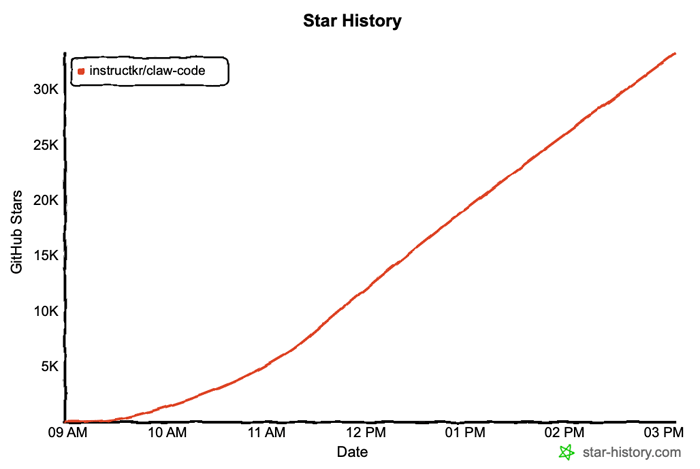
Where it became the fastest software repository to reach 50,000 forks (basically a copy of the source code).
And it all happened within a matter of hours.
Claude Code’s Source Code Forks to 50,000
Source: instructkr/claw-code
At the time of this writing, there are already about 91,900 copies of Claude Code’s source code in the wild.
And with every refresh of the GitHub page, the number continues to increase.
How could this have happened?
It wasn’t malicious or intentional.
A single individual in the company ran a production build of Claude Code in preparation for publishing the update.
The software compiler used generated a .map file, which can reverse the code base back to its source code.
And then the Anthropic employee published it all.
It was just a stupid mistake by a software engineer.
But for one of the world’s leading AI companies – now worth $380 billion – it’s a reckless, gaping hole revealing the company’s extremely weak security processes.
Which is ironic… since it’s coming from the company best known for “AI Safetyism.”
Anthropic’s CEO, Dario Amodei, is well-known for calling AI an existential threat and has declared Anthropic as the “most safety-focused lab on Earth.”
This comingWednesday, at 2 p.m. ET, Jeff Brown is having a special online strategy session he’s calling AI Doomsday… To help you prepare for a massive new wave of disruption he sees coming. Elon Musk is about to release a new AI model so disruptive that it could trigger a fresh new wave of crashes in the stock market. Click here to save your seat… Because if you’re holding the wrong stocks, you could lose everything in the coming days. (When you click the link, your email address will automatically be added to Jeff’s guest list.)
Even more ironic is that mere weeks ago, Anthropic and others ridiculed the Pentagon for blacklisting Anthropic’s AI from use, citing it as a supply chain risk for the government.
It is now crystal clear that it was a very smart move by the Pentagon.
And it’s also clear that the Pentagon knew a whole lot more about the inner workings of Anthropic and its software.
Just imagine the implications… if Anthropic were to accidentally release a custom fork of its frontier AI model, which had been designed for U.S. intelligence services and contained highly classified information.
It would be invaluable to U.S. adversaries and potentially devastating to U.S. national security.
But what about the implications for Anthropic, and for that matter, the AI industry at large?
After all, investors in Anthropic have given the company $61.15 billion to date – in the race to achieve artificial general intelligence (AGI).
Its last funding round was a $30.6 billion raise this February.
Anthropic has literally spent tens of billions of dollars developing its proprietary AI models.
And it just gave Claude Code away for free.
Can you imagine the phone calls Anthropic CEO Dario Amodei has been receiving since the release of its source code? Investors are not happy right now.
Of course, Anthropic has been in damage control mode since the release.
Since this morning, the company has issued more than 8,000 copyright takedown requests for the removal of the source code.
But do you really think that software developers in China, North Korea, Russia, etc. will adhere to U.S. copyright laws?
No way.
Anthropic has insisted that the source code release didn’t expose any customer-specific information, or even the weights of Anthropic’s AI models.
That’s probably true, but the reality is that the damage is done.
The source code is out there, and it continues to be copied and forked at a rapid pace.
It is out of Anthropic’s hands. The genie is out of the bottle. There’s no way to turn back time.
The source code literally reveals Anthropic’s software architecture, something that was once nearly impossible to reverse engineer.
It shows any software, company, or government precisely how Claude Code works – knowledge that came at a cost of billions of dollars of investment.
Now, any competitor, or any new startup, can leverage this knowledge to make competing products in a matter of months, which immediately devalues Anthropic’s software.
And if you’re an enterprise customer of Anthropic, how could you possibly trust the company with access to your proprietary and sensitive data?
The same is true for any government working with Anthropic.
In Development, Too!
To make matters worse, the software source code release also revealed new product features that Anthropic has in development.
One that particularly stands out is a multi-agent orchestration along the lines of what xAI has successfully implemented with Grok 4.2.
It is also developing new features around what it calls “Dream Memory Consolidation,” which is designed to defragment and consolidate long-term memory of the models.
This will enable an AI to have long-term, personalized memory of all interactions with an end user, company, or government.
And perhaps the oddest new feature in development is what Anthropic calls a “Tamagotchi-style pet companion,” with gacha mechanics, species, rarities, and ASCII art stats.
Aside from the gamification of having a digital pet to care for, the pet companion “sits beside your input box and reacts to your coding.” It’s like a little digital creature looking over your shoulder as you work, an intelligent one that you can interact with.
And at the center of it all is a new KAIROS feature that will become an always-on, 24/7agentic AI, capable of being productive when we play, relax, or sleep.
That’s what’s coming. And now we know this definitively, thanks to one massive, multibillion-dollar screw-up.
And it’s coming for all of the leading frontier AI models.
In a normal market environment, it would be hard for a company like Anthropic to recover from a massive mistake like this. But these are not normal times…
First, not all of Anthropic’s source code was released – just that related to Claude Code.
Second, Bleeding Edge readers can already grok the implications for the entire market, understanding now that one of the world’s leading source codes was just basically made open source to the world’s software engineers.
This will only act like fuel to an already frenzied race to AGI greatness… No need to invest billions to build a model. Just fork Anthropic’s source code, make some improvements, and you’ve got a state-of-the-art product.
Despite the massive flub, the value of any company that attains artificial general intelligence has the potential to be worth more than a trillion dollars.
Anthropic will get there, as will OpenAI. And I would argue xAI is already there in the laboratory… with what will become Grok 5.
To ensure our emails continue reaching your inbox, please add our email address to your address book.
This editorial email containing advertisements was sent to pahovis@aol.com because you subscribed to this service. To stop receiving these emails, click here.
Brownstone Research welcomes your feedback and questions. But please note: The law prohibits us from giving personalized advice.
To contact Customer Service, call toll free Domestic/International: 1-888-512-0726, Mon-Fri, 9am-7pm ET, or email us here.
Publisher’s Note: Elon’s rolling out a new space initiative, transforming Tesla into an AI chip rival to Nvidia, and launching what he’s calling “the biggest product of all time.”
All three happen before the end of April. Dr. Skousen’s identified three stocks positioned to explode off these launches — and he’s breaking down all three live on Wednesday, April 8 at 2 p.m. ET.
I’ve seen Mark’s research. The supply chain plays are real. The timing is tight.
If you don’t position before these launches hit, you’re watching from the sidelines. RSVP now. It’s free.
— Stephen Prior, Publisher
Dear Reader,
It’s that time of the year again: earnings season…
And while the mainstream loves to speculate and bet on company earnings…
Yesterday, we saw exactly WHY I use my overnight earnings strangle.
In case you are new to strangles…
A strangle is an options strategy you might use when you are betting on a big move higher or lower for a stock…
Meaning, regardless of if you are right or wrong, as long the moves in one direction… you can still win.
And earnings reports are some of the most common catalysts for these kinds of big moves.
To pull off a winning earnings strangle, you have to…
Pick the right strike price for both the puts and the calls
Pick the right company
Pick the right expiration date.
But the beauty of a strangle is you can make money regardless of which direction the stock goes.
The point of the trade is to buy a put option and a call option, so you’re covered in the event of either an upside move or a downside move.
To close the trade for a gain, all you need is for the stock to move enough (in either direction) that the price of one of your options rises above the total price you paid for both.
Take a look at NIKE yesterday…
In The War Room I recommended an Overnight Earnings Strangle…
I bought the $54 April 2nd Calls…
And the $52 April 2nd Puts…
The total cost for both positions was $3.60
So I was covered in both directions.
Take a look at what happened…
Nike got crushed. OUCH!!
The stock opened down about 10% overnight…
BUT because my strangle included the puts…
Not only was I protected…
But I actually scored a 68% winner!
Even though Nike got killed, we sold the call/put combo for $6.00.
So, even as Nike was getting clobbered, War Room traders locked in a killer overnight winner.
If the underlying option is predicting a huge move, then you likely will not make money, because the option will already be very expensive.
What you want to look for is a situation where the market is NOT expecting a huge move and has therefore underpriced the options. That’s where a surprise in earnings can lead to a sizable move.
You also need to know companies’ official expected earnings and unofficial “whisper numbers” (which represent what the market is reallyexpecting).
And lastly, you need to know the technical support and resistance levels.
That due-diligence is precisely what I do for you inside The War Room.
YOUR ACTION PLAN
Give the Overnight Earnings Strangle a try for yourself this earnings season…
In this market, there will be plenty of opportunities for them to pay off.
During earnings season, I trade these regularly inside The War Room.
Join a Secret Group of Ultra-Wealthy Investors Extracting Up to $494,100.00 Each Day in the MarketsLearn More About the War Room
Monument Traders Alliance, LLC
You are receiving this email because you subscribed to Trade of the Day. To unsubscribe from Trade of the Day, click here.
Questions? Check out our FAQs. Trying to reach us? Contact us here. Please do not reply to this email as it goes to an unmonitored inbox.
To cancel by mail or for any other subscription issues, write us at: Trade of the Day | 14 West Mount Vernon Place | Baltimore, MD 21201 North America: 800.507.1399 | International: +1.443.353.4977 Website | Privacy Policy Keep the emails you value from falling into your spam folder. Whitelist Trade of the Day.
Nothing published by Monument Traders Alliance should be considered personalized investment advice. Although our employees may answer your general customer service questions, they are not licensed under securities laws to address your particular investment situation. No communication by our employees to you should be deemed personalized investment advice. We allow the editors of our publications to recommend securities that they own themselves. However, our policy prohibits editors from exiting a personal trade while the recommendation to subscribers is open. In no circumstance may an editor sell a security before subscribers have a fair opportunity to exit. The length of time an editor must wait after subscribers have been advised to exit a play depends on the type of publication. All other employees and agents must wait 24 hours after publication before trading on a recommendation.
Any investments recommended by Monument Traders Alliance should be made only after consulting with your investment advisor and only after reviewing the prospectus or financial statements of the company.
Protected by copyright laws of the United States and international treaties. The information found on this website may only be used pursuant to the membership or subscription agreement and any reproduction, copying or redistribution (electronic or otherwise, including on the world wide web), in whole or in part, is strictly prohibited without the express written permission of Monument Traders Alliance, LLC, 14 West Mount Vernon Place, Baltimore, MD 21201.
When I look at many of the brands owned by Kraft Heinz (Nasdaq: KHC), it takes me back to my childhood: Cool Whip, Kool-Aid, Jell-O, Kraft Singles, Oscar Mayer, and, of course, Kraft Mac & Cheese, a staple in the diet of nearly every kid born between 1950 and today.
It’s a tougher market for Kraft Heinz now than when I was growing up. Today, store brands compete strongly with national brands. They’re cheaper and often just as good.
Among Kraft’s lineup of brands, the only ones I go out of my way to buy are Heinz ketchup and Philadelphia Cream Cheese.
Fortunately for the company and its shareholders, I’m not the only consumer out there. Kraft Heinz posted nearly $25 billion in revenue last year. That’s a lot of Maxwell House coffee and A1 steak sauce.
In fact, 94% of U.S. households buy Kraft Heinz products.
But unfortunately for shareholders, the stock has been as popular as the watery liquid that comes out when you first open a bottle of ketchup. It’s lost 28% over the past year and is down 46% since May 1, 2023. The last time the stock price was this low was during the COVID Crash.
The company has kept its dividend steady at $0.40 since 2019, so the declining stock price has pushed its yield up to a gigantic 7.2%.
Can shareholders rely on that dividend like Stove Top stuffing? Or will it spoil like Lunchables that have been left out in the sun?
Nvidia… Amazon… Netflix… Their biggest gains have come and gone.
If you missed out on those, the greatest legacy they’ve left for you is their playbook… so you can follow along the next time it plays out.
Folks, that time has arrived.
And Alexander Green would know. He identified ALL of those companies early on. Now he’s zeroed in on his next one… a little company with AI technology that could soon change the world. He’s targeting 4,700% in the next decade. Details HERE.
Despite its woes, Kraft Heinz has been steadily growing its free cash flow.
Last year, free cash flow grew 16% to $3.7 billion, and it is expected to grow another nearly 17% this year to $4.3 billion.View larger image
In 2025, Kraft Heinz paid shareholders $1.9 billion in dividends, or 52% of its free cash flow. This year, that dividend figure is expected to be nearly identical for a payout ratio of 44%, so Kraft Heinz can afford its dividend.
The only stain on the company’s record is a dividend cut in 2019. Prior to the current $0.40 quarterly dividend, Kraft Heinz paid shareholders $0.625 per quarter.
It really needed to slash the dividend at that point, because the amount it was paying in dividends was consistently exceeding free cash flow. But ever since it reduced the dividend, the company has been generating more cash than it pays out.
Before I reveal Kraft Heinz’s dividend safety rating… what grade would you give it? How confident are you that it won’t cut the dividend again?
Click your grade below, and you’ll be able to finish reading on the next page.ABCDF
During a private gathering of Wall Street elites, I was one of two people selected to speak with Elon personally.
As a result, my research now leads me to believe Elon will announce the SpaceX IPO on this date:
April 20, 2026. Circle it on your calendar.
I’m sharing an “access code” that lets anyone grab a pre-IPO stake before it happens. This is your invitation to the biggest wealth-building event of the decade.
Nothing published by The Oxford Club should be considered personalized investment advice. Although our employees may answer your general customer service questions, they are not licensed under securities laws to address your particular investment situation. No communication by our employees to you should be deemed personalized investment advice. We allow the editors of our publications to recommend securities that they own themselves. However, our policy prohibits editors from exiting a personal trade while the recommendation to subscribers is open. In no circumstance may an editor sell a security before subscribers have a fair opportunity to exit. The length of time an editor must wait after subscribers have been advised to exit a play depends on the type of publication. All other employees and agents must wait 24 hours after publication before trading on a recommendation.
Any investments recommended by The Oxford Club should be made only after consulting with your investment advisor and only after reviewing the prospectus or financial statements of the company.
Protected by copyright laws of the United States and international treaties. The information found on this website may only be used pursuant to the membership or subscription agreement and any reproduction, copying or redistribution (electronic or otherwise, including on the world wide web), in whole or in part, is strictly prohibited without the express written permission of The Oxford Club, LLC, 105 West Monument Street, Baltimore, MD 21201.
Love New Times? Thanks to a recent Google update, you can now select us as a preferred source to see our stories first in search results. Thank you in advance for your ongoing support of local journalism.
Welcome to The Pregame Lineup, a weekday newsletter that gets you up to speed on everything you need to know for today’s games, while catching you up on fun and interesting stories you might have missed. Today’s edition is brought to you by David Adler.
The hitter with the longest on-base streak in Major League Baseball is also the pitcher with the longest scoreless-inning streak in Major League Baseball.
After Ohtani’s first two-way game of the 2026 season last night — when he pitched six shutout innings on the mound and went 1-for-3 with two walks at the plate — the Dodgers superstar has reached base safely in 36 consecutive games going back to last season … and thrown 22 2/3 scoreless innings going back to last season.
Both of those streaks, incredibly, are the longest active regular-season streaks in baseball.
MLB’s longest active on-base streaks
Shohei Ohtani (Dodgers): 36 games
Geraldo Perdomo (D-backs): 22 games
Jonathan Aranda (Rays): 19 games
MLB’s longest active scoreless-inning streaks
Shohei Ohtani (Dodgers): 22 2/3 innings
Mason Miller (Padres): 22 1/3 innings
Max Fried (Yankees): 18 1/3 innings
Now, sure, Miller could leapfrog Ohtani between now and his next start, but we’ll worry about that later. For right now, Shohei is king of both sides of the ball.
And guess what? Ohtani has a chance to set his own personal hitting record tonight when the Dodgers face the Guardians (8:20 p.m. ET/5:20 p.m. PT).
Ohtani’s on-base streak, which goes all the way back to Aug. 24, 2025, is tied for the longest of his career. He had another 36-game streak from 2023-24, but if he gets on base today, his current streak will stand alone. His scoreless innings streak as a pitcher is already the longest of his career. Who knows how far he can take that one?
The two former Mets teammates — one now in Baltimore, the other in Texas — had some fun with each other in the O’s game against the Rangers, too. deGrom sent the Polar Bear lumbering back to first base on a rare pickoff throw before Alonso got the last laugh with his homer.
But here’s the interesting thing about Alonso taking deGrom deep, beyond just their history in New York: deGrom tried a new trick against Alonso … it just backfired.
The pitch Alonso homered against was a sinker — which is a new pitch for the 37-year-old deGrom this year. deGrom hasn’t thrown a sinker in seven years. The last time deGrom had a sinker, Alonso was a rookie on the Mets in 2019.
deGrom has one of the best four-seam fastballs … well, ever. But the two-time Cy Young Award winner has decided to start mixing in sinkers as a new wrinkle this year, his 13th MLB season. The one he threw to Alonso wasn’t bad, either — 96.5 mph with 14 inches of horizontal movement and right on the inside edge of the zone. But the Silver Slugger Alonso was still able to turn on it and hammer it out to left-center.
Will that be the end of deGrom’s sinker experiment, or will he stay with his new pitch? We’ll see.
‘THIS WEEK IN BASEBALL’ IS BACK!
In the mood for some nostalgia today? Well, here’s some good news:
MLB is reviving the classic franchise — complete with its iconic theme music.
The @MLB account on X will show a new short-form episode every Friday at noon ET from now through the 2026 postseason. The reimagined “TWIB” will highlight the biggest plays, amazing moments and fun stories of the season — all while keeping the vibe that made “This Week in Baseball” a hit with fans for decades.
“This Week in Baseball” debuted in April 1977 — hosted by Hall of Fame broadcaster Mel Allen — as a weekly 30-minute highlight program that showcased standout moments from around the league in the days when baseball highlights were usually limited to brief segments on local newscasts. The original run lasted until 1998, with a revival version also running from 2000-11.
WHY THIS 2-HOMER DEBUT WASN’T A SURPRISE
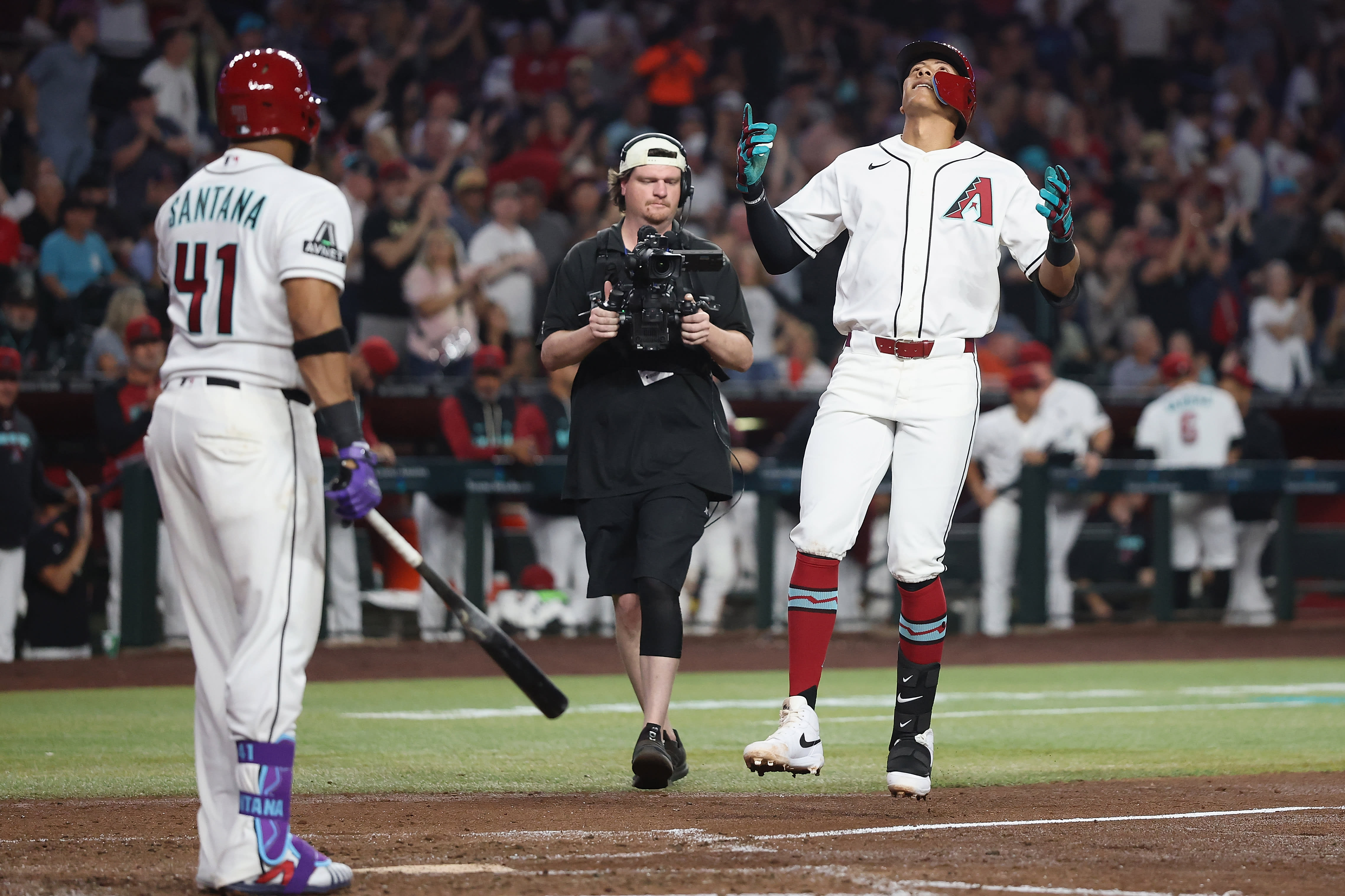
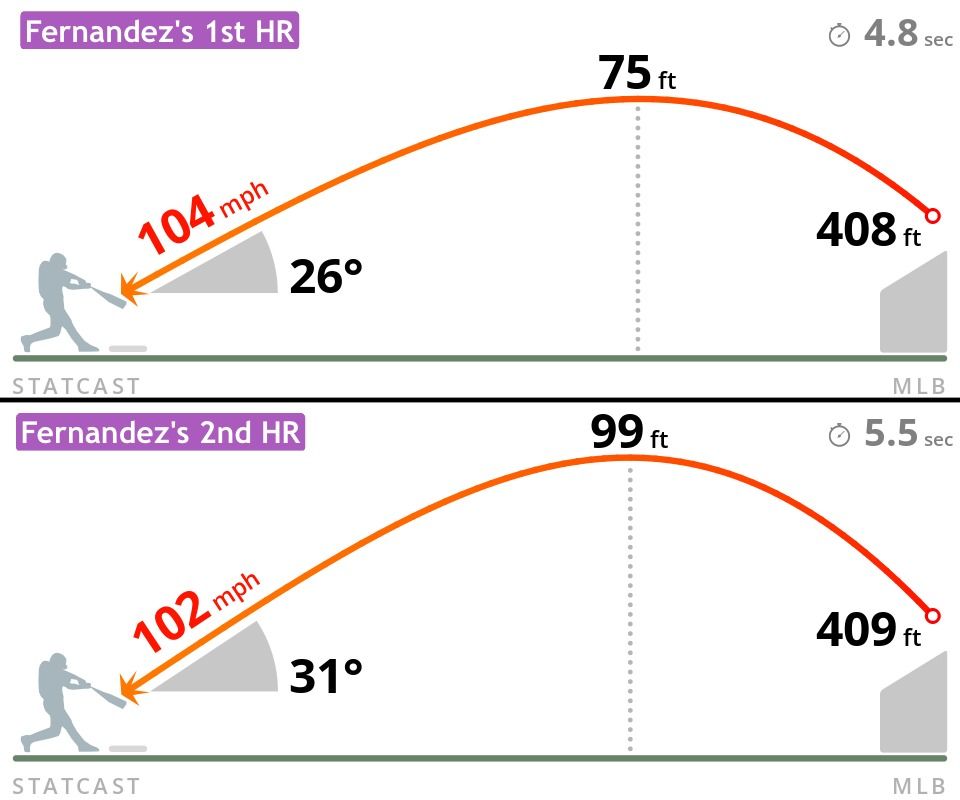
D-backs No. 27 prospect Jose Fernandez turned heads last night with a historic big league debut. Fernandez became just the eighth player in MLB history to hit two home runs in his first career regular-season game. (Crazily enough, two of those eight times have happened this season, with the Guardians’ Chase DeLauter also doing it on Opening Day.)
But if you were watching the 22-year-old tear it up at Spring Training, this wasn’t a surprise.
Fernandez had a ridiculous 100.1 mph average exit velocity this spring. He was one of only three players to average 100 mph or harder on at least 15 batted balls — and the other two guys were Giancarlo Stanton and Junior Caminero.
Fernandez’s 83% hard-hit rate was the highest of Spring Training, and 13 of his 18 balls in play were hit at least 100 mph off the bat. Oh, and he also smacked a 102.4 mph triple and 96.1 mph single in the D-backs’ Spring Breakout prospect showcase game.
So seeing Fernandez barrel up a 104.2 mph home run off Tigers starter Casey Mize and a 101.6 mph home run off closer Kenley Jansen last night? Makes perfect sense to us.
THE NASTIEST PITCHES OF PAINTER’S DEBUT
Andrew Painter’s much-hyped Major League debut yesterday was even more dazzling than we could’ve hoped for.
The Phillies’ star pitching prospect pitched 5 1/3 innings of one-run ball and racked up eight strikeouts on four different pitch types — his fastball, slider, curve and changeup.
Here’s a look at some of his nastiest pitches of the night — one K for each pitch type.
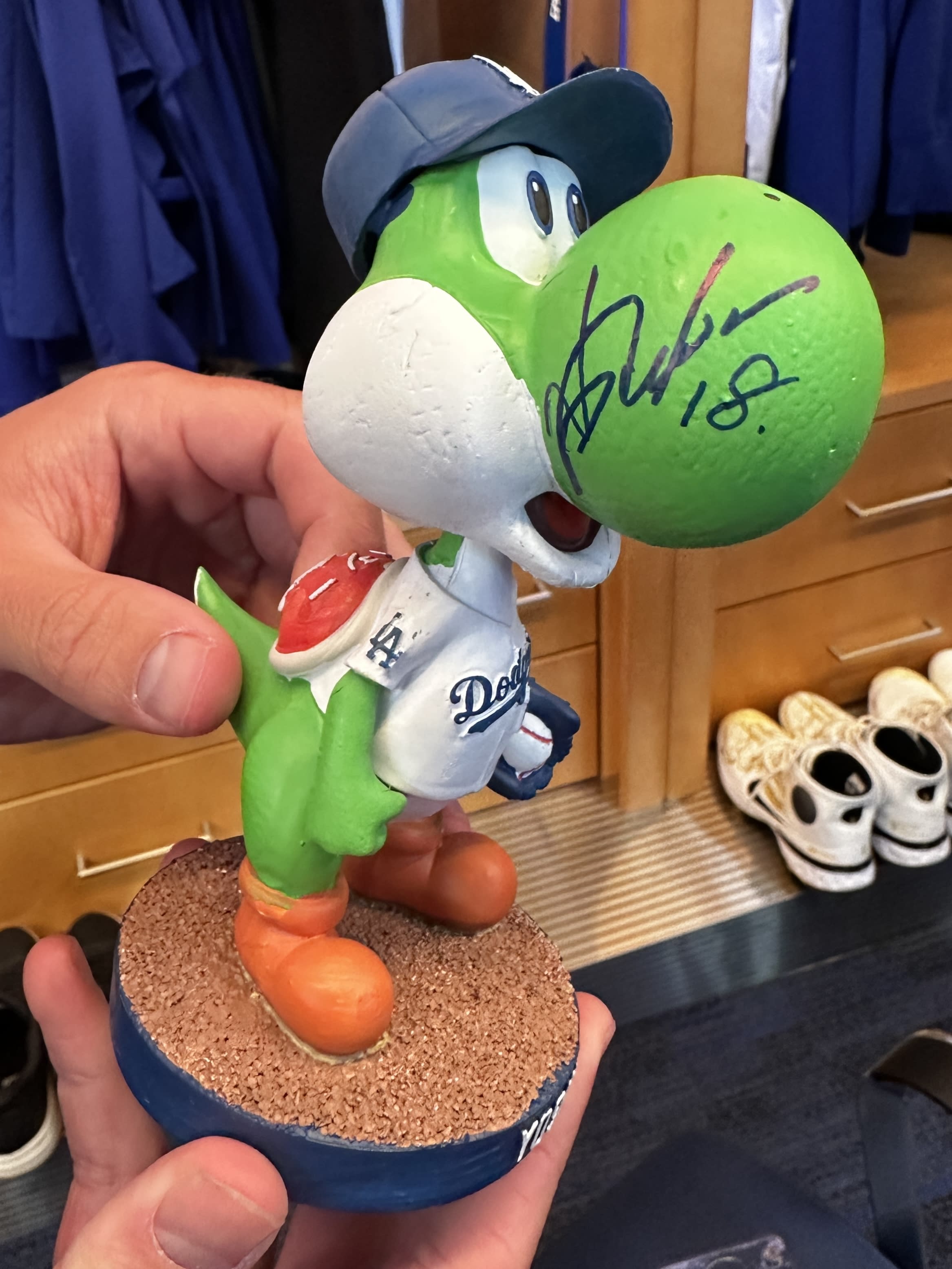
If you haven’t already seen it by now, the bobblehead was Yoshi (the green Super Mario dinosaur) wearing a Yoshi (Dodgers pitcher Yoshinobu Yamamoto) jersey.
And Pitcher Yoshi even autographed the Dinosaur Yoshi bobbleheads for his Dodgers teammates, as captured by Sonja Chen:
There were actually three Yoshis at Dodger Stadium last night: Yamamoto … a giant Yoshi mascot … and Donald Glover — the voice of the Yoshi character in the new Mario movie — who threw out the ceremonial first pitch to Yamamoto.
“The Super Mario Galaxy Movie” premieres in the U.S. today.



















































 RJ Hamster