🦉 The Night Owl Newsletter for July 16th

UnsubscribeThe OpenAI and Anthropic IPO wave is getting real (From StockEarnings)

Why Abbott Laboratories Stock Is Suddenly Winning Back Wall Street

Written by Thomas Hughes

Abbott logo displayed on a glass office building exterior at the company's headquarters.

Abbott Laboratories (NYSE: ABT)gave the market what it wanted in its Q2 earnings report, affirming that the Exact Sciences acquisition was a good one. The critical takeaways are that comp growth is solid, the Exact Sciences business has traction, and the near-term margin impairment the acquisition brought is less than expected.

Looking forward, profitability metrics have improved, leading to improved guidance, strengthened market sentiment, and a robust rebound in the share price.

The share price rebound is an operative factor in the second half of 2026. Abbott’s market was overly depressed, given its historical value and capacity for capital returns, signaling a buying opportunity for investors.

The post-release surge not only confirms support at the existing lows but is also backed by MACD and stochastic signals, suggesting a full reversal is in play. The market completely misjudged the Exact Sciences deal, focusing too intently on near-term margin pressure and execution risk, rather than the long-term commercial impact on revenue, margins, and earnings.

ABT chart showing a bottom prior to the Q2 earnings release, with a 5% premarket surge after the release.

Abbott Laboratories Q2 Report a Balm for Frayed Investor Nerves

Abbott Laboratories’ Q2 report is solid, with reported growth of 13% and organic growth of 4.8%. Strength was underpinned by Exact Sciences and the 42.3% increase in Diagnostic services it brought, aided by an 8.4% increase in Established Pharmaceuticals and a 7.9% increase in Medical Devices. Nutrition, among the smaller segments, declined by 3.1%. Regionally, strengths were seen domestically and abroad.

Margin news was the catalyzing factor. The company’s margins contracted but less than expected, leaving gross margin, operating and net income above analysts’ forecasts. The critical takeaway is that $1.31 in adjusted earnings per share (EPS) outperformed by 235 basis points and is sufficient to sustain financial health while reinvesting and returning capital to shareholders.

Guidance is another catalyzing factor for back-half trading. The company maintained its forecast for organic revenue growth but improved the outlook for earnings, lifting the midpoint and narrowing the range for full-year results. With momentum building and results forecasted to accelerate in the back half, the guidance is likely to be cautious, setting the stage for additional catalysts by year’s end.

Abbott’s Capital Return Outlook Improves

Abbott’s capital return was never in any real danger, but the threat of margin compression and cash flow impairment was sufficient to weigh on sentiment. The takeaway from the Q2 release, however, is that concerns are misplaced. Capital returns will continue to flow, including the dividend and share buybacks, and buybacks may accelerate.

As it stands, Abbott is a Dividend Kingwith nearly 55 consecutive increases to its credit, a manageable 70% payout ratio, and buybacks to offset the impact of annual increases and build shareholder leverage. The dividend yield is more than attractive, as of mid-July, at a historical high of approximately 2.8%, and Q2 buybacks reduced the count by 0.45%.

Analysts and Institutional Trends Reveal Optimistic Support for ABT Shares

Analysts’ trends reflect the dividend safety and deep value opportunity presented this year. While price targets have moderated, the market overreacted and moved below the low end of the target range. Price targets suggest a floor near $90, with potential for substantial upside at the consensus. Valuation metrics suggest the upside will run into the triple digits over time.

The likely outcome is that analysts’ price targets begin to firm, increasing conviction in the consensus and potential for a full stock price recovery. Until then, institutional activity suggests this group limits risk in 2026, owning more than 75% of the shares and buying on balance. Buying is broad-based, including funds, mutual funds, public retirement accounts, and private wealth managers.

Abbott’s risks center on legacy issues related to its baby formula business, competition in the MedTech sector, and the integration of Exact Sciences. Integration risks now appear limited, given the Q2 release and guidance update, leaving competition and legacy issues as the primary hurdles. Competition is being mitigated through pipeline investment, with numerous positive developments reported this quarter. Legacy issues relate to baby formula manufacturing processes, regulatory scrutiny, and the unresolved legal issues they bring.

This year’s catalysts include the successful integration of Exact Sciences, the revenue and margin boost from Cologuard, and the expansion of Medtech wearables. Libre Duo, the world’s first dual glucose/keytone monitoring system, received the EU’s CE Mark, enabling its sales throughout the region, while pipeline news includes advances in two critical cardiovascular devices. What the market gets wrong is that ABT isn’t just a legacy healthcare company and bond proxy but an innovative med-tech company expanding margins while investing in growth. READ THIS STORY ONLINE

The Lithium Gold Rush Minted A New $1B Unicorn (Ad)

The Lithium Gold Rush Minted A New $1B Unicorn

The Lithium Gold Rush Minted A New $1B Unicorn

This lithium producer surpassed a $1B private valuation, joining some of America’s most powerful startups.NOW YOU CAN INVEST IN ENERGYX ALONGSIDE GLOBAL GIANTS LIKE GENERAL MOTORS, BUT ONLY THROUGH JULY 16.

Revving Up Returns: Big Banks Race Through the Rate Plateau

Written by Jeffrey Neal Johnson

Standalone outdoor ATM with a welcome screen prompt, positioned in a parking lot outside a retail building.

Headline earnings beats across money-center banks frequently mask deep divergences in net interest income sustainability and operational leverage. A rapid glance at big bank second-quarter 2026 earnings reports shows broad consensus beats across the board.

However, peeling back the layers reveals a stark operational bifurcation. Bank of America Corporation (NYSE: BAC)and JPMorgan Chase & Co. (NYSE: JPM) continue to convert sticky deposit bases into pristine margin expansion. The Goldman Sachs Group, Inc. (NYSE: GS) rides the cyclical wave of an artificial intelligence-driven mergers-and-acquisitions supercycle. Wells Fargo & Company (NYSE: WFC)battles to outrun margin compression via raw loan volume.

Calibrating Portfolios for Elevated Rates

Analyzing this divergence can help investors identify the business models that are best calibrated to compound shareholder returns in a prolonged elevated-rate environment.

Investors seeking to navigate this terrain need to look past the top-line revenue to examine how efficiently these banks manage their liability costs and capitalize on secular growth trends. Understanding how these engines operate under pressure provides a clear roadmap for investing effectively.

How Bank of America Laps Wells Fargo

Bank of America provides a textbook example of a liability-insensitive balance sheet functioning optimally. The company grew second-quarter revenue 15% year-over-year to $31.6 billion.

The underlying engine of this success is 450 basis points of operating leverage generated in the first half of the year. Operating leverage occurs when revenue grows faster than expenses, signaling efficient core operations.

With net interest income reaching $16.2 billion, Bank of America management confidently revised full-year net interest income guidance to the upper end of its 6% to 8% growth target. Fixed-rate asset repricing against a loyal, low-cost deposit base creates a formidable margin-expansion engine that requires no pressure to chase high-cost deposits. 

Bank of America improved its efficiency ratio to 59%, proving that traditional banking operations can thrive without aggressive risk-taking.

Conversely, Wells Fargo & Company faces a fundamentally different reality. Despite netting a 16.5% year-over-year increase in net income to $6.4 billion, Wells Fargo experienced a post-earnings drop as investors digested underlying net interest margin compression.

The catalyst keeping Wells Fargo competitive is the Federal Reserve’s 2025 removal of its $1.95 trillion asset cap. Unshackled from this regulatory constraint, the company expanded average loan balances by 12% year over year. Management expects margin stabilization by the fourth quarter of 2026.

Until that inflection point arrives, Wells Fargo remains reliant on raw loan origination volume to outpace the pricing pressures on its deposit base. The inability to seamlessly translate loan volume into expanding margins exposes inefficiencies relative to peers such as Bank of America.

Trading in the Fast Lane: Goldman Meets JPMorgan

When elevated rates place ceilings on consumer borrowing, dealmaking, and trading, volatility must step in to bridge the revenue gap. Goldman Sachs reported an exceptional 25.5% return on tangible equity, capitalizing heavily on the multi-trillion-dollar AI infrastructure capital expenditure cycle.

Corporate clients seeking scale are driving sector-wide consolidation, pushing Goldman Sachs advisory revenues up 17% and sending its investment banking backlog to a five-year high. Equities financing skyrocketed 91% year over year, driven largely by robust demand across Asia-Pacific.

Because Goldman Sachs holds minimal traditional net interest income exposure, its earnings quality relies heavily on this capital markets momentum. The company currently operates as a high-octane cyclical play, tethered directly to corporate restructuring and tech infrastructure financing rather than sustained interest rate spreads.

JPMorgan Chase & Co. offers a masterclass in balance sheet agility and revenue diversification. Generating a 23% return on tangible common equity on $16.9 billion in net income highlights a fortress balance sheet operating at peak efficiency.

While Goldman Sachs relies almost exclusively on capital markets, JPMorgan fired on all cylinders, with investment banking fees rising 30% and equities trading climbing 86%. Crucially, the company management matched this capital markets dominance by revising its ex-markets net interest income guidance upward to $96.5 billion.

This dual-engine approach insulates JPMorgan Chase from sudden drops in mid-cycle mergers-and-acquisitions activity while still capturing upside yield from traditional lending. Executive transitions that established Doug Petno and Troy Rohrbaugh as co-presidents set a clear succession framework, removing lingering leadership uncertainty from JPMorgan’s risk premium.

How Banks Provision for Potholes

Strong top-line revenue means little if a bank fails to provision accurately for future loan losses. Underlying consumer and commercial credit health remains the ultimate barometer of systemic stability. Bank of America recorded flat net charge-offs of $1.4 billion, accompanied by improving consumer card delinquency metrics.

JPMorgan Chase booked a highly calculated $149 million net reserve build alongside $2.4 billion in net charge-offs. These highly controlled provisioning metrics confirm that the consumer remains resilient. Standardizing delinquency rates across the sector represents a normalization from historic, stimulus-driven lows, rather than signaling acute macroeconomic deterioration.

A stabilizing regulatory environment also contributes to this sector-wide confidence. Commentary across earnings calls indicates an easing of headwinds regarding Basel III endgame adjustments and G-SIB surcharge methodologies. This regulatory clarity effectively lowers the risk premium previously priced into financial equities, allowing institutions to focus capital on client deployment rather than defensive hoarding.

Victory Lap: Dividends, Buybacks, and Strategic Positioning

Unprecedented earnings inevitably lead to aggressive capital return programs, and the second quarter of 2026 proved highly lucrative for shareholders. JPMorgan Chase intends to hike its quarterly dividend to $1.65 per share. Goldman Sachs approved a 25% bump, raising its payout to $5 per share while executing a $4 billion share repurchase program. Bank of America and Wells Fargo returned $8 billion and $3 billion, respectively, through aggressive buybacks and dividend payouts.

Investors building an allocation strategy for a prolonged higher-for-longer rate environment might prioritize JPMorgan Chase or Bank of America for core portfolio defensibility and proven margin expansion capabilities.

Those with a higher risk tolerance could add Goldman Sachs to their watchlist for exposure to the artificial intelligence infrastructure and dealmaking supercycle. Cautious investors may prefer to wait for clear stabilization of Wells Fargo’s net interest margin before taking a heavy position. READ THIS STORY ONLINE

The OpenAI and Anthropic IPO wave is getting real (Ad)

The OpenAI and Anthropic IPO wave is getting real

OpenAI and Anthropic are moving closer to the public markets – and that shift could pull serious capital into AI infrastructure, chips, cloud, and data centers.

A fresh report breaks down 9 public AI stocks positioned to benefit before, during, and after this IPO wave – including a chip name tied to U.S. AI manufacturing, a cloud play with improving momentum, and a data analytics company with enterprise upside.REVIEW THE FULL 9-STOCK AI REPORT AND SEE WHO MAKES THE LIST

Why Uber’s Biggest Deal Yet Could Unlock Its Next Growth Phase

Written by Jeffrey Neal Johnson

Smartphone displaying the Uber logo stands on a marble ledge with keys, overlooking a city skyline.

The gig economy once operated under a very simple, highly capital-intensive mandate: capture user market share at any cost. For years, mobility and delivery platforms set cash on fire to win individual zip codes. That era of localized land grabs has effectively concluded. Investors are watching a structural pivot unfold in real time.

The proposed takeover of Delivery Hero SE (OTCMKTS: DLVHF) by Uber Technologies (NYSE: UBER) marks the final stage of global food-delivery consolidation. 

For investors, identifying when a sector transitions from top-line revenue chasing to bottom-line yield optimization often separates casual observers from strategic market participants.

From Cash Burn to Cash Cows

Uber Technologies is seeking to absorb one of its most formidable European and Asian competitors in a deal valuing Delivery Hero at roughly $12.8 billion. Trading around $73, Uber reflects a market beginning to price in this new operational reality.

Valued between $37 and $43 per share, the acquisition would provide Uber with immediate, turnkey access to international markets without the friction of organic customer subsidization. The focus is shifting entirely to margin extraction, away from the cash-burning user-acquisition strategies of the past decade.

Quiet Calories: Accumulating a 37% Stake

Acquisitions require more than just capital allocation. They demand deep regulatory foresight. Leading up to these advanced negotiations, Uber executed a calculated tactical retreat, intentionally halting organic food-delivery expansion into five new European markets.

Casual observers might interpret a market pause as an indication of operational weakness. Looking closer, this was a deliberate maneuver to appease the European Commission regulators. By reducing geographical overlap before the bid, Uber proactively smoothed the path to antitrust approval.

Simultaneously, the execution of the initial equity stake build served as a masterclass in stealth accumulation. Before initiating formal takeover proceedings, Uber secured block trades from institutional heavyweights. Activist hedge fund Aspex Management offloaded a 14.6% position directly to Uber, while Prosus transferred an additional 4.5% equity tranche.

These targeted moves allowed Uber to quietly accumulate a near-blocking 37% minority stake. Securing this position through private block trades neutralized potential rival bids and successfully skirted immediate foreign investment review thresholds that trigger upon a full buyout offer.

From Price Cuts to Pricing Power

When a regional delivery brand gets absorbed into a larger platform, the local price war it was waging ends with it. The historical vulnerability of these operators has always been their reliance on elevated debt-to-equity ratios and negative free cash flow yields to fend off well-capitalized global networks. Delivery Hero generated $15.9 billion in trailing 12-month revenues across 70 markets, but remained structurally exposed to relentless subsidization wars.

Integrating these assets into Uber paves the way for near-term EBITDA margin expansion across Europe and the Middle East for Uber. The absolute jewel in this acquisition crown is Talabat, the dominant food-delivery brand across the Gulf. Bypassing the capital-intensive customer-acquisition phase in these regions enables Uber to compound its adjusted EBITDA margins, which recently expanded to 4.6% of gross bookings.

Consolidation also fundamentally alters the platform take-rate dynamic. When multiple delivery apps battle for market share in a single city, restaurant partners set the margin terms. When that market consolidates, the prevailing platform regains pricing power.

Fattening Up Core Operating Leverage

Retail investors frequently get lost in GAAP accounting distortions, missing the underlying profitability story. Recent net income for Uber appeared artificially depressed due to a $1.5 billion pre-tax mark on legacy equity investments. Peeling back the accounting layers reveals a far more robust fundamental reality. Actual core operating income rose 56.6% year-over-year to $1.92 billion.

A structural driver of this underlying profitability is a rapidly expanding recurring-revenue moat. Uber One subscriptions recently crossed the 50 million-member threshold. This sticky, recurring revenue base provides the stabilization required to seamlessly absorb 800 quick-commerce Dmart fulfillment centers without diluting near-term liquidity.

When a digital network scales to this magnitude, the incremental cost of delivering a new service or physical good to an existing captive audience drops dramatically. This dynamic accelerates long-term free cash flow generation and gave Uber management the confidence to authorize a record $3 billion share repurchase program in early 2026.

Wall Street Bets on a Heavier Uber

Market sentiment often previews realities before they formally hit the balance sheet. Derivatives data from early July 2026 indicates immense institutional conviction surrounding this consolidation thesis. Daily options volume on Uber spiked past 102,000 contracts with an 80.42% call-to-put ratio. This volume remains highly concentrated on near-term $76 strike calls, reflecting aggressive bullish positioning from funds prioritizing high-margin technology compounders.

Even with a shifting macro environment and structural changes, such as autonomous driving partner Waymo exiting the Uber application ecosystem in Phoenix, UBER only experienced a brief 4% depression. The robust free cash flow and captive recurring revenue base insulated Uber from long-term decay, proving the resilience of a diversified mobility and logistics network.

Digesting the Next Era of Mobility

Understanding the life cycle of technology compounders like Uber remains essential for identifying long-term value creation. The era of fractured, regional delivery startups battling over pennies is ending. In its place, localized monopolies possessing the scale to dictate take-rates and optimize global logistics networks are firmly emerging. As marketing spends plummet and network density increases, corporate focus shifts entirely to yield optimization and aggressive capital returns.

Investors analyzing the global logistics sector may want to evaluate how the elimination of regional subsidization wars impacts long-term free cash flow models. Those monitoring the technology and consumer mobility space might consider adding equities demonstrating expanding EBITDA margins and strong recurring revenue bases to their watchlists as international market consolidation continues to unfold. READ THIS STORY ONLINE

Lance abandoned all his plans to meet me in Utah (Ad)

Lance abandoned all his plans to meet me in Utah

Trader Chris Pulver says a new SEC document dropping the day-trading limit to $2,000 has created the biggest retail opportunity he has seen in over 30 years.

His strategy targets what he calls Flashpoints – moments when market makers must move billions of dollars on the S-P 500 in a narrow window. Research shows one recent signal would have returned 83.7% in 36 minutes and another 62.8% in 51 minutes.

Lance Ippolito flew to Utah for a full breakdown of the method.TAP HERE TO SEE THE COMPLETE FLASHPOINT TRADING BREAKDOWN NOW

More Stories

The Night Owl is a financial newsletter that provides in-depth market analysis on stocks of interest to individual investors. Published by MarketBeat and Early Bird Publishing, The Night Owl is delivered around 9:00 PM Eastern Sunday through Thursday. If you give a hoot about the market, The Night Owl is the newsletter for you.

The Night Owl Newsletter.

View as a Web Page

If you have questions or concerns about your newsletter, please don’t hesitate to contact our U.S. based support team at contact@marketbeat.com.

Unsubscribe

© 2006-2026 MarketBeat Media, LLC. 
345 N Reid Pl. #620, Sioux Falls, S.D. 57103-7078. United States..

See Also: The Lithium Gold Rush Minted A New $1B Unicorn(From EnergyX)

Trial Miss Exposes Risks for Single Asset Biotech Names

Earnings360

Unsubscribe

One webinar worth putting on your calendar. (From Trade Thirsty)


The Phase 3 Failure That Sent Biotech Winners and Losers in Opposite Directions

Written by Jeffrey Neal Johnson on July 13, 2026 

A gloved hand holds a white capsule pill in a pharmaceutical laboratory setting.

Key Points

  • Wainua failed its CARDIO-TTRansform Phase 3 trial by showing no additive benefit for patients already taking stabilizer drugs like Vyndamax.
  • Ionis Pharmaceuticals shares fell more than 9% on concentrated pipeline risk, while AstraZeneca’s much larger, diversified business barely felt the impact.
  • Rivals BridgeBio, Pfizer, and Alnylam Pharmaceuticals gained ground as the trial failure preserved their competitive positions in the amyloidosis treatment market.
  • Special ReportBefore SpaceX goes public, watch this tiny supplier closely (From Weiss Ratings)

When a late-stage clinical trial misses a primary endpoint, the market reaction rarely distributes evenly across the board. The fallout often reveals undeniable fundamental truths about single-asset exposure, pipeline diversification, and the competitive moats protecting established treatments. The July 9 announcement from AstraZeneca (NYSE: AZN) and Ionis Pharmaceuticals (NASDAQ: IONS) regarding the CARDIO-TTRansform Phase 3 trial provides a real-time masterclass in these market dynamics.

The investigational use of Wainua, also known as eplontersen, failed to achieve statistical significance on its primary composite endpoint of cardiovascular mortality and recurrent cardiovascular events at 140 weeks. The treatment targets transthyretin-mediated amyloid cardiomyopathy. This fatal disease causes misfolded proteins to build up in the heart muscle.

The clinical failure removes an anticipated competitor from a highly lucrative market and triggers an immediate capital rotation across the broader biotech sector.

AI doesn’t run on chips. It runs on this. (Ad)

AI doesn’t run on chips – it runs on natural gas. Analysts are now tracking roughly 100 gigawatts of new behind-the-meter gas generation lining up behind the AI buildout, and on June 22, one of the world’s largest energy companies signed a 20-year, 2.67-gigawatt deal to power a single data-center project.

Ken Griffin has reportedly put more than a billion dollars into this corner of the market. Porter Stansberry has identified two picks-and-shovels plays in AI’s power supply, plus 6 stocks to buy and 10 to sell – all detailed in a new documentary.Watch the documentary now to see all 16 stock positions

Unmasking the Trial: Stabilizers Block the Path

To truly understand why the market repriced these assets so aggressively, investors must look beneath the headline failure and evaluate the underlying subgroup data. The treatment landscape relies heavily on stabilizer medications like Vyndamax, manufactured by Pfizer (NYSE: PFE). In the CARDIO-TTRansform trial, patients already taking these baseline stabilizers accounted for 57% of the study population at the start of the program, and that proportion rose to roughly 80% by the conclusion of the study.

Wainua failed to demonstrate an additive treatment effect in this specific stabilizer subgroup. The drug did not improve outcomes for patients who were already receiving standard-of-care treatments.

In the monotherapy subgroup, which includes patients not taking any stabilizers, Wainua demonstrated a hazard ratio of 0.71, translating to a 29% risk reduction. While that figure aligns closely with competitor benchmarks, it offers very little commercial utility. A pharmaceutical product cannot successfully capture meaningful market share if it only works for the rapidly shrinking fraction of patients who are completely naive to standard-of-care treatments.

This data exposes a fundamental disparity between antisense oligonucleotides like Wainua and RNA interference therapies developed by competitors. Alnylam Pharmaceuticals (NASDAQ: ALNY)previously validated its competing RNA interference therapy, Amvuttra, across both monotherapy and combination with a stabilizer subgroup in its HELIOS-B trial. By failing to show that essential additive benefit, Wainua is effectively locked out of the most lucrative and pre-treated segment of the total addressable market.

Asymmetric Damage: Single Asset Squeeze

The financial damage stemming from this clinical miss was distributed quite unevenly, highlighting the stark contrast between concentrated pipeline risk and structural business diversification.

Ionis Pharmaceuticals absorbed the brunt of the impact. Shares fell by more than 9% in a single day, pushing the stock down more than 26% since the start of the year and compressing its total market capitalization to $9.63 billion.

Ionis Pharmaceuticals faces acute vulnerability due to its reliance on expanding the addressable market for Wainua. The current regulatory approval for ATTR-polyneuropathy covers fewer than 50,000 patients globally.

The cardiomyopathy indication would have unlocked a total addressable market of 300,000 to 500,000 patients.

Without that expansion, Ionis Pharmaceuticals faces a difficult fundamental reality. The developer currently generates negative earnings, with an earnings-per-share loss of 56 cents. First-quarter 2026 revenue surged to $246 million, an 87% increase year-over-year, but rapid commercial infrastructure expansion kept profit margins compressed, resulting in a net loss of $93 million.

While the company’s trailing return on equity remained deeply negative at -58.65%, its balance sheet risk softened substantially after Ionis eliminated $633 million in convertible debt using restricted escrow cash on April 1, 2026.

AstraZeneca tells a completely different fundamental story. AstraZeneca’s stock price fell briefly intraday before institutional buyers stepped in to support it. A $266.54 billion pharmaceutical sector giant does not live or die by a single indication expansion.

AstraZeneca generates $60.44 billion in annual sales, supported by blockbuster oncology franchises such as Tagrisso and Imfinzi. The company operates with a healthy 17.19% net margin, a robust 30.86% return on equity, and a conservative debt-to-equity ratio of 0.52.

Pre-trial models projected Wainua could reach peak sales of up to $6.5 billion with the ATTR-CM approval.

Analysts have since revised those estimates down to approximately $4 billion. Erasing a $2.5 billion premium certainly adjusts near-term valuation models, but it barely registers against AstraZeneca’s stated $80 billion top-line revenue target for 2030. The institutional market accurately perceived the drop as a temporary mispricing rather than a structural downgrade.

The $15 Gold Fund That Pays Up to $1,152/Month (Ad)

Gold is hitting record highs, but most investors are leaving income on the table. A $15 fund is quietly paying out up to $1,152 a month to regular investors – no mining stocks, no options, no physical metal required.

Chief Income Strategist Tim Plaehn calls it a breakthrough strategy that transforms gold’s rally into reliable monthly payouts. The next distribution is just days away.Discover the gold income fund before the next payout date

The Vultures Circle: Rivals Catch the Tailwinds

Markets dislike a vacuum. When Wainua was removed as an imminent competitive threat, capital immediately rotated into the rival drugmakers positioned to capture that unaddressed market share. The trial failure preserves the current duopoly and triopoly pricing power within the disease space.

BridgeBio (NASDAQ: BBIO) emerged as the most direct beneficiary, with shares up 16% to touch new 52-week highs following the initial announcement. BridgeBio is actively launching its newly approved therapy, Attruby.

Without Wainua entering the market to compress margins and force aggressive discounting, BridgeBio enjoys a heavily cleared commercial runway. BridgeBio recently secured a $1 billion Series A convertible preferred equity raise led by Sixth Street and KKR. This infusion provides a substantial capital buffer to execute an aggressive, unopposed commercial launch, funding sales force deployment without immediate dilution concerns.

Pfizer and Alnylam Pharmaceuticals also experienced immediate bid support. Pfizer maintains its multi-billion-dollar stronghold with Vyndamax, resting easy knowing that physicians will not have to weigh the transition of stable patients to a competing therapy. Alnylam Pharmaceuticals sustains its clinical momentum, as its RNA interference mechanism remains the only proven combination therapy that effectively stacks on top of existing stabilizers.

Discharging the Risk: Portfolio Lessons Learned

The failure of the CARDIO-TTRansform trial fundamentally rewrites the competitive map for amyloidosis treatments. It draws a hard line between therapies that can improve the standard of care and those that merely match it in isolation.

For the entities involved, the data reinforces the protective power of a diversified revenue base. AstraZeneca easily absorbs the setback through its oncology and metabolic divisions, while Ionis Pharmaceuticals faces prolonged fundamental pressure as it navigates elevated debt levels and stalled growth drivers. Investors evaluating biotech allocations might consider prioritizing developers with validated combination therapies or deeply diversified pipelines to mitigate these specific clinical risks.

Read this article online ›

Featured Stories

Did you find this article useful?

I liked this article.
I did not like this article.

Thank you for subscribing to Earnings360, a morning newsletter that summarizes quarterly earnings for public companies that trade on U.S. markets.

If you need help with your newsletter, please feel free to contact our South Dakota based support team at contact@marketbeat.com.

If you no longer wish to receive email from Earnings360, you can unsubscribe.

© 2006-2026 MarketBeat Media, LLC. 
345 N Reid Place, Sixth Floor, Sioux Falls, S.D. 57103-7078. United States..

Just For You: Every machine needed a human. This one doesn’t.(From Porter & Company)

Who’s atop Power Rankings going into 2nd half?

Thursday, July 16

View In Browser 

TOP NEWS

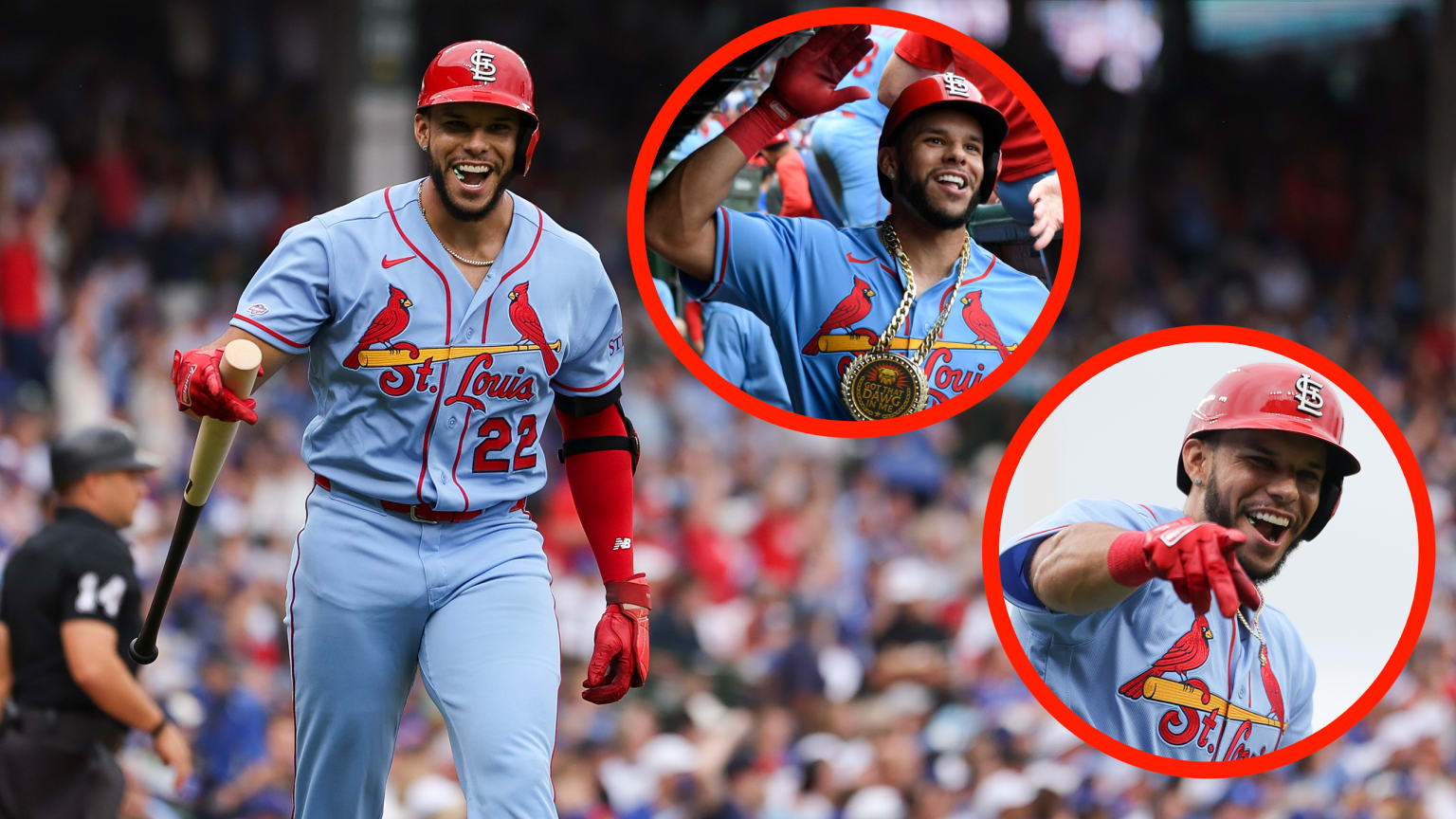
Kyle Schwarber, Jackson Chourio, Shohei Ohtani, Junior Caminero and Michael Harris II

How Power Rankings shake out as second half commences

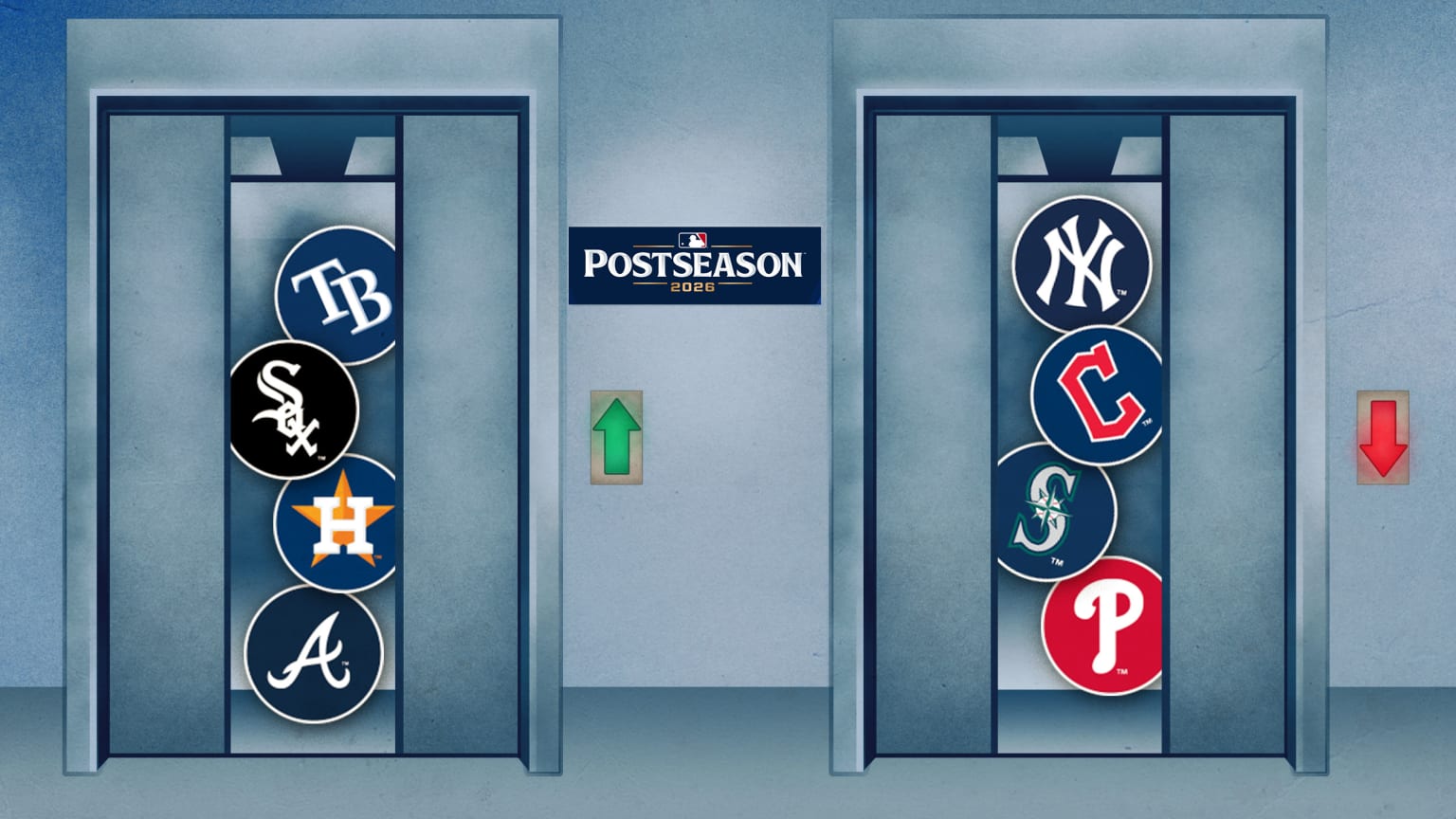
The second half begins as the first half did — with the Dodgers at No. 1. But many of the other teams near the top worked their way up since Opening Day and could challenge the champs. 

MLB

Trade rumors: Skubal suitors emerge, Yanks eyeing Mason Miller?

Arizona Diamondbacks

Hazen blunt ahead of Deadline: ‘Need to go out there and play our best baseball’

MLB

How will Trade Deadline go down? All-Stars give their takes

Baseball

No, you’re not imagining it — pitchers are throwing faster than ever this season

Trade

Crew trades for McCullers, Gordon from Astros to bolster pitching depth

Pirates

Skenes analyzes ‘weird’ first half, addresses questions over velocity drop

Baseball

How 9 hitters upped their power numbers this year

MLB

The Philly fun continues: Mets, Phillies open second half (7 p.m. ET on ESPN)

MLB Pipeline

MLB Pipeline’s favorite Draft picks — one for each club

Baseball

Abbott honored at ESPYs with Jimmy V Award for Perseverance 

MORE TOP NEWS

ADD MLB AS YOUR PREFERRED SOURCE ON GOOGLE

PERSONALIZE STORIES

PLAY A SPORCLE BASEBALL QUIZ!

Play Quiz

MORE FREE GAMES AT MLB PLAY  

STAFF PICKS

Jacob Misiorowski, Zack Wheeler and Dylan Cease

All-Star starter rising fast in latest SP Power Rankings

How do you go from unranked in the Starting Pitcher Power Rankings all the way to third? Nearly throwing a no-hitter and starting an All-Star Game did the trick for Dylan Cease. 

Each team’s biggest Trade Deadline need

Some teams are looking for a missing piece before the Trade Deadline while others are trying to build for the future, and our 30 beat reporters identified what each club should target.

A designed image of a clipboard with a list of teams' Trade Deadline needs

No bobbleheads injured in making of this souvenir

The Dodgers are memorializing Andy Pages’ game-saving catch while colliding with Kiké Hernández during Game 7 of the World Series with a one-of-a-kind bobblehead.

A bobblehead of Andy Pages and Kiké Hernández colliding on a World Series Game 7 catch

Now THIS was a short porch

Yankee Stadium is known for its short porch in right field, but those dimensions are cavernous compared to Nashville’s Sulphur Dell ballpark, where the right-field fence was 262 feet from home plate.

Sulphur Dell ballpark in Nashville

Sánchez, Eladio and LOTS of jewelry

Phillies ace and All-Star starter Cristopher Sánchez met up with Eladio Carrión for a diamond-filled All-Star Flow Up, presented by Corona.

Phillies starter Cristopher Sánchez is interviewed

Air Force Academy visits All-Star Week

US Air Force Academy players visited All-Star Week as part of the Air Force and MLB partnership celebrating America’s pastime for America’s 250th birthday.

Air Force players salute

MORE STORIES

Facebook
Instagram
Twitter
YouTube
TikTok
Snapchat

© 2026 MLB Advanced Media, L.P. MLB trademarks and copyrights are used with permission of Major League Baseball. Visit MLB.com. Any other marks used herein are trademarks of their respective owners.

Please review our Privacy Policy.

You (peterhovis@icloud.com) received this message because you registered to receive commercial email messages from MLB.com.

Please add info@marketing.mlbemail.com to your address book to ensure our messages reach your inbox. If you no longer wish to receive commercial email messages from MLB.com, please unsubscribe  or log in and manage your email subscriptions.

Postal Address: MLB.com, c/o MLB Advanced Media, L.P., 1271 Avenue of the Americas, New York, NY 10020.

Matthew 20:24 – Jesus Teaches Humility Over Pride in Leadership Roles

Having trouble reading this email? View it in your browser

Share this on Facebook
Pinterest
View as PDF

Matthew 20:24

(24) And when the ten heard it, they were moved with indignation against the two brethren. 
King James Version   Change email Bible version

Matthew 20:20-26 records the occasion when the mother of James and John asked Jesus for special consideration for her sons. When the other disciples heard of the mother of James and John asking Jesus for special consideration for her sons, they were indignant, angry. Why? From Jesus’ reply we can infer that their vanity was pricked—they had been “beaten to the punch”! They had been thinking of the same request because in their vanity they thought they deserved special consideration too.

Their proud minds had pictured themselves as worthy of being served, and they were offended because they thought that chance might be slipping away. Jesus reminded them that, even to be in the Kingdom, one has to have a humble attitude of a servant.

Unlike love, pride is “touchy and fretful.” When pride feels threatened, it broods against what it perceives to be hurting it or lessening its chances of “being on top,” “coming out ahead” of another, “looking good,” or “getting even.” And so it competes against others. It looks for ways to elevate itself or put another down. It counts all the offenses, real or imagined, and puts them into a mental account book to justify its position until it finds an opportune moment to break out in “vindication” of itself.

Love does not do any of those things. I Corinthians 13:5says it as simply as it can possibly be put. Love does not insist on its own way—it will not even become provoked in the first place. And it makes no accounting of the evil done against it! We all have a long way to go in this regard!

When love dominates a person’s life, becoming offended either through hurt feelings or a strong temptation to sin is remote. When pride dominates, hurt feelings or strong temptations to sin seem to lie behind every bush.

— John W. Ritenbaugh

To learn more, see:
The Defense Against Offense

Topics:

Humility

Love

Offense

Pride

Servant Attitude

Vanity

Commentary copyright © 1992-2026  Church of the Great God

Facebook

 ‌

Instagram

 ‌

YouTube

 ‌

Spotify

 ‌


Subscription Information

This daily newsletter was sent to you at peterhovis@me.com because you subscribed at www.theberean.org on Apr 14, 2017.

Email Preferences  |  Unsubscribe

Church of the Great God
P.O. Box 471846
Charlotte, NC 28247
803-802-7075

About The Berean | Archives | Random Berean | Subscriptions

Summer Is Better With Baseball

MLB

Thursday, July 16

View Online

For the People

We The People Love Summer Baseball. No summer is complete without hitting up your favorite ballpark. Head to mlb.com/tickets and grab your seat to finish the summer off right.BUY TICKETS

National Broadcast This Week

NYM
Phillies
ESPN/ESPN App
Preview
LAD
Yankees
MLB Network
Preview
CWS
Blue Jays
Apple TV
Preview
SF
Mariners
FOX
Preview
LAD
Yankees
FOX
Preview
CWS
Blue Jays
NBCSN / Peacock
Preview
LAD
Yankees
NBC/Peacock
Preview

Thursday
Jul 16
6:10 PM EDTNYM  @  PHI
Friday
Jul 17
7:05 PM EDTLAD  @  NYY
Friday
Jul 17
7:15 PM EDTCWS  @  TOR
Saturday
Jul 18
8:08 PM EDTSF  @  SEA
Saturday
Jul 18
8:08 PM EDTLAD  @  NYY
Sunday
Jul 19
12:15 PM EDTCWS  @  TOR
Sunday
Jul 19
7:20 PM EDTLAD  @  NYY

facebook
instagram
twitter
youtube
tiktok
snapchat

© 2026 MLB Advanced Media, L.P. MLB trademarks and copyrights are used with permission of Major League Baseball. Visit MLB.com. Any other marks used herein are trademarks of their respective owners.

Please review our Privacy Policy.

You (pahovis@aol.com) received this message because you registered to receive commercial email messages from mlb.com.

Please add info@marketing.mlbemail.com to your address book to ensure our messages reach your inbox. If you no longer wish to receive commercial email messages from mlb.com, please unsubscribe or log in and manage your email subscriptions.

Postal Address: mlb.com, c/o MLB Advanced Media, L.P., 1271 Avenue of the Americas, New York, NY 10020.

Daily Movers: Amtech and Seagate Shares Plummet, What You Need To Know

Daily recap of your portfolio performance - CLOSING BELL - PNG

Your recap for July 16, 2026 Top stories for youAmtech and Seagate Shares Plummet, What You Need To KnowWhy Healthcare Stocks Look Like a Haven in This MarketGE Vernova’s new $110 million Niskayuna research campus opensStock Market Today: Nasdaq Drops While TSMC Hits Sell Rule; Oil Shipper Steers Into Entry PointStocks to Watch Recap: TSMC, UnitedHealth, SpaceX, NetflixView more storiesMy portfolio highlightsDay Change   -0.52%Top gainersGCOGenesco37.32
+5.87%
MATMattel14.65
+5.7%
FOSLFossil4.21
+5.25%
Top losersSTXSeagate Technology745.49
-10.0%
GEGE Aerospace345.73
-4.06%
MSTRStrategy Inc94.03
-3.53%
Most activesCSCOCisco Systems109.66
-1.89%
WMTWalmart114.95
+2.15%
CLFCleveland-Cliffs9.53
-3.25%
View your portfoliosUS market highlightsS&P 500
+0.5%Dow 30
+0.7%Nasdaq
+0.31%Russell 2000
+0.79%Crude Oil
-3.94%Top gainersROKU
Roku, Inc.143.66
+20.08%PLBL
Polibeli Group Ltd7.75
+17.51%MAAS
Maase Inc.14.86
+15.73%Top losersFLY
Firefly Aerospace…31.87
-19.05%YSS
York Space System…27.69
-17.88%ASTS
AST SpaceMobile, …82.41
-15.53%Most activesAAL
American Airlines…14.98
+2.25%INTC
Intel Corporation124.57
+6.51%NOK
Nokia Corporation…14.8
+5.04%Yahoo Finance App: Portfolio performance, news and alerts, stock data and all you need in a finance app. Download now.

Privacy Policy | Customer Support | Unsubscribe

©2026 Yahoo Inc. All Rights Reserved.

770 Broadway, New York, NY 10003

Spencer Pratt and the election denier ecosystem

Follow @FlipboardSee More in The Daily EditionDownload App

What is Pete Hegseth's 'High-T Department of War?'

What is Pete Hegseth’s ‘High-T Department of War?’ NBC News · Megan Brand and Mosheh Gains Hegseth says the U.S. military will begin testing the testosterone levels of some service members and recommending hormone therapy. 

FLIP
The opening after Netanyahu

The opening after Netanyahu The Atlantic · Thomas Wright A new Israeli government won’t deliver peace overnight, but it could reverse the trajectory toward endless conflict. 

FLIP
How I turned AI to the dark side

How I turned AI to the dark side ieee.org · David Kuszmar It only took a little prompting to hijack the biggest AI models. 

FLIP
Spencer Pratt is the newest symbol of the election denier ecosystem

Spencer Pratt is the newest symbol of the election denier ecosystem motherjones.com · Anna Merlan “You think your election is going to stop me. If you want to stop me, you’re going to have to f**king kill me.” 

FLIP

Stay informed and inspired!

Download Flipboard to get the latest news and stories on the topics you care about.

An onslaught of lawsuits over the Paramount Warner Bros. deal

An onslaught of lawsuits over the Paramount Warner Bros. deal hollywoodreporter.com · Winston Cho Team Ellison could choose to fan political divisions, cut a deal with the state AGs or even renegotiate the terms of its $111 billion acquisition. 

FLIP
FIFA stands to make $11.2 million by selling the World Cup final pitch

FIFA stands to make $11.2 million by selling the World Cup final pitch Fast Company · Jude Cramer Soccer fans can purchase a small section of grass from New York-New Jersey stadium after Sunday’s match. 

FLIP
The common sleep supplement that might ease chronic pain

The common sleep supplement that might ease chronic pain ScienceAlert · David Nield Widely prescribed as a sleep aid, some research suggests melatonin might have broader uses. 

FLIP
Genre-bending spy comedy 'Ride Or Die' strikes up a friendship worth killing for

Genre-bending spy comedy ‘Ride Or Die’ strikes up a friendship worth killing for The A.V. Club · Amelia Emberwing Let Hannah Waddingham play James Bond, you cowards. 

FLIP
A day in the life of Tour De France photographers

A day in the life of Tour De France photographers Defector · Patrick Redford “The sunflowers are nicely spaced, but the road isn’t high enough to layer the shot. It’s not sh**, but it’s not a banger.” 

FLIP
This what a menu from 'The Odyssey' would have looked like

This what a menu from ‘The Odyssey’ would have looked like tasteofhome.com · Lindsay Parrill The monsters are mythical. The menu isn’t. 

FLIP

Was this sent to you by a friend? For more like it, subscribe here.BLOG · CAREERS · ADVERTISEUpdate your email preferences or unsubscribe here.View our privacy policy here.©2026 Flipboard, Inc. Made with love at 555 Bryant St #352 Palo Alto, CA 94301

TSMC to invest another $100 billion in US as Q2 profit blows past forecasts

The Daily Yahoo

TSMC to invest another $100 billion in US as Q2 profit blows past forecastsTSMC, the world’s main producer of advanced AI chips and a major Nvidia supplier, pledged on Thursday to invest a further $100 billion in the U.S. state of Arizona in a win for President Donald Tru…NewsiconNews for you, PeterSpaceX Fizzles to Close $1 Above IPO Price Weeks After Debut(Bloomberg) — Three days of losses have brought SpaceX shares to the brink of falling below their initial public offering…Bloomberg SpaceX Investors Are Lamenting All the Money They’ve Lost“So my Roth IRA is down 25 percent.”Futurism                               Trump administration announces 25% tariffs on Brazil ahead of a global rollout expected within weeksThe Brazilian tariffs are the first in what’s expected to be a series of new global tariffs.Yahoo Finance Eli Lilly to buy psychedelic drugmaker AtaiBeckley for up to $3.8 billion in bet on depression therapyEli Lilly announced it is buying AtaiBeckley in a bet on neuroscience and psychiatric pharmaceuticals.Yahoo Finance In US West, drought pits farms against towns, industry in scramble for waterBy Rebecca Noble and Andrew Hay CASA GRANDE, Arizona/TAOS, New Mexico, July 15 (Reuters) – In Arizona, dead fish lie in th…Reuters Prices Already Spiking at Trump’s Mysterious Gas Stations That Promised Cheap FuelWho could’ve seen this coming?Futurism Suspect charged in shooting at Kroger grocery storeThe shooting victim is hospitalized in “stable but critical condition.”ABC News Coast Guard suspends search for 3 missing after boat capsized in San FranciscoOne person and one dog were also killed in the incident, authorities said.ABC News Former Obama White House attorney says ‘it was a mistake’ to deal with Epstein and she r…Former Obama White House counsel Kathy Ruemmler said she regrets interacting with the late convicted sex offender Jeffrey …CNN Decision to allow 800 homes ‘gut-wrenching’ for communityCampaigners in Stoke-on-Trent say the decision will “forever change” Packmoor.BBC More like thisToday's gameToday’s gamePlay Astral Gems MatchMatch 3 to create a cascade of jewels.Trending now iconTrending now1. The ESPY Awards2. Canada Fires3. Donald Trump4. Cruz Beckham5. Blanche6. Jordan Pickford7. Cyclospora Outbreak8. Daylight Savings 20269. San Antonio Tornado10. Iran War Latest News Today
Take Yahoo News with you

Tap to download the Yahoo News app for Android or iOS devices.

Unsubscribe | Terms  | Privacy Policy | Help

77‌0 Broa‌dway, Ne‍w York, N‍Y 10‍003

© 2026 Yahoo Inc. All rights reserved.

Second half gets started with a bang

The Lineup: Pregame Edition

Thursday, July 16

View Online

Mets and Phillies open the second half tonight on ESPN

Welcome to The Pregame Lineup, a weekday newsletter that gets you up to speed on everything you need to know for today’s games, while catching you up on fun and interesting stories you might have missed. Today’s edition is brought to you by David Adler.

We’ve made it to the second half, and we’re already starting to dream about blockbuster trades and riveting playoff races. But first things first. 

The second half kicks off tonight with a Mets-Phillies rivalry showdown at Citizens Bank Park (6:10 p.m. ET on ESPN). It’s the only game of the day. 

The All-Star Game might be over, but we’re not ready to leave Philadelphia just yet. For the second-half opener, we get to see two of the best hitters in the National League go head-to-head — the Mets’ Juan Soto and the Phillies’ Kyle Schwarber — just two days after they were hitting back-to-back as teammates at the top of the NL’s starting lineup in the Midsummer Classic. 

Schwarber leads the Major Leagues with 32 home runs — the most ever by a Phillies player at the All-Star break, ahead of Mike Schmidt’s 31 in 1979. 

And Soto? He’s his typical all-around superstar self at the plate. Soto’s batting .290 with 21 home runs and a .967 OPS, with a dozen more walks (55) than strikeouts (43).

But these two teams are going in opposite directions. The Phillies enter the second half at 54-43, in the second NL Wild Card spot and just two games back of the Braves in the NL East. They’re tied with the Brewers for the best record in baseball (45-24) since Don Mattingly took over as manager on April 28.Philadelphia is a top-five team in our Power Rankings entering the second half.

The Mets, on the other hand, are in last place at 40-57 and well out of the playoff picture. They’re likely to be sellers at the Trade Deadline as they look toward 2027.

See our full preview of the Mets-Phillies second-half opener here >>

9-FIGURE EXTENSION FOR BREAKOUT ALL-STAR

Chase Burns

Yet another up-and-coming young star is landing a long-term contract extension. 

Chase Burns and the Reds agreed to a seven-year, $105 million contract today, as sources told MLB.com’s Mark Feinsand. 

Burns was drafted just two years ago, going No. 2 overall in 2024, but he’s already an All-Star, a rising ace and one of the most promising young pitchers in baseball. 

The 23-year-old made his first career All-Star Game after going 11-1 with a 2.54 ERA and 118 strikeouts in 102 2/3 innings in the first half. Burns’ upper-90s rising fastball and low-90s wipeout slider make for one of the nastiest pitch combos in baseball.

Burns’ new deal is tied for the largest guarantee given to a pitcher in Reds history and tied for the third largest the franchise has given to any player. In total dollars, it equals the six-year, $105 million contract pitcher Homer Bailey signed in 2014. The biggest commitment the club has ever made was the 10-year, $225 million extension given to first baseman Joey Votto in 2012. In 2000, upon his trade from the Mariners, Ken Griffey Jr. was given a nine-year, $116.5 million contract.

Burns joins the ever-growing list of young players who’ve gotten extensions this season — which includes one of Burns’ fellow All-Stars (the Tigers’ Kevin McGonigle), a trio of rookies on division rival squads (the Pirates’ Konnor Griffin, the Cardinals’ JJ Wetherholt and the Brewers’ Cooper Pratt) and more. 

Reds beat reporter Mark Sheldon has more on Burns’ extension here >>

THE KEY TO THE BIGGEST 2026 POWER SURGES

Hitters with the biggest first-half power surges in 2026

Now that the first half is wrapped up, we can take a look at some of the players who are having the biggest breakouts. 

There are 21 qualifying hitters who hit more home runs in the first half of 2026 than they did in the entire 2025 season. Our Max Ralph took a look at those hitters to see if there were any common themes. 

The one that emerged: Bat speed. 

Most of the power surges have been driven by gains in bat speed. Sixteen of the 21 hitters are swinging the bat faster this season than they did last season. Nine of those hitters have increased their bat speed by at least one full mph — which is a lot. 

Here are some of the most interesting bat speed gainers to watch as the second half gets underway:

Jordan Walker, Cardinals 

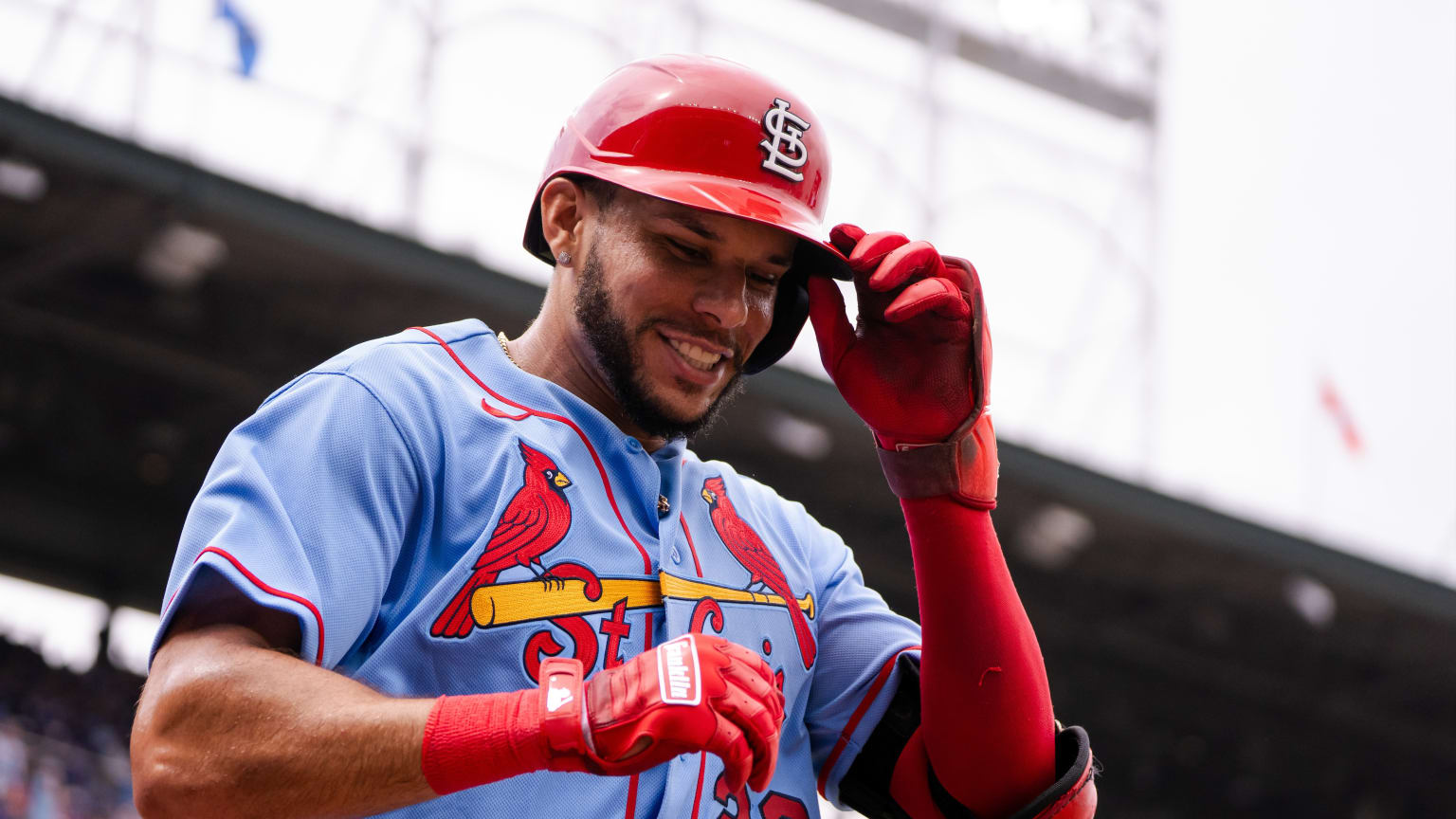
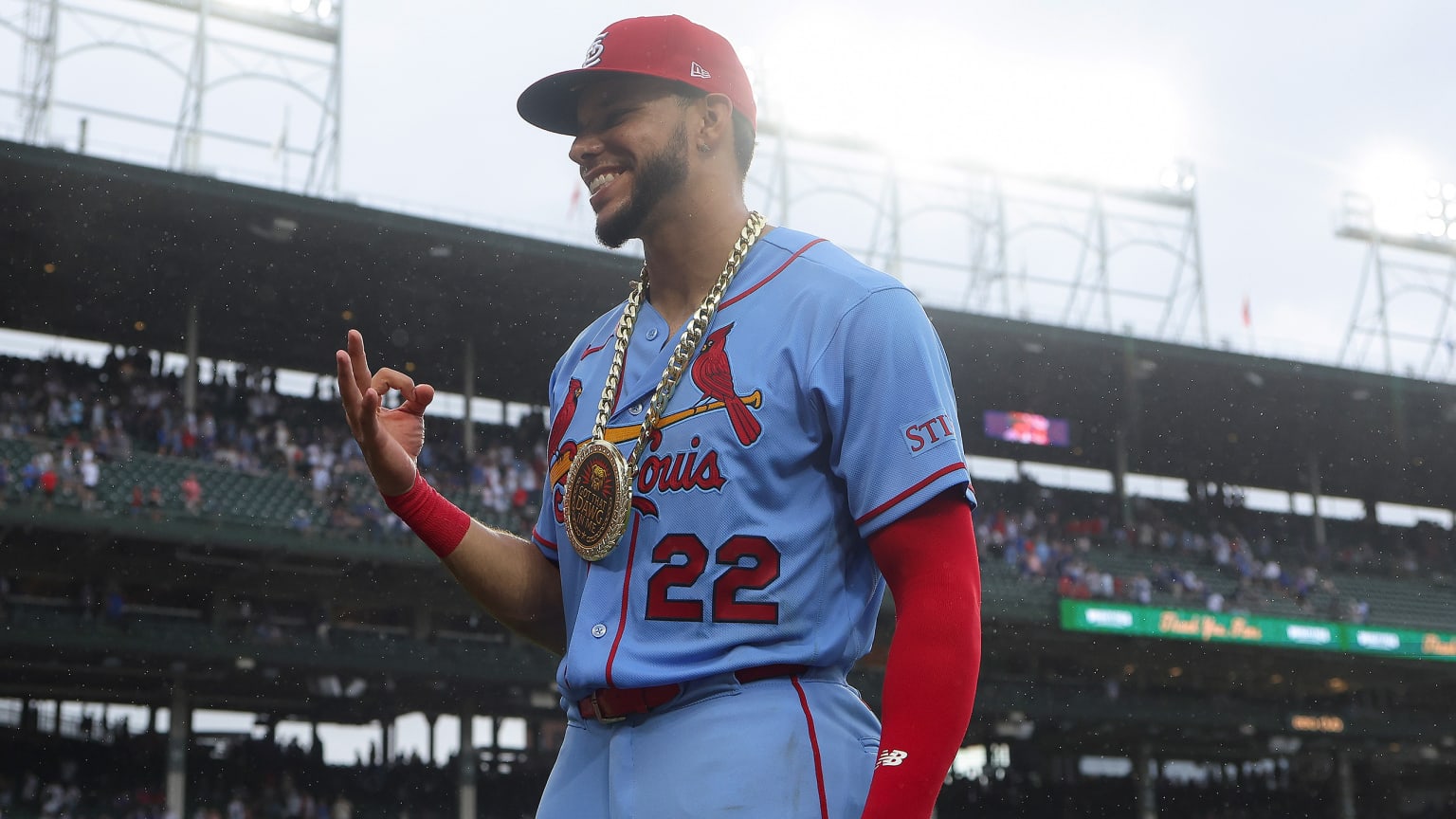
The first-time All-Star and Home Run Derby champion already had elite bat speed, but it’s gotten even more elite. Walker has increased his bat speed from 78.1 mph in 2025 to 79.2 mph in 2026 (second highest in MLB), as his home run total has skyrocketed from six to 22.

Miguel Vargas, White Sox 

Vargas, who crushed the only home run of the All-Star Game, has gained more bat speedthan any other qualifying hitter. He’s up from 70.6 mph in 2025 to 74.1 mph in 2026 — an increase of 3.5 mph — and hit 21 homers in the first half after hitting 16 last season. 

Liam Hicks, Marlins 

Hicks is one of the many breakout players for one of baseball’s biggest breakout teams. With a bat speed increase of over a mph (67.4 mph to 68.5 mph), he’s more than doubled last year’s home run total (six to 13), and has just been a much better hitter all around as the Marlins fight for a playoff spot.

Luis García Jr., Nationals 

García has been red-hot since the start of June — one of the best hitters in the entire league, in fact. If you look under the hood, you see that the bat speed is up from 72.4 mph to 73.6 mph, allowing him to reach the 20-homer mark for the first time this year after totaling 16 in 2025.    

See the rest of the biggest 2026 power surgers here >>

ABBOTT, OHTANI WIN ESPYS

Jim Abbott at the 2026 ESPYs

The 2026 ESPYs were last night, and baseball had two big award winners. 

First, former pitcher Jim Abbott received the prestigious Jimmy V Award for Perseverance

Abbott, who was born without a right hand, still pitched 10 seasons in the Major Leagues — including, memorably, throwing a no-hitterfor the Yankees on Sept. 4, 1993.

“To be here, to be included, to be in this room means the world to me,” Abbott said as he accepted the award. “To be included.”

Shohei Ohtani also won a pair of ESPYs: Best MLB Player, and Best Single-Game Performance. 

It’s no surprise that Ohtani won the former, as he took home his third consecutive MVP trophy and led the Dodgers to a second straight World Series title. 

And he earned the Best Single-Game Performance ESPY for his jaw-dropping two-way performance in Game 4 of the 2025 NLCS, when he threw six scoreless innings with 10 strikeouts as a pitcher and crushed three home runs as a hitter. 

SOTO, MEET SPIDEY

Juan Soto takes a selfie with Spider-Man

You’ve got to be a real big shot for Juan Soto to want a selfie with you. But even the Mets superstar is starstruck by Spider-Man

In a recently released promo for “Spider-Man: Brand New Day,” Spidey visits Citi Field as Soto takes batting practice. 

Soto spots the masked web-slinger — who’s sitting in the stands with Mr. Met — and exclaims: “No way! Hey Spidey! You the greatest, man!” before asking for a selfie. 

Spider-Man is excited too, turning to Mr. Met and saying, “That never happens!”

“Spider-Man: Brand New Day” hits theatres on July 31.

Watch Soto meet Spider-Man >>

SUMMER DAYS AT THE BALLPARK

An animated GIF of summer days at the ballpark

Food, friends, and summer baseball.

No summer is complete without hitting up your favorite ballpark. Head to mlb.com/tickets and grab your seat to finish the summer off right. 

Facebook
Instagram
Twitter
YouTube
TikTok
Snapchat

© 2026 MLB Advanced Media, L.P. MLB trademarks and copyrights are used with permission of Major League Baseball. Visit MLB.com. Any other marks used herein are trademarks of their respective owners.

Please review our Privacy Policy.

You (pahovis@aol.com) received this message because you registered to receive commercial email messages from MLB.com.

Please add info@marketing.mlbemail.com to your address book to ensure our messages reach your inbox. If you no longer wish to receive commercial email messages from MLB.com, please unsubscribe  or log in and manage your email subscriptions.

Postal Address: MLB.com, c/o MLB Advanced Media, L.P., 1271 Avenue of the Americas, New York, NY 10020.

Upgraded Outlooks Signal Continued Momentum for ASML Stock

Unsubscribe

The $15 Gold Fund That Pays Up to $1,152/Month (From Investors Alley)


Why ASML’s AI Monopoly Is Still Getting Stronger

Written by Thomas Hughes on July 15, 2026 

ASML logo on a semiconductor lithography machine with a robotic arm handling silicon wafers in a cleanroom.

Key Points

  • ASML’s monopoly on EUV lithography machines and its growing Installed Base give it a durable competitive moat against emerging rivals like Canon.
  • ASML’s Q2 results beat expectations with 21% revenue growth, expanding gross margins, and guidance suggesting continued strong demand into 2027.
  • Analysts raised price targets after the report, though geopolitical risks tied to China, Taiwan, and customer concentration remain significant threats.
  • Special ReportGet the golden rules of day trading for free (From The TradingPub)

ASML (NASDAQ: ASML) holds a monopoly on foundational AI technology, making it the most structurally sound tech investment you can own. Its Extreme Ultraviolet (EUV) lithography machines are the only ones capable of printing AI-capable circuitry, and they are in high demand.

Evidence of its strength was seen in the company’s Q2 results and guidance update, released July 15. The report highlighted not only demand but also a business model designed for the long term. While new EUV machines are the story today, those sales will cool over time. The long-term opportunity is the persistent upgrade cycle built into the technology, which means software and hardware upgrades and the services to implement them.

ASML’s machine bodies are bolted to the floors of semiconductor foundries globally, foundry capacity is expanding rapidly, and each machine body equates to Installed Base volume. As it stands, the Installed Base accounted for 30% of net revenue, growing 11% sequentially and 5% year-over-year, with a wide moat around the business.

There is an up-and-coming competitor technology developed by Canon (OTCMKTS: CAJPY), but it’s not slated for anything like commercial-scale availability until 2028 and, even then, isn’t truly a viable competitor. Canon’s Nanoimprint technology, which stamps circuits onto silicon, produces similarly fine circuitry but also a much higher error rate, making it unsuitable for advanced computing.

Get my day trading cheat sheet for free (Ad)

A veteran trader with nearly 30 years of experience – including running multi-million dollar hedge funds alongside Turtle Traders and a key economic advisor to President Trump – is releasing his day trading cheat sheet at no cost.

With markets posting one of the weakest first quarters on record, these principles may be worth a look. The report outlines the core rules that have shaped his approach across three decades of active trading.Tap here to access the free day trading cheat sheet now

ASML Signals Momentum Shift in Lithography Markets

ASML had a robust quarter, with revenue growing by 21% in Q2. The topline outpaced the consensus by approximately 450 basis points (bps), on strength in new equipment and upgrades. The company sold 86 new machines, up 28%, while used equipment sales declined. Gross margin, another critical factor, expanded by 1,000 bps due to leverage, including that provided by Installed Base management.

Margin is another critical factor for this investment, as the company has maintained a healthy gross margin in the mid-50% range and is improving due to sales strength and Installed Base growth. The only bad news is that the net margin contracted, leaving earnings up by only 5.8%, but there is a silver lining. The company is investing in technology and capacity to meet the new demand, signaling the cycle’s durability.

Guidance is yet another signal of this company’s strength, position, and momentum within the industry. The company issued a Q3 revenue target more than 1,000 bps above expectations, lifted its full-year outlook, and signaled a change to its long-term outlook. The caveat is that the change won’t be revealed until next year at the subsequent investor day event. Until then, ASML forecasts Q3 revenue to grow more than 23% sequentially and 31% year-over-year (YOY), which may underestimate demand for its products.

Analysts Pound Table for Top-Pick ASML

Analysts responded vigorously to ASML’s release, issuing numerous commentaries to strengthen their narrative. The group noted the considerable top- and bottom-line strengths, Installed Base growth, Installed Base management strength, and the direct translation into capacity expansion.

Activity included several price target increases, aligning with trends pushing the high end of the range. The consensus price target of $1,891 reported by MarketBeat in mid-July offered only a modest upside, but the high-end added nearly 40% to it. The likely outcome is that analyst trends remain robust through year’s end and into 2027, underpinning the stock price rally.

Capital returns are a factor in this stock’s ownership, including dividends and share buybacks. The dividend is little more than a token, yielding approximately 0.6% as of mid-July, but it is reliable, the distribution increases annually, and it is compounded by share count reductions. Q2 activity aided a nearly 1% trailing 12-month decline, a pace that is likely to continue in upcoming quarters.

Stock price action following the earnings release told a mixed story. ASML jumped more than 3% premarket before giving back the gains, though it held support near $1,775, coincident with the 30-day exponential moving average.

This suggests short-term buyers are active and defending support, but they haven’t yet taken decisive control. A push through the existing high near $2,000 is the level to watch—clearing it would likely trigger fresh capital inflows. Assuming new highs are set, the next resistance target is in the $2,250 region.

ASML chart showing the stock rebounding, on track for fresh highs.

ASML’s biggest risks are geopolitical. Restrictions, bans, and actions by China against Taiwan pose an existential threat, potentially disrupting the business. U.S. legislation currently under review could keep the company from even servicing equipment already placed in China. Customer concentration is focused on Taiwanese manufacturers, including Taiwan Semiconductor (NASDAQ: TSM), as well as Intel (NASDAQ: INTC) and Samsung (OTCMKTS: SSNLF). Valuation is also a risk, pricing in perfection and flawless execution.

Read this article online ›

Read More

Did you find this article helpful?

I liked this article.
I did not like this article.

Thank you for subscribing to MarketBeat!

MarketBeat empowers everyday investors to make better financial decisions by delivering real-time financial information and objective market analysis.

If you have questions or concerns about your subscription, please don’t hesitate to contact MarketBeat’s South Dakota based support team at contact@marketbeat.com.

If you would like to unsubscribe or change which emails you receive, you can manage your mailing preferences or unsubscribe from these emails.

© 2006-2026 MarketBeat Media, LLC. 
345 N Reid Place, Sixth Floor, Sioux Falls, S.D. 57103. USA..

Further Reading: Iran tensions are reshaping the energy trade(Click to Opt-In)