Category Archives: Uncategorized
What 2025’s Trading Range Tells You About Next Year

Blake just mapped out the entire 2026 S&P levels using yearly distribution.
Tomorrow at 7PM, he’s doing the same math on a 12-hour cycle for Euro futures.
Same methodology. Different timeframe.
He’ll calculate the exact entry, target, and stop levels that fire before the market opens Tuesday morning.
You’ll watch the calculation live. Then see if it hits the next day.
→ Register for tomorrow’s 7PM Dark Wire session
Don here…
Most traders will spend January guessing where the market goes.
Blake Young already has the levels written down.
He took the 2025 high, the 2025 low, and something called the volume skew. Then he ran a calculation that predicts exactly where overbought and oversold zones fall for 2026.
The S&P can rally another 300 points before hitting resistance. A reversal from that zone targets a 500 point pullback.
This is the same methodology Blake has used since 2007. It works because markets tend to respect the price levels where the most volume traded.
In today’s free session replay, you’ll discover:
- Why Bitcoin and MicroStrategy are flashing warning signs.Bitcoin needs to close above 105,000 to turn bullish. Below that, Blake is looking for shorts. MicroStrategy is even worse. It’s trading near its yearly low with nothing underneath to catch it.
- The NASDAQ’s balanced distribution and what that means.2025 was almost perfectly balanced between buyers and sellers. That tells you 2026 likely uses the same distribution. No major bias up or down until the levels break.
- Silver’s potential $20 move higher. The metal dropped right into the oversold zone. If it closes inside that range and breaks back above 69.72, Blake’s target is 90.77.
- Tesla’s fair price trap. The stock is sitting right at fair value for 2026. That’s not a buy signal and not a sell signal. Blake recommends waiting for a move to 505 or a drop to 393 before taking direction.
Blake walked through year after year of Tesla trades using this system. The pattern repeats. Breakout above a level, ride it to the target. Break below a level, short it to the target. Most trades hit. The losers get cut fast when the weekly close flips.
The monkey bar levels work because they’re based on where actual volume traded. Not indicators. Not feelings. Just math applied to the price history.
To your success,
Don Kaufman
Chief Market Strategist, TheoTRADE
Helping You Become a Better Trader…it’s What We Do. Experience TheoTrade® Today!
Whether you are a beginning, intermediate, or active trader, you will find a treasure chest of valuable trading education resources, both free and paid, that will help take your trading to the next level. We are committed to helping you become the best trader you can be.
Disclaimer: Neither TheoTrade.com or any of its officers, directors, employees, other personnel, representatives, agents or independent contractors is, in such capacities, a licensed financial adviser, registered investment adviser, registered broker-dealer or FINRA |SIPC |NFA-member firm. TheoTrade does not provide investment or financial advice or make investment recommendations. TheoTrade is not in the business of transacting trades, nor does TheoTrade agree to direct your brokerage accounts or give trading advice tailored to your particular situation. Nothing contained in our content constitutes a solicitation, recommendation, promotion, or endorsement of any particular security, other investment product, transaction or investment.Trading Futures, Options on Futures, and retail off-exchange foreign currency transactions involves substantial risk of loss and is not suitable for all investors. You should carefully consider whether trading is suitable for you in light of your circumstances, knowledge, and financial resources. You may lose all or more of your initial investment. Opinions, market data, and recommendations are subject to change at any time. Past Performance is not necessarily indicative of future results.
TheoTrade
PO Box 24790 Christiansted, Virgin Islands 00824
1 (800) 256-8876
Want to change how you receive these emails?
You can Update your preferences
Theotrade.com | Privacy Policy
If you no longer wish to receive our emails Unsubscribe
Last few days to watch this before 2026
Hey it’s Don.
We’re 3 days away from 2026.
And the way traders are responding to DON-DTE tells me everything I need to know:
People are ready for a different approach.
They’re tired of reacting to faster markets. They’re tired of 0DTE feeling like chaos. They’re tired of watching opportunities slip by because they don’t have a framework.
That’s why the turnout for this webinar was massive. That’s why the response has been so strong. That’s why people keep telling us they’re excited about how quickly they can start seeing results.
This framework works. And people can see it.
If you haven’t watched the replay yet, you’re running out of time before the calendar flips.
2026 is almost here. Daily expirations are part of the landscape now. Timeframes are compressing.
You can either step into the new year with structure… or you can keep guessing under pressure.
Watch the replay and make the call.
Don Kaufman
Chief Strategist, TheoTRADE
Helping You Become a Better Trader…it’s What We Do. Experience TheoTrade® Today!
Whether you are a beginning, intermediate, or active trader, you will find a treasure chest of valuable trading education resources, both free and paid, that will help take your trading to the next level. We are committed to helping you become the best trader you can be.
Disclaimer: Neither TheoTrade.com or any of its officers, directors, employees, other personnel, representatives, agents or independent contractors is, in such capacities, a licensed financial adviser, registered investment adviser, registered broker-dealer or FINRA |SIPC |NFA-member firm. TheoTrade does not provide investment or financial advice or make investment recommendations. TheoTrade is not in the business of transacting trades, nor does TheoTrade agree to direct your brokerage accounts or give trading advice tailored to your particular situation. Nothing contained in our content constitutes a solicitation, recommendation, promotion, or endorsement of any particular security, other investment product, transaction or investment.Trading Futures, Options on Futures, and retail off-exchange foreign currency transactions involves substantial risk of loss and is not suitable for all investors. You should carefully consider whether trading is suitable for you in light of your circumstances, knowledge, and financial resources. You may lose all or more of your initial investment. Opinions, market data, and recommendations are subject to change at any time. Past Performance is not necessarily indicative of future results.
TheoTrade
PO Box 24790 Christiansted, Virgin Islands 00824
1 (800) 256-8876
Want to change how you receive these emails?
You can Update your preferences
Theotrade.com | Privacy Policy
If you no longer wish to receive our emails Unsubscribe
Trump Says US ‘Knocked Out a Big Facility’ in Campaign Against Drug Boats

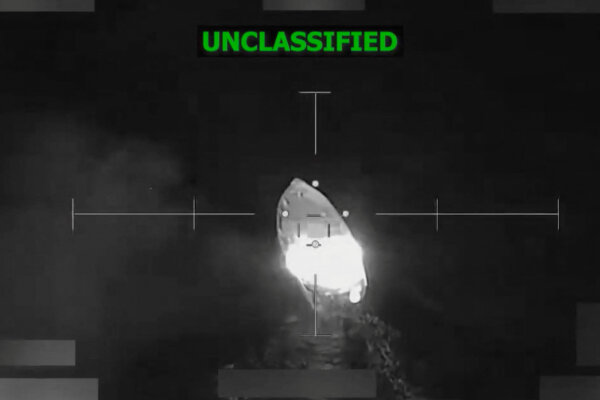






December 29, 2025 TODAY IN HISTORY Texas is admitted as the 28th state of the Union 1845 TOP STORIES Trump Confirms Major US Strikes
SHARE* READ MOREHospitals Ban Children in 2 States
SHARE* READ MOREAnother Chinese Researcher Arrested for Sneaking Hazardous Biological Material Into US
Within the last three months, we already discussed: a Chinese woman, from Wuhan of all places, who was smuggling in roundworms through the mail—while studying at a lab in Michigan;…


Trump Has a Plan to Make Housing Prices Tumble
WATCH NOWHEALTH
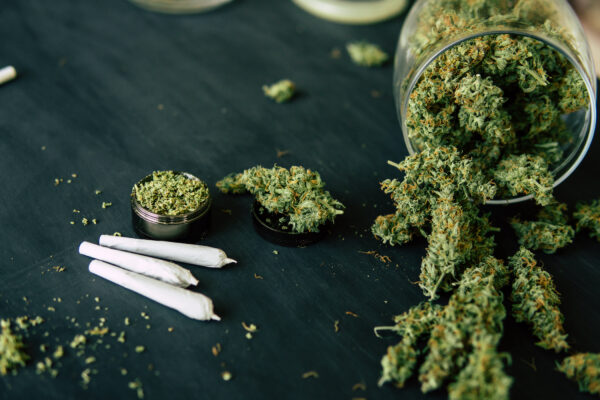
Vomiting Syndrome Linked to Cannabis Use Increased Sevenfold

Common Gout Drug May Prevent Heart Attacks and Strokes
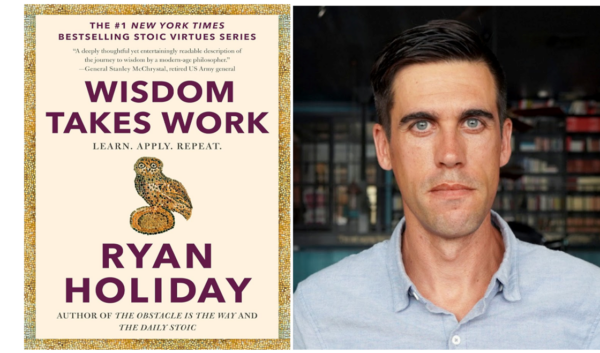
‘Wisdom Takes Work: Learn. Apply. Repeat.’ There’s No Easy Way

Sponsored by Gan Jing World
[GJW SUBSCRIBER] This documentary tells the story of the longest running Preacher to the Papal Household in history, Raniero Cardinal Cantalamessa.
Check out NOW EPOCH BUY

The Grounding Sheets That Sold Out Last Holiday Season Are Back—50% Off
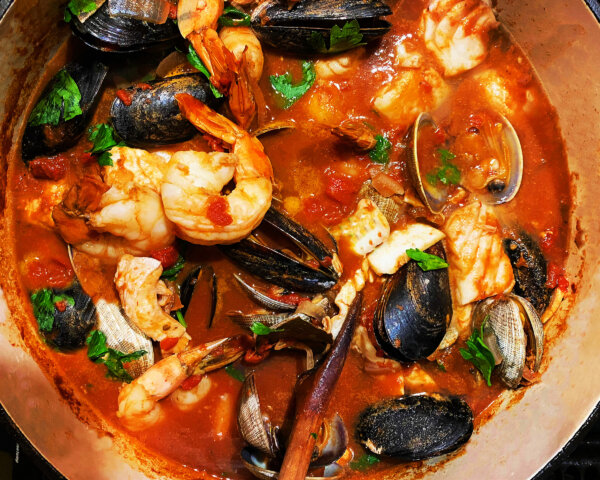
A New Year’s Reset With a Bowl of Cioppino
SHARE* READ MOREEPOCH FUN Freecell SolitaireArrange cards by suit in ascending order to win.PLAYSpot the DifferenceFind the differences between 2 images.PLAYWord WipeCreate words to eliminate tiles.PLAY
Share this email with a friend.
Received this email from a friend?
Trouble viewing this email?
View in browser Copyright © 2025 The Epoch Times, All rights reserved. The Epoch Times. 229 W. 28 St. Fl. 7 New York, NY 10001 | Contact Us * When sharing an article, giftaccess@TheEpochTimes.com is added to the list of recipients. If your friend is not already a subscriber, we will send them a special link for free access to the article.
Our Good Evening newsletter helps you catch up on the big stories of the day followed by lifestyle and uplifting content. Manage your email preferences here or unsubscribe from Good Evening here.
Your Night Prayer


Learn More About Madonna of the Rosary

Today’s Night Prayer is brought to you by Catholic Coffee
A Night Prayer
Jesus Christ, my God, I adore You and thank You for all the graces You have given me this day. I offer You my sleep and all the moments of this night. I place myself and all my loved ones, wherever they may be, in Your sacred side and under the mantle of Our Blessed Mother. Let Your holy angels stand watch and keep us in peace. Amen.

Quote of the Day
“The growth of Jesus ‘in wisdom and in stature, and in favor with God and man’ (Lk. 2:52) took place within the Holy Family under the eyes of St. Joseph, who had the important task of ‘raising’ Jesus, that is, feeding, clothing, and educating him in the Law and in a trade, in keeping with the duties of a father.” -St. John Paul II

Today’s Meditation
In the state of abandonment the only rule is the duty of the present moment. In this the soul is light as a feather, liquid as water, simple as a child, active as a ball in receiving and following all the inspirations of grace. Such souls have no more consistence and rigidity than molten metal. As this takes any form according to the mould into which it is poured, so these souls are pliant and easily receptive of any form that God chooses to give them. In a word, their disposition resembles the atmosphere, which is affected by every breeze; or water, which flows into any shaped vessel exactly filling every crevice. They are before God like a perfectly woven fabric with a clear surface; and neither think, nor seek to know what God will be pleased to trace thereon, because they have confidence in Him, they abandon themselves to Him, and, entirely absorbed by their duty, they think not of themselves, nor of what may be necessary for them, nor of how to obtain it. —Jean Pierre de Caussade
Recommended Products

Four Way Confirmation Cross w/ chain

Guardian Angel Children’s Plaque – 4″ x 5.7″
Examination of Conscience


The daily examination of conscience is an ancient Catholic practice. It’s very simple, and it’s designed to help us identify our sins and weaknesses so that we can improve and grow stronger in the spiritual life. Basically, it consists in taking a few minutes at the end of the day to prayerfully review our actions in the light of God’s commandments. The Act of Contrition is often said afterwards. The daily examination also serves as an excellent ongoing preparation for regular Confession.
Reflect on the victories and losses
Actively reflecting on the high and low points of the day can help you live more intentionally and bring a renewed sense of resolve into the following day.
- Review your actions, words, and thoughts today. Did you actively guard yourself against temptation? Where did sin creep in?
- In what moments did you practice virtue and moral courage?
- Were you attuned to the Holy Spirit’s promptings today? Where did you feel His inspiration?
- Ask Him for the graces necessary to follow His Will more purposefully tomorrow.
Act of Contrition
O my God, I am heartily sorry for having offended Thee, and I detest all my sins because of Thy just punishments, but most of all because they offend Thee, my God, Who art all good and deserving of all my love. I firmly resolve with the help of Thy grace to sin no more and to avoid the near occasions of sin. Amen.
Practice gratitude
It is God’s love that has brought you into existence and to this exact moment. Practice looking for His hand in your day.
- Where did you feel His loving gaze upon you today?
- What people or moments helped you see God in your life?
- Thank God for all these moments!
- Ask Him to help you recognize His blessings and providence tomorrow.
Renew your commitment to Christ
Remember our Faith is founded upon a Person—Christ! Renew your personal love and devotion to Him.
- Thank God for the gift of His Son Jesus and our call to be His disciples.
- Tell the Lord of your desire to know Christ more personally.
- If possible, set an intention for your day tomorrow. Ask Our Lord to guide you in this act.
- Pray a Hail Mary, Our Father, or another beloved prayer.
Rest with God
My people will abide in a peaceful habitation, in secure dwellings, and in quiet resting places. — Isaiah 32:18
Compline

Want to reach 2.6 million Catholics? Click here to consider sponsoring future Night Prayers!


View this email in your browser
Please add NightPrayer@goodcatholic.comto your address book or list of approved senders.
Unsubscribe | Privacy Policy | Contact Us

A service of the Network
The Catholic Company
615 E. Westinghouse Blvd.
Charlotte, North Carolina 28273
1-866-522-8465
© 2025 Trinity Road, LLC. All rights reserved.
Your Night Prayer
Learn More About Madonna of the Rosary
Today’s Night Prayer is brought to you by Catholic Coffee
A Night Prayer
Jesus Christ, my God, I adore You and thank You for all the graces You have given me this day. I offer You my sleep and all the moments of this night. I place myself and all my loved ones, wherever they may be, in Your sacred side and under the mantle of Our Blessed Mother. Let Your holy angels stand watch and keep us in peace. Amen.
Quote of the Day
“The growth of Jesus ‘in wisdom and in stature, and in favor with God and man’ (Lk. 2:52) took place within the Holy Family under the eyes of St. Joseph, who had the important task of ‘raising’ Jesus, that is, feeding, clothing, and educating him in the Law and in a trade, in keeping with the duties of a father.” -St. John Paul II
Today’s Meditation
In the state of abandonment the only rule is the duty of the present moment. In this the soul is light as a feather, liquid as water, simple as a child, active as a ball in receiving and following all the inspirations of grace. Such souls have no more consistence and rigidity than molten metal. As this takes any form according to the mould into which it is poured, so these souls are pliant and easily receptive of any form that God chooses to give them. In a word, their disposition resembles the atmosphere, which is affected by every breeze; or water, which flows into any shaped vessel exactly filling every crevice. They are before God like a perfectly woven fabric with a clear surface; and neither think, nor seek to know what God will be pleased to trace thereon, because they have confidence in Him, they abandon themselves to Him, and, entirely absorbed by their duty, they think not of themselves, nor of what may be necessary for them, nor of how to obtain it. —Jean Pierre de Caussade
Recommended Products
Four Way Confirmation Cross w/ chain
Guardian Angel Children’s Plaque – 4″ x 5.7″
Examination of Conscience
The daily examination of conscience is an ancient Catholic practice. It’s very simple, and it’s designed to help us identify our sins and weaknesses so that we can improve and grow stronger in the spiritual life. Basically, it consists in taking a few minutes at the end of the day to prayerfully review our actions in the light of God’s commandments. The Act of Contrition is often said afterwards. The daily examination also serves as an excellent ongoing preparation for regular Confession.
Reflect on the victories and losses
Actively reflecting on the high and low points of the day can help you live more intentionally and bring a renewed sense of resolve into the following day.
- Review your actions, words, and thoughts today. Did you actively guard yourself against temptation? Where did sin creep in?
- In what moments did you practice virtue and moral courage?
- Were you attuned to the Holy Spirit’s promptings today? Where did you feel His inspiration?
- Ask Him for the graces necessary to follow His Will more purposefully tomorrow.
Act of Contrition
O my God, I am heartily sorry for having offended Thee, and I detest all my sins because of Thy just punishments, but most of all because they offend Thee, my God, Who art all good and deserving of all my love. I firmly resolve with the help of Thy grace to sin no more and to avoid the near occasions of sin. Amen.
Practice gratitude
It is God’s love that has brought you into existence and to this exact moment. Practice looking for His hand in your day.
- Where did you feel His loving gaze upon you today?
- What people or moments helped you see God in your life?
- Thank God for all these moments!
- Ask Him to help you recognize His blessings and providence tomorrow.
Renew your commitment to Christ
Remember our Faith is founded upon a Person—Christ! Renew your personal love and devotion to Him.
- Thank God for the gift of His Son Jesus and our call to be His disciples.
- Tell the Lord of your desire to know Christ more personally.
- If possible, set an intention for your day tomorrow. Ask Our Lord to guide you in this act.
- Pray a Hail Mary, Our Father, or another beloved prayer.
Rest with God
My people will abide in a peaceful habitation, in secure dwellings, and in quiet resting places. — Isaiah 32:18
Compline
Want to reach 2.6 million Catholics? Click here to consider sponsoring future Night Prayers!
View this email in your browser
Please add NightPrayer@goodcatholic.comto your address book or list of approved senders.
Unsubscribe | Privacy Policy | Contact Us
A service of the Network
The Catholic Company
615 E. Westinghouse Blvd.
Charlotte, North Carolina 28273
1-866-522-8465
© 2025 Trinity Road, LLC. All rights reserved.
Daily Movers: MicroStrategy Was the Worst Performing Nasdaq-100 Stock in 2025. Should You Buy the Dip?


Your recap for December 29, 2025 Top stories for youMicroStrategy Was the Worst Performing Nasdaq-100 Stock in 2025. Should You Buy the Dip?Walmart’s $152M deal signals Arizona’s logistics real estate boomCrocs (CROX) Stock Trades Down, Here Is WhyCrypto winter looms in 2026, but Cantor sees institutional growth and onchain shiftsBitmine’s ether stash tops 4.1 million tokens as crypto and cash holdings reach $13.2 billionView more storiesMy portfolio highlightsDay Change -0.81%Top gainersKBLBKraig Biocraft La…0.08
+3.13%EBAYeBay87.74
+2.97%XOM.BAExxon Mobil Corpo…18,410.0
+2.62%Top losersUURAFUcore Rare Metals3.99
-17.05%CROXCrocs85.94
-6.21%COKECoca-Cola Consoli…154.62
-3.74%Most activesCSCOCisco Systems77.79
-0.47%XOMExxon Mobil120.53
+1.19%WMTWalmart112.53
+0.71%View your portfoliosUS market highlightsS&P 500
-0.28%Dow 30
-0.35%Nasdaq
-0.45%Russell 2000
-0.52%Crude Oil
+2.13%Top gainersRGC
Regencell Bioscie…24.42
+15.41%PRAX
Praxis Precision …300.51
+11.73%DBRG
DigitalBridge Gro…15.26
+9.63%Top losersBRBR
BellRing Brands, …27.41
-9.1%AUGO
Aura Minerals Inc.49.34
-8.73%SBSW
D/B/A Sibanye-Sti…14.31
-8.82%Most activesNVDA
NVIDIA Corporation187.95
-1.35%DBRG
DigitalBridge Gro…15.26
+9.63%PLUG
Plug Power, Inc.2.02
-2.42%Yahoo Finance App: Portfolio performance, news and alerts, stock data and all you need in a finance app. Download now.
Privacy Policy | Customer Support | Unsubscribe
©2025 Yahoo Inc. All Rights Reserved.
770 Broadway, New York, NY 10003
Gold Is Surging Again – But This Nevada Opportunity Offers Much More Than Gold





Gold Is Surging Again – But This Nevada Opportunity Offers Much More Than Gold
Gold has been on an incredible run as investors search for safety, inflation hedges, and real assets with staying power. But this Nevada opportunity isn’t just another gold story. The region is showing potential across copper, silver, gold, and tungsten – a rare mix tied to electrification, AI demand, and U.S. supply-chain needs. [ad]
Uncover the company positioned before this trend widens.
Free 5-Point Stock Investing Checklist to Grow Your Portfolio
Avoid risky picks! The Safe Stock Selector Checklist reveals how to find strong, reliable stocks before the crowd catches on. Get Your Free Report Now. [ad]
Download Your Free Safe Stock Selector Checklist.
Meta is under fire for spamming users. This tech disruptor is fighting back.
Meta is showing users an estimated 15 billion scam-risk ads every day. AI-generated fake shops, drop-shipped junk, and deceptive ads that turn users into products. And while Big Tech makes billions from users’ attention, the users themselves get nothing.
But Mode Mobile is booming by building the opposite model: they pay people for the screen time Big Tech profits from. And it’s working. Mode was previously named #1 fastest-growing software company in North America by Deloitte, with 50M+ users earning or saving over $325M+ through Mode’s EarnOS.
Accredited investors have the one last chance to invest at $0.50 in 2025.
2 weeks left to invest and earn up to 120% bonus shares.
Disclosure: This offer is only open to accredited investors. Please read the offering circular and related risks at invest.modemobile.com/elite
Every Wall Street Analyst Now Predicts a Stock Rally in 2026
At the big banks and the boutique investment shops, an optimistic consensus has taken hold: the US stock market will rally in 2026 for a fourth straight year, marking the longest winning streak in nearly two decades.

Privacy Policy | Advertiser DisclosureDISCLAIMER: Stocks and options trading have large potential rewards, but also large potential risk. You must be aware of the risks and be willing to accept them in order to invest in the stocks and options markets. Don’t trade with money you can’t afford to lose. This is neither a solicitation nor an offer to Buy/Sell stocks or options. No representation is being made that any account will or is likely to achieve profits or losses similar to those discussed in this report. The past performance of any trading system or methodology is not necessarily indicative of future results. All trades, patterns, charts, systems, etc., discussed in this report are for illustrative purposes only and not to be construed as specific advisory recommendations. Information contained in this correspondence is intended for informational purposes only and was obtained from sources believed to be reliable. Information is in no way guaranteed. No guarantee of any kind is implied or possible where projections of future conditions are attempted.
Stockguru LLC (dba InvestingDistrict), 2563 cherry hill ln, Hermitage, PA 16148, United StatesYou may unsubscribe or change your contact details at any time.
The RJ Hamster morning Show
Fresh Flowers That Speak From the Heart 🌸
Trouble viewing email? Click here
You are subscribed to this newsletter as: peterhovis@icloud.com


LEARN MOREVIEW OUR CATALOGMORE PROMOTIONSAt 19th Flower Shop, we believe flowers should do more than look beautiful — they should tell a story. From birthdays and anniversaries to “just because” moments, our handcrafted arrangements are designed with care, creativity, and premium blooms sourced for freshness and longevity.
Whether you’re celebrating a milestone or brightening someone’s day, we’re here to help you say it perfectly with flowers. Browse our latest designs online or stop by our Phoenix shop for a personalized floral experience.
Order today and let us help you make life’s moments bloom.

To ensure you receive our emails, please add inbox@phoenixnewtimes-insider.com to your address book.
You are receiving this advertisement newsletter because you have signed up on our website or at an event, participated in a promotion, or purchased a ticket to an event. Thank you for your patronage.
© 2025 Phoenix New Times, LLC. All rights reserved.
1201 E. Jefferson
Phoenix, AZ 85034

