Hello –
Today, we’re inviting you to take a free look at MarketBeat’s proprietary, up-to-the-minute list of 20 stocks that Wall Street’s top-rated analysts hate.
These aren’t mild downgrades or lukewarm opinions.
These are true Strong Sell stocks.
Some of them may look fine on the surface. A few even have what appear to be solid fundamentals. But when analysts issue a rare Sell rating, it’s usually because something beneath the surface is deeply wrong.
Sell-side analysts may not nail every Buy call… but when they raise red flags, they’re almost always worth listening to.
If any of these stocks are lurking around in your portfolio, you may seriously want to consider dumping them.
Click here to see the list now.
Stay one step ahead,
Matthew Paulson
Founder & CEO, MarketBeat
P.S. Access to 20 Stocks to Sell Now is completely free. Don’t miss your chance to review these timely, high-conviction warnings before the market reacts.
Exclusive Article
Inflation Shock Ahead? Get Ready for Impact
Author: Thomas Hughes. Article Posted: 4/17/2026.
Key Points
- Manufacturers are raising prices across industries to combat higher oil prices.
- Higher oil prices raise the risk of inflation and recession, and a price shock is coming.
- Resilient labor markets and an end to the conflict can keep the S&P 500 trending higher.
- Special Report: Elon Musk already made me a “wealthy man”
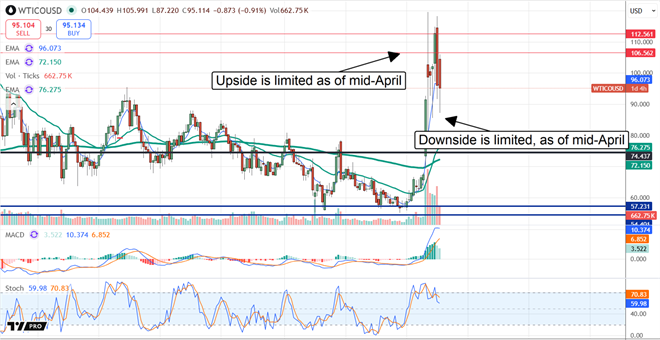
The fallout from the Iran war is mounting and is likely to trigger an inflation shock. The impact begins with oil prices, which have already pushed costs higher across the economy. Oil appears capped near $115, so upside risk is somewhat contained. Still, at mid-April levels near $95, WTI is well off its lows and is underpinning price increases across many sectors. That is a significant risk.
Nobody Understands Why Trump Is Invading Iran (here’s the answer) (Ad)
Most investors are reacting to the Iran strikes without understanding the underlying motive driving the decision.
Addison Wiggin, Founder of Grey Swan Investment Fraternity, says there is a hidden reason behind the bombing – and knowing it could change how you position your money right now.Discover the real reason behind the Iran strikes before markets react
Among the latest to announce price increases are major appliance manufacturers Whirlpool (NYSE: WHR) and GE Appliances, a Haier Smart Home company. They cited extreme inflationary pressure in warnings to dealers and plan to raise prices in mid-June to offset those higher costs. Their warnings threaten not just their own businesses but the wider economy, since broad-based price increases can contribute to a recession. The key caveat is that oil prices are volatile and an end to the war remains possible.
Oil Prices Shot Up When the War Started. What Happens When It Ends?
A lasting ceasefire would restore freer oil trade and put downward pressure on prices. The question is when lasting peace arrives and how far prices fall when it does. With an estimated 10% or more of global production offline or otherwise impaired because of the conflict, oil prices are likely to remain elevated for some time if not near current levels.
OPEC is a wild card. The cartel has agreed to raise production quotas, but two factors limit the impact. First, any increases may not fully replace lost Middle Eastern capacity. Second, much of OPEC’s available capacity is tied to the same region and constrained by access through the Strait of Hormuz. Saudi Arabia and its neighbors can boost output, but much of that supply can’t reach global markets until the conflict eases. The risk for oil bulls is that supply recovery, particularly once the conflict ends, could be swift—driving prices back toward the $60–$70 range.
Inflation Data Reveals Impact of Higher Oil Prices: More to Come
The March CPI showed the effect of higher oil, with the headline rate jumping; further increases are likely. As inflation runs hot on both monthly and headline measures, year‑over‑year figures will accelerate, putting the Fed squarely at risk. While the Fed has little influence over oil prices—a major driver of this inflation—it may nonetheless be forced to raise interest rates to stabilize consumer prices. The best-case scenario is that the Fed stands pat and lets the war and its oil-market effects play out, but even that would weigh on market outlooks by damping investor enthusiasm for stocks.
The stock market rally is supported by earnings growth that is expected to accelerate sequentially into the high teens through the end of the year. Higher‑for‑longer interest rates raise business costs for a longer period, especially for smaller-cap, pre‑revenue, and unprofitable companies that have been outperforming in April. In that environment, flows into small-cap stocks—the so‑called Great Rotation—may slow or reverse as investors refocus on quality, profitability, and capital returns.
Labor Market Strength and Economic Resilience Hang in the Balance
Labor and broader economic data continue to point to a healthy economy. Activity is below the peaks of 2022 and 2023, but those highs were influenced by pandemic stimulus and elevated consumer spending that has largely normalized. As of Q2 2026, labor-market trends resemble past periods of expansion, with job growth, ample openings, low unemployment, and rising wages. The economy can likely withstand a shock—assuming any upcoming inflation shock is not too severe or prolonged—so the S&P 500 should be able to trend higher, with periodic corrections.
S&P 500 price action—in the index and the S&P 500 ETF (NYSEARCA: SPY)—doesn’t yet fully reflect the risk from the conflict. The market hit new highs after solid earnings from JPMorgan Chase and other financial leaders, and there is street chatter that the war will end soon. Even if it doesn’t, so far it hasn’t impaired the earnings outlook for the equities market. With earnings reports coming from major tech companies, including NVIDIA and other members of the Magnificent Seven, the market could continue to advance until it encounters inflationary pressure.
Investors should be cautiously positioned. Volatility is the bigger risk, and another correction is possible, but fundamentals remain broadly bullish, so a wholesale exit from the market is premature. Taking profits and increasing dry powder for future opportunities is prudent; completely liquidating positions in anticipation of a major meltdown is not advised.
Thank you for subscribing to MarketBeat!
We empower individual investors to make better financial decisions by providing real-time financial information and best-in-class market research.
If you have questions about your account, don’t hesitate to email MarketBeat’s U.S. based support team at contact@marketbeat.com.
If you would like to unsubscribe or change which emails you receive, you can manage your mailing preferences or unsubscribe from these emails.
© 2006-2026 MarketBeat Media, LLC.
345 North Reid Place, Sixth Floor, Sioux Falls, South Dakota 57103. U.S.A..


