

The cold math behind Oracle’s mass layoffs… the Prisoner’s Dilemma, live and in person… Luke Lango describes the backlash that could end the AI bull run… Eric Fry with where the smart money goes now… make money before 2028
The layoff itself wasn’t all that noteworthy…
It was what this employee – “Jill” – had been doing in the months leading up to her dismissal.
Oracle (ORCL) had asked her, and others on her team, to document their workflows.
Not long after completing that work – after Oracle had secured a detailed, step-by-step roadmap for training its AI how to do her job – the company let her go.
Here she is from her recent interview with Time:
It really makes you feel used and abused.
They’re having you do something, it’s recorded, and then they’re going to replace you with whatever you just built.
Jill (a pseudonym she used for fear of retaliation) is one of roughly 30,000 workers Oracle just laid off as the company pivots aggressively toward AI – both internally and in the booming business of building AI data centers.
Meanwhile, Oracle’s chairman and CTO, Larry Ellison, briefly became the richest man in the world last fall after his company reported its best growth quarter in 15 years. That operational outperformance looks poised to continue, thanks in part to cost savings coming from the recent spate of firings.
This is the Prisoner’s Dilemma, playing out in real time
Regular Digest readers will recognize exactly what just happened.
In our April 6 Digest, I dove into the Prisoner’s Dilemma created by AI, laying out five versions of the same structural trap it has introduced across our economy.
Here’s what I wrote about the worker’s dilemma specifically:
Your boss has made it clear: use AI. Increase your productivity. Stay competitive.
So, you do. You adopt every tool available, automate the repetitive work, produce more output in less time. You become more valuable to your employer in the short term.
But here’s what you’re also doing: mapping your own job in granular detail so that a future, more intelligent version of AI can replace you.
Every workflow you automate, every task you hand to a model, every process you optimize – you’re demonstrating exactly what your role consists of and how it can be done without you.
The worker who doesn’t incorporate AI loses their job first. The worker who embraces AI loses it last. But the worker who uses AI accelerates the transition toward a robotic workforce for all other human workers coming after him.
That was written three weeks before Oracle’s “train your AI replacement” story broke nationally.
But Time’s story, published this past Friday, found that Oracle ran a deliberate data-collection program – asking employees to document their workflows, their knowledge, their institutional expertise – and then used the results to train the systems that made those employees redundant.
Here’s Time:
[Another fired employee] was also instructed to train AI systems on her work.
While she was scared about the outcome of this training, she felt trapped in a catch-22.
“We were training AI to replace us, but the AI is the only way we can get through our workload,” she says.
“You’re behind on all your deadlines, and your hand is forced.”
That is the exact Prisoner’s Dilemma I flagged. The rational choice – comply or fall behind – produces an outcome no individual worker chose.
Oracle isn’t alone…
In early spring, just weeks after Mark Zuckerberg purchased a $170 million compound on Miami’s “Billionaire Bunker” island, Meta (META) announced 8,000 layoffs – while simultaneously deploying software to log the keystrokes and screen activity of its U.S. employees to build AI agents designed to automate their work.
It’s hard to imagine that more Meta layoffs aren’t out on the horizon.
Recommended Link
Jonathan Rose: “If I lost EVERYTHING and started over with $1,000, here’s how I’d make it all back…”
A 25-year market pro just shared his 2026 “comeback plan.” His name is Jonathan Rose. He made $10.59 million in profits at a proprietary trading firm and taught his method to more than 100 professional traders. But if he had to start over with just $1,000 — how would he do it? Not AI stocks. Not crypto. Not an IPO. Instead, he’d use one simple strategy that’s shown 98% average gains across 117 consecutive trade recommendations. Now, he’s sharing how anyone can learn this approach for themselves in 7 daysor less. Click here to watch Jonathan’s free presentation.
The backlash has begun…
The Oracle and Meta stories aren’t isolated. They’re just the most visible data points in a pattern that is building toward something politically significant.
About two weeks ago, Futurismcataloged some of the recent examples of public anger directed at AI, calling it “a powder keg.”
Here are a few stories cited from the article:
- A man allegedly lobbed a Molotov cocktail at OpenAI CEO Sam Altman’s house.
- An Indianapolis city councilman reported that someone fired a dozen bullets at his home, leaving a handwritten note reading “No Data Centers.”
- In Missouri, voters fired half their city council over a recently approved $6 billion data center deal.
- Across rural America, small towns are fighting back against data centers that strain local power grids and water supplies.
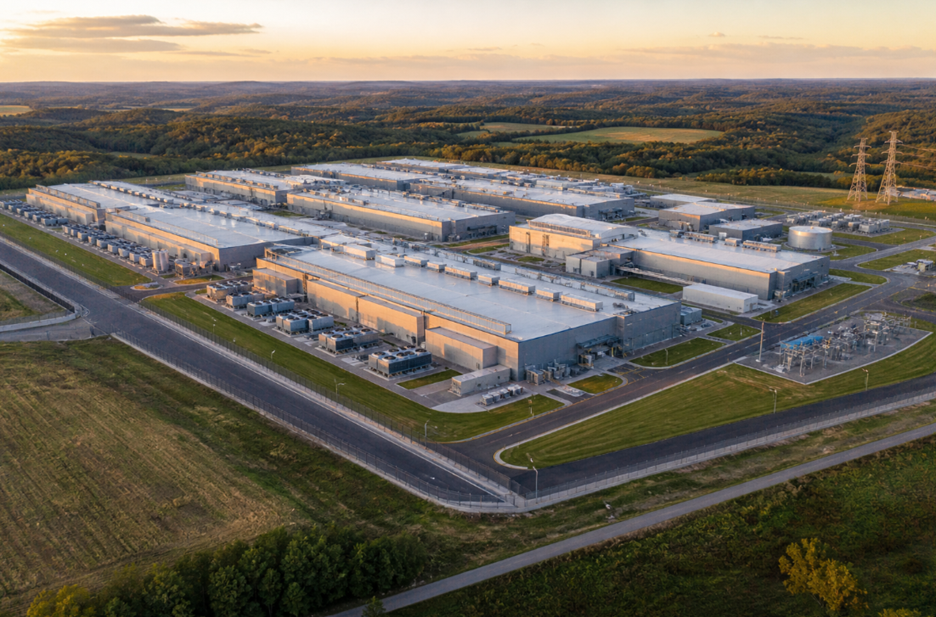
This is no longer just snarky Twitter grumbling.
It’s a physical, political expression of the same resentment felt by former Big Tech employees who just trained their AI replacements.
The AI industry is aware of this backlash and appears to be trying to soothe some of the frustration
For example, OpenAI recently argued in an industrial policy paper that we could shift the tax burden from human labor to capital and move to a four-day workweek.
Microsoft’s (MSFT) CEO Satya Nadella has said that companies must invest in people as aggressively as they invest in technology, suggesting that the “efficiency dividend” should fund widespread apprenticeships.
And Anthropic has advocated for $10,000 subsidies per trainee to incentivize companies to re-train rather than fire workers (funded by you, the taxpayer – not Anthropic).
Despite such posturing, reports find that the public is increasingly skeptical about AI.
Last fall, Pew Research put some numbers on this:
Americans remain far more concerned (50%) than excited (10%) about the increased use of AI in daily life. Concern is up from 37% in 2021.
More Americans, on balance, think AI will make people worse than better at key human abilities, such as thinking creatively or forming meaningful relationships with other people.
Two weeks ago, the title of an article from The New Republic summed it up best:
The AI Industry is Discovering That the Public Hates It
Our technology expert Luke Lango sees this building into a market-moving event
This is where the story becomes directly relevant to your portfolio…
Luke – editor of Innovation Investor – has been tracking this backlash, and he believes it’s carrying us toward one outcome…
The eventual end of the AI bull market.
To be clear, we’re not talking tomorrow, or even next year. But Luke believes it’s coming – and on a specific and identifiable timeline.
Here he is explaining:
The force that will derail the AI Boom is not a technological failure, demand collapse, or even a recession.
It is politics — specifically, a populist backlash against AI that is already building momentum, fueled by the growing economic pain hitting American households right now.
And it’s on a trajectory to reach full force right around the 2028 presidential election cycle.
Luke’s case is built on three compounding pressure points: rising energy costs from data center construction that are landing directly on residential electricity bills… accelerating AI-attributed layoffs across major employers… and widening wealth inequality.
His projection is that by 2027, anti-AI messaging will become a dominant political narrative.
From Luke:
Any politician who runs on “you should be in charge of this technology, not them” will already have majority support before they’ve said another word.
And a cross-the-aisle convergence makes this doubly dangerous for the AI industry: Republicans and Democrats are now equally concerned about AI in daily life.
This is a bipartisan pressure cooker.
Luke expects that AI-curbing legislation will arrive in 2029 – we’re talking AI taxes, restrictions on data center construction, and labor displacement provisions.
But here’s what’s critical for us to recognize today…
The market will begin pricing this risk before the bills are even introduced.
Remember, the markets always look out into the future, trying to price in today what’s coming tomorrow.
Here’s Luke with the practical takeaway for your portfolio:
That is the scenario that ends the AI Boom. And it is not a remote tail risk.
Make your money now.
The window for transformational wealth creation in this AI cycle is the next two to three years.
So, what’s the portfolio action step today?
Let’s begin with what it’s not…
Buy anything claiming it’s an AI stock.
Luke’s warning cuts both ways. The window to profit is open – but so is the trap door if you get into the wrong AI play (see the recent SaaSmageddon blowup).
As we’ve been covering in recent Digests, our global macro expert Eric Fry has been carefully mapping out this distinction.
His take is that the AI story is shifting in a way that will catch millions of portfolios flat-footed – and the mistakes investors make in the next 12 months could impact their portfolios for years to come.
Here he is to explain:
Cisco dropped 80% after the dot-com bubble burst and only recently surpassed its 2000 peak 25 years later.
Investors who bought near the 2000 peak and held on would have seen their significant gains disappear, resulting in over a decade of waiting just to break even.
Given the current landscape of the AI market, I believe today’s AI Builders will face similar disadvantages.
Eric ties the internet buildout to today’s AI buildout, concluding that the hyperscalers are pouring hundreds of billions into AI infrastructure, and borrowing heavily to do it. But this will turn AI into a cost center for them rather than a growth engine.
So, watch for margin compression…followed by valuation compression.
Eric is urging investors to find safer opportunities elsewhere
Specifically, the companies applying AI rather than building it.
These are businesses embedding autonomous intelligence into their existing operations – improving margins, reducing headcount costs, expanding capacity – without nosebleed valuations and without a monster infrastructure bet riding on uncertain returns.
He adds a specific catalyst worth noting: on May 19, Alphabet (GOOGL) is expected to announce a radical new autonomous AI platform to 1.8 billion users.
Eric believes that announcement will force the market to finally reckon with how quickly the AI story is shifting – and which companies are actually positioned for what comes next.
He’s laid out his full thinking, including the specific names he’s watching, in a free broadcast you can watch right here.
If Luke’s two-to-three-year window is the timeline, and the leadership rotation Eric is describing is already underway, getting into the right names now is critical – and his broadcast is a good place to figure out if you’re in those right names.
Just a heads-up – we’ll be taking down Eric’s presentation tomorrow, so this is last call.
Wrapping up…
These aren’t disconnected stories – they’re the same story at different stages.
Luke’s advice is to make your money now. Eric’s advice is to make sure you’re making it in the right places. His free broadcast is where those two ideas meet.
We’ll keep you updated.
Have a good evening,
Jeff Remsburg
(Disclaimer: I own MSFT and GOOGL)


 RJ Hamster