


Forwarded this email? Subscribe here for more



Govt u-turns over ban on trophy hunting imports
Eye on the Wild – #1
MAY 12READ IN APP
Welcome to the first edition of Eye on the Wild, our new weekly roundup designed to keep you up to date with the latest stories concerning British wildlife.
Each week, we’ll share important news, updates, and stories from across the UK, including issues, species, and campaigns that may not always make the headlines. We’ll also highlight ways you can help and take action for wildlife.
If you have a story you think we should cover, email us at contact@protectthewild.org.uk
Killing for kicks: the British trophy hunters that Labour won’t stop
Via Ban Trophy Hunting/Screenshot.
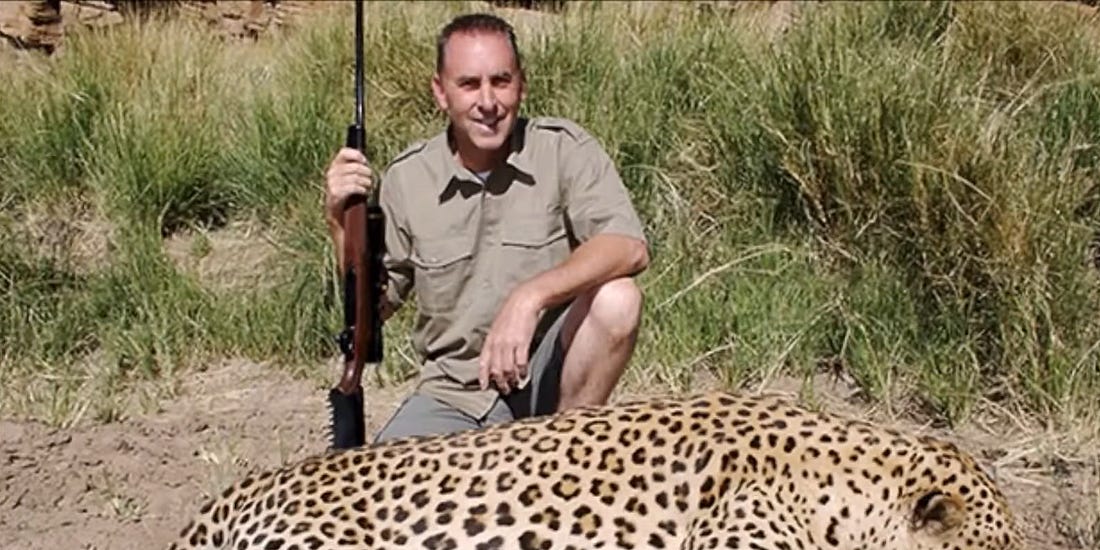
In recent days the UK mainstream media has revealed the faces behind Britain’s trophy hunting industry – ordinary people from the UK who travel abroad to shoot some of the world’s rarest animals for fun, then bring the body parts home as macabre momentoes.
The Mirror reported that Labour has shelved its manifesto promise after pressure from the Trump administration. The UK government has issued 28 import licenses in the last month, including for hippopotamuses, african elephants, brown and black bears as well as lions, giraffes and Nile crocodiles.
Giraffes, it turns out, are Britain’s most hunted trophy animal. Gentle, vulnerable and defenceless animals shot so their bones and skins can gather dust in British living rooms. Many species of giraffe are classified as endangered.
The Guardian recently published an opinion piece stating that a ban on trophy imports is long overdue, highlighting one Sussex man who casually described shooting a critically endangered black rhinoceros, as well as lions and elephants as “like mainlining on heroin.” That this behaviour is accepted in 2026 is a national embarrassment.
Labour promised a ban on hunting trophy imports in its 2024 manifesto. It has now confirmed there is no date set for delivery. Nine out of ten British voters support the ban. The Commons voted unanimously for it. The only thing standing between giraffes and British hunters is political cowardice.
Sign Protect the Wild’s petition calling for the government to keep its manifesto commitment and ban trophy imports.
Don’t be fooled by Reform UK’s greenwash
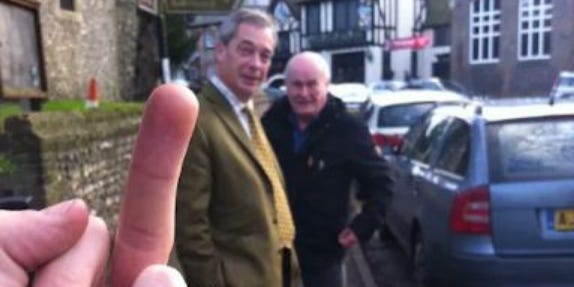
A photographer lets Nigel Farage know what they think of him. The Reform Leader was on his way to a Boxing Day parade to promote foxhunting.
Leicestershire’s far-right Reform UK-led council has voted to explore reintroducing wild beavers as a natural flood defence – a genuinely welcome move. Beavers are wonderful creatures and remarkable ecosystem engineers whose dams slow water flow, restore wetlands and boost biodiversity.
But let’s be clear about what Reform UK actually stands for when it comes to wildlife. This is a party that has pledged to protect “country sports” – a cynical euphemism for hunting, shooting. Its leader, Nigel Farage is an open supporter of fox hunting who has dismissed Labour’s trail hunting consultation as “authoritarian”. Farage doesn’t believe fox hunting is cruel. That tells you everything you need to know.
Reform UK is not a party of wildlife defenders. A party that would unleash hunts on foxes, hares and deer while cheering from the sidelines cannot credibly claim to care about nature. We won’t be fooled – and neither should you.
What’s more, the party plans to scrap thousands of nature laws risks pushing Britain’s depleted countryside into irreversible decline.
Reform UK has been looking to secure more votes by giving a nod to caring about the planet. In fact, Farage has been in discussions with ecologist and Conservative Environment Network co-founder Ben Goldsmith about advising the party on their environmental policies. Goldsmith’s proposed involvement could be the beginning of an attempt to greenwash Reform UK, but his advice has been rejected by others within the party.
At Protect the Wild we stand with many other wildlife defenders in opposing Reform, we won’t fall for their greenwashing.
Gloucestershire named worst county for illegal hunting
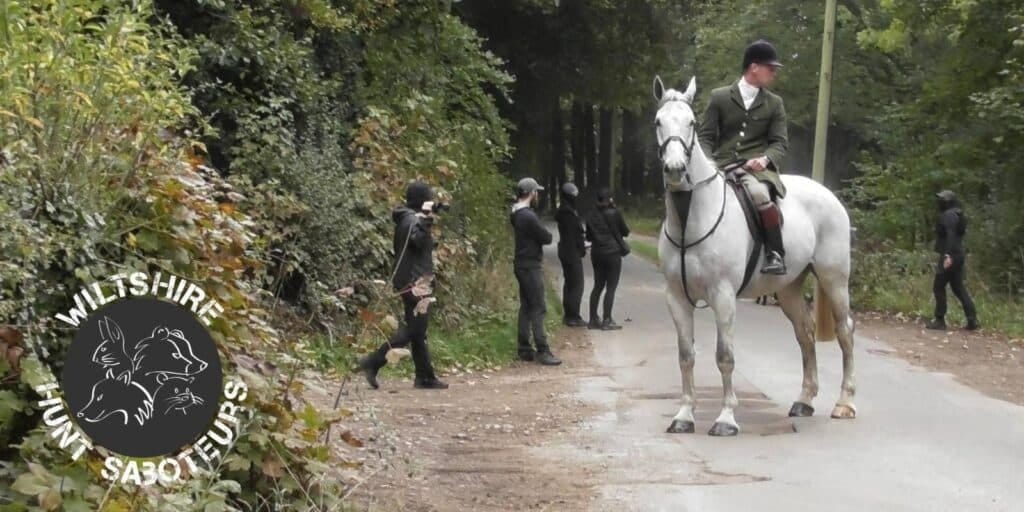
The Beaufort Hunt, courtesy of Wiltshire Hunt Saboteurs.
Gloucestershire has been identified as the worst county in England and Wales for illegal fox hunting and hunt-related havoc, with 75 incidents recorded in the last hunting ‘season’, according to the League Against Cruel Sports (LACS).
It’s no coincidence that the worst counties – Dorset, Somerset, Yorkshire and Cheshire – are largely the same areas where hunts have been most active, operating with impunity for decades. Three of the five are in the West Country, a region that is also home to England’s three remaining staghound packs and some of its most notorious fox hunts. More than half of LACS’ recorded incidents were in the West Country.
Check out Protect the Wild’s data on the worst UK hunts according to numbers of animals chased or killed and numbers of members of the public attacked here.
None of this will surprise anyone who has been following our coverage of Gloucestershire’s hunts. The county is home to some of the most lawless packs in the country. The Beaufort Hunt – whose kennels are in Badminton – is among the worst offenders. A 2021 undercover investigation, supported by Protect the Wild, caught the hunt on camera shooting four of its own hounds dead. More recently, the Beaufort was issued with a Community Resolution by Wiltshire Police after its hounds ran out of control in front of a police officer.
As we’ve been saying for years, we need a comprehensive ban to protect UK wildlife. There is just five weeks left to fill out the government consultation on banning ‘trail hunting’, which closes on 18 June. Protect the Wild has published guidance for people submitting their answers. Make sure you have your say!
- Click here to donate to Wiltshire Hunt Saboteurs.
Good news! First beaver sighting reported in Hampshire
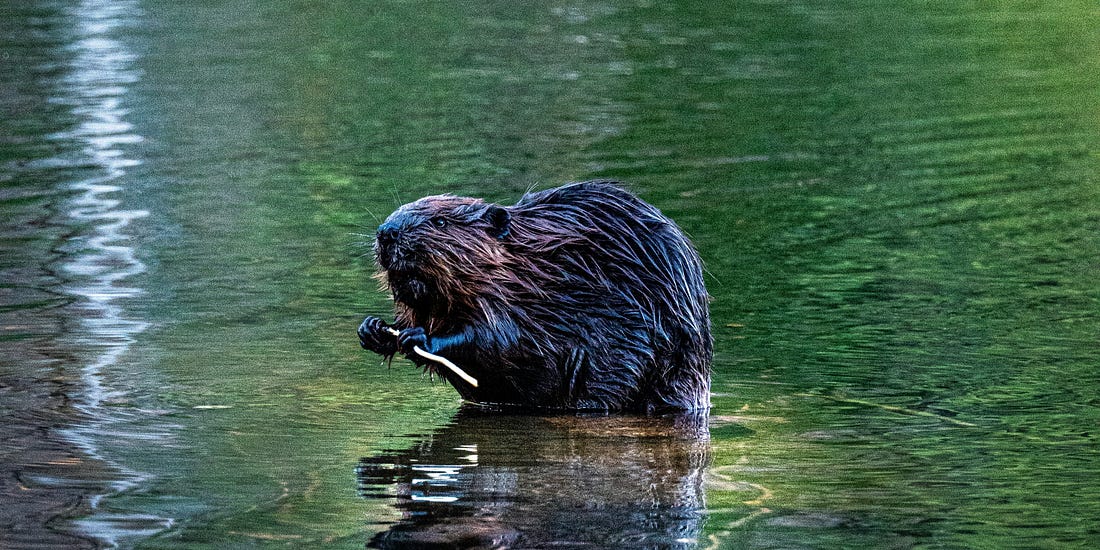
Via Ella Sachot on Unsplash.
Nature’s engineers are on the move. Beavers have been spotted at Blashford Lakes Nature Reserve in Hampshire for the first time, with footage captured by a local visitor showing two animals interacting in the water. Hampshire and Isle of Wight Wildlife Trust confirmed the sighting, describing the reserve’s rich wetlands and waterways as ideal habitats.
The sighting comes after Natural England released wild beavers at two new sites in South West England earlier this year, building on last year’s landmark licensed release in Dorset. Hunted to extinction in Britain centuries ago, beavers are a keystone species whose dam building conserves water, protects against drought, creates wetlands, slows floodwaters, improves water quality and boosts biodiversity across entire ecosystems.
Their return is not just good news. It is essential. Wild landscapes need wild architects, and after centuries of absence, beavers are finally coming home.
Wild and free: Deer on Liverpool’s Crosby Beach
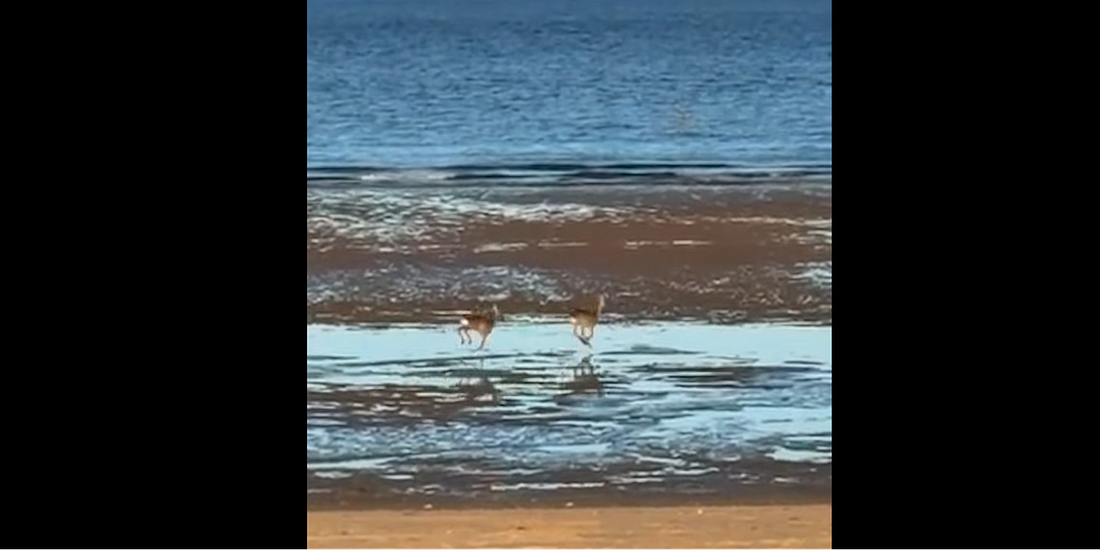
Screenshot from video posted by Joe Walsh/Liverpool Echo.
Deer have been spotted frolicking on Crosby Beach. It is a joyful, unexpected sight, and a reminder that our wildlife is resourceful and knows no boundaries..
Yet not everyone is celebrating. Media coverage has increasingly framed Britain’s two million deer as a crisis, pointing to woodland damage, road collisions and calls for greater culling. The scapegoated deer, it seems, are becoming a problem to be solved. No one ever points out that the intersecting environmental crises we are facing are being caused by capitalist industrialisation, not by non-human animal species.
At Protect the Wild we are more than aware that the first impulse of the authorities in non-human species ‘management’ is to reach for the rifle. But we should not be looking towards more culling. Britain’s deer population has grown precisely because we have systematically removed the predators that once kept it in balance. Wolves and lynx were hunted to extinction here centuries ago. Their absence is the real crisis.
If management is genuinely necessary in some areas, the conversation must be centred on non-lethal options: contraception programmeshave been shown to be viable, and the reintroduction of apex predators such as wolves or lynx would restore the natural regulation our ecosystems are crying out for. Academics have also promoted the reintroduction of wolves as a way to counteract climate change because it would enable the regeneration of woodland and thus the storage of large amounts of carbon dioxide (CO2).
The deer on Crosby Beach are not a problem. They are a glimpse of a wilder Britain, and we should be fighting to protect it.
Read more about the debate around the reintroduction of apex predators.
Become a monthly supporter of Protect the Wild
We’re working around the clock for British wildlife – and doing it on a shoestring budget. We don’t rely on major grants or corporate funding. Instead, our work is powered by thousands of passionate supporters, and that’s exactly how we want it to stay.
Because it means we stay independent. It means we can move quickly, speak honestly, challenge powerful interests, take risks, and do what truly needs to be done for British wildlife.
If you’d like to support our work and help us keep fighting, please consider becoming a monthly supporter here.


