May 13, 2026
This Pre-IPO Window Is Closing Tomorrow
Featured: The Fed Chair Vote Is Here. Don’t Look Away. Sponsored
This Pre-IPO Window Is Closing.
Why 7,000+ People Got In Early.
Round closes May 14th, 2026
Not every company makes it from seed to public markets. The ones that do tend to share a pattern: real users, real revenue, strategic partners locked in, and a clear path to liquidity.
Immersed is partnered with the tech giants and checks every box.
THE IMMERSED SCORECARD✓4,000% valuation growth since founding ✓$28M+ raised from over 7,000 retail investors ✓NASDAQ ticker reserved: $IMRS. Path to public markets is clear. ✓Strategic partnerships with Meta, Microsoft, Qualcomm, and Samsung✓No. 1 productivity app in the Meta Quest Store, 1.5M+ active users ✓Covered in Time, Wired, Forbes, CNET, and TechCrunch
Pre-IPO shares are available now at $0.72 through a Regulation A+ offering. Early investors qualify for up to 20% bonus shares. Minimum investment is $999.
This isn’t an idea. The raise is live. The close date is May 14th. The entry price moves when the round does.Invest by May 14 to lock in this share price →
© 2026 Immersed, Inc. All rights reserved.
This is a paid advertisement for Immersed Regulation A+ offering. Please read the offering circular at invest.immersed.com
The valuation is set by the Company and there is currently no public market for the Company’s Common Stock. NASDAQ ticker “IMRS” has been reserved by Immersed and any potential listing is subject to future regulatory approval and market conditions. Investor references reflect factual individual or institutional participation and do not imply endorsement or sponsorship by the referenced companies. Forward-looking statements appear here based on current information. They involve known and unknown risks, uncertainties, and other factors that may cause outcomes to differ.
FEATURED
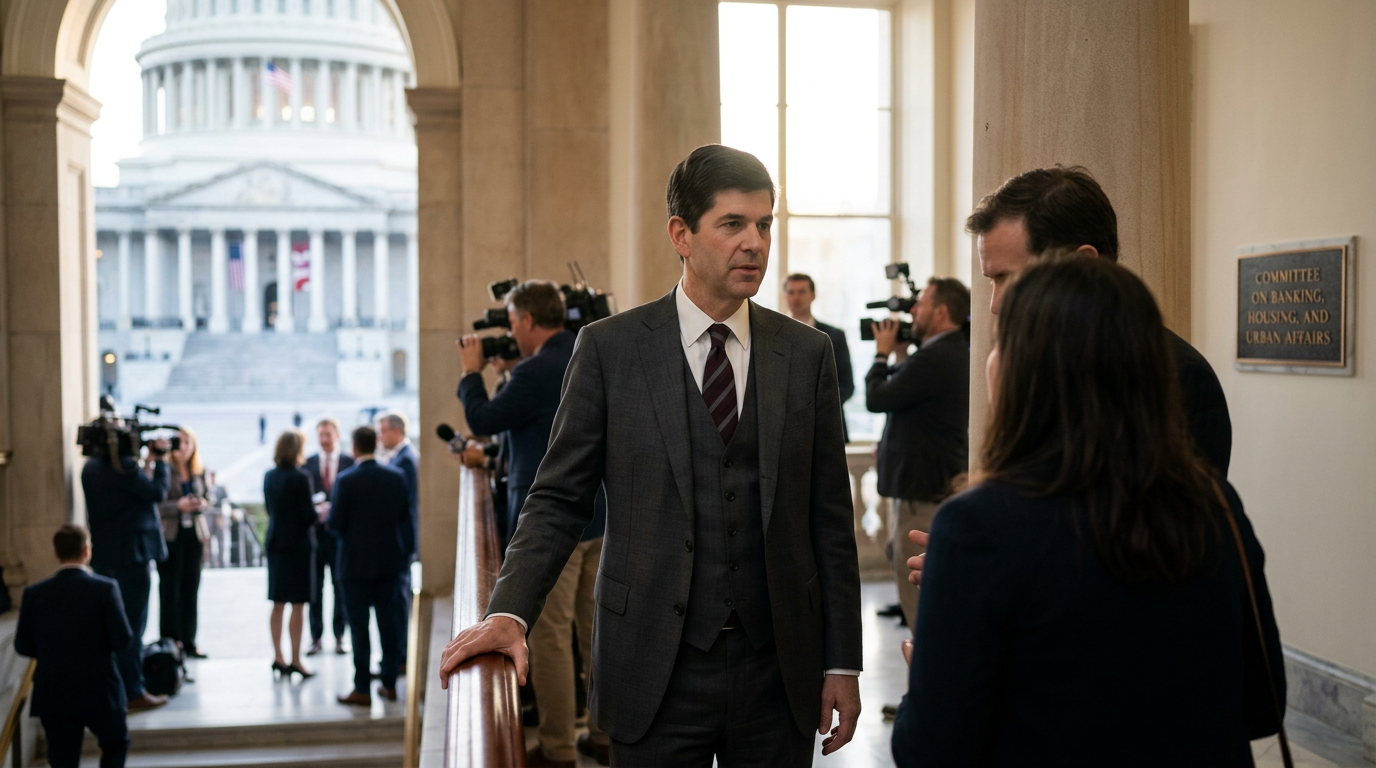
The Fed Chair Vote Is Here. Don’t Look Away.
The Senate voted 51-45 yesterday to confirm Kevin Warsh to the Federal Reserve’s Board of Governors. One Democrat crossed the aisle – Sen. John Fetterman of Pennsylvania. Every Republican who showed up voted yes. The chair vote, which is a separate confirmation, is expected as soon as tonight or tomorrow, ahead of Jerome Powell’s term expiring on Friday, May 15.
This is not a small thing.
The Federal Reserve hasn’t had a leadership transition this politically charged in decades. And the person stepping into that chair has already told anyone who would listen that he wants what he calls “regime change” at the central bank. Not a tweak. Not a pivot. A structural overhaul of how the institution operates, communicates, and coordinates with the Treasury.
So let’s talk about what’s actually changing, what probably isn’t, and where the market is getting ahead of itself.
Who Is Kevin Warsh
Warsh, 55, is not a newcomer. He served on the Fed’s Board of Governors from 2006 to 2011, spanning the global financial crisis, and built a reputation during that stretch as an inflation hawk who was skeptical of the Fed’s expanding mandate and balance sheet. He graduated from Stanford and Harvard Law, spent years at Morgan Stanley in M&A, then moved into the Bush White House as a special assistant for economic policy. After leaving the Fed in 2011, he spent time as a Hoover Institution fellow and as an adviser to Stanley Druckenmiller.
Trump nominated him in late January of this year. The path to confirmation got complicated fast.
Sen. Thom Tillis (R-NC), a Banking Committee member, blocked the nomination until the Justice Department concluded its criminal investigation into Powell over testimony he gave to the Senate about the Fed’s $2.5 billion headquarters renovation. The DOJ dropped that investigation late last month. Tillis confirmed he was ready to vote yes. The Banking Committee advanced Warsh on a party-line vote, and the full Senate followed yesterday.
Slight tangent, but it matters – Powell is actually staying. He told reporters he will remain on the Board as a rank-and-file governor, which would make him the first outgoing Fed chair in more than 75 years to do so. His governor term runs through January 2028. His stated reason: protecting the institution from what he described as “legal attacks” threatening the Fed’s ability to conduct monetary policy without political interference. That’s a real dynamic Warsh will have to manage from day one.
Sponsored
Wall Street Issues Dire Warning to Clients
Wall Street has issued a chilling warning for anyone with money in the U.S. stock market right now. Top analysts at these banks say a big event is coming that could both wipe out the market and keep it down for 10 years or longer. What can you do? A new tech breakthrough from a firm in Baltimore, Maryland may hold the answer.
What Warsh Has Actually Said He Wants to Do
Here’s where it gets interesting. Warsh’s public positioning has shifted meaningfully from his earlier hawkish days. During his confirmation hearing on April 21, he expressed openness to lower rates – not because the economy demands it, but because he believes a smaller Fed balance sheet, tighter coordination with Treasury on non-monetary policy, and productivity gains from AI could create room to ease. In a November 2025 Wall Street Journal op-ed, he wrote that AI would be “a significant disinflationary force.” Senators pressed him on whether that view held given the current energy shock. He gave no clean answer.
Deutsche Bank analysts put it more precisely: Warsh should not be read as structurally dovish. His views “have tended to skew hawkish relative to others.” The argument that a smaller balance sheet creates room for rate cuts is a long-horizon thesis. It doesn’t move rates in June.
What he confirmed during the hearing:
- He wants to shrink the Fed’s balance sheet. He believes doing so will help temper inflation and over time open the door to lower borrowing costs.
- He floated the idea of reducing the number of annual FOMC meetings from eight. He said four isn’t enough, and more than four is appropriate – but he declined to commit to eight. That’s a bigger operational shift than it sounds.
- He told senators Trump never asked him to predetermine any interest rate decision. He pledged independence. Sen. Warren called him a “sock puppet.” He denied it.
- He said he will divest the majority of his roughly $100 million in assets before confirmation, with the rest within 90 days.
Trump, for his part, told CNBC he would be “disappointed” if Warsh doesn’t cut rates. That comment is already priced into the political backdrop. What it actually means for monetary policy is a different question entirely.
Where Rates Stand Right Now
The Fed cut 75 basis points total in the final three meetings of 2025, landing the federal funds rate at the current target range of 3.50%–3.75%. Since then, the FOMC has held rates steady for three consecutive meetings in January, March, and April 2026 – all in line with expectations. The April vote was notably fractured: an 8-4 dissent, the first time since October 1992 that four officials disagreed with a single FOMC decision.
The friction point is inflation. A surge in energy prices tied to the U.S.-Israel war on Iran has pushed inflation higher and complicated the Fed’s path. Financial markets are currently pricing roughly a one-in-three chance of a rate hike by December. That’s not a base case – it’s a tail risk that’s grown large enough to be worth watching. The FOMC minutes from March showed that a majority of participants judged that upside risks to inflation had increased, and that a prolonged Middle East conflict would likely lead to more persistent energy price increases passing through to core inflation.
The Fed’s next scheduled meeting is June 16–17. That will almost certainly be Warsh’s first as chair.
The Independence Question Is the Real Story
Here’s what most of the coverage is underweighting. The structural tension isn’t really about whether rates go up or down in June. It’s about whether the Federal Reserve’s decision-making process remains insulated from the executive branch over a multi-year horizon.
Warsh has proposed tighter coordination between the Fed and Treasury on non-monetary policies. Trump has attempted to fire at least one Biden-era Fed governor – a case currently before the Supreme Court. The DOJ investigated the sitting Fed chair. Powell is staying on the board specifically to push back on what he sees as institutional erosion. And Warsh, whatever his intentions, was nominated by an administration that has been explicit about wanting the Fed aligned with its economic agenda.
Worth noting: the Fed chair has only one of twelve votes on the FOMC. Warsh can advocate – but he cannot unilaterally cut rates. Any meaningful policy shift requires building a coalition among governors and regional Fed presidents. Several of those seats are held by Biden nominees. The board dynamics are not going to be frictionless.
That’s the part people skip. Warsh is a persuader-in-chief, not a sole decision-maker.
Sponsored
Wall Street is calling it the “Warsh Shock.” Here’s how to profit from it…
Larry Benedict isn’t scrambling. He’s seen this before.
He says the Warsh Shock is setting up the most predictable wealth-building window he’s seen in 20 years… and there’s one ticker right at the center of it.
Click here to see how Larry is playing it.
What to Watch From Here
The chair confirmation vote lands as early as tonight – ahead of Powell’s May 15 term expiration. After that, the immediate calendar looks like this:
- June 16–17: First FOMC meeting under Warsh. No rate move is expected, but the statement language and press conference will get intense scrutiny. Any shift in tone from Powell-era communication will move markets.
- Balance sheet trajectory: Warsh has been clear that he wants the balance sheet smaller. How aggressively and on what timeline is the first real policy signal investors should track.
- Meeting frequency: If Warsh moves toward fewer than eight annual FOMC meetings, that changes forward guidance mechanics and how markets price rate expectations throughout the year.
- FOMC composition: The Supreme Court case on firing Fed governors is unresolved. If the court rules in the administration’s favor, the board’s composition could shift in ways that matter for the vote count on any contentious decision.
- Energy and inflation: None of the above matters much if CPI keeps climbing. The Iran-driven energy shock is the wildcard that could force Warsh’s hand before any structural reforms gain traction.
What’s interesting is that the market’s immediate reaction to Warsh’s April 21 hearing was muted and slightly negative. The S&P 500 and Nasdaq each fell roughly 0.4% that day, pausing a rally that had pushed both indexes to record highs. Nothing about that reaction screamed “investors love this.” It said: investors are uncertain, and uncertainty at the Fed is a premium risk right now given the inflation backdrop.
Bottom line: Warsh gets the title. What he does with it is the question that won’t be answered in a single press conference or a single FOMC statement. The June 16 meeting is the first real data point. Between now and then, watch the communication style, watch the balance sheet language, and watch what happens with the Supreme Court case. The structural changes Warsh is talking about – a Treasury-Fed accord, fewer meetings, a smaller balance sheet – are multi-year projects, not quarter-to-quarter trades. The market will price in expectations long before any of it materializes.
The chair is new. The inflation problem is not.
– The Cheap Investor
This content is for informational purposes only and should not be considered financial advice. Investing involves risk.
The Cheap Investor is a publication of Investing Media Solutions, LLC.
To view our full policies: Disclaimer | Privacy Policy | Terms & Conditions
Update your email preferences or unsubscribe here
© 2026 The Cheap Investor
203 N La Salle Suite 2100
Chicago , Illinois 60601, United StatesPowered by beehiivTerms of Service


