Unsubscribe How anticipating beats reacting every single time (From Base Camp Trading)
From Zepbound to Foundayo: Lilly’s Latest Results Support Oral GLP-1 Outlook
Written by Leo Miller
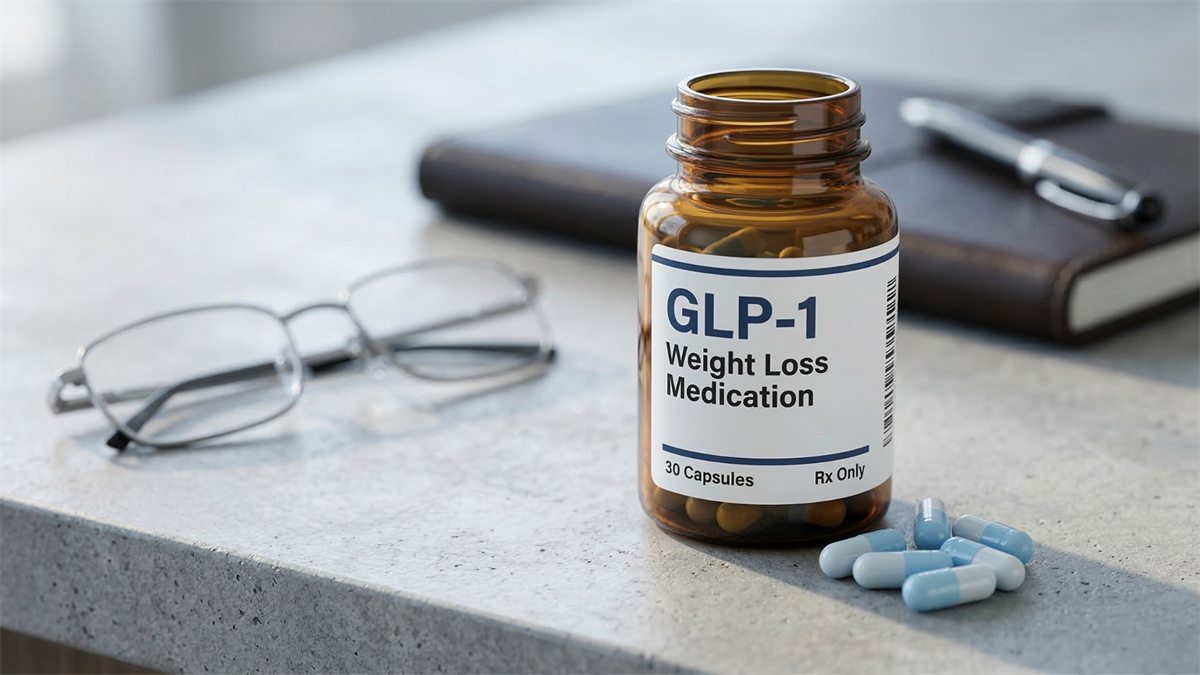
Shares of Eli Lilly and Company (NYSE: LLY), the world’s most valuable pharmaceutical stock, started 2026 in a bad way. Near the end of April, LLY shares had fallen as much as 20%. However, the stock has rebounded mightily since then.
Lilly’s highly impressive earnings report kicked off the rally, with shares surging nearly 10% in one day. Lilly has continued to trudge higher, now down only around 5% in 2026.
One event that recently helped Lilly’s stock move up was the latest results surrounding its oral GLP-1 medication Foundayo. While Foundayo is already approved by the Food and Drug Administration, the need to continue testing does not stop there. By generating more robust and a wider variety of data on the medication, Lilly can improve the chances of doctors prescribing it. Lilly’s latest results support this all-important goal.
Foundayo’s 2-Pronged Attack: Needle Fear Patients and Maintenance Patients
The trial in question focuses on weight-loss maintenance—helping patients keep lost weight off after they stop taking high-dose GLP-1s. For Lilly, this is part of a two-pronged strategy to generate demand for Foundayo.
The first part is based on attracting completely new patients. Researchers estimate that up to 25% of U.S. adultshave a fear of needles, preventing certain patients who want to lose weight from taking injectable GLP-1s. Through pill-based medications, Lilly can unlock demand from this patient group.
However, Lilly is falling behind Novo Nordisk A/S (NYSE: NVO) on oral uptake, as Novo received approval for its oral weight-loss drug several months earlier. Novo’s pill has also demonstrated efficacy that moderately surpasses Foundayo. Novo notes an average weight loss of 14% after 64 weeks among patients taking the Wegovy pill. This compares to an average weight loss of 12.4% after 72 weeks for Foundayo.
According to BMO Capital Markets, “While Foundayo scripts have been trending upward since launch in April, scripts have lagged vs. those of the Wegovy Pill and Street expectations.”
However, Lilly may be able to better differentiate itself in the second prong of its strategy: weight loss maintenance. Injectables are more efficacious than either pill, with Lilly touting an average weight loss of 20.2% at 72 weeks for patients using Zepbound. Thus, after losing a lot of weight on injectables, patients can transition to pills in order to keep lost weight off.
With this, Lilly can drive recurring sales of Foundayo as patients make the switch. Its latest Foundayo results provided encouraging data on this front.
Foundayo: Weight Loss Maintenance Improves Dramatically Versus Going Cold Turkey
In its ATTAIN-MAINTAIN trial, Lilly looked at patients who had lost significant weight through taking Zepbound. Throughout the Zepbound period, patients lost an average of 55 lbs. Patients then transitioned onto Foundayo for 52 weeks, gaining back 11 lbs. So, when using Foundayo as a maintenance treatment, patients regained only 20% of their original weight loss.
This is actually a strong showing, as patients who get off GLP-1s completely regain much more weight. A recent analysis of 48 studies found that after one year of getting off GLP-1s, patients regained 60% of their original weight loss. Thus, the percentage of weight loss kept in Lilly’s study is three times higher than that of those who got off GLP-1s completely.
Lilly also performed the same test with patients who originally lost 41 lbs by taking injectable Wegovy. After switching to Foundayo for 52 weeks, these patients regained just 2 lbs—another very strong result. In the end, Zepbound to Foundayo patients lost 17.2% of their weight, and Wegovy to Foundayo patients lost 15.5% of their weight on average.
Clearly, these results provide evidence that transitioning to Foundayo after taking injectables can be an effective pathway for keeping lost weight off. Notably, on the day of this data release, Lilly’s shares rose by 2.4%.
There is also reason to believe that Foundayo will have greater appeal as a weight-loss maintenance treatment than the Wegovy pill. This is because it comes with no dietary restrictions. Meanwhile, doctors advise Wegovy pill patients not to eat or drink for 30 minutes after taking the medication.
Ultimately, the convenience factor of pills is a key reason why people would want to switch from injectables. With no dietary restrictions, Lilly has an advantage here. However, it will be interesting to see if Novo conducts a similar maintenance study that could shift the playing field in this vertical.
Analysts Forecast Substantial Upside in Lilly After Recent Rebound
Overall, targeting the weight-loss maintenance market is one of many levers Eli Lilly can pull to continue growing its GLP-1 business. Notably, even with Lilly only down less than 10% from its all-time high, Wall Street analysts continue to forecast substantial gains ahead. The MarketBeat consensus price target on the stock sits near $1,218, implying upside of just over 20%. READ THIS STORY ONLINE
Elon Musk’s $1 Quadrillion AI IPO (Ad)

$1 quadrillion would be enough to send a $2.8 million check to every man, woman, and child in America. That is the scale of what analysts are calling the biggest AI IPO in history.
And right now, you can claim a stake before the company goes public, starting with just $500.
Elon Musk is predicting this investment could climb 1,000x from here. Early access is available today. CLAIM YOUR STAKE NOW
AI Consolidation Begins: Blackstone & Google Forge an AI Empire
Written by Jeffrey Neal Johnson
The artificial intelligenceinfrastructure buildout is entering its consolidation phase. In a decisive move that reshapes the competitive landscape, private equity giant Blackstone (NYSE: BX) and hyperscaler Alphabet (NASDAQ: GOOGL) announced a $5 billion joint venture to create a new AI cloud platform. This alliance directly targets the operational moats of high-flying, pure-play infrastructure providers, signaling a fundamental market rotation toward mega-cap players with unmatched access to capital.
For investors, this catalyst clarifies the board. The era of speculative premiums for companies with GPU capacity appears to be closing, replaced by a new reality in which balance sheet strength and cost of capital are paramount. This shift creates a compelling opportunity for a classic pairs trade, favoring the unlevered scale of institutional giants over the debt-fueled growth of their mid-tier rivals.
Forging a Debt-Free Weapon With Capital and Silicon
The partnership between Blackstone and Google is more than just another data center deal; it’s a vertically integrated assault on the AI compute market. Blackstone is making an initial $5 billion equity commitment to bring 500 megawatts of capacity online by 2027, with plans to scale significantly. The new, U.S.-based entity will offer Google’s proprietary Tensor Processing Units (TPUs) as a compute-as-a-service offering.
The deal structure presents two immediate and formidable advantages. First, by using pure equity, the venture completely bypasses the increasingly expensive debt markets that competitors rely on for expansion, creating a superior unit economics model from its inception.
Second, it fuses Blackstone’s global expertise in real estate, energy, and digital infrastructure with Google’s decade-plus of experience developing and deploying its custom-built AI accelerators. TPUs already power Google’s entire suite of AI products, including Gemini, giving the new platform a foundation of proven, at-scale technology. This combination of deep private equity backing and proprietary hardware presents a structural challenge to the existing pure-play AI cloud operators.
Caught in the Crossfire: The Squeeze on Levered Operators
While the AI boom has lifted many boats, the tide may be turning for operators whose growth is built on significant debt. The entrance of a debt-free, institutionally backed competitor puts a magnifying glass on the financial structures of these mid-tier players.
CoreWeave’s High-Wire Act
CoreWeave (NASDAQ: CRWV) has been a primary beneficiary of the market’s insatiable demand for GPU capacity. However, its aggressive expansion has come at a cost.
CoreWeave operates with a substantial debt-to-equity ratio of 3.68, financing its growth at borrowing rates reportedly exceeding 9%. This heavy reliance on leverage creates significant margin compression. In a market where a new competitor can deploy billions in equity, CoreWeave’s high cost of capital may become a critical vulnerability. The negative net margin of -25.57% and return on assets of -3.84% at CoreWeave underscore the immense capital intensity of its operating model, which now faces a direct challenge from a far more efficiently capitalized rival.
Nebius Group’s Sales Multiple in the Firing Line
Another market favorite, Nebius Group (NASDAQ: NBIS), faces a different kind of pressure. While its financial footing is more stable, its valuation appears priced beyond perfection.
Nebius Group trades at a staggering 93 times its annual sales. This kind of multiple leaves zero room for error and assumes a long-term growth trajectory with no significant competitive threats. The Blackstone-Google venture fundamentally invalidates that assumption. With a -9.11% return on equity, Nebius Group’s current market capitalization of over $50 billion is difficult to justify on fundamentals alone. The arrival of a new, powerful competitor makes Nebius Group’s forward guidance look far more precarious, placing its premium valuation at high risk of a substantial correction.
Downgrades, Dumps, and Derivatives
Wall Street appears to be recognizing this structural shift. In the wake of the joint venture announcement, DA Davidson downgraded both CoreWeave and Nebius Group. The CoreWeave downgrade centered on concerns over its thin margins and rising input costs, while the Nebius Group downgradepointed to a valuation that had reached a saturation point.
This cautious analyst sentiment is echoed by insider activity. Recent filings show notable stock sales by key executives at CoreWeave and Nebius Group. While insider selling can happen for many reasons, the timing suggests a potential recognition that the competitive environment is becoming materially more difficult.
Derivatives markets are showing signs of institutional hedging, with rising implied volatility and skewed put-to-call ratios on near-term options contracts for these pure-play operators. This activity indicates that sophisticated investors may be actively purchasing downside protection.
Playing Offense and Defense in the AI Shakeout
The data points to a clear and actionable thesis. The AI infrastructure sector is consolidating, and the advantage is shifting decisively toward large, vertically integrated players with pristine balance sheets. Recent geopolitical news has triggered broad market selloffs, but this has masked the underlying capital flight from highly levered operators toward fortified mega-caps.
For investors with a strategic, long-term view, this environment may be well-suited for a pairs trade. Such a strategy would involve a bullish position on a hyperscaler like Alphabet, which stands to benefit directly from this consolidation, while taking a bearish position on capital-intensive pure-plays like CoreWeave or the richly valued Nebius Group.
Investors should, of course, consider the risks. The sheer scale of demand for AI compute could create opportunities for all players in the short term. The Blackstone-Google capacity is not scheduled to come online until 2027, giving incumbents a window to strengthen their positions. Mid-tier operators could also become attractive acquisition targets for other tech giants looking to accelerate their entry into the AI infrastructure space.
Still, the catalyst is clear. The injection of $5 billion of unlevered private equity into the AI cloud war has permanently altered the rules of engagement. Investors focused on this space might consider re-evaluating their exposure to operators reliant on expensive debt, while closely monitoring the execution of hyperscaler alliances as a key indicator of where the market is heading. READ THIS STORY ONLINE
How anticipating beats reacting every single time (Ad)

Most traders do not lose because they are unlucky – they lose because they are late. Chasing moves that have already run, hesitating at key moments, or overcomplicating entries until the opportunity is gone.
Dave Aquino, Lead Income Trader at Base Camp Trading, built his single-day trading approach around pre-defined setups, specific timing windows, and clear decision points – so you are anticipating moves instead of reacting to them. His free report breaks it all down.CLAIM YOUR FREE COPY OF DAVE AQUINO’S SINGLE-DAY TRADING REPORT
USA Rare Earth Posts Strong Q1 2026 as Massive Serra Vera Deal Looms
Written by Leo Miller

USA Rare Earth (NASDAQ: USAR) is looking to fill a hole in the market born out of geopolitical uncertainty. Along with mining companies like MP Materials (NYSE: MP), USA Rare Earth is aiding the United States in loosening China’s chokehold on rare earth elements (REEs). China controls the majority of the world’s REE mines, and 94% of permanent magnet production—the vital end product of REEs.
This is a pressing issue, as permanent magnets are essential to building many modern-day technologies. This includes advanced weaponry, and the United States does not want to find itself in a position where China can cut off its production capabilities.
Ultimately, the goal of USA Rare Earth is to become a vertically integrated mine-to-magnet producer. Recently, USA Rare Earth delivered its latest earnings report, providing insight into how the firm is progressing toward its goal.
USA Rare Earth Posts Beats, Government Funding Deal Sees a Delay
As an early-stage company, showing operational improvements is far more important than near-term revenue or profit generation. However, that’s not to say the company’s financials don’t matter at all—investors certainly want to see it stay on budget and not burn cash unnecessarily. Luckily, in its latest quarter, the firm posted better-than-expected results.
USA Rare Earth generated revenue of $5.7 million in Q1 2026. Note that it recorded no revenue a year ago. This figure solidly beat estimates of $4.2 million. The company also exceeded expectations on its bottom line. The company’s adjusted loss per share was 12 cents, significantly less than the 16-cent loss analysts had forecasted.
However, it is important to note that loss per share can be a deceiving metric. Because USA Rare Earth issues a lot of stock, its loss per share can fall even if actual losses grow, which is exactly what happened during Q1. Adjusted loss per share improved from 14 cents a year ago, but the company’s adjusted net loss more than doubled to $24.1 million. The takeaway is that USA Rare Earth’s profitability is getting worse, not better.
However, this is fully expected for early-stage companies, and USA Rare Earth has plenty of capital to absorb losses. The firm ended the quarter with $1.75 billion in cash, as it received $1.5 billion in proceeds from a private investment offering.
Additionally, the company said it expects to complete the definitive documentation for its $1.6 billion in Department of Commerce funding in May. While a delay compared to previous expectations that this would finish up in April, ultimately getting the funding is what matters. Importantly, the firm notes that the terms of the deal have not deteriorated.
USA Rare Earth Presses Forward, Looks to Enhance Position With Serra Verde
The company also remained on course with several operational milestones. The company continues to expect to begin fulfilling sales of sintered magnets in Q2 2026.
USA Rare Earth also still expects its Stillwater magnet capacity to hit 600 metric tons per annum (MTPA) by the end of 2026. Expectations for 1,200 MTPA in Q1 2027 remain intact as well.
However, its planned $2.8 billion acquisition of Serra Verde is by far the biggest development over recent months. The company notes that Serra Verde is the first and only scaled producer of all four magnetic rare earth elements outside of Asia. These elements are neodymium (Nd), praseodymium (Pr), dysprosium (Dy), and terbium (Tb).
Garnering this asset would be a clear win for USA Rare Earth, accelerating its mine-to-magnet buildout and providing a key benefit compared to MP Materials. MP’s mines are rich in only light rare earth elements like Nd and Pr—not heavy rare earths like Dy and Tb. Notably, making advanced technologies like missile guidance systems requires adding heavy rare earths. With Serra Verde, USA Rare Earth would have access to both light and heavy REEs, a strategic advantage over MP.
The combined company is targeting an EBITDA run rate of $550 million to $650 million by the end of 2027. Additionally, USA Rare Earth notes that the cash position of the combined firm would be $3.2 billion, drastically higher than its current balance.
However, the acquisition is set to be a massively dilutive event for shareholders. USA Rare Earth plans to issue 127 million shares to fund the deal. This is huge compared to its current share count of nearly 233 million. Nonetheless, shares surged 13% on the day of this announcement, indicating that investors prioritized the strategic value of the deal over the dilution factor.
USA Rare Earth Awaits Deal Closing After Good Quarter
Overall, USA Rare Earth performed well during its latest quarter, putting up solid financials and continuing to execute on operational objectives. Meanwhile, it’s possible that acquiring Serra Verde could be a game-changer—making the company an anchor in the non-China market.
Still, the deal has yet to close, with finalization expected in Q3 2025. After closing, USA Rare Earth plans to host its Investor Day. As the company provides more details around its strategy at the event, this will be a key point at which to re-evaluate USAR’s future. READ THIS STORY ONLINE
The #1 Stock to Buy Before Elon Takes Over AI Industry? (Ad)

Elon Musk’s AI lab has partnered with the Department of Defense, Oracle, and Palantir – and he just filed confidential IPO paperwork. By the time it goes public, most investors will have missed the biggest gains.
Louis Navellier, a 47-year Wall Street veteran who has recommended over 675 stocks that climbed 100% or more, says he’s found a way to profit ahead of the IPO. He’s backed his conviction with $358 million of his own firm’s money. Goldman Sachs projects the underlying technology could surge 70X over the next decade.SEE NAVELLIER’S FULL ANALYSIS AND HOW TO POSITION TODAY
More Stories
- 3 Space Infrastructure Stocks Gaining Momentum Ahead of the SpaceX IPO
- Why AST SpaceMobile Is the Bigger Winner of the AT&T, T-Mobile, and Verizon Joint Venture
- JPMorgan moves 2 billion a day through this – heard nothing? (Ad)
- Analog Devices Provides Much-Needed Pullback: How Low Can It Go?
- Vertical Aerospace: Pre-Flight Checks Point to a Breakout
- Tesla Ends Model S and X Era, Bets Everything on What’s Next
- Palo Alto Networks Up 70%: Can the Rally Last Into June?
The Night Owl is a financial newsletter that provides in-depth market analysis on stocks of interest to individual investors. Published by MarketBeat and Early Bird Publishing, The Night Owl is delivered around 9:00 PM Eastern Sunday through Thursday. If you give a hoot about the market, The Night Owl is the newsletter for you.
If you have questions or concerns about your account, please feel free to email our U.S. based support team at contact@marketbeat.com.
Unsubscribe
© 2006-2026 MarketBeat Media, LLC. All rights protected.
345 N Reid Pl., Sixth Floor, Sioux Falls, S.D. 57103. United States of America..
Check This Out: I wouldn’t let this sit in your inbox(From The Oxford Club)


