I was born on 6 August 1956 in San Francisco, California to Janet and (the late) Richard Hovis.
I grew up in Santa Monica, California where I attended elementary, junior high school, and high school (graduating in 1974), in addition to involvement in sports and recreation (Little League +, the Boy’s Club ++). Further, it was in elementary school – St. Augustine’s By-the -Sea Parish School that I found, and made the choice to truly journey with God.
I attended Arizona State University from 1974 to 1977 – seeking to become an architect, however, I was not accepted, and, as such, I graduated with a Liberal Arts degree.
Upon graduation from Arizona State University, I attended Cal Poly San Luis Obispo and studied City and Regional Planning at the Master’s level. I successfully completed one (1) year in a two (2) year program – I did not complete the Master’s degree in City and Regional Planning – due to personal reasons.
I returned to Santa Monica where I started (October 1979) my career as graphic designer with Exxon Company, USA. I spent five years with Exxon Company, USA.
While working with Exxon Company, USA I was accepted into architectural school – Sci-Arc in Southern California, however, I did not attend preferring to stay with Exxon..
In 1982 I married Laura Flosi and in April 1983 we had our one and only child – Lauren Alain Hovis – a gift from God.
We moved to Phoenix, Arizona in 1984 from Los Angeles, where I went to work as a graphic designer with Kitchell CEM (from 1985 -1987).
From 1987 – 1995 I was an independent contractor, and a registered representative in mortgage finance, financial management, graphic design, and drafting.
Further, I attended the University of Phoenix and successfully obtained a Master’s in Business Administration (MBA) in 1982.
I was also a member of the Scottsdale Jaycees, where I became very involved in community events and projects.
In 1994, I accepted a cartography position with the Defense Mapping Agency in Reston, Virginia. As such, I relocated from Phoenix to Reston.
In 1998, I was accepted and worked as a Visual Information Officer with the Central Intelligence Agency. In 2002, I worked as a Support Officer until my retirement (due to a need for shoulder surgery) in September 2018.
Away from my Federal Government service, I have been involved in various organizations and activities in Northern Virginia.
In November of 2011, I married Rebecca Ouellette in Santa Monica, California. I reside in San Tan Valley, AZ with my two hamster - Jess and Timothy, our fish, our lizard - RJ Lizard., and our cats - Pearl and Grey.
As to hobbies, I enjoy playing sports, attending sporting events, mentoring individuals from financial management to hamsters, building models, photography, travel, multimedia design, managing partner for RJ Hamster, and jazz – smooth jazz to a samba or a bossa nova.
Love and God Bless,
Peter – aka RJ Hamster Jo hi
“For I will pour water on the thirsty land, and streams on the dry ground…” — Isaiah 44:3
While God provides the living water that sustains our souls, we still need water here on earth to sustain life. As poet W. H. Auden wisely observed:
“Thousands have lived without love, not one without water.”
Arizona knows that reality better than most.
If you’ve turned on the news recently, you’ve probably seen headlines warning about the Colorado River, shrinking reservoirs, and a new federal proposal that Arizona leaders say could leave our state carrying an unfair share of future water shortages.
Like many issues involving Washington, the debate is wrapped in legal jargon, court rulings, and agreements that date back more than a century.
So, let’s set aside the politics and explain what’s really happening—in plain English.
Think of the Colorado River as a business.
Imagine seven business partners who agree to split the profits from a company.
For years, they believe the company earns $100 every month, so each partner plans accordingly.
Then one day they discover the company actually earns only $75.
Suddenly everyone agrees there is less money.
The argument becomes who gives up their share.
That is exactly where we are today.
More than one hundred years ago, Arizona, California, Colorado, Nevada, New Mexico, Utah, and Wyoming agreed to divide the waters of the Colorado River.
Unfortunately, those agreements were negotiated during unusually wet years when officials believed the river carried substantially more water than history has since shown it actually produces.
Today, the math simply no longer works.
How We Got Here
The Colorado River provides drinking water for roughly 40 million Americans, irrigates millions of acres of farmland that help feed our nation, and generates electricity at Hoover Dam, Glen Canyon Dam, and Parker Dam. It also fills Lake Mead, Lake Powell, and Lake Havasu—the reservoirs that make modern life in much of the Southwest possible.
But after more than two decades of drought, warmer temperatures, and continued population growth, the river no longer produces enough water to satisfy every promise made decades ago.
Nobody disputes that reality.
The disagreement is over who sacrifices.
Why Arizona Is Different
Many people assume Arizona simply pumps water directly from the Colorado River.
It doesn’t.
Instead, Arizona depends on one of the greatest engineering accomplishments in American history—the Central Arizona Project (CAP).
Think of CAP as Arizona’s giant drinking straw.
The Colorado River flows along our western border, while most Arizonans live hundreds of miles away.
CAP is a remarkable 336-mile canal that lifts water nearly 3,000 feet uphill from Lake Havasu before carrying it across the desert to Phoenix, Tucson, and countless communities in between.
Today it supplies water to more than six million Arizonans, tribal communities, farms, industries, and businesses.
Without CAP, modern Arizona simply would not exist as we know it.
The problem isn’t the canal.
The problem is the river feeding it.
Imagine building a pipeline capable of carrying 100 gallons of water only to discover the reservoir supplying it now contains 60 gallons.
The pipeline still works.
There simply isn’t enough water to fill it.
Why Arizona Gets Cut First
This is the part that frustrates many Arizonans.
Arizona spent decades battling California over Colorado River water.
When Congress finally approved the Central Arizona Project in 1968, Arizona accepted a difficult compromise.
California retained much of its senior water rights while much of Arizona’s CAP supply received junior priority during shortages.
Think of it like boarding an airplane.
California boarded first.
Arizona boarded later.
When the flight is oversold, who gets bumped?
The last passenger on the plane.
That is essentially how today’s shortage rules work.
At the time, few imagined the Colorado River would one day decline to today’s levels, so the compromise appeared reasonable.
Today, those decades-old decisions carry enormous consequences.
Who Makes These Decisions?
Many assume governors simply negotiate water reductions every year.
They don’t.
The U.S. Bureau of Reclamation operates Hoover Dam, Glen Canyon Dam, Lake Mead, and Lake Powell.
Think of the Bureau as the person controlling the faucet.
But it doesn’t invent the rules.
Instead, it administers what is known as the Law of the River—a century’s worth of interstate compacts, congressional legislation, Supreme Court decisions, treaties, contracts, and operating agreements.
As Lake Mead falls below certain elevations, predetermined shortage rules automatically take effect.
The lower the lake falls, the larger Arizona’s reductions become.
Why the States Are Fighting
This debate isn’t really about whether conservation is necessary.
Nearly everyone agrees it is.
The real disagreement is over fairness.
California argues that water rights established generations ago should continue to be honored because entire communities, farms, and industries were built around those legal protections.
Arizona argues that while we have already accepted significant reductions, we should not continue carrying a disproportionate share of future shortages simply because of compromises made more than fifty years ago.
Meanwhile, the Upper Basin states—Colorado, Utah, Wyoming, and New Mexico—argue they should not be forced into comparable reductions because many of them already consume less than their legal allocations.
Finding common ground has proven extraordinarily difficult.
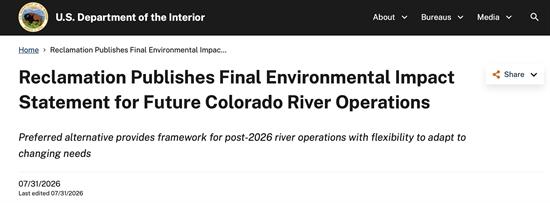
Under the proposal, Arizona, California, and Nevada—the Lower Basin states—would absorb virtually all mandatory shortages, with reductions reaching as much
as three million acre-feet annually during severe drought.
Upper Basin states would not face comparable mandatory reductions under the proposal.
Arizona officials have expressed serious concerns that the framework continues placing an outsized share of future shortages on our state while preserving many of California’s senior rights.
Negotiations remain ongoing, and additional litigation is widely expected.
What This Means for Arizona
If future reductions continue under the current framework, Arizona could face:
Reduced Colorado River deliveries through the Central Arizona Project.
Increased pressure on agriculture, particularly in Pinal, Maricopa, and Yuma Counties.
Higher costs for cities and water providers.
Greater uncertainty for future housing, manufacturing, and economic growth.
Arizona has invested billions of dollars in conservation, groundwater recharge, water banking, and infrastructure.
We have done our part.
Is There Any Good News?
The situation is serious, but there is reason for optimism.
First, the federal government rejected simply allowing Lake Mead and Lake Powell to continue declining unchecked. The goal is to prevent reservoirs from falling to dangerously low levels that threaten both water deliveries and hydroelectric power.
Second, these operating rules will be revisited every two years, allowing adjustments if conditions improve or if the states negotiate a better agreement.
Finally, these proposals are not the final word. Additional negotiations—and likely court challenges—mean Arizona still has opportunities to secure a fairer outcome.
My Record: I’ve Been Warning About This for Years
None of this should surprise anyone.
For more than a decade I have warned that this day was coming.
In 2020, I founded and chaired the bipartisan Colorado River Caucus, where I argued that conservation alone would never solve the Southwest’s long-term water challenges.
I consistently advocated developing new water, not simply dividing less water among more people.
As shortages intensified in 2022, I publicly supported desalination projects in the Sea of Cortez, pipelines transporting desalinated water into Arizona, public-private infrastructure partnerships, expanded reservoirs, aquifer recharge, and federal investment in long-term water infrastructure.
During 2023 and 2024, I convened Arizona water roundtables bringing together engineers, hydrologists, local officials, infrastructure experts, energy developers, and water authorities to examine practical solutions.
Those discussions focused on desalination facilities in cooperation with Mexico, interstate pipelines, pumping stations, permitting reform, nuclear-powered desalination technologies, and expanding Arizona’s long-term water portfolio.
For years, readers of this newsletter have heard me repeat the same message: We cannot conserve our way out of this problem.
Conservation remains essential, but it cannot create new water.
That is why I have consistently used my position on the House Natural Resources Committee to advocate expanding Bureau of Reclamation infrastructure, reducing permitting delays, strengthening interstate and international partnerships, and investing in projects that increase the overall water supply available to the American West.
Encouragingly, policymakers are beginning to recognize what I have argued for years: solving this crisis requires more than simply allocating shortages. It requires building new infrastructure, developing new water supplies, modernizing existing systems, and making strategic investments that expand the West’s long-term water portfolio.
Arizona has already begun moving in that direction. In 2026, legislation was introduced directing the Arizona Department of Water Resources to study desalinating brackish groundwater at multiple locations across the state—a promising step toward diversifying Arizona’s future water supply.
The Colorado River will remain the lifeblood of the Southwest, but protecting Arizona’s future requires both fairness in how existing water is allocated and bold investments that create new sources of water for generations to come.
The Bottom Line
If you remember only one thing, remember this:
The Colorado River debate is not really about water.
It is about whether a century-old system should continue determining who bears the burden when the river no longer produces enough water for everyone.
Arizona isn’t asking for special treatment.
We’re asking for a fair deal.
And I will close by once again repeating what I have said for years:We cannot conserve our way out of this challenge.
Conservation is part of the solution—but it is not the solution.
Arizona and the American West need new water.
That means pursuing desalination, expanding reservoirs, investing in pipelines where practical, accelerating aquifer recharge, reducing unnecessary permitting delays, studying interstate water transfers where feasible, and embracing the kind of bold infrastructure projects that built the West in the first place.
The time to begin developing tomorrow’s water supply is not twenty years from now.
It is today.
DOJ Uncovers $350 Million in Fraud, Protecting Taxpayer Dollars
For far too long, hardworking Americans have watched billions of their tax dollars disappear through fraud and government abuse. That is why I applaud the Department of Justice’s latest enforcement effort, which this week uncovered roughly $350 million in alleged fraud involving SNAP benefits, housing assistance, SBA loans, Medicare, and fraudulent tax schemes across seven southeastern states. The investigation includes 17 separate cases and highlights the importance of strong coordination between federal and state officials to identify and prosecute those who steal from taxpayers.
This is exactly the kind of accountability Washington needs. Every dollar lost to fraud is a dollar taken from American taxpayers and from those who legitimately rely on these programs. Congress must continue supporting efforts to eliminate waste, fraud, and abuse while ensuring taxpayer-funded benefits are protected from criminals who seek to exploit the system. Honest Americans deserve nothing less.
Fauci Refuses to Answer for the COVID Response
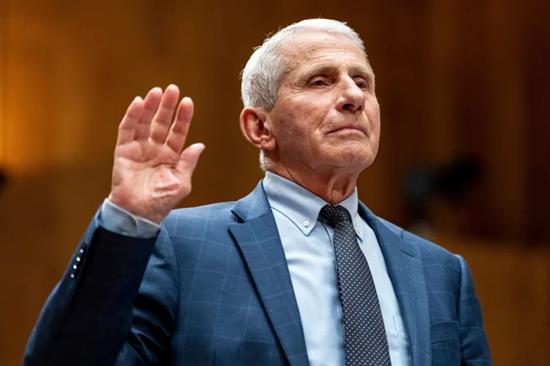
For years, Americans were told to “trust the science” while anyone who questioned the government’s pandemic response was ridiculed, censored, or silenced. Yet when Dr. Anthony Fauci finally appeared before the Senate Homeland Security Committee this week to answer for the policies that reshaped our nation, he invoked the Fifth Amendment more than 100 times rather than explain his actions.
Dr. Fauci locked millions of Americans in their homes and kept families apart during the COVID pandemic, yet he stood silent while more than 20 million unvaccinated illegals poured across our southern border. That was apparently acceptable. Meanwhile, Americans were not allowed to visit a dying grandfather in a nursing home or spend Christmas with their grandmother. Now that there is a reckoning of his authoritarian conduct, he has chosen to plead the fifth. He doesn’t have one word to say to the millions whose lives he stole and were forever changed by the policies he championed.
Millions of Americans endured lockdowns, school closures, vaccine mandates, lost jobs, shuttered businesses, and economic hardship. Families deserve answers—not evasions.
Newly released records and testimony continue to raise serious questions about Fauci’s role in funding risky gain-of-function research, his early knowledge of the lab leak hypothesis, and the shifting public health guidance that dictated nearly every aspect of American life. According to information highlighted during the hearing, Fauci was aware of the lab leak theory early in the pandemic, yet it was publicly dismissed while Americans were told to accept one changing directive after another.
Rather than provide transparency, Fauci stonewalled nearly every line of questioning. His repeated invocation of the Fifth Amendment only deepened concerns about what remains hidden from the American people.
The American people sacrificed too much to be denied the truth. Regardless of one’s views on the pandemic, no public official—especially one whose decisions affected virtually every American household—should be beyond scrutiny. Accountability and transparency are essential to restoring trust in our institutions, and no one should receive a free pass simply because they once claimed to be “following the science.”
Join Me in Mohave County Next Thursday, August 6th!
If you live in Mohave County, I hope you’ll join me on Thursday, August 6th in Kingman, Arizona, for two important roundtable discussions focused on issues that matter most to rural Arizona.
In partnership with the U.S. Department of Agriculture, federal, state, and local officials will be on hand to provide valuable information, answer questions, and discuss opportunities available to our communities.
🐄Grazing Summit 10:30 a.m. – 12:00 p.m.(Check-in begins at 10:00 a.m.) This discussion is geared toward ranchers, land users, and agricultural producers. We’ll cover federal grazing leases and permits, multiple-use management of public lands, strengthening food security, and how the USDA’s new Forest Service directive can better support Arizona ranchers.
🏡Rural Communities Roundtable 1:30 p.m. – 3:30 p.m.(Check-in begins at 1:00 p.m.) Learn about federal grants, loans, and resources available to support affordable housing, rural infrastructure, and small businesses. Representatives from USDA Rural Development, the U.S. Department of Housing and Urban Development, the Small Business Administration, and regional partners will be available to answer questions and connect attendees with programs that can help their communities thrive.
Whether you’re a rancher, small business owner, local elected official, or simply interested in strengthening rural Arizona, I encourage you to attend. These roundtables are an excellent opportunity to hear directly from agency experts, ask questions, and learn about programs that can benefit our communities.
More details in the flyer above. I look forward to seeing you in Kingman!
Tweet of the Week:
Photo of the Week:
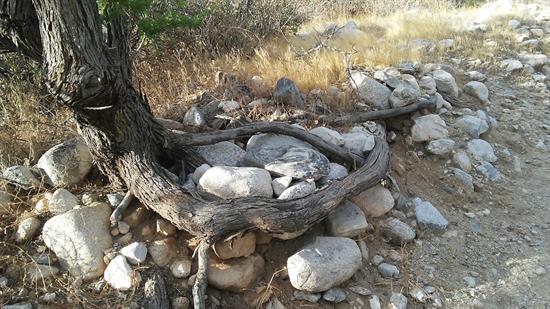
Dave Kiesling from Goodyear, AZshares this great photo he describes as the roots of a desert ironwood tree growing around rocks along the Bajada Trail in the White Tank Mountains. Great picture, Dave. Keep sending them in!
📸 Do you want the chance for your photograph to be featured as our “Photo of the Week?” If so, send your best shots along with a brief description to Anthony.foti@mail.house.gov. Remember to include your name and where you live.
⚠ Warning!! The Gosar Weekly Newsletter is meant for discerning readers with above-average intelligence. We link to interesting stories. We get stories a couple different ways: Google alerts, a third-party aggregator and sometimes readers send stuff. We don’t vouch for every publication or every author. If we link to a story, it is because of that story. The views expressed in any of the publications do not represent any promotion, endorsement or reflection of Congressman Gosar’s views. While we try our best, we cannot guarantee every news organization spouting hatred, animosity or divisiveness will be filtered from appearing in the Gosar Weekly Newsletter. We will endeavor to prevent that from happening by never linking to Fake News organizations including CNN, MSNBC, CNBC, Rolling Stone, the Arizona Republic, the Arizona Mirror, Media Matters or the New Republic. WEBSITE | UNSUBSCRIBE | CONTACT MEShare on Facebook | Share on TwitterWashington, DC Office 2057 Rayburn HOB Washington, DC 20515 Phone: (202) 225-2315Goodyear 1300 S. Litchfield Road Suite 115-H Goodyear, AZ 85338 Phone: 623-707-0530
Today’s Email Partner is: Truthly. Catholic “AI for good.” Try free for 7 days.
A Night Prayer
Jesus Christ, my God, I adore You and thank You for all the graces You have given me this day. I offer You my sleep and all the moments of this night. I place myself and all my loved ones, wherever they may be, in Your sacred side and under the mantle of Our Blessed Mother. Let Your holy angels stand watch and keep us in peace. Amen.
Quote of the Day
“The past is no longer yours; the future is not yet in your power. You have only the present wherein to do good.”
— St. Alphonsus Liguori
Today’s Meditation
“There are many ways of looking at confession, and all of them are valid. You can look at it as a courtroom with a divine judge. You can look at it as an accounting of debts. I think it’s most helpful to look at it as healing – as health care. Confession does for our souls what doctors, dieticians, physical therapists, and pharmacists do for our bodies. Think about all we do to keep our bodies in working order. We go for regular checkups with a primary-care physician, a dentist, an eye doctor. And no one has to remind us to brush our teeth, take a shower, and pop the pills for whatever ails us. All this is good for us, and it’s good for everyone around us, too. No one wants to work beside us if we decide to stop showering. Well, if we spend so much effort on the care of our bodies, shouldn’t we be spending more time on our souls? After all, our bodies will pass away soon enough, but our souls will live on forever.” —Scott Hahn, pg. 186An excerpt from Signs of Life
What if your AI didn’t spy on you — and actually aligned with your faith?
With over 250,000 downloads, Truthly is the Catholic AI app built to help you navigate the internet faithfully. Ask anything. Get answers you can trust — grounded in truth, not trends.
The daily examination of conscience is an ancient Catholic practice. It’s very simple, and it’s designed to help us identify our sins and weaknesses so that we can improve and grow stronger in the spiritual life, while providing an excellent ongoing preparation for regular Confession. It consists of taking a few minutes at the end of the day to prayerfully review our actions in the light of God’s commandments, followed by the Act of Contrition.1. Reflect on the victories and losses
Actively reflecting on the high and low points of the day can help you live more intentionally and bring a renewed sense of resolve into the following day.
Review your actions, words, and thoughts today. Did you actively guard yourself against temptation? Where did sin creep in?
In what moments did you practice virtue and moral courage?
Were you attuned to the Holy Spirit’s promptings today? Where did you feel His inspiration?
Ask Him for the graces necessary to follow His Will more purposefully tomorrow.
2. Act of Contrition
O my God, I am heartily sorry for having offended Thee, and I detest all my sins because of Thy just punishments, but most of all because they offend Thee, my God, Who art all good and deserving of all my love. I firmly resolve with the help of Thy grace to sin no more and to avoid the near occasions of sin. Amen.3. Practice gratitude
It is God’s love that has brought you into existence and to this exact moment. Practice looking for His hand in your day.
Where did you feel His loving gaze upon you today?
What people or moments helped you see God in your life?
Thank God for all these moments!
Ask Him to help you recognize His blessings and providence tomorrow.
4. Renew your commitment to Christ
Remember: our Faith is founded upon a Person—Christ! Renew your personal love and devotion to Him.
Thank God for the gift of His Son Jesus and our call to be His disciples.
Tell the Lord of your desire to know Christ more personally.
If possible, set an intention for your day tomorrow. Ask Our Lord to guide you in this act.
Pray a Hail Mary, Our Father, or another beloved prayer.
Rest with God
He determines the number of the stars, He gives to all of them their names.— Psalm 147:4Compline (Night Prayer)Want to help your organization reach thousands of Catholics? Click here to consider sponsoring future Night Prayers.