I was born on 6 August 1956 in San Francisco, California to Janet and (the late) Richard Hovis.
I grew up in Santa Monica, California where I attended elementary, junior high school, and high school (graduating in 1974), in addition to involvement in sports and recreation (Little League +, the Boy’s Club ++). Further, it was in elementary school – St. Augustine’s By-the -Sea Parish School that I found, and made the choice to truly journey with God.
I attended Arizona State University from 1974 to 1977 – seeking to become an architect, however, I was not accepted, and, as such, I graduated with a Liberal Arts degree.
Upon graduation from Arizona State University, I attended Cal Poly San Luis Obispo and studied City and Regional Planning at the Master’s level. I successfully completed one (1) year in a two (2) year program – I did not complete the Master’s degree in City and Regional Planning – due to personal reasons.
I returned to Santa Monica where I started (October 1979) my career as graphic designer with Exxon Company, USA. I spent five years with Exxon Company, USA.
While working with Exxon Company, USA I was accepted into architectural school – Sci-Arc in Southern California, however, I did not attend preferring to stay with Exxon..
In 1982 I married Laura Flosi and in April 1983 we had our one and only child – Lauren Alain Hovis – a gift from God.
We moved to Phoenix, Arizona in 1984 from Los Angeles, where I went to work as a graphic designer with Kitchell CEM (from 1985 -1987).
From 1987 – 1995 I was an independent contractor, and a registered representative in mortgage finance, financial management, graphic design, and drafting.
Further, I attended the University of Phoenix and successfully obtained a Master’s in Business Administration (MBA) in 1982.
I was also a member of the Scottsdale Jaycees, where I became very involved in community events and projects.
In 1994, I accepted a cartography position with the Defense Mapping Agency in Reston, Virginia. As such, I relocated from Phoenix to Reston.
In 1998, I was accepted and worked as a Visual Information Officer with the Central Intelligence Agency. In 2002, I worked as a Support Officer until my retirement (due to a need for shoulder surgery) in September 2018.
Away from my Federal Government service, I have been involved in various organizations and activities in Northern Virginia.
In November of 2011, I married Rebecca Ouellette in Santa Monica, California. I reside in San Tan Valley, AZ with my two hamster - Jess and Timothy, our fish, our lizard - RJ Lizard., and our cats - Pearl and Grey.
As to hobbies, I enjoy playing sports, attending sporting events, mentoring individuals from financial management to hamsters, building models, photography, travel, multimedia design, managing partner for RJ Hamster, and jazz – smooth jazz to a samba or a bossa nova.
Love and God Bless,
Peter – aka RJ Hamster Jo hi
“Things that are holy are revealed only to men who are holy.”
—Hippocrates, “The Law”
Ivan Pentchoukov National Editor
Good morning. It’s Sunday. Here are today’s top stories.
Siskiyou County in California produces about 18 million pounds of illegal marijuana every year. Here’s how the state is battling the illicit grow operations.
U.S. lettuce supplier Taylor Farms expanded its voluntary recall of iceberg lettuce from central Mexico due to concerns over its link to a cyclospora outbreak affecting Americans across the country.
At President Donald Trump’s direction, U.S. forces launched a new wave of strikes at Iran on July 18, in what U.S. Central Command described as an answer to Iranian strikes on Jordan on July 17, which killed two U.S. troops and injured several others.
⚽World Cup: Declan Rice notched a goal and an assist in less than 20 minutes to open the floodgates before teammate Bukayo Saka scored a hat-trick in England’s first-ever third-place finish in a World Cup.
🍵 Health: Most people already know the experience: a song that lifts your mood on the drive home or the sound of rain helping you drift off to sleep. Sound doesn’t just set a mood. It changes your body. Heart rate slows, stress hormones drop, and pain feels different. That’s why an idea once dismissed as new-age relaxation is now showing up in treatment for everything from anxiety to chronic pain.
Officers with the Siskiyou County Sheriff’s Department participate in an operation targeting illegal marijuana farms growing outside of Montague, Calif., on June 4, 2026. Violent crime associated with illegal marijuana grow farms has increased significantly, the sheriff said. (John Fredricks/The Epoch Times)
A convoy of sheriff’s deputies heads into a vast network of illegal marijuana grow operations in the foothills of Mount Shasta in California’s Siskiyou County.
They drive into a dusty encampment strewn with garbage and piles of empty plastic fertilizer containers, a blight on the otherwise scenic landscape.
The morning raid is nothing new for Siskiyou County Sheriff Jeremiah LaRue.
Thousands of makeshift greenhouses known as “hoop houses”—each one containing hundreds of illegally grown cannabis plants—are operating in the county at any given time, LaRue told The Epoch Times, as his deputies scoured the Mount Shasta Vista subdivision, a 20-minute drive northeast of Weed, Calif.
The sheriff’s office has counted 2,732 hoop houses using satellite and aerial imagery in the subdivision alone.
By the time he arrived at the scene on June 4, all the occupants had fled.
Spotters at these illegal grow sites—sometimes armed with AK-47s and rifles, according to nearby residents—alert laborers to leave the camp when they see sheriff’s deputies approaching.
Except for a few roosters, an older German shepherd, and a couple of curious pups, the site was abandoned. The occupants had already cleared out when an advance team of investigators approached the camp earlier that morning.
They know the drill.
About 430 flowering marijuana plants were found in each of two 30-by-100 foot hoop houses. Agents from the regional North State Marijuana Investigation Team weighed about 900 pounds of freshly cut marijuana plants that were hanging to dry in another slightly larger greenhouse.
All the marijuana was destroyed. No one was arrested, according to the sheriff’s office.
The team had served a search warrant on the same property last August and arrested the property owner, Haizhou Wang, then 56, who was on-site at the time.
Cannabis industry experts estimate that more than 30 million pounds of illicit marijuana are grown in the United States annually.
Siskiyou County alone produces about 17.8 million pounds of illegal marijuana every year, with a “low-end” estimated local street value of about $3.6 billion based on sales at $200 a pound, according to the sheriff’s office. (More)Sponsored by NativePath
If nighttime bathroom trips are disrupting your sleep, it may not be age – and it’s not something you have to live with. A new report uncovers the overlooked cause behind frequent nighttime urination and explains a simple, practical way adults are using to support bladder control, reduce urgency, and sleep through the night again. Get the facts and decide for yourself.*Read More ➜
LATEST NEWS
The Trump administration activated a never-before-used pathway for removing alien terrorists from the United States. Since its creation in 1996, the Alien Terrorist Removal Court has lain dormant until it received the first-ever removal application from the Department of Justice on July 15 and held a debut hearing the following day for a suspected foreign terrorist.
The United States has allowed the “national emergency” related to Hong Kong to expire, a move that doesn’t restore the city’s special status, which President Donald Trump stripped away in 2020 during his first term.
Elon Musk: The Real Life Iron Man tells the story of a man who embodies the American Dream—building companies that have changed the world and turning science fiction into reality. Featuring exclusive interviews with Musk, his friends, colleagues and science teacher, as well as leading experts in Space and Science. It is a powerful story of vision, ambition, and possibility— one that may change the way you see the world.
Gaming the Clock for Industry—by Jeffrey A. Tucker (Read)
The False Choice Facing American Agriculture—by Mollie Engelhart(Read)
🎤 American Thought Leaders: The Forgotten US Territory Where Chinese Birth Tourism Thrives—Cleo Paskal(Watch)
🇺🇸 (Sponsored) “What drives a man to turn the impossible into possible?” Elon Musk: The Real Life Iron Man explores the story behind one of the most inspiring entrepreneurs in American history.
Sub-Head
A lady knows how to host a dinner or party with grace and good etiquette. (FreshSplash/Getty Images)
For many people, that question raises up a thicket of snags and thorns, equivalent to Winston Churchill’s description of Russian geopolitical ambitions as “a riddle wrapped in a mystery inside an enigma.”
Certain traditional signs of etiquettereadily identify a gentleman, at least as a starting point of definition and discussion. On public transportation, for instance, a gentleman stands to offer his seat to an elderly grandmother or a pregnant mom. He holds the door of a café open for others. Inside the café, he offers his companion the seat with the best view of the room. He stands when greeting a friend or a stranger.
It’s different for women. When they extend these same courtesies, they are more often tagged as nice or polite than as ladylike. In fact, the very word “lady” is far less common in today’s society than “gentleman.”
As writer and fashion designer Marisa Pereira noted in “When Is a Woman a ‘Lady’?,” our culture has pushed “lady” aside as having “a pejorative connotation,” especially when “used as an informal, often brusque, form of address to a woman: I’m sorry, lady, but you have the wrong number.”
Meanwhile, we frequently read or hear that chivalry and gentlemanly conduct are dead, though many of us see it exhibited in our everyday lives. But what about the gentlewoman? Has she gone the way of fans and parasols? What, if anything, does it mean to be a lady these days? (More)
🎲 Games
Spot the Difference is our readers’ favorite. Play it here.
Our mailing address is: The Epoch Times, 129 West 29th Street, Fl 8, New York, NY 10001 | Contact Us
Our Morning Brief newsletter is one of the best ways to catch up with the news. Manage your email preferences here or unsubscribe from Morning Brief here.
*Disclaimer: The opinions expressed in this advertisement are exclusively those of the advertiser and do not represent our views or positions. This material is promotional in nature and should not be mistaken for news, research or editorial content.
(16) Now to Abraham and his Seed were the promises made. He does not say, “And to seeds,” as of many, but as of one, “And to your Seed,” who is Christ.
(29) And if you are Christ’s, then you are Abraham’s seed, and heirs according to the promise. New King James VersionChange email Bible version
In all of mankind since Adam, only one person has qualified to receive the inheritance of the promises that were made to Abraham—Christ.
We can see the requirements as early as Genesis 17:1, where God says to Abraham, “Walk before Me, and be perfect.” Some Bibles translate it, “Be blameless,” which means the same thing; “Be without sin.” Christ, at the end of His life, was found to be blameless; therefore, He qualified to receive the promises. He met every condition of the Covenant, and then became the Inheritor.
Verse 29 is explaining that, if we are “in Christ” (in union with Him), then we become co-heirs with Him. We become co-inheritors with Him, if we have met the conditions the Bible gives: God has called us; we have unconditionally surrendered to God; we believe the gospel; we believe in the blood of Jesus Christ; we have been baptized; we have received the Holy Spirit; we have had hands laid on us. Then we also become “in Christ.” The picture is as if we were part of Christ’s body, and we are “in” Him. That is not actually what has occurred, but we are within the church.
Christ, being the Inheritor of the promises, then made out a will, as it were, prior to His death for the forgiveness of our sins. This will is also the New Covenant, which includes all the promises and blessings the Scriptures show us.
Christ had to die for a number of reasons. First of all, He was physical; and it is given to all men to die once (Hebrews 9:27). Another reason is that the wages of sin is death (Romans 6:23), and when our sins were placed on Him, He then came under the law and the law claimed its penalty—He died. Another reason is that He had to be transformed, glorified by means of a resurrection, because, as long as He was in the flesh, He could not inherit the promises either. One has to be eternal to inherit them; “flesh and blood cannot inherit the kingdom of God” (I Corinthians 15:50).
Muddled Wild Card races in both leagues should make for a fascinating leadup to the Trade Deadline as these clubs determine whether they will be buyers or sellers.
With members of the 2016 World Series champs being honored this weekend, Anthony Rizzo was sitting in right field when Michael Busch launched a home run his way.
Before he was a Hall of Fame basketball player, Michael Jordan played America’s pastime as a kid, and a baseball program he signed as a 12-year-old sold during an auction during the All-Star festivities in Philadelphia.
Alex Rodriguez surely elicited more than a few double takes when the former Mariners, Rangers and Yankees star appeared at Fanatics Fest wearing a Mets jersey.
During the AUSL season, Bandits outfielder Morgan Zerkle is one of the league’s top hitters. During the offseason, she’s helping the next generation of players as head coach at her alma mater, Marshall.
The physical constraints of artificial intelligence (AI) are no longer bound by silicon or compute capacity. Today, the singular bottleneck choking global technology expansion is electricity. Hyperscale data centers require staggering amounts of continuous power, and national utility grids lack the infrastructure to deliver gigawatt-scale loads on the timelines technology developers demand. Grid interconnection queues often stretch for years, forcing tech giants to seek immediate alternatives outside the traditional utility framework.
This structural crisis has activated an entirely unexpected sector. Legacy oilfield service providers are aggressively stepping in to fill the capacity gap, rerouting existing fossil fuel hardware to deliver modular natural gas power directly to data center sites. Investors observing this shift are witnessing a rare moment in which heavy industrial assets are the primary enablers of next-generation technology.
Marc Chaikin, founder of Chaikin Analytics, is flagging a little-known company that just secured a partnership with Nvidia – one he believes positions it ahead of Tesla in the autonomous vehicle race.
With a market-moving announcement expected on July 31st, Chaikin is urging investors to swap overpriced AI stocks for this under-the-radar name before markets open. He’s also releasing a free Hotlist and Hitlist of buy and sell ideas for the second half of 2026.Get the ticker symbol and full details at no charge today
Drilling for Data Center Solutions
The July 2026 strategic alliance between SLB (NYSE: SLB) and Liberty Energy (NYSE: LBRT) illustrates this fundamental market shift. By combining modular infrastructure with integrated natural gas power generation, SLB and Liberty Energy are positioning themselves as critical capacity vendors for the technology sector. The partnership bridges the gap between compute infrastructure and immediate power generation, creating a non-cyclical revenue vertical that equity markets have yet to fully digest.
Rather than viewing SLB and Liberty Energy strictly as traditional upstream oilfield operators, market participants should begin evaluating them as essential infrastructure providers for the artificial intelligence ecosystem. This pivot offers a compelling blueprint for how legacy energy expertise can solve immediate macroeconomic bottlenecks.
Behind-the-Meter Economics Take Charge
To understand the economic gravity of this partnership, investors should examine the mechanics of behind-the-meter power.
Generating electricity behind the meter means producing power on-site, completely independent of the traditional utility transmission grid. For a data center developer, this eliminates multi-year delays waiting for utility lines to be built and approved by local regulators.
SLB brings deep project execution capabilities and prefabricated modular infrastructure to the table. SLB has already shipped more than 1.3 gigawatts of infrastructure for data center projects since April 2024. Management expects cumulative global deliveries to exceed two gigawatts by the end of 2026. This is not speculative research and development. It is an active and monetized pipeline.
Liberty Energy steps in to provide the actual power generation systems and intelligent power controls through its Liberty Power Innovations arm. Liberty Energy targets deploying roughly three gigawatts of power projects by 2029.
The underlying margin tailwind for this venture rests on feedstock economics. North America possesses an abundance of structurally cheap natural gas.
Tapping into this localized and inexpensive fuel source to run modular turbines makes the solution provided by SLB and Liberty Energy economically superior to grid-tied utility power while completely bypassing bureaucratic utility timelines.
Alexander Green bought Apple in 1996, recommended Nvidia at a split-adjusted 66 cents in 2004, and picked up Amazon and Netflix under $3 per share in 2005.
Despite this strategic pivot toward secular growth, the market misprices energy service companies. Institutional capital largely treats them as cyclical fossil-fuel operators rather than as emerging technology infrastructure plays. SLB currently trades near $47, with a market capitalization of roughly $70.13 billion.
SLB operates with a trailing price-to-earnings ratio of 20.49 and a forward price-to-earnings ratio of 18.13. Backed by a solid operating cash flow of $4.65 per share, SLB supports a reliable 2.52% dividend yield. While SLB trades at a premium valuation relative to legacy peers like Baker Hughes (NASDAQ: BKR)and Halliburton (NYSE: HAL), the stock remains heavily tied to international rig counts and Middle East capital expenditures rather than its digital and new energy initiatives.
Liberty Energy presents a more complex valuation puzzle for fundamental investors. Priced near $24.50 with a $4 billion market capitalization, Liberty Energy trades at a trailing price-to-earnings ratio of 27.14. Its forward price-to-earnings ratio is heavily distorted at 102.68. This multiple expansion occurs because analysts are modeling a sharp contraction in forward earnings per share, driven by immediate pricing headwinds in the core North American hydraulic fracturing market.
This valuation distortion creates an asymmetric opportunity. The market is pricing Liberty Energy strictly on the cyclical weakness of its legacy completion services, entirely discounting the high-margin cash flows emerging from its natural gas power generation pipeline. While awaiting broader market recognition, investors are supported by a newly authorized quarterly cash dividend of 9 cents per share, yielding 1.47%.
Seeing Past the Fracking Short Squeeze
Institutional sentiment across both equities reflects this foundational misunderstanding of the evolving business models. SEC filings show a recent pattern of measured insider sellingacross both boards, including the Chief Financial Officer of Liberty Energy, who divested shares in early July 2026.
Short sellers are heavily targeting Liberty Energy, driving the short interest ratio to bearish levels. Wall Street analysts remain fixated on a 25% year-over-year decline in adjusted earnings before interest, taxes, depreciation, and amortization from Q1 2026. That decline was a direct result of the cooling domestic frac spread market, but it ignores the forward-looking growth engine. SLB faces a healthier short interest profile but continues to weather analyst price target reductionstied to global drilling fluctuations rather than its emerging capacity to power data centers.
When institutional capital stubbornly anchors to legacy metrics, observant investors gain a distinct advantage. The broader oilfield services sector is actively rerouting hardware to address technology infrastructure bottlenecks. Once revenue from behind-the-meter data center power eclipses traditional upstream operations, SLB and Liberty Energy will likely experience aggressive multiple expansion as the market correctly categorizes them.
What to Watch as the Grid Transition Scales
The immediate proving ground for this fundamental thesis arrives with the upcoming Q2 2026 earnings reports. Liberty Energy takes the stage on July 22, 2026, followed closely by SLB on July 24, 2026.
Analysts will undoubtedly press management on core legacy operations, but the true value for forward-looking investors lies in the commentary surrounding the new joint venture. Initial contract bookings, projected margins on power generation units, and the speed at which Liberty Energy can scale its three-gigawatt pipeline will dictate how quickly institutional investors begin re-rating the stocks.
Investors monitoring the artificial intelligence infrastructure boom might consider adding SLB and Liberty Energy to their watchlists as earnings season approaches. Those comfortable absorbing near-term commodity cyclicality could view the current valuation distortion as an optimal entry point before Wall Street fully prices in the shift from fossil fuel service providers to gigawatt-scale technology vendors.
Gosar Votes to Protect the Privacy of Firearm Purchases
This week, I voted in favor of H.R. 1181, the Protecting Privacy in Purchases Act.The purpose of this bill is straightforward: financial institutions should not be allowed to assign firearm and ammunition purchases unique merchant category codes that distinguish them from ordinary consumer transactions. Doing so creates an easy avenue for the government to monitor the lawful purchases of law-abiding gun owners and undermines every American’s right to privacy.
Designating firearm purchases as a separate category effectively creates the framework for a gun owner registry that the Bureau of Alcohol, Tobacco, Firearms and Explosives (ATF) could exploit through warrantless surveillance. Courts have long recognized that government actions which “chill” the exercise of a constitutional right are themselves constitutionally suspect. A de facto registry of firearm and ammunition purchases would also burden the Second Amendment by discouraging Americans from exercising their lawful right to keep and bear arms.
Democrats are quick to argue that the federal government has no business monitoring Americans’ private decisions when it comes to abortion, political activity, or personal relationships. Yet when the Second Amendment is involved—a right explicitly protected by the Constitution—they suddenly embrace government surveillance. Law-abiding gun owners are too often treated with suspicion, not because they have broken the law, but because someone fears they might.
As a constitutional conservative, I know that gun owners are among the most responsible citizens in America. They understand the serious legal responsibilities that come with firearm ownership and recognize that even a single mistake can carry severe criminal penalties. H.R. 1181 protects these law-abiding Americans by preventing federal bureaucrats from using financial records to compile lists of innocent gun owners and ammunition purchasers. It is a commonsense measure that defends both the Second Amendment and the fundamental right to privacy.
With the exception of the Navajo Nation, Arizona has wisely remained on standard time for decades because it makes sense for our desert climate. What works for Arizona may not work for New York or Florida, and Congress shouldn’t force a one-size-fits-all solution on every state. As with so many issues, the people closest to the issue are best equipped to decide what works for their communities.
My vote here aligns with my broader philosophy: Congress should focus on its core constitutional responsibilities—border security, fiscal discipline, national defense, and oversight—rather than federalizing issues that states are capable of deciding themselves.
If you’re interested in learning more about the impact of a permanent daylight savings time in each state, I encourage you to read this informative article.
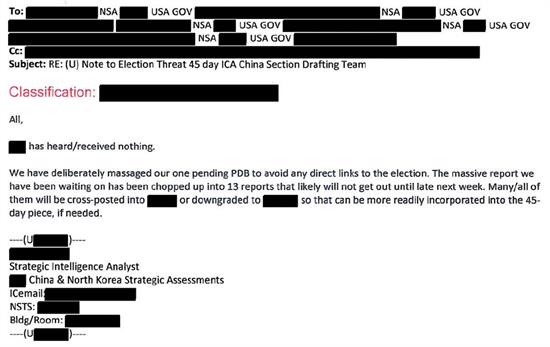
President Trump Declassifies Election Security Intelligence In a nationally televised prime-time speech, President Trump announced the declassification of intelligence documents detailing vulnerabilities in America’s election infrastructure. According to the administration, the records describe cyber threats targeting voter registration databases and election systems, alleged Chinese efforts to acquire U.S. voter data and influence elections, evidence of suspected voter fraud investigations that were not fully pursued, and a Department of Homeland Security review identifying non-citizens registered on voter rolls. Every American should be shocked and concerned that China has engaged in an influence campaign aimed at shaping American elections. I commend President Trump for declassifying and releasing the reports that prove China obtained sensitive American voter information to exploit the voter data it acquired. This is yet another obvious reason why the United States Senate must pass the SAVE Act, legislation requiring proof of citizenship and photo identification to vote, so there can be no more cheating on elections. Is there any question why every Democrat in Congress opposes the SAVE Act?
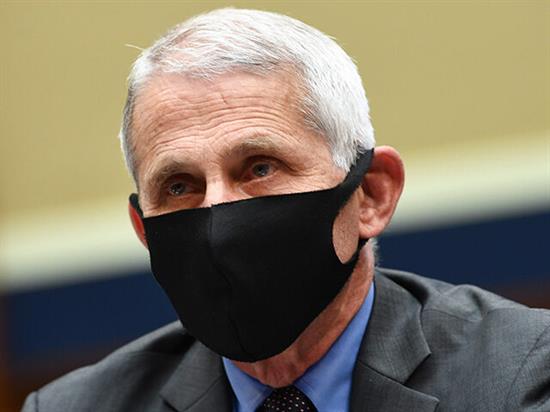
Holding Reckless Government Research Accountable This week, I sent a letter to Secretary Robert F. Kennedy Jr. and NIH Director Dr. Jay Bhattacharya calling for the permanent closure of Montana’s Rocky Mountain Laboratories. After repeated attempts by foreign spies to smuggle deadly pathogens into the facility – on top of charges that Dr. Fauci repeatedly covered up dangerous and cruel animal research – it is time to close this den of iniquity for good.
There is no conceivable reason for our government and its health experts to engage in “gain of function” research. What is gain-of-function research? It is a type of biomedical research in which a virus, bacterium, or other pathogen is deliberately modified to give it new or enhanced characteristics. In plain English, scientists alter naturally occurring pathogens to make them more transmissible, more virulent, better able to infect new species, or more capable of evading the immune system.
Proponents argue that this research can help scientists better understand dangerous pathogens and prepare vaccines or treatments before future outbreaks occur. Critics, however, warn that creating more dangerous viruses carries enormous risks if those pathogens are accidentally released or fall into the wrong hands. The COVID-19 pandemic underscored just how devastating such an event could be.
Biological warfare is illegal under international law because of the catastrophic harm these agents can inflict. While gain-of-function research is currently legal under federal law and subject to regulation, it raises serious questions about whether the potential benefits outweigh the potentially catastrophic consequences. After the lessons of COVID-19, Congress should carefully consider whether this type of research should continue at all.
Since the COVID-19 pandemic, it has become clear to many, including myself, that experimenting with modified pathogens, diseases, and viruses is not in our country’s safety interests. If anything, creating a deadly superweapon just to see how it might affect living organisms defies basic moral codes. It is this kind of hubris that novels like Frankenstein warn us about: engineering deadly things kills people.
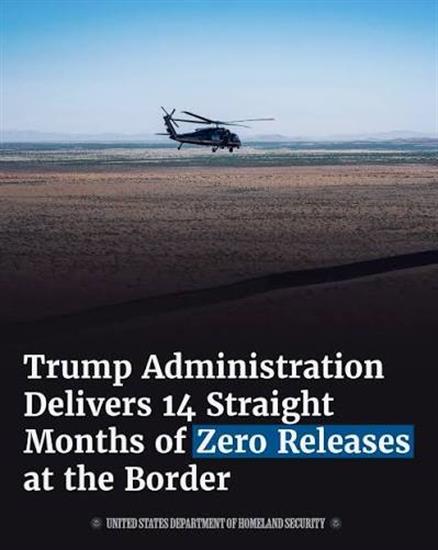
President Trump’s America First border policies continue to deliver results. This week, the President announced that June marked 14 consecutive months of zero illegal alien releases at the southern border, noting that “Our previously wide-open borders have been transformed into the most secure borders in the history of our country, with zero illegal aliens being admitted to the United States in the past 14 months. That is zero. Nobody thought it was possible. We had the worst border in the history of our country, and now we have the best.” At the same time, CBP seized significantly more fentanyl, cocaine, heroin, and other deadly narcotics before they reached American communities. This proves what we’ve known all along: when our laws are enforced and our border is secured, the American people are safer.
Federal Law Enforcement Officers Make Arizona Safer Speaking of border security, federal law enforcement officers were busy this month in Arizona. On July 6th, the U.S. Attorney for Arizona reported that 325 people were charged with immigration-related crimes, including: 101 instances of illegal reentries, 96 illegal entries, and 26 cases of trafficking people into the country. I applaud the Department of Justice for their swift and vigorous defense of America’s sovereignty, and I applaud our immigration officers for arresting 325 people within a week for deportable offenses.
And on Tuesday, an attempted cop killer was shot after stabbing a Border Patrol agent and another victim at the Blythe Station in Yuma. Thanks to the swift actions of fellow agents, the suspect was stopped, and the injured agent is expected to recover. These stories, while tragic and terrible, highlight the important work our federal law enforcement performs every day to keep Arizonans safe. I commend every single law enforcement officer who puts their safety on the line to arrest and deport every violent criminal.
One Year Later: RECA Expansion Helps Downwinders Two weeks ago, I highlighted the historic wins secured for Arizonans by the passage of President Trump’s Working Families Tax Cut Act from last year. And while more money in the pockets of hard-working Arizonans is an accomplishment I am proud to have supported; I wanted to highlight the reauthorization and expansion of the Radiation Exposure Compensation Act (RECA) in this week’s newsletter.
RECA was originally passed by Congress in 1990 to provide damages and compensation to those affected by radiation exposure, nuclear testing, and uranium mining. The thought process behind RECA was simple: if the federal government’s action harms you or your family, you should have a statutory right to remedy this injury. Originally, RECA’s authorization only covered Nye County and Lincoln County in Nevada, Southern Utah, and Coconino County, Navajo County, and Yavapai County in Arizona until 2024.
Strangely enough, neither Clark County nor Mohave County were originally covered by RECA. Despite being two of the most irradiated counties during the atomic testing at the Nevada Test Site, Congress did not provide a remedy for citizens of these counties. This oversight in writing RECA frustrated me greatly as a freshman Congressman, which is why I have spent well over a decade fighting to give Mohave County residents a fair deal. While Arizona Democrats talked about bringing justice to Arizona residents, none of them voted in favor of this life-changing provision. All of them claim to put “Arizonans first,” while turning their backs on the residents of Mohave County. As the saying goes: the Democrats are “all hat and no cattle” when it comes to fighting for their constituents.
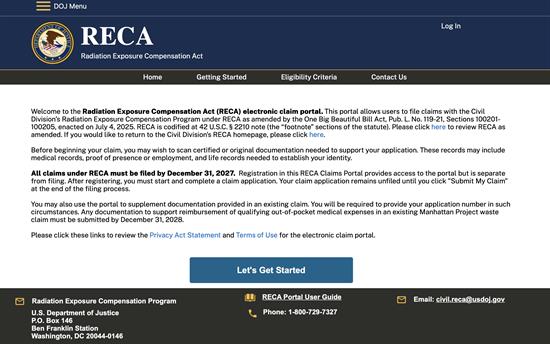
If you or someone you know has developed cancers related to possible radiation exposure, I urge you to visit the Department of Justice’s webpagedetailing qualifying conditions. Downwinders affected by nuclear testing may be entitled to a lump-sum payment of $100,000 for nuclear testing related to the Nevada Test Site. The Department of Justice also allows surviving family members to bring compensation claims for qualifying conditions. Don’t wait any longer to receive the justice you deserve. President Trump’s extension of RECA claims is open until December 31st, 2027.
Casework Corner: Helping Arizonans Cut Through the Red Tape
Helping constituents navigate the federal bureaucracy is one of the most important services my office provides. Recently, Kat A. from El Mirage, spent six months trying to recover more than $3,100 in Social Security Part B premium overpayments, but despite repeated calls and visits, she received no resolution. After contacting my office, my staff worked directly with the Social Security Administration, and within just three weeks she received a check for the full amount owed along with an additional $625 in other overpayments that had been improperly withheld.
If you are experiencing problems with a federal agency, my office is here to help. Please don’t hesitate to contact my district office at 623-707-0530. While we cannot guarantee a particular outcome, we are committed to ensuring your concerns receive the attention they deserve.
Arizona: One of the Hottest Growing Markets In a recent study released this week by SmartAsset, seven Arizona cities ranked among the top 50 “Boomtowns” in America. To qualify as a boomtown, your city must have experienced year-over-year growth in: economic output, housing units, and the labor force size. I am proud to say that three of these cities are located in my district.
This study confirms what I have been saying for years: people do not want to raise families in failed states like California, Oregon, or Washington. People want to move to up-and-coming states like Arizona where they can enjoy economic freedom, governance based on common sense, and affordable housing. Arizona is the land of opportunity not because we have a rapidly growing population; we have a rapidly growing population because we do not believe that big government nor extensive regulation leads to economic opportunity. If anything, these two policies choke the ability for small businesses to innovate while rewarding large corporations who can afford costly certifications. I welcome everyone fleeing failed Democrat states to Arizona. I just hope they don’t bring those failed policies which drove them from their homes to Arizona; as we say in Arizona, “Don’t California My Arizona!”
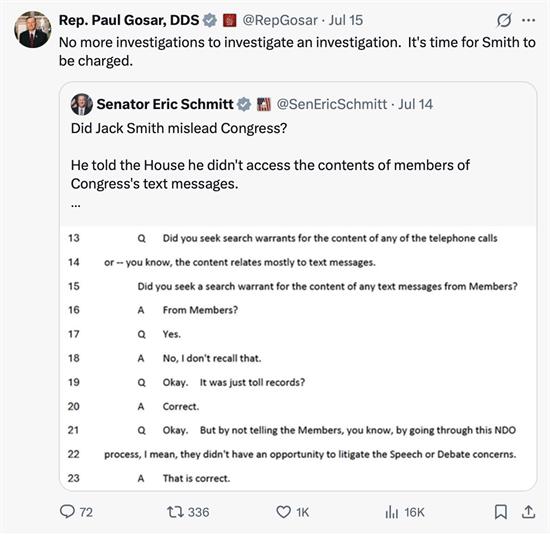
Tweet of the Week:
Photo of the Week:
📸 Patrick Palas from Ash Fork, Arizona shares this great picture of the antelope that roam around Juniper Ranch in Ash Fork. Great photo, thanks for sharing!
Do you want the chance for your photograph to be featured as our “Photo of the Week?” If so, send your best shots along with a brief description to Anthony.foti@mail.house.gov. Remember to include your name and where you live.
⚠ Warning!! The Gosar Weekly Newsletter is meant for discerning readers with above-average intelligence. We link to interesting stories. We get stories a couple different ways: Google alerts, a third-party aggregator and sometimes readers send stuff. We don’t vouch for every publication or every author. If we link to a story, it is because of that story. The views expressed in any of the publications do not represent any promotion, endorsement or reflection of Congressman Gosar’s views. While we try our best, we cannot guarantee every news organization spouting hatred, animosity or divisiveness will be filtered from appearing in the Gosar Weekly Newsletter. We will endeavor to prevent that from happening by never linking to Fake News organizations including CNN, MSNBC, CNBC, Rolling Stone, the Arizona Republic, the Arizona Mirror, Media Matters or the New Republic. WEBSITE | UNSUBSCRIBE | CONTACT MEShare on Facebook | Share on TwitterWashington, DC Office 2057 Rayburn HOB Washington, DC 20515 Phone: (202) 225-2315Goodyear 1300 S. Litchfield Road Suite 115-H Goodyear, AZ 85338 Phone: 623-707-0530
Trent’s contract raised eyebrows when Charania first broke the news last week that he was re-signing with Milwaukee. The 27-year-old has mostly come off the bench in two completely unremarkable seasons with the Bucks, averaging 11.1 points per game in 2024–25 and 8.1 points per game this past year.
Trent’s initial contract with the Bucks, signed in the summer of 2024, was a two-year deal for the veteran minimum. That, too, was something of a surprise. The former second-round pick had just had four productive seasons with the Trail Blazers and Raptors, averaging 16.2 points per game over that span. He was paid $18.6 million in his final season in Toronto. Trent opted out after the first season of his deal with the Bucks and signed a new two-year, $7.5 million contract with another player option. In doing so, he established his early Bird rights—a way for veterans to re-sign with their current team even if it pushes the team over the salary cap. His new contract, which was officially signed and submitted to the league yesterday, will pay him $15.2 million this season—$11.5 million more than he earned last season. Chris Mannix reported that rival executives expected Trent would command between $4 million and $6 million on the open market.
The NBA collective bargaining agreement prohibits handshake deals where a player takes a lower salary with the promise of a bigger contract down the road to make up for it. In 2000, the league punished the Timberwolves for salary cap circumvention after it found that Minnesota had a handshake deal with Joe Smith, who had signed three consecutive one-year discount contracts with the promise of landing a richer deal once he’d established his Bird rights. The NBA voided Smith’s contract (nullifying his Bird rights) and stripped the Timberwolves of five first-round picks (although two picks were later reinstated).
When Trent first signed with the Bucks, the team was up against the salary cap thanks to the hefty contracts of Giannis Antetokounmpo and Damian Lillard, both of whom earned $48.8 million in 2024–25. After Giannis was traded away and Lillard was waived, Trent seemed poised to cash in on the newly available cap space. Now, it could end up costing both him and the team.
Everyone’s still waiting on LeBron
NBA transactions are at a standstill as teams across the league wait for LeBron James to pick his next team (among other things).
Anyone hoping James would make his announcement yesterday in New York at Fanatics Fest was sorely disappointed. James hosted a live edition of his podcast, Mind the Game, with Pacers star Tyrese Haliburton, but didn’t as much as hint at the news we’re all waiting to hear.
Haliburton might have a future in journalism after his playing career is over. LeBron apparently said backstage that he didn’t want to talk about free agency, but that didn’t stop Haliburton from asking the question anyway.
“We literally talked about this in the back,” James told Haliburton after being asked about his future.
Any good reporter knows that if you’ve been told a topic is off-limits, there’s no harm in asking the question and making your subject decline to comment.
Several teams are reportedly in the mix for James. They include the Cavaliers and Heat, two of his former teams. The Warriors are also said to be interested in pairing LeBron with Stephen Curry, and the Sixers have also thrown their hat in the ring.
The wait for LeBron’s decision has a trickle-down effect on the rest of the NBA. Other prominent players like Draymond Green and James Harden won’t be able to sign new contracts until their current teams know their salary cap situations. That, combined with the Raptors’ decision to pause their planned trade for Kawhi Leonard, has created a logjam. Hopefully LeBron makes his decision soon so things can get moving again.
5. A nice run and well-timed pass by Portland’s David Da Costa to Cole Bassett for the Portland Timbers’ third goal in a blowout win over the rival Seattle Sounders.
We may receive compensation for some links to products and services included in this email.
Sports Publishing Solutions Inc. 625 Broadway, 10th floor New York, NY. 10012 You are receiving this email because you are subscribed to the SI:AM newsletter.
We may receive compensation for some links to products and services included in this email.
Sports Publishing Solutions Inc. 625 Broadway, 10th floor New York, NY. 10012 You are receiving this email because you are subscribed to the Sports Illustrated newsletter.