The 30-Year Bond Doesn’t Lie

Stansberry Research Logo
Stansberry Digest

Delivering World-Class Financial Research Since 1999

No one knows prices better than the market… The consequences of price controls… The Fed’s massive price-control operation… What long-term rates show… The biggest oil-market disruption in history… Opportunities are coming fast…


Nobody knows what the price of anything should be…

I don’t know. You don’t know. No economist knows. No government bureaucrat knows.

There is simply no way to set reliable, meaningful prices for goods and services except through free trade in fair and open markets.

If you want to know what happens when government tries to take the market’s place, just look at Venezuela. That country is one of the most egregious examples of government-directed price controls in modern history.

Despite the oil boom of the early 2000s, basic foods like milk, eggs, sugar, cooking oil, and pasta were nonexistent on store shelves. When they became available, they were rationed, and long lines formed to buy them. Buyers had their hands stamped to prevent them from buying more than they were rationed.

In 2011, former president Hugo Chávez created the National Superintendent of Fair Costs and Prices (“SUNDECOP”). The organization’s purpose was to set prices across all parts of the economy. It monitored cost structures of companies and determined what prices they had to charge and how much profit they were allowed to make. It initially set prices for 19 product categories starting in 2012.

If a business violated government prices, it was subject to fines, asset seizures, and nationalization. The price controls expanded over time to cover most goods and services.

As if that weren’t enough, Chávez’s hand-picked successor, Nicolás Maduro, made things even worse. He sent the military into electronics stores to enforce discounted pricing, claiming, like every other misguided socialist fool, that he was cracking down on an “economic war” of spiraling prices.

His 2014 Fair Costs and Prices Law made selling regulated goods at unregulated prices and a host of other ill-defined crimes – including hoarding, speculation, boycott, and usury – punishable by imprisonment. Imagine going to jail for charging more than government prices.

You likely already know the consequences of all those price controls: chronic shortages of basic goods… long lines at supermarkets and other stores… a thriving black market… collapsing domestic production… and hyperinflation that eventually exceeded 10 million percent – rendering government prices completely meaningless. Companies stopped producing goods they couldn’t sell profitably, making shortages even worse.

That’s what happens when anything but free trade in fair markets sets prices. A market price is made up of the decisions of all the individuals and companies that buy and sell a particular product. There is simply no way any person, committee, or organization can replicate the hopelessly vast and complex myriad decisions.

Austrian economist Friedrich Hayek cut to the core of the issue when he wrote in The Fatal ConceitThe Errors of Socialism:

The curious task of economics is to demonstrate to men how little they really know about what they imagine they can design.

I (Dan Ferris) have said it before, but it bears repeating. Humans didn’t create markets. Markets are what happen when humans decide to coexist peacefully. We’re in markets the same way fish are in water. Folks like Chávez and Maduro are like sharks trying to control the tides. It simply can’t be done.

If you leave the market alone, prices become reliable signals of what consumers and investors want and don’t want.

But there’s an even larger, ongoing price-control operation than Venezuela…

It’s being run by the U.S. Federal Reserve.

Interest rates are prices too. They tell you how much it costs a particular government, company, or individual to borrow money for a certain period of time.

The Fed controls short-term interest rates through its benchmark federal-funds rate (currently 3.5% to 3.75%), but not by decree. Instead, it pushes rates into its target range by buying and selling U.S. Treasury (and sometimes mortgage-backed) securities.

The Fed reacts to inflation and other data and generally targets lower rates when it believes economic activity is slowing. It targets higher rates when it believes economic activity is rising. That’s what Chávez’s bureaucrats at the SUNDECOP did. They monitored business activity and pretended to know what prices to set based on their observations.

Just like SUNDECOP, the Fed pretends it’s the market. It substitutes its judgment for the unfathomably vast number of inputs and actions of millions of market participants. And, of course, U.S. central bank bureaucrats can no more get it right than Venezuelan bureaucrats.

Fed policy contributed to huge stock market bubbles in 1929 and 1999 to 2000, along with the housing bubble that peaked in 2006 and nearly wrecked the global economy, and probably a dozen other economic calamities over the past century or so.

To sidestep Fed policy and get a clearer picture of economic reality, investors need only check with the real market – the vast global network of investors and traders who buy and sell U.S. long-term Treasury securities.

The Fed doesn’t manipulate long-term rates…

The 10-year and 30-year Treasury rates are set by a vast, global market. When people say, “the bond market doesn’t lie,” it’s the longer end of the curve they’re talking about – the market’s verdict, not Fed policy.

The 30-year yield blipped above 5% on May 4 and quickly retreated. But on May 12, it exceeded 5% again and has been in a solid uptrend since then.

If you’re a daily consumer of financial news, you’ve probably noticed the concerns of a growing chorus of analysts. I’ve seen it getting more and more attention over the past week or so.

That’s because the 30-year yield hasn’t traded consistently above 5% since August 2002. It went above 5% a couple of times over the past three years (October 2023 and May 2025). But it didn’t remain above that level.

Three important conditions suggest it will remain above 5% this time… and possibly head higher.

The first is oil.

Since March 12, global benchmark Brent crude oil has mostly been $100 per barrel or higher. The market doesn’t seem worried about $100 oil. But I bet it starts getting a lot more worried when oil hits $120 or more.

As I told Ferris Report subscribers this month, since the Iran war started, thousands of oil wells representing as much as 10 million barrels per day have been shut down in the Middle East. Many will never be restarted.

Without getting too deep in the weeds, you can’t shut an oil well on and off like a kitchen faucet. When you shut it off too fast – say, because someone has started dropping bombs on your country – various types of chemical and geologic processes take place that can – and in many cases will – result in a permanent loss of the wells.

Oil prices will be higher for longer. That will weigh on inflation data, and the bond market will continue to notice, which will keep rates higher for longer.

The second reason I think the 30-year yield will remain above 5% is that the major inflation benchmarks have all remained solidly above the Fed’s 2% inflation target since March 2021.

They’ve also all moved higher over the past two months, with Consumer Price Index inflation at 3.8% in April and Core Personal Consumption Expenditures (the Fed’s preferred measure) at 3.2%.

Inflation is always the prime suspect behind big moves up in government bond yields. Yields go up when investors sell bonds because they don’t want to lose purchasing power by holding an instrument that pays a fixed level of income.

The third reason the 30-year yield will likely stay higher for longer is printed for all to see in the minutes of the April Fed meeting. They indicate a clear bias toward raising rates.

The minutes twice noted that most of the Fed’s 19 policymakers (“participants”) were adjusting their inflation expectations higher:

The vast majority of participants noted an increased risk that inflation would take longer to return to the Committee’s 2 percent objective than they had previously expected.

In the minutes’ only other mention of the majority of policymakers, rate hikes (“policy firming”) were mentioned explicitly, along with regrets about previously stating a bias toward rate cuts:

A majority of participants highlighted, however, that some policy firming would likely become appropriate if inflation were to continue to run persistently above 2 percent. To address this possibility, many participants indicated that they would have preferred removing the language from the postmeeting statement that suggested an easing bias regarding the likely direction of the Committee’s future interest rate decisions.

They also noted a risk I’ve mentioned before: that the Iran war could last longer than expected, and even if it ended tomorrow, higher oil prices are here to stay.

Bottom line: Fed policymakers see inflation rising, and they’re becoming hawkish. That means they’re more likely to raise rates than cut them or leave them unchanged.

These conditions are happening simultaneously with massive – and climbing – U.S. debts and large fiscal deficits…

Besides its verdict on inflation, the 30-year bond yield is also a running commentary on the U.S. government’s fiscal credibility.

A 30-year bond takes roughly one generation to pay off. So when its yield rises, the market is saying that, even if it doesn’t think the government will spend and borrow too much in the short term, it doesn’t trust it to curb either of those habits in the long term.

The 30-year bond is almost like a stock, meaning it’s far more volatile than short-term bonds. A 90-day Treasury bill will barely fluctuate at all in price. But a 30-year or other long-duration bond can see its price drop 50% or more as the years go by.

If you have iron discipline, never touch your principal, and the bond gets paid off on schedule, you’ll lose nothing in nominal terms (though you’ll likely lose badly in inflation-adjusted terms). But it’ll be a wild ride until then.

Because of its stock-like price movements, a 30-year bond also prices in extreme risks like, oh, I don’t know… wars, regime changes, and geopolitical shocks. When things are bad, it sells off and yields rise.

In other words, with all that’s happening right now, of course the 30-year bond is back above 5%. Nobody should have expected otherwise.

Putting a finer point on it, all three of the conditions we highlighted – high oil, inflation numbers, and growing Fed hawkishness – have been exacerbated by the same simple truth…

The Iran war is the biggest oil-market disruption in history…

It’s not just an oil shock. As I told Ferris Report subscribers in the May issue (which came out on Wednesday), the Iran war is a massive reset to the global manufacturing industry. I expect it to influence the rest of my recommendations for 2026, and possibly into 2027 and beyond.

I believe folks will still be talking about it 20 years from now, just like they were still talking about the 1973 oil shock in 1994. That year, the Chicago Fed published an essay called “The 1973 Oil Crisis: One Generation and Counting.” It begins by noting a sharp rise in oil prices in the first half of 1994, which generated headlines evoking a return to the era of high oil prices.

That’s like our view of the great financial crisis today. It happened 18 years ago, but we’re still looking for signs that another crisis is right around the next bend. And 18 to 20 years from now, we’ll look back on the Iran war the same way. It’ll shape our world for decades to come.

But it’s not all bad news…

Just as the 1970s inflation and oil shocks generated substantial profits in oil and mining stocks, the Iran war has created opportunities in dozens of companies.

I’m finding stocks that have started uptrends, but whose latest financial results have yet to reflect the Iran war’s higher oil and other commodity prices. I expect most of those big changes to happen by the end of the year. Some companies will suffer big losses. Others will see large increases in net income and free cash flow.

For example, the newest Ferris Reportrecommendation logged a large net loss in 2025, but I expect it to make a substantial profit in 2026, due almost entirely to Iran-war-related rises in commodity prices. It’s a market-dominating producer of one of the most critical commodities in the global economy (one hardly anybody mentions anymore).

While the details are for Ferris Reportsubscribers only, I can tell you it makes one of the four critical ingredients of modern civilization: ammonia (fertilizer), steel, cement, and plastics. Our modern lifestyle is simply impossible without these ingredients, and they all require large amounts of fossil fuels like oil and natural gas, either for feedstock or as fuel to generate large amounts of heat.

Ferris Report subscribers can find my latest issue here. And if you don’t already subscribe to The Ferris Reportclick hereto learn more.

And that’s just one opportunity. I’m working from a list of more than a dozen industries, each with perhaps half a dozen companies that have already been – or will be – impacted by commodity-price increases and the dramatically reduced shipping traffic through the Strait of Hormuz.

The opportunities are coming at me almost too fast to vet them all, a problem I haven’t had in a while.

I expect 2026 to be an incredibly high-return year for investors who can focus on all the ways the Iran war is reshaping global markets.


Recommended Links:

A New Way to Spot 700%-Plus Gains in Days… Not Years

Marc Chaikin has already found some of the biggest stock winners in history. But now, he’s working with master trader Jonathan Rose to find similar moves in a fraction of the time. We’re talking about days… or maybe even hours. On Thursday, May 28 at 8 p.m. Eastern time, these two financial legends will unveil the full method for the first time. Click here to register.


Check Your Power Bill: A New ‘AI Tax’ Is Rolling Out Nationwide

A new AI crisis is spiking power bills across America. It’s part of a $33 trillion problem for the stock market… which experts warn could cause a crash 62 times worse than the Great Depression if it isn’t fixed fast. Click here to see how a new venture backed by Elon Musk and Sam Altman could stop this “AI Tax,” save the economy, and send a small group of stocks soaring in the process.


New 52-week highs (as of 5/21/26): Arm Holdings (ARM), Alpha Architect 1-3 Month Box Fund (BOXX), Datadog (DDOG), Linde (LIN), Plains All American Pipeline (PAA), Palo Alto Networks (PANW), State Street SPDR Portfolio S&P 500 Value Fund (SPYV), and State Street SPDR S&P Semiconductor Fund (XSD).

One quick note before the mail: We are off Monday for Memorial Day, and the U.S. markets will be closed. Following this weekend’s Masters Series, we’ll pick things up with our daily fare on Tuesday.

In today’s mailbag, feedback on yesterday’s Digest, which covered Nvidia’s latest earnings report and market reaction… Do you have a comment or question? As always, e-mail us at feedback@stansberryresearch.com.

“Lots of people used to say Tesla was extremely over valued and was too expensive. Now it’s Nvidia.” – Subscriber Richard R.

Good investing,

Dan Ferris
Medford, Oregon
May 22, 2026


Stansberry Research Top 10 Open Recommendations

Top 10 highest-returning open stock positions across all Stansberry Research portfolios. Returns represent the total return from the initial recommendation.InvestmentBuy DateReturnPublicationMSFT
Microsoft11/11/101,383.9%Retirement MillionaireMSFT
Microsoft02/10/121,356.0%Stansberry’s Investment AdvisoryCIEN
Ciena10/20/22874.7%Stansberry Innovations ReportGOOGL
Alphabet12/15/16854.9%Retirement MillionaireADP
Automatic Data Processing10/09/08845.8%Extreme ValueBRK.B
Berkshire Hathaway04/01/09772.1%Retirement MillionaireALS-T
Altius Minerals03/26/09670.2%Extreme ValueWRB
W.R. Berkley03/15/12627.0%Stansberry’s Investment AdvisoryLITE
Lumentum04/15/21588.7%Stansberry Innovations ReportSII
Sprott01/11/18582.3%Extreme Value

Please note: Securities appearing in the Top 10 are not necessarily recommended buys at current prices. The list reflects the best-performing positions currently in the model portfolio of any Stansberry Research publication. The buy date reflects when the editor recommended the investment in the listed publication, and the return shows its performance since that date. To learn if a security is still a recommended buy today, you must be a subscriber to that publication and refer to the most recent portfolio.


Top 10 Totals3Extreme ValueFerris3Retirement MillionaireDoc2Stansberry Innovations ReportEngel2Stansberry’s Investment AdvisoryPorter


Top 5 Crypto Capital Open Recommendations

Top 5 highest-returning open positions in the Crypto Capital model portfolioInvestmentBuy DateReturnPublicationBTC/USD
Bitcoin11/27/181,963.3%Crypto CapitalWSTETH/USD
Wrapped Staked Ethereum12/07/181,769.8%Crypto CapitalONE/USD
Harmony12/16/191,006.5%Crypto CapitalPOL/USD
Polygon02/26/21641.0%Crypto CapitalQRL/USD
Quantum Resistant Ledger01/19/21404.1%Crypto Capital

Please note: Securities appearing in the Top 5 are not necessarily recommended buys at current prices. The list reflects the best-performing positions currently in the Crypto Capital model portfolio. The buy date reflects when the recommendation was made, and the return shows its performance since that date. To learn if it’s still a recommended buy today, you must be a subscriber and refer to the most recent portfolio.


Stansberry Research Hall of Fame

Top 10 all-time, highest-returning closed positions across all Stansberry portfoliosInvestmentDurationGainPublicationNvidia (NVDA)^*5.96 years1,466%Venture Tech.Microsoft (MSFT)^12.74 years1,185%Retirement MillionaireCiena (CIEN)^3.57 years1,183%Innovations ReportEngelInovio Pharma. (INO)^1.01 years1,139%Venture Tech.Rocket Lab (RKLB)^2.35 years1,034%Venture Tech.Seabridge Gold (SA)^4.20 years995%Sjug Conf.Lumentum (LITE)^5.09 years851%Innovations ReportEngelBerkshire Hathaway (BRK-B)^16.13 years800%Retirement MillionaireIntellia Therapeutics (NTLA)1.95 years775%Amer. MoonshotsRite Aid 8.5% bond4.97 years773%True Income

^ These gains occurred with a partial position in the respective stocks.
* Editor Dave Lashmet closed the first leg of this Nvidia position in November 2016 for a gain of about 108%. Then, he closed the second leg in July 2020 for a 777% return. And finally, in May 2022, he booked a 1,466% return on the final leg. Subscribers who followed his advice on Nvidia could’ve recorded a total weighted average gain of more than 600%.


Stansberry Research Crypto Hall of Fame

Top 5 highest-returning closed positions in the Crypto Capital model portfolioInvestmentDurationGainAnalystBand Protocol (BAND)0.31 years1,169%Crypto CapitalTerra (LUNA)0.41 years1,166%Crypto CapitalPolymesh (POLYX)3.84 years1,157%Crypto CapitalFrontier (FRONT)0.09 years979%Crypto CapitalBinance Coin (BNB)1.78 years963%Crypto Capital

You have received this e-mail as part of your subscription to Stansberry Digest. If you no longer want to receive e-mails from Stansberry Digest click here.

Published by Stansberry Research.

You’re receiving this e-mail at pahovis@aol.com. Stansberry Research welcomes comments or suggestions at feedback@stansberryresearch.com. This address is for feedback only. For questions about your account or to speak with customer service, call 888-261-2693 (U.S.) or 443-839-0986 (international) Monday-Friday, 9 a.m.-5 p.m. Eastern time. Or e-mail info@stansberryresearch.com. Please note: The law prohibits us from giving personalized financial advice.

© 2026 Stansberry Research. All rights reserved. Any reproduction, copying, or redistribution, in whole or in part, is prohibited without written permission from Stansberry Research, 1125 N Charles St, Baltimore, MD 21201 or stansberryresearch.com.

Any brokers mentioned constitute a partial list of available brokers and is for your information only. Stansberry Research does not recommend or endorse any brokers, dealers, or investment advisors.

Stansberry Research forbids its writers from having a financial interest in any security they recommend to our subscribers. All employees of Stansberry Research (and affiliated companies) must wait 24 hours after an investment recommendation is published online – or 72 hours after a direct mail publication is sent – before acting on that recommendation.

This work is based on SEC filings, current events, interviews, corporate press releases, and what we’ve learned as financial journalists. It may contain errors, and you shouldn’t make any investment decision based solely on what you read here. It’s your money and your responsibility.

The Stocks I’m Buying Instead of NVIDIA

Friends,

Don’t let the headlines fool you.

Yes, NVIDIA just reported another extraordinary quarter. Profits tripled.

And yes, it was a generational opportunity when I first recommended it back in 2015, before it surged more than 25,000%.

But great companies don’t always make great investments at today’s prices.

NVIDIA isn’t cheap anymore.

And more importantly, the massive life-changing gains are no longer happening in AI’s First Act.

The real opportunity lies with Act Two.

It’ll be made by owning the companies quietly deploying AI to cut costs, expand margins, and compound cash flow year after year.

This is the same phase where the biggest fortunes were made after the internet was already built.

Amazon, Google, and Netflix didn’t build the internet. They applied it to rewrite entire industries, and that’s where the explosive gains came from.

That’s why instead of buying NVIDIA here, I’m recommending these stocks that are trading at a fraction of the price of the average high-flying AI stock.

I urge you to look at these names before July 8th.

I’ll walk you through each one and why AI’s Second Act matters.

Let The Game Come To You!

Big T

In case you missed it, here’s Big T’s Digital Asset Daily

Bitcoin crossed $82,000 last week. Then it hit resistance and slid back into the $77,000 range. The breakout that seemed to be forming has stalled for now.

I’ve seen this before. And I know the question it raises. Readers write in asking some version of the same thing: “Teeka, is the thesis still intact?”

It is. I’m going to show you exactly why.

The Signal Nobody Is Talking About

Recent events in the Middle East just revealed one of the most important real-world use cases for bitcoin I’ve seen in years. And almost nobody is talking about it.

Since the end of February, the U.S. and Israel have been at war with Iran, which responded by restricting shipping through the Strait of Hormuz. A ceasefire took effect on April 8, but tensions in the region remain active.

It’s not my place to tell you what to think about geopolitics or foreign policy. My job is to help you understand how global events shape the markets, so you can make informed decisions that help you build your family’s wealth.

What has happened since the ceasefire is something every serious bitcoin holder should understand.

Cut off from Western financial networks and holding effective control over the Strait of Hormuz, Iran is moving to monetize that position and cement its grip over the world’s most critical energy passageway.

On May 16, Iranian state media reported the launch of Hormuz Safe, a bitcoin-settled maritime insurance platform for cargo transiting the strait.

To understand why this matters, you need to know what the strait is worth. It handles roughly 20% of the world’s daily oil supply. That translates to about $2 billion in daily oil value alone.

Foreign cargo ships transiting the strait need maritime insurance to operate.

Western protection and indemnity (P&I) clubs, the international syndicates that have underwritten global shipping for centuries, are prohibited under sanctions from covering vessels moving through Iranian-controlled waters.

Those that haven’t pulled out entirely have raised war-risk premiums as much as 32x pre-war rates, pricing most commercial operators out of the market entirely.

Tehran saw the gap and moved to fill it.

Hormuz Safe positions Iran as the insurer of last resort for foreign ships wanting to transit the strait. Ship operators select a coverage tier, pay the premium in bitcoin, and receive a cryptographically verified digital receipt the moment the blockchain confirms the transaction.

Iran collects the premium from operators who have no sanctioned alternative. 

The settlement runs entirely outside Western financial rails, with no banks, no SWIFT, and no dollar-denominated intermediary required.

Tehran turned a sanctions-created coverage gap into a revenue stream, priced in an asset no government can freeze.

Iranian officials project the platform could generate more than $10 billion in annual revenue if it captures a meaningful share of regional shipping insurance demand.

As of this writing, Iran has yet to confirm Hormuz Safe is operational. The full scope of the platform remains to be seen. But what it establishes is this: A sovereign government publicly adopted bitcoin as the actual settlement layer for international commerce.

I Predicted This in 2022

I predicted we’d see this happen back on March 14, 2022.

Russia had just invaded Ukraine. The U.S. and its allies froze more than $600 billion in Russian national assets overnight. At the time, bitcoin was down 45% from its prior all-time high. It had dropped from $68,000 to $37,600.

Here’s what I wrote on that day:

The West can cut off the world’s 11th-biggest economy and nuclear power in a blink of an eye… what does that mean for our country? I believe bitcoin will be the biggest long-term winner.

Regardless of how you feel about that conflict, every other nation on earth started asking the same question: could this happen to us?

For some, that question became a directive. Build financial infrastructure outside the reach of Western sanctions. Iran’s Hormuz Safe platform is one of the clearest examples of what that looks like in practice.

A government just structured sovereign financial infrastructure using bitcoin: insurance contracts, on-chain settlement, and cryptographic receipts, all denominated in bitcoin, over a waterway that handles one-fifth of global oil trade.

Bitcoin doesn’t need a central bank’s permission or a congressional vote to do this. It works because of what it already is: borderless, uncensorable, and impossible to freeze.

Iran is the most visible example. But the same underlying pressure is showing up in places that still have full access to Western financial systems.

In January 2025, Czech National Bank Governor Aleš Michl formally proposed adding bitcoin to the bank’s reserves, framing it explicitly as a reserve-management diversification tool alongside gold and equities.

The CNB board approved the study, and by November 2025 the bank made its first purchase of roughly $1 million in bitcoin and blockchain-based assets, specifically to gain operational experience with digital-asset custody and settlement.

By April 2026, Michl was publicly arguing that bitcoin could improve sovereign reserve returns without meaningfully raising overall risk, pointing to its low long-term correlation with traditional assets. That framing matters more than the dollar amount.

The U.S. dollar’s share of global foreign exchange reserves has fallen from 60% to 43% since 2000. Central banks are already diversifying.

Once one institution frames bitcoin as a reserve asset, the professional risk calculus shifts for every other bank governor who follows. And unlike gold, bitcoin held in self-custody requires no vault in New York.

That’s how sovereign adoption turns bitcoin into a multitrillion-dollar asset.

What Matters Right Now

While the market is watching bitcoin’s daily price action, I’m focused on the underlying thesis for bitcoin. And it just got materially stronger.

That’s why I always remind you not to confuse short-term price swings with the long-term adoption trend. I said that in 2022 after bitcoin dropped to $37,600. It applies just as much today at $77,000.

I believe bitcoin is becoming the foundation of a new global monetary regime.

As I’ve seen in every crypto cycle, the largest gains will go to the protocols and platforms that capture the capital flows bitcoin makes possible.

My research suggests one of the biggest beneficiaries will be stablecoins.

Stablecoins solve one of crypto’s major problems: volatility.

They keep price stability by pegging their value to another asset, maintaining reserve assets as collateral, or using algorithmic formulas that control supply. Many of them are pegged to the U.S. dollar (USD) and trade at or near $1.

They’re popular among unbanked populations because, as digital assets, they enable anyone to send value to anyone else anywhere in the world at any time.

Juniper Research projects this market will grow to $5 trillion by 2035, nearly 14 times its current size. And the regulatory environment has never been more favorable.

When the GENIUS Act became law last year, it cracked open access to the $117 trillion global bank deposit market, the total value sitting in traditional banks around the world.

Stablecoins provide the rails to move massive chunks of that money over the blockchain.

I recently put together a briefing on the specific altcoins I believe are best positioned to profit as this parallel financial system continues to take shape.

You can stream it right here…

In that briefing, you’ll also learn more about the $117 trillion stablecoin opportunity, including details on six projects trading at deep discount right now.

One of them is a company I believe will become the gateway between Wall Street and stablecoins.

When the market finally awakens to this trend and reprices these altcoins higher, those positioned in the right ideas could see 10x, 15x, or even 20x gains from here.

What Iran showed us in the Strait of Hormuz, and what the Czech National Bank confirmed with its reserves, is that bitcoin adoption at the sovereign level is no longer a prediction. It’s a documented trend.

The stablecoin layer is where that adoption turns into capital flows. And following capital flows is how you build wealth.

Let the Game Come to You!

Big T

Update your email preferences or unsubscribe here

© 2026 Tiwari Research Group

1607 Ponce De Leon Ave
San Juan, Puerto Rico 00909, Puerto Rico

After 569 days, a Cy Young winner returns

The Lineup: Pregame Edition

Friday, May 22

View Online

Gerrit Cole

Welcome to The Pregame Lineup, a weekday newsletter that gets you up to speed on everything you need to know for today’s games, while catching you up on fun and interesting stories you might have missed. Today’s edition is brought to you by David Adler. Since this is Memorial Day Weekend, we’ll be back on Tuesday. 

It’s been 569 days since Gerrit Cole last pitched in a Major League game. 

Well, today’s the day. The Yankees ace and 2023 AL Cy Young winner is finally returning to the mound. 

Cole will make his long-awaited 2026 season debut as the Bronx Bombers host the MLB-best Rays in a rivalry showdown at Yankee Stadium (7:05 p.m. ET, MLB.TV). 

Cole’s last game was on Oct. 30, 2024 — that was the deciding Game 5 of the 2024 World Series, when the Dodgers rallied to defeat the Yankees and win the first of their back-to-back championships the last two years.

Cole missed all of last season after undergoing Tommy John surgery in March of 2025. But now, after a year-plus of recovery, every box has been checked. The Cole Train is back in the big leagues.

We have five things to watch in Cole’s return to the Yankees, courtesy of MLB.com’s Jason Catania. Let’s focus on three of them here:

1) Can he bring the heat? 

Cole touched 99.6 mph in his final rehab start at Triple-A. Maybe the No. 1 thing we’ll be watching is: Can the 35-year-old bring his old heat tonight? 

2) Will he have his elite command? 

Cole is a six-time All-Star who knows how to put a baseball where he wants it. He doesn’t just have overpowering stuff, he also has great command. But after Tommy John surgery, command is often the last thing to come back for a pitcher. 

3) How will his new windup look? 

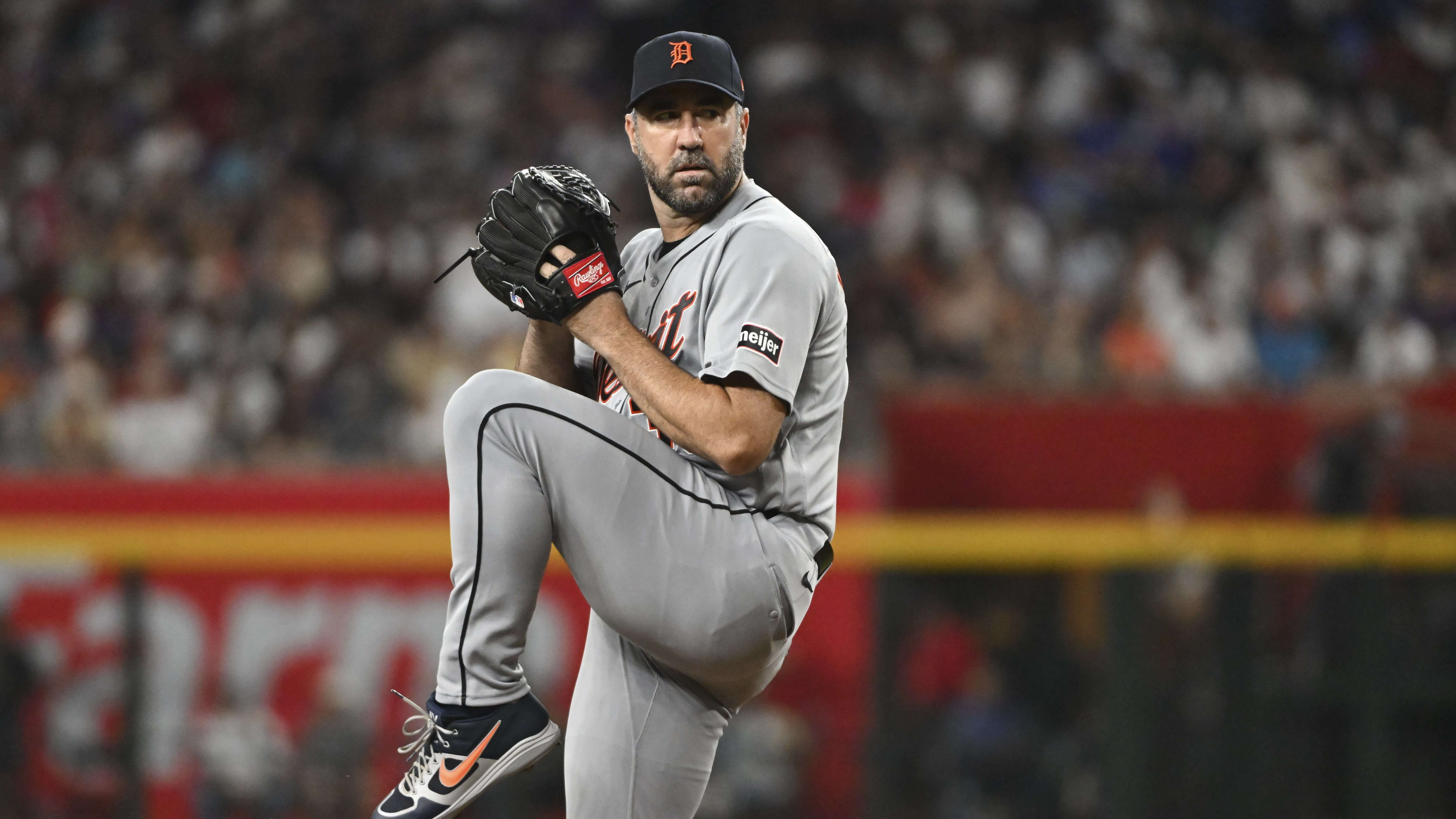
Cole has been experimenting with a new, hands-over-the-head windup in his rehab process — a windup in the style of Max Scherzer. We want to see that new windup in action. And will it affect Cole’s stuff? His command? Both? Neither? 

Whatever the results tonight, though, we’re just happy to see one of baseball’s true aces for the first time in a year and a half. 

GAMES TO WATCH ON MEMORIAL DAY WEEKEND

Baseball’s longest scoreless streak, a bounceback spot for Skenes and some division rivalry series highlight the games to watch this Memorial Day Weekend. See how MLB is commemorating Memorial Day here.  

Today: Guardians at Phillies (6:40 p.m. ET, MLB.TV

Phillies ace Cristopher Sánchez has a 29 2/3-inning scoreless streak going, the longest in the Majors — and it’s his bobblehead night at Citizens Bank Park. But he’s facing a first-place Guardians team that has its own ace going, Gavin Williams.  

Tomorrow: Pirates at Blue Jays (3:07 p.m. ET, MLB.TV

Paul Skenes had one of his roughest outings of the season his last time out, allowing five runs in a loss to the Phillies. He’ll look to bounce back this weekend against a Blue Jays team that’s been scuffling, but still has a dangerous lineup. 

Sunday: Rays at Yankees (1:35 p.m. ET, MLB.TV)

The two best teams in the AL this season both happen to play in the AL East, and they’re clashing this weekend. This contest should be a particularly good one with resurgent Rays ace Shane McClanahan (2.82 ERA) on the mound.  

Monday: Cardinals at Brewers (2:10 p.m. ET, MLB.TV) 

The now-first-place Brewers open a big NL Central series against the Cards, who are just a couple of games back, on Memorial Day. And the series opener tentatively lines up to be Jacob Misiorowski’s start for the Brew Crew. The Miz hasn’t allowed a run in four starts in May, and he leads the Majors with 88 strikeouts this season. 

DÉJÀ VU FOR HARRIS II

Michael Harris II hits a pair of nearly identical home runs

It was the home run so nice Michael Harris II hit it twice.

Harris had Braves fans feeling déjà vu this week in Miami when he hit a pair of eerily similar home runs on Tuesday and Thursday.

Not only did Harris hit the home runs to the same patch of grass beyond the right-center-field wall at loanDepot Park, but almost everything about the home runs was nearly identical.

Check this out: 

  • HR #1: 110.1 mph / 19 degrees / 421 feet / 4.3 seconds hang time 
  • HR #2: 110.5 mph / 18 degrees / 418 feet / 4.4 seconds hang time 

Even Harris’ swing speeds were identical: 78.7 mph.

Statcast data for Michael Harris II's nearly identical home runs

It’s like looking in a dinger mirror. 

WHO NEEDS HOME RUNS? NOT THE BREW CREW

The Brewers celebrate a win

The Brewers have taken over first place in the NL Central thanks to a sweep of the rival Cubsearlier this week. And — surprise, surprise — they’re getting it done in the most Brewers way possible. 

The Brew Crew continue to be the kings of small ball. And this weekend’s series against the Dodgers — who eliminated Milwaukee from the playoffs last year in the NLCS — will be a big contrast in styles between two contenders. 

Entering tonight’s series opener in Milwaukee (7:40 p.m. ET, MLB.TV), the Brewers are a top-five offense in baseball. But they’re not like the others. Because they score without hitting home runs

The Brewers rank fourth in the Majors this season at 5.04 runs per game. They rank dead last in the Majors with 33 home runs. No AL/NL team has ranked in the top five in runs scored while hitting the fewest home runs in the Majors since the 1930s.

Now consider the Dodgers. Los Angeles ranks just ahead of the Brewers in scoring offense at 5.14 runs per game. But the Dodgers rank fourth in MLB with 66 homers — twice as many as the Brewers. 

And yet both teams are in first place in their respective divisions. Both teams have nearly identical records. There’s more than one way to win a baseball game.  

BEST NICKNAME IN THE MINORS? VOTE NOW

Vote now for the best nickname in the Minors

The Minor Leagues are full of players with incredible nicknames. 

There’s “Tugboat” … “The Grinch” … “The Ice Cream Man” … “The Username” … “Lord Tubbington” … “The Iowa Meat Truck” … the list goes on and on.

But who has the very best nickname of them all? It’s up to you to decide. 

MLB Pipeline is running a “Nickname Knockout” bracket for the Minors, and you can vote now through next Friday, May 29, at noonET.

There are 32 nominees, but only one will be crowned the nickname champion.

VOTE HERE >>

Facebook
Instagram
Twitter
YouTube
TikTok
Snapchat

© 2026 MLB Advanced Media, L.P. MLB trademarks and copyrights are used with permission of Major League Baseball. Visit MLB.com. Any other marks used herein are trademarks of their respective owners.

Please review our Privacy Policy.

You (pahovis@aol.com) received this message because you registered to receive commercial email messages from MLB.com.

Please add info@marketing.mlbemail.com to your address book to ensure our messages reach your inbox. If you no longer wish to receive commercial email messages from MLB.com, please unsubscribe  or log in and manage your email subscriptions.

Postal Address: MLB.com, c/o MLB Advanced Media, L.P., 1271 Avenue of the Americas, New York, NY 10020.

The 2012 Paradigm Shift That Saved a Career


4 PM isn’t the close. It’s the open.

For 30 years, the overnight window has paid $17 for every $1 the daytime market returned.

Same stocks you already trade. Tesla, Apple, Broadcom – moves of +281%, +215%, +263%, all hitting between the closing bell and the next morning’s open.

Brandon Chapman just delivered a private briefing walking through every trade on camera. Real tickers. Real dates. Backed by research from Columbia, Purdue, and UC Berkeley.

The recording comes down soon, and once it does, this window goes back to the institutions.

👉 WATCH THE 4PM OPEN BRIEFING NOW


Don here…

Corey Rosenbloom shared something during his session I haven’t heard him explain in this much detail. 

He started his career as a bear in 2007. 

He cleaned up scalping the 2008 crash with a small account. He felt smart.

Then 2009 happened. Then 2010. Then 2011. 

His account suffered while the market kept climbing. 

By 2012 he had to have a hard conversation with his family about whether he could keep trading at all.

In today’s free session replay, you’ll discover:

  • The paradigm shift that turned a struggling bear into a hardened bull. Corey changed his entire worldview in 2012. He explains exactly what forced the decision and why being right about fundamentals does not pay if you are wrong about the tape.
  • Why the “this has never happened before” argument is statistically false. Eight straight weeks. 13% from the lows. The current run is the 10th largest streak on record. Corey walked through 1995 and 2020 as examples where the same complaints showed up at every step higher.
  • The relative strength rule that filters winners from laggards.Strong stocks get stronger. Weak stocks get weaker. It sounds simple. Brandon, Gianni, Professor, and Mac all build their work on this same principle for a reason.
  • The colleague who wrote eight reasons the market would crash in 2012. Arab spring. Inflation. A new presidential term. Every reason was reasonable. The market kept going up anyway. Bears had good arguments. The tape had better answers.

Corey made a point that goes against most of the noise traders absorb every day. 

Blaming manipulation, algorithms, or “those dang bulls” does not improve your trading. 

Difficult conversations with yourself about why the tape disagrees with your bias do.

The fundamentals are bullish. GDP is bullish. Jobs at 4.3%. The chart is objectively in an uptrend. 

If you start with the wrong foundation, everything that flows from it is wrong too.

→ Watch Corey explain the 2012 paradigm shift, the persistency of trend principle, and why the model still points higher

To your success, 

Don Kaufman
Chief Market Strategist, TheoTRADE


Helping You Become a Better Trader…it’s What We Do. Experience TheoTrade® Today!

Whether you are a beginning, intermediate, or active trader, you will find a treasure chest of valuable trading education resources, both free and paid, that will help take your trading to the next level. We are committed to helping you become the best trader you can be.

Disclaimer: Neither TheoTrade.com  or any of its officers, directors, employees, other personnel, representatives, agents or independent contractors is, in such capacities, a licensed financial adviser, registered investment adviser, registered broker-dealer or FINRA |SIPC |NFA-member firm. TheoTrade does not provide investment or financial advice or make investment recommendations. TheoTrade is not in the business of transacting trades, nor does TheoTrade agree to direct your brokerage accounts or give trading advice tailored to your particular situation. Nothing contained in our content constitutes a solicitation, recommendation, promotion, or endorsement of any particular security, other investment product, transaction or investment.Trading Futures, Options on Futures, and retail off-exchange foreign currency transactions involves substantial risk of loss and is not suitable for all investors. You should carefully consider whether trading is suitable for you in light of your circumstances, knowledge, and financial resources. You may lose all or more of your initial investment. Opinions, market data, and recommendations are subject to change at any time. Past Performance is not necessarily indicative of future results.

TheoTrade

PO Box 24790 Christiansted, Virgin Islands 00824
1 (800) 256-8876

support@theotrade.com

Want to change how you receive these emails?

You can Update your preferences

Theotrade.com  |  Privacy Policy

Stories That Inspire

Stories That Inspire

Every day offers a new chance to grow—so explore stories filled with real-life inspiration, practical wisdom, and ideas that fuel your next step forward. Discover uplifting content curated to support your personal growth, and join thousands of readers who visit our site daily for motivation, insight, and a positive boost.

“The last stretch before a breakthrough is often the one that tests your resolve most deeply. That test is a sign you are near.”

When progress is slow and the goal still feels far away, it’s easy to wonder if your efforts are even working. But persistence has a way of quietly compounding beneath the surface, building momentum that isn’t always visible until the moment it releases. Don’t let the slowness of this season convince you to stop. You are doing the necessary work, and something is about to open up.MORE INSPIRATION 

You’re always one blessing away from a brighter day… and a bigger life. May these stories, affirmations, prayers, and insights lift your spirits and inspire you to lift others.

Go forth and be blessed!GET BLESSINGS 🕊️

Please, Unsubscribe Here to stop receiving these emails

Tulsi Gabbard Resigns, Trump Admin Shakeup

Breaking News from Newsmax.com

BREAKING: Tulsi Gabbard Resigns as Director of National Intelligence

Watch Newsmax, Newsmax2 on latest shakeup in Trump administration.

Find Newsmax Here

Find Newsmax2

More Links:

Special: Doctor Makes Breakthrough for Male Performance Issues

Digestion Woes? Science Finds Bacteria That Works

This email is never sent unsolicited. You have received this Newsmax email because you subscribed to it or someone forwarded it to you. To opt out, see the links below.

Remove your email address from our list or modifyyour profile. We respect your right to privacy. Viewour policy.

This email was sent by:
Newsmax.com
362 N. Haverhill Road
West Palm Beach, FL 33415 USA

DM968336
01012404430g

Must Read: Why This Market Is Like a Sports Car – and How You Should Drive It

Louis Navellier

Market360 logo

Why This Market Is Like a Sports Car – and How You Should Drive It

VIEW IN BROWSER

I have a confession to make.

As much as I love the stock market and investing, I am also passionate about cars.

In fact, I’ve built up quite a little collection of sports cars over the years.

And recently, I added something special to my collection: a Cadillac CT5-V Blackwing.

Image

This is not a quiet little luxury sedan built for grocery runs. It is a serious performance machine. 668 horsepower and 659-lb-ft of torque. The kind of power that makes you sit up straight the moment you touch the gas pedal.

But here’s the thing about power…

It is only useful if you know how to control it.

That is why, in a few weeks, I will be heading to Spring Mountain Raceway in Nevada to go to Cadillac’s V-Performance Academy. It is a driving school built to help Blackwing owners learn how to handle these cars the right way.

Braking. Cornering. Reading the track. Staying calm when the car is moving fast.

In other words, it teaches you how to harness all that raw power and turn it into something you can control and enjoy.

And as I was thinking about that trip, I realized it is the perfect way to describe today’s market.

Because this market moves fast and turns on a dime.

Stocks can move 5%, 10% or even 20% on a single headline. Artificial intelligence news, oil prices, tariff rumors, Federal Reserve comments and global shocks can whip the market around in a matter of hours.

Most investors look at that and see danger.

But I see power – and a lot of potential gains on the table for investors who can harness it the right way – just like my Blackwing.

So, in today’s Market 360, I’ll show you why this market is no place for white-knuckle guessing – and why my InvestorPlace colleague Jonathan Rosemay have the ultimate “performance driving school” investors need for this new era of volatility. (You can learn more about it at his Convergence Summitevent on May 28.)

Recommended Link

The AI Launch 57X Bigger than the SpaceX IPO

Elon Musk could take SpaceX public in 2026, at an estimated $1.75 trillion valuation. The IPO would include Elon’s AI model, Grok. But according to Louis Navellier, a radical new AI model will launch this year… kicking off a $100 trillion revolution. The company behind this new tech could outperform SpaceX in the process, too. Click here for full details (including Louis’ new pick – free).

This Is Not a Sunday Drive Anymore

For years, investing felt like cruising down a wide-open highway.

You could buy the biggest tech names, hold on, and let the market do most of the work. Thanks to the Federal Reserve, low rates helped.

The biggest growth stocks kept getting bigger. But that market is disappearing.

Today, investors are dealing with a much faster environment. Inflation matters one day, then it doesn’t. The Fed might lower interest rates, then it’s off the table. Oil spikes when conflict breaks out in the Middle East, but then craters when rumors of a potential peace deal leak out.

Don’t get me started on tariff fears and how they can hit entire industries. Or how AI stocks can soar one day and fall hard the next.

That is why so many investors feel like the market has become harder to read.

Folks, I have been in the market for nearly five decades. Let me tell you something: You are not imagining it.

This market is faster, more emotional, and less forgiving when you are on the wrong side of a move than at any time I can remember.

But that does not mean you should panic. It just means you might need to upgrade your playbook.

Volatility is a lot like horsepower. In the wrong hands, it can be dangerous. But with the right training, tools and signals, it can become a major advantage.

That brings me to Jonathan Rose.

Jonathan Rose Is Built for Speed

I believe Jonathan’s strategy is a perfect fit for the market we are in right now.

He came up in the Chicago trading pits, where fortunes could be made or lost by reading the flow of money faster than the next trader. That kind of environment teaches you how to spot when big money is moving. It teaches you how to recognize when a move has real force behind it. And it teaches you that speed is only useful when it is paired with discipline.

That is what I like about Jonathan.

His system is built for speed. It is designed to capture short, powerful bursts in the market that most investors miss. When everything lines up, it can absolutely blow your hair back.

But Jonathan does not just hand people the keys and tell them to floor it.

His entire approach is built around training, discipline and control. He teaches people how to recognize the right signals, understand the setup and avoid emotional decisions when the market is moving fast.

And folks, that matters. Because this market is not a Sunday drive anymore.

Follow the Smart Money

If you have followed my work for any length of time, you know one of the pillars of my own system, Stock Grader, is institutional buying pressure.

In plain English, I want to know where the big money is moving.

When paired with strong fundamentals – meaning growing sales, rising earnings, positive analyst revisions, etc. – it’s like the secret sauce for a stock. Chances are, good things will happen.

Jonathan follows a similar idea, but in a faster part of the market.

He looks for moments when big money is moving with unusual force. These are not small, ordinary signals. They are the kind of powerful moves that can show up before the broader market catches on.

My system helps identify where institutional money is building over time.

Jonathan’s system is designed to spot where that money is moving right now.

That is why I believe his work is such a valuable complement to mine. And it is why I want you to hear what he has to say (more on that in a moment).

The New Convergence Trigger

There is another reason this is so timely.

Jonathan is now teaming up with Marc Chaikin.

Marc is one of Wall Street’s best-known institutional analysts, and he created the famous Chaikin Money Flow indicator.

Marc has spent decades studying how money moves through the market. Now, he and Jonathan say they have combined two powerful smart-money signals into one new trigger.

They call it the Convergence trigger.

Here is the simple version…

Jonathan’s work helps spot conviction – where big money appears to be moving with unusual force.

Marc’s Money Flow work helps confirm direction – whether institutional capital is lining up behind the same move.

When those two signals agree, Jonathan and Marc believe it can reveal some of the strongest setups in today’s market.

To go back to my Blackwing, this is like having a professional instructor in the passenger seat and a dashboard full of real-time data.

It does not remove all risk. Nothing in the market does.

But it can help you approach a high-speed environment with more control.

And the results can be powerful – I’m talking about gains like 780% in 42 days, 833% in just

over two weeks… and 784% in 30 days.

Reserve Your Spot for The Convergence Summit

That is why I want you to know about a special event coming up soon.

It is called The Convergence Summit.

It’s where Jonathan and Marc will come together to explain this new Convergence trigger and show why they believe it is built for today’s volatile market.

They will explain why the old playbook may not be enough anymore… why smart-money signals matter so much right now… and how this new approach is designed to help investors handle today’s market with more confidence.

Again, I think about it like my upcoming trip to Spring Mountain.

I’ve been behind the wheel for years. But when you are dealing with a machine as powerful as the CT5-V Blackwing, you respect the power enough to learn how to handle it the right way.

Investors should have the same mindset today.

This market has power. It has speed. And if you know how to handle it, it may create some of the most exciting profit opportunities we have seen in years.

But you do not want to approach it blindly.

You want training. You want tools. You want discipline. And you want to know what signals to watch.

That is exactly why I think you should tune in to hear from Jonathan and Marc on May 28 at 8 p.m. Eastern.

Click here to reserve your free seat right now.

Sincerely,

Louis Navellier's signature

Louis Navellier
Editor, Market 360

InvestorPlace

🧨Reddit Gets Zucked

May 22, 2026 

🧨Reddit Gets Zucked… Revenge of the Computer Nerds

As the great Pablo Picasso once said, good artists copy… great artists steal.

(If you happened to read that opening line and immediately thought “he must be talking about a certain UFC fan” Ding. Ding. Ding. You are the winner).

Because Reddit shareholders got absolutely zucked on the final business day before Memorial Day weekend after Meta decided to do what Facebook Meta has done from the beginning: Ctrl+C, Ctrl+V somebody else’s entire business model. 

Just like Zuck allegedly copied the Winklevoss twins… then copied Elon’s Twitter with Threads… Marky Mark and the boys over at Meta Platforms apparently looked at Reddit and said: “Yeah… we’ll take one of those too.” 

So, they created a new app called Forum… which is literally the exact same idea as reddit (probably just with more ads).

Shares of Reddit dropped roughly 6% Friday, bringing the stock down around 40% on the year now… despite the company’s ad business continuing to put up pretty solid numbers. 

Meanwhile, even though Marco Rubio’s peace talks with Iran still haven’t amounted to a hill of beans (at least not yet) the market kept floating higher anyways, with the S&P 500 climbing 0.5%, the Nasdaq rising 0.5%, and the Dow tacking on another 0.8% as commodity-hungry businesses and traders alike started getting hopeful the Middle East might finally be inching closer to something resembling “calm.” 

Over in tech land, household name PC stocks had themselves a field day.

Your grandpa’s favorite computer company (and the S&P’s #1 stock today), Dell exploded more than 16% to an all-time high after Lenovo reported its strongest PC, tablet, and smartphone sales growth in five years. (Mac Mini? Never heard of her.)

HP also erupted nearly 16% as investors started foaming at the mouth ahead of earnings next week.

Turns out consumers are still buying computers despite everyone claiming smartphones and AI assistants were supposed to replace them years ago. Funny how every “the PC is dead” prediction keeps aging like unrefrigerated sushi. 

Although, Lenovo did admit some demand may have been pulled forward because companies are panic-buying hardware ahead of expected price increases and ongoing memory chip shortages tied to AI infrastructure demand. 

Then there’s the Fed… where President Trump officially swore in Kevin Warsh as the new Federal Reserve Chair this afternoon. 

During the ceremony, Trump had the audacity to say he wants an “independent Federal Reserve” which is kind of like your boss telling you, “make your own decisions… as long as they’re the ones I like.” In response, Warsh promised a “reform-oriented Federal Reserve” focused on escaping outdated economic models.

Translation: the money printer is about to go Brrr. 

Anyways, that’s enough market brain rot from me for one week. Go enjoy your Memorial Day weekend, eat an irresponsible amount of hot dogs, and try not to check your phone too often in front of your grandma.

If you read all of this, congrats for having a 10 second attention span (better than me). As always, here’s our heatmap for today.

Revealed: Today’s Top Momentum Stock (FREE)

Momentum can explode in minutes. Most traders see it after the move has already started.

GuyStocks delivers real-time alerts designed to help you spot stocks gaining strength while they’re still under the radar. No fluff. No complicated charts. Just clear alerts when momentum starts building. 

If you’ve ever watched a stock run without you, this is your chance to get ahead of the next one. 

👉 Join GuyStocks FREE and confirm your subscription now.

(By clicking the link above, you are opting in to receive emails from this advertiser. You are also agreeing to the terms of our privacy policy. Unsubscribe at any time)

Oura’s Wellness Cult Marches Toward Nasdaq IPO After Smart Ring Revenue Explodes 4x

Kid: Mommy, how did we get so rich?

Mom: Daddy ignored the SpaceX hype and mortgaged the entire house on Oura’s IPO…

If there’s one thing Wall Street loves more than an AI company burning $400 million a quarter… it’s a subscription business attached to it. And now pretty soon, the suits will have a brand-new wellness obsession to throw ridiculous price targets at. 

That right, Oura (the company that convinced millions of people to pay a monthly subscription to learn they’re stressed, exhausted, and probably overtrained) has confidentially filed for an IPO with the SEC. And I’ll have to admit, when I saw the press release I kind of rolled my eyes and smirked… but the numbers are…

Read The Full Article HERE 

Asset Managers Laugh All the Way to the Bank as Retail Investors YOLO into Endless Space ETFs

Hey, there’s a bubble…

To avoid contradicting the blurb at the top of this article… I’m not saying a bubble’s about to burst… but I’m also not NOT saying it.

So what’s got me acting all weird at the moment? Well, just the fact that our good friend Elon has somehow convinced the entire world that the next trillion dollar gold rush is happening somewhere above Earth’s atmosphere.

And that this gold rush is set to happen in months… not years or even decades (as his arch rocket nemesis Jeff Bezos said…

Read The Full Article HERE 

☕ Market Gossip

>Pentagon releases more declassified UFO files, including intelligence officer’s account of seeing ‘orbs’ (ABC News):And they said it was hard to get Donnie to release files…

>Trump makes major investment in trendy revolving sushi chain (Fox Business):Is there a single stock that the White House hasn’t bought?

>Campbell Soup stock hasn’t been this low in over 30 years (Yahoo Finance):Gives “no soup for you” a whole new meaning.

>Beef prices soar as Americans prepare for Memorial Day cookouts (Consumer Affairs): Tubesteaks it is.

Anthropic Swoons Microsoft’s Maia Chip After Already Pimping Rest of Big Tech…

“I got hoes in different area codes” – Ludacris Daro Amodei, probably… 

Well, it’s 2026 and there is absolutely NO compute partner Anthropic isn’t dipping its proverbial pen into, and as of yesterday, Satya is next. Sources confirmed that Dario “No Hands” Amodei is in talks with Microsoft to adopt the Maia 200 AI chip, the in-house silicon Satya rolled out in January but hasn’t bothered making available to actual Azure customers. No paperwork is signed (because, of course)”. The snitch “person familiar with the matter” was very clear about that. Which means as of now, both sides are still playing just the tip. 

But the rumor is enough to make heads turn. For instance, Microsoft wrote Anthropic a $5 billion check six months ago. Anthropic immediately turned around and committed $30 billion to Azure. Friendly reminder: Side-Piece Satya (read: Nadella) has also sunk billions into OpenAI and briefly employed Sam Altman for what felt like a long weekend in November 2023.

Which makes Microsoft, at this point, the chip-sales equivalent of a hot tub with two dating apps open on the laptop. As for the Maia 200 itself, it’s the… 

Read The Full Article HERE 

“WTF” Meme of the Day

Three points for Russ Hanneman 

Oh, and one more thing…

What did you think about today’s newsletter?

🧨🧨🧨Loved it 🧨🧨It was ok 🧨Disliked it 

1  

2  

Update your email preferences or unsubscribe here

23 Downing Street
Newark, NJ 07105, United StatesTerms of Service 

Arthur Burns’ Secret 1979 Warning

Issue #83, Volume #3Arthur Burns’ Secret 1979 WarningBy Porter Stansberry • Friday 22, May 2026View in website 

Inside today’s Daily Journal

  • Essay: Arthur Burns’ Secret 1979 Warning
  • Central banks running from Treasuries
  • UAE and Oman look to solve Iran War
  • Booz Allen Hamilton’s mixed earnings bag
  • Chart Of The Day… Hovnanian Enterprises (HOV)
  • Today’s Mailbag

The Most Important Central Bank Speech Of All Time And Why It Was Kept Secret For Decades

In 1979, Belgrade, Yugoslavia, was the Dubai of the Soviet bloc.

Belgrade was the leading industrialized city in Eastern Europe. Rebuilt after World War II, it was a city shaped by the demands of the communists, which included heavy manufacturing for the military. Their plans didn’t include wastewater treatment or any regulations on air pollution. Its filth and stench were a warning of the catastrophe that would emerge a decade later in its civil war.

It was the most unlikely place in the world for the leading bankers of capitalism to gather. And it was the site of the most unlikely speech ever given by any central banker: a warning about the imminent failure of central banking.

Arthur F. Burns was chairman of the Federal Reserve from February 1970 until January 1978. He taught Milton Friedman at Rutgers. He advised four U.S. presidents. He smoked a pipe in every photograph. In the eyes of his profession, he stood at the summit of American economic thought.

He also presided over the worst peacetime inflation in American history, the rapidly escalating prices of the 1970s.

One Sunday in late September 1979 in Belgrade, Burns delivered the annual Per Jacobsson Lecture. The Per Jacobsson Foundation invites only the most senior figures in global finance – central bank governors, finance ministers, the principals of the International Monetary Fund (“IMF”) and the World Bank.

Burns’ lecture runs roughly 12,000 words. It is a moral and economic indictment of central banking. And it was a dire warning – to the entire world – of the enormous monetary reset that would begin just two months later. But this speech was kept secret for almost a decade.

It was only published after Burns’ death in 1987.

If you understand it, you have a chance of surviving what’s about to happen to America. If you don’t understand it, you have no chance.

Burns’ argument was not that the Federal Reserve botched the job of maintaining price stability in the previous decade, although he admitted plenty of error. His argument wasn’t about how central banking failed. It was about the far deeper failures, the why central banking fails.
Burns’ warning was that, in democracies, the promises of the politicians will always outpace the taxes necessary to support them. This, inevitably, creates permanent and growing fiscal deficits. Burns explained that central banks were no longer being used to support legitimate government financing, but instead, had become the bridge to spending that would otherwise be impossible. He said:

The proliferation of government programs led to progressively higher tax burdens on both individuals and corporations. Even so, the willingness of government to levy taxes fell distinctly short of its propensity to spend. Since 1950, the federal budget has been in balance in only five years. Since 1970, a deficit has occurred in every year. Not only that, but the deficits have been mounting in size. Budget deficits have thus become a chronic condition of federal finance. They have been incurred when business conditions were poor and also when business was booming. But when the government runs a budget deficit, it pumps more money into the pocketbooks of people than it withdraws from their pocketbooks – the demand for goods and services therefore tends to increase all around. That is the way the inflation that has been raging since the mid-1960s first got started and later kept being nourished.

And then Burns told the world that the only way forward was a drastic change to this accommodative policy – a global monetary reset was inevitable.

If the United States and other industrial countries are to make real headway in the fight against inflation it will first be necessary to rout inflationary psychology – that is, to make people feel that inflation can be, and probably will be, brought under control. Such a change in national psychology is not likely to be accomplished by marginal adjustments of public policy. In view of the strong and widespread expectations of inflation that prevail at present, I have therefore reluctantly come to believe that fairly drastic therapy will be needed to turn inflationary psychology around.

What did “drastic therapy” mean? A complete monetary reset. Sixty days after Burns delivered his remarks in Belgrade, Paul Volcker – Burns’ successor at the Fed – began the most violent monetary tightening in U.S. history. The federal fund rate would eventually climb to 20%. The yield on the 10-year Treasury bond would hit 15% by October 1981, causing a 50% decline in bond prices. Mortgage rates hit 18%. Unemployment touched 11%. Stocks fell until the average earnings multiple on the S&P 500 was 8x earnings. The global monetary order reset. The dollar was saved. And financial assets were virtually destroyed.

Burns knew it was coming. He tried to warn the world – and the bankers wouldn’t let him. Today, the same warning applies, but on a vastly larger scale. Will you listen…?

From 1950 to 1979 – for 29 years – the federal budget reached balance only five times. Through the entire decade of the 1970s, it ran deficits every single year. The debt ballooned.

And today? Fiscal year 1999 was the last full year of a genuine on-budget surplus in American history. The deficits have been growing in every year since. Twenty-seven years of growing deficits and ballooning debts.

The arithmetic now exceeds anything Burns could imagine in Belgrade. Burns called deficits averaging 2% of GDP a “chronic condition.” We are running deficits that are 5.8% of GDP in peacetime, with full employment, with no recession on the horizon. This is the most extraordinary fiscal posture the United States has ever sustained outside of total war.

And you haven’t heard a single banker or politician or economist say a single word about how this is completely unsustainable.

Net interest payments on the federal debt climbed from 1.6% of GDP in 2021 to a record 3.2% in 2025. If rates continue to rise, our government’s interest expense will soon reach 5% of GDP. Just in interest payments. In dollar terms, net interest will rise from $970 billion in fiscal 2025 to $2.1 trillion by the early 2030s. On this trajectory, by 2036, interest alone will consume more than 30% of every federal tax dollar.

Interest on the debt is the fastest-growing line item in the federal budget.

And every additional dollar of interest forces the Treasury to issue new debt, which pushes yields higher, which raises interest expense, which forces more issuance. Economists call this debt fueled doom loop “fiscal dominance.”

What they should call it is the bankruptcy of our government.

In 1979, the monetary reset had a name: Paul Volcker. Fed chair Volcker drove the federal funds rate to nearly 20% in 1981. He pushed the 10-year Treasury yield above 15%. He crashed the economy to save the dollar. But that option no longer exists.

When Volcker took the Fed chair in August 1979, federal debt held by the public stood at roughly 25% of GDP. Net interest expense ran about 1.7% of GDP. Higher rates, for a short period of time, wouldn’t threaten the stability of the government’s budget.

In 2026, federal debt held by the public sits at 101% of GDP and climbs to 120%. Interest already consumes at 3.2% of GDP. With $30 trillion of debt held by the public, every additional percentage point of average interest cost adds roughly $300 billion to annual interest expense.

A Volcker move today – funds rate to 15% – would add trillions in annual interest within three years. At those rates, interest alone would exceed total federal revenue.

Thus, this time, the monetary reset will not be like the last time. We can’t afford it. What will happen this time is letting the inflation run, higher and higher, while using the central bank to peg interest rates at a level the government can afford. As a result, inflation is going much higher.

It is inevitable. But, even so, just like in 1979, no one sees what’s coming.

The five-year, five-year forward inflation expectation rate – the bond market’s expectation of average inflation across the five-year window beginning five years from today – is only 2.21%.

Meanwhile, despite the soaring stock market, we are in the midst of some of the biggest bond market losses in history. Look at long-duration Treasuries since 2020. The iShares 20+ Year Treasury Bond ETF (TLT) – the standard proxy for the long end of the U.S. yield curve – peaked in August 2020. Through 2025, it has lost roughly half its value. The U.S. bond market has been in a continuous drawdown for 68 months. That’s the longest bond bear market ever.

This is what the early stages of a monetary reset looks like. The 1979-1981 episode was resolved in roughly 24 months because the Federal Reserve could raise rates and the government could afford them. The current episode drags on – five and a half years and counting – because the Treasury can’t afford it. And that means it’s bankrupt.

Our creditors see what’s happening.

Over the last five years, China has sold roughly $400 billion of U.S. Treasuries, dropping its holdings by half.

What are central banks buying instead of Treasuries? More than 1,000 tonnes of gold per year in 2022, 2023, 2024, and 2025. This represents the largest official-sector accumulation of gold since the closing of the gold window in 1971.

This is the “End of America” – the end of U.S. financial hegemony over the world. America’s creditors no longer believe the U.S. Treasury can be repaid in real terms.

Why was President Trump in China? When a debtor flies halfway around the world to see his creditor, the meeting is never just about tariffs.

The 1979–1985 reset moved through a predictable sequence:

  1. September 1979: Burns’ warning in Belgrade
  2. October 1979: Volcker’s “Saturday Night Special.” The Fed pivots from targeting interest rates to targeting bank reserves. Yields rip higher.
  3. 1980–1982: Fed funds rate touches 20%. Ten-year Treasury yield breaks 15%. Deep recession. Long bonds destroyed.
  4. September 1985: Plaza Accord: The U.S., Japan, West Germany, France, and the UK agree to engineer a coordinated devaluation of the dollar. Over the next two years, it falls by nearly half.
  5. The bond bull market begins. The secular inflation in goods ends. The secular inflation in financial assets begins.

The modern sequence will not look identical. The Fed cannot be Volcker – the government can’t afford it – the math forbids it. The monetary reset this time won’t be to rebuild the dollar. It will be to escape it.

Watch these markers between now and 2029:

  • The Social Security Trust-fund cliff. Social Security OASI (Old Age And Survivors Insurance) insolvency will arrive around 2029. A general-revenue bailout, financed by new Treasury issuance, becomes inevitable.
  • Continued Fed accommodation. Real interest rates become negative as inflation moves above 6% but the Fed doesn’t raise rates fast enough to prevent enormous losses in long bonds.
  • The printing resumes. When 10-year yields threaten to break the level at which Treasury interest expense turns unmanageable, the Fed returns to large-scale asset purchases.
  • A final reset in 2029. A global inflationary crisis leads to a formal U.S. Treasury default and a creditor negotiation. A formal Plaza-style accord – Beijing, Tokyo, Riyadh, Frankfurt at the table lead to a new global monetary agreement with gold and Bitcoin at the center of global trade.

Burns ended his Belgrade lecture with a sober line. He said central banking would ultimately fail, not because central banks couldn’t provide stability and liquidity to the markets, but because they did.

His warning was that central banks, by providing credit support, would enable governments to destroy their economies with debt and unsustainable promises. And so they have.

Prepare. Prepare now.

To learn more about the coming monetary reset and how to prepare, please read Porter’s new, best-selling book 2029: The End of America: Why the Age of Paper Money Is Ending And How to Survive the Coming Global Monetary Reset, available now at Amazon.

Tell me what you think of today’s Journalporterstansberrydirect@gmail.com

Good investing,

Porter Stansberry
Stevenson, Maryland 

3 Things To Know Before We Go…

1. Foreigners dump Treasuries. The value of U.S. Treasuries held by international investors fell by $139 billion in March, the largest drop since September 2022. The selling was led by Japan, which unloaded $48 billion in Treasuries, followed by China’s $41 billion in sales. The world is fleeing from U.S. government debt at the same time that Treasury issuance sets new record highs, pushing up yields and thus U.S. borrowing costs.

2. Booz Allen’s EPS beat, brought to you by the IRS. Booz Allen Hamilton (BAH) closed fiscal 2026 with revenue of $11.2 billion, down 6.4% year-over-year, but earnings per share of $1.78 beat the $1.34 consensus – however, the largely mechanical earning beat related to an $86 million IRS reserve release. The full-year earnings margin actually remained flat at 11.0%. Backlog hit a record $38 billion, but FY27 revenue and EPS guidance remain below FY26’s. Shares rose 3% today on the news.

3. Gulf states press Trump to stand down on Iran as Tehran moves to formalize Hormuz tolls. The UAE, Saudi Arabia, and Qatar have urged President Trump to resume diplomacy and not military operations against Iran. Trump agreed to postpone a planned strike this week. Meanwhile, Iran is negotiating with U.S. ally Oman to establish a permanent toll system for the Strait of Hormuz, where passage fees have already reached $2 million per vessel. Iran has controlled transit through the strait since the war began in February, and formalizing that grip would represent a huge shift in global energy logistics. Roughly 20% of the world’s oil supply passed through the strait prior to the war.

Chart Of The Day… Hovnanian Enterprises (HOV)

Shares of Hovnanian Enterprises (HOV) rose 18% yesterday, despite its fiscal Q2 results looking weak. Revenue dipped to $667.6 million and the company posted a $0.46 per-share loss versus $2.43 in earnings a year ago. Bearish consensus was calling for a $2.06 loss and just $633 million in revenue. Less bad than feared was enough to spark the rise in share price.

Mailbag

In yesterday’s Daily Journal, “The Violent Lives Of Black Americans, Porter wrote about the level of violence among blacks in America and how law enforcement’s inability to treat all people equally, regardless of race, has led to more homicides. He advocated that statistics among various groups be recognized to ensure the safety of all people.

“We Need to Address These Issues”

Bill S. writes:

Thank you, Porter, for having the courage to address a subject that many of us have wrestled with for some time. While we may not have been aware of the specific data that you’ve shared, we have been aware that common sense has been abandoned in favor of political correctness in today’s culture. The left preaches color-blindness as an attribute we should all espouse, except when it points to an offense committed by a person of color. I am not a racist, but I do find myself being extra wary when I am around a group of African-American individuals, especially at night. I ask myself why that is: it is because they are statistically more inclined toward aggression, as your data has clearly shown. Making excuses for bad behavior by claiming racism is truly an affront to most people’s intelligence. Your data and our eyes do not lie. Until the African-American community addresses these issues, we will never reach racial harmony in this country.

“Violent Lives Of Black Americans”

Raymond H. writes:

Porter,

Boy, you really stepped in this time. How DARE you cite empirical data and statistics! Doubtless, you will receive hate mail and cancellations.

I never studied the data you accessed, but you quantified my observations in growing up in a racially mixed neighborhood in the 1950s and now over 50 years practicing law. No, I never handled criminal cases. I could not cite statistics, but have wondered for years why the relative crime rates between black and white, as reported by day-to-day news accounts, clearly illustrated what you presented. Apparently, it is not a sociological origin, and I conclude it is simply endemic until the phenomenon is better explained.

Thanks for going out on a limb to point out that the emperor has no clothes. You do have balls.

Porter Comment: In 2020, 7.4 per 100,000 black women committed murder, according to the FBI. That was more, per capita, than white men. I think it’s extraordinary that facts like these (the 7x higher violent crime rates in the black population), the global prevalence of black violence, and the historic prevalence of black violence is largely ignored (and completely forbidden to discuss) because it forces us to ask very hard questions, that currently, don’t have any clear answers. One thing is certain – like I wrote yesterday – there is no excuse for violent crime in America. We should have a zero tolerance policy for all violent crime.

“Murder Rates In The U.S.”

Mary N. writes:

No doubt the facts recorded are correct. Yet not one mention of the extraordinary ownership by nearly all U.S. citizens of violent weapons. Mostly multiple ownership, it seems. No other country on earth provides such abundant wherewithal for killing. So, what else should you expect?

Porter Comment: I’ve got bad news for you…

There are lots of places in America where most people own guns. In states like Montana, Idaho, Wyoming, and West Virginia the majority of adults own firearms. The homicide rates in these places are extraordinarily low – as is the population of black people. The percentage of the population that is black is a far more powerful indicator of violent crime than gun ownership rates in America. In America, violent crime is tightly correlated with black populations, not guns.

“Disparate Impact”

H Busch. writes:

Dear sir,

As a Black man, born and raised in St. Louis, Missouri, in the late 1940s to the mid 1960s, I am so glad that someone has highlighted this travesty in America. Your article really hits home how dangerous some Black people truly are.

Even before the Mike Brown incident in Ferguson, I’d read that Europeans are educated/briefed on what places in America not to visit whenever they decide to vacation here. Ferguson was at the top of the list.

Even though born and raised in the ghettos of St. Louis, I have no desire at all to return from my current home in PA., to live there. It’s simply because of the high crime rate there… despite the most recent data below.

It’s really unsettling to me to know that our law enforcement officers have their hands tied by this Disparate Impact nonsense. However, the FBI has reported this recently:

“The projected U.S. murder rate in 2025 dropped to approximately 4.0 per 100,000 residents, which makes it the lowest rate recorded in the U.S. since 1900. This 20% to 21% decrease from 2024 represents the largest single-year decline in homicides on record.

This historic milestone is detailed in data from the Council on Criminal Justice (CCJ) and preliminary statistics from the FBI’s Crime Data Explorer.

While 2025 likely brought the murder rate to a century low, experts note that crime reporting methods have changed significantly over the last 125 years.”

“Impact on Specific Cities:Chicago: Homicides fell by roughly 28% to 30% compared to 2024, giving the city its lowest number of murders since 1965Baltimore: Killings plummeted by roughly 30% to 60% compared to 2019, putting the city on track for its lowest homicide rate in nearly 50 yearsSt. Louis: The city recorded its lowest homicide numbers in over a decade, with 141 murders in 2025 representing a notable reduction in citywide violent crimeDetroit: The city shared in the downward trend, echoing the historic drops in violent crime seen across major U.S. urban centers”

What’s your opinion on these most recent stats? Thanks. God bless!

Porter Comment: Thank you for your letter! The reverse in the homicide rates in the last one to two years has occurred because of a return to more aggressive policing and the end of the consent decrees. Also, many of the notoriously lax prosecutors (like Mosby in Baltimore) have been voted out of office.


Porter & Co. Market Snapshot

PriceYesterday’s ReturnYear-to-Date ReturnS&P 500 Index$7,445.720.17%8.77%Gold per ounce$4,539.80-0.49%4.44%Bitcoin$77,539.17-0.85%-12.14%Oil (West Texas Intermediate) per barrel$96.35-1.23%68.60%Berkshire Hathaway (BRK)$718,387.00-0.34%-4.82%Porter’s Permanent Portfolio-0.02%0.23%The Better Than Berkshire Index-1.36%2.49%YieldYesterday’s ChangeChange
Year-to-DateU.S Treasury 30-Year Yield5.11%0 bps27 bps

Prices as of 4:00 pm ET May 21, 2026

bps = basis points (or 0.01%)

*A Complete Investor risk rating of 1 is defined as a “low risk, high allocation” security, while positions rated closer to a 5 are higher risk. Porter & Co.’s top-ranked positions include those rated either 1 or 2 in Complete Investor portfolio.


Porter & Co. Top Positions

PublicationTickerDescriptionTotal ReturnComplete InvestorBWXTBWX Technologies255%Tech FrontiersQUREuniQure237%Complete InvestorBTC/USDBitcoin187%Tech FrontiersROIVRoivant Sciences137%Complete InvestorPMPhilip Morris133%Tech FrontiersQUREuniQure131%Tech FrontiersSGMTSagimet Biosciences130%Tech FrontiersTGTXTG Therapeutics113%Distressed InvestingHLFHerbalife102%Distressed InvestingPTONPeloton Interactive97%

Prices as of 4:00 pm ET May 21, 2026

Please note: The investments in our “Porter & Co. Top Positions” should not be considered current recommendations. These positions are the best performers across our publications – and the securities listed may (or may not) be above the current buy-up-to price. To learn more, visit the current recommendations page of the relevant service, here. To gain access or to learn more about our current recommendations, call our Customer Care team at 888-610-8895 or internationally at +1 443-815-4447.


www.PorterandCompany.com  support@porterandcompanyresearch.com | 888-610-8895 

You have received this e-mail as part of your subscription with Porter & Company, LLC. If you no longer want to receive e-mails, unsubscribe here.

Porter & Company, LLC welcomes comments or suggestions at support@porterandcompanyresearch.com. For questions about your account or to speak with customer service, call 888-610-8895 Monday-Friday, 9 a.m.-5 p.m. Eastern time. 

Please note: The law prohibits us from giving personalized financial advice.

© 2026 Porter & Company, LLC,. All rights reserved. Any reproduction, copying, or redistribution, in whole or in part, is prohibited without written permission from Porter & Company, LLC.

Disclaimer: Nothing in this email should be considered personalized financial advice. Do not consider any communication between you and Porter & Company, and its employees or writers as financial advice. This work is based on SEC filings, current events, interviews, corporate press releases, and what we’ve learned as financial journalists. It may contain errors, and you shouldn’t make any investment decision based solely on what you read here. Insight is provided to help readers gain knowledge and experience. All investments carry risk. Readers should not trade if they cannot handle a loss and should not trade more than they can afford to lose. Consider consulting with a professional before making investment decisions. Please be aware that by accessing this publication, you acknowledge and agree that Porter & Co. and its editors and affiliates may, at any time, buy or sell securities discussed in this publication without prior notice. This may result in potential conflicts of interest, as Porter & Co., its editors, and affiliates may have a financial interest in the securities mentioned. The views expressed in this publication are subject to change without notice and reflect the personal opinions of the authors and speakers.

By submitting a response or feedback, you hereby grant Porter & Co. the right to use, reproduce, and publish your feedback in any and all marketing materials, including but not limited to online platforms, print advertisements, and promotional content. Your review may be edited for clarity and length, but the substance of your feedback will remain unchanged. Please note that your personal information will be kept confidential and will not be disclosed without your explicit consent. If you have any questions or concerns regarding this agreement, please contact us at support@porterandcompanyresearch.com or to speak with customer service, call 888-610-8895 Monday-Friday, 9 a.m.-5 p.m. Eastern time. 

A Seminary Experience Rooted in Justice

Dear Friend,

For seminarians and recent graduates, the Hall-Proctor Institute offers more than a gathering. It offers formation. 

The Dale Andrews Freedom Seminary (DAFS) is a credit-bearing, graduate-level experience embedded within the Institute. Designed for emerging faith leaders, DAFS connects theology, preaching, pastoral care, and social analysis with the urgent realities shaping the lives of children and youth

Named in honor of Rev. Dr. Dale P. Andrews, a visionary in public theology, the seminary prepares students to lead with clarity, courage, and accountability to the communities they serve.

What Makes DAFS Distinct:

  • A rigorous academic experience, not a conference track 
  • Integration of public theology and children’s advocacy 
  • Space to engage faith, justice, and lived experience together 
  • A cohort model that extends learning beyond the week on the Farm 

2026 Leadership

This year’s DAFS will be led by Co-Deans Rev. Dr. Lorena Parrish and Rev. Dr. Obery M. Hendricks, Jr., guiding seminarians through a week of theological reflection, critical engagement, and formation grounded in the Black prophetic tradition. 

Rev. Dr. Lorena Parrish

Associate Professor of Urban Ministries,

Director of Community Engagement Institute and Center for Public Theology at Wesley Theological Seminary

Rev. Dr. Obery Hendricks

Emeritus Professor of Biblical Interpretation at New York Theological SeminaryRead MoreRead More

Hall-Proctor is an intergenerational convening of emerging and established faith leaders. The Institute is not complete without our seminarians. 

Register for DAFS or share with a seminary student today! Register Today

In Service,

Rev. Marvin Silver

Director, Leadership Development & Organizing

Rev. Trevor Beauford

Organizing Manager, Faith CommunitiesDONATE

View email in browser
Children’s Defense Fund · 840 1st St NE Ste 300 · Washington, DC 20002-8000 · USA

Forward to a Friend
Update your Preferences or Unsubscribe