One Minute With GodGod Starts and Finishes your Day with Love Evening Bible ReadingISAIAH 49:1-12
Listen to me in silence, O coastlands; let the peoples renew their strength; let them approach, then let them speak; let us together draw near for judgment. Who stirred up one from the east whom victory meets at every step? He gives up nations before him, so that he tramples kings under foot; he makes them like dust with his sword, like driven stubble with his bow. He pursues them and passes on safely, by paths his feet have not trod. Who has performed and done this, calling the generations from the beginning? I, the LORD, the first, and with the last; I am He. The coastlands have seen and are afraid, the ends of the earth tremble…
Editor’s Note: I have a message for you from Addison Wiggin at Grey Swan Investment Fraternity. I thought you might find it interesting – check it out here or read more below.
You are receiving this email because you subscribed to Trade of the Day. Trade of the Day is published by Monument Traders Alliance, LLC.
To stop receiving special invitations and offers from Trade of the Day, please click here. Please note: This will not impact the fulfillment of your subscription in any way.
To cancel by mail or for any other subscription issues, write us at: Trade of the Day | 14 West Mount Vernon Place |Baltimore, MD 21201 North America: 800.507.1399 | International: +1.443.353.4977 Website | Privacy Policy Keep the emails you value from falling into your spam folder. Whitelist Trade of the Day.
Please do not reply to this email as it goes to an unmonitored inbox.
Nothing published by Monument Traders Alliance should be considered personalized investment advice. Although our employees may answer your general customer service questions, they are not licensed under securities laws to address your particular investment situation. No communication by our employees to you should be deemed personalized investment advice. We allow the editors of our publications to recommend securities that they own themselves. However, our policy prohibits editors from exiting a personal trade while the recommendation to subscribers is open. In no circumstance may an editor sell a security before subscribers have a fair opportunity to exit. The length of time an editor must wait after subscribers have been advised to exit a play depends on the type of publication. All other employees and agents must wait 24 hours after publication before trading on a recommendation.
Any investments recommended by Monument Traders Alliance should be made only after consulting with your investment advisor and only after reviewing the prospectus or financial statements of the company.
Protected by copyright laws of the United States and international treaties. The information found on this website may only be used pursuant to the membership or subscription agreement and any reproduction, copying or redistribution (electronic or otherwise, including on the world wide web), in whole or in part, is strictly prohibited without the express written permission of Monument Traders Alliance, LLC, 14 West Mount Vernon Place, Baltimore, MD 21201.
Editor’s Note:Oil markets can’t seem to catch a break as geopolitical tensions, supply concerns, and global uncertainty continue to build, welcoming serious volatility.
To explain how to navigate periods like this, I’ve invited my colleague Jonathan Rose to discuss the two specific market signals investors should watch out for — and why he believes they may already be pointing toward another major opportunity in oil and refinery stocks.
Jonathan has spent decades trading volatile markets, from the futures pits in Chicago to the options floor at the CBOE. Now, he’s teaming up with Wall Street veteran Marc Chaikin for a special event on May 28 at 8 p.m. Eastern to discuss their new “Convergence” system designed to track institutional money flow and volatility together.
In October 1973, the world learned just how fragile the global oil order really was.
A coalition of Arab states attacked Israel on Yom Kippur. The U.S. responded by sending aid. And within days, OPEC issued an oil embargo against the United States.
The result was immediate and brutal. Oil went from $2.90 a barrel to $11.65 in three months. At the pump, Americans watched prices jump 36% practically overnight. Drivers sat in gas lines for hours, and some stations ran dry before noon. Rationing kicked in.
Credit: JudiLen
Americans watched gas prices explode almost overnight while Washington imposed a national speed limit of 55 miles per hour and urged citizens to conserve fuel as a patriotic duty.
The shock eventually eased. But before the decade was out, the Iranian Revolution triggered a second supply disruption that sent prices even higher. By 1981, oil had hit $35 a barrel — nearly 12 times what it cost before the OPEC embargo.
What those two crises revealed wasn’t just how much the world ran on oil. They also revealed how fast the entire system could crack when the geopolitical order shifted underneath it.
Fifty years later, it’s shifting again.
And this time, the cracks are deeper.
In this piece, I want to give you something more useful than a prediction.
I want to show you exactly how I read an oil market under stress — the two specific signals I watch, how they work together, and how they already handed us one of our best trades of the year.
If you understand these signals, you’ll never look at an oil headline the same way again. And you’ll know what to do with your money – and make a profit – before Wall Street figures it out.
One company to replace Amazon… another to rival Tesla… and a third to upset Nvidia. These little-known stocks are poised to overtake the three reigning tech darlings in a move that could completely reorder the top dogs of the stock market. Eric Fry gives away names, tickers and full analysis in this first-ever free broadcast. Watch now…
This Could Be Bigger Than 1973
Earlier this year, the U.S. entered a conflict with Iran that put a lockdown on the Strait of Hormuz – the narrow waterway through which roughly 20% of the world’s oil supply passes every single day.
When it’s under pressure, we all feel it.
Oil responded immediately. West Texas Intermediate crude ran from $66 a barrel to over $100. Brent — the global benchmark — climbed from $71 to $119. In three months, crude prices nearly doubled.
But the bigger story wasn’t the price move. It was what happened inside OPEC.
After nearly 60 years, the United Arab Emirates announced it was leaving the cartel.
This is not a minor development.
The UAE is one of the world’s top five oil producers. Its exit isn’t a diplomatic footnote — it’s a fracture in the architecture that has governed global oil supply since 1960.
The timing made it worse. The announcement came right before a scheduled OPEC meeting, in the middle of an active regional conflict, with the Strait of Hormuz already under pressure.
In 1973, the crisis came from outside OPEC — Arab states using oil as a weapon against the West. What we’re watching now is that alliance coming apart. That instability may end up being deeper and harder to reverse than in 1973.
The question isn’t whether energy market volatility will stay elevated. It will.
The question is how to position yourself to profit from the volatility that is becoming a long-term feature of the energy markets.
That starts with understanding two signals.
The Two Signals I Watch When Oil Gets Volatile
I’ve been trading energy markets for nearly 30 years — from the futures pits in Chicago to the options floor at the CBOE. And in all that time, I’ve found that the most reliable way to profit from oil volatility isn’t to predict where prices are going. It’s to read what the market is already telling you.
Two signals do most of that work. These aren’t predictions. They’re instruments that help the pros profit.
The first is the crack spread. That’s basically the profit margin for oil refiners. Think of it like owning a bakery. Your input cost is flour — that’s crude oil. Your output is bread — that’s gasoline and diesel. The spread is the difference between what you paid for the ingredients and what you sold the finished product for. That difference is your profit margin.
When the crack spread expands — meaning refiners are making more money per barrel they process — refiner stocks tend to follow. When it compresses, they struggle.
Right now, the crack spread is expanding. Refiners bought crude weeks ago at lower prices. They’re selling gasoline and diesel today at prices implied by $106 crude. That gap — old crude, new prices — is pure margin. And it’s showing up directly in refiner earnings.
That’s Signal 1.
The second signal is backwardation in the futures. This one sounds technical. It isn’t. Here’s all you need to know.
When the oil futures curve is in backwardation, it means near-term contracts are trading above longer-dated ones. In plain English, buyers are paying a premium to get oil now rather than later. That tells you immediately that the market believes supply is too tight to absorb a shock.
That’s exactly what the WTI futures is showing us today. Front-month contracts have surged as refiners, hedgers, and institutions pay up for prompt delivery. Contracts further out into late 2026 flatten considerably.
In short, the market sees near-term supply strain but expects conditions to ease over time.
That distinction matters because it tells us where capital is flowing right now — into assets tied to near-term scarcity and pricing power. Refiners. Select producers. Names with direct exposure to U.S. domestic supply chains.
When the crack spread is expanding and the futures curve is in backwardation at the same time, the market is sending a clear two-part message: refiners are making serious money right now, and institutional energy traders are paying a premium to secure supply immediately.
That combination — margin expansion plus supply urgency — is historically when refiner stocks and energy names make their biggest moves to the upside.
It’s the setup for a bullish trade on oil and refiner stocks.
Here’s how that trade looked in practice earlier this year.
The Trade That Proves the Signals Work
Back in April, both signals fired at the same time.
The crack spread was expanding. The WTI futures curve was moving into backwardation. And one name kept showing up on my radar: CVR Energy Inc. (CVI). It’s a midsized independent refiner with direct exposure to exactly the kind of margin environment the signals were pointing to.
On April 20, I got my members into a bullish position on CVR at the beginning of the month. The setup was clean. The signals were clear. The risk was defined.
In just a single week, we locked in an 80% return on the lagging refiner.
That’s not luck. That’s what happens when you stop trying to predict where oil is going and start reading what the market is already telling you. The crack spread said refiners were making serious money. Backwardation said supply was too tight to absorb a shock. CVR was the most direct way to express that opinion with defined risk.
Catalyst. Signal. Trade. That’s the whole model.
And right now, both signals are firing again.
The crack spread is expanding faster than it has in months. The WTI futures curve is deep in backwardation. The UAE’s exit from OPEC has added a layer of structural uncertainty that isn’t going away quickly. And the Strait of Hormuz remains under pressure.
The setup that handed us CVR is back. The names that benefit most from this environment are the same ones I’ve been watching since the conflict began — refiners, select producers, and companies with direct exposure to U.S. domestic supply chains.
The question now isn’t whether the opportunity is there. It’s whether you have the tools to find it before Wall Street does.
What I’m Doing About It — and How You Can Too
Here’s something I tell my members all the time: Know what you’re good at… and know where you need help.
I’m good at reading volatility. Finding the setup. Identifying the signal before the crowd sees it. What’s harder — for every floor trader I’ve ever known — and for me is direction. Not whether volatility is coming. But whether the next big move breaks up or breaks down.
That’s where Marc Chaikin comes in. Marc spent decades building the quantitative tools Wall Street’s biggest institutions use to forecast market direction. He designed his Money Flow system to answer a different question than mine. I focus on where volatility is building. Marc focuses on whether institutional money flow confirms the direction.
My expertise is finding where volatility creates opportunity.
Marc’s expertise is in knowing which way it breaks.
Together, we’ve built something that combines both. We’re calling it The Convergence, and on May 28 at 8 p.m. Eastern, we’re going live with it for the first time. (You can reserve a seat for that free event right now.)
The global oil order is cracking. The two signals I’ve shown you today are already firing simultaneously. And the window to position before Wall Street catches up is, as always, shorter than it looks.
This event is free. And it’s the first time we’re combining these two systems in front of an audience.
P.S. Jonathan makes an important point in today’s piece: Major market moves often begin long before the headlines fully explain them. That’s a big part of what he and Marc Chaikin plan to discuss during their free Convergence Summit event on May 28. They’ll explain how they combine volatility analysis with institutional money-flow signals to spot potential opportunities early. If you haven’t already reserved your seat, you can do that right here.
Manage your account We hope this timely investment research is valuable to you. As you know the markets move fast and conditions change frequently. So please check the current issue for the most recent advice. Please note that we cannot be liable for any missed bulletins caused by overzealous filters. To ensure that you continue to receive this valuable part of your service please take a moment to add services@exct.investorplace.comto your address book.
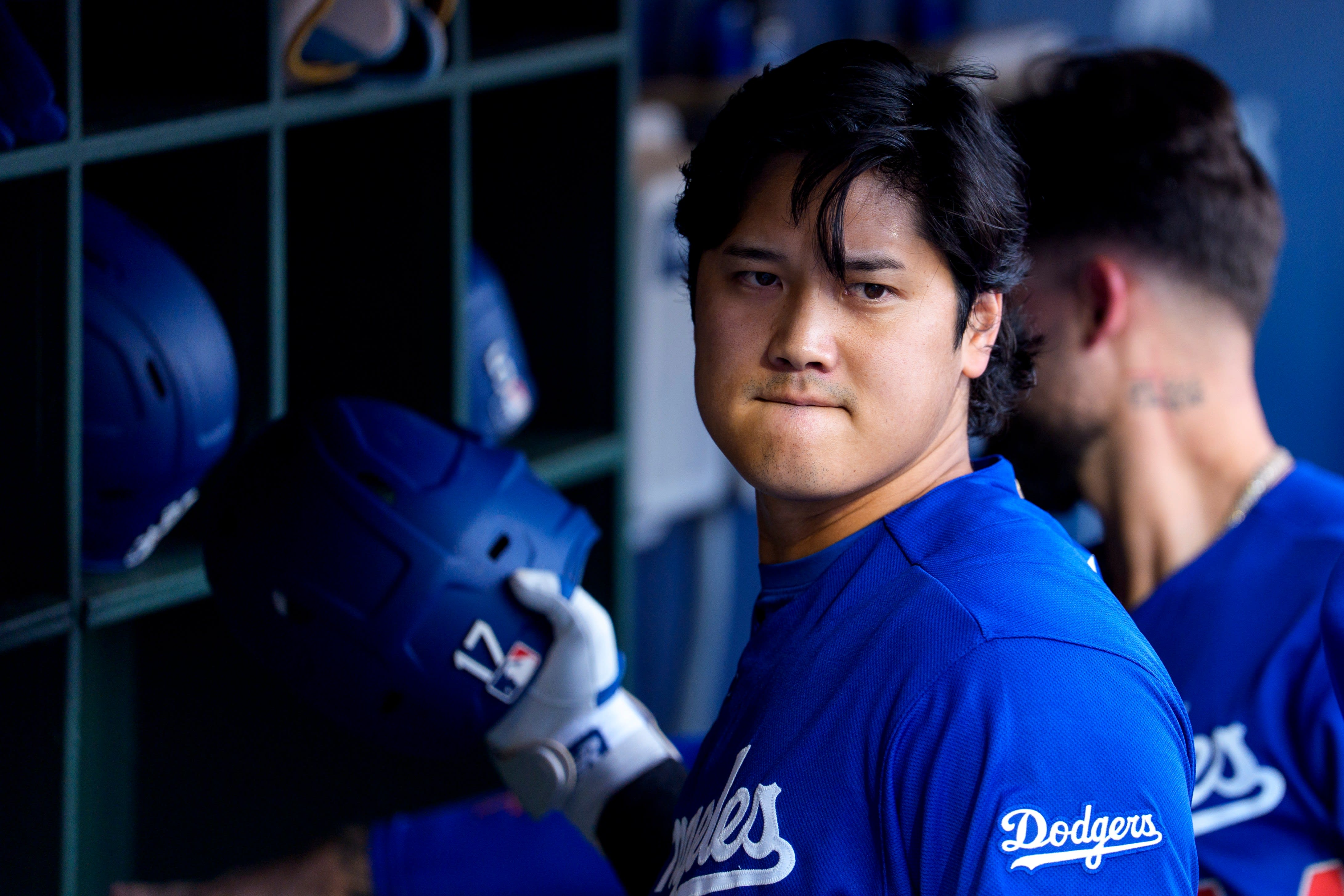
In the lineup while pitching for the first time in nearly a month, Shohei Ohtani hit the second leadoff HR by a pitcher ever (joining himself) and lowered his ERA to 0.73 with five shutout innings.
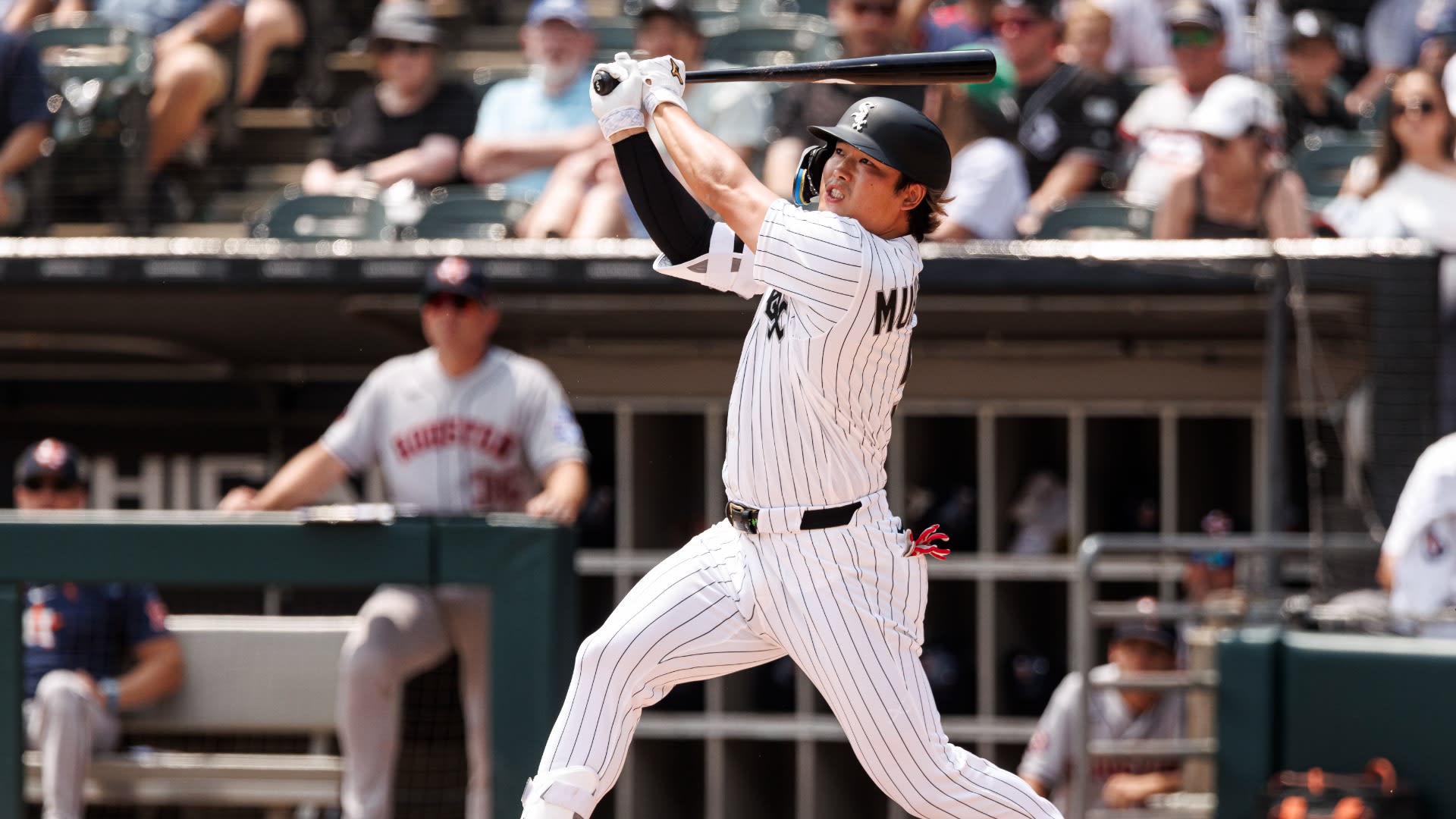
Just two seasons removed from a 121-loss campaign, the White Sox have improved at a historic pace, and there are plenty of signs that they can keep it going.
Paul Thornton is temporarily paralyzed after surgery to remove a tumor from his spine, but he didn’t let that stop him from being at son Zach’s Major League debut for the Mets.
Here is one player from each farm system who has been better than expected in 2026, including some who have broken on to MLB Pipeline’s Top 100 Prospects list.
AL East division rivals square off in the Bronx on MLB Network Showcase as Vladimir Guerrero Jr. and the Blue Jays take on Aaron Judge and the Yankees at 7 p.m. ET (or Braves vs. Marlins at 6:30).
José Ramírez and the Guardians are in Detroit to battle Kevin McGonigle and the Tigers at 1 p.m. ET. Then, catch the Rockies and D-backs following the Blue Jays vs. Yankees Showcase game.
(16) Or do you not know that he who is joined to a harlot is one body with her? For “the two,” He says, “shall become one flesh.” (17) But he who is joined to the Lord is one spirit with Him. (18) Flee sexual immorality. Every sin that a man does is outside the body, but he who commits sexual immorality sins against his own body. (19) Or do you not know that your body is the temple of the Holy Spirit who is in you, whom you have from God, and you are not your own? (20) For you were bought at a price; therefore glorify God in your body and in your spirit, which are God’s. New King James VersionChange email Bible version
Adultery creates a second one-body/one-flesh bond in opposition to the marriage. This will inflict severe damage upon the marriage relationship. The apostle says such sexual sins hurt so much because they are “sins against [our] own body” (verse 18).
Paul comes to his primary point in verses 19-20: We are not our own! God bought us at an incredibly high cost, the blood of our Master, and thus He commands us to “glorify God in your body and in your spirit,” both of which are His! God owns us completely!
The import of this is staggering! When we commit sex sins—even in our minds—we have first become unfaithful to God! When we break the seventh commandment, we show infidelity to God! Yes, it shows infidelity to the wronged spouse, but it all begins with unfaithfulness to God.
The road to adultery starts when we become willing to break the vows we made to God at our baptism. We promised then that we would honor and obey Him exclusively and faithfully, accepting Him as our Savior, Master, and soon-coming King and Husband. When we are willing to walk away from the commands He gives us about sex and marriage, we begin to walk into the arms of adultery. Physical adultery starts with spiritual adultery!
If an adulterer desires to repent, he must first acknowledge that he has sinned against God. King David, in his moving prayer of repentance after the murder of Uriah and adultery with Bathsheba, cries out, “Against You, You only, have I sinned, and done this evil in Your sight” (Psalm 51:4). Did he not also sin against Uriah, Bathsheba, the nation, his wives, and his children? Of course! But ultimately, his sin was against God! When we are faithful to God and our covenant with Him, we will not commit sex sins.
Stocks broke a three-session losing streak in a tape shaped by two competing pulls: relief that Treasury yields finally pulled back, and anxiety over whether NVIDIA’s after-the-bell earnings would justify lofty AI-spend expectations. The session leaned risk-on, with small caps and high-beta baskets like space, quantum, and data centers leading, a welcome shift from recent narrow leadership.
The bond move drove the rotation. A tame UK inflation print and easing U.S.-Iran tensions cooled global rates and pulled oil back, softening the inflation overhang pressuring the Fed-path debate. When long yields relax, the discount-rate squeeze on growth equities eases, and consumer-tilted sectors get room to run.
Airlines surged on cheaper crude, with United, Delta, and Southwest leading the index, joined by Carnival and Norwegian as cruise stocks caught the same bid. AI-adjacent utilities NRG Energy and Constellation Energy advanced on power-demand enthusiasm, while Intel, AMD, and Micron firmed up into NVIDIA’s print. After the close, NVIDIA beat on both lines and guided Q2 above consensus, reinforcing the CapEx story. Traders are watching whether Thursday’s session converts that into broader follow-through, or whether long yields creep back into focus.
TJX Companies’ (NYSE: TJX) uptrend has limits, but they have yet to be reached. Accelerating business, dividends, and share buybacks suggest the uptrend will not only continue but may itself accelerate in the second half. The company decided to increase its share buyback, providing investors with …READ THE FULL STORY
Electricity costs have surged nearly 30% in four years, driven by aging infrastructure, data center expansion, tariffs on steel and aluminum, and extreme weather pushing natural gas prices higher.
Whitney Tilson of Stansberry Research believes Jeff Bezos is quietly advancing a near-limitless clean energy technology – and one little-known company holds the ticker at the heart of this multi-year energy supercycle. The firm calls it potentially 10x bigger than AI, crypto, and EVs combined.CLAIM YOUR FREE REPORT TO GET THE NAME AND TICKER SYMBOL NOW
Shares of Eli Lilly and Company (NYSE: LLY), the world’s most valuable pharmaceutical stock, started 2026 in a bad way. Near the end of April, LLY shares had fallen as much as 20%. However, the stock has rebounded mightily since then. Lilly’s highly impressive earnings report kicked off the rally…READ THE FULL STORY
The artificial intelligence infrastructure buildout is entering its consolidation phase. In a decisive move that reshapes the competitive landscape, private equity giant Blackstone (NYSE: BX) and hyperscaler Alphabet (NASDAQ: GOOGL) announced a $5 billion joint venture to create a new AI cloud plat…READ THE FULL STORY
A smaller North American mining group has stepped into rare earth and titanium ground with ties to Rio Tinto – and the track record behind the move is hard to ignore.
In 2025, the company drilled 15 holes and hit mineralization in all 15. By 2026, that extended to 55 out of 55. With rare earths gaining strategic importance across energy and defense, this setup is drawing a closer look.SEE WHAT’S BEHIND THIS RIO TINTO-LINKED RARE EARTH MOVE
USA Rare Earth (NASDAQ: USAR) is looking to fill a hole in the market born out of geopolitical uncertainty. Along with mining companies like MP Materials (NYSE: MP), USA Rare Earth is aiding the United States in loosening China’s chokehold on rare earth elements (REEs). China controls the majority …READ THE FULL STORY
The space sector has been one of the most exciting areas of the market in 2026, and the excitement is only building. Reports that SpaceX could file its prospectus as soon as this week, ahead of a potential June IPO, have injected fresh momentum into a sector already generating compelling stories of…READ THE FULL STORY
The artificial intelligence hardware trade, which for years has been a straightforward bet on GPU manufacturers, is undergoing a foundational shift. As the initial frenzy of building out AI training models matures, the market is waking up to a new, more persistent bottleneck: data storage. The data…READ THE FULL STORY
Mirum Pharmaceuticals (NASDAQ: MIRM) is a late-stage biotechnology company that is making significant progress toward its mission to combat rare diseases with no or limited treatment options. Mirum recently reported its Q1 2026 earnings, headlined by 43% year-over-year (YOY) revenue growth. In 2025…READ THE FULL STORY
Enterprise software is undergoing a major transformation driven by AI, unleashing unprecedented market expansion for platforms that are adopting autonomous architecture. A shift is underway, splitting the legacy Software-as-a-Service (SaaS) ecosystem into clear winners and losers, effectively endin…READ THE FULL STORY
Eagle Materials (NASDAQ: EXP) is not exactly an AI play, as it has no exposure to the tech market beyond its own investment in operational quality. However, as the nation’s 7th-largest producer of cement and concrete, and the largest U.S.-owned manufacturer of gypsum wallboard, it is very well posi…READ THE FULL STORY
Analog Devices’ (NASDAQ: ADI) share price peaked in mid-May and is set up to pull back by mid-year. A pullback is much-needed for this market, as the stock price has recently advanced about 35% in a nearly vertical movement. The question is how deep the pullback may get, and the likely answer is n…READ THE FULL STORY
International Business Machines Corporation, together with its subsidiaries, provides integrated solutions and services worldwide. The company operates through Software, Consulting, Infrastructure, and Financing segments. The Software segment offers a hybrid cloud and AI platforms that allows clients to realize their digital and AI transformations across the applications, data, and environments in which they operate. The Consulting segment focuses on skills integration for strategy, experience, …
Should I Buy International Business Machines Stock? IBM Bull and Bear Case Explained
These insights were generated using artificial intelligence. They are based on proprietary MarketBeat data, news articles, and custom LLM A.I. algorithms. This analysis of International Business Machines was last updated on Saturday, May 16, 2026 at 6:13 PM.
International Business Machines Bull Case
The current stock price is around $218, which may present a buying opportunity for investors looking for value in the technology sector.
International Business Machines Co. has shown a strong revenue growth of approximately 9.5% year-over-year, indicating robust business performance and potential for future profitability.
The company reported earnings per share (EPS) of $1.91, exceeding analysts’ expectations, which reflects strong operational efficiency and effective cost management.
Institutional investors hold a significant portion of the company’s stock, with ownership at about 58.96%, suggesting confidence in the company’s long-term prospects.
Recent insider buying activity, including a director purchasing shares, can be a positive signal about the company’s future performance and management’s confidence in its direction.
International Business Machines Bear Case
The company’s debt-to-equity ratio stands at 1.75, indicating a higher level of debt compared to equity, which could pose risks in times of economic downturns.
Despite recent growth, the stock has experienced volatility, with a 52-week high of $324.90 and a low of $212.34, suggesting potential instability in its market performance.
The price-to-earnings (P/E) ratio is around 19.31, which may be considered high compared to industry averages, potentially indicating that the stock is overvalued.
Recent reductions in stock holdings by some institutional investors, such as Conning Inc., may signal a lack of confidence in the company’s short-term performance.
The company’s current ratio of 0.80 suggests that it may face challenges in meeting its short-term liabilities, which could impact liquidity and operational flexibility.
The Early Bird is a daily email newsletter powered by MarketBeatthat covers the top stories that will impact the stock market each day. Read your copy every morning at 7:00 AM Eastern so that you can “catch the worm” when the market opens.
5 Ways the Holy Spirit Tries to Get Your Attention Have you ever felt a sudden, inexplicable hesitation about a decision, or had a door slam unexpectedly in your face? It’s easy to feel frustrated when things don’t go as planned. But what if those quiet nudges and closed doors are actually divine redirection? Discover how God might be gently trying to get your attention today.
Read More Daily Bible Reading Romans 7:13-25 Did that which is good, then, bring death to me? By no means! It was sin, working death in me through what is good, in order that sin might be shown to be sin, and through the commandment might become sinful beyond measure. We know that the law is sp…
TODAY’S BIBLE TRIVIA Where does the Bible say, “do to others as you would have them do to you”? Luke Leviticus Revelation Judges 5 Signs God is Telling You to Pause We live in a world that constantly demands our attention, making it easy to get caught up in the rush. When your schedule feels overwhelming and exhaustion sets in, God might be inviting you to simply be still. Take a breath and explore these gentle reminders that it’s time to rest in His presence.
Read More 6 Things to Remember When Your Prayers Seem Unanswered Waiting for an answer to prayer can be one of the heaviest burdens we carry. When days turn into weeks or even years, it’s natural to wonder if God has forgotten you. Be encouraged—He hasn’t. If you’re struggling with the silence, here are a few comforting truths to hold onto while you wait for His perfect timing.
Read More 4 Signs God is at Work in Your Life When you’re facing unexpected setbacks or feeling deeply dissatisfied despite your achievements, it’s easy to wonder where God is in the mess. Yet, these very struggles are often the profound moments where He is quietly shaping our hearts. Find comfort in recognizing how He is actively weaving purpose into your current season.
“Be silent, if you choose; but when it is necessary, speak—and speak in such a way that people will remember it.”
— Wolfgang Amadeus Mozart
Ivan Pentchoukov National Editor
Good morning. It’s Thursday. Here are today’s top stories:
With electricity costs spiking for many of the nation’s 133 million households, this local issue could determine whether Republicans retain control of Congress or Democrats seize one or both chambers in November’s midterm elections.
Former Cuban leader Raúl Castro has been indicted on murder charges in the United States, court records unsealed on May 20 show. The move reflects intensifying U.S. pressure on the communist regime as the island grapples with severe economic turmoil.
Elon Musk is taking SpaceX public, filing paperwork for an initial public offering that would put one of the world’s most valuable private companies on the stock market.
President Donald Trump said he would have a direct conversation with Taiwanese President Lai Ching-te as he makes a decision on approving a weapons sale to Taiwan. Trump will be the first U.S. president to speak directly with a Taiwanese leader since 1979, when Washington switched diplomatic recognition from Taipei to Beijing.
🍵 Health: What years in high heels do to women’s bodies.
Sen. Martin Heinrich (D-N.M.) speaks to reporters after a roundtable on rising energy costs in Washington on March 17, 2026. Heinrich called the administration’s cancellation of renewable energy allocations “political revenge or intimidation” and said communities, workers, and businesses are counting on those investments to lower energy costs. (Anna Moneymaker/Getty Images)
If all politics is local, as former House Speaker Tip O’Neill said in tying politicians’ fortunes to constituents’ pocketbooks, then a voter’s electricity bill is about as local as an issue can get, landing on kitchen tables every month.
With electricity costs spiking for many of the nation’s 133 million households, this local issue could determine whether Republicans retain control of Congress or Democrats seize one or both chambers in November’s midterm elections.
According to the U.S. Energy Information Administration, average residential electricity rates increased nationwide nearly 13 percent from April 2020 to April 2025. Since President Donald Trump returned to office in January 2025, they’ve increased 6 percent.
Electricity prices are expected to increase, on average nationwide, by another 6 percent in 2026, the administration projects, and as much as 40 percent by 2030, warns economic development finance firm ICF.
The reason is simple: supply and demand. The North American Electric Reliability Corp. projected in its 2026 long-term reliability assessment report that electricity demand will increase in the coming decade by 70 percent more than what was estimated in 2024. Many analyses find that overall demand will increase 25 percent by 2030.
The surge is driven by the development of power-hungry data centers, artificial intelligence computing, advanced manufacturing, and “the electrification of everything,” with the average home featuring up to 21 digital devices—all eating electricity all the time.
The solution is also simple: The nation’s 2,896 utility companies must increase the electricity their power plants produce with the most abundant, least expensive energy sources. Meanwhile, the nation’s seven major grid operators must add up to 7,500 miles a year to their 240,000-mile network of high-voltage transmission lines while also upgrading up to 100,000 miles of those live wires, through 2035.
But determining what solutions work best and what long-term investments to make is a complex $1 trillion challenge mired in partisan politics and buried in century-old federal, state, and local regulations. (More)
Townhouse for sale in Elkridge, Md., on Sept. 27, 2024. (Madalina Vasiliu/The Epoch Times)
POLITICS
A key housing affordability bill that includes restrictions on large institutional investors purchasing single-family homes passed the House of Representatives.
The South Carolina House passed a new U.S. congressional map on May 20 that could eliminate the only Democratic seat in the state. The legislation, which would likely push out long-serving Democrat Rep. James Clyburn, moves to the GOP-majority state Senate.
A federal judge ordered Trump administration officials to comply with a federal law requiring the preservation of presidential records.
LATEST NEWS
The surgeon general’s office on May 20 warned Americans that many children are spending excessive time on screens, and that screen time has been associated with problems such as difficulty paying attention.
A Bloomberg gauge of long-term sovereign debt yields has climbed to its highest level since the global financial crisis.
ADVERTISER’S NOTE:
“Eat our dust!”
That’s what a prominent Democrat strategist told Leftist podcast listeners last month.
His plan? Pack the Supreme Court. Grant statehood to Washington, D.C., and Puerto Rico. Permanently block Voter ID laws nationwide.
The radical Left does not believe they can win fair elections. So they are engineering a system where they never have to.
U.S. Marines with the 31st Marine Expeditionary Unit, deployed in the U.S. Central Command area of operations, board a helicopter on April 14, 2026. (U.S. Marine Corps photo)
WORLD
U.S. Marines boarded an Iranian oil tanker on Wednesday due to concerns the vessel was attempting to violate a U.S. blockade of Iran’s ports.
Moscow’s allegation that Baltic countries are opening their airspace for Ukrainian drones to attack Russia was branded “ridiculous” by NATO Secretary-General Mark Rutte.
A new Ebola outbreak spreading in central Africa has killed 136 people, prompting officials around the world to take precautions to try to avoid the disease from entering their countries. Here’s what to know about the outbreak.
Time to End the Iranian Regime’s Ceasefire Game—by Carl Schuster(Read)
When All Opinions Seem Equal—by Patrick Keeney (Read)
Car Brands Motor Oil Warnings Are About More Than Motor Oil—by Mollie Engelhart (Read)
Beijing Alters Its Education Emphasis—by Milton Ezrati (Read)
The End May Be Nigh for Automakers’ Monopoly on Car Repair Data—by E.J. Antoni (Read)
A path among the trees, mostly conifers, in a forest on May 20, 2026, near Celle, Germany. (Sean Gallup/Getty Images)
📸 Day in Photos: Montenegro Marks Independence, Raúl Castro Indicted, and Academy Commencement Ceremony (Look)
🧠 (Sponsored) Your brain may be aging 20 – 30 years faster from one common daily mistake. Scientists say it has nothing to do with crossword puzzles or screen time. Discover the surprising cause here: Read Report*
🗳️ (Sponsored) Turning Point PAC is conducting an urgent national poll ahead of the 2026 Midterms: Should states be REQUIRED to verify voter identity before casting a ballot? Answer now >>
MUSIC
Javier Camarena as the Duke of Mantua in “Rigoletto.” (Todd Rosenberg)
What makes a great tune? For opera composers throughout history, this question often meant the difference between a forgotten work and an instant sensation. Operagoers often went to the theater as much to hear star singers perform famous arias as to experience the opera itself. When a tune became popular, it was quickly imitated and heard throughout the city the next day.
When it comes to inventing unforgettable melodies, few composers were as gifted as Giuseppe Verdi. Born in Busseto, Verdi was one of the preeminent opera composers of 19th-century Italy, writing some of history’s most beloved operas, including “La traviata” and “Otello.” In the case of his controversial “Rigoletto,” one standout aria in the third act has become one of the most memorable in all of music.
While “Rigoletto” was a resounding success at its premiere, its inception was a complicated process. Based on Victor Hugo’s play “Le roi s’amuse,” the opera initially faced censorship concerns, since Hugo’s original drama had been banned in France for its portrayal of royal immorality.
“Rigoletto” seemed likely to follow in its footsteps until the opera was saved after some timely edits to the plot. The revised libretto changed the King into a Duke, and the original jester of the story, Triboulet, was renamed as the opera’s title character “Rigoletto.”
While the drama and character psychology explored in this opera serve as the emotional core of the work, its music captured the hearts of audiences. In particular, Duke Mantua’s aria in the beginning of the third act, “La donna è mobile,” is one of the most recognizable melodies in all of opera. (More)
🎲 Games
Spot the Difference is our readers’ favorite. Play it here.
Our mailing address is: The Epoch Times, 129 West 29th Street, Fl 8, New York, NY 10001 | Contact Us
Our Morning Brief newsletter is one of the best ways to catch up with the news. Manage your email preferences here or unsubscribe from Morning Brief here.
*Disclaimer: The opinions expressed in this advertisement are exclusively those of the advertiser and do not represent our views or positions. This material is promotional in nature and should not be mistaken for news, research or editorial content.