systemtrading.ca
Category Archives: Uncategorized
The RJ Hamster afternoon Show
Sep 25, 2026 01:43
Hope fading for new Boeing deal during US-China summit, sources say

Hope fading for new Boeing deal during US-China summit, sources saySEATTLE, Sept 23 (Reuters) – Hopes for a new China commitment to buy Boeing planes are sinking ahead of a Thursday summit between the US and Chinese presidents, two people briefed on the matter sai… News for you, PeterUS diesel futures fall after report of export ban plan, which the White House deniesHOUSTON, Sept 23 (Reuters) – US ultra-low-sulfur diesel futures fell 4% on Wednesday after Politico reported that the Whit…Reuters Starbucks to close 250 stores this weekStarbucks plans to close more unprofitable locations as its turnaround under CEO Brian Niccol continues.Yahoo Finance ‘Mayday! Mayday! Mayday!’ Military training jet plunges into ocean off California coastThe pilot ejected from the aircraft before it crashed, according to a spokesperson for Airborne Tactical Advantage Co., a …LA Times High cost of living tops voter concerns, Becerra remains front-runner in governor’s race, new poll…As Californians prepare to elect a new governor in November, the top concern they want the new leader to prioritize is red…LA Times The runaway 10-year yield is triggering a bad memory for investorsAn ominous sign on bonds.Yahoo Finance Inside Michael Jackson’s Neverland Ranch, and What Happened After He Abandoned ItThe pop star turned the 2,700-acre ranch into a private playground.InStyle Global bond sell-off deepens, sending borrowing costs higher around the worldThe US 30-year Treasury yield rose as high as 5.46% Thursday, its highest level since 2004, extending a recent sell-off th…CNN Business US to Buy Back Up to $6 Billion in Longer-Dated TreasuriesThe US Treasury said it will purchase up to $6 billion of longer-dated government debt on Thursday, in line with the first…Bloomberg California Supreme Court orders Riverside County sheriff to return 650,000 seized ballotsA Republican California sheriff must return more than a half-million ballots he seized for an investigation into unfounded…Associated Press Trump’s push to acquire Greenland almost broke NATO. The winner of it all may be … GreenlandIn the end, it was all kisses and laughter as U.S. President Donald Trump hailed his “fantastic” relationship …Associated Press More like this
 Today’s gamePlay Crushable by Candy CrushCan you beat today’s daily puzzle? Don’t miss out.
 Trending now1. Who Won AGT Last Night2. Iran Conflict3. Donald Trump Latest News4. Hurricane Polo Category 55. Lindsey Vonn6. Digger Reviews7. Chris Spatola8. Presley Gerber9. Hannah Jorgensen10. Muse
Take Yahoo News with you

Unsubscribe | Terms | Privacy Policy | Help
770 Broadway, New York, NY 10003
© 2026 Yahoo Inc. All rights reserved.
Should dads take their daughters to the women’s bathroom?


Follow @FlipboardSee More in The Daily EditionDownload App





Stay informed and inspired!
Download Flipboard to get the latest news and stories on the topics you care about.







Was this sent to you by a friend? For more like it, subscribe here.BLOG · CAREERS · ADVERTISEUpdate your email preferences or unsubscribe here.View our privacy policy here.©2026 Flipboard, Inc. Made with love at 555 Bryant St #352 Palo Alto, CA 94301
oin us for America at 250

From Arizona State University Office of the President
Dear ASU colleagues and community partners:
As we mark the 250th anniversary of our nation’s independence, we have an opportunity to reflect on the ideas that shaped the United States, the challenges that have tested those ideas and the work still ahead.
ASU was created through direct democratic action, and our charter calls us to be measured by whom we include and how they succeed. That responsibility is especially meaningful in this anniversary year, as we consider how public institutions like ASU can help advance learning, dialogue and service to the nation.
I invite you to join me for two upcoming conversations that explore these questions from different but connected perspectives.
On Wednesday, Sept. 30, Pulitzer Prize-winning historian and presidential biographer Jon Meacham will join me for “America at 250: Past, Present, Possible,” a Dialogues for Democracy event exploring what America’s past can teach us about its future.
One week later, on Wednesday, Oct. 7, I will join acclaimed author Walter Isaacson for the 2026 Centennial Lecture, “The Greatest Sentence Ever Written,” a conversation inspired by the Declaration of Independence and the words that continue to challenge and guide our nation.
These events are an invitation to engage with history not as something fixed behind us, but as a source of context for the choices before us. I hope you will make time to attend and take part in these important public conversations. Details and registration for both events are below.
America at 250: Past, Present, Possible
Jon Meacham with ASU President Michael Crow
Wednesday, Sept. 30 at 5:30 p.m.
Mullett Arena
Register: https://specialevents.asu.edu/ereg/newreg.php?eventid=817784&
2026 Centennial Lecture: “The Greatest Sentence Ever Written”
Walter Isaacson with ASU President Michael M. Crow
Wednesday, Oct. 7 at 6:30 p.m.
ASU Gammage
Register: https://asuevents.asu.edu/event/2026-centennial-lecture-greatest-sentence-ever-written-walter-isaacson-and-asu-president
Thank you for your continued engagement with ASU and with the ideas that shape our shared future.
Michael M. Crow
President
Arizona State University
https://president.asu.edu
This email was sent to: peterhovis@icloud.com
To ensure future delivery, please add officeofthepresident@reply.asu.edu to your safe sender list or address book.
Arizona State University
PO Box 877705
Tempe, AZ 85287-7705
USA
Copyright © 2026 Arizona Board of Regents | Privacy statement
40-40 club — and a playoff clinch!


Thursday, September 24

Welcome to The Pregame Lineup, a weekday newsletter that gets you up to speed on everything you need to know for today’s games. Today’s edition is brought to you by David Adler. We have PCA joining the 40-40 club, the Cubs and White Sox clinching and more.
PCA just put the bow on his surefire MVP season — and he helped the Cubs clinch a playoff berth while doing it.
With his 40th stolen base of the season today at Wrigley Field, Pete Crow-Armstrong became the seventh member of the 40-40 club. And with the Cubs’ win over the Marlins, they’re headed to the postseason.
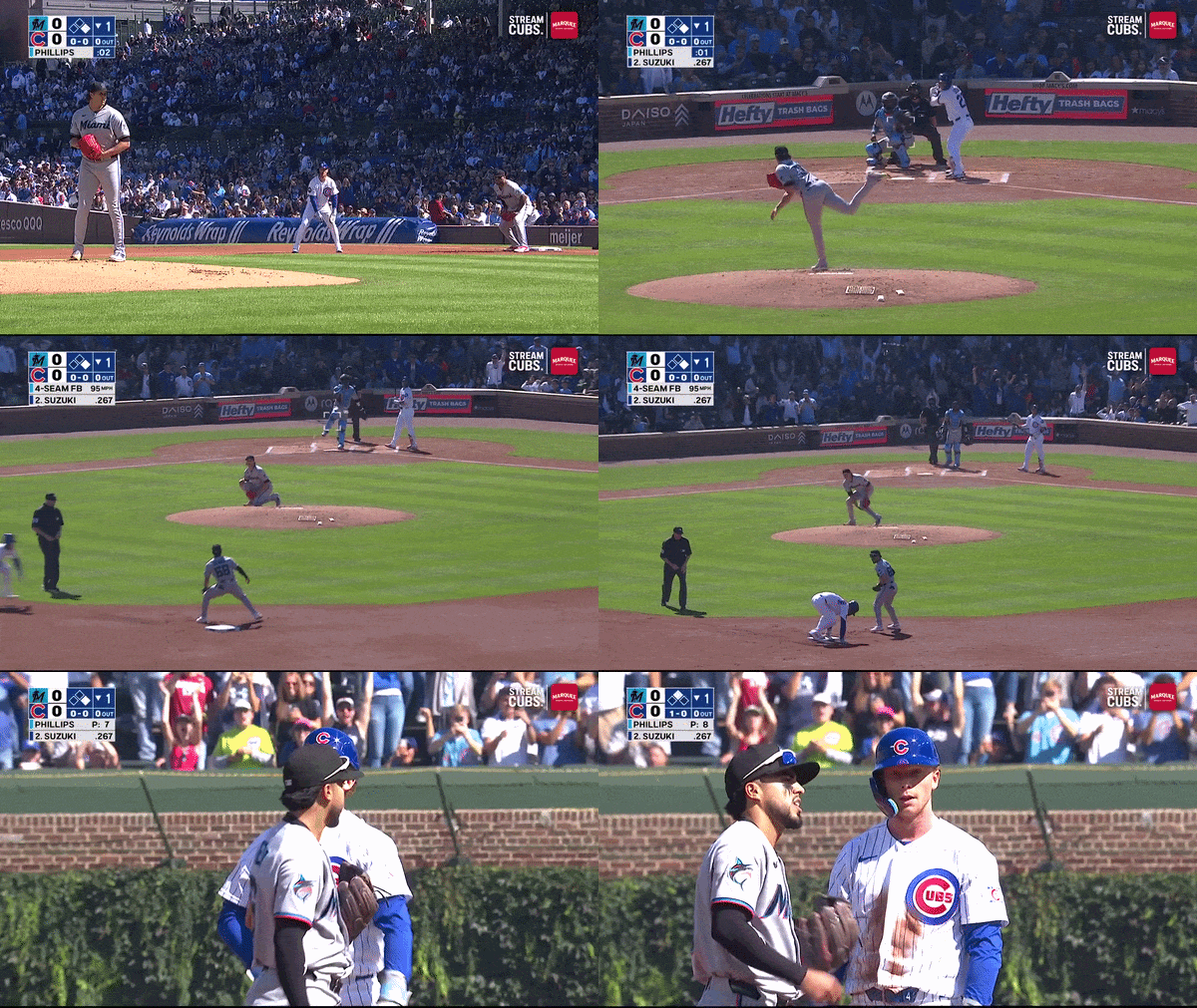
There’s been a flurry of new 40-40 club members recently — PCA this season, Shohei Ohtani in 2024 and Ronald Acuña Jr. in 2023 — but that’s just the brand of superstar in baseball these days.
The best of the best are electric players who can do it all, and we’ve been treated to some truly ridiculous seasons as a result.
PCA didn’t just go 40-40, he’s also having one of the best defensive seasons in center field we’ve ever seen. Ohtani didn’t just join the 40-40 club, he created the 50-50 club. Acuña didn’t stop at 40 steals, he racked up 73, making him the only 40-70 player in history.
Anyway, here’s your updated 40-40 club as of today:
- Pete Crow-Armstrong, Cubs, 2026 — 45 HR, 40 SB
- Shohei Ohtani, Dodgers, 2024 — 54 HR, 59 SB
- Ronald Acuña Jr., Braves, 2023 — 41 HR, 73 SB
- Alfonso Soriano, Nationals, 2006 — 46 HR, 41 SB
- Alex Rodriguez, Mariners, 1998 — 42 HR, 46 SB
- Barry Bonds, Giants, 1996 — 42 HR, 40 SB
- Jose Canseco, A’s, 1988 — 42 HR, 40 SB
MAKING SENSE OF THE AL PLAYOFF PICTURE

Two of the three American League division titles are still up for grabs. Four teams are fighting for them. Someone has to step up and take them. Right??
The Guardians and White Sox are battling for the AL Central title. The Astros and Rangers are battling for the AL West title. But with only a few days left in the regular season, none of those teams have been able to seize control of the race.
Cleveland (82-76) leads Chicago (82-77) by just a half-game in the Central after the White Sox won today — which actually clinched a postseason berth for the Sox. Chicago also holds the tiebreaker over Cleveland for the division if it comes down to that.
There could be an extra benefit to winning the Central, too, because that division winner will likely get the No. 2 seed in the AL — and a bye straight into the Division Series.
Meanwhile, Houston and Texas entered the day tied atop the West … even though both teams had a losing record at 78-80. No division winner has ever done that. (The Rangers won today to take a half-game lead, for now.)
Actually, because the best the Astros and Rangers can do now is finish 82-80, the 2026 AL West winner is guaranteed to at least be tied for the worst record of any division winner ever. The 2005 Padres, who went 82-80 to win the NL West, hold that mark.
Oh, and then after all that gets sorted out, whichever two teams don’t win those divisions will also be battling for the third and final AL Wild Card spot. After their win today, the White Sox hold a 3 1/2-game lead over the Astros for that spot.
But with all the flipping and flopping that could still happen in both the Central and the West, who knows which team you’ll see occupying that Wild Card berth at the end of the season.
It’s basically four teams for three playoff spots. So there’s going to be A LOT going on over the final weekend. We’re keeping tabs on all the latest developments in the AL playoff picture right here.
DON’T COUNT JUDGE OUT JUST YET

Apparently, Aaron Judge never got the memo that Aaron Judge was likely going to miss the Wild Card Series.
A day after Aaron Boone said the Yankees were planning on not having Judge for the first round of the playoffs, Judge himself said: Not so fast.
The reigning MVP said he intends to be ready for Game 1 of the Wild Card Series, which is scheduled to begin Tuesday at Yankee Stadium, and is all but guaranteed to be against the Red Sox.
Now, we’ll wait and see what actually happens, because Judge’s right calf strain isn’t just going to disappear. But we don’t want to doubt the superstar slugger when he says he’s going to be out there slugging in October.
Getting a player like Judge back is the type of thing that can swing a playoff series. And he isn’t the only star around the league who could be returning just in time for the postseason.
That list includes players like:
Shohei Ohtani — Ohtani rapped a base hit in his return from right knee and biceps issuesyesterday. If the Dodgers want to three-peat, they need their MVP.
Garrett Crochet — The Red Sox rehabbing ace is up to 96 mph as he gets ready to pitch out of the bullpen in the postseason.
Alex Bregman — The Cubs third baseman is ramping up his bid to return from the gnarly facial fractures he suffered when he got hit by a foul ball in the on-deck circle.
Jesús Luzardo — The All-Star lefty’s return to the mound is still TBD, but Luzardo and the Phillies are hopeful he’ll be ready to pitch in the postseason.
Blake Snell — The two-time Cy Young winner is expected to return from left groin tightness to make one more regular-season start, with an eye toward joining the Dodgers’ postseason rotation.
Giancarlo Stanton — This one’s a real wild card. Big G is apparently “knocking on the door” of a return to the Yankees lineup, and he has a history of clutch postseason home runs.
See more important injury updates here >>
BIGGEST GAMES OF THE NIGHT
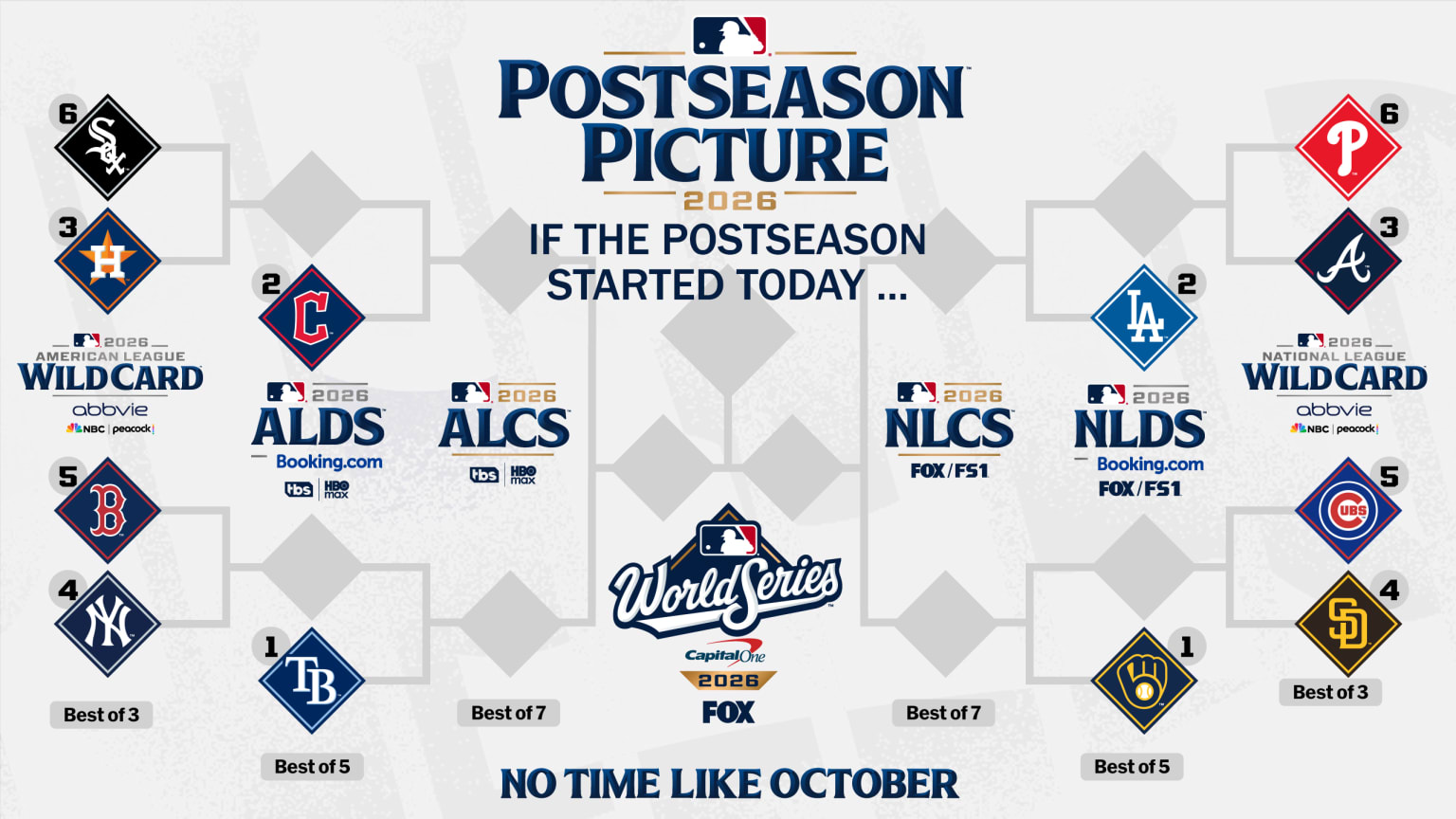
Of the five teams that could’ve clinched a playoff spot yesterday … zero did. But that’s already changed today — and there are plenty more clinch scenarios on the table.
First of all, both Chicago teams already clinched their playoff spots today. Now watch out for these games later tonight.
Brewers at Phillies (6:05 p.m. ET, MLB.TV)
The Brewers can clinch the No. 1 seed in the National League, which would give them home-field advantage through the NLCS, if they win today and the Dodgers lose to the Padres. The Phillies can clinch a playoff spotwith a win and a loss by either the D-backs or Padres.
Guardians at Red Sox (6:45 p.m. ET, MLB.TV)
The Guardians can clinch an AL postseason berth with a win over the Sox. They’d also clinch if either the Rangers lose to the Mets (that game is live right now) or the Astros lose to the A’s.
Astros at A’s (9:40 p.m. ET, MLB.TV)
It’s not a potential clincher, but every game is huge for the Astros as their playoff hopes come down to the wire. They still control their own destiny as they own the AL West tiebreaker over the Rangers.
Padres at Dodgers (10:10 p.m. ET, MLB Network Showcase / MLB.TV)
The Padres can clinch an NL Wild Card spot if they beat the Dodgers or the D-backs lose to the Rockies. On the flip side, the Dodgers clinch a first-round bye if they win this game, or if the Braves lose to the Reds.
ONE LAST SENDOFF FOR JV
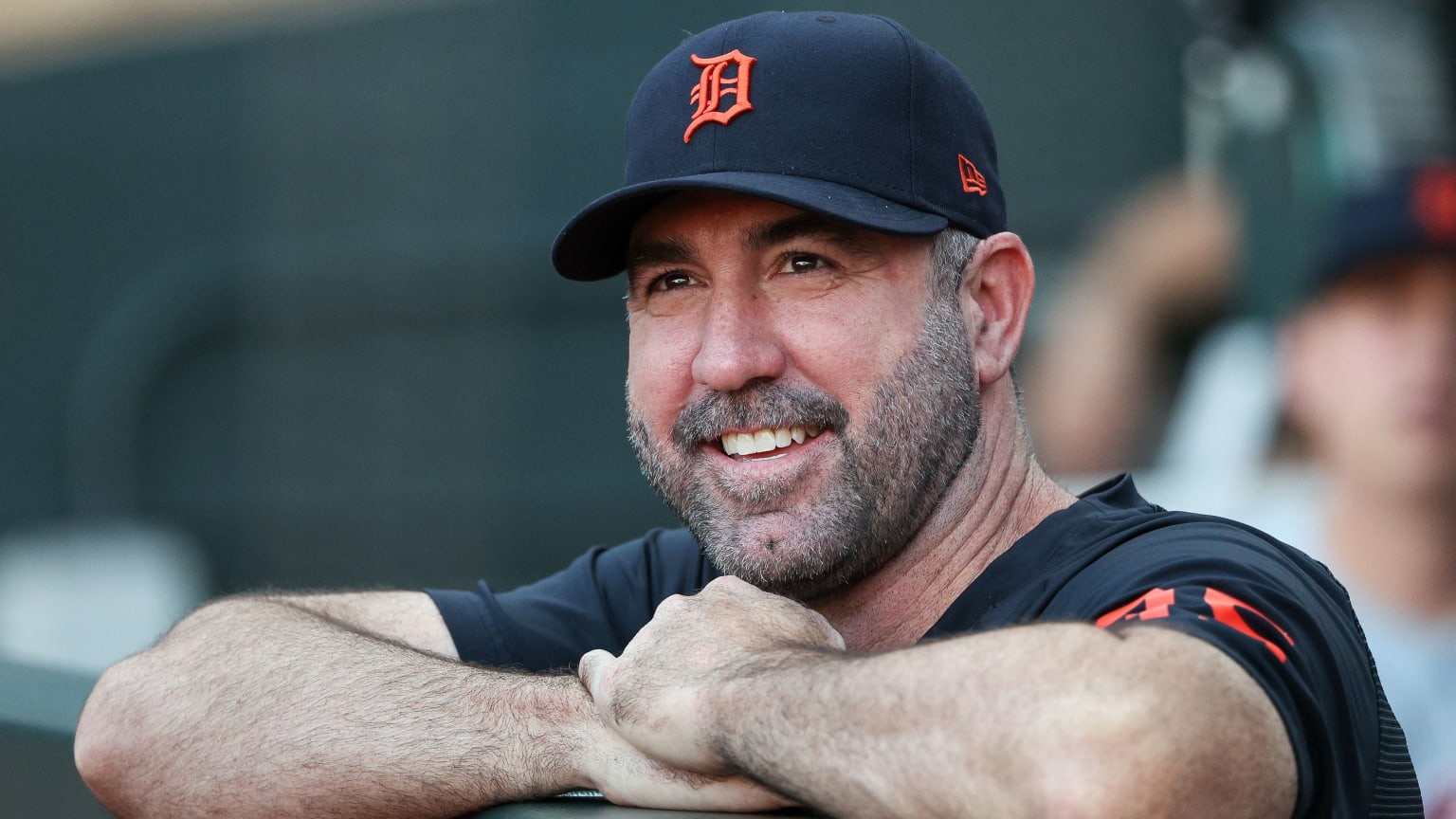
On Saturday, Justin Verlander will make the final start of his storied Major League career.
It will be one last chance to pitch in front of the home crowd in Detroit, where Verlander began his career 21 years ago, made seven All-Star teams, and won a Rookie of the Year Award, Cy Young and MVP.
“I don’t think there is preparation for what I’m going to feel emotionally,” Verlander said. “I think I remember the first time coming back here [as an Astro in 2017], the tribute video that they played when I was walking between the bullpen and the dugout, and that got me a little emotional. But I was able to settle that down and go pitch. So I think maybe that’s like the only other experience I think that I’ll have to lean on with something like this.”
The Tigers will be celebrating their franchise icon all weekend. Here’s what they have in store for JV.


© 2026 MLB Advanced Media, L.P. MLB trademarks and copyrights are used with permission of Major League Baseball. Visit MLB.com. Any other marks used herein are trademarks of their respective owners.
Please review our Privacy Policy.
You (peterhovis@icloud.com) received this message because you registered to receive commercial email messages from MLB.com.
Please add info@marketing.mlbemail.com to your address book to ensure our messages reach your inbox. If you no longer wish to receive commercial email messages from MLB.com, please unsubscribe or log in and manage your email subscriptions.
Postal Address: MLB.com, c/o MLB Advanced Media, L.P., 1271 Avenue of the Americas, New York, NY 10020.
4 days left and 6 playoff spots still to fill

Thursday, September 24

4 days left and 6 playoff spots still to fill
The Guardians, White Sox, Cubs, Phillies and Padres all had an opportunity to secure their place in the playoff field last night if things broke right. They’ll all try again today to make things official.
YOUR NEWS

D-backs live to fight another day in playoff chase with win over Rockies
Backflipping Minor Leaguer is at it again after title win!
TOP NEWS

Machado’s HR sets tone as Padres move one step closer to postseason berth

Astros squander 4-0 lead — and a chance to break away in AL West

White Sox miss chance to tie for Central lead, but clincher remains oh so close

Cubs fall to Marlins, still in pursuit of elusive playoff spot

Judge trying to speed up process, hopes to be ready for Wild Card Series
STAFF PICKS

The bonkers stats that defined the 2026 season
Here are 17 hard-to-believe numbers — some already etched in the MLB record books — that left us all in awe.
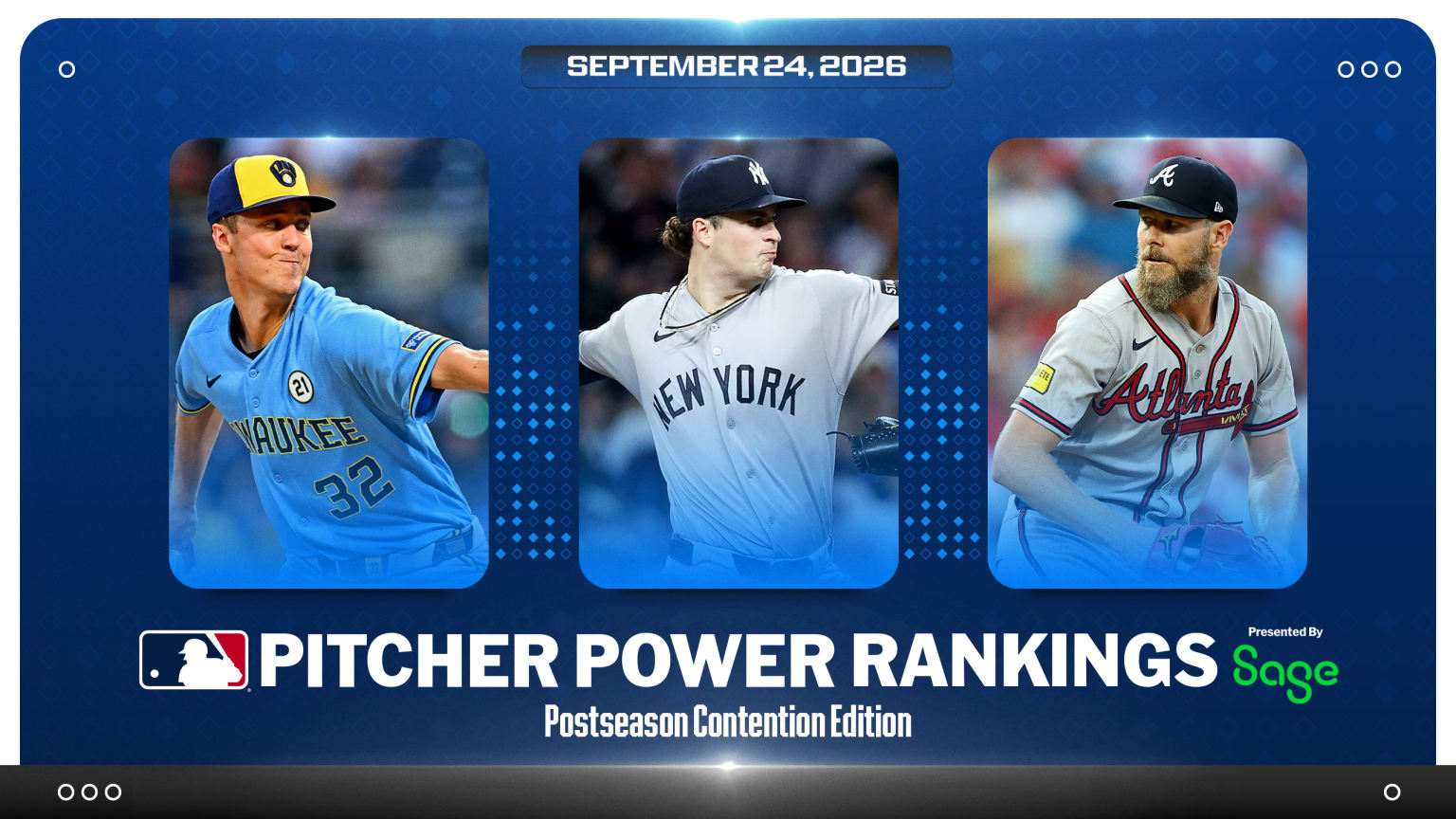
Postseason pitcher power rankings
We are this close to postseason baseball, so for this iteration of Starting Pitcher Power Rankings, we decided to get in the playoff spirit — ranking only hurlers on teams who have already clinched a playoff bid, or those still in contention.
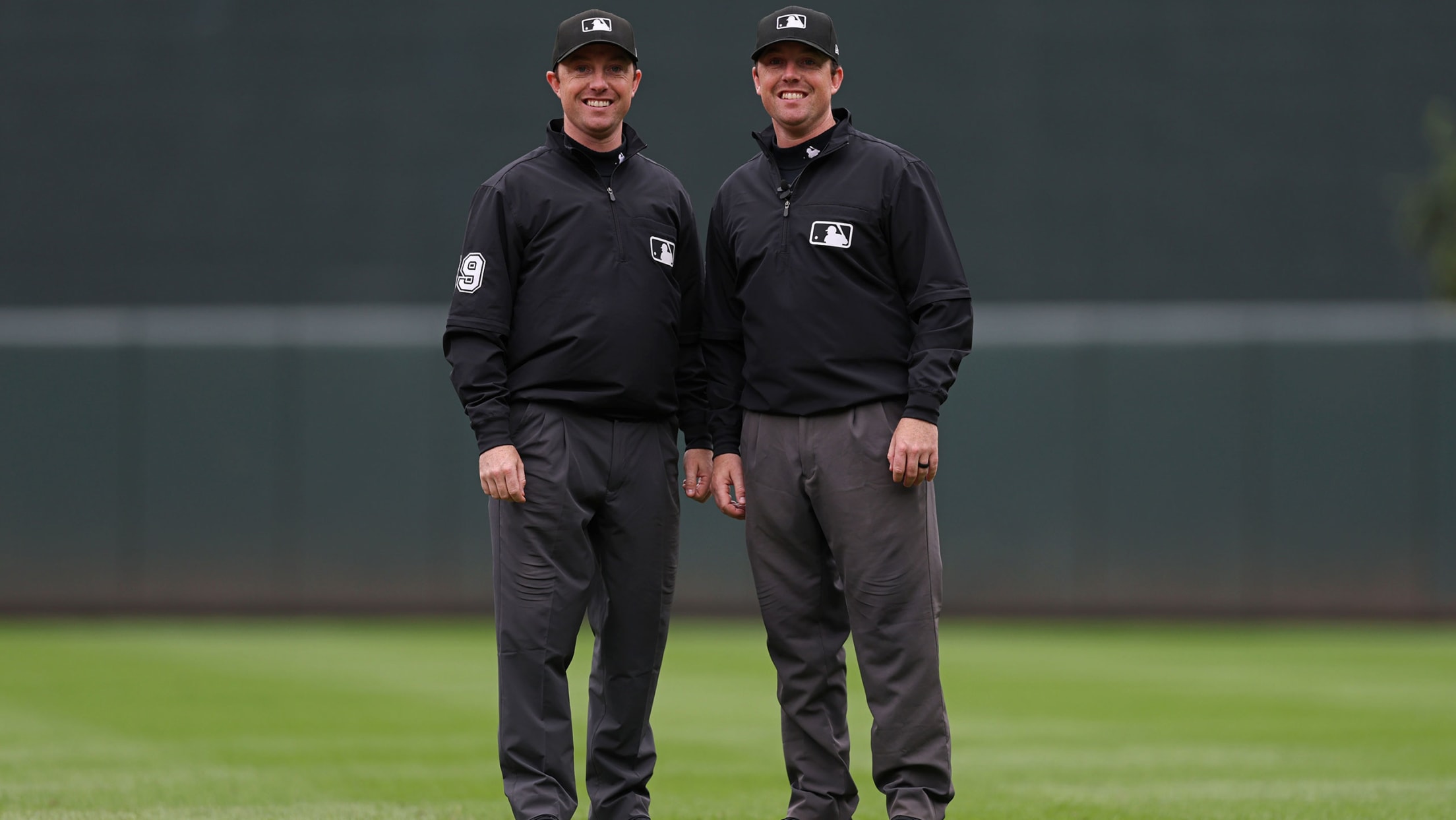
Next they just need to umpire a game the Rogers twins are pitching
Austin and Tyler Jones became the first identical twins to serve on the same umpiring crew for an MLB game when they worked together during the Blue Jays-Orioles doubleheader on Wednesday.
ADD MLB AS YOUR PREFERRED SOURCE ON GOOGLE
TOP PERFORMANCES


Longest Home Run
Brett Baty
455 ft
9th Inning

Hardest Base Hit
Henry Bolte
115.1 mph
4th Inning

Fastest Strikeout
Tyron Guerrero
100.8 mph
7th Inning

Decisive Play
Astros
34% WPA
10th Inning

2nd Yankees Draft pick to have a 40-HR season (Judge)

3rd starter with 2.20 ERA or lower at 37+ years old (Verlander, Clemens)

1st with a save on multiple days holding a share of MLB lead in IP
Finishes with 0.84 WHIP, lowest ever for rookie (min. 15 starts)
2nd with 60+ triples and 100+ HR within first 640 games (Gehrig)
PLAY A SPORCLE BASEBALL QUIZ!

MUST-SEE PLAY

This diving stop by Joey Ortiz saved a run in a tight game with the Phillies.
MLB NETWORK

MLB Network Showcase: Padres vs. Dodgers
Fernando Tatis Jr. and the Padres take on Freddie Freeman and the Dodgers in an MLB Network Showcase presented by CarShield at 10 p.m. ET (or Astros vs. A’s).

Thursday afternoon action
Jordan Walker and the Cardinals take on Brandon Lowe and the Pirates at 12:30 p.m. ET, followed by the conclusion of the D-backs and Rockies.
SCOREBOARD

WSH 4
DET 2

TOR 2
BAL 4
TOR 2
BAL 4

MIN 4
SF 2

STL 5
PIT 1

MIL 4
PHI 1

TB 2
NYY 9

CLE 0
BOS 1

CIN 2
ATL 3

CWS 4
KC 5

MIA 3
CHC 2

NYM 7
TEX 2

AZ 5
COL 3

LAA 3
ATH 7

SD 5
LAD 1

HOU 5
SEA 6
© 2026 MLB Advanced Media, L.P. MLB trademarks and copyrights are used with permission of Major League Baseball. Visit MLB.com. Any other marks used herein are trademarks of their respective owners.
Please review our Privacy Policy.
You (peterhovis@icloud.com) received this message because you registered to receive commercial email messages from MLB.com.
Please add info@marketing.mlbemail.com to your address book to ensure our messages reach your inbox. If you no longer wish to receive commercial email messages from MLB.com, please unsubscribe or log in and manage your email subscriptions.
Postal Address: MLB.com, c/o MLB Advanced Media, L.P., 1271 Avenue of the Americas, New York, NY 10020.
Matthew 5:3 – Understanding Poor in Spirit: Embracing Humility to Follow His Lead
Having trouble reading this email? View it in your browser.


Matthew 5:3
(3) Blessed are the poor in spirit: for theirs is the kingdom of heaven.
King James Version Change email Bible version
“Poor in spirit” does not mean to conduct one’s life without vitality, nor does it mean that a person is weak. Would we ever accuse Jesus of being weak? Jesus was the personification of humility. People think of humility as weakness because they are judging carnally by man’s spirit, by sight. But the Spirit of God, the faith of God, judges according to things not seen—the Kingdom’s standards.
Here is a definition of poor in spirit from a commentary by Emmet Fox on the Sermon on the Mount:
To be poor in spirit means to have emptied yourself of all desire to exercise personal self-will and what is just as important to have renounced all preconceived opinions [prejudices] in the wholehearted search for God. It means to be willing to set aside your present habits of thought, your present views and prejudices, your present way of life, if necessary, to jettison in fact anything and everything that can stand in the way of your finding God.
When Jesus counseled us in Matthew 18:4 that unless we became as little children, we would not even be in the Kingdom of Heaven, He was not holding up a child’s innocence or purity as a model. He was not counseling us to become childish but to have a child’s unconcern for social status, honor, or anything similar. When we are carnal, pride is such a master that we have little choice but to follow it. It is plowing the way before us. One who is truly poor in spirit, however, can ignore pride and follow God’s lead.
— John W. Ritenbaugh
To learn more, see:
Faith (Part Seven)
Topics:
Commentary copyright © 1992-2026 Church of the Great God


Subscription Information
This daily newsletter was sent to you at peterhovis@me.com because you subscribed at www.theberean.org on Apr 14, 2017.
Email Preferences | Unsubscribe
Church of the Great God
P.O. Box 471846
Charlotte, NC 28247
803-802-7075
Championship Battles Take Center Stage as Motul Petit Le Mans Entries Revealed




















Entry List Notebook:
Motul Petit Le Mans
DragonSpeed Steps Back Up To GTD PRO For Motul Petit Le Mans; Adds Bourdais
Drudi Rounds Out Car Blanche Lineup For Its First GTD PRO Michelin Endurance Cup Race
Winward Racing Returns Its Championship-Winning Mercedes-AMG GTD Lineup For 2027
Lamborghini Super Trofeo North America 2027 Schedule Released
Win The Weekend Presented By Michelin Bonus Episode! | Multimatic Ford Mustang GT3 Shop Tour
2026 IMSA TireRack.com Battle On The Bricks | WeatherTech Championship | Indianapolis Motor Speedway
Revealing The GR GT3’s Secrets | The NEW Gazoo Racing GT3 Race Car!
Free To Play Game Asphalt Legends Launches IMSA Event
Play the IMSA Endurance Mode event in the racing game Asphalt Legends for a chance to win a VIP trip to experience the 24 Hours at Daytona! Available for a limited time!
International Motor Sports Association, LLCOne Daytona Blvd.Daytona Beach, FL 32114UnsubscribeUpdate Profile | About our service providerSent by insider@imsa.com

