Now that Tarik Skubal is back on the mound, the question turns to how much longer it will be for the Tigers. If they move the two-time Cy Young winner, here is where he could end up.
Along with the usual superstars at the Midsummer Classic, the rosters always have some surprises. Here is one player at each position who could be an unexpected All-Star.
Even though Jacob Misiorowski did not throw a no-hitter on Friday night, there is a case to be made that his one-hit, 15-strikeout outing is one of the most dominant starts ever.
Mike Trout is the only active player who has been voted as an All-Star Game starter 10 times, and here is the complete list of players in double digits.
Energy giants like Exxon and Chevron are buying land in America’s lithium hotspot. Now they’ve got a new neighbor.
EnergyX has now acquired 35k gross acres in Southwest Arkansas, right next door. With tech that can recover up to 3X more lithium than traditional methods, they’re aiming for America’s lithium crown. General Motors already invested.
DISCLOSURE: EnergyX’s Regulation A offering has been qualified by the SEC. Before investing, carefully review the offering circular, including the risk factors. The offering circular is available at invest.energyx.com.CLICK HERE…Fellow Investor,
The widow’s penalty tax is one of the least known yet most onerous of the retirement Stealth Taxes.
Since few people are aware of it, few retirement plans defend against the widow’s penalty.
I frequently warn people about the “solo” years.
Those are the years after one spouse has passed away.
The surviving spouse must maintain the household with one less Social Security benefit and perhaps a decline in other income.
In addition, expenses are likely to increase because the surviving spouse needs help the deceased spouse used to provide.
Perhaps what’s least known about the solo years is that income taxes are likely to be substantially higher for the surviving spouse.
The solo years often are when retirement plans fall apart and the surviving spouse struggles.
The widow’s penalty tax is a major reason…
Here’s How the Widow’s Penalty Works
When both spouses are alive, the couple’s tax return filing status is “married filing jointly.”
But after one spouse passes away, the surviving spouse’s filing status changes to single.
The married filing jointly status is the most beneficial while the single filing status is unfavorable.
Taxpayers who are married filing jointly stayed in the 12% tax bracket until their taxable income exceeded $80,250 in 2020.
But a single taxpayer stays in the 12% bracket only until taxable income exceeds $40,125.
The 22% tax bracket applies to a married couple filing jointly until taxable income exceeds $171,050… but for a single taxpayer the ceiling is taxable income of $85,525.
A surviving spouse is allowed to use the married filing jointly status only for the year in which the other spouse died.
The special surviving spouse status can be used for a few years – but only if there is a dependent child in the household.
You can see the surviving spouse is hit with a double whammy.
First, as I mentioned earlier, income is likely to decline.
The household begins receiving only one Social Security check instead of two.
Other sources of income also might decline.
For example, the deceased spouse might have been receiving a pension or annuity that upon his or her death either ends or pays a reduced amount to the surviving spouse.
There is a way retirees can collect thousands of dollars per month for the rest of their lives — tax-free. Plus, this tax-free income source is 100% legal and approved by the IRS.
And here’s the kicker: even if they don’t have enough money put away yet for retirement… even if they’re over age 60… they can still get thousands of dollars a month from this opportunity. Click here to find out more.CLICK HERE…Second, the surviving spouse is pushed into a higher tax bracket.
The income usually doesn’t decline enough to keep the surviving spouse in the same tax bracket as a single taxpayer.
That would require the income to be cut in half.
Instead, the surviving spouse loses some income but also pays a higher income tax rate on the remaining income because of the change in filing status.
Income declines, but income taxes increase.
There can be a third hit to the surviving spouse.
Higher-income Medicare beneficiaries are subject to the Medicare premium surtax, also known as income-related monthly adjustment amount (IRMAA).
As with income taxes, the Medicare premium surtax changes with marital status.
A single taxpayer with the same income as a married couple will pay twice the Medicare surtax as the couple.
A newly widowed taxpayer who retained a high percentage of the couple’s previous income could pay as much or more in the Medicare premium surtax as the couple paid jointly.
In next week’s Retirement Watch Weekly, I’ll share a fourth negative effect of the solo years – and how to plan for the Widow’s Penalty Tax.To a better retirement, Bob Carlson Editor, Retirement Watch WeeklyEditor’s Note: Studies show many Americans make costly mistakes when claiming Social Security. In fact, the average household can lose up to $111,000 in benefits. Some lose out on even more.
Yet savvy retirees make sure this doesn’t happen. For example, some collect $3,451 monthly instead of $1,600.
And the strategy is perfectly legal. No complex moves required.
This patented artificial intelligence processes 1.4 million data points every day across stocks, ETFs, options, currencies, and global markets to forecast direction 72 hours in advance, with up to 87.4% proven accuracy.
In this live Options training session, our expert shows you exactly how the AI forecast model pulls hidden setups into focus and walks you through the specific stocks and options positioned to move right now.
New to the Retirement Watch Community: SeniorResource.com
Retirement is often viewed as a period of life filled with relaxation, leisure, and the freedom to pursue passions and hobbies. However, transitioning into retirement also brings about a new set of financial challenges. While you may no longer face the daily grind of commuting or work-related expenses, there are several costs that can suddenly appear, potentially disrupting your financial stability. Understanding these costs and planning for them can help ensure a smoother and more enjoyable retirement. Here are 10 costs that can unexpectedly arise in retirement.
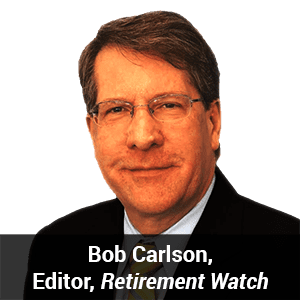
About Bob Carlson:
Robert C. Carlson is the author of the books The New Rules of Retirementand Retirement Tax Guide, editor and investment director of the popular retirement newsletter, Retirement Watch, and editor of the free weekly e-letter, Retirement Watch Weekly. Bob is a frequent speaker at investment conferences around the country, and you can also hear Bob as a featured guest on nationally-syndicated radio shows, such as The Retirement Hour, Dateline Washington, Family News in Focus, The Michael Reagan Show, Money Matters and The Stock Doctor.
About Us:
Eagle Financial Publications is located in Rosslyn, VA. – Blocks from the Capitol. Our products have been helping investors build their wealth for several decades. Whether you’re a long-term investor or short-term trader, you’ll find the right strategy for you, including how to earn more steady income to spend now, preserve and grow your capital to enjoy later, and whatever other investment goals you have.
To ensure future delivery of Eagle Financial Publicationemails please add financial@info2.eaglefinancialpublications.com to your address book or contact list.
This email was sent to peterhovis@icloud.com because you are subscribed to Dividend Investor Daily. To unsubscribe from this list please click here. To stop receiving emails simply click here. If you have questions, please send them to Customer Service. View this email in your web browser.
Legal Disclaimer: Any and all communications from Eagle Products, LLC. employees should not be considered advice on finances. Although our employees may answer your general customer service questions, they are not licensed under securities laws to address your particular investment situation. No communication by our employees to you should be deemed as personalized advice on finances.
Salem Media Group – Eagle Financial Publications | 1735 N Lynn St, Suite 500, Arlington, VA 22209-2016
(13) Watch ye, stand fast in the faith, quit you like men, be strong. (14) Let all your things be done with charity. King James VersionChange email Bible version
Are we not in a spiritual fight? Do we not face an adversarythat wants to destroy us? Have we not committed ourselves to give our lives, if necessary? Matthew Poole, who published his commentary in 1685, makes a good point when speaking of “quit ye like men” (“be brave”, NKJV):
. . . you are as soldiers fighting against the world, the flesh, and the devil; do not behave yourselves like children, whom the least opposition will terrify and throw down; but like men, with a spiritual courage and fortitude, becoming such who have so good a Captain, and so good a cause.
The “captain of their salvation” (Hebrews 2:10) is our commanding officer in battle. Our Captain has given us the equipment we need to carry out our duties: these four imperatives. All of them—watching, standing firm in the faith, acting like men, and being strong—can be considered as masculine traits due to the military analogies; but they are not limited to men, nor should they be.
Satan has perverted the minds of today’s world to the point that these traits are regarded negatively. Feminists might concede that men are strong and courageous, in some cases, but foolishly so. We are told that women are loving and nurturing and these qualities are to be preferred. So much so that homosexuality is considered normal and a man that truly acts like a man is abnormal—a Neanderthal. It is a mixed-up world indeed.
However, these traits are not mutually exclusive! Notice what Paul says in verse 14: “Let all that you do be done with love.” Verse 13 is not for lumberjacks, and verse 14, for women and sensitive, new-age males! Not at all. As Christians, we are to “be men” and do all with love. Is not love showing concern for others? In the Christian fight, are not watching, standing in the faith, exhibiting courage, and being strong—in order to protect their loved ones and their way of life—showing love? Certainly!
The entire book of I Corinthians is, as Henry Halley says, “Mainly about Certain Church Disorders.” Brethren met in their homes and small halls in one of the largest, richest, and most important cities of the Roman Empire. The brethren there were faced with decadence, temptation, and vices of every sort. They experienced corruption on a grand scale. There were factions and competing groups. Sound familiar? Truly, “there is nothing new under the sun” (Ecclesiastes 1:9).
Our lives to this point have been difficult, and more tough times lie ahead. We know that God will provide. God is faithful (I Corinthians 1:9), and we do not need to worry about how He will do it. Instead, we need to take care of our end of the deal: to be ever-vigilant, standing firm in the faith, courageous and strong, doing everything in concern for others. All this is summed up by andrizomai: quit ye like men!
House Republicans Secure Long-Term Funding for Border Security
This week, I voted in favor of the Secure America Act, legislation that fully funds Border Patrol, ICE, and critical border security operations through 2029.
After years of Biden’s failed open-border policies that fueled the worst border crisis in our nation’s history and following months of obstruction by America Last Democrats, Congress is finally providing the resources needed to restore law and order at the southern border. The bill strengthens enforcement efforts by funding additional personnel, detention and removal operations, advanced border technology, fentanyl interdiction programs, and partnerships with state and local law enforcement.
Just as importantly, this legislation provides long-term certainty for the brave men and women of Customs and Border Protection and Immigration and Customs Enforcement who put their lives on the line every day to stop cartels, human traffickers, drug smugglers, and criminal illegal aliens from entering our communities.
The American people overwhelmingly rejected open borders. By passing the Secure America Act, House Republicans are delivering on our promise to secure the homeland, support our frontline law enforcement officers, and put the safety and security of American citizens first.
Gosar Votes Against Warrantless Spying of Americans
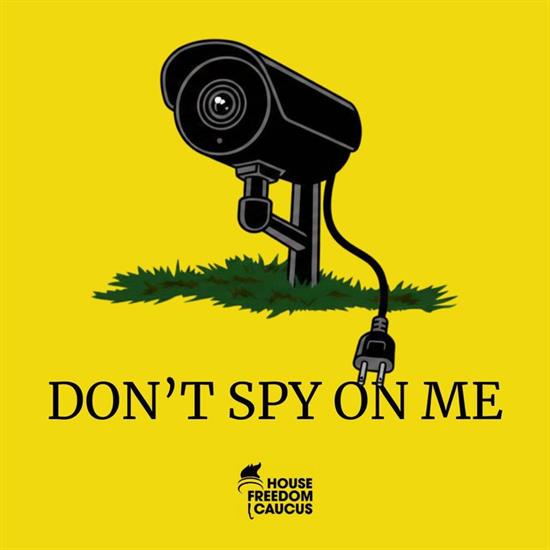
This week, I once again voted against extending Section 702 of the Foreign Intelligence Surveillance Act (FISA) without meaningful reforms to protect the constitutional rights of American citizens.
The Fourth Amendment is clear: Americans should not be subjected to government searches and surveillance without a warrant based on probable cause. Yet Section 702 has repeatedly been abused to conduct warrantless searches of Americans’ communications, including improper queries involving political protesters, journalists, congressional candidates, and even Members of Congress. These violations are not isolated incidents—they are part of a troubling pattern.
I support giving our intelligence agencies the tools needed to target terrorists, spies, and foreign adversaries. What I do not support is allowing the federal government to continue exploiting a surveillance program that has been repeatedly used to sweep up Americans’ private information without adequate safeguards.
I took an oath to defend the Constitution, not rubber-stamp warrantless spying on the American people. Until Congress enacts real reforms that protect the rights guaranteed by the Fourth Amendment, I will continue to oppose reauthorizing FISA 702.
Restore Accountability for Big Pharma
This week, I joined Children’s Health Defense, Senator Rand Paul, Senator Ron Johnson, and other advocates to support my bill, the End the Vaccine Carveout Act.
Big Pharma enjoys a special liability shield that no other major industry receives. If a defective product harms an American family, vaccine manufacturers are largely protected from the same legal accountability faced by other companies.
My bill restores fairness by allowing those injured to seek justice in court. No corporation should be above the law, especially those earning billions from products used by millions of Americans.
Our system works best when science is transparent, patients are informed, and companies are held accountable for the products they sell.
The bill expands the safety zone surrounding Yuma Proving Ground, one of the nation’s premier military testing and training facilities and a critical asset for developing next-generation defense technologies. Yuma Proving Ground generates more than $1.1 billion in economic activity in western Arizona and is the only facility capable of supporting certain high-altitude flight tests essential to our national defense.
By extending the installation’s boundary to a clearly identifiable landmark along Route 95, the legislation improves public safety, enhances military testing capabilities, and provides greater certainty for local residents and land users.
I am grateful to Chairman Bruce Westerman and my colleagues on the Committee for advancing this commonsense, bipartisan legislation. I look forward to securing House passage and ensuring our warfighters have the resources they need to defend our nation.
The announcement comes on the heels of last month’s Operation Checkmate, which resulted in 52 arrests, including 36 illegal aliens working as semi-truck drivers. Many possessed commercial driver’s licenses issued by other states, highlighting the serious consequences of lax immigration enforcement and the need for continued vigilance.
As the Congressman representing Yuma and much of Arizona’s border region, I have long advocated for stronger border security and enforcement of our immigration laws. The Yuma Sector’s 126 miles of border remain a critical frontline in protecting our communities, safeguarding American jobs, and defending our national security.
I commend the men and women of Border Patrol for their tireless service and dedication. This renewed enforcement effort is another important step toward restoring law and order at our southern border and putting the safety and interests of American citizens first.
Rather than standing with American workers, the court sided with a coalition of Democrat-led states determined to protect a system that benefits foreign labor, corporate interests, and the open-borders crowd.
The H-1B program was intended to fill critical workforce shortages. Instead, it has become a tool for outsourcing jobs and suppressing wages while hardworking Americans are pushed to the sidelines. President Trump sought to put American workers first. An activist judge decided otherwise.
This ruling is yet another example of unelected judges obstructing the America First agenda that millions of Americans voted for. Time and again, the courts are used to protect the failed policies of the past while blocking common-sense reforms that prioritize American citizens.
My position is simple: American jobs should go to American workers. Our government’s first responsibility is to the people of this country—not foreign labor pools, multinational corporations, or the special interests profiting from a broken immigration system. I will continue fighting to ensure America’s workers come first.
Back up: UNRWA, the United Nations Relief and Works Agency for Palestine Refugees, was established in 1949 to provide humanitarian assistance and public services to Palestinian refugees and their descendants in the Middle East. Over the years, American taxpayers have contributed more than $7 billion to the agency—funds that could have been invested in priorities here at home, such as schools and infrastructure. For years, credible concerns have been raised that UNRWA has been used to fund terrorist organizations and has facilitated or enabled extremist activities. In response, the first Trump Administration announced in 2018 that it would end all U.S. funding for UNRWA. The Biden Administration restored funding in 2021.
These shocking findings confirm what many have long suspected: UNRWA has become so deeply compromised by Hamas infiltration that it can no longer be viewed as a legitimate humanitarian organization. American taxpayers should never be forced to subsidize an agency that employs individuals tied to a terrorist group responsible for the murder, rape, kidnapping, and torture of innocent civilians.
UNRWA should be designated as a terrorist-affiliated organization, and every remaining avenue of U.S. funding must be permanently shut down. More broadly, this scandal is another example of the corruption and dysfunction that plague the United Nations and its affiliated agencies.
The United States should withdraw from the U.N. and its network of organizations that consistently undermine American interests while demanding American tax dollars. Not one penny of taxpayer money should ever be used to support institutions infiltrated by terrorists.
It’s Mail Time!
I receive thousands of letters every month and I appreciate hearing from everyone. I do my very best to respond to every single letter. Here are a few letters that I received this week.
📨 Cassidy S. from Wickenburg, AZ writes:
I am writing today to ask that you use every single tool at your disposal to see Bill Pulte removed as acting Director of National Intelligence. Pulte has absolutely no experience in national intelligence and is clearly being offered the job based on his willingness to go after Trump’s political adversaries. He is even currently under investigation by the Government Accountability Office over whether he misused his authority at FHFA to go after these “enemies.” In this role, Pulte poses a danger to our democracy and, because of his obvious inexperience, our national security. This is not an acceptable appointment for the head of the American intelligence
Cassidy, President Trump selected Bill Pulte to serve as Acting Director of National Intelligence following the resignation of Tulsi Gabbard, who stepped down to support her husband as he battles a rare form of cancer. My thoughts and prayers remain with Director Gabbard and her family during this challenging time. Mr. Pulte’s appointment is temporary and will allow him to lead the Office of the Director of National Intelligence until President Trump’s nominee, Jay Clayton, is confirmed by the Senate as DNI Gabbard’s permanent successor.
President Trump was elected to lead the Executive Branch and is fully entitled to appoint trusted America First leaders to help implement his agenda. Despite predictable opposition from the Left and the Washington establishment, Mr. Pulte has demonstrated a willingness to challenge entrenched bureaucracy, pursue reform, and confront a broken status quo.
Because I serve in the House of Representatives, I have no formal role in the Senate’s advice-and-consent process. Nevertheless, I hope the Senate will quickly confirm Jay Clayton so that the Administration can continue advancing its America First agenda.
📨 Bobbie S. from Kingman sent in this doozy (warning, reader discretion advised):
You are without a doubt the biggest dumb a$$ ever to grace the house floor. And with MTG and Boebert that’s saying something. You just voted no on something that needed no vote. Why might you ask? Because it’s in the f#@king Constitution of the United States. I certainly hope that Trump gives you that reach around while you’re so busy, because holy f#@k are you a damned a$$ hole.
Bobbie, while it is your right to send me a message filled with profanity and personal insults it reflects rather poorly on your character.
Nevertheless, I took an oath to defend the Constitution, including the First Amendment. Americans have every right to criticize their elected officials—even in terms I would never use myself.
Too many people today believe disagreement is something to be silenced rather than debated. I disagree.
Socrates once noted that “when the debate is lost, slander becomes the tool of the loser.” Better yet, Martha Finley observed that “the weapon of vituperation is generally used by those who lack brains for argument or are upon the wrong side.”
Bobbie, you are the poster child for that which Socrates and Finley exposed. The strength of an argument is measured by facts, not its insults.
The Constitution protects our right to speak freely. It also reminds us that self-government works best when we argue ideas instead of attacking people with juvenile name-calling.
Tweet of the Week:
Photo of the Week:
Kris Thompson from Buckeye, AZ shares this great photo of Dunson the Yellow Lab at the overlook of the Victory Golf Course. Love this picture. Looks like Dunson is having a doggone great day! Thanks so much for sharing, Kris!
📸 Do you want the chance for your photograph to be featured as our “Photo of the Week?” If so, send your best shots along with a brief description to Anthony.foti@mail.house.gov. Remember to include your name and where you live.
⚠ Warning!! The Gosar Weekly Newsletter is meant for discerning readers with above-average intelligence. We link to interesting stories. We get stories a couple different ways: Google alerts, a third-party aggregator and sometimes readers send stuff. We don’t vouch for every publication or every author. If we link to a story, it is because of that story. The views expressed in any of the publications do not represent any promotion, endorsement or reflection of Congressman Gosar’s views. While we try our best, we cannot guarantee every news organization spouting hatred, animosity or divisiveness will be filtered from appearing in the Gosar Weekly Newsletter. We will endeavor to prevent that from happening by never linking to Fake News organizations including CNN, MSNBC, CNBC, Rolling Stone, the Arizona Republic, the Arizona Mirror, Media Matters or the New Republic. WEBSITE | UNSUBSCRIBE | CONTACT MEShare on Facebook | Share on TwitterWashington, DC Office 2057 Rayburn HOB Washington, DC 20515 Phone: (202) 225-2315Goodyear 1300 S. Litchfield Road Suite 115-H Goodyear, AZ 85338 Phone: 623-707-0530
Today’s Night Prayer is brought to you by Rosary.com
A Night Prayer
Jesus Christ, my God, I adore You and thank You for all the graces You have given me this day. I offer You my sleep and all the moments of this night. I place myself and all my loved ones, wherever they may be, in Your sacred side and under the mantle of Our Blessed Mother. Let Your holy angels stand watch and keep us in peace. Amen.
Quote of the Day
“The life of the body is the soul, the life of the soul is Christ.” -St. Anthony of Padua
Today’s Meditation
Many things happen that God does not will. But he still permits them, in his wisdom, and they remain a stumbling block or scandal to our minds. God asks us to do all we can to eliminate evil. But despite our efforts, there is always a whole set of circumstances which we can do nothing about, which are not necessarily willed by God but nevertheless are permitted by him, and which God invites us to consent to trustingly and peacefully, even if they make us suffer and cause us problems. We are not being asked to consent to evil, but to consent to the mysterious wisdom of God who permits evil. Our consent is not a compromise with evil but the expression of our trust that God is stronger than evil. This is a form of obedience that is painful but very fruitful.
Here at Rosary.com, we recognize that we’re more likely to pray the Rosary if we have one we absolutely love. That’s why our designers hand-select each bead, crucifix, and centerpiece to reflect beloved devotions such as Immaculate Conception, Undoer of Knots, patron saints, and more!
With sacrament season, Easter, and even Mother’s Day coming quickly, now is the time to find a gift for a devoted Catholic in your life…or to refresh your own collection.
Personalize select pieces to create unique gifts, or to fashion the perfect piece that you’ll love to pray with.See Them All
The daily examination of conscience is an ancient Catholic practice. It’s very simple, and it’s designed to help us identify our sins and weaknesses so that we can improve and grow stronger in the spiritual life, while providing an excellent ongoing preparation for regular Confession. It consists of taking a few minutes at the end of the day to prayerfully review our actions in the light of God’s commandments, followed by the Act of Contrition.
Reflect on the victories and losses
Actively reflecting on the high and low points of the day can help you live more intentionally and bring a renewed sense of resolve into the following day.
Review your actions, words, and thoughts today. Did you actively guard yourself against temptation? Where did sin creep in?
In what moments did you practice virtue and moral courage?
Were you attuned to the Holy Spirit’s promptings today? Where did you feel His inspiration?
Ask Him for the graces necessary to follow His Will more purposefully tomorrow.
Act of Contrition
O my God, I am heartily sorry for having offended Thee, and I detest all my sins because of Thy just punishments, but most of all because they offend Thee, my God, Who art all good and deserving of all my love. I firmly resolve with the help of Thy grace to sin no more and to avoid the near occasions of sin. Amen.
Practice gratitude
It is God’s love that has brought you into existence and to this exact moment. Practice looking for His hand in your day.
Where did you feel His loving gaze upon you today?
What people or moments helped you see God in your life?
Thank God for all these moments!
Ask Him to help you recognize His blessings and providence tomorrow.
Renew your commitment to Christ
Remember: our Faith is founded upon a Person—Christ! Renew your personal love and devotion to Him.
Thank God for the gift of His Son Jesus and our call to be His disciples.
Tell the Lord of your desire to know Christ more personally.
If possible, set an intention for your day tomorrow. Ask Our Lord to guide you in this act.
Pray a Hail Mary, Our Father, or another beloved prayer.
Rest with God
Praise Him, sun and moon, praise Him, all you shining stars! — Psalm 148:3



































 The widow’s penalty tax is one of the least known yet most onerous of the retirement Stealth Taxes.
 Robert C. Carlson is the author of the books The New Rules of Retirementand Retirement Tax Guide, editor and investment director of the popular retirement newsletter, Retirement Watch, and editor of the free weekly e-letter, Retirement Watch Weekly. Bob is a frequent speaker at investment conferences around the country, and you can also hear Bob as a featured guest on nationally-syndicated radio shows, such as The Retirement Hour, Dateline Washington, Family News in Focus, The Michael Reagan Show, Money Matters and The Stock Doctor.





















/https://tf-cmsv2-smithsonianmag-media.s3.amazonaws.com/filer_public/ef/fd/effd1e4d-d4d0-4aca-a2e9-84e0b334b56d/cf36e43e-596b-4104-a59e-9426cb826b92original.jpg)