Smithfield Foods Roasts Q4 Estimates: Is a $30 Price Handle Near?

Unsubscribe

Do this before SpaceX IPOs or be sorry (From Timothy Sykes)


Smithfield Foods Roasts Q4 Estimates: Is a $30 Price Handle Near?

Written by Thomas Hughes on March 27, 2026 
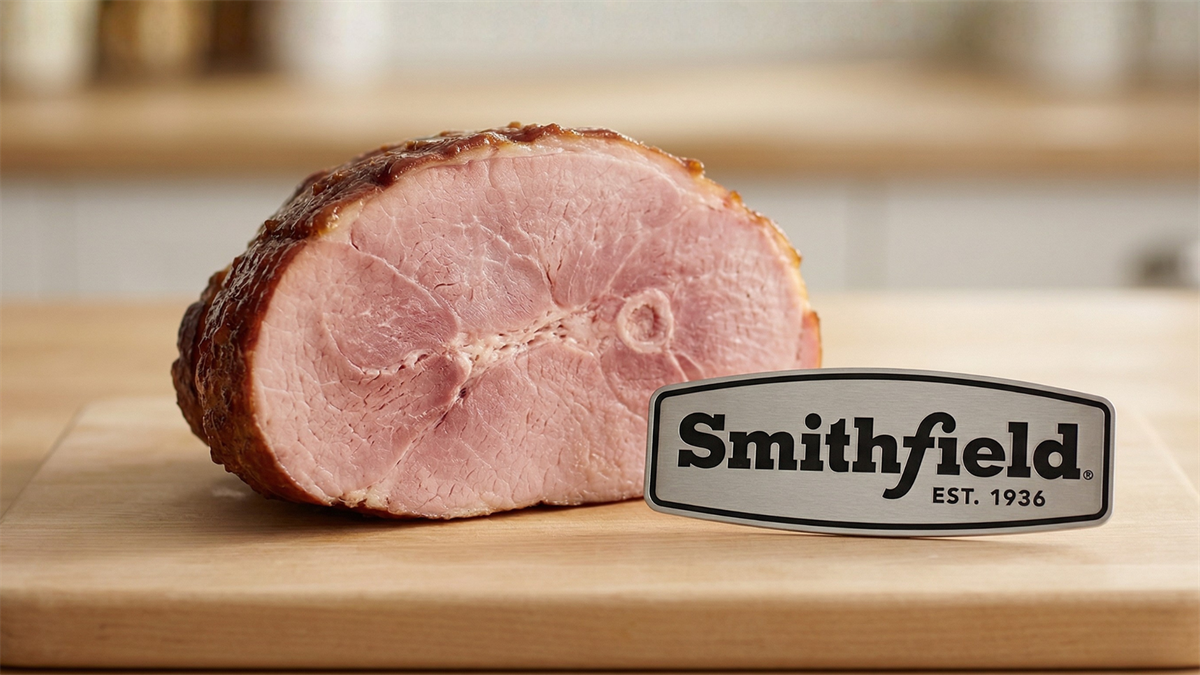
Smithfield branded ham on cutting board, highlighting packaged meat producer tied to growth, margins and dividend outlook.

Key Points

  • Smithfield Foods is trending higher on margin expansion, growth, and valuation metrics, with fresh highs likely by mid-year.
  • Analysts and institutions are accumulating this stock, underpinning an emerging uptrend.
  • 2026 catalysts include high pork prices, plans to build a new facility, and margin-accretive activity such as the Nathan’s Famous acquisition.
  • Special ReportHave $500? Invest in Elon’s AI Masterplan (From Brownstone Research)

Smithfield Foods’ (NASDAQ: SFD) stock price is rocketing higher and on track to keep moving, as the high-quality, deep-value company is firing on all cylinders amid tailwinds.

The tailwinds include increased demand and pricing for pork products, underpinned by export growth and high beef prices. Estimates vary, but pork demand is expected to remain strong this year, leading to a 2% average price increase per unit as consumers shift away from higher-priced beef. 

What this means for Smithfield is an improved earnings outlook and dividend safety.

The outlook and safety are evident in the board’s decision to increase the dividend payment to $1.25 per share this year. At $1.25, the payment is more than attractive, yielding about 4.80% with shares near their post-IPO highs, and it is cheap to own. More importantly, the payout ratio and growth outlook suggest that the dividend payment is reliable for future years and that distribution growth is likely to continue. 

Valuation metrics align with a robust increase in stock price. SFD trades at approximately 9x earnings, about 6 handles shy of its major competitor, Hormel. Hormel, trading at approximately 15x earnings, is also at value levels, as it tends to trade above 25x when fully valued. That premium is tied to its dividend and growth outlook, which are robust in the first case and improving in the second.

In this scenario, both Hormel and Smithfield Foods are positioned to advance over the coming quarters and years, but Smithfield is poised to outperform. 

less than two weeks to prepare? (Ad)

A $1.5 trillion valuation. That is what industry experts are projecting for the highly anticipated SpaceX IPO, expected to be announced on April 20th — potentially surpassing the combined market caps of the six largest U.S. defense contractors.

Consider what Tesla’s IPO meant for early investors: a $50,000 position held for 10 years grew to $1.5 million. The SpaceX IPO is projected to be even larger.

Before April 20th, there is still a backdoor way to secure a pre-IPO stake in SpaceX. Here is how to get positioned.Claim Your Pre-IPO Position

Smithfield Foods Grows and Widens Margin in FQ4

Smithfield Foods had a solid fourth quarter, with revenue growing by 7.1% to $4.23 billion.

Strength was seen across segments, with Packaged Meats up 4.3%, Fresh Pork up 2.1%, and Hogs up 3.3%. The strongest growth was seen in the Other category, which grew by neary 43% for the quarter. It includes high-demand quick-serve, value-added, and convenience products such as cooked ribs and snacks. 

Margin news is also good. The company experienced margin pressure in the Other and Packaged Meats segment but mitigated the decline with quality improvements and strength in the other segments. Operating profit in the Fresh Pork and Hogs segments increased by 25% and reversed a loss, respectively, leading to a 20% year-over-year systemwide improvement.

Guidance assumes pricing strength will continue, and includes plans for operational improvements. Among them is a new state-of-the-art Sioux Falls facility that incorporates modern automation and superior product flow.
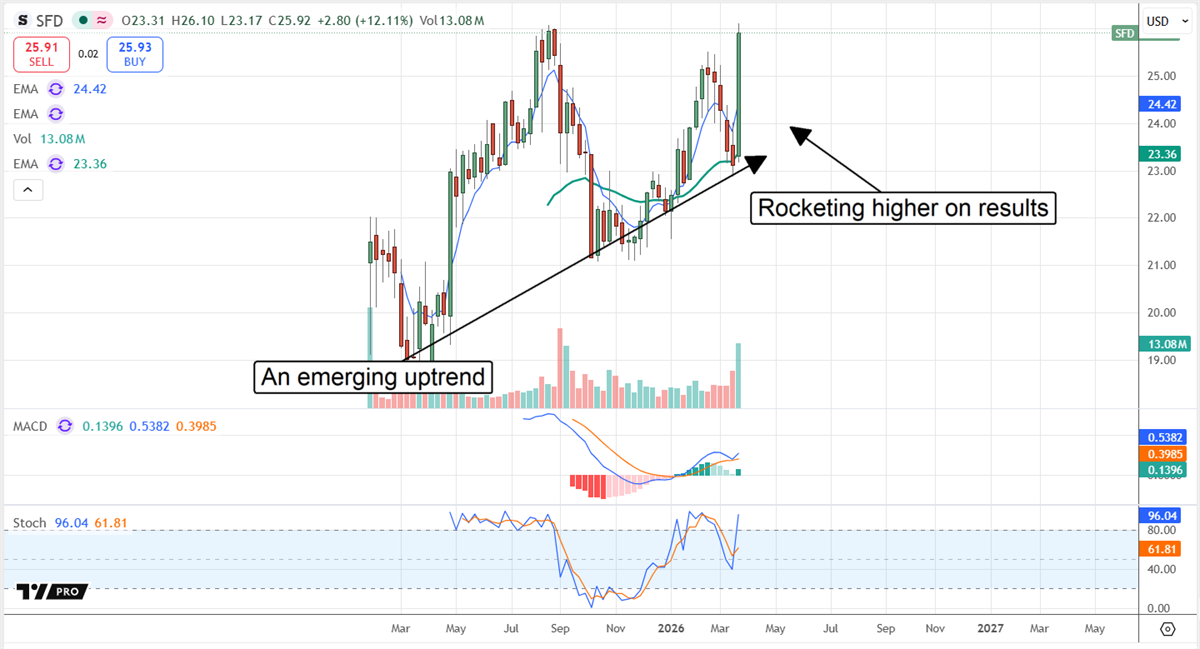
Smithfield stock chart illustrating an emerging uptrend and the share price rocketing higher on quarterly results.

Signs Point to $30 SFD Share Price

The company’s momentum is seen clearly in the guidance. Smithfield expects revenue growth to slow, but to only to 3%, 200 basis points better than expected.

Within that, earnings quality is also forecasted to improve, leading analysts to lift price targets.

The coverage isn’t robust, with about a half dozen reports tracked, but the revisions are leading the market higher, forecasting a 25% upside at the high-end, and putting this market at fresh all-time highs.

This is a critical detail, as the move entails breaking out of a post-IPO trading range. The stock price could rise by 20% to 25% in that instance, aligning with analysts’ high target price. 

The post release price action is robust, lifting the stock by $4 to just over $26. The move creates a large green candle, reflecting solid support and confirming the uptrend. The market also shows a high probability of extending the move, with trading volume, the MACD, and stochastic indicators aligning with trend-following entries.

Critical resistance is near the existing all-time high, just above $26, and is likely to be crossed soon. In that event, the market may reach the $30 level within days to a few weeks and may continue higher if the news flow strengthens the outlook for profits. 

Among this year’s catalysts is the acquisition of Nathan’s Famous hot dogs, which is part of a broader strategy focused on high-margin packaged meat products. The purchase turns the company into the brand owner, transitioning from manufacturer, and will increase profitability immediately. The move removes licensing fees, enabling Smithfield to capture 100% of available margin. Institutions are also in the mix, accumulating the stock at a 4-to-1 pace since the IPO and underpinning the uptrend. 

Read this article online ›

Further Reading

MarketBeat All Access is the premier all-in-one stock research solution that helps you identify the best stocks, monitor your portfolio, and keep track of the market.

Did you find this article helpful?

I liked this article.
I did not like this article.

Thank you for subscribing to MarketBeat!

We empower individual investors to make better investment decisions by offering real-time financial information and objective investment analysis.

If you need assistance with your account, feel free to contact our South Dakota based support team at contact@marketbeat.com.

If you would like to unsubscribe or change which emails you receive, you can manage your mailing preferences or unsubscribe from these emails.

Copyright 2006-2026 MarketBeat Media, LLC. All rights protected.
345 N Reid Place, Sixth Floor, Sioux Falls, South Dakota 57103-7078. USA..

Read More: Secretary of Defense: This is the truth about SpaceX(Click to Opt-In)

Greenland: One Destination, Endless Ways to Explore

National Geographic - Lindblad Expeditions
DISCOVER GREENLAND, REGION BY REGION
READ GUIDE
SPECIAL OFFERS ON VOYAGES AROUND THE WORLD
FEATURED VOYAGES
SOUTHEAST GREENLAND: EXPLORING AT THE EDGE OF THE ICE CAP / 10 DAYS
SEE TRIP
WILD ARCTIC SHORES: CIRCUMNAVIGATING ICELAND AND EXPLORING GREENLAND / 10 DAYS
SEE TRIP
ARCTIC EDGES: ICELAND WESTFJORDS TO EAST GREENLAND / 8 DAYS
SEE TRIP
ICELAND AND GREENLAND: EDGE OF THE ARCTIC / 18 DAYS
SEE TRIP
CELEBRATING INTERNATIONAL WOMEN'S MONTH

Greenland is a land of vast possibility, where the landscapes are as dramatic as they are diverse. From south to north, east to west and into the remote reaches of its national park, each region reveals a distinct character—and a different way to explore.

Aboard the ice-class vessels in the National Geographic-Lindblad Expeditions fleet, venture deep into this wild frontier—navigating iceberg-filled bays, tracing remote fjords and accessing communities and wildlife-rich regions far beyond the reach of conventional cruising. Explore one region in depth, pair Greenland with Iceland or Arctic Canada, or journey farther still on an epic voyage through the Northwest Passage.

Request a Brochure
Friends for Life Enjoy 10% Off
Planning Your Voyage? Request a Quote
Facebook
Instagram
LinkedIn
YouTube
Pinterest

US: 1-332-999-9344   •   AU: 1300-361-012   •   NZ: 0800-444-462

UK: 44-800-098-1496

US: 11 W 42nd Street, Suite 22 B3, New York, NY 10036

AU: Level 1, 35 Grafton St, Bondi Junction, NSW 2022

UK: Fred. Olsen House, 42 White House Road, Ipswich, IP1 5LL

Brochures  •  Stories

*Air Credit Offer: Book by April 15, 2026 and receive air credit of $1,000 per person, deducted from air fare with the purchase of cabin fare on select 2026 departures. To qualify for the offer, airfare must be ticketed by Lindblad Expeditions. In the case that airfare at the time of booking is higher than $1,000 per person, guest will be required to pay any amount in excess of $1,000 per person. Valid for new bookings only on select 2026 departures, subject to availability, not applicable on extensions. Not combinable with any other offers. Baggage fees may incur additional costs and seat assignments may not be guaranteed. Valid for US and Canadian residents only.

*Kids Offer: Book from March 18 to April 30, 2026 and receive savings of 50% deducted from cabin fare on select 2026 voyages for children 18 and under at time of travel. Applicable savings will be deducted from cabin fare after any additional savings with the purchase of cabin fare. Additional restrictions may apply. Promotional offer valid on new bookings only for select 2026 departures, subject to availability and offer may be withdrawn at any time without prior notice, not applicable on airfare or extensions, and may not be combined with other promotions. Call to book or for additional details.

*Group Offer: Book from March 18 to May 6, 2026: Receive savings of 10% deducted from cabin fare when you book a party of 6 or more on voyages departing on or after April 1, 2026, through 2028. To qualify for the offer, parties must be 6 or more across a minimum of 3 cabins. Applicable savings will be deducted from cabin fare after any additional savings with the purchase of cabin fare. Discount is subject to be removed upon cancellation of party members if group drops below 6. Additional restrictions may apply. Savings offer valid on new bookings only, subject to availability, and offer may be withdrawn at any time without prior notice, not applicable on airfare or extensions, and may not be combined with other promotions. Call to book or for additional details.

© 2026 Lindblad Expeditions. All Rights Reserved. Lindblad Expeditions and the Eye are the trademarks of Lindblad Expeditions, LLC.

© 2026 NATIONAL GEOGRAPHIC EXPEDITIONS and the Yellow Border Design are trademarks of the National Geographic Society, used under license.

You received this email as you opted in to receive promotional information from Lindblad Expeditions.
To unsubscribe, click here.

GREENLAND-032826

This $1.8 Trillion Risk Could Hit Your Portfolio

Ad Image
InvestorPlace Digest Logo

Another crisis for the markets … build your fortress portfolio to withstand anything

VIEW IN BROWSER

For nearly a thousand years, the Theodosian Walls of Constantinople (modern-day Istanbul) stood as one of the most formidable defenses ever constructed.

The strength of the Theodosian Walls didn’t come from a single imposing barrier, but from a carefully engineered system built in layers.

A wide moat stretched across the front, slowing invaders before they could even reach the structure. Beyond it stood an outer wall, and behind that, a much taller and thicker inner wall.

Image

Credit: scaliger

Towers were spaced at regular intervals along the walls, giving defenders visibility and the ability to strike from multiple angles. Even if attackers managed to breach one layer, they found themselves exposed in the open space between walls, vulnerable before they could press forward.

Underneath it all was a solid foundation, designed to endure for centuries, supported by constant maintenance and reinforcement.

These walls had depth, redundancy, and strength beneath the surface. They weren’t built for appearance but for endurance.

That’s exactly the kind of strength today’s market is demanding.

Recommended Link

Tech CEOs Dumping Dollars [Musk, Zuckerberg, Bezos, Ellison]

It’s not a PR stunt. A 47-year Wall Street insider says it’s the clearest signal in American finance: the people who understand money best refuse to be paid in dollars. Louis Navellier explains what they take instead — and how ordinary folks could do the same. Watch His Urgent Briefing.

The Headlines You May Be Missing

Operation Epic Fury has created significant uncertainty in the markets. But while investors are focused on the immediate headlines, a quieter risk is building beneath the surface – and it has the potential to do far more lasting damage to long-term wealth.

That’s why today’s environment needs a different kind of portfolio – one built like a fortress.

The burgeoning crisis in the private credit market is flying under the radar of most investors. If not for the war, these headlines would be creating a lot more anxiety.

From Bloomberg:


Image

From CNN:


Image

The private credit industry – valued at about $1.8 trillion – is suffering from significant defaults and fears that AI disruption could hurt software companies, which account for about 30% of its loans, according to JPMorgan.

Earlier this week, Apollo Global Management and Ares said they are limiting shareholder withdrawals in their private credit funds amid a surge in investor requests across the industry.

Meanwhile, Moody’s downgraded the credit rating of a private credit fund run by KKR and Future Standard, sending it into “junk” territory after more of its borrowers stopped paying their loans.

Investing legend Louis Navellier has been calling out this danger for more than a year.

In December, during our semi-annual Omnia roundtable with all the analysts, Louis was bullish on the market’s prospects in 2026, but he called out this problem as one to watch.

If you want to be scared, private credit is a problem.

Dodd-Frank created the private credit industry because banks won’t lend to people unless they’re perfect. So, if your credit score isn’t above 800, you’re 798, they kick you out to private credit, they mark up the loans, and they pay 11% yields to investors because they leverage those loans. Well, now the default rate is rising, there’s a problem. 

JP Morgan lost 170 million with Tricolor. BlackRock’s got a problem with the Utah bundler of loans; they might lose half a billion dollars. 

Since then, the negative headlines have come fast.

Now, you might be thinking…

“Why should I care about private credit? I don’t own any of these funds.”

Even if you’ve never invested a dollar in private credit… many of the companies you do own depend on it.

As Louis has been saying, this $1.8 trillion market has quietly become the go-to funding source for thousands of businesses that couldn’t qualify for traditional bank loans. This is especially true in areas such as software, where easy money helped fuel rapid growth.

For years, that system has kept weaker companies alive, helped others expand faster than fundamentals would justify, and allowed investors to ignore the weaknesses.

But that environment has changed.

Interest rates are higher. Defaults are rising. And lenders are starting to pull back.

Many of the companies leveraging that cheap money are about to lose access to the very thing that’s been keeping them afloat. And when that happens, the impact won’t stay contained inside private credit funds – and ripples will extend throughout the stock market.

You can probably guess what we’ll see.

Companies miss earnings. Debt becomes harder to refinance. Layoffs begin.

Then, stock prices fall fast.

So, you don’t have to be in the private credit market to start to feel the effects.

You just have to own the wrong stocks.

Can your portfolio withstand the pressure?

Just like the Theodosian Walls weren’t defined by a single layer of stone… the strongest companies today aren’t defined by a single metric.

They’re built in layers.

And that’s exactly what Louis Navellier’s system is designed to identify.

Every week, Louis runs a quantitative analysis on more than 6,000 stocks—grading them from A to F based on the same kind of structural strength that made those walls so effective.

Not surface-level traits like hype or recent price momentum, but the deeper layers that determine whether a company can endure real stress.

We’re talking about stocks with superior fundamentals:

  • Strong, consistent cash flow
  • High return on equity
  • Expanding profit margins
  • Low debt relative to assets

And, of course, whether institutional investors are quietly accumulating shares.

When all of those layers are in place, stocks get an “A” in Louis’ Stock Grader system.

These are the market’s true fortress companies.

On the other hand, stocks with weak fundamentals, such as high debt, deteriorating margins, and negative cash flow, are the ones leaning on today’s private credit system to survive.

And if that system continues to crack, there isn’t a second wall behind them.

The DNA of a Fortress Company

In Louis’ Breakthrough Stocks service, he recommends smaller companies with superior fundamentals … the ones few have heard of that can explode higher over time.

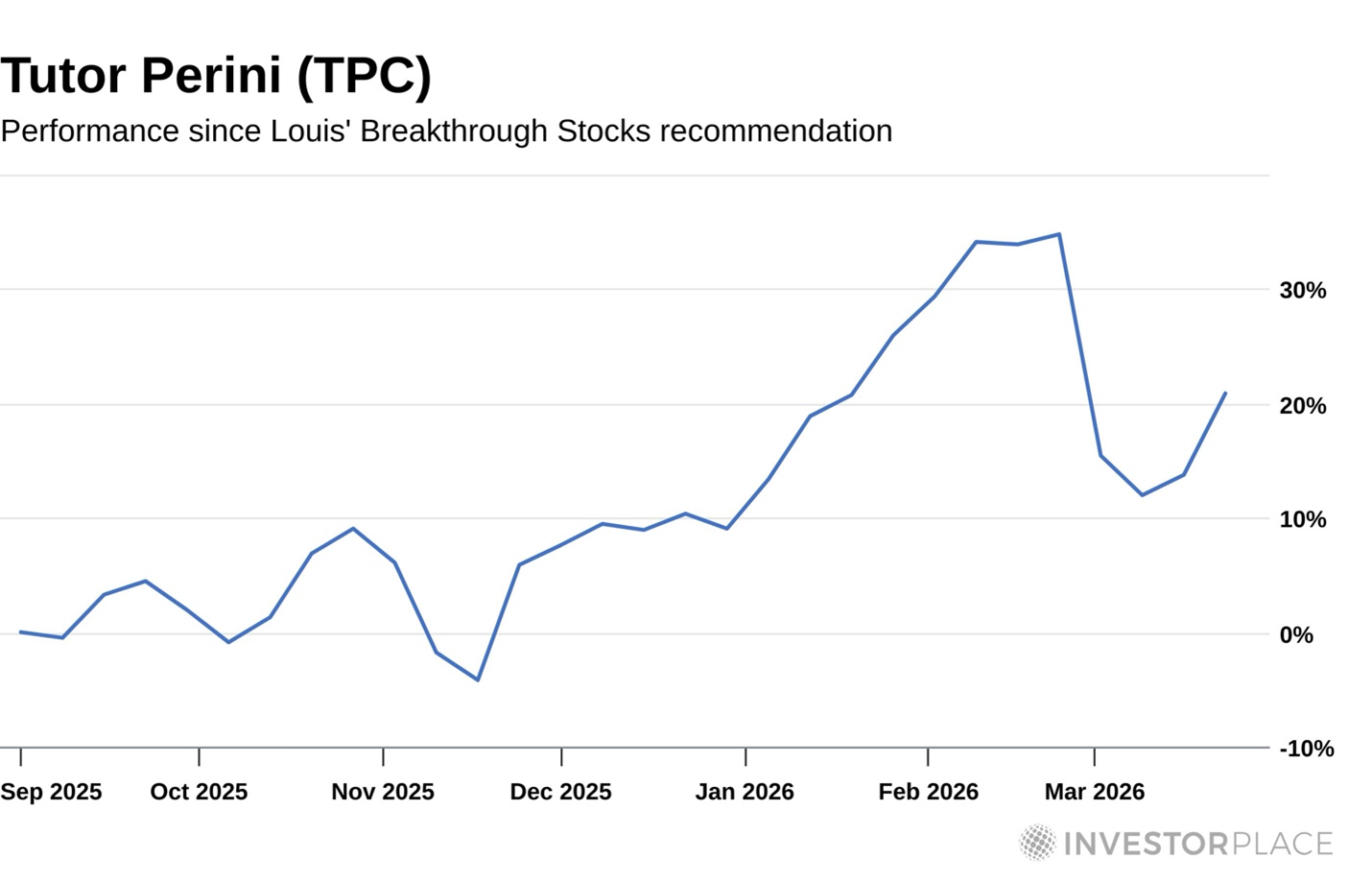
In September, he recommended Tutor Perini Corp. (TPC), a full-service construction company.

That’s not a flashy AI darling. Instead, it’s a company known for large-scale transportation and civil construction. In late February, the company posted blowout earnings, proving why Louis’ system identified it as a strong buy.

Fourth-quarter adjusted earnings surged to $1.07 per share, compared to a loss of $1.49 per share in the same quarter a year earlier. The consensus estimate called for adjusted earnings of $0.92 per share, so TPC posted a 16.3% earnings surpriseFourth-quarter revenue increased 41.1% year-over-year to $1.51 billion, beating estimates of $1.35 billion.

Even amid recent market volatility, the stock has held up well, rising more than 20%.

Image

The stock is below Louis’ buy price of $90, so there is still time to get into this trade.

Louis just released a deep dive into the growing cracks in private credit that details not only how to protect your portfolio, but how to benefit as this crisis redirects enormous currents of capital through the financial system.

As I noted above, he identified this risk months ago, and has been putting his subscribers in the best position to protect themselves – and even profit – when the market starts to show cracks.

Maybe you’re in a credit fund, or maybe just exposed to the collateral damage without even realizing it – either way, you should make time to watch Louis’ free presentation that explains the risks and can help position you to profit.

Enjoy your weekend,

Luis Hernandez
Editor in Chief, InvestorPlace

InvestorPlace