I was born on 6 August 1956 in San Francisco, California to Janet and (the late) Richard Hovis.
I grew up in Santa Monica, California where I attended elementary, junior high school, and high school (graduating in 1974), in addition to involvement in sports and recreation (Little League +, the Boy’s Club ++). Further, it was in elementary school – St. Augustine’s By-the -Sea Parish School that I found, and made the choice to truly journey with God.
I attended Arizona State University from 1974 to 1977 – seeking to become an architect, however, I was not accepted, and, as such, I graduated with a Liberal Arts degree.
Upon graduation from Arizona State University, I attended Cal Poly San Luis Obispo and studied City and Regional Planning at the Master’s level. I successfully completed one (1) year in a two (2) year program – I did not complete the Master’s degree in City and Regional Planning – due to personal reasons.
I returned to Santa Monica where I started (October 1979) my career as graphic designer with Exxon Company, USA. I spent five years with Exxon Company, USA.
While working with Exxon Company, USA I was accepted into architectural school – Sci-Arc in Southern California, however, I did not attend preferring to stay with Exxon..
In 1982 I married Laura Flosi and in April 1983 we had our one and only child – Lauren Alain Hovis – a gift from God.
We moved to Phoenix, Arizona in 1984 from Los Angeles, where I went to work as a graphic designer with Kitchell CEM (from 1985 -1987).
From 1987 – 1995 I was an independent contractor, and a registered representative in mortgage finance, financial management, graphic design, and drafting.
Further, I attended the University of Phoenix and successfully obtained a Master’s in Business Administration (MBA) in 1982.
I was also a member of the Scottsdale Jaycees, where I became very involved in community events and projects.
In 1994, I accepted a cartography position with the Defense Mapping Agency in Reston, Virginia. As such, I relocated from Phoenix to Reston.
In 1998, I was accepted and worked as a Visual Information Officer with the Central Intelligence Agency. In 2002, I worked as a Support Officer until my retirement (due to a need for shoulder surgery) in September 2018.
Away from my Federal Government service, I have been involved in various organizations and activities in Northern Virginia.
In November of 2011, I married Rebecca Ouellette in Santa Monica, California. I reside in San Tan Valley, AZ with my two hamster - Jess and Timothy, our fish, our lizard - RJ Lizard., and our cats - Pearl and Grey.
As to hobbies, I enjoy playing sports, attending sporting events, mentoring individuals from financial management to hamsters, building models, photography, travel, multimedia design, managing partner for RJ Hamster, and jazz – smooth jazz to a samba or a bossa nova.
Love and God Bless,
Peter – aka RJ Hamster Jo hi
🧨Reddit Gets Zucked… Revenge of the Computer Nerds
As the great Pablo Picasso once said, good artists copy… great artists steal.
(If you happened to read that opening line and immediately thought “he must be talking about a certain UFC fan” Ding. Ding. Ding. You are the winner).
Because Reddit shareholders got absolutely zucked on the final business day before Memorial Day weekend after Meta decided to do what Facebook Meta has done from the beginning: Ctrl+C, Ctrl+V somebody else’s entire business model.
Just like Zuck allegedly copied the Winklevoss twins… then copied Elon’s Twitter with Threads… Marky Mark and the boys over at Meta Platforms apparently looked at Reddit and said: “Yeah… we’ll take one of those too.”
So, they created a new app called Forum… which is literally the exact same idea as reddit (probably just with more ads).
Shares of Reddit dropped roughly 6% Friday, bringing the stock down around 40% on the year now… despite the company’s ad business continuing to put up pretty solid numbers.
Meanwhile, even though Marco Rubio’s peace talks with Iran still haven’t amounted to a hill of beans (at least not yet) the market kept floating higher anyways, with the S&P 500 climbing 0.5%, the Nasdaq rising 0.5%, and the Dow tacking on another 0.8% as commodity-hungry businesses and traders alike started getting hopeful the Middle East might finally be inching closer to something resembling “calm.”
Over in tech land, household name PC stocks had themselves a field day.
Your grandpa’s favorite computer company (and the S&P’s #1 stock today), Dell exploded more than 16% to an all-time high after Lenovo reported its strongest PC, tablet, and smartphone sales growth in five years. (Mac Mini? Never heard of her.)
HP also erupted nearly 16% as investors started foaming at the mouth ahead of earnings next week.
Turns out consumers are still buying computers despite everyone claiming smartphones and AI assistants were supposed to replace them years ago. Funny how every “the PC is dead” prediction keeps aging like unrefrigerated sushi.
Although, Lenovo did admit some demand may have been pulled forward because companies are panic-buying hardware ahead of expected price increases and ongoing memory chip shortages tied to AI infrastructure demand.
Then there’s the Fed… where President Trump officially swore in Kevin Warsh as the new Federal Reserve Chair this afternoon.
During the ceremony, Trump had the audacity to say he wants an “independent Federal Reserve” which is kind of like your boss telling you, “make your own decisions… as long as they’re the ones I like.” In response, Warsh promised a “reform-oriented Federal Reserve” focused on escaping outdated economic models.
Translation: the money printer is about to go Brrr.
Anyways, that’s enough market brain rot from me for one week. Go enjoy your Memorial Day weekend, eat an irresponsible amount of hot dogs, and try not to check your phone too often in front of your grandma.
If you read all of this, congrats for having a 10 second attention span (better than me). As always, here’s our heatmap for today.
Revealed: Today’s Top Momentum Stock (FREE)
Momentum can explode in minutes. Most traders see it after the move has already started.
GuyStocks delivers real-time alerts designed to help you spot stocks gaining strength while they’re still under the radar. No fluff. No complicated charts. Just clear alerts when momentum starts building.
If you’ve ever watched a stock run without you, this is your chance to get ahead of the next one.
(By clicking the link above, you are opting in to receive emails from this advertiser. You are also agreeing to the terms of our privacy policy. Unsubscribe at any time)
Oura’s Wellness Cult Marches Toward Nasdaq IPO After Smart Ring Revenue Explodes 4x
Kid: Mommy, how did we get so rich?
Mom: Daddy ignored the SpaceX hype and mortgaged the entire house on Oura’s IPO…
If there’s one thing Wall Street loves more than an AI company burning $400 million a quarter… it’s a subscription business attached to it. And now pretty soon, the suits will have a brand-new wellness obsession to throw ridiculous price targets at.
That right, Oura (the company that convinced millions of people to pay a monthly subscription to learn they’re stressed, exhausted, and probably overtrained) has confidentially filed for an IPO with the SEC. And I’ll have to admit, when I saw the press release I kind of rolled my eyes and smirked… but the numbers are…
Asset Managers Laugh All the Way to the Bank as Retail Investors YOLO into Endless Space ETFs
Hey, there’s a bubble…
To avoid contradicting the blurb at the top of this article… I’m not saying a bubble’s about to burst… but I’m also not NOT saying it.
So what’s got me acting all weird at the moment? Well, just the fact that our good friend Elon has somehow convinced the entire world that the next trillion dollar gold rush is happening somewhere above Earth’s atmosphere.
And that this gold rush is set to happen in months… not years or even decades (as his arch rocket nemesis Jeff Bezos said…
Anthropic Swoons Microsoft’s Maia Chip After Already Pimping Rest of Big Tech…
“I got hoes in different area codes” – Ludacris Daro Amodei, probably…
Well, it’s 2026 and there is absolutely NO compute partner Anthropic isn’t dipping its proverbial pen into, and as of yesterday, Satya is next. Sources confirmed that Dario “No Hands” Amodei is in talks with Microsoft to adopt the Maia 200 AI chip, the in-house silicon Satya rolled out in January but hasn’t bothered making available to actual Azure customers. No paperwork is signed (because, of course)”. The snitch “person familiar with the matter” was very clear about that. Which means as of now, both sides are still playing just the tip.
But the rumor is enough to make heads turn. For instance, Microsoft wrote Anthropic a $5 billion check six months ago. Anthropic immediately turned around and committed $30 billion to Azure. Friendly reminder: Side-Piece Satya (read: Nadella) has also sunk billions into OpenAI and briefly employed Sam Altman for what felt like a long weekend in November 2023.
Which makes Microsoft, at this point, the chip-sales equivalent of a hot tub with two dating apps open on the laptop. As for the Maia 200 itself, it’s the…
The Most Important Central Bank Speech Of All Time And Why It Was Kept Secret For Decades
In 1979, Belgrade, Yugoslavia, was the Dubai of the Soviet bloc.
Belgrade was the leading industrialized city in Eastern Europe. Rebuilt after World War II, it was a city shaped by the demands of the communists, which included heavy manufacturing for the military. Their plans didn’t include wastewater treatment or any regulations on air pollution. Its filth and stench were a warning of the catastrophe that would emerge a decade later in its civil war.
It was the most unlikely place in the world for the leading bankers of capitalism to gather. And it was the site of the most unlikely speech ever given by any central banker: a warning about the imminent failure of central banking.
Arthur F. Burns was chairman of the Federal Reserve from February 1970 until January 1978. He taught Milton Friedman at Rutgers. He advised four U.S. presidents. He smoked a pipe in every photograph. In the eyes of his profession, he stood at the summit of American economic thought.
He also presided over the worst peacetime inflation in American history, the rapidly escalating prices of the 1970s.
One Sunday in late September 1979 in Belgrade, Burns delivered the annual Per Jacobsson Lecture. The Per Jacobsson Foundation invites only the most senior figures in global finance – central bank governors, finance ministers, the principals of the International Monetary Fund (“IMF”) and the World Bank.
Burns’ lecture runs roughly 12,000 words. It is a moral and economic indictment of central banking. And it was a dire warning – to the entire world – of the enormous monetary reset that would begin just two months later. Butthis speech was kept secret for almost a decade.
It was only published after Burns’ death in 1987.
If you understand it, you have a chance of surviving what’s about to happen to America. If you don’t understand it, you have no chance.
Burns’ argument was not that the Federal Reserve botched the job of maintaining price stability in the previous decade, although he admitted plenty of error. His argument wasn’t about how central banking failed. It was about the far deeper failures, the why central banking fails. Burns’ warning was that, in democracies, the promises of the politicians will always outpace the taxes necessary to support them. This, inevitably, creates permanent and growing fiscal deficits. Burns explained that central banks were no longer being used to support legitimate government financing, but instead, had become the bridge to spending that would otherwise be impossible. He said:
The proliferation of government programs led to progressively higher tax burdens on both individuals and corporations. Even so, the willingness of government to levy taxes fell distinctly short of its propensity to spend. Since 1950, the federal budget has been in balance in only five years. Since 1970, a deficit has occurred in every year. Not only that, but the deficits have been mounting in size. Budget deficits have thus become a chronic condition of federal finance. They have been incurred when business conditions were poor and also when business was booming. But when the government runs a budget deficit, it pumps more money into the pocketbooks of people than it withdraws from their pocketbooks – the demand for goods and services therefore tends to increase all around. That is the way the inflation that has been raging since the mid-1960s first got started and later kept being nourished.
And then Burns told the world that the only way forward was a drastic change to this accommodative policy – a global monetary reset was inevitable.
If the United States and other industrial countries are to make real headway in the fight against inflation it will first be necessary to rout inflationary psychology – that is, to make people feel that inflation can be, and probably will be, brought under control. Such a change in national psychology is not likely to be accomplished by marginal adjustments of public policy. In view of the strong and widespread expectations of inflation that prevail at present, I have therefore reluctantly come to believe that fairly drastic therapy will be needed to turn inflationary psychology around.
What did “drastic therapy” mean? A complete monetary reset. Sixty days after Burns delivered his remarks in Belgrade, Paul Volcker – Burns’ successor at the Fed – began the most violent monetary tightening in U.S. history. The federal fund rate would eventually climb to 20%. The yield on the 10-year Treasury bond would hit 15% by October 1981, causing a 50% decline in bond prices. Mortgage rates hit 18%. Unemployment touched 11%. Stocks fell until the average earnings multiple on the S&P 500 was 8x earnings. The global monetary order reset. The dollar was saved. And financial assets were virtually destroyed.
Burns knew it was coming. He tried to warn the world – and the bankers wouldn’t let him. Today, the same warning applies, but on a vastly larger scale. Will you listen…?
From 1950 to 1979 – for 29 years – the federal budget reached balance only five times. Through the entire decade of the 1970s, it ran deficits every single year. The debt ballooned.
And today? Fiscal year 1999 was the last full year of a genuine on-budget surplus in American history. The deficits have been growing in every year since. Twenty-seven years of growing deficits and ballooning debts.
The arithmetic now exceeds anything Burns could imagine in Belgrade. Burns called deficits averaging 2% of GDP a “chronic condition.” We are running deficits that are 5.8% of GDP in peacetime, with full employment, with no recession on the horizon. This is the most extraordinary fiscal posture the United States has ever sustained outside of total war.
And you haven’t heard a single banker or politician or economist say a single word about how this is completely unsustainable.
Net interest payments on the federal debt climbed from 1.6% of GDP in 2021 to a record 3.2% in 2025. If rates continue to rise, our government’s interest expense will soon reach 5% of GDP. Just in interest payments. In dollar terms, net interest will rise from $970 billion in fiscal 2025 to $2.1 trillion by the early 2030s. On this trajectory, by 2036, interest alone will consume more than 30% of every federal tax dollar.
Interest on the debt is the fastest-growing line item in the federal budget.
And every additional dollar of interest forces the Treasury to issue new debt, which pushes yields higher, which raises interest expense, which forces more issuance. Economists call this debt fueled doom loop “fiscal dominance.”
What they should call it is the bankruptcy of our government.
In 1979, the monetary reset had a name: Paul Volcker. Fed chair Volcker drove the federal funds rate to nearly 20% in 1981. He pushed the 10-year Treasury yield above 15%. He crashed the economy to save the dollar. But that option no longer exists.
When Volcker took the Fed chair in August 1979, federal debt held by the public stood at roughly 25% of GDP. Net interest expense ran about 1.7% of GDP. Higher rates, for a short period of time, wouldn’t threaten the stability of the government’s budget.
In 2026, federal debt held by the public sits at 101% of GDP and climbs to 120%. Interest already consumes at 3.2% of GDP. With $30 trillion of debt held by the public, every additional percentage point of average interest cost adds roughly $300 billion to annual interest expense.
A Volcker move today – funds rate to 15% – would add trillions in annual interest within three years. At those rates, interest alone would exceed total federal revenue.
Thus, this time, the monetary reset will not be like the last time. We can’t afford it. What will happen this time is letting the inflation run, higher and higher, while using the central bank to peg interest rates at a level the government can afford. As a result, inflation is going much higher.
It is inevitable. But, even so, just like in 1979, no one sees what’s coming.
The five-year, five-year forward inflation expectation rate – the bond market’s expectation of average inflation across the five-year window beginning five years from today – is only 2.21%.
Meanwhile, despite the soaring stock market, we are in the midst of some of the biggest bond market losses in history. Look at long-duration Treasuries since 2020. The iShares 20+ Year Treasury Bond ETF (TLT) – the standard proxy for the long end of the U.S. yield curve – peaked in August 2020. Through 2025, it has lost roughly half its value. The U.S. bond market has been in a continuous drawdown for 68 months. That’s the longest bond bear market ever.
This is what the early stages of a monetary reset looks like. The 1979-1981 episode was resolved in roughly 24 months because the Federal Reserve could raise rates and the government could afford them. The current episode drags on – five and a half years and counting – because the Treasury can’t afford it. And that means it’s bankrupt.
Our creditors see what’s happening.
Over the last five years, China has sold roughly $400 billion of U.S. Treasuries, dropping its holdings by half.
What are central banks buying instead of Treasuries? More than 1,000 tonnes of gold per year in 2022, 2023, 2024, and 2025. This represents the largest official-sector accumulation of gold since the closing of the gold window in 1971.
This is the “End of America” – the end of U.S. financial hegemony over the world. America’s creditors no longer believe the U.S. Treasury can be repaid in real terms.
Why was President Trump in China? When a debtor flies halfway around the world to see his creditor, the meeting is never just about tariffs.
The 1979–1985 reset moved through a predictable sequence:
September 1979: Burns’ warning in Belgrade
October 1979: Volcker’s “Saturday Night Special.” The Fed pivots from targeting interest rates to targeting bank reserves. Yields rip higher.
1980–1982: Fed funds rate touches 20%. Ten-year Treasury yield breaks 15%. Deep recession. Long bonds destroyed.
September 1985: Plaza Accord: The U.S., Japan, West Germany, France, and the UK agree to engineer a coordinated devaluation of the dollar. Over the next two years, it falls by nearly half.
The bond bull market begins. The secular inflation in goods ends. The secular inflation in financial assets begins.
The modern sequence will not look identical. The Fed cannot be Volcker – the government can’t afford it – the math forbids it. The monetary reset this time won’t be to rebuild the dollar. It will be to escape it.
Watch these markers between now and 2029:
The Social Security Trust-fund cliff. Social Security OASI (Old Age And Survivors Insurance) insolvency will arrive around 2029. A general-revenue bailout, financed by new Treasury issuance, becomes inevitable.
Continued Fed accommodation. Real interest rates become negative as inflation moves above 6% but the Fed doesn’t raise rates fast enough to prevent enormous losses in long bonds.
The printing resumes. When 10-year yields threaten to break the level at which Treasury interest expense turns unmanageable, the Fed returns to large-scale asset purchases.
A final reset in 2029. A global inflationary crisis leads to a formal U.S. Treasury default and a creditor negotiation. A formal Plaza-style accord – Beijing, Tokyo, Riyadh, Frankfurt at the table lead to a new global monetary agreement with gold and Bitcoin at the center of global trade.
Burns ended his Belgrade lecture with a sober line. He said central banking would ultimately fail, not because central banks couldn’t provide stability and liquidity to the markets, but because they did.
His warning was that central banks, by providing credit support, would enable governments to destroy their economies with debt and unsustainable promises. And so they have.
Prepare. Prepare now.
To learn more about the coming monetary reset and how to prepare, please read Porter’s new, best-selling book 2029: The End of America: Why the Age of Paper Money Is Ending And How to Survive the Coming Global Monetary Reset, available now at Amazon.
1. Foreigners dump Treasuries. The value of U.S. Treasuries held by international investors fell by $139 billion in March, the largest drop since September 2022. The selling was led by Japan, which unloaded $48 billion in Treasuries, followed by China’s $41 billion in sales. The world is fleeing from U.S. government debt at the same time that Treasury issuance sets new record highs, pushing up yields and thus U.S. borrowing costs.
2. Booz Allen’s EPS beat, brought to you by the IRS. Booz Allen Hamilton (BAH) closed fiscal 2026 with revenue of $11.2 billion, down 6.4% year-over-year, but earnings per share of $1.78 beat the $1.34 consensus – however, the largely mechanical earning beat related to an $86 million IRS reserve release. The full-year earnings margin actually remained flat at 11.0%. Backlog hit a record $38 billion, but FY27 revenue and EPS guidance remain below FY26’s. Shares rose 3% today on the news.
3. Gulf states press Trump to stand down on Iran as Tehran moves to formalize Hormuz tolls. The UAE, Saudi Arabia, and Qatar have urged President Trump to resume diplomacy and not military operations against Iran. Trump agreed to postpone a planned strike this week. Meanwhile, Iran is negotiating with U.S. ally Oman to establish a permanent toll system for the Strait of Hormuz, where passage fees have already reached $2 million per vessel. Iran has controlled transit through the strait since the war began in February, and formalizing that grip would represent a huge shift in global energy logistics. Roughly 20% of the world’s oil supply passed through the strait prior to the war.
Chart Of The Day… Hovnanian Enterprises (HOV)
Shares of Hovnanian Enterprises (HOV) rose 18% yesterday, despite its fiscal Q2 results looking weak. Revenue dipped to $667.6 million and the company posted a $0.46 per-share loss versus $2.43 in earnings a year ago. Bearish consensus was calling for a $2.06 loss and just $633 million in revenue. Less bad than feared was enough to spark the rise in share price.
Mailbag
In yesterday’s Daily Journal, “The Violent Lives Of Black Americans,” Porter wrote about the level of violence among blacks in America and how law enforcement’s inability to treat all people equally, regardless of race, has led to more homicides. He advocated that statistics among various groups be recognized to ensure the safety of all people.
“We Need to Address These Issues”
Bill S. writes:
Thank you, Porter, for having the courage to address a subject that many of us have wrestled with for some time. While we may not have been aware of the specific data that you’ve shared, we have been aware that common sense has been abandoned in favor of political correctness in today’s culture. The left preaches color-blindness as an attribute we should all espouse, except when it points to an offense committed by a person of color. I am not a racist, but I do find myself being extra wary when I am around a group of African-American individuals, especially at night. I ask myself why that is: it is because they are statistically more inclined toward aggression, as your data has clearly shown. Making excuses for bad behavior by claiming racism is truly an affront to most people’s intelligence. Your data and our eyes do not lie. Until the African-American community addresses these issues, we will never reach racial harmony in this country.
“Violent Lives Of Black Americans”
Raymond H. writes:
Porter,
Boy, you really stepped in this time. How DARE you cite empirical data and statistics! Doubtless, you will receive hate mail and cancellations.
I never studied the data you accessed, but you quantified my observations in growing up in a racially mixed neighborhood in the 1950s and now over 50 years practicing law. No, I never handled criminal cases. I could not cite statistics, but have wondered for years why the relative crime rates between black and white, as reported by day-to-day news accounts, clearly illustrated what you presented. Apparently, it is not a sociological origin, and I conclude it is simply endemic until the phenomenon is better explained.
Thanks for going out on a limb to point out that the emperor has no clothes. You do have balls.
Porter Comment: In 2020, 7.4 per 100,000 black women committed murder, according to the FBI. That was more, per capita, than white men. I think it’s extraordinary that facts like these (the 7x higher violent crime rates in the black population), the global prevalence of black violence, and the historic prevalence of black violence is largely ignored (and completely forbidden to discuss) because it forces us to ask very hard questions, that currently, don’t have any clear answers. One thing is certain – like I wrote yesterday – there is no excuse for violent crime in America. We should have a zero tolerance policy for all violent crime.
“Murder Rates In The U.S.”
Mary N. writes:
No doubt the facts recorded are correct. Yet not one mention of the extraordinary ownership by nearly all U.S. citizens of violent weapons. Mostly multiple ownership, it seems. No other country on earth provides such abundant wherewithal for killing. So, what else should you expect?
Porter Comment: I’ve got bad news for you…
There are lots of places in America where most people own guns. In states like Montana, Idaho, Wyoming, and West Virginia the majority of adults own firearms. The homicide rates in these places are extraordinarily low – as is the population of black people. The percentage of the population that is black is a far more powerful indicator of violent crime than gun ownership rates in America. In America, violent crime is tightly correlated with black populations, not guns.
“Disparate Impact”
H Busch. writes:
Dear sir,
As a Black man, born and raised in St. Louis, Missouri, in the late 1940s to the mid 1960s, I am so glad that someone has highlighted this travesty in America. Your article really hits home how dangerous some Black people truly are.
Even before the Mike Brown incident in Ferguson, I’d read that Europeans are educated/briefed on what places in America not to visit whenever they decide to vacation here. Ferguson was at the top of the list.
Even though born and raised in the ghettos of St. Louis, I have no desire at all to return from my current home in PA., to live there. It’s simply because of the high crime rate there… despite the most recent data below.
It’s really unsettling to me to know that our law enforcement officers have their hands tied by this Disparate Impact nonsense. However, the FBI has reported this recently:
“The projected U.S. murder rate in 2025 dropped to approximately 4.0 per 100,000 residents, which makes it the lowest rate recorded in the U.S. since 1900. This 20% to 21% decrease from 2024 represents the largest single-year decline in homicides on record.
This historic milestone is detailed in data from the Council on Criminal Justice (CCJ) and preliminary statistics from the FBI’s Crime Data Explorer.
While 2025 likely brought the murder rate to a century low, experts note that crime reporting methods have changed significantly over the last 125 years.”
“Impact on Specific Cities:Chicago: Homicides fell by roughly 28% to 30% compared to 2024, giving the city its lowest number of murders since 1965Baltimore: Killings plummeted by roughly 30% to 60% compared to 2019, putting the city on track for its lowest homicide rate in nearly 50 yearsSt. Louis: The city recorded its lowest homicide numbers in over a decade, with 141 murders in 2025 representing a notable reduction in citywide violent crimeDetroit: The city shared in the downward trend, echoing the historic drops in violent crime seen across major U.S. urban centers”
What’s your opinion on these most recent stats? Thanks. God bless!
Porter Comment: Thank you for your letter! The reverse in the homicide rates in the last one to two years has occurred because of a return to more aggressive policing and the end of the consent decrees. Also, many of the notoriously lax prosecutors (like Mosby in Baltimore) have been voted out of office.
Porter & Co. Market Snapshot
PriceYesterday’s ReturnYear-to-Date ReturnS&P 500 Index$7,445.720.17%8.77%Gold per ounce$4,539.80-0.49%4.44%Bitcoin$77,539.17-0.85%-12.14%Oil (West Texas Intermediate) per barrel$96.35-1.23%68.60%Berkshire Hathaway (BRK)$718,387.00-0.34%-4.82%Porter’s Permanent Portfolio-0.02%0.23%The Better Than Berkshire Index-1.36%2.49%YieldYesterday’s ChangeChange Year-to-DateU.S Treasury 30-Year Yield5.11%0 bps27 bps
Prices as of 4:00 pm ET May 21, 2026
bps = basis points (or 0.01%)
*A Complete Investor risk rating of 1 is defined as a “low risk, high allocation” security, while positions rated closer to a 5 are higher risk. Porter & Co.’s top-ranked positions include those rated either 1 or 2 in Complete Investor portfolio.
Please note: The investments in our “Porter & Co. Top Positions” should not be considered current recommendations. These positions are the best performers across our publications – and the securities listed may (or may not) be above the current buy-up-to price. To learn more, visit the current recommendations page of the relevant service, here. To gain access or to learn more about our current recommendations, call our Customer Care team at 888-610-8895 or internationally at +1 443-815-4447.
You have received this e-mail as part of your subscription with Porter & Company, LLC. If you no longer want to receive e-mails, unsubscribe here.
Porter & Company, LLC welcomes comments or suggestions at support@porterandcompanyresearch.com. For questions about your account or to speak with customer service, call 888-610-8895 Monday-Friday, 9 a.m.-5 p.m. Eastern time.
Please note: The law prohibits us from giving personalized financial advice.
Disclaimer: Nothing in this email should be considered personalized financial advice. Do not consider any communication between you and Porter & Company, and its employees or writers as financial advice. This work is based on SEC filings, current events, interviews, corporate press releases, and what we’ve learned as financial journalists. It may contain errors, and you shouldn’t make any investment decision based solely on what you read here. Insight is provided to help readers gain knowledge and experience. All investments carry risk. Readers should not trade if they cannot handle a loss and should not trade more than they can afford to lose. Consider consulting with a professional before making investment decisions. Please be aware that by accessing this publication, you acknowledge and agree that Porter & Co. and its editors and affiliates may, at any time, buy or sell securities discussed in this publication without prior notice. This may result in potential conflicts of interest, as Porter & Co., its editors, and affiliates may have a financial interest in the securities mentioned. The views expressed in this publication are subject to change without notice and reflect the personal opinions of the authors and speakers.
By submitting a response or feedback, you hereby grant Porter & Co. the right to use, reproduce, and publish your feedback in any and all marketing materials, including but not limited to online platforms, print advertisements, and promotional content. Your review may be edited for clarity and length, but the substance of your feedback will remain unchanged. Please note that your personal information will be kept confidential and will not be disclosed without your explicit consent. If you have any questions or concerns regarding this agreement, please contact us at support@porterandcompanyresearch.com or to speak with customer service, call 888-610-8895 Monday-Friday, 9 a.m.-5 p.m. Eastern time.
For seminarians and recent graduates, the Hall-Proctor Institute offers more than a gathering. It offers formation.
The Dale Andrews Freedom Seminary (DAFS) is a credit-bearing, graduate-level experience embedded within the Institute. Designed for emerging faith leaders, DAFS connects theology, preaching, pastoral care, and social analysis with the urgent realities shaping the lives of children and youth.
Named in honor of Rev. Dr. Dale P. Andrews, a visionary in public theology, the seminary prepares students to lead with clarity, courage, and accountability to the communities they serve.
What Makes DAFS Distinct:
A rigorous academic experience, not a conference track
Integration of public theology and children’s advocacy
Space to engage faith, justice, and lived experience together
A cohort model that extends learning beyond the week on the Farm
2026 Leadership
This year’s DAFS will be led by Co-Deans Rev. Dr. Lorena ParrishandRev. Dr. Obery M. Hendricks, Jr., guiding seminarians through a week of theological reflection, critical engagement, and formation grounded in the Black prophetic tradition.
Rev. Dr. Lorena Parrish
Associate Professor of Urban Ministries,
Director of Community Engagement Institute and Center for Public Theology at Wesley Theological Seminary
Rev. Dr. Obery Hendricks
Emeritus Professor of Biblical Interpretation at New York Theological SeminaryRead MoreRead More
Hall-Proctor is an intergenerational convening of emerging and established faith leaders. The Institute is not complete without our seminarians.
A Note From Publisher Stephen Prior:The markets and our Monument Traders Alliance offices will be closed Monday, May 25, for Memorial Day. So, we won’t be publishing our Trade of the Day letter.
We hope you enjoy the long weekend, and you can expect to receive your next issue on Tuesday, May 26.
Dear Reader,
Jet fuel has nearly doubled in price since the Iran war started.
The conflict in the Middle East triggered the largest oil supply disruption in recorded history. The Strait of Hormuz, which carries roughly 20% of global oil supply, saw tanker traffic collapse from 130 ships per day in February to just 6 in March.
Global oil supply fell by 10 million barrels per day in March alone.
My job is to look past the pain.
The most useful investing maxim I know comes from hockey: skate to where the puck is going, not where it’s been.
The sectors that will generate the most profit in a few months look absolutely terrible right now. That’s the window of opportunity I see.
Airlines, industrials, consumer discretionary, homebuilders, and financials are falling further behind. When the market is this narrow, the sectors getting ignored are the ones worth watching.
The ceasefire Pakistan brokered on April 8 has held in fits and starts. Iran’s foreign minister says a deal is just inches away. But a durable resolution hasn’t happened yet, which means the positioning window is still open.
When the Gulf War ended in 1991, the S&P 500 gained roughly 26% in the year that followed.
Oil prices fell sharply the moment the supply threat lifted, and the sectors that had absorbed the most punishment posted the strongest rebounds. That’s the playbook I’m working from.
Airlines are the most direct casualty of this conflict.
Jet fuel surged from roughly $85 a barrel to nearly $200 in Europe and up 70% in the United States, and Reuters estimates the industry absorbed nearly $15 billion in war-related costs.
The three largest U.S. carriers face nearly $5 billion in additional quarterly fuel expenses at current prices, and one carrier, Spirit Airlines, has already ceased operations.
Delta (DAL), United (UAL), and Booking Holdings (BKNG) are on my radar. When oil falls, the fuel cost reversal is dramatic, and the stock recovery follows.
The pain extends beyond aviation.
High oil prices are inflationary, and inflation is a direct tax on consumer spending.
When energy costs consume a larger share of household budgets, companies in retail, restaurants, entertainment, and autos contract.
A drop in oil is a drop in inflation, a rise in consumer confidence, and a release valve on the interest-rate pressure that has kept the Fed from moving. Amazon (AMZN), Tesla (TSLA), and LVMH sit in that recovery path.
It disrupted everything that moves through it. Global merchandise trade growth is now forecast to slow from 4.7% in 2025 to as low as 1.5% in 2026 as rerouted shipping lanes and broken supply chains ripple through the industrial economy.
A resolution normalizes those routes and puts companies like FedEx (FDX), Caterpillar (CAT), and UPS back in business at pre-war margins.
War-driven inflation pushed bond yields higher and kept the Fed from cutting rates.
Higher rates mean higher mortgage costs, which keep the housing market on the sidelines waiting for relief. If peace cools inflation and gives the Fed room to move, the homebuilders and lenders move fast.
Lennar (LEN) and JPMorgan (JPM) are the names in that camp.
AI has been the only game in town, but a peace deal broadens the whole market.
The parts of technology sitting outside the top AI names have room to run into semiconductors, software, and growth names that have been left behind. Broadcom (AVGO), Intel(INTC), and AMD are already moving.
The rest of the sector has some catching up to do.
A lot of the market looks terrible right now. Which is why I’m looking at these specific sectors before we get a resolution.
YOUR ACTION PLAN
I’m already building positions in several of these sectors inside the War Room.
If you want to know exactly where I’m putting money to work before the puck gets there, this is where we do it.Want more content like this?
FUN FACT FRIDAY
This week, NVIDIA raised its quarterly dividend from 0.01 dollars to 0.25 dollars per share. This is a 25 times increase. Jensen Huang owns roughly 812 million to 871 million shares of NVIDIA.
This change boosts his personal annual dividend income from around $35 million to nearly $870 million. It is one of the largest self-funded pay increases a CEO has ever given himself through a dividend hike.
You are receiving this email because you subscribed to Trade of the Day. To unsubscribe from Trade of the Day, click here.
Questions? Check out our FAQs. Trying to reach us? Contact us here. Please do not reply to this email as it goes to an unmonitored inbox.
To cancel by mail or for any other subscription issues, write us at: Trade of the Day | 14 West Mount Vernon Place | Baltimore, MD 21201 North America: 800.507.1399 | International: +1.443.353.4977 Website | Privacy Policy Keep the emails you value from falling into your spam folder. Whitelist Trade of the Day.
Nothing published by Monument Traders Alliance should be considered personalized investment advice. Although our employees may answer your general customer service questions, they are not licensed under securities laws to address your particular investment situation. No communication by our employees to you should be deemed personalized investment advice. We allow the editors of our publications to recommend securities that they own themselves. However, our policy prohibits editors from exiting a personal trade while the recommendation to subscribers is open. In no circumstance may an editor sell a security before subscribers have a fair opportunity to exit. The length of time an editor must wait after subscribers have been advised to exit a play depends on the type of publication. All other employees and agents must wait 24 hours after publication before trading on a recommendation.
Any investments recommended by Monument Traders Alliance should be made only after consulting with your investment advisor and only after reviewing the prospectus or financial statements of the company.
Protected by copyright laws of the United States and international treaties. The information found on this website may only be used pursuant to the membership or subscription agreement and any reproduction, copying or redistribution (electronic or otherwise, including on the world wide web), in whole or in part, is strictly prohibited without the express written permission of Monument Traders Alliance, LLC, 14 West Mount Vernon Place, Baltimore, MD 21201.
I’ve opened the door to a pre-IPO stake in SpaceX.
Yours for peace, prosperity, and liberty, AEIOU,
Mark
P.S. 95% of the gains in any major IPO are gone before retail investors can even place a trade. SpaceX won’t be different – unless you act before June. Click here for the full story.
You are receiving this email because you subscribed to Liberty Through Wealth. Liberty Through Wealth is published by The Oxford Club.
To stop receiving special invitations and offers from Liberty Through Wealth, please click here. Please note: This will not impact the fulfillment of your subscription in any way.
Questions? Check out our FAQs. Trying to reach us?Contact us here. Please do not reply to this email as it goes to an unmonitored inbox.
Nothing published by The Oxford Club should be considered personalized investment advice. Although our employees may answer your general customer service questions, they are not licensed under securities laws to address your particular investment situation. No communication by our employees to you should be deemed personalized investment advice. We allow the editors of our publications to recommend securities that they own themselves. However, our policy prohibits editors from exiting a personal trade while the recommendation to subscribers is open. In no circumstance may an editor sell a security before subscribers have a fair opportunity to exit. The length of time an editor must wait after subscribers have been advised to exit a play depends on the type of publication. All other employees and agents must wait 24 hours after publication before trading on a recommendation.
Any investments recommended by The Oxford Club should be made only after consulting with your investment advisor and only after reviewing the prospectus or financial statements of the company.
Protected by copyright laws of the United States and international treaties. The information found on this website may only be used pursuant to the membership or subscription agreement and any reproduction, copying or redistribution (electronic or otherwise, including on the world wide web), in whole or in part, is strictly prohibited without the express written permission of The Oxford Club, LLC, 105 West Monument Street, Baltimore, MD 21201.
Sometimes a church has to get to that point–rock bottom, nowhere to go but up–before the people are willing to change how they do things. What you hope is that there is time enough and strength sufficient in the body to pull back from that near-death experience. The goal, as always, is healthy churches doing the work of the Lord.Continue Reading →
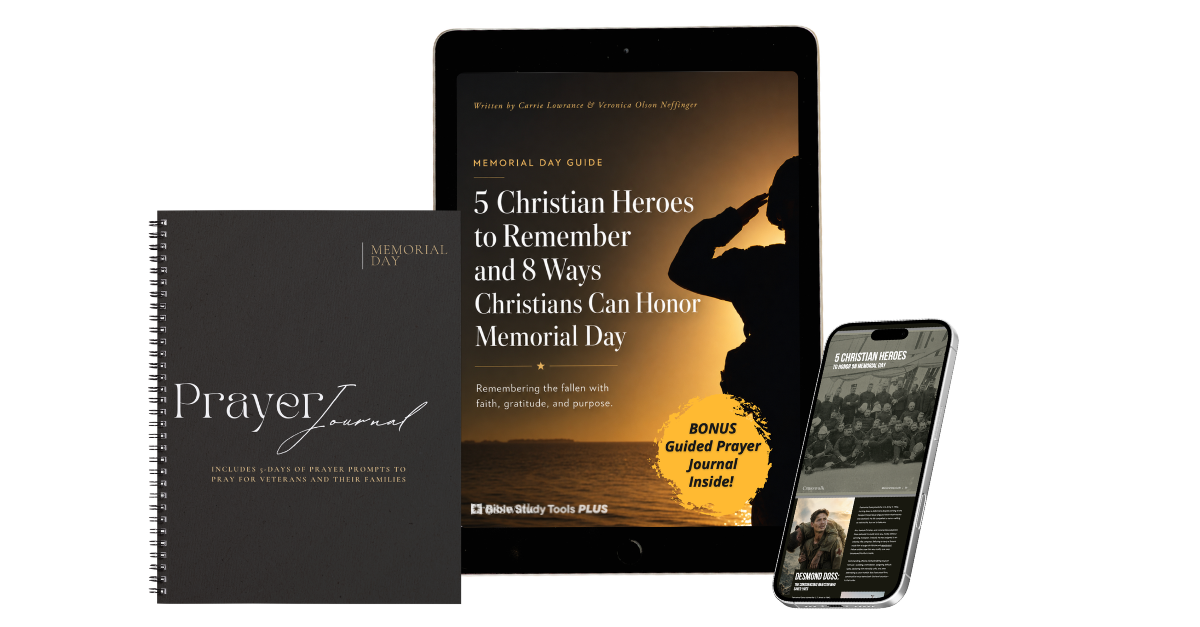
Memorial Day invites us to pause, remember, and honor the brave men and women who gave their lives to protect the freedoms we enjoy. For Christians, this day is also a sacred opportunity to reflect on sacrifice, gratitude, service, and loving your neighbor. This guide highlights five Christian heroes and offers meaningful ways believers can honor Memorial Day with reverence and prayer.
Inside, you’ll find practical ideas for showing appreciation to veterans and their families, thoughtful reflectionson the connection between faith and sacrifice, and a BONUS5-day prayer journal with prompts to help you pray for veterans, military families, and those grieving the loss of loved ones. Whether you are looking for ways to serve, remember, or simply pause in gratitude, this guide will help you approach Memorial Day with a heart rooted in faith and thankfulness.
Download this Memorial Day prayer guide below and discover meaningful ways to remember the fallen, honor veterans and their families, and pray with gratitude, faith, and purpose.
Are the storms of life closing in on you today? Have you been tossed by winds and rain that never seem to end? Take heart, dear child of God. Joy still comes in the morning. Continue Reading →
There are specific moments when we encounter God in such an intimate way that our life is drastically altered. Consider one biblical senior citizen who had likely given up his youthful dreams and settled down to a quiet, nomadic life in the desert—until he had a life-changing encounter with God.Continue Reading →
God is constantly speaking to people. But too often, they miss out on hearing God’s messages because they seek His guidance only when they’re going through a crisis or facing a major decision.Continue Reading →
Here are five resources that can help you along your journey of following Jesus. They will support you as you study the Bible, develop your relationship with the Lord, strengthen your theology, and overall gain a fundamental understanding of Christianity.Continue Reading →
This email is never sent unsolicited. You are receiving this email because your email address, peterhovis@icloud.com, is signed up to receive newsletters, updates, and special offers from BibleStudyTools.
Great crested newts are one of Britain’s most protected animals. London’s most significant population lives and breeds in and around the Glebelands Nature Reserve, a vital pocket of nature sitting alongside the Great North Leisure Park (GNLP) in Finchley.
But the newts’ survival is gravely threatened by a proposed housing development. On 27 May, Mayor Sadiq Khan has the final say on whether it goes ahead.
Arada, a property development company headquartered in Dubai, wants to build 1,485 flats on the adjacent GNLP, with the tallest rising to 25 storeys.
“Dressed up in the language of “enhancing biodiversity” and “softening the edge,” what is actually being proposed is the conversion of a designated nature reserve into a back garden for 1,485 luxury flats.”
It is looking likely that the Mayor will approve the project, despite the fact that the required ecological surveys to protect the newts have not been completed. The local council already voted resoundingly against the development, but the Mayor has used his powers to “call in” the application and will make his own decision.
Save Our Newts says of Khan:
“His record in such matters gives little cause for confidence as he has approved many large, low-quality schemes that were soundly rejected by local residents and councillors.”
Great crested newts are a European Protected Species. Under the Wildlife and Countryside Act 1981 and the Conservation of Habitats and Species Regulations 2017, it is a criminal offence to deliberately harm them, disturb their habitat, or damage the places where they rest and shelter. Before any development that could affect their habitat is approved, the law requires that full ecological surveys are carried out and appropriate mitigation measures are proposed.
Arada has not done this.
The Save Our Newts team is calling on the Mayor to reject Arada’s application. The campaigners state:
“What happens at Glebelands LNR will matter far beyond North London. It will serve as a test case for planning and environmental policy changes, and determine whether legal protections for our nature and wildlife truly mean anything when inconvenient for development.”
Sign our petition today, telling Sadiq Khan to give the great crested newts the legal protection they are entitled to.
The public consultation, asking for comments on this development, is still open. Add your views here.
Pigeons really are up against it. Branded as “vermin” or “pests”, they’re routinely treated with cruelty, left to die tangled in bird netting, targeted in culls, or shot for sport. These are animals humans domesticated and then abandoned, and they deserve far better than the way they’re treated today.
That’s why we’re fighting for them however we can, whether that’s mobilising supporters to help stop pigeon culls, launching national campaigns against deadly bird netting, pressuring companies to remove harmful netting, or challenging the public perception that has normalised cruelty towards these intelligent birds.
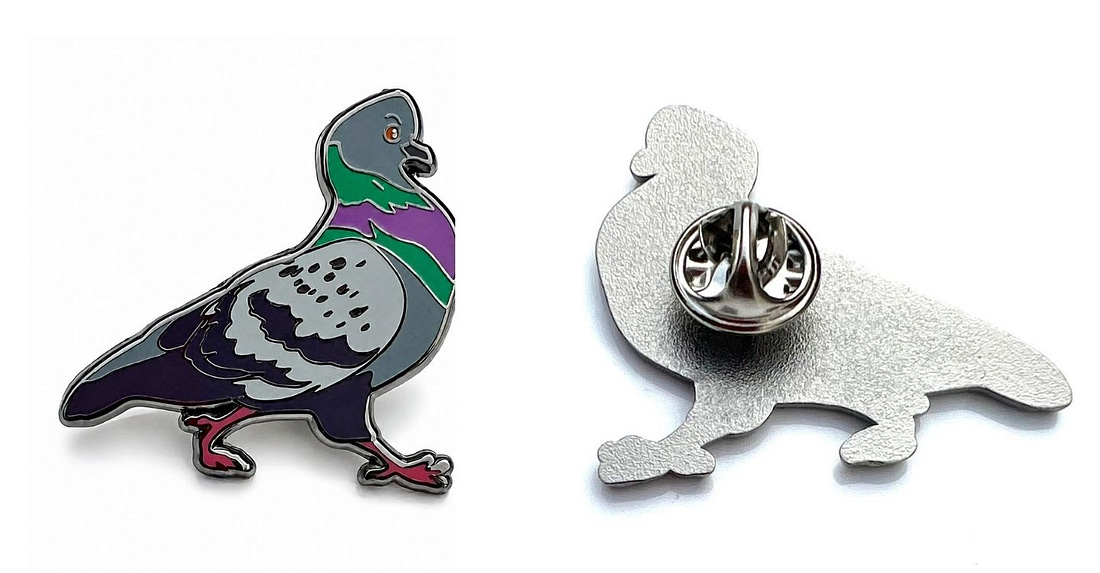
You can support our work for pigeons by picking up the pin badge pictured above.
We just got word that HB 2265—our crucial bill to eliminate fees for constitutional due process rights—is scheduled for a vote in the Senate on Tuesday! That’s great news for Arizonans who support a stronger criminal justice system.End due process fees
Eliminating fees for constitutional due process rights would be a big win for common sense. But the Senate needs to hear from you before the bill comes to the floor.
Welcome to the May editorial edition of the Best of Phoenix newsletter. While the Best of Phoenix winners were announced in September 2025, we want to make sure you are informed year-round.
Once a month, we’ll share our editorial coverage spotlighting a curated mix of stories about standout restaurants and cultural gems to can’t-miss events and the people who make this city unique. Think of it as your insider’s guide to what makes Phoenix, Phoenix.
Love New Times? Thanks to a recent Google update, you can now select us as a preferred source to see our stories first in search results. And if you enjoy this newsletter, consider forwarding it to a friend. Add New Times as a preferred source on Google