Editor’s Note: For many years, investors were told to buy strong companies and hold them for the long run. In my experience, that approach can still work. But the market doesn’t always make it easy.
Stocks move faster than they used to. It’s common now to see big swings – sometimes 30% or more – even in companies that are doing well.
My friend and colleague Luke Langobelieves this is the result of deeper changes in the market. Algorithms, high-frequency trading, and heavy retail participation have made volatility a regular part of investing.
In the essay below, Luke explains why these shifts matter and how investors can look for stocks that may be ready to move higher.
He also explains the approach in a free presentation, where he walks through the system his team uses to scan thousands of stocks for potential breakouts.
There’s a quiet panic spreading through the investing world.
It doesn’t show up in headlines. But you hear it in planning offices and investor forums:
“Why doesn’t this make sense anymore?”
It’s that moment when your watchlist is green at 10:30… red by lunch… and back to flat by the close — and you can’t even point to a single piece of news that explains the entire round trip.
Or when a stock reports “good” earnings, sells off anyway, then rips higher two days later — not because anything changed in the business, but because money moved.
That disconnect is what’s unnerving people. Not volatility by itself… but volatility that feels unmoored, like the market is reacting to forces most investors can’t see.
The media focuses on AI companies and job disruption. But the deeper shift is happening inside the market itself.
Stocks move faster. They reverse harder. And they disconnect from fundamentals more violently than at any point in modern history. The strategies that built wealth for decades can still work — but they no longer work the way investors remember.
Markets that once moved in days now move in minutes. Sometimes seconds.
“Buy great businesses and wait” still works over long stretches. But it now requires enduring drawdowns many investors simply can’t stomach.
Algorithms are now the market.
They account for roughly 70% to 90% of daily U.S. equity volume. Add a surge in retail participation — with stock cash flows running more than 50% higher last year — and you get a system wired for speed and sharp swings.
The human beings you picture on a trading floor — reading tape, making calls, “deciding” what happens next — are mostly the last visible layer of the system.
The real decision-making is increasingly automated, happening in data centers where machines react to headlines, prices, and order flow faster than any person can process.
That doesn’t mean “humans don’t matter.” It means the first move often happens before humans even agree on what the story is.
The average holding period has collapsed from roughly eight years in the 1950s to about five months today.
Since COVID, we’ve experienced three bear markets — roughly one every two years.
That’s not a temporary phase. It’s structural.
And it may intensify. Markets are evolving beyond rule-based algorithms toward agentic AI systems that react to data — and to one another — in real time.
So what happens when price and fundamentals drift apart?
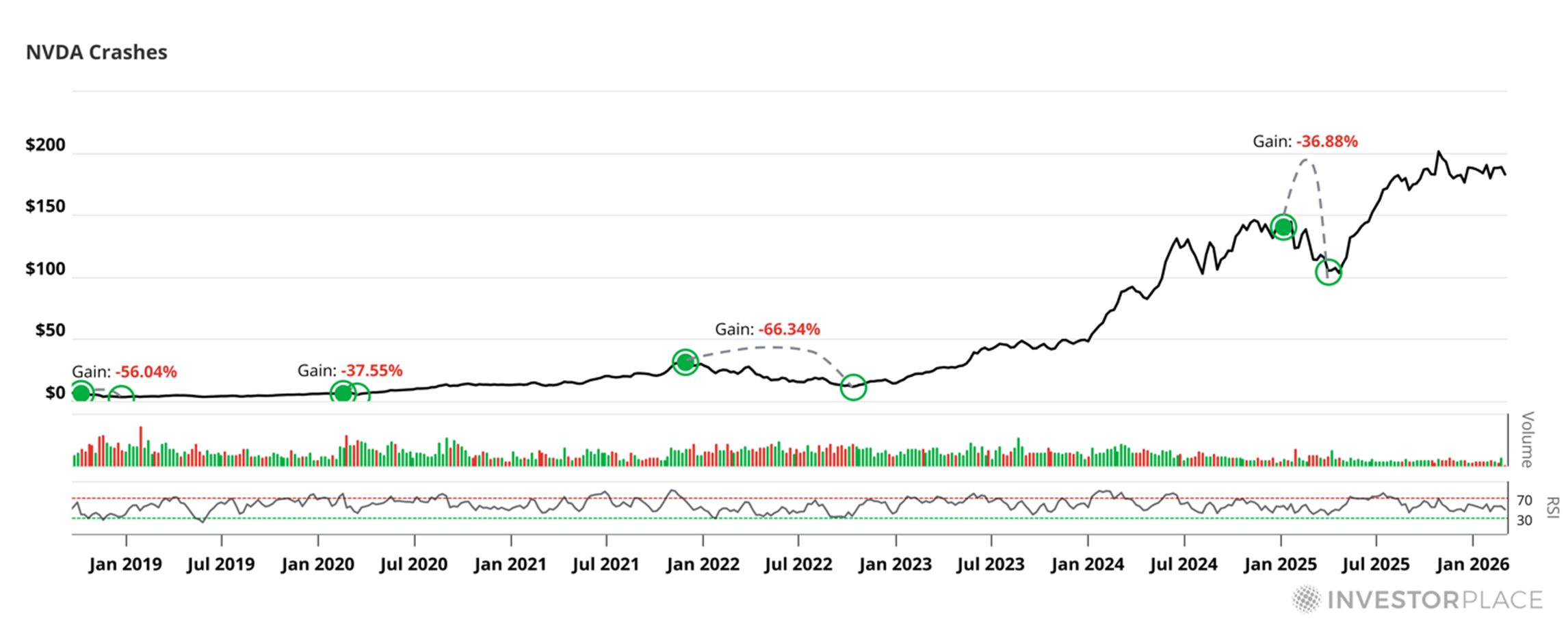
Blue-chip stocks like Netflix Inc. (NFLX)and Nvidia Corp. (NVDA) have lost 35%, 50%, even 60%+ before recovering.
Nvidia alone has endured four major crashes in eight years. The stock ultimately advanced — but holding through those drops required unusual discipline.
Most investors don’t “just hold.” They sell low and buy back higher. Loss aversion is powerful — and expensive.
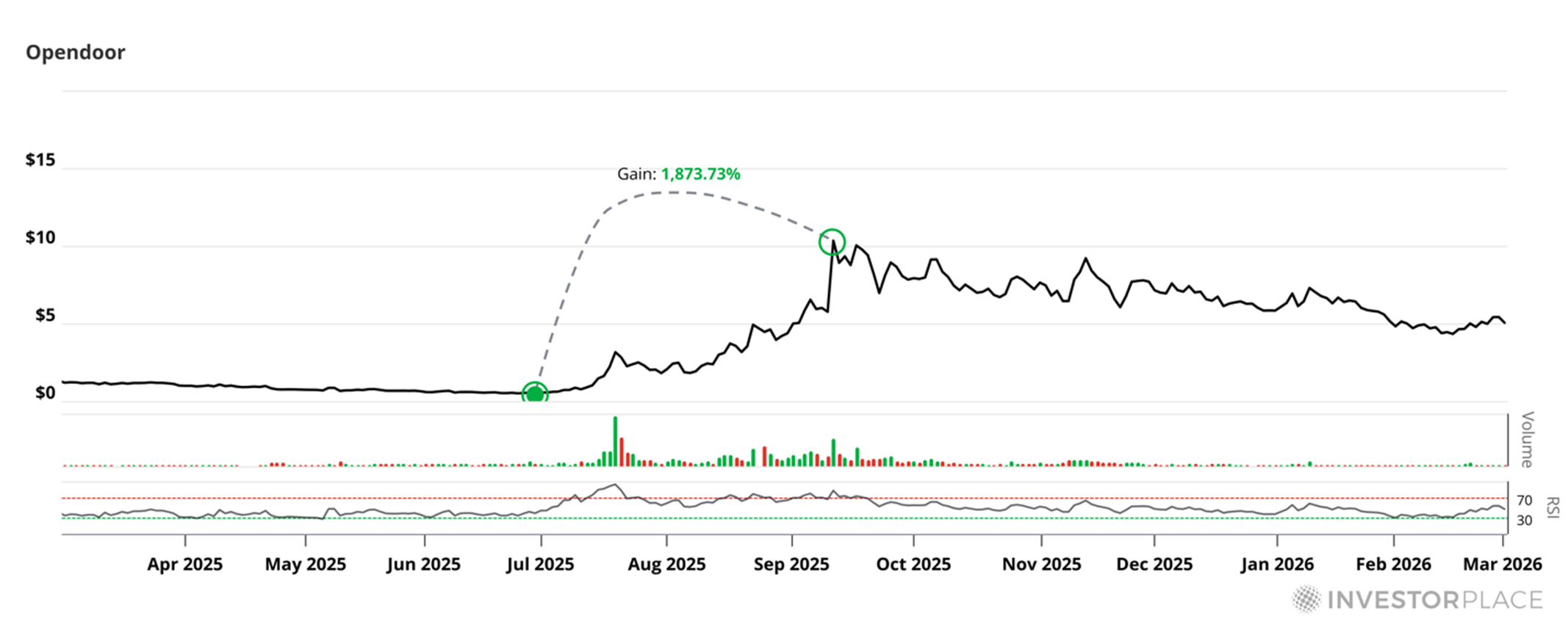
Meanwhile, price behavior has grown increasingly detached from business performance. Opendoor Technologies Inc. (OPEN) rallied nearly 1,900% in two months despite deteriorating fundamentals.
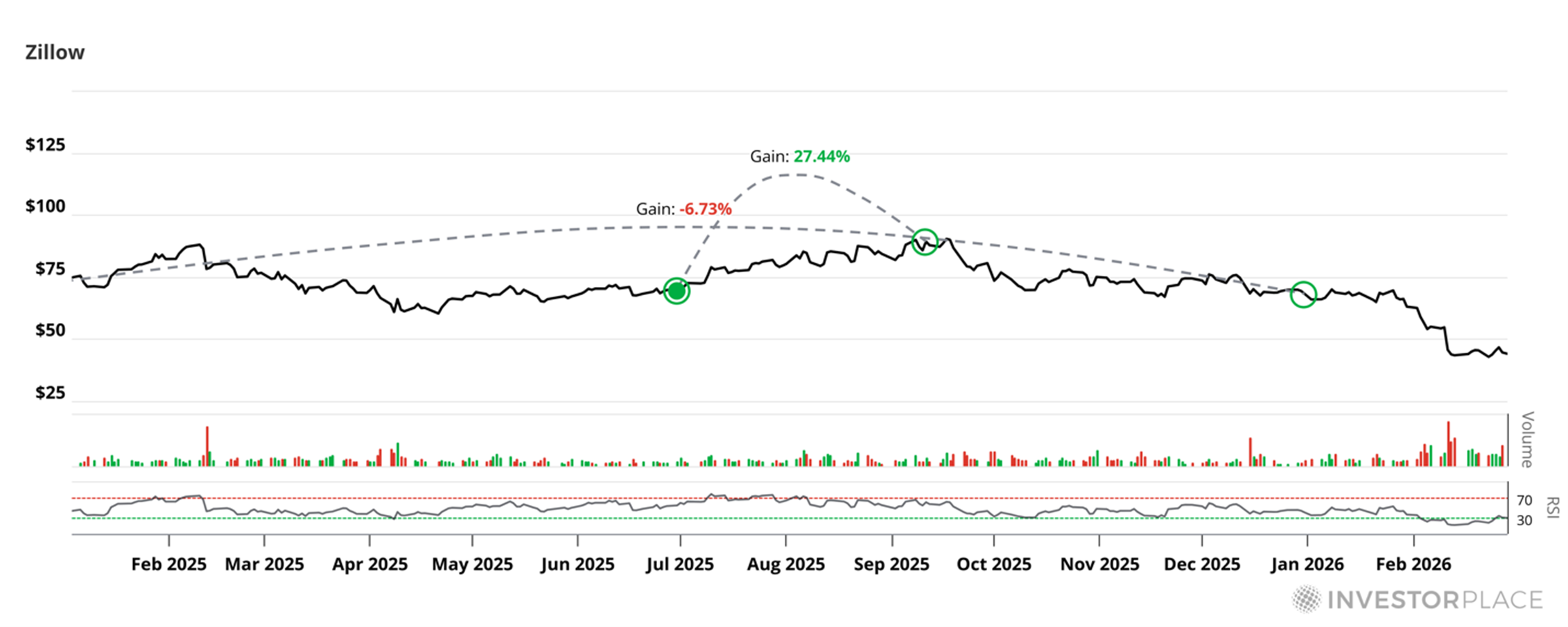
Zillow Group Inc. (Z), another real estate tech firm with stronger revenue and market position, barely moved.
When price decouples from fundamentals, traditional analysis becomes unreliable.
OpenAI is gearing up for a historic IPO, and Silicon Valley insider Luke Lango has found a way for you to invest BEFORE the announcement is even made. You don’t need to file any special paperwork… buy shares from a former employee… have a source on the inside – or jump through any other hurdles. Best of all, all you need is just $10 to get started.
Stage Analysis: Built for Fast Markets
In a high-volatility environment, valuation alone isn’t enough. What matters is where capital is flowing now.
That’s the foundation of stage analysis, popularized by Stan Weinstein.
Every stock moves through four recurring stages:
Stage 1: Sideways consolidation
Stage 2: Breakout and sustained advance
Stage 3: Distribution
Stage 4: Decline
Stage 2 is where the money is made.
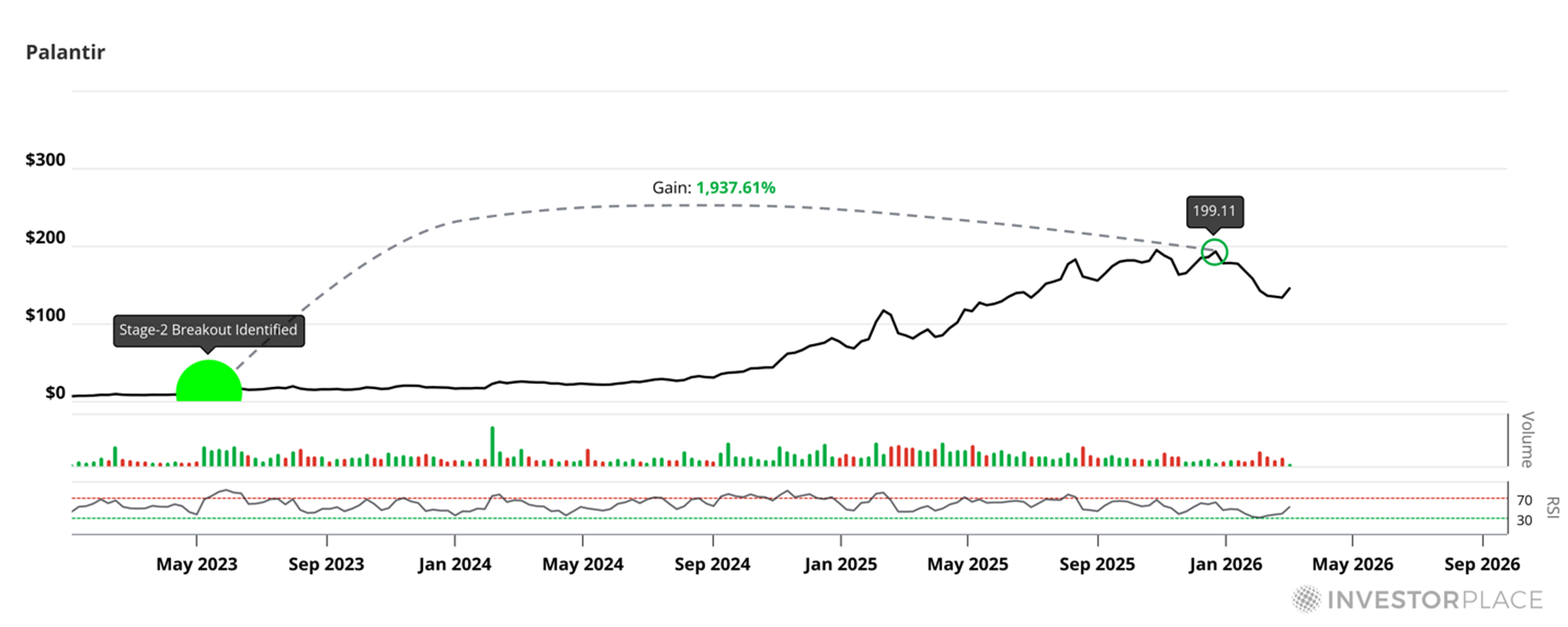
Palantir Technologies Inc. (PLTR) moved from $9 to over $200 after entering Stage 2.
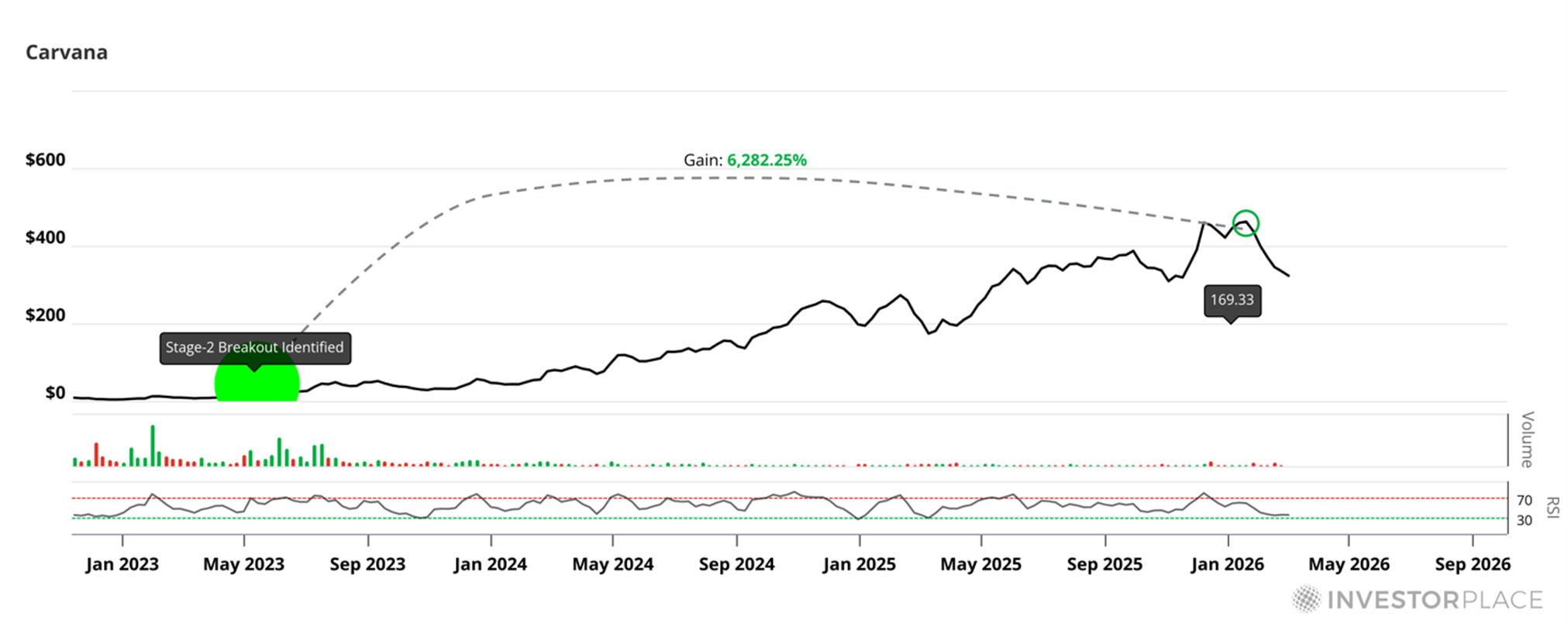
Carvana Co. (CVNA) surged more than 6,000% from its breakout.
Stage analysis doesn’t forecast earnings. It identifies when accumulation is already happening and momentum is building.
In a market defined by rapid rotations, recognizing a Stage 2 breakout early can mean the difference between chasing a move and positioning ahead of it.
The Real Problem: You Can’t Do This Manually
There are thousands of publicly traded stocks. At any moment, a small number are transitioning from consolidation into breakout mode.
That’s where major gains begin.
You won’t catch them by flipping through earnings reports or waiting for a TV segment. By the time they trend on social media, the move is already underway.
That’s why my team built a systematic breakout screener, which I reveal during my new free broadcast. It scans more than 3,000 stocks and assigns each a 0-to-5 breakout score based on momentum strength.
In historical testing, it flagged eight of 2025’s top-performing stocks before their major advances — including:
Hycroft Mining Holding Corp. (HYMC) before a 1,100% run
Terns Pharmaceuticals Inc. (TERN)before an 865% surge
And Palantir long before it became a mainstream AI story
The objective is simple: identify stocks as institutional momentum builds — when price and volume confirm something meaningful is happening.
Volatility isn’t going away. Leadership will continue to rotate quickly.
You can try to keep up manually.
Or you can use a system designed for the market we actually have.
In my latest free presentation, I walk through how it works, what Stage 2 looks like on a chart, and which stocks are scoring highest right now. I give the name and ticker of one of those stocks away for free. Plus, folks who join me will gain unlimited access to my new breakout stock screener, which they can use to find their own Stage 2 stocks.
The market won’t slow down.
But you don’t have to fall behind.
Luke Lango Editor, Hypergrowth Investing
Manage your account We hope this timely investment research is valuable to you. As you know the markets move fast and conditions change frequently. So please check the current issue for the most recent advice. Please note that we cannot be liable for any missed bulletins caused by overzealous filters. To ensure that you continue to receive this valuable part of your service please take a moment to add services@exct.investorplace.comto your address book.
Energy has been the story in the markets for at least the past year.
Prior to last week, when investors talked about the energy sector, it was in relation to how it would feed AI.
But now, because of the war in the Middle East, the main topic on everyone’s mind when it comes to energy is the surge in oil prices.
On February 20, I told readers in my Technical Pattern Profits VIP Trading Service that if oil got above $65, it was likely going to $80 quickly – and after it reached $80, I said it would go on to $95.
Yesterday, just 17 days after my initial prediction, it crossed $100.
There have only been three times in the past 44 years that oil has spiked above $100 per barrel. It happened in 2008, from 2011 to 2014, and in 2022 coming out of the pandemic.
Oil is back down in the low $80s as I write, but it’s still markedly higher than the mid-$50s prices we saw near the end of last year.
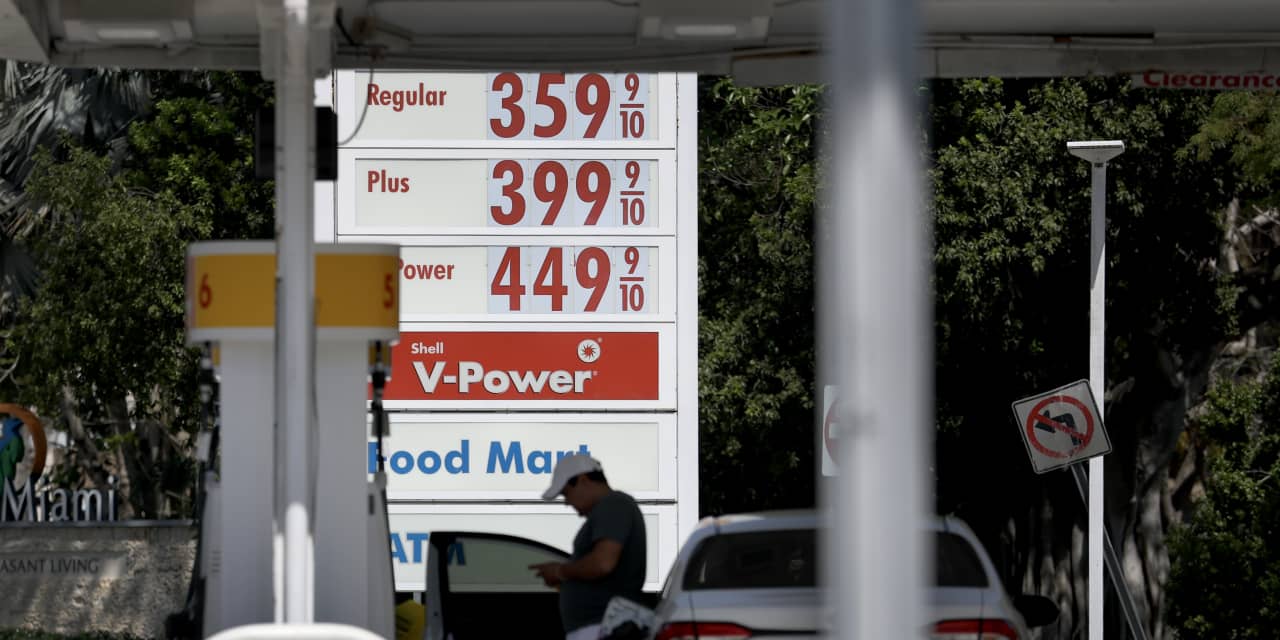
That obviously causes pain at the pump and raises inflation, as everything gets more costly to ship.
But what does it mean for stocks?
Let’s look at five previous periods when oil spiked.
In 1990, when Iraq invaded Kuwait, oil prices quickly doubled from around $20 per barrel to more than $40. You can see that during that move in oil, the S&P 500 had a nearly identical inverse reaction.View larger image
Nine years later, as the dot-com boom was entering its final phase, oil surged from about $10 per barrel to nearly $40 a year and a half later.
Interestingly, as oil rose, the S&P – caught in the final throes of dot-com mania – did not slide immediately. In fact, it continued to rise even though the rally was clearly running out of gas (pun intended).
Then, just as oil peaked, the market began its plummet.View larger image
The first time oil broke above $100 was January 2, 2008.
Like we saw during the dot-com boom, as oil began its rise, the market didn’t drop immediately. But that $100 level proved too much. In conjunction with the global financial crisis, the market melted down. Oil ascending to $145 put additional pressure on stocks.View larger image
The global recession brought oil prices back in check, but they quickly began surging again when the Arab Spring uprisings began in December 2010. Oil bounced around between roughly $75 and $110 for the next three years.
After the pounding from the financial crisis, stocks got up off the mat, even as oil prices doubled between 2009 and 2011 and then stayed elevated for several years. The S&P continued higher despite the high price of oil.View larger image
The COVID crash in 2020 obliterated both oil prices and stock prices. They quickly recovered together until oil hit $100, which was around the same time that stocks topped out and the 2022 bear market began.View larger image
So what have we learned?
Investing when oil prices are rising is like driving during a bad storm. It doesn’t necessarily mean that a crash is coming and it’s time to panic. But you should be paying closer attention and proceeding more carefully.
Nothing published by The Oxford Club should be considered personalized investment advice. Although our employees may answer your general customer service questions, they are not licensed under securities laws to address your particular investment situation. No communication by our employees to you should be deemed personalized investment advice. We allow the editors of our publications to recommend securities that they own themselves. However, our policy prohibits editors from exiting a personal trade while the recommendation to subscribers is open. In no circumstance may an editor sell a security before subscribers have a fair opportunity to exit. The length of time an editor must wait after subscribers have been advised to exit a play depends on the type of publication. All other employees and agents must wait 24 hours after publication before trading on a recommendation.
Any investments recommended by The Oxford Club should be made only after consulting with your investment advisor and only after reviewing the prospectus or financial statements of the company.
Protected by copyright laws of the United States and international treaties. The information found on this website may only be used pursuant to the membership or subscription agreement and any reproduction, copying or redistribution (electronic or otherwise, including on the world wide web), in whole or in part, is strictly prohibited without the express written permission of The Oxford Club, LLC, 105 West Monument Street, Baltimore, MD 21201.
You are receiving this email because you are subscribed to Morning Watchlist from Behind the Markets. If you no longer wish to receive these partner emails, please unsubscribe here. This message is from Rebel Investors Club.
Dear Investor,
It’s one of modern medicine’s greatest failures.
More than 35 years after Prozac was introduced with great fanfare and enormous promise, hundreds of millions of people around the world still struggle with depression and anxiety.
And it’s because Prozac and drugs like it simply don’t work very well. Worse yet, they come with a dizzying array of nasty side-effects.
Unfortunately, Big Pharma never came up with anything better. So, in the end, they simply “walked away from mental health,” as the Wall Street Journal puts it.
Yet, even as Big Pharma was throwing in the towel, a tiny biotech was going all in, developing breakthrough new drugs to address all manner of mental health problems.
That biotech — Helus Pharma (NASDAQ: HELP) — recently caught my eye with clinical trial results that knocked my socks off.
Those recently completed trials reveal that two of the breakthrough new drugs the company is developing may finally provide a safe, powerful, and long-lasting way to effectively treat depression and anxiety.
And our analysis shows that Helus Pharma could be a big winner for investors who buy its stock now, while it’s still flying under the radar.
My name is Jon Najarian. I’m a former NFL football player who traded in his cleats more than four decades ago to launch what has turned out to be a more successful career in the financial markets.
With my brother Pete, I run the Rebel Investors Club, which provides potentially high-profit investment advice to Main Street investors.
And our analysis shows that Helus Pharma (Nasdaq: HELP) could be our next big winner — whether a big pharmaceutical makes a play for the company or not.
The company is in the business of engineering — and patenting — novel compounds based on natural substances for the treatment of Major Depressive Disorder, Generalized Anxiety Disorder, and many other mental health problems.
And, as I mentioned, clinical trials already show that they’re working miracles in the lives of human subjects… 71% of whom reported complete remission of their depressive symptoms 12 months after treatment — something that’s almost unheard-of with antidepressants.
All without any significant side effects reported!
This is the kind of breakthrough that could catapult this company into the ranks of the pharmaceutical superstars — or make it an inviting takeover target for a bigger company looking to jump back into the mental health space.
Either one could mean a much higher stock price in the months and years ahead.
You can get the full story in an exclusive Research Report we recently completed. It’s called Big Pharma Failure Creates Massive Investment Opportunity, and it reveals seven reasons why this unique company could be a big winner for your portfolio.
To get your free, no-obligation copy of this $99.95-value Report, click here, and you can download it immediately.
We’re encouraging our Rebel Investors Club members to consider jumping on this opportunity with Helus Pharma (Nasdaq: HELP) now. It’s an opportunity you’d be well served to consider too.
Click here to claim your free Research Report today.
Sincerely,
Jon and Pete Najarian, Editors Rebel Investors Club
IMPORTANT NOTICE AND DISCLAIMER: All investments are subject to risk, which must be considered on an individual basis before making any investment decision. This paid advertisement includes a stock profile of Helus Pharma (NASDAQ: HELP). Rebel Investors Club is an investment newsletter being advertised herein. This paid advertisement is intended solely for information and educational purposes and is not to be construed under any circumstances as an offer to sell or a solicitation of an offer to purchase any securities. In an effort to enhance public awareness, Helus Pharma (NASDAQ: HELP) provided advertising agencies with a total budget of approximately $2,914,712 and is the sole source of funds to cover the costs associated with creating, printing and distribution of this advertisement. From that total budget, Moneta Advisory Partners, an affiliate of Rebel Investors Club was paid $500,000 as a research fee and for the production and placement of additional advertising media for this campaign. The advertising agencies will retain any excess sums after all expenses are paid. Rebel Investors Club may receive subscription revenue in the future from new subscribers as a result of this advertisement for its newsletter.
While this advertisement is being disseminated and for a period of not less than 90 days thereafter, Rebel Investors Club , the advertising agencies, and their respective officers, principals, or affiliates will not sell securities of Helus Pharma (NASDAQ: HELP). If successful, this advertisement will increase investor and market awareness of Helus Pharma (NASDAQ: HELP) and its securities, which may result in an increased number of shareholders owning and trading the securities, increased trading volume, and possibly an increase in share price, which may be temporary. This advertisement, the advertising agencies and Rebel Investors Club do not purport to provide a complete analysis of Helus Pharma (NASDAQ: HELP) or its financial position. They are not, and do not purport to be, broker-dealers or registered investment advisors.
This advertisement is not, and should not be construed to be, personalized investment advice directed to or appropriate for any particular investor. Any investment should be made only after consulting a registered broker-dealer or registered investment advisor or, at a minimum, doing your own research if you do not utilize an investment professional to make decisions on what securities to buy and sell, and only after reviewing the financial statements and other pertinent publicly-available information about Helus Pharma (NASDAQ: HELP). Further, readers are specifically urged to read and carefully consider the Risk Factors identified and discussed in Helus Pharma (NASDAQ: HELP) SEC filings. Investing in microcap securities such as Helus Pharma (NASDAQ: HELP) is speculative and carries a high degree of risk. Past performance does not guarantee future results. This advertisement is based exclusively on information generally available to the public and does not contain any material, non-public information. The information on which it is based is believed to be reliable. Nevertheless, the advertising agencies and Rebel Investors Club cannot guarantee the accuracy or completeness of the information and are not responsible for any errors or omissions.
This advertisement contains forward-looking statements, including statements regarding expected continual growth of Helus Pharma (NASDAQ: HELP) and/or its industry. The advertising agencies and Rebel Investors Club note that statements contained herein that look forward in time, which include everything other than historical information, involve risks and uncertainties that may affect Helus Pharma (NASDAQ: HELP) actual results of operations. Factors that could cause actual results to vary include the size and growth of the market for Helus Pharma (NASDAQ: HELP) products and/or services, the company’s ability to fund its capital requirements in the near term and long term, federal and state regulatory issues, pricing pressures, etc.
Rebel Investors Club is the publisher’s trademark. All trademarks used in this advertisement other than Rebel Investors Club are the property of their respective trademark holders and no endorsement by such owners of the contents of this advertisement is made or implied. The advertising agencies and Rebel Investors Club are not affiliated, connected, or associated with, and are not sponsored, approved, or originated by, the trademark holders unless otherwise stated. No claim is made to any rights in any third-party trademarks.
We are issuing this disclosure in compliance with Section 17(b) of the Securities Act, which requires us to disclose any compensation received or expected to be received in cash or in kind in connection with the purchase or sale of any security.
We would like to inform you that we have received or expect to receive compensation in connection with the purchase or sale of the securities of Helus Pharma (NASDAQ: HELP). The compensation consists of up to $5,500 and was received/will be received from Creative Direct Marketing Group.
This communication should not be considered as an endorsement of the securities of adviser Helus Pharma (NASDAQ: HELP) and we are not responsible for any errors or omissions in any information provided about the securities of Helus Pharma (NASDAQ: HELP) by Rebel Investors Club or Creative Direct Marketing Group.
We encourage you to conduct your own due diligence and research before making any investment decisions. You should also consult with a financial advisor before making any investment decisions.
This disclosure is made as of 03/10/2026.
Our mailing address is: Behind the Markets, LLC 4260 NW 1st Avenue, Suite 55 Boca Raton, FL 33431
You are receiving this email because you are subscribed to Morning Watchlist from Behind the Markets. If you no longer wish to receive these partner emails, please unsubscribe here.
But before you do… it’s critical you understand something first.
While we’re happy to let you try this for free…
The real power of this tool comes from full, year-round access.
Our AI has learned to forecast the price of 2,384 U.S. stocks, to the penny, days in advance.
It was built by a former lieutenant colonel who coded top-secret projects for the U.S. military.
And our AI specializes in spotting rapid-fire, quick profit opportunities, week after week.
That means by using our AI over and over, our users could have already seen gains like 5% in just 1 day on Tesla, or 25% in 2 days on Carvana – just trading regular shares. No options or anything wild.
Our AI has spotted dozens and dozens of quick trades like these in just the last few months alone.
And these winners could quickly add up to grow your portfolio hundreds or thousands of percent per year.
But the only way to see potential profits like that is to KEEP using the AI, all year long, as a full member.
Normally a full subscription costs $499 per year – or even much more…
But we’ve established a much better way to access this AI for a fraction of the cost.
TradeSmith is not registered as an investment adviser and operates under the publishers’ exemption of the Investment Advisers Act of 1940. The investments and strategies discussed in TradeSmith’s content do not constitute personalized investment advice. Any trading or investment decisions you take are in reliance on your own analysis and judgment and not in reliance on TradeSmith. There are risks inherent in investing and past investment performance is not indicative of future results.
To unsubscribe or change your email preferences, please click here.TradeSmith | 1125 N. Charles Street, Baltimore, MD 21201Terms of UsePrivacy Policy
You can feed AI all kinds of data and get a remarkable forecast in return…
They’re using AI to forecast medical readings in hospitals to save dozens of lives. each year in California ERs. In fact, according to the New York Times, medical AI now beats doctors at diagnosing many illnesses.
Google DeepMind’s AI can predict hurricanes faster than even the most advanced supercomputer models.
AI can predict energy grid blackouts in advance, to help prevent them.
This is a paid advertisement provided to customers of Schaeffer’s Investment Research. Although we have sent you this email, Schaeffer’s does not necessarily endorse this product nor is it responsible for the content of this advertisement. Schaeffer’s makes no guarantee or warranty about what is advertised above.
Jeff Tweedy has been writing the soundtrack to existential crises and long desert drives for three decades — and on March 16, he’s taking over The Van Buren. Macie Stewart opens.
This is the kind of show you brag about seeing in a room this size. Lock in your tickets now at LiveNation.com.
Formula One Digital Media Limited is a company registered in England and Wales with registered number 8915039 with its registered office at N° 2 St James’s Market, London, SW1Y 4AH.The F1 FORMULA 1 logo, F1 logo, FORMULA 1, F1, FIA FORMULA ONE WORLD CHAMPIONSHIP, GRAND PRIX and related marks are trademarks of Formula One Licensing BV, a Formula 1 company. All rights reserved.
Save 30% on flights to Florida, Latin America, and across the U.S. and Canada this spring. Use code SPRING30 at checkout. Sale ends March 10, 2026.
— Read on www.alaskaair.com/content/flights/deals/promo












.png)






















 RJ Hamster