Carvana Soars Over 10,000% From Lows—Now It’s in the S&P 500
Written by Jeffrey Neal Johnson on December 9, 2025
At a Glance
The company’s addition to the S&P 500 index creates significant, automatic buying demand from passive and tracker funds.
This milestone was earned through a fundamental business transformation that delivered sustained profitability and impressive year-over-year revenue growth.
Management has shifted its focus from survival to market dominance, backed by a fortified balance sheet and clear guidance for continued strong unit sales.
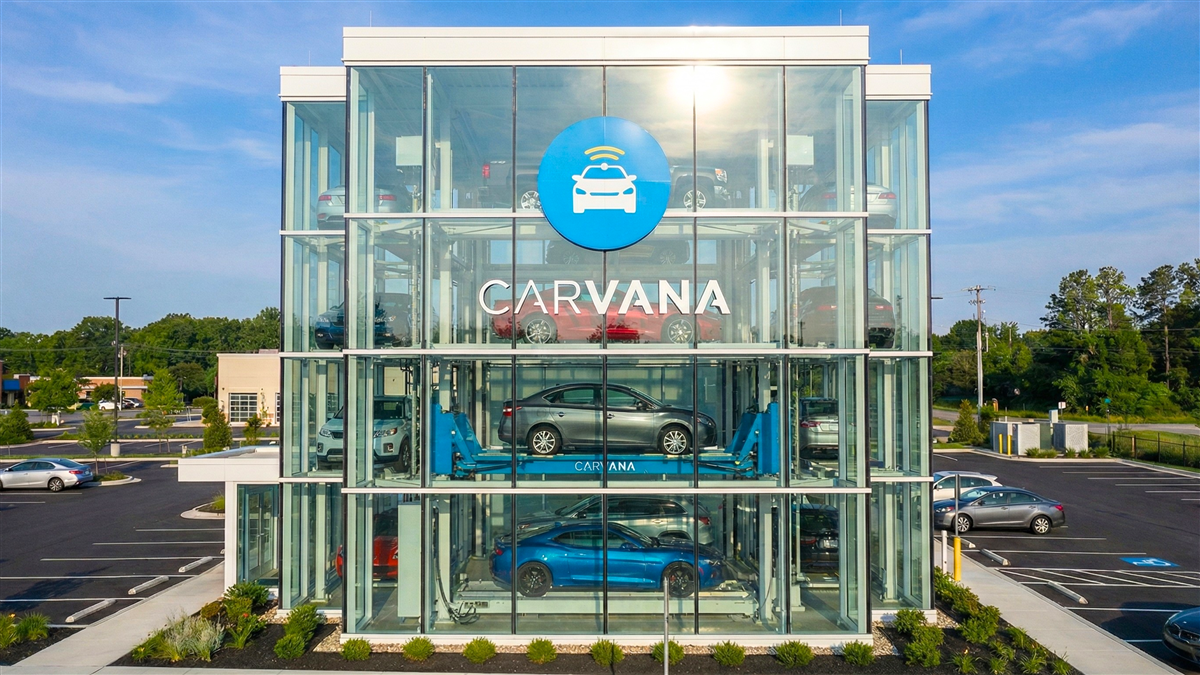
Carvana Co. (NYSE: CVNA) has just completed one of the market’s most remarkable comebacks. Just a few years after facing bankruptcy concerns that sent its stock tumbling to an all-time low of $3.72, the company is now joining the prestigious S&P 500 index. This milestone event, effective before the market opens on Dec. 22, 2025, serves as a powerful validation of a dramatic operational and financial turnaround that has seen the stock gain over 10,000% from its 2022 lows.
The market’s reaction to the news was immediate and decisive. Carvana’s stock price jumped by double digits to a new 52-week high of $456.97 on explosive trading volume of over 14 million shares, nearly four times its daily average. This is more than a symbolic victory; it is a significant technical event that will force a new wave of institutional buying, cementing the company’s status as a high-growth industry leader.
Elon Musk’s Starlink project is generating major speculation ahead of a potential IPO that some analysts believe could reach a historic $100 billion valuation. According to James Altucher, there may be a smart “backdoor” way for everyday investors to position ahead of that event without needing traditional IPO access — and he says it can be done for under $100. He’s also sharing a free ticker tied to this trend for anyone who wants to take a closer look.Click here to learn more
The Index Effect: A Powerful, Non-Discretionary Catalyst
Carvana’s inclusion in the S&P 500 creates a powerful and automatic demand for its shares, a phenomenon known as the Index Effect. The reason lies in the mechanics of modern investing. An estimated $13 trillion in assets is directly indexed or benchmarked to the S&P 500. The massive passive funds and ETFs that track this index are now obligated to purchase Carvana stock to mirror the index’s composition accurately. For these funds, buying is not a choice based on valuation or sentiment; it is a mandate.
This creates a significant, near-term demand shock. The forced buying from passive funds provides a strong technical tailwind and a new level of support for the share price as the inclusion date approaches. This dynamic also puts immense pressure on short sellers, investors who bet that a stock’s price will fall. As of mid-November, over 11 million shares of Carvana were held short. The sudden, inelastic demand from index funds can trigger a short squeeze, a scenario where short sellers are forced to buy back shares to close out their losing positions. This rush to buy adds fuel to the fire, further accelerating the stock’s upward price momentum.
The Engine of the Turnaround: Data-Driven Validation
While the index news is a powerful catalyst, it was earned, not given. Carvana’s inclusion was made possible only after the company met the S&P’s strict financial criteria, chief among them being sustained profitability under Generally Accepted Accounting Principles (GAAP). This achievement serves as an institutional stamp of approval on a business that has fundamentally transformed itself from a cash-burning growth story into a profitable industry leader.
The data from its recent financial reports tells the story of this operational success.
Profitability Mastered: After a period of significant losses, Carvana has demonstrated a strong command of its bottom line. In the third quarter of 2025, the company reported a net income of $263 million and now boasts a positive trailing twelve-month earnings per share (EPS) of $4.38.
Explosive Growth: Proving it can scale profitably, Carvana’s revenue grew an impressive 55% year-over-year in the third quarter. This was driven by a 44% increase in retail units sold, far outpacing many of its industry peers. This performance beat revenue estimates but missed on EPS, showing that cost efficiencies remain a key focus.
A Fortified Balance Sheet: The company has aggressively de-risked its financial position. Over the past two years, it has retired $1.2 billion in corporate debt, and its net debt-to-Adjusted EBITDA ratio now stands at a healthy 1.5x, its strongest financial position ever.
This impressive financial recovery is the result of concrete operational improvements. By integrating its acquired ADESA auction sites, the company has positioned inventory closer to customers, cutting average delivery times by a full day. In a pilot program in Phoenix, Carvana is now achieving same-day or next-day delivery for 40% of customers, a capability that sets a new standard for the industry.
Carvana’s recent financial performance has sparked debate over the stock’s high valuation, with its price-to-earnings ratio(P/E) now exceeding 100. This premium reflects the market’s confidence in Carvana’s disruptive potential and its progress toward its long-term target of selling 3 million vehicles annually with industry-leading profit margins.
Investors have also noted the recent pattern of stock sales by top executives. However, these transactions are typically executed under pre-scheduled Rule 10b5-1 trading plans, which allow insiders to sell shares for personal financial management and diversification. Critically, key insiders, including CEO Ernie Garcia III, continue to retain substantial equity stakes, ensuring their long-term interests remain closely aligned with those of shareholders.
With its entry into the S&P 500, Carvana is embarking on a new era. The narrative has decisively shifted from survival to market share dominance. Management’s guidance reflects this confidence, forecasting over 150,000 retail units sold in the fourth quarter and full-year 2025 Adjusted EBITDA at or above the high end of its $2 to $2.2 billion range. For investors, the focus now turns to execution as Carvana leverages its powerful e-commerce platform and fortified balance sheet to redefine the future of automotiveretail.
Thank you for subscribing to DividendStocks.com’s daily newsletter for dividend and income investors that covers ex-dividend stocks, new dividend declarations, dividend stock ideas, and the latest market news.
If you have questions or concerns about your newsletter, don’t hesitate to contact MarketBeat’s South Dakota based support team at contact@marketbeat.com.
If you no longer wish to receive email from DividendStocks.com, you can unsubscribe.
Copyright 2006-2025 MarketBeat Media, LLC. 345 North Reid Place #620, Sioux Falls, South Dakota 57103. U.S.A..
Authored by Jordan Chussler. Originally Published: 12/3/2025.
Key Takeaways
Costco has dealt with numerous headwinds this year, including tariffs and souring consumer sentiment, resulting in a year-to-date gain of just 1.34%.
Despite that, Costco has beat on earnings nine of the last 10 quarters.
The company could turn a corner in 2026, supported by strong fundamentals, bullish price targets from analysts, and negligible short interest.
2025 has been a mixed bag for consumer staples companies in the retail sector. While Target’s (NYSE: TGT) well-documented struggles have produced a year-to-date (YTD) loss of more than 34%, other retailers have fared much better.
Walmart (NYSE: WMT), for example, has shown an ability to adapt to President Trump’s tariff policies and the resulting shifts in consumer behavior.
The company—a dividend king, the largest grocer in the United States, and an increasingly significant e-commerce competitor—has posted a YTD gain of nearly 25%.
Throughout 2025, Costco shareholders have weathered corrections of more than 17%, 12% and 8% at various points.
With the calendar about to turn to 2026, current and prospective investors are hoping for a bounce-back year driven by Costco’s loyal members, solid underlying fundamentals and bullish forecasts from Wall Street analysts.
Costco Has Adapted to Tariffs and Continued to Expand
On Monday, it was reported that Costco is suing the Trump administration and seeking a refund for import taxes the U.S. Court of International Trade in New York and the U.S. Court of Appeals for the Federal Circuit in Washington have deemed “illegal.”
While the litigation may take months to resolve, it underscores the broader challenges the company has faced—and how it has navigated them.
A key response has been expanding Costco’s private-label brand, Kirkland Signature, which celebrated its 30th anniversary in 2025. According to president and CEO Ron Vachris’s fiscal year (FY) 2025 Q4 earnings callcomments, “Kirkland Signature sales penetration continues to increase, bringing even more high-quality value to our members while offsetting potentially inflationary impacts from tariffs.”
That strategy appears to be working. Costco has broadened Kirkland Signature offerings to provide members high-quality alternatives to tariff-impacted goods. CFO Gary Millerchip said those products typically deliver 15% to 20% better value compared with national brands of comparable quality.
In Q4 alone, Costco launched more than 30 new Kirkland Signature items, while ancillary businesses—including the company’s pharmacy, optical and hearing-aid operations—all posted strong quarters. Vachris also noted that Costco’s merchants adjusted plans to mitigate tariff impacts for the warehouse chain.
Those moves helped the company stay on a steady growth path. In FY 2025, Costco opened 27 new warehouses, bringing the total to 914, and plans 35 additional locations in FY 2026 across domestic and international markets.
The company has also increased its e-commerce presence: online sales topped $19.6 billion (a 15% year-over-year increase), while digitally enabled sales surpassed $27 billion for FY 2025.
Costco’s Strong Fundamentals Have Remained Intact
The warehouse club’s core business—selling memberships—maintains an impressively high renewal rate of about 90% in the United States and Canada. That helped Costco beat expectations on both the top and bottom lines when it reported FY 2025 Q4 earnings on Sept. 25—its ninth earnings beat in the last 10 quarters.
However, the stock was punished after the earnings release, sliding more than 6% before finding a bottom on Nov. 24. Since then, COST is up more than 4%, and investors are looking ahead to FY 2026 with renewed interest.
Earnings are expected to grow about 9.21% next year, from $18.03 per share to $19.69. The company reported quarterly revenue rose 8.1% year over year to $86.16 billion; net income increased to $2.61 billion, up more than 11% YOY; and paid memberships reached 81 million, up 6.3% YOY.
That performance reflects disciplined management and healthy financials. From 2022 to 2025, Costco’s net income grew at an annual average rate of 11.15%, while annualized earnings per share (EPS) growth averaged 11.53% over the same period.
Perhaps most notably, the company’s net cash from operating activities rose more than 80% from 2022 to 2025, increasing from $7.39 billion to $13.33 billion.
What Wall Street Thinks of Costco
Of the 32 analysts covering Costco, the consensus is a Moderate Buy: 19 assign a Buy rating, 13 assign a Hold, and none a Sell.
Analysts’ average 12-month price target of $1,027.75 implies roughly 11.47% upside from current levels. While that may not signal explosive upside, it is complemented by a dividend yield of 0.56%, which equates to about $5.20 per share annually at current prices.
Over the past year, institutional ownership(68.48%) has remained solid, with 3,106 buyers outnumbering 2,596 sellers. That has produced inflows of more than $51 billion versus outflows near $27 billion.
At the same time, Wall Street’s skeptics are proceeding cautiously: short interest in Costco currently sits at just 1.63% of the float.
Delivering World-Class Financial Research Since 1999
Me: Learn history… Dalio: It’s all happened before… Toews: Retirement portfolios are vulnerable… Solomon: There’s nothing new under the sun… Me again: We can help (but it’s up to you)…
Editor’s note: Our Stansberry Research offices are closed today as our team enjoys some deserved time off and celebrates the holiday season. So we’re republishing a missive from regular Friday Digest essayist, Extreme Value and The Ferris Report editor, and Stansberry Investor Hour co-host Dan Ferris.
We originally published this essay back in April of this year. But we think you’ll find the insights and lessons – about the importance of understanding history to navigate today’s market – as timely as ever. It’s the kind of long-term view that Dan uniquely can provide. Enjoy…
I (Dan Ferris) love history…
Subscribers to my Extreme Value and The Ferris Report newsletters know I often introduce a stock recommendation by walking through the company’s life story.
That exercise is especially valuable when there is a straight line from the founding or some early point in the company’s history to the present. By that, I mean something like consistent leadership and a culture that kept the business on track, and which I believe will remain successful.
Learning to understand the longer arc of financial and economic history became a much more important skill for investors over the past few years…
In 2020, we had the worst pandemic since 1918, whose economic effects (higher inflation among them) are still with us today.
In 2022, we faced the steepest interest-rate-hiking cycle in history, with the only precedent occurring more than 40 years before (in 1980). Interest rates remain well above 2022 levels.
If investors didn’t take the hint after those events, Donald Trump’s trade war has finally made understanding history a nonnegotiable requirement.
Ray Dalio agrees that there’s no substitute for knowing economic history…
Dalio founded Bridgewater Associates, the world’s biggest hedge fund. He has researched and written about centuries of historical precedents for what’s happening now. In a recent Bloomberg interview with investor Barry Ritholtz, Dalio said…
The one thing that I learned about early on, particularly when the dollar in 1971 was broken from gold, is that many things that surprised me had never happened in my lifetime before, but they happened many times in history before.
Most investors seem unaware that they’re witnessing events with many historical precedents from before they were born. In a recent Reddit post, Dalio described the three biggest oft-repeated historical events happening today…
Creating a lot of debt and money, big wealth and political gaps, and the rise of [a] new world power (China) challenging an existing one (the US)…
We won’t delve into each of those areas today, but I believe Dalio is right. You should get a basic understanding of them, especially debt and money creation and the China/U.S. power struggle.
Another financial leader says many investors today are suffering from ‘corona bias’…
Philip Toews, founder and CEO of New York-based Toews Asset Management, wrote in a commentary in Barron’s…
Just as pandemic preparedness suffered from historical amnesia, investment strategies are constructed with a blind spot for market regimes that haven’t occurred within most professionals’ careers.
Toews calls out retirement portfolios as being particularly vulnerable, since they’ve all been built based on assumptions that have prevailed since 1980. As he puts it…
Bonds are reliable portfolio stabilizers. Stock market corrections will be relatively brief and followed by strong recoveries. Inflation is a largely conquered threat.
And he is not subtle about the implications of those vulnerabilities…
These assumptions work brilliantly in back-tests covering recent decades. But extending that historical lens reveals market regimes that would devastate today’s conventional portfolio construction.
In other words, multidecade market regimes become so ingrained in our collective investment psychology that we struggle to even contemplate alternatives—until they arrive with devastating force.
Toews’ short piece includes “devastate,” “devastation,” and “devastating” a total of six times. The repetition is neither an accident nor an overstatement.
The portfolio you think is perfect could be financially fatal starting right now. Trump intends to topple the global economic order… potentially unleashing a devastating force on financial markets and the retirement portfolios that depend on them. Even if you believe what he’s doing will be a long-term good, even he has made it clear it’ll require near-term pain.
Nobody wants to look back years from now and realize they could have saved their investments from a devastating force if only they’d learned more about what happened in the world before 1980.
If you want to bone up on your financial and economic history…
Try the 2009 book This Time Is Different: Eight Centuries of Financial Folly, by economists Carmen Reinhart and Kenneth Rogoff. It’s a bit dense and technical, but it also features amusing and relevant observations like:
For economists, Henry VIII of England should be almost as famous for clipping his kingdom’s coins as he was for chopping off the heads of its queens.
Henry VIII “resorted to an epic debasement of the currency,” starting in 1542 and continuing through his successor’s reign starting in 1547. As a result, the British pound lost 83% of its silver content.
Likewise, Dalio might say something similar is happening today, and he has said that our current debt cycle today resembles the period from 1935 to 1945. That cycle really began in 1933, when President Franklin D. Roosevelt ordered Americans to surrender their gold. The following year, FDR reduced the value of the gold-backed U.S. dollar by changing the official price of gold, from $20.67 per ounce to $35 – reducing the value of the currency by roughly 40% in a single stroke.
Today, our currency isn’t debased by reducing its silver content or repricing its gold backing. While gold repricing has been in the news, it’s not about backing the U.S. dollar. Gold hasn’t backed the U.S. dollar since 1971.
Dalio, among many others, has also repeatedly warned investors of the debasement of the dollar by the Federal Reserve printing more money to buy increasing amounts of debt issued by the U.S. government.
I also highly recommend Edward Chancellor’s 2022 masterpiece, The Price of Time: The Real Story of Interest. Chancellor is in a class by himself, having read and digested everything available on the topics he covers. Combine this with his 1999 history of financial speculation, Devil Take the Hindmost, and you’ll better understand several important episodes and trends in the history of both equity and debt markets. These are excellent reads and my two favorite financial-history books of any type.
It’s mostly serious, often downright dense material… But that’s what it takes to really dig far enough into financial history to make a difference in how you see the world.
If you read and digest all of these books, you’ll be far better able to navigate what’s happening right now than 99% of investors in the market today. Reading them would probably also light a fire under you to learn even more market history.
Besides reading, there are some interesting folks you can follow through social media and other online portals who have an excellent understanding of history. Outside of my colleagues at Stansberry Research and its affiliated companies, three of my favorites are Marko Papic at BCA Research… Brent Johnson of Santiago Capital… and Hugh Hendry, “The ACID Capitalist.”
These writers understand the current macro environment and frequently drop historical names, dates, and topics that send me scanning my bookshelves and scouring the Internet for more information.
Of course, another book you might already be familiar with also contains some valuable insights about history, which you might not have realized were relevant to financial markets…
I’m talking about the biblical book of Ecclesiastes…
Throughout the frequently quoted book, Solomon, king of Jerusalem, ponders the cyclical nature of life, most famously in chapter 1, verses 9 to 11:
The thing that hath been, it is that which shall be; and that which is done is that which shall be done: and there is no new thing under the sun.
Is there any thing whereof it may be said, See, this is new? it hath been already of old time, which was before us.
There is no remembrance of former things; neither shall there be any remembrance of things that are to come with those that shall come after.
The key danger for investors lies in that last verse. Folks don’t remember things that happened before they were born. Even if they do remember reading or hearing about them, those events never feel as real as anything one has lived through.
Wall Street, aided by the Federal Reserve, helps investors forget about the dangers that have caused past crises by constantly pushing new, risky, leveraged financial products.
The history of such schemes is checkered at best, and often disastrous. But at worst, these products rake in cash until they crash, and then their managers turn around and sell some fresh new terrible idea.
Dozens of new highly leveraged exchange-traded funds have debuted over the past few years. Somebody got paid for doing that, even though they’re utterly worthless to investors.
Besides learning history and not forgetting it, it’s probably also helpful to realize that…
History itself can change…
That’s not intuitively obvious. After all, what has happened has happened. The past can’t change… can it? Maybe not, but history is not necessarily synonymous with the past…
The article describes an archaeological site in Turkey called “Göbekli Tepe.” It contains the oldest buildings in the world, erected 11,500 years ago. Scientists estimate that extracting and removing their stone pillars from a nearby quarry required a force of at least 500 people. The author says that’d be “quite the organizational feat,” given low population densities at that time.
Even more remarkable, Göbekli Tepe lies within the Middle East’s Fertile Crescent region, but it is older than evidence of agriculture in the region. Sumerian city-states are usually considered the birthplaces of civilization, but Göbekli Tepe is 4,000 years older than them.
So, did humans feed the labor force necessary to build large structures without agriculture? Or did humans have agriculture millennia earlier than previously thought? In other words, maybe what we call the history of civilization starts before we thought it did. That would change history without changing what happened.
So what is history?…
Is it simply what happened? Or is it wiser to call history “what humans say happened as they understand it”?
And that is inextricably bound up with what humans say is important about what happened.
Maybe the past is the past and the story we tell about it is history. Even when we do get the facts right, nobody ever knows the whole story.
Too many investors today don’t know the whole story while acting like they know it perfectly. Their strength – getting the story right for decades – is now their greatest weakness.
When circumstances change, investors must transition from believing they know everything to appreciating how much they don’t know about economic and financial history. Many will fail to do so. They’ll buy the dips, expect bonds to protect them during downturns… and ultimately be devastated by the results.
Once-a-century economic upheaval can devastate your wealth…
You must do what you can to avoid this catastrophe.
For example, as I’ve shared before, old-money Europeans used to preserve their wealth for centuries through the time-honored formula of one third each in land, gold, and art.
As always, I’m not saying your portfolio should be land, gold, and art, though having some of each wouldn’t hurt you over the long term. A more modern portfolio might contain bitcoin, Treasury bills, gold, land, whatever type of art or other collectible you’re most familiar with… and alternatives that didn’t exist hundreds of years ago, like a managed futures fund.
The real point is that true diversification is more important than ever. It’s about the only way I know of to prepare your wealth for whatever is to come.
Too many U.S.-based investors (and a fair amount of international investors) hold too much in U.S. stocks, especially the riskier growth stocks – many of which are burning cash with little prospect of near-term profitability.
Those investors need to raise the quality of their portfolios and should consider diversifying geographically, by asset class, and by risk profile.
If all you own is stocks, you probably need to add some Treasury bills and gold.
If all you have is gold, you probably need to add some stocks.
If all you own is U.S. stocks, add foreign stocks…
And so on.
But all of these are hypothetical examples…
There is no off-the-shelf portfolio that’s perfect for everyone. Investing is very personal. Only you know what kind of investor you are: your interests, goals, risk tolerance, and style.
The editors at Stansberry Research can certainly help you build a portfolio with our Portfolio Solutions products or the recommendations in our monthly newsletters. We can help you pick value, technology, mining, energy… and just about any other category of stocks you might find interesting, in addition to various options strategies.
Right now, I suspect most people’s portfolios are wildly unprepared for what could happen next in the economy and markets… They don’t understand history, and so headlines about tariffs and daily market volatility are obscuring the major story that is driving it all, just as they have in the past…
Most people can’t fathom how Trump’s next move could wipe out as much as 40% of their money in the years ahead. And so, they certainly don’t have a blueprint to protect and grow their wealth in this scenario.
But just as we can’t digest your food for you, only you can carry your wealth into the future.
Right now more than ever during your lifetime, you’re less likely to figure out where to go if you don’t know where similar market and economic environments throughout history have gone before.
It’s not too late to dive headlong into history.
But you can’t afford to wait any longer. You must begin today.
On December 16, legendary market veteran Marc Chaikin is officially sounding the alarm on the U.S. stock market… and will reveal the No. 1 step to take with your money BEFORE January 1 to protect yourself and prepare as hundreds of stocks could soon suffer swift, brutal sell-offs. The last time he issued a warning like this, the average investor went on to lose up to 44% of their portfolio in the months that followed. Before it’s too late, learn more here.
As one market veteran is now warning, if you want to protect yourself from the chaos surrounding the AI bubble – and potentially triple your money – you need to make this ONE move before January 1, 2026. Click here to learn more.
With our offices closed today, we’re taking a break from our 52-week highs list and the mailbag. After this weekend’s Masters Series, we’ll pick things back up with our regular fare on Monday. As always, send your comments and questions to feedback@stansberryresearch.com.
Good investing,
Dan Ferris Medford, Oregon December 12, 2025
You have received this e-mail as part of your subscription to Stansberry Digest. If you no longer want to receive e-mails from Stansberry Digestclick here.
Published by Stansberry Research.
You’re receiving this e-mail at pahovis@aol.com. Stansberry Research welcomes comments or suggestions at feedback@stansberryresearch.com. This address is for feedback only. For questions about your account or to speak with customer service, call 888-261-2693 (U.S.) or 443-839-0986 (international) Monday-Friday, 9 a.m.-5 p.m. Eastern time. Or e-mail info@stansberryresearch.com. Please note: The law prohibits us from giving personalized financial advice.
Any brokers mentioned constitute a partial list of available brokers and is for your information only. Stansberry Research does not recommend or endorse any brokers, dealers, or investment advisors.
Stansberry Research forbids its writers from having a financial interest in any security they recommend to our subscribers. All employees of Stansberry Research (and affiliated companies) must wait 24 hours after an investment recommendation is published online – or 72 hours after a direct mail publication is sent – before acting on that recommendation.
This work is based on SEC filings, current events, interviews, corporate press releases, and what we’ve learned as financial journalists. It may contain errors, and you shouldn’t make any investment decision based solely on what you read here. It’s your money and your responsibility.
Invest smarter, not harder. Use VectorVest’s Safe Stock Selector Checklist to quickly identify safe, high-performing stocks with expert precision. [ad]
“Netflix is trying to say it competes with YouTube because people only watch a certain amount of content a day,” said Abiel Garcia, antitrust partner at Kesselman Brantly Stockinger. “That argument ultimately fails.”
Privacy Policy | Advertiser DisclosureDISCLAIMER: Stocks and options trading have large potential rewards, but also large potential risk. You must be aware of the risks and be willing to accept them in order to invest in the stocks and options markets. Don’t trade with money you can’t afford to lose. This is neither a solicitation nor an offer to Buy/Sell stocks or options. No representation is being made that any account will or is likely to achieve profits or losses similar to those discussed in this report. The past performance of any trading system or methodology is not necessarily indicative of future results. All trades, patterns, charts, systems, etc., discussed in this report are for illustrative purposes only and not to be construed as specific advisory recommendations. Information contained in this correspondence is intended for informational purposes only and was obtained from sources believed to be reliable. Information is in no way guaranteed. No guarantee of any kind is implied or possible where projections of future conditions are attempted.
Stockguru LLC (dba InvestingDistrict), 2563 cherry hill ln, Hermitage, PA 16148, United StatesYou may unsubscribe or change your contact details at any time.
Energy giants like Exxon and Chevron are buying land in America’s lithium hotspot. Now they’ve got a new neighbor. EnergyX acquired 35k gross acres in the Smackover Formation, right next door. With tech that can extract 300% more lithium than regular methods, they aim to be America’s top lithium producer. General Motors already invested. Invest in EnergyX today. Disclosure: This is a paid advertisement for EnergyX`s Regulation A Offering. Please read the offering circular at invest.energyx.com/.Animal Health Focused Elanco Details Pipeline Momentum, US Investments, Cost-Saving Plans
A controversial new law (S.1582) just gave a small group of private companies legal authority to create a new form of government-authorized money. Today, I reveal how to use this new money, why it’s set to make early investors fortunes, and what to do before the wealth transfer begins just weeks from now if you want to profit. Go here for details now.XRP Lands On Solana As Ripple Lands Crucial Banking License
Gov. Newsom targets Trump’s drowsy moment in cabinet meeting, sparking debate over President’s stamina and age. Video shows Trump nodding off. Continue Reading ➔How to Crush Inflation With AI – Ad
BANGKOK (AP) — Chinese gaming and social media giant Tencent Holdings has withdrawn from Paramount Skydance Corp.‘s bid to buy Warner Bros Discovery, according to a revised filing of its takeover bid by Paramount with the U.S. Securities and Exchange Commission. Continue Reading ➔Top 5 Stocks About to Test Their 52-Week Low – Ad
A 52-week low is a technical indicator used by some of the world’s top traders and investors to determine the current and future value of a stock. In this report we reveal today’s top 5 stocks about to reach their 52-week lows.
A White House insider with direct ties to Trump’s inner circle just revealed what he calls “Manhattan II” – a potential $2.2 trillion AI initiative. He says this could mirror past U.S. projects that minted fortunes – with small firms soaring 5,000% to 10,000% over two decades. And now he’s giving away his #1 stock pick for free before the deadline. Go here now to check it out.Here’s Why Bill Gates Blames Donald Trump’s ‘Gigantic Mistake’ For Surge In Child Deaths
Investors miss out on simple truth of combining high dividend and free cash flow stocks, with 6% annual excess return. Cash flow doesn’t lie. Continue Reading ➔
Information, charts, or examples contained in this email are for illustration and educational purposes only and not for individualized investment management. This message contains commercial elements, such as advertising and partner offers for which we may receive affiliate compensation. We only send these offers to those who have opted into our newsletter.
If you wish to no longer receive these offers, click on the unsubscribe link at the bottom of this email. Past performance is not indicative of future results. For these reasons, we strongly suggest trading in a DEMO/Simulated account.
The information provided by us is for educational and informational purposes only. We make no representations or warranties concerning the products, practices, or procedures of any company or entity mentioned or recommended in this email and have not determined if the statements and opinions of the advertiser are accurate, correct, or truthful.
If you use, act upon, or make decisions in reliance on information contained in this email or any external source linked within it, you do so at your own peril and agree to hold us, our officers, directors, shareholders, affiliates, and agents without fault.
2967 Dundas St. W. #990, Toronto, ON M6P 1Z2 | Phone Number: 917.672.7040
Can This Cannabis Beverage Brand Ride the Green Wave?
A potential federal shift in cannabis policy could change everything for THC-infused consumer products. With hemp-based drinks already in stores and public support for reform growing, this company might be positioned to lead the charge into a more regulated and profitable market.
(By clicking this link you agree to receive emails from Trading Tips and our affiliates. You can opt out at any time. – Privacy Policy)
Markets
Wall Street closed lower on Friday as weak guidance from major AI chipmakers like Broadcom triggered a broad selloff in tech, weighing heavily on the Nasdaq and S&P 500. Concerns over stretched valuations and delayed AI revenue overshadowed otherwise strong earnings and supportive Fed policy signals.
DJIA [-0.51%]
S&P 500 [-1.07%]
Nasdaq [-1.69%]
Russell 2K [-1.39%]
Market-Moving News
Aviation
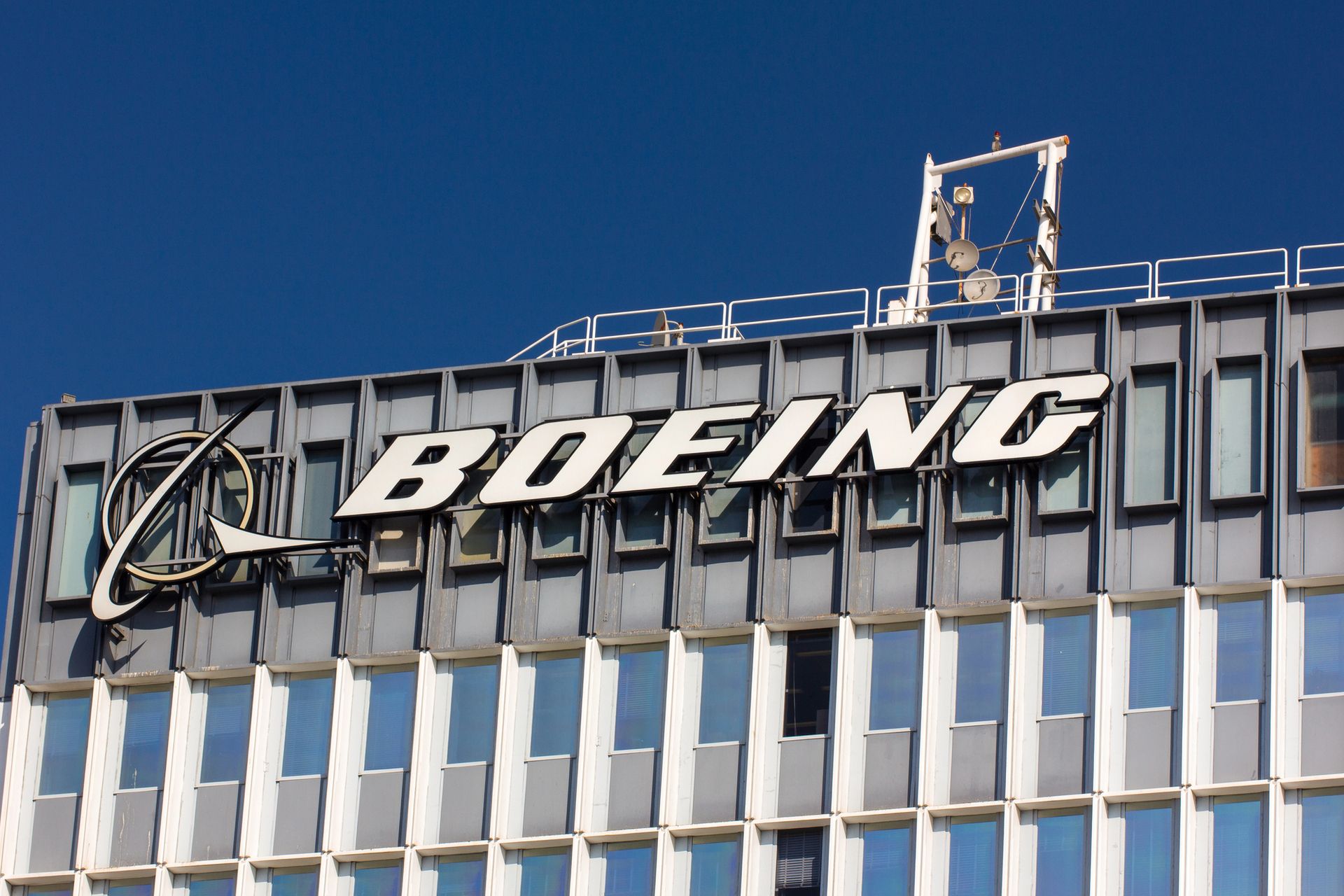
After Years of Waiting, Boeing’s Narrow-Body Recovery Gets Real
Boeing (NYSE: BA) just cleared a regulatory checkpoint that has stalled its recovery for years.
U.S. aviation regulators will now formally review the upgraded flight crew alerting system for the 737 MAX 10.
That review matters because you are watching Boeing move from redesign into validation, where timelines finally become measurable.
It signals that the conversation is shifting from fixes to approval.
Why This Jet Changes the Math
The MAX 10 is Boeing’s highest capacity narrow-body aircraft and a core profit driver airlines have been waiting on, and you can feel how much is riding on it after delays locked up cash, disrupted production plans, and strained customer trust.
Once certification opens the door, backlog starts turning into real deliveries, factories regain stability, and rhythm returns across the 737 line.
That progress flows straight into stronger cash generation.
From Promises to Process
This milestone also sets a compliance framework for safety upgrades across the entire MAX family.
A unified standard reduces future friction and simplifies regulatory engagement going forward.
Recovery now depends on execution, and you measure progress in filings, reviews, and approvals, not headlines. The runway is clearer, but the climb still has to be flown.
Fintech
From Stablecoin Issuer to Regulated Bank, Circle Makes Its Move
Circle (NYSE: CRCL) just cleared a milestone that reshapes its entire identity. U.S. regulators granted conditional approval for Circle to form a national trust bank.
That decision matters because you are seeing Circle move from crypto rails into federal oversight, where credibility is built, not marketed.
It places the company directly inside the U.S. banking framework.
This structure allows Circle to hold and manage USDC reserves under national supervision.
In a market where regulation now defines survival, Circle is choosing alignment over resistance.
Why This Changes the Adoption Curve
A national trust bank opens doors that were previously closed. Large institutions require strict custody, settlement, and compliance standards.
With this approval, you now see Circle qualifying for roles crypto firms usually cannot touch, including institutional custody and regulated settlement services.
That shift accelerates enterprise adoption and deepens trust with policymakers. Circle becomes part of the rulebook instead of reacting to it.
Building for the Long Financial Cycle
This move signals a long-horizon strategy. Circle is not chasing speculative growth; it is laying infrastructure.
As digital dollars and tokenized assets expand, you find Circle positioned as a utility layer, not a product cycle.
If final approval follows, Circle transitions from crypto-native issuer to regulated financial backbone. That is how durability is built.
(By clicking the links above, you agree to receive future emails from us and bonus subscriptions from our partners. You can opt out at any time. – Privacy Policy)
Restaurants
Chipotle’s 4,000th Restaurant Isn’t a Peak, It’s a Launchpad
Chipotle Mexican Grill (NYSE: CMG) just opened its 4,000th restaurant, a milestone that confirms years of disciplined execution.
Very few restaurant brands reach this size without sacrificing food standards, speed, or customer trust.
What makes this moment different is how controlled the growth has been.
At this scale, you are watching a concept turn into infrastructure, one designed to expand without creating operational stress or cultural drift.
Stores Built for How People Eat Now
The newest Chipotle locations are engineered around digital ordering, drive-thru pickup lanes, and faster kitchen throughput.
These formats are no longer pilots; they are now the default blueprint.
That matters because you find convenience engineered into the system, not bolted on after problems appear.
It lets Chipotle lift traffic while keeping labor efficiency and consistency intact.
A Long Runway, Not a Victory Lap
Reaching 4,000 locations puts Chipotle more than halfway to its stated goal of 7,000 restaurants across North America.
That target reflects confidence rooted in repeatable execution, not aggressive guesswork.
At this stage, you are dealing with a company that knows exactly how to scale, adapt to shifting habits, and protect margins at the same time.
This milestone is a checkpoint, not a ceiling.
Want to make sure you never miss our post-market roundup?
Elite Trade Club now offers text alerts — so you get trending stocks and market-moving news sent straight to your phone right after the closing bell rings.
RYTHM surged as news of Trump’s potential cannabis reclassification boosted sentiment around hemp-based consumer brands positioned for nationwide growth.
Tilray Brands Inc [TLRY] $12.15 (+44.13%)
Tilray also soared on reports of the Trump-led executive order to reclassify marijuana, unlocking major tax and distribution benefits.
Frequency Electronics Inc [FEIM] $46.45 (+28.81%)
Frequency Electronics rose after posting strong Q2 results, including a 24% revenue rebound and record $82M backlog, signaling renewed momentum.
Fermi Inc [FRMI] $10.09 (-28.81%)
Fermi plunged after a key potential tenant terminated a $150 million construction funding agreement, raising doubts about near-term financing for its massive Project Matador data center.
Lenz Therapeutics Inc [LENZ] $18.14 (-25.96%)
LENZ tumbled after a reported retinal tear linked to its newly launched eye drop appeared in the FDA’s adverse-event database, spooking investors over safety risks.
Arteris Inc [AIP] $16.29 (-17.18%)
Arteris slipped after announcing an acquisition that raised short-term integration and cost concerns, compounded by continued insider selling.
Trivia: Which retailer streamlined the layaway program?
The market is rushing toward the next headline, but the investors winning quietlyare the ones who refuse to sprint and their returns prove it.
The Tortoise Portfolio reveals the blue-chip compounders that outperformed from 2015–2025 by doing exactly what panic-driven traders never manage: staying disciplined through every cycle.
This is the shortlist of companies whose durability, pricing power, and decade-long operating strength turned patience into real wealth while everyone else chased noise.
Access the report now before this window closes and get two exclusive bonuses instantly.
(By clicking the link above or any link in this email, you agree to receive market insights from Equiscreen, LLC, along with two complimentary bonus subscriptions. We respect your privacy – you can unsubscribe at any time. For more information, please review our privacy policy.)
That’s it for today! Please, write us back, and let us know what you think of the Closing Bell Roundup. We’re always eager to hear feedback!
Thanks for reading. I’ll see you at the next open!
Best Regards, — Adam G. Elite Trade Club
Click here to get our daily newsletter straight to your cell for free.
P.S. Just like this newsletter, it’s 100% free*, and you can stop at any time by replying STOP.
Legal Stuff: Stocks featured in this newsletter are for entertainment purposes only. You should not base any investment decisions on information contained in my newsletter. Stocks featured in this newsletter may be owned by owners/operators of this website, which could impact our ability to remain unbiased. Please consult a financial advisor before making any trading decisions. I may earn a small commission from links placed inside these emails.
On December 12, 1892, Tchaikovsky’s The Nutcracker made its world premiere in St. Petersburg—debuting alongside Iolanta. Though early reviews were lukewarm, its magical music and dancing toys would later become a global holiday tradition. Ready to enter the Land of Sweets? Take a twirl below!
🚨IMPORTANT: Clicks are the best way for us to know you’re actively enjoying this newsletter. Please click any link in this newsletter if you would like to continue receiving This Day in History! If you want something easy to click, here’s a link to today’s facts: What Happened on This Day in History?














 Market alerts, actionable tips, and timely insights to fuel your investment success.




 RJ Hamster