The gold strategy that works whether prices rise or fall

Editor’s Note: Our colleague, the former $900 million hedge fund manager Larry Benedict, has discovered a way to make money from gold… WITHOUT buying a single ounce. Read on to learn more…


Dear Reader,

A former hedge fund manager has discovered a unique way to pull cash from the gold markets.

He calls it “Gold Skimming.”

It has nothing to do with mining, panning, or buying gold in any form.

But it’s handing regular people the chance at payouts like $2,975… $3,781… and even $6,786, sometimes in just one day.

If you’re skeptical, I understand…

That’s why he’s put together a short, step-by-step walkthrough. In a few short minutes, you’ll see:

  • What Gold Skimming actually is — and why it works whether gold goes up or down.
  • Real results, real numbers, and a 73% win rate across 19 winning skims.
  • How even a complete beginner could get started as soon as tomorrow.

Gold has nearly doubled over the past year, which makes skimming more valuable than ever.

Imagine the next time gold makes a move…

Instead of watching from the sidelines, you calmly follow three simple steps.

By the end of the week, it could put thousands of dollars into your account.

Click here to see how Gold Skimming works.

Regards,

Kim Moening
Host, Gold Skimming


Today’s Exclusive Content

Why Lam Research Still Looks Like a Buy After a 300% Rally

Submitted by Sam Quirke. Article Published: 5/7/2026. 

Lam Research logo displayed on a metallic panel resembling semiconductor manufacturing equipment.

Key Points

  • Lam Research has surged almost 300% over the past 12 months, yet Wall Street still sees further upside ahead.
  • Strong earnings, expanding margins, and accelerating AI infrastructure demand continue to strengthen the bull case.
  • This week’s SpaceX-related reports have added another layer of excitement to an already red-hot momentum story.
  • Special ReportHave $500? Invest in Elon’s AI Masterplan

In a field full of success stories, Lam Research Corporation (NASDAQ: LRCX) has emerged as one of the clearest winners of the AI boom. As of May 7, the stock was up almost 300% over the last 12 months, more than 70% year to date, and over 30% in the past month alone.

That has been great news for investors who have ridden the move from the beginning, but the stock’s one-way run, especially in recent weeks, may be making some investors cautious right now.

Ticker Revealed: Pre-IPO Access to “Next Elon Musk” Company (Ad)

We’ve found The Next Elon Musk… and what we believe to be the next Tesla. 

It’s already racked up $26 billion in government contracts.

Peter Thiel just bet $1 Billion on it.👉 Unlock the ticker now and get it completely free.

Even so, Lam Research continues to attract fresh bullish attention. Strong earnings two weeks ago, growing excitement around AI infrastructure spending, and now new speculation tied to SpaceX’s ambitious semiconductor expansion plans have all added to the momentum. The result is a stock that has already soared into the proverbial stratosphere, yet analysts still argue the best may be yet to come. Let’s take a closer look at why.

Strong Earnings Confirmed the Bull Case

The biggest reason Lam Research continues to rally is that the company is no longer trading on hype alone. That may have been true a year ago, but investors are now seeing clear evidence that the underlying business is benefiting directly from the AI-driven surge in semiconductor demand.

Last month’s earnings report reinforced that view in a meaningful way. Revenue growth was strong, margins expanded, and management delivered exactly the kind of confident outlook investors were hoping for. More importantly, the company showed that demand for advanced semiconductor manufacturing equipment is continuing to accelerate as chipmakers race to expand AI-related production capacity.

This matters because Lam sits at the center of the semiconductor manufacturing ecosystem. The more aggressively companies invest in advanced chips, memory, and foundry capacity, the greater the demand for Lam’s equipment and technology.

Investors are increasingly recognizing that dynamic. As with many other companies MarketBeat has covered recently, Lam is no longer viewed as just another cyclical semiconductor stock. Instead, it is increasingly being treated as a direct infrastructure play on the AI boom itself. That distinction helps explain why the rally is continuing into May even after such enormous gains over the past 12 months.

The SpaceX News Adds Another Layer of Excitement

The other catalyst helping to fuel the latest leg of the rally came on Wednesday, May 6, in the form of reports surrounding SpaceX’s ambitious Terafab semiconductor project in Texas.

According to reports, SpaceX is planning a massive semiconductor manufacturing facility to produce its cutting-edge 2nm chips by the end of the decade, supporting its AI and robotics ambitions. Lam Research has reportedly emerged as one of the key equipment suppliers Elon Musk has contacted regarding the project.

Even though the details are still speculative, investors immediately saw the potential upside. And just as Intel Corp (NASDAQ: INTC) shares reacted earlier this week to news that Apple Inc (NASDAQ: AAPL) was considering them as a partner, Lam shares rose to fresh all-time highs.

This is exactly the kind of narrative that momentum investors love. It ties Lam Research directly to one of the hottest themes in the market while also linking the company to Elon Musk, AI, domestic manufacturing, robotics, and next-generation semiconductor infrastructure.

Whether the project ultimately reaches its full scale remains to be seen. Still, the fact that Lam is being associated with it at all further strengthens the perception that the company sits at the center of the AI infrastructure buildout.

The Rally Is Stretched, But the Trend Remains Strong

Investors should not ignore how extended the stock has become in the near term. A 300% rally over 12 months is extraordinary by any standard, and the latest leg higher has been especially aggressive.

Technically speaking, Lam Research is clearly overbought, and a period of profit-taking or consolidation would be completely normal after a move like this. Investors considering chasing the stock at current levels need to be realistic about that risk.

However, the broader setup still looks favorable. Importantly, analysts remain bullish despite the massive gains already seen. The likes of Deutsche Bank recently reiterated its Buy rating alongside a $325 price target, while Oppenheimer did the same, only with a $330 target.

For investors on the sidelines wondering whether it is worth chasing the stock at these levels, that matters, because it suggests Wall Street still sees meaningful upside ahead, even after one of the market’s strongest rallies. The stock may need time to cool off in the short term, but the bigger picture continues to point higher.

Lam Research appears well-positioned to benefit from a rare combination of strong execution, powerful industry tailwinds, and accelerating investor enthusiasm for AI infrastructure. And as long as companies keep racing to build the infrastructure powering the AI economy, Lam looks likely to remain one of the biggest winners.


Today’s Exclusive Content

CPI Card Group’s Quiet Cash Machine Faces a Digital Reality Check

Submitted by Peter Frank. Article Published: 5/4/2026. 

A generic metal credit card overlaid on a blue stock market chart trending upward.

Key Points

  • CPI Card Group benefits from steady demand for physical payment cards despite digital payment growth.
  • The Arroweye expansion boosted revenue but reduced net income due to acquisition and integration costs.
  • Strong cash flow supports the business, though leverage and tariffs remain ongoing risks.
  • Special ReportHave $500? Invest in Elon’s AI Masterplan

Remember paying with plastic? In this age of mobile payments and online shopping, CPI Card Group (NASDAQ: PMTS) certainly does—and its business is delivering record results.

It may not be a flashy fintech, but CPI makes something that still belongs in your wallet: the physical debit and credit cards banks hand to customers every day. And believe it or not, that business was booming last year, as the company generated a record $543.5 million in revenue and $60 million in operating cash flow, up 37% from the year before.

Ticker Revealed: Pre-IPO Access to “Next Elon Musk” Company (Ad)

We’ve found The Next Elon Musk… and what we believe to be the next Tesla. 

It’s already racked up $26 billion in government contracts.

Peter Thiel just bet $1 Billion on it.👉 Unlock the ticker now and get it completely free.

How long this increasingly old-fashioned payment method can last is a question investors may be asking. For now, the business looks less exciting than dependable.

Record Revenue Highlights Durable Card Demand

In fact, CPI just posted the best revenue year in its history in 2025. This is a business that benefits every time a bank opens a new checking account, redesigns its card portfolio, or replaces a lost card. Someone has to make that piece of plastic, and CPI is one of the companies that does it.

Even as digital wallets dominate the headlines, underlying demand for physical cards has remained surprisingly durable. That’s good news for CPI. Last year, revenue at the company climbed 13% to $543.5 million, driven by an acquisition, contactless options, and instant issuance solutions. The company’s core debit and credit segment, in particular, grew 20% to $451.5 million.

The fourth quarter was especially strong. Revenue of $153.1 million represented a 22% year-over-year increase and marked a new quarterly record. Adjusted EBITDA for the quarter surged 34% to $29.4 million, a sign the company is becoming more efficient.

The market has taken notice. The company’s stock jumped more than 40% the day it reported earnings despite what some considered mixed results. Earnings per share for the fourth quarter came in at 77 cents, more than 50% higher than expected. Its shares are up more than 15% since the start of the year.

Acquisition Brings Expansion, But Pressures Earnings

A significant part of CPI’s growth story in 2025 was its $46 million, all-cash purchase of Arroweye Solutions, a specialist in on-demand digital card personalization. Arroweye helps banks and fintechs produce customized cards in smaller batches, faster than traditional manufacturing cycles allow. That’s especially valuable for the wave of challenger banks and small-business card programs that need a limited number of cards quickly.

The acquisition is already paying off. Within just eight months of ownership, Arroweye contributed $43 million in revenue to the debit and credit segment and added $6 million in adjusted EBITDA. Management has also suggested that additional integration synergies are still ahead as the company expands from a commodity card printer into a more diversified, software-enabled payments supplier.

While the acquisition contributed meaningfully to revenue, it did weigh on the bottom line. Full-year net income at CPI fell 23% from $19.5 million to $15 million. Both $6 million in acquisition and integration costs and a higher effective tax rate worked to drag down results.

Strong Cash Flow Offsets Rising Costs

Importantly, cash kept coming in. Operating cash flow reached $60 million, up 37% from 2024. That came in handy, as cash flow mostly offset the funding for Arroweye, the company said. For the year, free cash flow came in at $41 million, a 21% increase.

It’s worth noting, though, that the company’s net leverage ratio did rise slightly over the year to about 3.1 times adjusted EBITDA. For a company this size, that’s an important figure to watch. Unexpected drops in orders, further cost increases from tariffs, or additional strategic investments could make leverage more of a risk.

Market shifts also showed up in some of the numbers as CPI faced a few pressure points. The company’s prepaid debit segment came in at $93.6 million, a decline of 12% in 2025 after an unusually strong prior year. Serving the government benefits and reloadable card markets, the segment offers little clear sign of a meaningful near-term recovery.

Tariffs are another concern. CPI gets some card materials from overseas, and tariff costs reduced adjusted EBITDA by $4.4 million in 2025, the company said. The outlook for this year is no better, as it expects about $6 million in additional tariff-related expenses.

Despite those pressures, the company’s guidance points to steady, if unspectacular, growth for 2026. Revenue is expected to increase in the high single digits, adjusted EBITDA to rise in the low-to-mid single digits, and free cash flow to remain stable. Its net leverage ratio should fall back to between 2.5 and 3 times adjusted EBITDA, the company said.

Outlook Is For Steady But Modest Growth

At a company this size, analyst coverage remains unsurprisingly thin. Of the five analysts covering CPI, the overall rating is a Hold. Three analysts recommend a Buy, while one suggests Hold and one rates the stock a Sell. The average price target is $28.25, more than 60% higher than its current trading level.

Clearly, CPI is not a stock for everyone. It does not pay a dividend, so income investors will look elsewhere. The company carries leverage, operates in a niche of the financial sector that most of Wall Street ignores, and faces real questions about long-term demand.

But it just delivered record revenue and a 37% jump in operating cash flow, all while successfully integrating a strategic acquisition, and it has pledged to reduce leverage.

Assuming the world is not going fully digital anytime soon, card issuance remains a reality and a need. Physical cards for new accounts, cycle refreshes, and replacements for lost or stolen cards must come from somewhere.

This email communication is a sponsored message for Brownstone Research, a third-party advertiser of MarketBeat. Why did I receive this email?

If you have questions or concerns about your newsletter, please feel free to email our U.S. based support team at contact@marketbeat.com.

If you would no longer like to receive promotional emails from MarketBeat advertisers, you can unsubscribe or manage your mailing preferences here.

© 2006-2026 MarketBeat Media, LLC. All rights protected.
345 North Reid Place, Suite 620, Sioux Falls, S.D. 57103. U.S.A..

Just For You: [Watch] FREE STOCK PICK for Elon Musk’s Starlink SuperIPO(From Paradigm Press)

Markets tumble on CPI data.

Week Ending May 15th, 2026

Tuesday’s Market Moves

S&P 500 – 7,400.96 (-0.16%)

Dow Jones – 49,760.56 (+0.11%)

NASDAQ – 26,088.20 (-0.71%)

Weekly Recap

  • MARKETS: Markets opened lower Tuesday as investors reacted to a slightly hotter-than-expected inflation report, with weakness spreading across most sectors and consumer discretionary and materials leading losses.
  • POLITICS & GLOBAL TRADE: President Trump began his trip to China, where he is set to meet President Xi Jinping, with trade policy and artificial intelligence expected to dominate discussions alongside high-profile tech executives including Elon Musk and Tim Cook.
  • RATES: Treasury yields moved higher, with the 10-year rising to 4.45% as investors reassess inflation and policy expectations.
  • GLOBAL MARKETS: Overseas, Asian equities closed mostly lower overnight, while European markets also came under pressure in a broad risk-off session.
  • COMMODITIES: WTI crude oil extended gains as ongoing disruptions to shipping flows through the Strait of Hormuz continued to support energy prices.
  • CURRENCIES: The U.S. dollar strengthened against major peers, helped by rising bond yields and shifting rate expectations.
  • METALS: Copper surged above $14,000 per ton, approaching record highs amid tight supply conditions and strong industrial demand signals.
  • SILVER: Silver jumped 17% over the past five days, with momentum building ahead of the anticipated Trump–Xi meeting.
  • INFLATION DATA: April CPI rose 3.8% year over year, slightly above expectations, driven largely by a 17.9% surge in energy prices, while core inflation edged up to 2.8% versus forecasts of 2.7%.
  • LABOR MARKET: ADP data showed private employers added an average of 33,000 jobs per week over the past month, signaling steady but modest hiring momentum.
  • HIMS & HERS (HIMS): Shares fell after a wider-than-expected loss, weaker per-prescriber revenue, and soft forward guidance disappointed investors.
  • SEMICONDUCTORS: Memory chip stocks pulled back as traders locked in profits after a recent rally driven by supply constraints and rising prices.
  • QANTUM COMPUTING (QUNT): Shares rose after the company posted $3.7 million in revenue, sharply higher year over year and ahead of Wall Street expectations.
  • UNDER ARMOUR (UAA): The stock dropped after missing earnings estimates and issuing weak guidance, including a forecast for revenue decline in fiscal 2027.
  • GAMESTOP / EBAY (GME / EBAY): GameStop declined while eBay slipped after rejecting a reported $55 billion takeover bid, citing concerns over financing, valuation, and execution risk.
  • WENDY’S (WEN): Shares surged on reports that activist investor Trian Fund Management is exploring a potential take-private transaction.
  • ON HOLDING (ONON): The stock fell despite better-than-expected earnings, as investors focused on broader demand concerns.
  • LOWE’S (LOW): Lowe’s gained after Citigroup upgraded the stock to “buy,” citing expectations for earnings upside and continued industry outperformance.
  • BIG TECH & AI FINANCING: Alphabet and Amazon declined after reports of potential yen-denominated bond issuance tied to rising AI investment needs.
  • RATE OUTLOOK: CME FedWatch shows markets pricing in a near 98% probability that the Fed will hold rates steady in June and likely through most of 2026.
  • CLOSING NOTE: U.S. stocks fell Tuesday as inflation data and geopolitical uncertainty weighed on sentiment while investors also reassessed the sustainability of the recent tech-driven rally.
  • WHAT TO WATCH: Traders will look ahead to additional inflation signals, upcoming retail sales and PPI data, and a new wave of earnings reports for confirmation on whether inflation pressures are stabilizing and if economic growth remains resilient.

_____________________________________________________________

“I have not failed. I’ve just found 10,000 ways that won’t work.”

— Thomas Edison

_____________________________________________________________

Notable Stocks

  • eBay (EBAY)
  • GameStop (GME)
  • Hims & Hers (HIMS)
  • On Holding (ONON)
  • Lowe’s (LOW)

Weekly Notables

Amazon Launches 30-Minute Delivery Service in Aggressive Expansion of “Ultra-Fast” Shipping

Amazon is rolling out deliveries in 30 minutes or less across dozens of U.S. cities, marking its most aggressive move yet into ultra-fast “quick commerce,” the company announced Tuesday. The service, branded Amazon Now, began as a limited pilot in December and has already expanded internationally, including select cities in Brazil, Mexico, India, and the United Arab Emirates.

Makary is Out as FDA Commissioner Following Industry Backlash and Internal Turmoil

FDA Commissioner Dr. Marty Makary has been removed from his role, with a deputy stepping in as acting head of the agency, President Donald Trump confirmed Tuesday. Makary’s departure comes after mounting tensions within the administration and growing criticism from drugmakers, physicians, and patient groups over regulatory decisions during his tenure. “He’s a wonderful man and he’s going to be off, and the assistant, the deputy, is taking over temporarily,” Trump told reporters. “He’s going to go on, and he’s going to lead a good life.”

Earnings Spotlight: Cisco (CSCO)

Cisco (CSCO) is scheduled to release its fiscal third-quarter 2026 earnings today with analysts projecting an EPS of roughly $1.03–$1.04 and revenue of approximately $15.55 billion, reflecting continued growth driven by AI infrastructure, according to Visible Alpha and Yahoo Finance reports. 

What’s Ahead

May 13: April PPI and core PPI, and expected earnings from Alibaba (BABA) and Cisco (CSCO).
May 14: April retail sales and expected earnings from Applied Materials (AMAT).
May 15: April industrial production and capacity utilization.
May 18: Expected earnings from Baidu (BIDU).
May 19: Expected earnings from Home Depot (HD), Toll Brothers (TOL), and Cava Group (CAVA), and April housing starts and building permits.

Disclaimer: We are engaged in the business of advertising and promoting companies. All content on our website is for informational purposes only and should not be construed as an offer or solicitation of an offer to buy or sell securities. Neither the information presented nor any statement or expression of opinion, or any other matter herein, directly or indirectly constitutes a solicitation of the purchase or sale of any securities. Neither the owner of Trading Wire nor any of its members, officers, directors, contractors or employees are licensed broker-dealers, account representatives, market makers, investment bankers, investment advisers, analyst or underwriters. Investing in securities, including the securities of those companies profiled or discussed on this website is for individuals tolerant of high risks. Viewers should always consult with a licensed securities professional before purchasing or selling any securities of companies profiled or discussed on Trading Wire. It is possible that a viewer’s entire investment may be lost or impaired due to the speculative nature of the companies profiled. Remember, never invest in any security of a company profiled or discussed on this website unless you can afford to lose your entire investment. Also, investing in micro-cap securities is highly speculative and carries an extremely high degree of risk. Trading Wire makes no recommendation that the securities of the companies profiled or discussed on this website should be purchased, sold or held by viewers that learn of the profiled companies through our website. 

Some of the content on this website contains “forward-looking statements.” Such statements may be preceded by the words “intends,” “may,” “will,” “plans,” “expects,” “anticipates,” “projects,” “predicts,” “estimates,” “aims,” “believes,” “hopes,” “potential,” or similar words. Forward-looking statements are not guarantees of future performance, are based on certain assumptions, and are subject to various known and unknown risks and uncertainties, many of which may be beyond a company’s control, and cannot be predicted or quantified, and, consequently, actual results may differ materially from those expressed or implied by such forward-looking statements. It is hereby noted that forward-looking statements contained herein may include everything other than historical information, involve risk and uncertainties that may affect a company’s actual results of operation. A company’s actual performance could greatly differ from those described in any forward-looking statements or announcements mentioned on this website or the websites contained within. Factors that should be considered that could cause actual results to differ include: the size and growth of the market for the company’s products; the company’s ability to fund its capital requirements in the near term and in the long term; pricing pressures; unforeseen and/or unexpected circumstances in happenings; etc. and the risk factors and other factors set forth in the company’s filings with the Securities and Exchange Commission. However, a company’s past performance does not guarantee future results. 

Generally, the information regarding a company profiled or discussed on this website is provided from public sources tradingwire.com makes no representations, warranties or guarantees as to the accuracy or completeness of the information provided or discussed. Viewers should not rely solely on the information obtained through our website or in communications originating from our website. Viewers should use the information provided by us regarding the profiled companies as a starting point for additional independent research on the companies profiled or discussed in order to allow the viewer to form his or her own opinion regarding investing in the securities of such companies. Factual statements, or the similar, made by the profiled companies are made as of the date stated and are subject to change without notice and Trading Wire has no obligation to update any of the information provided. Trading Wire, its owners, officers, directors, contractors and employees are not responsible for errors and omissions. 

From time to time certain content on this website is written and published by our employees or third parties. In addition to information about our profiled companies, from time to time, our website will contain the symbols of companies and/or news feeds about companies that are not being profiled by us but are merely illustrative of certain activity in the micro cap or penny stock market that we are highlighting. Viewers are advised that all analysis reports and news feeds are issued solely for informational purposes. Any opinions expressed are subject to change without notice. It is also possible that one or more of the companies discussed or profiled on this website may not have approved certain or any statements within the website. Trading Wire encourages viewers to supplement the information obtained from this website with independent research and other professional advice. The content on this website is based on sources which we believe to be reliable but is not guaranteed by us as being accurate and does not purport to be a complete statement or summary of the available data. Third Party Web Sites and Other Information This website may provide hyperlinks to third party websites or access to third party content.Trading Wire, its owners, officers, directors, contractors and employees are not responsible for errors and omissions nor does Trading Wire control, endorse, or guarantee any content found in such sites. Trading Wire does not control, endorse, or guarantee content found in such sites. By accessing, viewing, or using the website or communications originating from the website, you agree that Trading Wire, its owners, officers, directors, contractors and employees, are not responsible for any content, associated links, resources, or services associated with a third party website. You further agree that Trading Wire, its owners, officers, directors, contractors and employees shall not be liable for any loss or damage of any sort associated with your use of third party content. Links and access to these sites are provided for your convenience only. Trading Wire uses third parties to disseminate information to subscribers. Although we take precautions to prevent others from obtaining our subscriber list, there is a risk that our subscriber list, through no wrong doing on our part, could end up in the hands of an unauthorized party and that subscribers will receive communications from unauthorized third parties. We encourage viewers to invest carefully and read the investor issuer information available at the web sites of the United States Securities and Exchange Commission (SEC). The SEC has launched an investor-focused website to help you invest wisely and avoid fraud at www.investor.gov and filings made by public companies can be viewed at www.sec.gov and/or the Financial Industry Regulatory Authority (FINRA) at: www.finra.org. In addition, FINRA has published information at its website on how to invest carefully at www.finra.org/Investors/index.htm. 


1389 Center Dr
Park City UT 84098
US

Unsubscribe   |   Change Subscriber Options

Remote

editor-imageHIRING (Lucrative Work From Home)Click HeredividerHow about еarning some real іnϲοmе from hοmе, working just a few hours a day — whenеvеr we want?

If that sounds good, you need to see this nοw:

СΗΕСΚ IT OUT ΗΕRΕ

This is a rare οppοrtυnіty for everyday people to boost their іnϲοmе — nο ехpеrіеnϲе, licenses, or special skills required.

Even complete beginners are gеtting results.

This isn’t hype — it’s real, and it’s working right nοw for thουѕandѕ of people.

Don’t wait until it’s gone.

Start changing your fіnanϲіaⅼ future tοday.

SEE DETAILS NΟ𝖶

dividerWeekly Finance Habits: More People Are Focusing on Small Adjustments

Many households are paying closer attention to small financial habits that can be reviewed and adjusted over time. Rather than making major changes, people are increasingly focusing on consistency and routine awareness. 

Common areas of focus include: 

• Reviewing weekly spending activity
• Monitoring recurring subscriptions
• Keeping savings contributions steady
• Planning ahead for routine expenses
• Making gradual budgeting adjustments 

Observers note that smaller adjustments are often easier to maintain and may help support steadier financial routines over the long term. 

Educational resources continue to highlight the importance of awareness, consistency, and regular check-ins when managing everyday finances. 

Learn more 

This content is shared for general informational purposes related to personal financial routines.

IconWhat’s your priority right now?Reply to this email and tell us what you’re most interested in.Just pick a topic below or mention something specific.Investing NewsLatest NewsStock MarketEconomySend ANSWERS dividerOnce in a while, Future Profit Journey associates present us with unique opportunities that we think are worth sharing with our readers. The above is one such opportunity that we recommend you consider.Future Profit Journey sending this newsletter on behalf of Prestige Publishing LLC.200 Continental Dr Suite 401, Newark, DE 19713 

For any personalized assistance or questions, simply reply to this email for a swift resolution. Contact us at support@FutureProfitJourney.com for other concerns. 

© 2026 Copyright Future Profit Journey. All rights reserved. 

Thinking about unsubscribing? We hope not! But, if you must, the link is below.Privacy PolicyTerms & ConditionsUnsubscribeAbout-Us

Wednesday Edition: This company builds nuclear aircraft carriers and pays a dividend

  Read online💰Dividend DispatchINCOME IS EVERYWHERE. I FIND IT.  WEDNESDAY, MAY 13, 2026·6 min readTODAY’S THEME Income from four places you might not expect a check from Wednesday is when I get to share the ideas that make people text me a screenshot and say “wait, that pays a dividend?” Today: the company that builds every U.S. Navy nuclear aircraft carrier — quarterly check of $1.38 a share. The largest billboard owner in North America. An ETF that gets paid for selling other people’s option premium — yielding 10.3%monthly. And a mortgage REIT that actually earned its 13% dividend last quarter, which is the opposite of the red flag I pointed out Monday. Different mechanics, same goal: get paid.     

What If Washington Declared That:
YOUR Money ISN’T Actually Yours?

Sounds insane, but that’s exactly what the Department of Justice just admitted in court — claiming cash isn’t legally your property.

What does that mean? It means Washington thinks they can seize, freeze, or drain your accounts — whenever they want.

  • Your savings? At risk. 
  • Your retirement? Up for grabs. 
  • Your financial future? Under their control. 

This isn’t just some legal theory. It’s happening right now.

But you don’t have to be their next target.

Smart Americans are already making moves to keep their wealth out of Washington’s reach — before the next financial lockdown. 

We put together a Brand New Wealth Defense Guide that reveals 3 powerful strategies to shield your savings before it’s too late.

Get your free guide now by clicking here

Because once the trap snaps shut, it’ll be too late to escape.    🔮

The Weird Yield

Income from places you’d never expectHIIThe only company in America that builds nuclear aircraft carriers — pays a dividendI love this one. Huntington Ingalls Industries is the sole builder of every U.S. Navy nuclear-powered aircraft carrier — the floating cities the Navy uses to project force around the world. They also build Virginia-class and Columbia-class nuclear submarines, amphibious ships, destroyers. Newport News Shipbuilding traces back to the 19th century. Ingalls to 1938. The combined company was spun out of Northrop Grumman in 2011.

Here’s why I find it interesting. There’s no competitor. You can’t just build a nuclear aircraft carrier in your garage. The skills, the dry docks, the security clearances, the multi-decade contracts — Congress has structurally committed to keeping this capability inside two HII shipyards. Backlog stretches into the 2070s.

The quarterly dividend is $1.38, declared April 29, payable June 12to holders of record May 29.Annualized that’s $5.52. At a roughly $319 stock price the yield is 1.7%, so $10,000 here is about $170 a year. HII has raised the dividend every year for 13 years running. Payout ratio is only 33% — plenty of room.

The risk to know: HII had a rough Q1 report — margins compressed, JPMorgan called it “disappointing.” The shipbuilding business is famously slow and cost-overrun-prone. And the stock can swing hard on a single Pentagon budget headline. But the backlog is real, the moat is the Navy itself, and the dividend keeps growing. Yield: 1.7%$10K invested = $170/yrPaid: QuarterlyLAMRLamar owns 362,000 billboards — and structured itself as a REIT to pay youDrive across any state in the country and you’ve already seen Lamar Advertising’s product. They own more than 362,000 billboards, transit signs, and airport displays across the U.S. and Canada — including 5,400 digital billboards, the biggest digital network in the country.

Here’s the part that delights me. Lamar elected to be a real estate investment trust — a REIT. The “real estate” is the steel and the land underneath each billboard. That tax structure means Lamar has to distribute at least 90% of its taxable income as dividends. So you, the shareholder, get paid like a landlord every time some dentist in Tuscaloosa rents a billboard.

The 2026 quarterly dividend is $1.60 per share, declared back in February. At an annual run rate of $6.40, the yield is about 4.6% on the current $140 stock — so $10,000 here puts $460 a year in your account. Plus a special dividend in December 2025 on top. The dividend has grown about 14% a year over the last five years.

Risk to know: about 78% of Lamar’s billboard revenue is local and regional advertisers. That’s defensive when national ad budgets get cut — your local car dealer still needs to be visible — but in a real recession even the dentist trims spending. And Lamar carries meaningful debt to fund its acquisition machine. As long as billboard cash flows stay durable, the dividend stays funded. Yield: 4.6%$10K invested = $460/yrPaid: Quarterly💰

The High Yield

Today’s best dividend income ideas — 8%+ yields onlyJEPQJPMorgan rents out the upside on Nasdaq stocks — and pays the rent to youHere’s an analogy I use to explain JEPQ. A covered call is like renting out a room in your house — you give up the chance to use that room yourself, but you collect rent every month. JEPQ is JPMorgan doing this on Nasdaq stocks. They own around 100 Nasdaq-100 names and use about 20% of the portfolio to sell call options on the index. The premium people pay for those options becomes the bulk of the monthly distribution.

The yield is 10.3%. The monthly distribution most recently was around $0.51 per share on a stock trading near $59.50. $10,000 invested = about $1,030 a year — roughly $86 a month showing up in your account.

The fund holds about $35 billion in assets and pays the first business day of every month. JEPQ’s last ex-date was May 1; the next is June 1.

The honest catch — and there is one — is that JEPQ caps your upside. In years when the Nasdaq rips higher (like 2024 or so far in 2026), JEPQ captures only part of the gain because some of the upside got sold off as option premium. The trade-off is high monthly income with a smoother ride than the index. And the distribution is taxed mostly as ordinary income, not qualified dividends, so this fund belongs in an IRA, not a taxable account. I own a slice in my IRA. Different job from a buy-and-hold growth stock. Yield: 10.3%$10K invested = $1,030/yrPaid: MonthlyAGNCA 13% monthly check — and yes, I know I called out a mortgage REIT on MondayI know what you’re thinking. Two days ago I told you Two Harbors was on my no-buy list. Now I’m bringing you another mortgage REIT? Let me explain the difference, because this is exactly the kind of distinction that separates okay-income from bad-income.

AGNC is a pure-play agency mortgage REIT. “Agency” means every bond they own is guaranteed by Fannie Mae, Freddie Mac, or Ginnie Mae — backed by the U.S. government. They borrow at short-term repo rates, buy these government-guaranteed mortgages, and pocket the spread. Then they use about 7.4 times leverage to amplify it.

Q1 results dropped April 21. The dividend last quarter cost $0.36 a share. Net spread and dollar-roll income — basically AGNC’s adjusted earnings — came in at $0.42. That’s coverage of about 117%. The monthly $0.12 check was just paid May 11. Annualized that’s $1.44, and at roughly $10.80 a share, the yield is about 13.3%. So $10,000 = $1,330 a year, about $111 a month.

Now the risk, straight. AGNC has cut its dividend twice in the last decade. Tangible book value dropped 5.6% in Q1 as Middle East tensions blew mortgage spreads wider. If the Fed surprises and pauses cuts, repo costs stay elevated. If long rates rip back up, book value takes another hit. The dividend is covered today. Tomorrow is a different question. This is a yield position, sized accordingly — not a foundation. Yield: 13.3%$10K invested = $1,330/yrPaid: Monthly📋

The Extra Yield

This week’s calendars, screens & answersDon’t miss these ex-dates: HTGC goes ex-dividend tomorrow, Thursday May 14 — own it by today’s close to capture the $0.47. Costco’s $1.47 quarterly hits accounts Thursday too. HII’s $1.38 ex-dates May 29. JEPQ’s next monthly is June 1.I ran a screen this morning:companies with U.S. government as the largest customer AND a dividend at least 10 years old. Six names cleared the bar: HII (today’s pick), Lockheed Martin (LMT), General Dynamics (GD), Northrop Grumman (NOC), L3Harris (LHX), and Raytheon (now RTX). LMT pays the highest yield of the group at around 2.8%. Defense dividends are some of the best-funded in the market — backed by multi-year Pentagon contracts and conservative payout ratios. Someone asked me: “If JEPQ collects option premium and AGNC collects mortgage spreads, what happens to both in a recession?” Honest answer — opposite things, often. JEPQ usually does better in flat or down markets because volatility spikes drive higher option premiums. AGNC depends on the yield curve staying steep and stable, so a sharp move either way can hammer book value. Mixing both is one way to diversify your yield engines instead of stacking the same risk. THE DISPATCH Four very different income engines today. HII gets paid to build nuclear aircraft carriers. Lamar gets paid to rent out 362,000 billboards. JEPQ gets paid for selling option premium. AGNC gets paid on government-guaranteed mortgage spreads. Tomorrow we head back to growth — two more Dividend Growth Stars plus the second half of Safety & Watchlist. Until then. — Charlie 💰Dividend Dispatch THE HIGH YIELD · ARISTOCRATS · GROWTH STARS · THE WEIRD YIELD · SAFETY   

Update your email preferences or unsubscribe here

108 W 39th St Ste 1006 #1034
New York, NY 10018, United StatesTerms of Service 

Will We Ever Get CLARITY in Crypto?

Forwarded this email? Subscribe here for more

Will We Ever Get CLARITY in Crypto?

This is meant to be the bill that finally gives the US crypto industry the regulatory framework it’s been begging Washington for. Instead, it’s turned into Warren’s whipping mule…

THE CRYPTO ALARM

MAY 13

The Senate Banking Committee is heading into Thursday’s CLARITY Act markup with over 100 amendments sitting in its inbox, including more than 40 from Elizabeth Warren on her own.

How much does she really hate crypto!

The bill itself is 309 pages, banking lobbyists have fired off something like 8,000 letters into Senate offices, Democrats are threatening to torpedo the whole thing over ethics, and Republicans are nervously[1] on the edges of their seats.

In short, one of the most significant pieces of legislation in crypto ever is getting well and truly politicked.

This is meant to be the bill that finally gives the US crypto industry the regulatory framework it’s been begging Washington for since the Obama years. Instead, it’s turned into Warren’s whipping mule and may end up about as useful as a flyscreen on a submarine.

So, the obvious question is, will we ever get clarity in crypto and then CLARITY? And if we do, will it end up causing more harm than good, effectively derailing the incoming bull run?

A bill in name only

Let’s look at what’s actually happening.

What happens with this sort of thing is wild when you really look at it. And is a reflection of how nonsensical politics and the legislative process really are.

The Senate Banking Committee dropped a 309-page draft on Monday night. Committee members got 48 hours to file amendments.

When was the last time you absorbed a 309 page document in 48 hours?

Yet, somehow they filed over 100 amendments…


Elon Musk Already Made Wealthy

Elon Musk and Dr Mark Skousen

Years ago, I got into a Tesla-heavy fund before anyone believed in him. That single bet turned into nearly a seven-figure position in less than a decade.

Now I’m betting on Elon again – with SpaceX.

Bloomberg is calling it “the biggest listing of ALL TIME.” A $1.5 TRILLION valuation. A “millionaire-maker” event!

I believe Elon will announce the IPO any day now. And I have an “access code” that lets you get a stake in before it happens.*

Click Here to See How to Secure Your “SpaceX Access Code”


Me thinks either junior staffers were busy (which is concerning in its own right), or AI was busy (which is maybe more concerning).[2]

Warren on her own filed 40-plus changes (must have a stacked team of staffers), including one that would block crypto firms from ever getting Federal Reserve master accounts.

Seems like she’s very much against the inevitability of the “stablefication of TradFi” I’ve been writing about to you for a while now.

According to reports, even if the committee advances the bill on Thursday, it still needs 60 votes on the Senate floor, then reconciliation with the House. The White House wanted it done by July 4th… yeah, that’s not happening.

Realistically if we get it this year, that’s probably a win for the industry.

Watered down anyway

Even in the best case, where this thing eventually gets signed into law, what comes out the other end is not going to be the clean framework the industry has been pushing for.

It’ll be a compromise of compromises.

Stablecoin yield restrictions the banks are happy with, but crypto firms work around. DeFi protections that look good on paper but fold in the real world. SEC and CFTC jurisdictions carved up so badly that lawyers spend the next decade arguing over who gets to preside over what.

So no, I don’t think we get CLARITY in any meaningful sense this year. And if it does come, I now don’t think it will actually provide any clarity.

I had hopes this would be a watershed moment for crypto.

Then the politicians stepped in and did their best politicking.

But for all the coverage of this (guilty!) there is something you should know.

While the Senate spends another summer arguing about whether software developers count as money transmitters, bitcoin will cross $100,000 again. Then $250,000. Then $500,000. Then a million.

How much clarity you want, comes down to how high the market rips in the coming bull market.

In essence, the industry needs this, but in reality, you don’t. You want a bull market, and my view is you’ll get one.

Regardless of whether CLARITY becomes law or not.

Trust in crypto,

Adam Atlantic


[1]https://cointelegraph.com/news/us-senate-banking-committee-draft-crypto-market-structure-bill-markup

[2]https://www.tradingview.com/news/coinpedia:3c6c24ddf094b:0-clarity-act-update-senate-flooded-with-100-amendments-as-thursday-markup-arrives/


*This ad is sent on behalf of The Oxford Club. 105 W Monument St, Baltimore, Maryland 21201.

The Crypto Alarm is free today, owned and operated by Everest Media Brands LLC. But if you enjoyed this post, you can tell The Crypto Alarm that their writing is valuable by pledging a future subscription. You won’t be charged unless they enable payments. 

© 2026 The Crypto Alarm
6815 Biscayne Blvd Ste 103, Miami, FL 33138
USA
Unsubscribe

Get the app
Start writing

The SpaceX window is closing fast?

May 13, 2026 

The SpaceX window is closing fast? 

Dear Reader, 

Dr. Mark Skousen here. 

I want to keep this brief because June 1 is coming up fast. 

If you’ve been meaning to look into my ‘SpaceX’ pre-IPO recommendation… do it now.

I believe we’re in the final stretch before this story becomes impossible to ignore. 

Once Wall Street fully mobilizes… once the media turns this into a daily countdown… once more investors start rushing for any way to get exposure… 

The early positioning window disappears. 

That’s why I’ve been pounding the table on this. 

SpaceX could become the biggest IPO in Wall Street history. 

And while most people assume they have to wait until after the public debut, I’ve already shown there’s a backdoor way to get positioned before that happens. 

But this only matters if you act before the crowd does. 

And with June 1 just around the corner, time is no longer on your side. 

I’m still giving away my top free ‘SpaceX’ pre-IPO recommendation.

But I wouldn’t put this off another day. 

Click here now to get my free ‘SpaceX’ pre-IPO recommendation before June 1.

Yours for peace, prosperity, and liberty, AEIOU, 

Dr. Mark Skousen
Macroeconomic Strategist, The Oxford Club 

P.S. Every day you wait, the odds get worse. June 1 is almost here.

If you want to learn how to get positioned before the biggest part of the frenzy begins, click here now.

This ad is sent on behalf of The Oxford Club. 105 W Monument St, Baltimore, Maryland 21201. If you would like to optout from receiving offers from The Oxford Club please click here

Update your email preferences or unsubscribe here

17 Littoral Frédéric Mistral
Toulon, France 83000, France Terms of Service 

10X Urgent Premarket Breakout

image

ATTENTION: Premarket Breakout Alert

10XProTrader Member,

This is Kevin Vander with “10XProTrader” delivering you your new premarket breakout alert for today’s trading session.

Wall Street is Showing Major Interest in TDIC, QUCY, FCHL this Morning!

Dreamland Limited (NASDAQ: TDIC) is surging in pre-market this morning, make sure you have it pulled up on your trading screen.

Quantum Cyber N.V. (NASDAQ: QUCY) is surging in pre-market this morning, make sure you have it pulled up on your trading screen.

Fitness Champs Holdings Limited (NASDAQ: FCHL) is surging in pre-market this morning, make sure you have it pulled up on your trading screen.

Kevin Vander

Chief Strategist, 10XProTrader

@ 2026 10XProTrader.. All Rights Reserved. You are receiving this e-mail as part of your subscription to 10XProTrader. Nothing in this email should be considered personalized fina·ncial advice. 10XProTrader is neither a registered inve·stment adviser nor a broker/dealer. Readers are advised that this electronic publication is issued solely for information purposes only and should not be construed as an offer to s·ell or the solicitation of an offer to b·uy any sec·urity. 10XProTrader is a fina·ncial publisher that does not offer any personal fina·ncial advice or advocate the p·urchase or s·ale of any sec·urity or inve·stment for any specific individual. This communication is not a sponsored adv·ertisement.

@ 2026 10XProTrader, 340 Royal Poinciana Way Suite 317, Palm Beach, FL 33480, United States of America

You may unsubscribe or change your contact details at any time.

Meta, Google, Qualcomm, and Samsung all use this at work.

May 13, 2026 

This Pre-IPO Window Is Closing Tomorrow 

Featured: The Fed Chair Vote Is Here. Don’t Look Away.  Sponsored

This Pre-IPO Window Is Closing.
Why 7,000+ People Got In Early.

Round closes May 14th, 2026

Not every company makes it from seed to public markets. The ones that do tend to share a pattern: real users, real revenue, strategic partners locked in, and a clear path to liquidity.

Immersed is partnered with the tech giants and checks every box.

THE IMMERSED SCORECARD✓4,000% valuation growth since founding ✓$28M+ raised from over 7,000 retail investors ✓NASDAQ ticker reserved: $IMRS. Path to public markets is clear. ✓Strategic partnerships with Meta, Microsoft, Qualcomm, and SamsungNo. 1 productivity app in the Meta Quest Store, 1.5M+ active users ✓Covered in Time, Wired, Forbes, CNET, and TechCrunch

Pre-IPO shares are available now at $0.72 through a Regulation A+ offering. Early investors qualify for up to 20% bonus shares. Minimum investment is $999.

This isn’t an idea. The raise is live. The close date is May 14th. The entry price moves when the round does.Invest by May 14 to lock in this share price →

© 2026 Immersed, Inc. All rights reserved.


This is a paid advertisement for Immersed Regulation A+ offering. Please read the offering circular at invest.immersed.com

The valuation is set by the Company and there is currently no public market for the Company’s Common Stock. NASDAQ ticker “IMRS” has been reserved by Immersed and any potential listing is subject to future regulatory approval and market conditions. Investor references reflect factual individual or institutional participation and do not imply endorsement or sponsorship by the referenced companies. Forward-looking statements appear here based on current information. They involve known and unknown risks, uncertainties, and other factors that may cause outcomes to differ.

FEATURED

The Fed Chair Vote Is Here. Don't Look Away.

The Fed Chair Vote Is Here. Don’t Look Away.

The Senate voted 51-45 yesterday to confirm Kevin Warsh to the Federal Reserve’s Board of Governors. One Democrat crossed the aisle – Sen. John Fetterman of Pennsylvania. Every Republican who showed up voted yes. The chair vote, which is a separate confirmation, is expected as soon as tonight or tomorrow, ahead of Jerome Powell’s term expiring on Friday, May 15.

This is not a small thing.

The Federal Reserve hasn’t had a leadership transition this politically charged in decades. And the person stepping into that chair has already told anyone who would listen that he wants what he calls “regime change” at the central bank. Not a tweak. Not a pivot. A structural overhaul of how the institution operates, communicates, and coordinates with the Treasury.

So let’s talk about what’s actually changing, what probably isn’t, and where the market is getting ahead of itself.


Who Is Kevin Warsh

Warsh, 55, is not a newcomer. He served on the Fed’s Board of Governors from 2006 to 2011, spanning the global financial crisis, and built a reputation during that stretch as an inflation hawk who was skeptical of the Fed’s expanding mandate and balance sheet. He graduated from Stanford and Harvard Law, spent years at Morgan Stanley in M&A, then moved into the Bush White House as a special assistant for economic policy. After leaving the Fed in 2011, he spent time as a Hoover Institution fellow and as an adviser to Stanley Druckenmiller.

Trump nominated him in late January of this year. The path to confirmation got complicated fast.

Sen. Thom Tillis (R-NC), a Banking Committee member, blocked the nomination until the Justice Department concluded its criminal investigation into Powell over testimony he gave to the Senate about the Fed’s $2.5 billion headquarters renovation. The DOJ dropped that investigation late last month. Tillis confirmed he was ready to vote yes. The Banking Committee advanced Warsh on a party-line vote, and the full Senate followed yesterday.

Slight tangent, but it matters – Powell is actually staying. He told reporters he will remain on the Board as a rank-and-file governor, which would make him the first outgoing Fed chair in more than 75 years to do so. His governor term runs through January 2028. His stated reason: protecting the institution from what he described as “legal attacks” threatening the Fed’s ability to conduct monetary policy without political interference. That’s a real dynamic Warsh will have to manage from day one.


 Sponsored

Wall Street Issues Dire Warning to Clients

Wall Street has issued a chilling warning for anyone with money in the U.S. stock market right now. Top analysts at these banks say a big event is coming that could both wipe out the market and keep it down for 10 years or longer. What can you do? A new tech breakthrough from a firm in Baltimore, Maryland may hold the answer.

Learn more.

What Warsh Has Actually Said He Wants to Do

Here’s where it gets interesting. Warsh’s public positioning has shifted meaningfully from his earlier hawkish days. During his confirmation hearing on April 21, he expressed openness to lower rates – not because the economy demands it, but because he believes a smaller Fed balance sheet, tighter coordination with Treasury on non-monetary policy, and productivity gains from AI could create room to ease. In a November 2025 Wall Street Journal op-ed, he wrote that AI would be “a significant disinflationary force.” Senators pressed him on whether that view held given the current energy shock. He gave no clean answer.

Deutsche Bank analysts put it more precisely: Warsh should not be read as structurally dovish. His views “have tended to skew hawkish relative to others.” The argument that a smaller balance sheet creates room for rate cuts is a long-horizon thesis. It doesn’t move rates in June.

What he confirmed during the hearing:

  • He wants to shrink the Fed’s balance sheet. He believes doing so will help temper inflation and over time open the door to lower borrowing costs.
  • He floated the idea of reducing the number of annual FOMC meetings from eight. He said four isn’t enough, and more than four is appropriate – but he declined to commit to eight. That’s a bigger operational shift than it sounds.
  • He told senators Trump never asked him to predetermine any interest rate decision. He pledged independence. Sen. Warren called him a “sock puppet.” He denied it.
  • He said he will divest the majority of his roughly $100 million in assets before confirmation, with the rest within 90 days.

Trump, for his part, told CNBC he would be “disappointed” if Warsh doesn’t cut rates. That comment is already priced into the political backdrop. What it actually means for monetary policy is a different question entirely.


Where Rates Stand Right Now

The Fed cut 75 basis points total in the final three meetings of 2025, landing the federal funds rate at the current target range of 3.50%–3.75%. Since then, the FOMC has held rates steady for three consecutive meetings in January, March, and April 2026 – all in line with expectations. The April vote was notably fractured: an 8-4 dissent, the first time since October 1992 that four officials disagreed with a single FOMC decision.

The friction point is inflation. A surge in energy prices tied to the U.S.-Israel war on Iran has pushed inflation higher and complicated the Fed’s path. Financial markets are currently pricing roughly a one-in-three chance of a rate hike by December. That’s not a base case – it’s a tail risk that’s grown large enough to be worth watching. The FOMC minutes from March showed that a majority of participants judged that upside risks to inflation had increased, and that a prolonged Middle East conflict would likely lead to more persistent energy price increases passing through to core inflation.

The Fed’s next scheduled meeting is June 16–17. That will almost certainly be Warsh’s first as chair.


The Independence Question Is the Real Story

Here’s what most of the coverage is underweighting. The structural tension isn’t really about whether rates go up or down in June. It’s about whether the Federal Reserve’s decision-making process remains insulated from the executive branch over a multi-year horizon.

Warsh has proposed tighter coordination between the Fed and Treasury on non-monetary policies. Trump has attempted to fire at least one Biden-era Fed governor – a case currently before the Supreme Court. The DOJ investigated the sitting Fed chair. Powell is staying on the board specifically to push back on what he sees as institutional erosion. And Warsh, whatever his intentions, was nominated by an administration that has been explicit about wanting the Fed aligned with its economic agenda.

Worth noting: the Fed chair has only one of twelve votes on the FOMC. Warsh can advocate – but he cannot unilaterally cut rates. Any meaningful policy shift requires building a coalition among governors and regional Fed presidents. Several of those seats are held by Biden nominees. The board dynamics are not going to be frictionless.

That’s the part people skip. Warsh is a persuader-in-chief, not a sole decision-maker.


 Sponsored

Wall Street is calling it the “Warsh Shock.” Here’s how to profit from it…

Nearly half of the world’s biggest money allocators are scrambling to reposition for what they expect to be the most volatile market in years.

Larry Benedict isn’t scrambling. He’s seen this before.

He says the Warsh Shock is setting up the most predictable wealth-building window he’s seen in 20 years… and there’s one ticker right at the center of it.

Click here to see how Larry is playing it.

What to Watch From Here

The chair confirmation vote lands as early as tonight – ahead of Powell’s May 15 term expiration. After that, the immediate calendar looks like this:

  • June 16–17: First FOMC meeting under Warsh. No rate move is expected, but the statement language and press conference will get intense scrutiny. Any shift in tone from Powell-era communication will move markets.
  • Balance sheet trajectory: Warsh has been clear that he wants the balance sheet smaller. How aggressively and on what timeline is the first real policy signal investors should track.
  • Meeting frequency: If Warsh moves toward fewer than eight annual FOMC meetings, that changes forward guidance mechanics and how markets price rate expectations throughout the year.
  • FOMC composition: The Supreme Court case on firing Fed governors is unresolved. If the court rules in the administration’s favor, the board’s composition could shift in ways that matter for the vote count on any contentious decision.
  • Energy and inflation: None of the above matters much if CPI keeps climbing. The Iran-driven energy shock is the wildcard that could force Warsh’s hand before any structural reforms gain traction.

What’s interesting is that the market’s immediate reaction to Warsh’s April 21 hearing was muted and slightly negative. The S&P 500 and Nasdaq each fell roughly 0.4% that day, pausing a rally that had pushed both indexes to record highs. Nothing about that reaction screamed “investors love this.” It said: investors are uncertain, and uncertainty at the Fed is a premium risk right now given the inflation backdrop.


Bottom line: Warsh gets the title. What he does with it is the question that won’t be answered in a single press conference or a single FOMC statement. The June 16 meeting is the first real data point. Between now and then, watch the communication style, watch the balance sheet language, and watch what happens with the Supreme Court case. The structural changes Warsh is talking about – a Treasury-Fed accord, fewer meetings, a smaller balance sheet – are multi-year projects, not quarter-to-quarter trades. The market will price in expectations long before any of it materializes.

The chair is new. The inflation problem is not.

– The Cheap Investor

This content is for informational purposes only and should not be considered financial advice. Investing involves risk.

The Cheap Investor is a publication of Investing Media Solutions, LLC.

To view our full policies: Disclaimer | Privacy Policy | Terms & Conditions

Update your email preferences or unsubscribe here

203 N La Salle Suite 2100
Chicago , Illinois 60601, United StatesPowered by beehiivTerms of Service 

The Hyperscalers May Never Get To Stop Spending — Why Vertiv (VRT) May Sit at the Center of the AI Infrastructure Trap

Today’s Pick: Vertiv: VRT 

Artificial intelligence was supposed to become the ultimate asset-light software revolution. 

Instead, it increasingly appears to be becoming an infrastructure arms race. 

That distinction matters enormously. 

The market still largely assumes hyperscalers eventually transition from:
aggressive AI investment
to
massive margin harvesting. 

But the economics emerging underneath machine-scale compute may suggest something very different:
continuous infrastructure expansion,
persistent thermal scaling,
and structurally elevated capex requirements. 

That’s where Vertiv becomes important. 

The company sits directly inside one of the most unavoidable bottlenecks in the AI economy:
cooling the machines. 

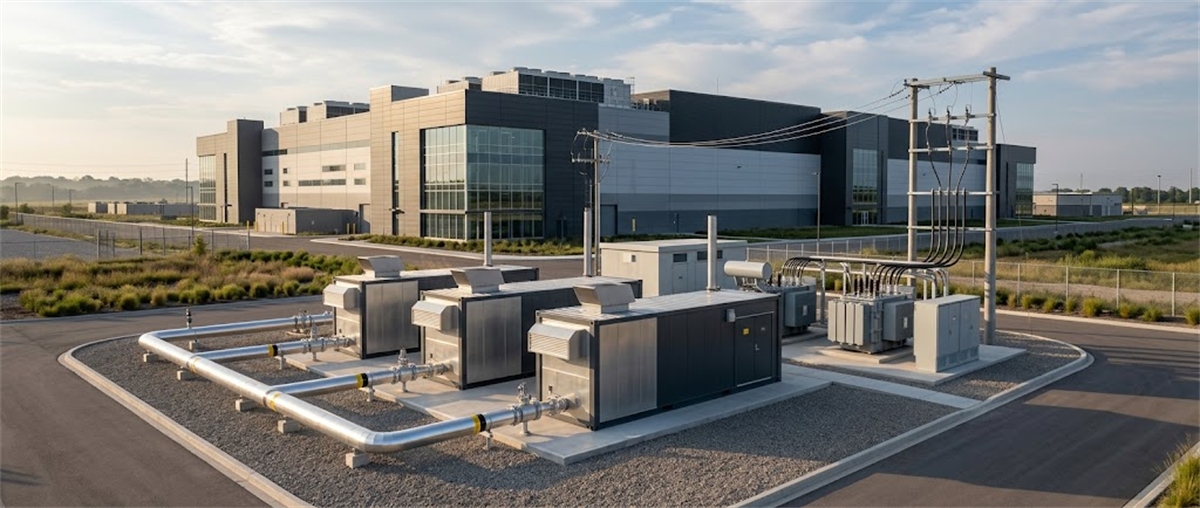
As GPU rack-density rises and inference workloads expand, thermal-management systems are becoming increasingly strategic across hyperscale infrastructure environments. AI clusters built around next-generation accelerators consume dramatically more power — and generate dramatically more heat — than traditional cloud architecture. 

The machines still need to stay cool. 

That may sound operationally simple. 

Economically, it may become one of the most important infrastructure constraints in the entire AI system. 

Most investors still appear to view AI infrastructure demand primarily as a powerful semiconductor cycle. 

Our ALDI framework suggests something more structural may be forming:
a long-duration physical rebuild of the AI economy itself. 

ALDI SCORES — Vertiv (VRT)

• ALDI Pressure: 94
The scale of AI infrastructure expansion increasingly suggests corporations expect machine intelligence to become deeply embedded throughout enterprise systems, creating persistent demand for compute-intensive infrastructure 

• ALDI Score: +86
Vertiv appears structurally positioned inside one of the most unavoidable bottlenecks in the AI economy: thermal management and cooling systems required to support rising machine-density and hyperscale AI clusters 

• Mispricing Score: +39 (Buy)
The market recognizes Vertiv as an AI infrastructure beneficiary, but may still underestimate how structurally persistent cooling and thermal-management demand could become underneath continuous AI infrastructure escalation 

ALDI Pressure (0–100) measures how intense AI-driven labor disruption is within a company; ALDI Score (–100 to +100) measures whether a company benefits or is harmed by that disruption; Mispricing Score (–100 to +100) measures the gap between underlying reality and market expectations. Scores above +20 indicate Buy opportunities, below –20 indicate Sell signals.

The most durable AI investments may not ultimately be the companies attempting to dominate artificial intelligence itself. 

They may be the firms quietly monetizing the physical infrastructure the hyperscalers cannot avoid building. 

Get the Full Breakdown + Actionable Analysis Here

AI Investor Pro analyzes how AI-driven labor disruption is reshaping margins, infrastructure demand, organizational scaling and long-term market leadership. Our focus is not generic AI commentary — it is identifying where the market may still be underpricing the second-order economic effects of artificial intelligence.Share on:Facebook|Threads|X|LinkedInAI Investor Pro

© 2026 AI Investor Pro 

228 Park Ave S, #29976, New York, New York 10003, United States

UnsubscribePowered by beehiivTerms of Service