If you would like to unsubscribe, click Unsubscribe
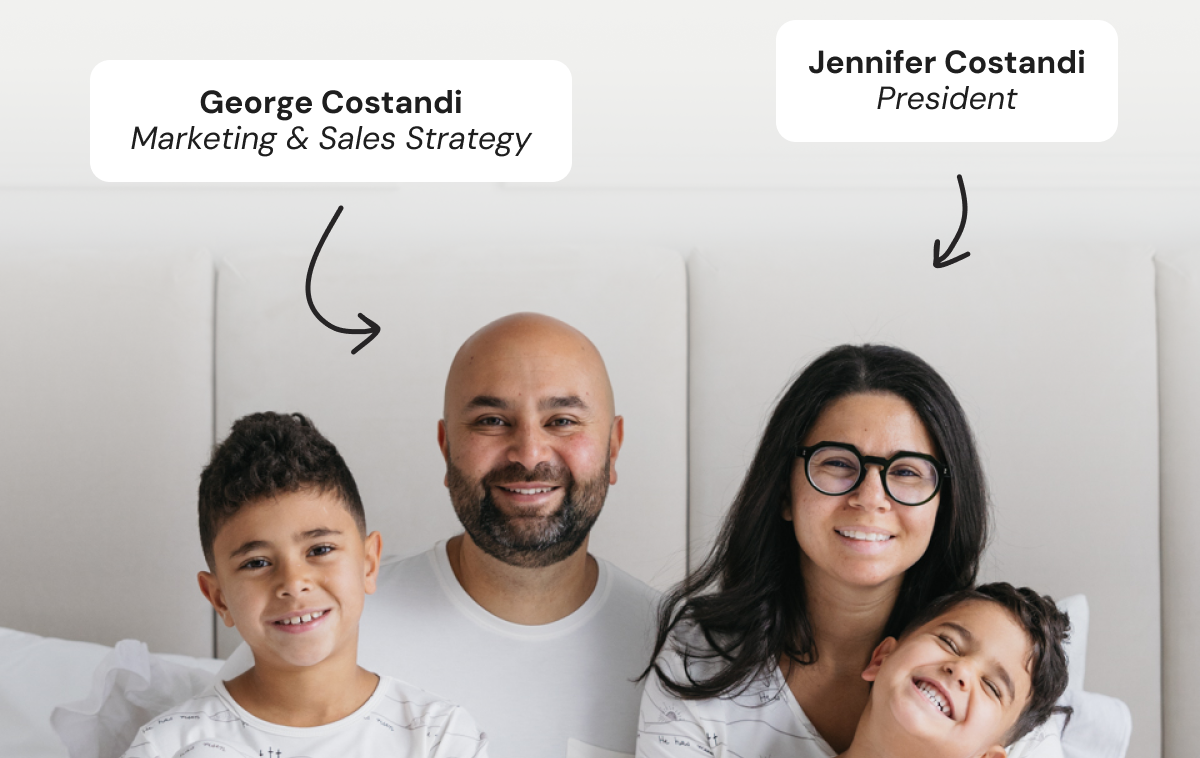
HolyOne night as we were dressing Nazareth for bed, he said “imagine if my pajamas had David & Goliath all over them, wouldn’t that be cool?”. From that moment we knew we had to make it happen.
Journey to the birthplace of Jesus. The prophets spoke of his arrival. Dimitris Chermantas brings the Gospel to life retracing the events of the birth of Jesus Christ, from Nazareth to Bethlehem.
Newsmax Exclusive PREMIERE!
Jesus the Nazarene: His Galilee Ministry
Sunday at 9:30 p.m. ET
Explore the teachings and miracles of the man they called Jesus of Nazareth. Immerse yourself in the journey that changed the world. Dimitris Chermantas takes viewers on a spiritual journey retracing the ministry of Jesus in Galilee.
Israel Now
Saturday at 6 a.m. ET Sunday at 11:30 p.m. ET
This Week: Josh Hammer, author of “Israel and Civilization,” joins Katrina Szish and Bob Brooks to discuss the importance of the U.S.-Israel alliance.
America Right Now
Tom Basile
Saturday at 9 a.m. ET — LIVE
This Week: John Chell, Ret. NYPD Chief of Department, will join Tom Basile to discuss the updates in the Luigi Mangione case.
Saturday Report
Rita Cosby
Saturday at 11 a.m. ET — LIVE
This Week: 2025 Kennedy Center honoree and Grammy Award winner Gloria Gaynor will share what it was like being honored by President Donald Trump.
Saturday Agenda
Rob Astorino
Saturday at 1 p.m. ET — LIVE
This Week: Chad Wolf, former Acting Secretary of the Department of Homeland Security, will discuss the DHS hearing with Sec. Kristi Noem.
Wendy Bell Common Sense
Saturday at 3 p.m. ET Sunday at 3:30 p.m. ET
This Week: Tens of millions in taxpayer money allegedly grifted by Somali refugees in Minnesota.Unhinged claims about climate change. The U.S. makes a big dent in the fentanyl crisis. The liberal media chides President Trump for unkind comments but doesn’t hesitate to do the same to him. Wendy Bell breaks it down with radio hosts Carl DeMaio, Stacy Washington, and Brian Craig.
Greg Kelly This Week
Saturday at 4 p.m. ET Sunday at 5 p.m. ET
This Week: Dr. Mehmet Oz, administrator of the Centers for Medicare & Medicaid Services, warns that Minnesota’s federal Medicaid funding could be withheld next year due to systemic fraud vulnerabilities. And former Minneapolis police officer Derek Chauvin seeks to overturn the George Floyd murder conviction. Journalist Liz Collin discusses the latest on his appeal.
Ed Henry The Briefing Weekly
Saturday at 7 p.m. ET Sunday at 6 p.m. ET
This Week: Ed Henry speaks with Sen. Ron Johnson on the state of President Trump’s economy. Former Commerce Secretary Wilbur Ross tells us how the President can usher in the golden age of America in just three years. And Ed talks with a corn and soybean farmer from Iowa, who sat next to the President as he announced a $12 billion farm aid package.
David Harris Jr. The Pulse Weekly
Saturday at 8 p.m. ET Sunday at 10 p.m. ET
This Week: David Harris Jr. speaks with former New York Rep. Nan Hayworth about the shortcomings of the competing Democrat and Republican backed healthcare proposals. And Darby Fox, adolescent family therapist, and Scott Augenbaum, retired FBI supervisory special agent, discuss the extremist global online network known as 764.
Wise Guys With John Tabacco
Saturday at 9 p.m. ET Monday at 12 a.m. ET
This Week: NYC Mayor-elect Zohran Mamdani tries to impede ICE efforts to catch illegal aliens. Massive fraud in Minnesota’s refugee community while Rep. Ilhan Omar and Gov. Tim Walz turn a blind eye. Actress Halle Berry pushes back on California Gov. Gavin Newsom. John Tabacco lays it out with Republican strategist Jackie Tobacco, Mike Byrne, Chair of the Montclair GOP in New Jersey, and New Jersey State Sen. Declan O’Scanlon.
American Hero: The John Wayne Story
Saturday at 11 p.m. ET
Newsmax Exclusive! He was “The Duke” — bigger than life on screen, with millions of devoted fans around the world. John Wayne was a man of strength and courage, a real patriot. He was a steadfast symbol of his country — a true American hero.
Sunday Report
Jon Glasgow
Sunday at 10 a.m. ET — LIVE
This Week: Alan Dershowitz, Professor Emeritus of Law at Harvard, will discuss the latest updates in the Jeffrey Epstein case.
Sunday Agenda
Sunday at 12 p.m. ET — LIVE
Lidia Curanaj
This Week: Steve Hilton, Republican California gubernatorial candidate, will talk about the hidden car-trade-in trap in liberal-run states.
Conversations With Nancy Brinker
Sunday at 3 p.m. ET
This Week: Nancy Brinker looks at the quest to unleash America’s energy potential in an increasingly energy-dependent world. She also discusses international politics and its impact on obtaining rare earth minerals with Doug Burgum, Secretary of the Interior.
The Miracle on 34th Street
Sunday at 4 p.m. ET
Christmas Movie! It’s a Christmas classic. A kind, elderly man becomes Macy’s Santa. When he claims he’s the real St. Nick, the holiday spirit goes on trial. Starring Thomas Mitchell as Kris Kringle.
Carl Higbie This Week
Sunday at 7 p.m. ET
This Week: Carl Higbie calls on Republicans to follow President Trump’s lead and speaks with Assistant Attorney General Harmeet Dhillon about the importance of protecting the 2nd Amendment.
Michael Savage: Savage Nation
Sunday at 8 and 11 p.m. ET
This Week: Dementia in the White House? Michael Savagediscusses his past research into Alzheimer’s disease, while addressing the rumors swirling about Joe Biden’s last term and President Donald Trump’s current state of mind. And the gloves are off as Savage points out the weakness he sees among Gen Z.
Rob Carson’s What in the World?
Sunday at 8:30 p.m. ET
This Week: Somali immigrants in Minnesota may have stolen $8 billion, but they’re the victims because “Trump is Hitler.” Narco-terrorists in drug boats off the coast of Venezuela get sympathy from Democrats. CNN’s Jake Tapper is colorblind, and in fact blind when it comes to the man accused of planting bombs at the RNC and DNC offices in Washington, D.C.
Tell your cable company you wantNewsmax TV. We’ll connect you immediately to them. Call toll free877-763-9762.
This email is never sent unsolicited. You have received this Newsmax email because you subscribed to it or someone forwarded it to you. To opt out, see the links below.
Remove your email address from our list or modifyyour profile. We respect your right to privacy. Viewour policy.
This email was sent by: Newsmax.com 362 N. Haverhill Road West Palm Beach, FL 33415 USA
What should have been a calming move by the Fed turned into a red flag.
This week, the Federal Reserve issued a long-awaited rate cut — but instead of boosting investor confidence, it exposed just how fragile the market truly is. That vulnerability was only reinforced when a major tech company posted disappointing earnings, triggering a widespread selloff.
📉 The NASDAQ 100 dropped 2% 📉 The S&P 500 fell over 1%
So what now?
Gold Breaks Out as Wall Street Panics
In the face of market uncertainty, one asset has made its move loud and clear — gold.
📈 Gold futures surged above $2,380/oz
📈 Up over 65% YTD, nearing all-time highs
📈 Safe-haven demand is spiking
This isn’t just a reaction — it’s a signal.
👉 A historic gold announcement is expected to shake Wall Street in the coming days. If you want to be ahead of the curve when it hits, this special briefing lays it all out:
Big banks and insiders are already positioning quietly. You don’t want to be the last one in the room when this news becomes front page.
Volatility Watch: Tech & High-Growth Stocks Take a Hit
After the recent rate cut and a disappointing earnings report from a major company, markets were shaken—and some of the hardest-hit areas were technology and “high-beta” stocks.
What’s a High-Beta Stock? These are companies that tend to swing more—up or down—than the overall market. They’re often in fast-moving sectors like tech or AI, and while they can soar in good times, they can also fall hard when fear creeps in.
Why Did These Stocks Drop? Even though the Fed cut rates, which usually supports growth, the move signaled that underlying market confidence might be fragile. Then came a big earnings miss that spooked investors further. The combination triggered sharp sell-offs in tech names and riskier, fast-growing stocks.
What It Means for You: While sharp price swings can create lucrative opportunities for short-term traders, they often signal uncertainty and risk for long-term investors — requiring different strategies and levels of caution. Investors should-
Stay cautious with high-growth tech stocks—they may continue to see sharp moves.
Consider hedging if you’re heavily invested in the tech sector.
Look to gold or defensive stocks as potential safe havens in choppy conditions.
Markets are driven by psychology as much as fundamentals — and this week, the fear was real. When gold soars, tech tanks, and the Fed turns dovish… something is shifting under the surface.
The winners will be those who read between the lines — and act before the headlines catch up.
The S&P 500 dropped 100 points today while the advance-decline line sat at 50-50. That combination should not be possible.
Tech is selling off hard. Broadcom cratered after hitting all-time highs. Nvidia is stuck in the mud. Microsoft keeps taking hits. Google broke outside its expected move to the downside.
Yet the broader market looks calm on the surface because traders are playing the rotation game. Capital is flooding into financials, Walmart, Boeing, and Tesla to mask the damage in tech.
This is a false sense of security.
I’ve been watching the S&P futures trade in an 80-point range between 6820 and 6900 for nearly two weeks. We’re now sitting right at the lower edge of that volatility box. A crack through 6800 opens the door to significant downside as correlation kicks in across sectors.
Here’s what makes next week particularly dangerous:
The bond market is breaking down despite the Fed’s rate cut. The 10-year yield is pushing toward 4.2% and closing the week considerably higher than it started.
Back-to-back weeks of lower-edge expected moves in TLT. This signals trend-worthy selling in bonds.
Bond vigilantes may be arriving soon.Interest rates rising while markets sell off will slam every sector.
When bond market stress combines with tech sector weakness, the rotation game ends. That 50-50 advance-decline line will collapse. All those financials and defensive names propping up the market will get dragged down with the passive investment flows.
I took a bearish position in XLF today but held off on additional trades. I’m waiting for higher degrees of correlation before fully repositioning.
Triple witching arrives next Friday with trillions in options expiring. Monday and Tuesday are when the real action typically begins.
This is the perfect time to make sure you’re up to speed on your trading know-how. So I want to ensure you’ve read our free Rebel’s Guide to Trading Options – it covers all the basics of trading options. Like everything we do, the course is in plain English. It’s specially geared toward beginners but all traders will get something out of it. Yours absolutely free, of course – right here…
1. To open an account with tastytrade and enjoy an additional 6 months of TheoTRADE membership, start by clicking the button below..
2. Follow the directions on that page to open a new account.
3. Fund the account with a minimum of $2,000 in the next 30 days and keep open for at least 6 months.
4. IMPORTANT: After the new account is open AND funded email support@theotrade.com so we can verify your new account. Please note it may take us up to one week to verify your account from the time you email us.
5. TheoTrade will then provide you membership access for 6 months!
NEED HELP? LOOKING FOR MORE ADVANCED TRAINING? CALL OUR VIP CONCIERGE TEAM: (623) 244-5657
Warm regards,
Don Kaufman
Disclaimer: Neither TheoTrade or any of its officers, directors, employees, other personnel, representatives, agents or independent contractors is, in such capacities, a licensed financial adviser, registered investment adviser, registered broker-dealer or FINRA|SIPC|NFA-member firm. TheoTrade does not provide investment or financial advice or make investment recommendations. TheoTrade is not in the business of transacting trades, nor does TheoTrade agree to direct your brokerage accounts or give trading advice tailored to your particular situation. Nothing contained in our content constitutes a solicitation, recommendation, promotion, or endorsement of any particular security, other investment product, transaction or investment. Trading Futures, Options on Futures, and retail off-exchange foreign currency transactions involves substantial risk of loss and is not suitable for all investors. You should carefully consider whether trading is suitable for you in light of your circumstances, knowledge, and financial resources. You may lose all or more of your initial investment. Opinions, market data, and recommendations are subject to change at any time. Past Performance is not necessarily indicative of future results.
WARNING: If you UNSUBSCRIBE, you will be removed from ALL email lists, including any paid subscription emails. To opt out of this list only and keep other access, forward this email to support@theotrade.com and say “remove me from this particular email list.” Unsubscribe
TheoTrade 16427 N Scottsdale Rd Suite # 410 Scottsdale, Arizona 85254 United States 1 (800) 256-8876
President Trump just made a significant move in the American Birthright story, opening Alaskan lands for mining:
This is a massive opportunity – both for American mineral production, and for individual investors who know exactly where to park their cash before mining begins.
That’s the approximate return I would’ve made if I’d trusted myself.
It was 2022, still deep in the pandemic’s long fade-out. Many industries were under pressure, and the auto market was one of the hardest hit. With little travel and even less commuting, demand slid and the entire sector slowed.
But in the middle of that slowdown, something caught my attention. It wasn’t loud. It wasn’t obvious. It was a small but steady shift taking place where almost no one was looking.
I was convinced enough to message my colleagues about it.View larger image
Carvana (NYSE: CVNA) had fallen 97%. “Deep value” barely captured it.
I’m a committed value investor, but even I hesitated. A collapse that sharp made me assume the market must’ve known something I didn’t.
So I held back as the stock closed at $8.76 that day.
But within a year, it was trading near $56 – a gain of well over 500%. And this week, it pushed past $460.View larger image
Again, that’s a more than 50-FOLD gain.
It’s a moment that stays with you – not because of the money, but because it reminds you how hard it can be to act when the crowd is running the other way.
That lesson is useful now as we ask a different question: After such a dramatic rise, where does the stock stand today?
Carvana has settled into its role as a full-scale online marketplace for used cars. Buyers can find a car, line up financing, handle the paperwork, and arrange delivery without stepping into a dealership. And recent results make it clear that the model is working at scale.
Retail units hit a record 155,941 in the third quarter, up 44% from last year. Revenue jumped 55% to $5.6 billion. Net income reached $263 million, while operating margins climbed to 9.8% – both company records.
Even more striking, Carvana crossed a $20 billion revenue run rate. Management says the firm now has reconditioning and production capacity for more than 1.5 million retail units a year, with long-term goals of selling 3 million.
These gains aren’t coming from hype alone. Carvana continues to bolt ADESA’s network into its system, adding more sites where cars can be processed and delivered faster and at lower cost. The earnings release shows this strategy is lifting both scale and efficiency.
But strong numbers don’t answer the central question: What is the stock worth right now?View larger image
Carvana’s enterprise value-to-net asset value sits at 34.40, far above the universe average of 3.82. That means investors are paying a steep premium for each dollar of net assets. On that measure, the stock is expensive.
Its cash generation tells a different story. Free cash flow-to-NAV is 4.12%, versus a universe average of 1.12%. And over the past 12 quarters, Carvana has grown its free cash flow nearly 64% of the time – well above the 46.74% average.
That kind of consistency is uncommon, especially for a business that once looked fragile.
A multimillionaire stock trader’s research explains how focusing on just one ticker every week has generated payouts up to a rare 2,614% in under 11 days…
Nothing published by The Oxford Club should be considered personalized investment advice. Although our employees may answer your general customer service questions, they are not licensed under securities laws to address your particular investment situation. No communication by our employees to you should be deemed personalized investment advice. We allow the editors of our publications to recommend securities that they own themselves. However, our policy prohibits editors from exiting a personal trade while the recommendation to subscribers is open. In no circumstance may an editor sell a security before subscribers have a fair opportunity to exit. The length of time an editor must wait after subscribers have been advised to exit a play depends on the type of publication. All other employees and agents must wait 24 hours after publication before trading on a recommendation.
Any investments recommended by The Oxford Club should be made only after consulting with your investment advisor and only after reviewing the prospectus or financial statements of the company.
Protected by copyright laws of the United States and international treaties. The information found on this website may only be used pursuant to the membership or subscription agreement and any reproduction, copying or redistribution (electronic or otherwise, including on the world wide web), in whole or in part, is strictly prohibited without the express written permission of The Oxford Club, LLC, 105 West Monument Street, Baltimore, MD 21201.
Editor’s Note: Longtime readers know that I’m bullish about the AI Revolution. In fact, I expect 2026 to rival some of the best years of my career.
But the reality is every major tech boom looks unstoppable – until it hits a wall. And history shows that it always happens faster than most people expect.
That’s why it pays to listen to people who may have a different perspective – especially ones you trust. And my friend, TradeSmith CEO Keith Kaplan, says we may be getting closer to a “tipping point” – the moment when the trend suddenly breaks, and stocks take a sharp turn lower.
That’s why his team built a brand-new alert system – designed to help you spot danger early, avoid big losses and know exactly when to get back in.
I think it makes sense to be prepared in case Keith is right. And to do that, you can join him at the Tipping Point 2026 event on Tuesday, December 16, at 10 a.m. Eastern.
If you’re looking to protect your money – and be ready for the next recovery – you’ll want to see this. Click here to RSVP now.
Now, here’s Keith with more details…
Nothing seduces investors quite like a New Era.
In the Roaring ‘20s, it was the dizzying cocktail of electrification, automobiles, radios, aviation and mass production. Productivity soared. Stocks soared with it.
Leading economists of the day argued that technology and modern management had tamed recessions. Investors believed a permanent boom had arrived.
Then the 1929 Crash hit… and they were plunged into the worst bear market in history.
In the 1960s, another New Era dawned – this time with the rise of computing, electronics and aerospace.
Brokers told their clients that the Nifty Fifty – a group of 50 fast-growing blue chips – were so great you could buy them at any price. Believing we’d entered a long, unstoppable technological renaissance, they called them “one-decision stocks.”
By the mid-1970s, many of the Nifty Fifty stocks had fallen 60% to 80%.
Then in the late 1990s, New Era thinking returned again. This time, it was inspired by the rollout of the commercial internet.
It was the fastest boom of the century. Brokers told their clients that traditional valuation metrics no longer applied in the new digital economy. And dot-com stocks with no profits became billion-dollar tickers overnight.
In March 2000, stocks peaked, the bubble burst, and the tech-filled Nasdaq dropped almost 80% over the next two years.
Different decades. Different technologies. Different New Eras. But each ended the same way: with a “tipping point” nobody saw coming until it was too late.
Today, we find ourselves in another New Era – this time driven by eye-widening advances in artificial intelligence (AI). Once again, stocks are minting millionaires. And millions of investors believe they’re living through an unstoppable boom driven by a world-changing technology.
I’m NOT telling you this because I believe stocks are going to crash tomorrow. But despite the dizzying gains from AI stocks like Nvidia and Palantir, you need to understand that New Eras don’t last forever. Eventually, each one reaches a tipping point, and stocks thump back to Earth without much warning.
It’s why my team and I built a new way to safeguard your wealth. It’s an innovation in investment tech that could save you a world of pain – and tens of thousands of dollars in potential losses – when we reach the next tipping point.
And as you’ll see today, the tipping point for the AI boom could come as soon as next year.
First, it’s important you understand why market moves are speeding up and why you need a new kind of indicator to warn you ahead of these moves.
Bigger, Faster, More Online
Outside of the 2008 financial crisis, the 10 biggest daily percentage moves in the S&P 500 over the past 30 years have all occurred since 2020.
Partly, that’s due to shrinking holding times.
In the late 1950s, investors typically held stocks for about eight years. By 2020, the average holding time was 5.5 months.
And there are now more retail investors in the market than ever before.
Before the COVID lockdowns, retail trading made up about 10% of U.S. stock trading volume. That doubled to about 20% in 2020… and reached as high as 26% in the 2021 pandemic boom.
These are not pension fund managers weighing valuations, balance sheet growth, and long-term industry trends. Most of these folks are rookies reacting to social media posts.
They also move in packs based on instructions from “gurus” in online message boards where millions of anonymous users swap stock ideas, brag about wins, and egg each other on to make riskier trades.
Struggling movie theater chain AMC didn’t soar 3,000% in 2021 and then crash because its business changed. Like GameStop before it, it became a meme stock. Millions of highly-online investors piled into its shares to “stick it to the man.”
When tens of millions of these folks have access to zero-commission, gamified trading, the market doesn’t only get bigger. It gets faster.
And it’s not just human traders who are responsible for these lightning-fast moves. It’s also the algorithms.
In the past 90 days, the U.S. government shocked Wall Street by taking equity stakes in three small American companies. These small stocks skyrocketed 111%… 194%… and 211% in a single day. Luke Lango’s firm identified all three BEFORE the announcements. Now he’s sharing his urgent new analysis on the fourth big “White House Windfall” for the first time. Get the full details here.
Machines Now Do Most of the Trading
The New York Stock Exchange now processes about 1.2 trillion buy and sell orders a day – triple what we saw as recently as 2020.
And computers account for up to 80% of that trading volume.
High-frequency firms now fire off orders measured in millionths of a second. A human can’t even blink that fast. And according to some estimates, more than half of these algorithmic traders are enhanced with AI.
This creates a new kind of problem. Many of these systems are trained on the same data, learn the same patterns, and react at the same millisecond speeds. So they often make the same decision at the same moment — especially when they sense danger.
Think of the market like a packed stadium with only a few doors. If everyone stands up at once to leave, the exits clog and people get crushed.
That’s what happens when AI trading systems all pull their buy orders at the same time. Liquidity vanishes. Prices don’t fall in steps – they drop straight through the floor.
We’ve already seen early versions of this.
In the 2010 Flash Crash, a single automated sell order snowballed into a chain reaction that erased almost $1 trillion in market value. In 2015, an opening-bell volatility burst caused more than 1,000 stocks and ETFs to halt within the hour.
And in 2020, the NYSE’s “circuit breakers” tripped on March 9, 12, 16, and 18 – each time triggered by a sudden 7% plunge in the first minutes of trading.
The S&P 500 usually moves about 0.7% to 0.8% a day. Those drops were nearly 10 times larger… and they were happening in minutes. That’s an order-of-magnitude jump in volatility.
And the next downturn could hit faster, harder, and with even less warning. If you’re relying on traditional indicators to alert you, you won’t keep up. You’ll wake up one morning and find a large hole in your brokerage account.
That’s why my team and I have created a new kind of sell signal with volatility, tipping points, and bear markets in mind. It’s designed to help you avoid the whiplash-style selloffs that are now routine.
Introducing Our Early-Warning System
Just like the AI-powered algorithms that have overtaken Wall Street… our early-warning system is more reactive than anything we’ve built before.
It’s sensitive to even the slightest bearish tremor in a stock.
You can set it up to monitor every stock you follow. If one begins to experience abnormal short-term volatility—an early sign of a steeper drop – our system will automatically alert you.
In our backtests, you would have been able to get out of:
Freshpet (FRPT) before a 74% crash
Lifetime Brands (LCUT) before a 77% crash
Bloomin’ Brands (BLMN) before a 72% crash
Funko (FNKO) before an 86% crash
Rocky Brands (RCKY) before a 75% crash
American Eagle Outfitters (AEO)before a 69% crash
The Buckle (BKE) before a 21% crash
Levi Strauss & Co. (LEVI) before a 49% crash
Shoe Carnival (SCVL) before a 42% crash
The Gap (GAP) before a 72% crash
QVC Group (QVCGA) before a 99% crash
I’ll be going into more details on how it works… and why it’s critical to have on your side as we head into 2026… during our upcoming launch event.
And I hope you’ll clear time in your schedule to join me.
I’ll be there alongside Marc Chaikin – a Wall Street legend known for sharing a series of stunningly accurate market forecasts with his more than 800,000 followers around the world.
In early 2022, Marc sounded the alarm on the post-COVID bull run, just 90 days before stocks plunged into a bear market.
In early 2023, he said stocks were about to kick off an extraordinary recovery and shoot up 20% or more. That year alone the S&P 500 gained 26%.
And earlier this year, he warned of a violent market shift just before the S&P 500 plunged 19% following the Liberation Day tariffs.
Nobody has called the twists and turns of this market quite like Marc has.
He’s worked on Wall Street for 50 years, survived 10 bear markets, built three new indexes for the Nasdaq, and created his own quantitative indicator still used on Wall Street. That’s why I hope you’ll pay serious attention to his newest prediction.
Based on decades of market data, Marc is predicting a bear market in 2026, with an average market loss of 20%. And that’s just the average loss. Marc says many popular stocks could fall a lot further.
For the first time since I’ve been TradeSmith’s CEO, I’m not recommending you use our long-term trailing stops to protect you. They’re a powerful tool – we didn’t engineer them for the kind of fast, reactive environment Marc expects in 2026.
Instead, my team and I created a new kind of sell alert – built specifically for volatility shocks, fast trend breaks, and tipping-point conditions Marc sees ahead.
If his newest prediction is as accurate as his past calls, stocks will likely bottom in the fall of 2026 after a sharp drop. And one of the most lucrative recoveries in history will begin.
Most investors will miss out. But by following our new sell-alert signals, you can pinpoint when to get back into any stock in the market.
I’ll show you how it all works during our Tipping Point 2026 event, which airs next Tuesday, December 16, at 10 a.m. Eastern Time. And Marc will get into more detail on why he’s calling 2026 the Year of the Bear – including the four-year cycle that’s played out over more than a century.
And of course, we’ll demonstrate how you can use our newest investment tech to protect yourself from any surprises.
P.S. Could your favorite stocks be headed for a sudden drop?
When you sign up for our Tipping Point 2026 event, you’ll get access to our Flash Crash Screener. You can use it to check on up to 10 of the tickers in your portfolio to instantly see if they’re susceptible to a plunge.
But to get the name and ticker of the worst offender – a widely loved stock that looks doomed according to our new system – you’ll need to tune in on December 16. Here’s that link again to register.
Manage your account We hope this timely investment research is valuable to you. As you know the markets move fast and conditions change frequently. So please check the current issue for the most recent advice. Please note that we cannot be liable for any missed bulletins caused by overzealous filters. To ensure that you continue to receive this valuable part of your service please take a moment to add services@exct.investorplace.comto your address book.
AUTOX CLUB – Early bird special available now! Save on your 2026 Autocross Season
IN CASE YOU MISSED IT: At Lime Rock Park, We Keep On Truckin’
VIDEO: Kastner Cup Paddock Walk at Historic Festival 43
Secure Your Summer of Speed in 2026 – Tickets & Passes On Sale Now
From NASCAR trucks roaring through the Berkshires, to the return of the Trans Am Memorial Day Classic, to a refreshed Historic Festival weekend and an elevated MiataCon, you won’t want to miss 2026 at Lime Rock Park!
Save big on the 2026 Autocross season on the FCP Euro Proving Grounds
If you want to compete for a spot in the 2026 AutoX Shootout or just interested in testing your car on the FCP Euro Proving Grounds, the AutoX Club is the perfect opportunity!
Valued at $3,000, the standard AutoX Club gives you the same amount of track time for $1,250! Autocross events run from April to November, so there’s plenty of opportunities to show off your skills.
New for 2026, the Unlimited AutoX Club allows you to participate in up to 63 different sessions throughout the season. Paired with the price being nearly 80% off the standard Autocross Lapping Day rate — you won’t find more track time for less.
IN CASE YOU MISSED IT: At Lime Rock Park, We Just Keep On Truckin’
Greg Rickes shares the history of truck racing at Lime Rock Park ahead of the NASCAR Craftsman Truck Series debut this past June
This past June, iconic track announcer Greg Rickes detailed the history of truck racing at Lime Rock Park, starting much earlier than this past year’s inaugural LIUNA 150! Click the link below to read more about truck racing’s history at Lime Rock Park.READ ON LIMEROCK.COM
VIDEO: Kastner Cup Paddock Walk at Historic Festival 43
If you missed the Kastner Cup’s debut at Lime Rock Park, worry not! Thanks to YouTube user Tony Drews, you can take a virtual walk-through of the Kastner Cup paddock right from your couch. Click the link below to check it out!WATCH NOW – KASTNER CUP HF43
Stephen Prior, Publisher Monument Traders Alliance
Monument Traders Alliance, LLC
You are receiving this email because you subscribed to Trade of the Day. Trade of the Day is published by Monument Traders Alliance, LLC.
To stop receiving special invitations and offers from Trade of the Day, please click here. Please note: This will not impact the fulfillment of your subscription in any way.
To cancel by mail or for any other subscription issues, write us at: Trade of the Day | 14 West Mount Vernon Place |Baltimore, MD 21201 North America: 800.507.1399 | International: +1.443.353.4977 Website | Privacy Policy Keep the emails you value from falling into your spam folder. Whitelist Trade of the Day.
Please do not reply to this email as it goes to an unmonitored inbox.
Nothing published by Monument Traders Alliance should be considered personalized investment advice. Although our employees may answer your general customer service questions, they are not licensed under securities laws to address your particular investment situation. No communication by our employees to you should be deemed personalized investment advice. We allow the editors of our publications to recommend securities that they own themselves. However, our policy prohibits editors from exiting a personal trade while the recommendation to subscribers is open. In no circumstance may an editor sell a security before subscribers have a fair opportunity to exit. The length of time an editor must wait after subscribers have been advised to exit a play depends on the type of publication. All other employees and agents must wait 24 hours after publication before trading on a recommendation.
Any investments recommended by Monument Traders Alliance should be made only after consulting with your investment advisor and only after reviewing the prospectus or financial statements of the company.
Protected by copyright laws of the United States and international treaties. The information found on this website may only be used pursuant to the membership or subscription agreement and any reproduction, copying or redistribution (electronic or otherwise, including on the world wide web), in whole or in part, is strictly prohibited without the express written permission of Monument Traders Alliance, LLC, 14 West Mount Vernon Place, Baltimore, MD 21201.
Top 3 Winter Stocks With Solid Growth Opportunities
Written by Jeffrey Neal Johnson on December 11, 2025
Key Points
Cheniere Energy is positioned to benefit from increased global heating needs and infrastructure expansion that boosts export capacity.
Walmart continues to capture market share through supply chain automation and a strategic shift toward high-margin digital advertising revenue.
Palo Alto Networks drives growth by consolidating corporate security budgets and securing large government contracts for its platform solutions.
The winter season often marks a distinct shift in the economic landscape, presenting investors with an opportunity to recalibrate their portfolios. While the colder months can bring market volatility, they also clarify the winners in specific industries that thrive on seasonal demand. Growth investing in this environment means looking beyond the hype to find companies with structural advantages that are expanding their earnings through innovation, efficiency, and market dominance.
As Winter 2025 begins, three themes are converging to drive market activity: a spike in global heating demand, a consumer migration toward value-driven retail, and the critical release of new corporate budgets. By understanding these cycles, investors can identify investment possibilities where fundamental strength meets seasonal opportunity.
While President Trump’s official salary is $400,000 per year… his tax returns reveal he’s been collecting up to $250,000 PER MONTH from one hidden source. Until recently, most Americans couldn’t touch the type of investment that makes up this investment. But thanks to Executive Order 14330, that just changed. If you love investing in disruptive new companies…Discover how to invest in the fund Trump uses to collect this income >>
Smart Strategies: Capitalizing on Seasonal Trends
One of the most effective tools for navigating the winter market is sector rotation. This strategy involves shifting capital into industries that have historically outperformed in the first quarter of the year. The goal is to identify sectors that provide essential services when the temperature drops and the calendar year resets.
For Winter 2025, the market is reacting to specific catalysts, events that trigger predictable financial outcomes. Meteorologists have confirmed a La Niña weather pattern, which historically drives down temperatures and drives up energy prices. Simultaneously, lingering inflation and price increases driven by tariff issues are pushing shoppers toward discount retail giants. Wrapped around both of these issues is the start of a new fiscal year for many corporations, which has historically triggered the release of pent-up capital from the information technology (IT) department.
However, simply buying an entire sector can be inefficient. The key to solid growth is finding the market leaders within these sectors. Investors should look for the companies that have finished building their infrastructure and are ready to reap the rewards just as demand peaks.
Cheniere Energy: Capitalizing on the Big Freeze
The energy sector is perhaps the most direct beneficiary of winter weather. As temperatures plummet across the Northern Hemisphere, the demand for heating fuels rises sharply. For Winter 2025, this dynamic is amplified by the confirmed La Niña weather pattern, which is forecast to bring colder-than-average temperatures to key markets in Northeast Asia and Europe. These regions rely heavily on imported fuel to keep their power grids running and their homes warm.
Cheniere Energy (NYSE: LNG) is uniquely positioned to serve this global need. As the leading exporter of Liquefied Natural Gas (LNG) in the United States, Cheniere plays a critical role in the global energy supply chain. The company’s business model relies on arbitrage, buying natural gas at lower prices in the U.S. (where supply is abundant) and selling it at premium prices in international markets where it is scarce.
This winter offers a specific growth catalyst for the company: the completion of major infrastructure. Cheniere’s Corpus Christi Stage 3 Expansion has reached commercial capacity as of December 2025. In the energy export business, volume is king. This expansion allows the company to process and ship significantly more gas than in previous years, right at the moment when global prices are supported by high winter demand.
For investors concerned about energy price volatility, Cheniere offers a layer of protection. Unlike drillers who are at the mercy of daily spot prices, Cheniere has sold approximately 80% to 90% of its production capacity through long-term contracts. This ensures a steady, predictable stream of cash flow regardless of short-term market fluctuations, making it a stable growth pick for the season.
Power Nickel Mines (PNPNF) just delivered blockbuster drill results from the Lion Zone at its Nisk Project, including 4.40 meters of 12.18% copper (14.34% CuEqRec) within a broader 20.40 meters of 2.91% Cu (3.58% CuEqRec) — standout grades as gold pushes above $4,300, silver tops $50, and battery metals continue to surge. With a fully funded 100,000-meter drill program through 2026, PNPNF is expanding high-grade nickel, copper, cobalt, PGE, gold, and silver mineralization across multiple zones, positioning itself as a North American polymetallic leader. Located near low-cost Hydro-Québec power and supported by strong ESG and carbon-sequestration advantages, the Nisk Project offers rare leverage to both precious-metals momentum and critical-minerals demand.Discover why PNPNF is emerging as a must-watch polymetallic powerhouse with major upside potential.
Walmart: The Flight to Value and Efficiency
In the retail sector, the winter months are defined by the holiday shopping rush followed by a return to budget consciousness in January. In the current economic climate, consumers are increasingly prioritizing value. Walmart (NASDAQ: WMT) has successfully capitalized on this behavior through the trade-down effect. Data shows that the retailer is capturing market share from households earning over $100,000 annually, shoppers who previously frequented premium stores but are now seeking better prices on groceries and essentials.
However, Walmart’s growth story in Winter 2025 is not just about selling more products; it is about selling them more profitably. The company is approaching an operational finish line. By the end of its Fiscal Year 2026, Walmart aims to have 65% of its stores serviced by automation. This overhaul of their supply chain reduces the cost of moving goods, which directly improves profit margins.
Furthermore, Walmart is rapidly evolving into a digital advertising giant. Its Walmart Connect business allows brands to buy ads on Walmart’s website and in stores. This digital advertising revenue carries much higher profit margins than traditional retail sales. As the company reports its full-year earnings in early 2026, the combination of supply chain savings and advertising growth is expected to significantly boost the bottom line.
This operational efficiency, combined with its scale, makes Walmart a defensive anchor for a portfolio. It offers the stability of a grocery store with the growing profit margins of a technology-driven logistics company.
Palo Alto Networks: The Cybersecurity Budget Surge
While retail slows down in January, the corporate technology sector heats up. The start of the calendar year is when enterprise companies release their new IT budgets. In 2025, during rising digital threats and regulatory pressure, cybersecurity has become a non-negotiable line item. Palo Alto Networks (NASDAQ: PANW) stands out as the primary beneficiary of this spending cycle.
The driving force behind Palo Alto’s growth is a trend called platformization. In the past, companies would buy antivirus software from one vendor, firewall protection from another, and cloud security from a third. This created complexity and security gaps. Today, Chief Information Officers (CIOs) are seeking to save money and simplify operations by consolidating everything with a single vendor. Palo Alto’s broad, integrated platform makes it the logical choice for this consolidation.
A major vote of confidence in this strategy came recently with the signing of the OneGov agreement with the U.S. General Services Administration. This deal streamlines federal agencies’ ability to purchase Palo Alto’s AI-driven security tools, signaling government-level trust in its infrastructure.
Additionally, the company is pivoting toward a more lucrative business model. By focusing on software subscriptions rather than one-time hardware sales, Palo Alto is building a base of recurring revenue. This means that once a customer signs up, they tend to stay and pay annually. For investors, this creates a high degree of visibility into future earnings, making Palo Alto a resilient growth choice in the tech sector even if the broader economy faces headwinds.
3 Paths to Seasonal Growth
Winter presents a unique set of variables for the stock market, ranging from freezing weather patterns to the reset of corporate budget cycles. Navigating this season successfully requires a balanced approach. By focusing on sectors such as energy, defensive retail, and cybersecurity, investors can position themselves to capitalize on these trends.
Identifying market leaders like Cheniere Energy, Walmart, and Palo Alto Networks allows investors to own companies with distinct advantages. Whether it is the export capacity to feed global heating demand, the automation to improve retail margins, or the platform to secure corporate data, these three stocks represent solid growth opportunities for the Winter 2025 season.



































.png)







 RJ Hamster