When news broke of a Hantavirus outbreak on a cruise ship, the market’s response was immediate and dramatic. Biotech and pharmaceutical stocks jumped as investors scrambled to…
Markets are getting squeezed from two directions this morning, and neither one offers much comfort. Stock futures opened lower as investors digested the US rejection of Iran’s response…
Apple. Microsoft. Nvidia. Amazon. They converted nearly a trillion dollars out of cash and into something else. Louis Navellier has tracked this pattern for 47 years. He says it’s the most important financial signal most Americans are missing entirely.
When Beazer Homes shares jumped 24% to $23. 20 in premarket trading Monday following Dream Finders’ $704 million acquisition bid, the market sent a clear signal. This deal…
For years, we’ve been told SpaceX is a rocket company. But according to new satellite images from 300 miles above the Earth’s surface, there is something very strange going on at SpaceX right now that has nothing to do with space. It could soon replace our need for foreign oil forever and ignite a $10 trillion boom for the stocks involved.
Cardano’s collapse tells you everything you need to know about the brutal reality of cryptocurrency investing. Back in 2021, when it hit $3. 10, everyone was convinced this was the…
(Privacy Policy/Disclosures)Advertising Disclosure: This email contains paid advertisements. This email is from our associates at Investment News Daily.
Legal Entity Information: Investing Ideas Daily is owned and operated by Darwin Investor Network, a DBA of The Darwin Agency, Inc.
Disclaimer: Nothing in this email should be considered personalized financial advice. Always conduct your own due diligence when investing. We urge you to read our full disclaimer by clicking on the terms of use link below.
Unsubscribe: You are receiving this email as part of your complimentary subscription to the Investing Ideas Daily E-Letter. If you would like to unsubscribe, you can do so by clicking on the unsubscribe link below.Darwin Investor Network 2319 N Andrews Avenue, Fort Lauderdale, FL 33311 support@investingideasdaily.com | 1-800-496-9838Investing Ideas Daily | Privacy Policy | Terms of Use Unsubscribe | View Online
While buy-and-hold investors and retirees watched their portfolios get slashed by half during the 2008 financial crisis…
Larry Benedict made $95 million for his private clients.
Same year and same market.
But wildly opposite results.
Over the last 40 years, Larry has tested and perfected that core strategy through well over 10,000 trading sessions.
And it’s still working like gangbusters today.
In the last six months alone…
Larry has delivered 49 winners on 54 trades. That’s a 91% win rate. And 31 of those winners each paid more in a single day than the S&P 500 typically delivers in an entire year.
Same method. Same ticker. Same simple trade.
That’s not a lucky streak; that’s a repeatable profit-targeting system anyone can learn.
Larry revealed how it works during an exclusive strategy session last Thursday.
Lauren Wingfield Managing Editor, The Opportunistic Trader
P.S. Some of Larry’s readers are already using the system and reporting big wins:
“First 26 trading days, and my profit is now up to $52,014. My profit rate so far is more than four times my maximum salary when I was working 40 to 80 hours per week.” – Richard H.*
*The investment results described in these testimonials are not typical; investing in securities carries a high degree of risk; you may lose some or all of the investment.
Editor’s Note: On the eve of America’s 250th anniversary, Porter believes we are standing on the threshold of a new 1776 moment.
A convergence of forces across the three domains that dictate almost every aspect of your life: Economics. Technology. Politics. An event that he says could trigger the greatest transfer of wealth in American history.
In their interview, Porter and Luke Lango explored America’s New 1776 Moment in full detail – including the stocks to buy and sell ahead of what could be one of the most transformative periods in American history, for the good and the bad.
Now, Porter has asked Luke to take the reins with a series of guest essays that will explore this phenomenon in more detail and provide further depth on some of the concepts they didn’t have time to explore.
Below, you’ll find the first essay from Luke and if you haven’t seen their interview yet, you can watch it by clicking here.
From The Desk of Luke Lango:
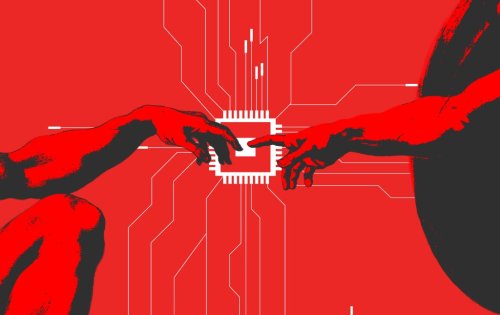
The Great Decoupling: How AI Is Breaking The Engine of Human Labor
If you’re still operating under the comforting delusion that artificial intelligence is just a high-tech version of a Swiss Army knife – a handy tool to help you draft a “per my last email” response or generate a picture of a cat in a tuxedo – I have some very expensive news for you.
We aren’t just looking at a “productivity tool.” We are witnessing the Great Decoupling.
For the last 250 years, ever since the founding of our great nation in 1776, the global economy has functioned on a very simple, linear equation: Human Cognition + Time = Economic Value. If you wanted to build a bridge, write a legal brief, or design a semiconductor, you needed to rent a human brain. That brain was the bottleneck. It was expensive, it required eight hours of sleep, it had “feelings,” and it occasionally went on strike.
Those were the rules of the old game.
But those rules are now changing.
Today, that equation no longer includes the human part. We are entering an era where productivity can scale toward infinity while human involvement scales toward zero. This isn’t just “automation” 2.0. This is a total labor replacement engine.
And it has massive investment, economic, and societal implications.
Today, that equation no longer includes the human part. We are entering an era where productivity can scale toward infinity while human involvement scales toward zero. This isn’t just “automation” 2.0; this is a total labor replacement engine.
And it has massive investment, economic, and societal implications.
The End of the “Brain-Power” Monopoly
Historians like to talk about the “Great Divergence” when the West pulled away from the rest of the world. But we are now entering the Great Disconnect.
In 1776, the steam engine decoupled industrial power from muscle. It meant you no longer needed 500 horses or 1,000 peasants to move a mountain. You just needed a few tons of coal and a James Watt engine. This shifted the “value” of the human being from their back to their brain. We became a “knowledge economy.” We told our children that as long as they were smart, went to college, and learned to think, they would always have a seat at the table.
AI has just evicted us from that table.
What we are seeing with models like OpenAI’s Codex or Google’s Gemini or Claude Cowork isn’t just “better software.” It is Recursive Reasoning. These systems aren’t just “predicting the next word.” They are thinking through problems, checking their own work, and iterating. When an AI can solve a 50-year-old biological protein-folding mystery in a weekend – a task that would have taken a thousand PhDs their entire lives – the “value” of those PhDs just hit an air pocket.
When cognition becomes a commodity that can be downloaded for $20 a month, the “Knowledge Class” – the lawyers, the accountants, the junior analysts, and the coders – becomes the new “Useless Class.”
The “Engels’ Pause” 2.0: Profits Without People
Here is the smartly sarcastic reality of the modern corporate boardroom: Your CEO doesn’t want to hire you. They never did. They hired you because they had to. You were a necessary evil – a biological requirement for profit.
Now, look at the math.
In the first half of the 19th century, during the Industrial Revolution, we saw a phenomenon called Engels’ Pause. It was a 50-year window where the economy grew at record rates, corporate profits doubled, and the stock market soared – but wages for the average worker stayed flat or declined. Why? Because the technology (the power loom, the steam engine) was doing the heavy lifting, and the owners of that technology captured 100% of the gains.
We are entering Engels’ Pause 2.0, and this time, it’s on steroids. Just like everything else these days – it is bigger and moving faster than ever before.
Currently, corporate profits as a share of GDP are at record highs, while labor’s share of the pie has cratered to levels not seen since the Gilded Age. We are seeing “Jobless Growth.” Companies are hitting record valuations with fewer employees than ever before. Instagram had 13 employees when it was bought for $1 billion. Today, AI-native startups are aiming for $100 billion valuations with a headcount you can figure on two hands.
If you think a “Universal Basic Income” or a government handout is going to bridge this gap, you’re missing the point. The wealth is being concentrated in the Physical Layer and the Compute Layer. It’s being captured by the entities that own the data centers, the energy sources, and the silicon.
Not the laborers.
The Fallacy Of “Augmentation”
The mainstream media loves the word “augmentation.” They’ll tell you that AI won’t replace you; it will just make you “more efficient.”
Let’s be honest: “efficiency” is just a corporate euphemism for “we used to need five of you, and now we only need one.”
If AI makes a lawyer five times more efficient, the world doesn’t suddenly need five times more legal briefs. It just needs 80% fewer lawyers. This is the Arithmetic of Obsolescence.
We are seeing this play out in real-time across the S&P 500.
Companies that built their entire business model on being “toll booths” for human knowledge are being bypassed. Just look at software stocks. They’ve been crushed this year. And with good reason. Why would a company pay millions to a consulting firm or a software firm for a market analysis when they can run a sovereign AI model on their own private data for the cost of the electricity used to power the server?
This is why you’re seeing “The Great Purge” in Silicon Valley and Wall Street. It’s not a “recession.” It’s a restructuring. The labor-replacement engine has been turned on, and it doesn’t have a “stop” button.
The New Wealth Equation: Energy And Compute
In the Old World, you invested in “people companies” – banks, service providers, retailers. In the New World of the Great Decoupling, you must invest in The Infrastructure of Intelligence.
The intelligence explosion is fundamentally a physics problem. It requires two things in massive, almost incomprehensible quantities: Compute and Energy.
Every time someone asks a “thinking” AI model a question, it consumes an order of magnitude more electricity than a standard Google search. By 2030, AI data centers could consume as much power as the entire country of Germany. This is why the smartest money on the planet – the people like Ken Griffin and the massive sovereign wealth funds – are stopping at nothing to lock up energy assets.
They aren’t buying “app” companies. They are buying natural gas. They are buying the “New OPEC” of chips. They are buying the land and the transformers.
Because in a world where human labor is decoupled from wealth, the only things that matter are the things that power the machines. If you own the electricity and you own the silicon, you own the future. If you own a “resume” and a “specialized skill set,” you own a relic.
The Smartly Sarcastic Truth About The “Future Of Work”
We are told to “reskill” and “upskill.” But let’s be real: how do you “out-skill” a recursive algorithm that updates itself every 15 milliseconds? You don’t. Compete all you want. You will lose.
The idea that we are all going to become “AI Prompt Engineers” is the modern equivalent of telling the 19th-century blacksmith that he should just become a “Steam Engine Whisperer.” Sure, a few people will do it. But most of the blacksmiths just went out of business.
The Great Decoupling is cold, it is efficient, and it is entirely indifferent to your feelings about “meaningful work.” The machine doesn’t care about your work-life balance. It doesn’t care about your DEI initiatives. It only cares about the cost per flop and the kilowatt-hour.
This is why the Technological Republic (Palantir CEO Alex Karp’s vision for a new economic model that replaces free-market capitalism with a partnership between the public and private sectors to prioritize critical technological growth) is so vital.
Our current administration is fully embracing this mindset. The big investment in Intel… and MP Materials… and Lithium Americas… and Trilogy Metals… all companies mission-critical to the AI infrastructure buildout. The $500 billion Project Stargate to build new AI datacenters. The massive Genesis Mission to unlock U.S. energy resources for AI.
All of these moves are unprecedented. And all of these moves point to the U.S. government embracing the Technological Republic idea.
The government knows that the Great Decoupling is going to create a massive “Useless Class.” Their solution isn’t to stop the technology—that would mean losing to China. Their solution is to speed it up and ensure the United States owns the most powerful “replacement engine” on the planet.
Better us than them, they figure.
And on that point, the government may actually be right.
How To Position Your Capital
If you’re waiting for the “labor market” to bounce back, you’re waiting for a ship that has already sunk. The opportunity today lies in moving your capital from the Victims of Decoupling to the Enablers of Decoupling.
You need to sell the “Knowledge Toll-Booths”—the companies that sell human time and expertise. You need to buy the “Intelligence Utilities”—the companies that provide the raw materials for the silicon mind.
We are talking about:
Natural Gas: The only fuel capable of meeting the immediate, monstrous demand of the AI data centers.
Sovereign Infrastructure: The companies building the “Stargate” and “Genesis” projects that the government is backing with billions.
Advanced Compute: Not just the chips, but the cooling systems and the power management hardware that prevents the “brain” from melting.
The Great Decoupling is the most significant economic event of our lives. It is the end of the “Human Century” and the beginning of the “Intelligence Century.” You can either be the labor that is being replaced, or the capitalist who owns the replacement.
Which is why, just weeks ago, I sat down with the legendary Porter Stansberry for the first time ever to dive deep into this topic.
We’re calling it the “New 1776 Moment” because, frankly, there hasn’t been any economic, social, or political event this monumental since 1776.
You have received this e-mail as part of your subscription with Porter & Company, LLC. If you no longer want to receive special offers from Porter & Company, LLC, unsubscribe here.
Porter & Company, LLC welcomes comments or suggestions at support@porterandcompanyresearch.com. For questions about your account or to speak with customer service, call 888-610-8895 Monday-Friday, 9 a.m.-5 p.m. Eastern time.
Please note: The law prohibits us from giving personalized financial advice.
Disclaimer: Nothing in this email should be considered personalized financial advice. Do not consider any communication between you and Porter & Company, and its employees or writers as financial advice. This work is based on SEC filings, current events, interviews, corporate press releases, and what we’ve learned as financial journalists. It may contain errors, and you shouldn’t make any investment decision based solely on what you read here. Insight is provided to help readers gain knowledge and experience. All investments carry risk. Readers should not trade if they cannot handle a loss and should not trade more than they can afford to lose. Consider consulting with a professional before making investment decisions. Please be aware that by accessing this publication, you acknowledge and agree that Porter & Co. and its editors and affiliates may, at any time, buy or sell securities discussed in this publication without prior notice. This may result in potential conflicts of interest, as Porter & Co., its editors, and affiliates may have a financial interest in the securities mentioned. The views expressed in this publication are subject to change without notice and reflect the personal opinions of the authors and speakers.
By submitting a response or feedback, you hereby grant Porter & Co. the right to use, reproduce, and publish your feedback in any and all marketing materials, including but not limited to online platforms, print advertisements, and promotional content. Your review may be edited for clarity and length, but the substance of your feedback will remain unchanged. Please note that your personal information will be kept confidential and will not be disclosed without your explicit consent. If you have any questions or concerns regarding this agreement, please contact us at support@porterandcompanyresearch.com or to speak with customer service, call 888-610-8895 Monday-Friday, 9 a.m.-5 p.m. Eastern time.
It took me years to realize my mom was lying when she said she wasn’t hungry.
As kids, my brother and I loved going to The Old Country Buffet. We’d load up on mashed potatoes, honey baked ham, and hot fudge sundaes.
My mom sat at the table, busy with her stack of bills and work reports, smiling as we piled our empty plates up high. She never ate. Now I understand she couldn’t afford to buy herself a meal. She went hungry for our sake.
That image stayed with me through community college… and through my master’s in finance. It stayed with me through my first job at $60,000 a year, when I was six-figures deep in student debt.
By that point, I had done everything you’re “supposed” to do to set yourself up for a good life. I had the degree Wall Street wanted. The obvious path would’ve been to take a seat at a bulge-bracket bank… and spend the next 30 years telling clients to buy index funds.
But the math didn’t add up. That “obvious” path wasn’t going to close the gap between what I was making and what I needed to be financially free. Not for me. Not for my family.
I thought about my mom, and what she would’ve given to be better off financially. So in 2018, I made a different call. I joined Teeka Tiwari’s research team.
And I started to learn a principle that no finance program teaches: Asymmetric investing.
What I Learned From Big T
Asymmetric opportunities don’t come around often, and most people only understand them in hindsight. But the idea is straightforward.
You risk $1 with the goal of making $100, $1,000, or more. The asset is more likely to go to zero than explode higher. But because the potential upside is so large, you don’t have to risk a lot to make a lot.
Bitcoin is the clearest example.
When Teeka first recommended it in 2016, it traded at $400-and-change. Most analysts were calling it a speculation at best and a money-laundering scheme at worst.
Teeka saw the most important monetary technology ever built… A digital currency with a fixed supply, no central authority, and nearly impossible to confiscate.
Going against the crowd has paid off for his readers.
Last year, bitcoin hit an all-time high of $126,000. That’s a 29,900% return in under a decade. A $1,000 position at his entry price grew to $300,000 at the peak.
Another example is Nvidia.
He recommended it in 2015 at only 80 cents per share (split-adjusted). Most analysts in our business saw a gaming company. Teeka saw the processing backbone of a century of artificial intelligence.
A $1,000 position in Nvidia would have been worth as much as $269,000.
Today, Nvidia is the most valuable company on Earth, with a market cap approaching $5 trillion.
Now, if bitcoin and Nvidia had both gone to zero, you would’ve been out $2,000. That’s not fun, but it’s not life-shattering either.
It’s how you build life-changing gains without putting your current lifestyle at risk. It’s how I went from $100,000 in debt to a seven-figure portfolio within five years. I was 28.
And it’s how I’ve been able to help Teeka’s readers book gains as high as 10x in under three months.
The “Wrong” AI Stocks Could Ruin Your Retirement
Right now, millions of everyday investors are buying the wrong AI stocks.
Big T calls them “bubble stocks waiting to burst.”
One of these stocks has already exploded over 200% since December 2025. And it’s only just begun.GET THE DETAILS NOW
My Own Track Record
When Teeka launched his own research company in 2024, I didn’t hesitate to join him.
Free from Wall Street’s bureaucracy, we could find ideas most analysts wouldn’t touch. That’s the same instinct that put Teeka in Nvidia in 2015 and bitcoin in 2016.
In the first year, I approached Teeka with two new altcoin ideas: Virtuals Protocol and ai16z. Nobody was writing about them when we got our subscribers in. But my research showed both coins were gaining adoption from AI agents transacting on the blockchain.
They returned 806% and 919%, respectively, in under three months.
Last year, I called Teeka to share some energy trades I was excited about. He saw the deeper layer connecting my ideas to the AI buildout. In December 2025, we added data energy provider Bloom Energy to get ahead of the surge in AI data center demand.
In less than six months, Bloom is up nearly 224%.
In February, I approached Teeka with an idea to recommend Circle. It issues USDC, the second-largest stablecoin. The Genius Act made it the most direct beneficiary of the first federal stablecoin legislation.
Teeka saw the deeper layer: The Clarity Act making its way through Congress this year would send stablecoin companies higher.
Circle doubled in under a month.
Each of those calls followed the same pattern: Find the layer beneath the obvious story.
World Dominators Follow This Pattern
Today, the biggest wealth creation opportunity in crypto is shifting. It’s not obvious to most investors… yet. And that’s what’s setting up the asymmetric opportunity.
During the early days of crypto, Teeka identified 27 altcoins that returned over 1,000%. That includes peak gains of 36,696% on Binance… 48,611% on Ethereum… 85,029% on Terra… and 156,753% on Neo.
Those are real numbers. Real gains that went to real subscribers.
But what we’re seeing now is an industry that’s maturing. It’s moving beyond the “pure plays” in the altcoin market… to the publicly traded companies building the infrastructure and platforms that will drive mass adoption of digital assets.
Think back to the dot-com era. People made big money in speculative plays like Pets.com and eToys. But those boom times didn’t last forever.
The wealth that followed the bear market came from a different group of companies: the ones building the internet’s infrastructure. Companies like Amazon, Alphabet, and Microsoft enabled mass adoption of the internet.
The second area is the merger of blockchain and AI technology.
The clearest example of that intersection is Hut 8, which we recommended to subscribers in April 2020.
It was a bitcoin miner back then. But in June 2024, I recognized the company had made a fundamental shift: It was no longer just mining bitcoin. It was making moves to capture surging AI demand, too.
I noticed it had started building high-performance computing data centers and power generation facilities… and that move has now paid off.
Since we added Hut 8, we’re up 4,070%.
That kind of return doesn’t come from mining alone. It comes from a company sitting at the intersection of two megatrends with the infrastructure to serve both.
We believe that’s where the biggest asymmetric opportunities in the crypto markets will come from going forward.
That’s why I’ve been working with Teeka to develop a two-track strategy:
Select altcoins for asymmetric upside.
Crypto equities for durable 5x to 10x growth over the coming years.
Together, they position you for every major opportunity in this market cycle.
First, we’re looking at a class of altcoins most investors have written off. They trade for pennies. Yet they’re sitting at the intersection of blockchain and AI that every major institution will eventually need to access.
We call them “AI Coins.” Our research suggests the best-positioned ones could return 20x more than the hottest AI stocks because AI agents need them to operate. Most investors have no idea they exist yet. That’s exactly what you want to see from an asymmetric investment.
Second, we’re focusing on crypto-related equities getting tailwinds from the $117 trillion stablecoin trend… and transforming from mining bitcoin to powering the AI data center buildout. Teeka recently held a briefing discussing these types of plays. You can watch it here.
The bottom line is this. If I had followed the traditional path, I’m almost certain I’d still be stuck in the rat race, working overtime in the hopes of someday paying off my debt. Seeing my mom struggle inspired me to find a different way.
Teeka showed me the blueprint that allowed me to get off that treadmill, by going a layer deeper.
Today, I believe you’re getting a second chance to compress your wealth-building journey from decades to just a few years. You just have to be willing to look beyond the obvious.
The problem with a divided, unfocused mind is that it is, as we would say today, all over the place, seeking fulfillment in a host of things, pursuing a wide variety of goals, but rarely, if ever, coming to grips with the pursuit of revealed truth.
Many of us have television to thank for having a mind like this as it has played a major role in destroying peoples’ attention span. The attention span of Americans is now getting down into the neighborhood of seven minutes: the length of time between advertising on television. We have a hard time focusing for any period of time, and television is constantly pushing its mind-numbing banalities into our minds, making it difficult for us to do what is absolutely necessary for us to do, that is, to spend time in heartfelt prayer and study, seeking God. The chances are very great that we sit down to read the Bible, and our eyes get heavy, and we struggle to fight off sleep. It happens because we have no passion for Jesus Christ.
God is teaching us what defragments our mind: seeking Him with a passionate desire to be like Him. This works to make our minds one with His.
The AI trade is running full throttle. But it won’t last forever. It’s not time to abandon AI stocks completely, but it IS time to prepare for the inevitable slowdown. Futurist Eric is giving away 7 free trade ideas in his “Sell This, Buy That” research package, where he reveals which market moves you need to make today (starting with getting rid of Nvidia stock.) Access these trade ideas here.Anthropic Signs $1.8 Billion Akamai Cloud Deal Amid Surging Claude AI Demand: Report
Anthropic reportedly signed a $1.8 billion cloud computing deal with Akamai Technologies, boosting AI infrastructure capacity for its Claude platform. More Info ➔Trump Signs Law to Launch Dollar 2.0 – Ad
From space systems to cybersecurity and advanced weapons, defense innovation is accelerating. These 3 stocks are tied to critical technologies shaping the future of global security.
A report says Jeff Bezos is selling his $500 million superyacht. Could the sale have a sports related significance? More Info ➔
Information, charts, or examples contained in this email are for illustration and educational purposes only and not for individualized investment management. This message contains commercial elements, such as advertising and partner offers for which we may receive affiliate compensation. We only send these offers to those who have opted into our newsletter.
If you wish to no longer receive these offers, click on the unsubscribe link at the bottom of this email. Past performance is not indicative of future results. For these reasons, we strongly suggest trading in a DEMO/Simulated account.
The information provided by us is for educational and informational purposes only. We make no representations or warranties concerning the products, practices, or procedures of any company or entity mentioned or recommended in this email and have not determined if the statements and opinions of the advertiser are accurate, correct, or truthful.
If you use, act upon, or make decisions in reliance on information contained in this email or any external source linked within it, you do so at your own peril and agree to hold us, our officers, directors, shareholders, affiliates, and agents without fault.
2967 Dundas St. W. #990, Toronto, ON M6P 1Z2 | Phone Number: 917.672.7040
In the history of the New York Mets, who is the only pitcher to be honored with a Gold Glove Award?
Hint: #1 He is the first player born in the last state.
Hint: #2 In his thirteen-year major league career, he only hit two home runs, but they were hit within a week of each other, in consecutive starts, in his seventh season.
Friday’s question answered:
Q. Who led his league in pitching victories in each of his first five seasons in the majors, increasing in number each season?
Hint: #1 His career winning percentage is the highest all-time.
Hint: #2 He became so famous after playing that the average fan doesn’t know that he was a Hall of Fame player.
– #1 Spalding played for 7 seasons amassing a career total of 251/65, or .794.
– #2 Spalding created the sporting goods company that bears his name in 1876 while he was still playing. Today, it is still a strong force in its sector.
Jeremiah Denton (1924–2014) was a United States Navy Rear Admiral and a U.S. Senator known for his extraordinary resilience as a prisoner of war (POW) during the Vietnam War. Born in 1924 and passing away in 2014, he graduated from the U.S. Naval Academy and served as a naval aviator. In 1965, his A-6 Intruder was shot down over North Vietnam, leading to seven years and seven months of captivity. Denton became a national hero for his defiance against his captors, most famously during a 1966 televised propaganda interview where he blinked the word “T-O-R-T-U-R-E” in Morse code, providing the first clear confirmation to U.S. Intelligence that American prisoners were being mistreated.
Following his release in 1973 and his retirement from the Navy as a Rear Admiral in 1977, Denton transitioned into a career in public service. In 1980, he was elected as a Republican to represent Alabama in the U.S. Senate, making history as the first Republican popularly elected to the Senate from that state since Reconstruction. During his tenure, he was a staunch conservative, focusing on national security and social issues. He authored the memoir When Hell Was in Session, which chronicled his harrowing experiences in North Vietnamese prison camps like the “Hanoi Hilton” and became a definitive account of the POW experience.
The first transcontinental railroad is completed with the driving of the Golden Spike at Promontory Summit, Utah. This milestone revolutionized transportation and commerce across the U.S.
Harley-Davidson, Inc. (NYSE: HOG)delivered a mixed but telling first-quarter 2026 report, beating revenue expectations while navigating severe margin compression. The iconic motorcycle manufacturer posted revenues of $1.17 billion, comfortably ahead of the $1.01 billion consensus, signaling resilient consumer demand.
This top-line strength was overshadowed by a steep decline in profitability, with earnings per share (EPS) of 22 cents marking a significant drop from the $1.07 recorded in the prior-year quarter. Consolidated operating income fell 85% to just $23 million.
The results provide the first clear financial picture of Harley-Davidson’s aggressive new Back to the Bricks strategic plan. The strategy confronts the brand’s primary existential threat: an aging customer base. In response, management is pivoting toward more accessible, youth-oriented models while undertaking a costly but necessary reset of dealer inventories and operational economics. For investors, the quarter crystallizes the central conflict: Is Harley-Davidson executing a genuine, sustainable turnaround, or is the revenue beat a temporary sugar high fueled by promotions, with a long, uncertain road to recovering profitability?
SpaceX has confidentially filed for an IPO with the SEC, targeting a June 2026 listing at a valuation exceeding $1.75 trillion – potentially the largest IPO in history.
A critical success in the first quarter was the deliberate and aggressive correction of dealer inventory. Global dealer inventory levels were drawn down 22% year-over-year, a move that directly refutes any narrative of channel stuffing. While wholesale shipments decreased by 3%, global retail sales expanded by 8% year over year, driven by a 14% increase in the critical North American market.
This inventory reset, though painful for near-term margins, is a foundational element of the new strategy. It leaves the dealer network in a much healthier position heading into the peak riding season, with approximately two-thirds of North American stock now composed of current 2026 model-year motorcycles.
This operational discipline improves dealer economics and reduces the need for the kind of broad, deep discounting that has historically eroded brand equity and profitability. The move aligns with Back to the Bricks’ focus on creating a win-win model in which dealer success directly translates into enterprise value.
A Demographic Cliff: Designing for a New Generation
The centerpiece of Harley-Davidson’s strategy is a direct confrontation with the demographic cliff that has challenged the brand for over a decade. The new strategy pivots away from an over-reliance on high-margin heavyweight touring bikes toward a more balanced, accessible product portfolio designed to attract younger riders.
Two key product initiatives anchor this pivot. The first is the return of the iconic Sportster model in 2027, a middleweight, highly customizable motorcycle that historically served as a critical entry point for new riders. The second is the launch of the all-new 440cc Sprint in the second half of 2026, a lightweight model aimed at an even more accessible price point. These moves are supported by a broader push into blank canvas models across the lineup, encouraging personalization through the high-margin Parts & Accessories division.
Management has attached concrete financial targets to this operational overhaul, aiming for over $350 million in Harley-Davidson Motor Company (HDMC) earnings before interest, taxes, depreciation, and amortization (EBITDA) by 2027. This goal is underpinned by a plan to achieve at least $150 million in annual run-rate cost savings against 2025 levels.
Jim Rickards has uncovered what he believes is Trump’s economic plan, with a key trigger date of May 15. The Financial Times estimates this move could help unleash $100 trillion in new wealth.
Billionaire investors John Paulson, Ray Dalio, and Paul Tudor Jones are already said to be preparing. The window to get ahead of this may be closing.Click here to see the full details before May 15
Tariffs and Financing Headwinds Test the Turnaround
The path to restored profitability is complicated by significant external pressures. The first quarter results were heavily impacted by a $45 million hit from new and increased tariffs. For the full year, Harley-Davidson anticipates total tariff costs of $75 million to $90 million. However, recent regulatory developments offer a potential tailwind. A favorable court judgment in the EU resulted in a tariff refund, and new U.S. exemptions on certain imported manufacturing parts are expected to provide sequential margin relief as the year progresses.
Harley-Davidson’s financial architecture is also undergoing a fundamental change. Revenue from Harley-Davidson Financial Services (HDFS) declined 54% in the quarter. This was an expected outcome of a major strategic transaction with KKR and PIMCO in 2025, which transitioned HDFS to a capital-light, forward-flow model. While this de-risks Harley-Davidson’s balance sheet, it removes a significant source of historical profit and introduces new earnings volatility in a high-interest-rate environment.
Meanwhile, the LiveWire electric motorcycle division remains a work in progress, posting an $18 million operating loss for the quarter. In a crucial move to protect the core business, management confirmed during the earnings call that it has no current plans for Harley-Davidson to provide additional direct funding to the unit, effectively ring-fencing the legacy operation from the EV segment’s cash burn.
Reading the Room: Cautious Optimism on the Harley Rebuild
The market responded positively to the Q1 report, sending Harley-Davidson shares up over 8% on the day of the announcement. This price action suggests investors are prioritizing tangible evidence of strong retail demand and clarity about the new strategic direction over the stark reality of near-term margin compression.
Still, professional skepticism remains. The analyst consensus rating is Hold, with an average price target of $22.78, implying a downside, especially following the stock’s post-earnings rally. Short interest provides another layer of context. While still elevated, around 15% of the float, this figure represents a 16.4% decrease from the prior reporting period, indicating that the strong top-line performance and strategic pivot are forcing some bearish investors to cover their positions.
For now, the strategic roadmap appears credible, and the operational execution on inventory management is impressive. Investors might consider the recent rally a signal of renewed confidence in Harley-Davidson’s direction. Cautious observers, however, may prefer to await tangible retail results from the new Sprint and Sportster launches and clear evidence of sustained margin recovery before committing long-term capital.
Thank you for subscribing to DividendStocks.com’s daily newsletter for dividend and income investors that covers ex-dividend stocks, new dividend declarations, dividend stock ideas, and the latest market news.
If you have questions about your newsletter, please feel free to email our U.S. based support team at contact@marketbeat.com.
If you no longer wish to receive email from DividendStocks.com, you can unsubscribe.
Copyright 2006-2026 MarketBeat Media, LLC. All rights protected. 345 North Reid Place, Suite 620, Sioux Falls, S.D. 57103. U.S.A..