(12) And I saw the dead, small and great, standing before God, and books were opened. And another book was opened, which is the Book of Life. And the dead were judged according to their works, by the things which were written in the books. (13) The sea gave up the dead who were in it, and Death and Hades delivered up the dead who were in them. And they were judged, each one according to his works.
(11) For it is written: “AsI live, says the LORD, Every knee shall bow to Me, And every tongue shall confess to God.” (12) So then each of us shall give account of himself to God. New King James VersionChange email Bible version
Since all are to be judged according to their works, what if one claiming to be Christian has no works to show when God clearly expects them? James 2:19-20 clinches the argument: “You believe that there is one God. You do well. Even the demons believe – and tremble! But do you want to know, O foolish man, that faith without works is dead?”
This entire issue is actually quite simple. No amount of works can justify us before God. Justification by faith in Christ’s atoning blood makes one legally free to access God and to begin a relationship with Him. However, from that point on, works are absolutely required for sanctification unto holiness – to the extent that, not only is one’s reward contingent upon them, but also salvation itself. Will God reward one who can show no works at all, or provide salvation to one whose faith is so weak it produces bad works? Such a person would be totally out of place, unfit for living eternally in the Kingdom of God.
Ephesians 2:8-10 makes this reality even stronger. Even though we are saved by grace through faith, the very reason we are created is for good works that God Himself prepared beforehand for us to walk in. The gospel of the Kingdom of God provides the reasons for which works are required – the major one being to prepare us for living in God’s Kingdom.
God intended Israel’s forty-year journey through the wilderness to prepare them for living in the Promised Land. However, even though Israel had the gospel preached to them and had godly leadership provided by the likes of Moses, Aaron, and Joshua, in their stiff-necked unbelief they refused to submit in obedience to God’s commands. They thus failed to receive the necessary preparation for using the Promised Land rightly, becoming an eternal example of why works of preparation are needed (Hebrews 4:1-2).
Can we learn a lesson from their examples? When God brings us out of spiritual Egypt, He is not done with us yet. In fact, a great deal of spiritual creating within us remains to be accomplished before we will be fit to live and occupy a working position in God’s Kingdom. We are being created in Christ Jesus, created in His image. Can we honestly say we are already in His image when we are merely legally cleared of sin? Absolutely not! As great as this is, it is not the end of God’s creative process. God is not merely “saving” us. His purpose is far greater than that.
Welcome to The Pregame Lineup, a weekday newsletter that gets you up to speed on everything you need to know for today’s games, while catching you up on fun and interesting stories you might have missed. Today’s edition is brought to you by Brian Murphy.
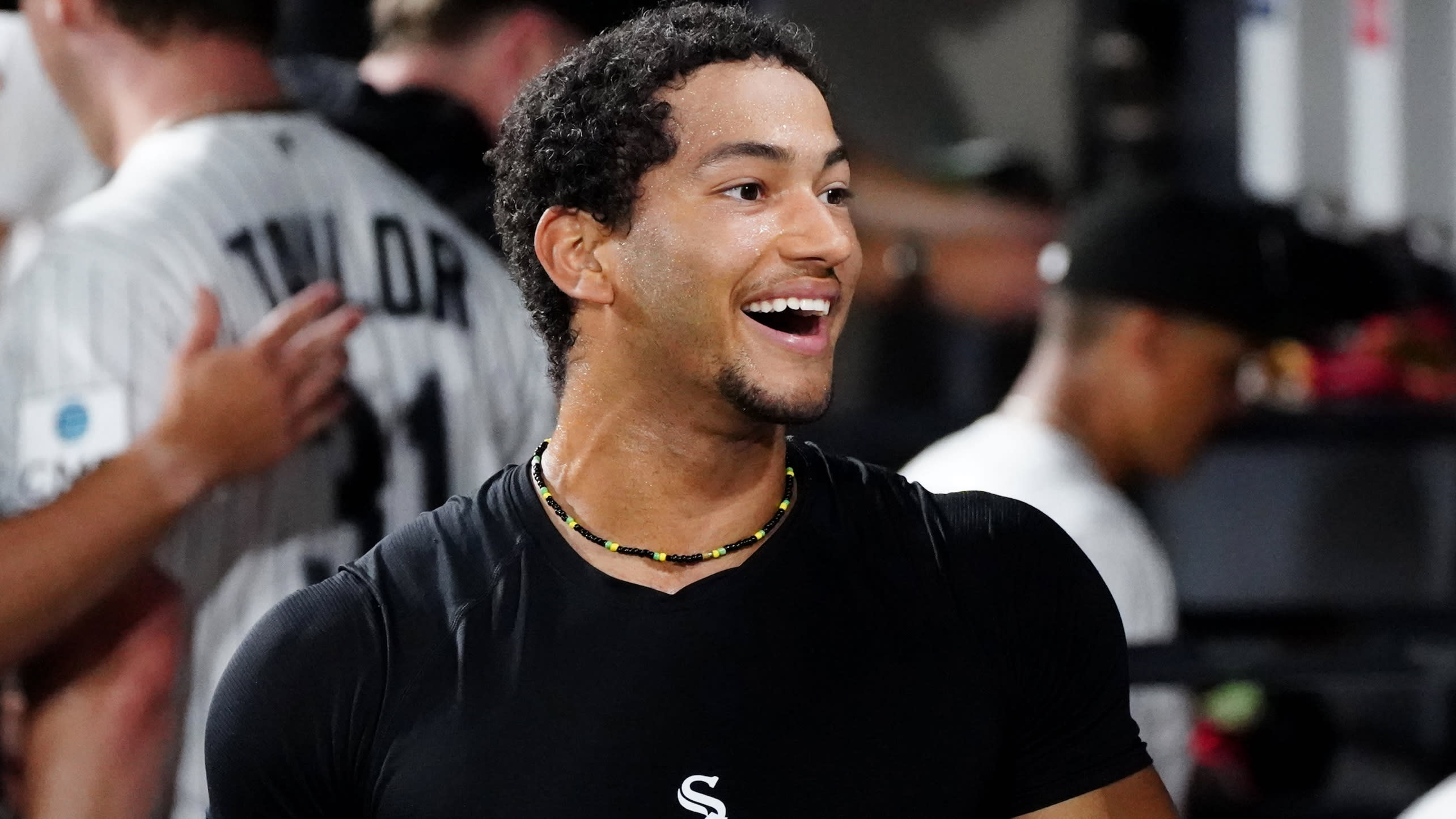
There are remarkable turnarounds, and there is what the 2026 White Sox are doing right now.
Chicago defeated old friend Chris Sale and the Braves on Wednesday night to take the first two games of its series against the team with the best record in baseball and climb into first place in the AL Central.
To say the White Sox have gone from worst to first kind of undersells their rapid ascent. Lest we forget that just two years ago, the South Siders were in the midst of what was, objectively, the losingest season in the Modern Era (since 1900) in terms of both losses (121) and win-loss percentage (.248). They got outscored by 306 runs.
They achieved a 19-win improvement last season, but they don’t hang banners for going 60-102.
However, there might be a divisional title in the White Sox future if they keep swinging it as well as they have. Of the 11 position players who received at least 200 plate appearances on that 2024 squad, only one (Andrew Benintendi) is a part of the current roster. That overhaul makes sense considering that ‘24 team was last in MLB in runs scored (507) and home runs (133).
And now? Good luck to opposing pitchers when they have to travel to Rate Field. The White Sox enter Thursday’s series finale against Atlanta (7:40 p.m. ET, MLB.TV) with the fourth-most homers (91) and the fifth-best OPS (.739) in the Majors. They then welcome the Dodgers for a three-game weekend set in Chicago, where the club’s 22-11 home record — tied with the Braves for the second-best mark in MLB — is largely due to a cast of young, potent bats.
Second-year shortstop Colson Montgomery, who hit 21 home runs in 71 games as a rookie, has 16 homers through 64 games this year. That’s tied with third baseman Miguel Vargas, whose breakout campaign has him looking every bit like an All-Star. Japanese sensation Munetaka Murakami is still tied for second in the AL with 20 dingers even though he hasn’t played this month due to a right hamstring strain.
Rookie Sam Antonacci (.387 on-base percentage) has been a pest at the top of the lineup. Outfielder Tristan Peters, who was acquired for cash from the Rays during the winter, has an OPS better than 1.000 across his previous 22 games. Outfielder Braden Montgomery, MLB’s No. 21 overall prospect, followed up his improbable debut from Tuesday with two more hits in Wednesday’s victory. And besides missing Murakami, the White Sox have also been without catcher Kyle Teel (hamstring strain/knee sprain) for the entire season, and he had a 121 OPS+ last year.
This offense is for real. The pitching? It could use some work, although starter Davis Martin has evolved into an ace and was stellar again last night.
But maybe the first-place White Sox will be buyers at this season’s Trade Deadline and fortify their staff. Who thought that would be the case two months ago, much less two years ago?
J-ROD = MVP?
The AL MVP Award has resided with Aaron Judge in three of the past four seasons. But with the Yankees captain on the shelf for a long while due to a fractured rib, that honor will most likely fall into other hands this year.
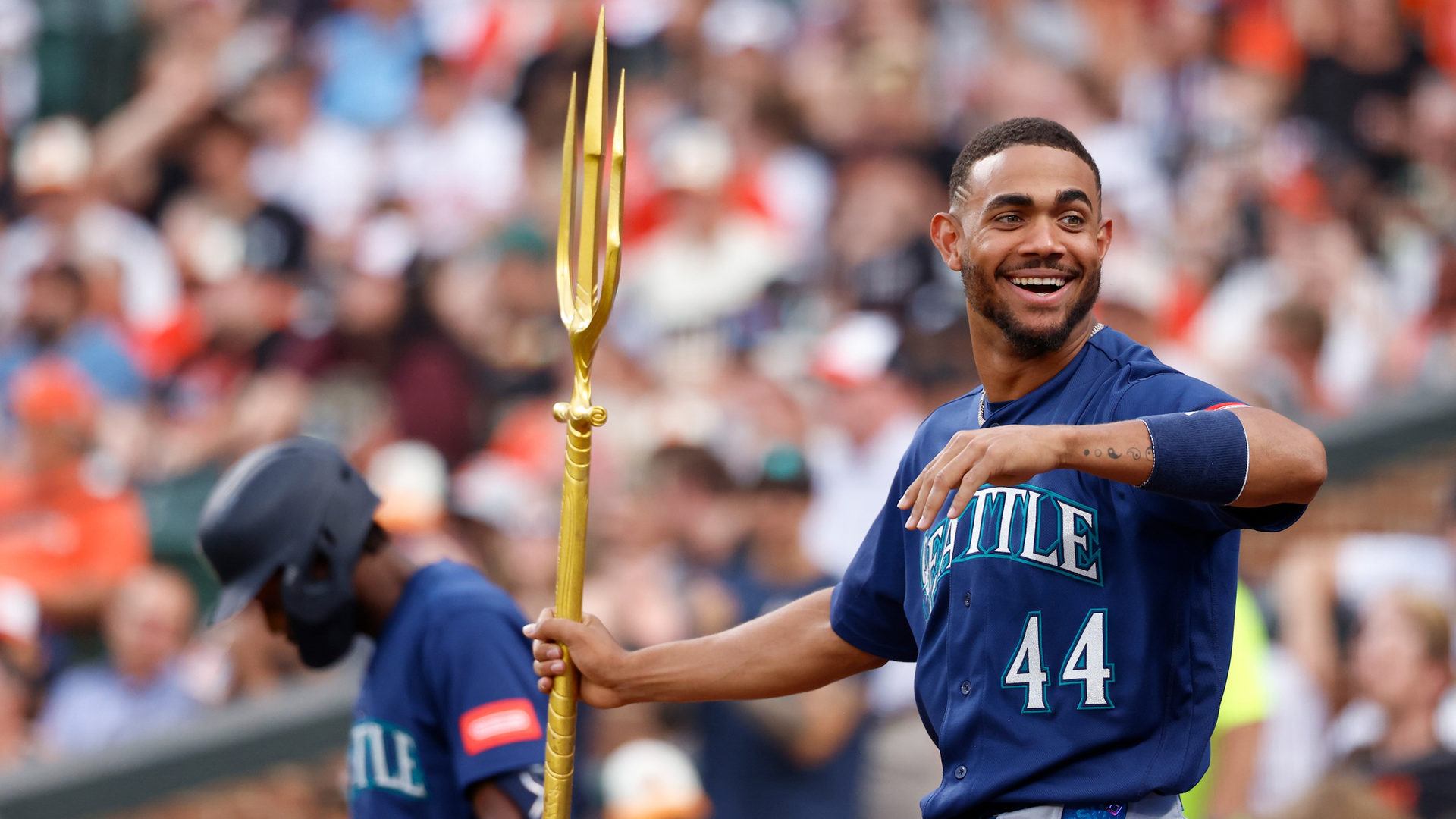
One candidate to watch is Mariners star outfielder Julio Rodríguez, and you can watch him tonight when the Mariners face the Orioles at 7:05 ET on ESPN.
To mention J-Rod as an MVP possibility even a few weeks ago would have been a wild take, considering that he got off to another one of his typical slow starts, when his bat was as frigid as the winter rain in Seattle. Even with a few good performances to close April, he entered May with a .254/.329/.349 slash line and two homers through 32 games.
But Rodríguez’s bat blossomed in May, highlighted by 10 homers and resulting in one of the best months of his five-year career. We usually don’t see J-Rod really turn it on until we’re closer to the All-Star break, but as MLB.com’s Thomas Harrigan explains, Rodríguez’s monster month could have him set up for a career-best season and a real run at that aforementioned hardware.
ANOTHER CHANGE AT THE TOP
Rodríguez, however, didn’t crack MLB.com’s latest Hitter Power Rankings, which were released today. So who did? Well, this month’s top 10 features a change at No. 1 for the fourth straight edition.
Also, there is a very (very, very, very) familiar name who rose up to No. 2 after going unranked last month.
Tarik Skubal will return this weekend! That, plus a wild walk-off Wednesday and a home run that was ready for its close-up are among a few more stories that you need to know.
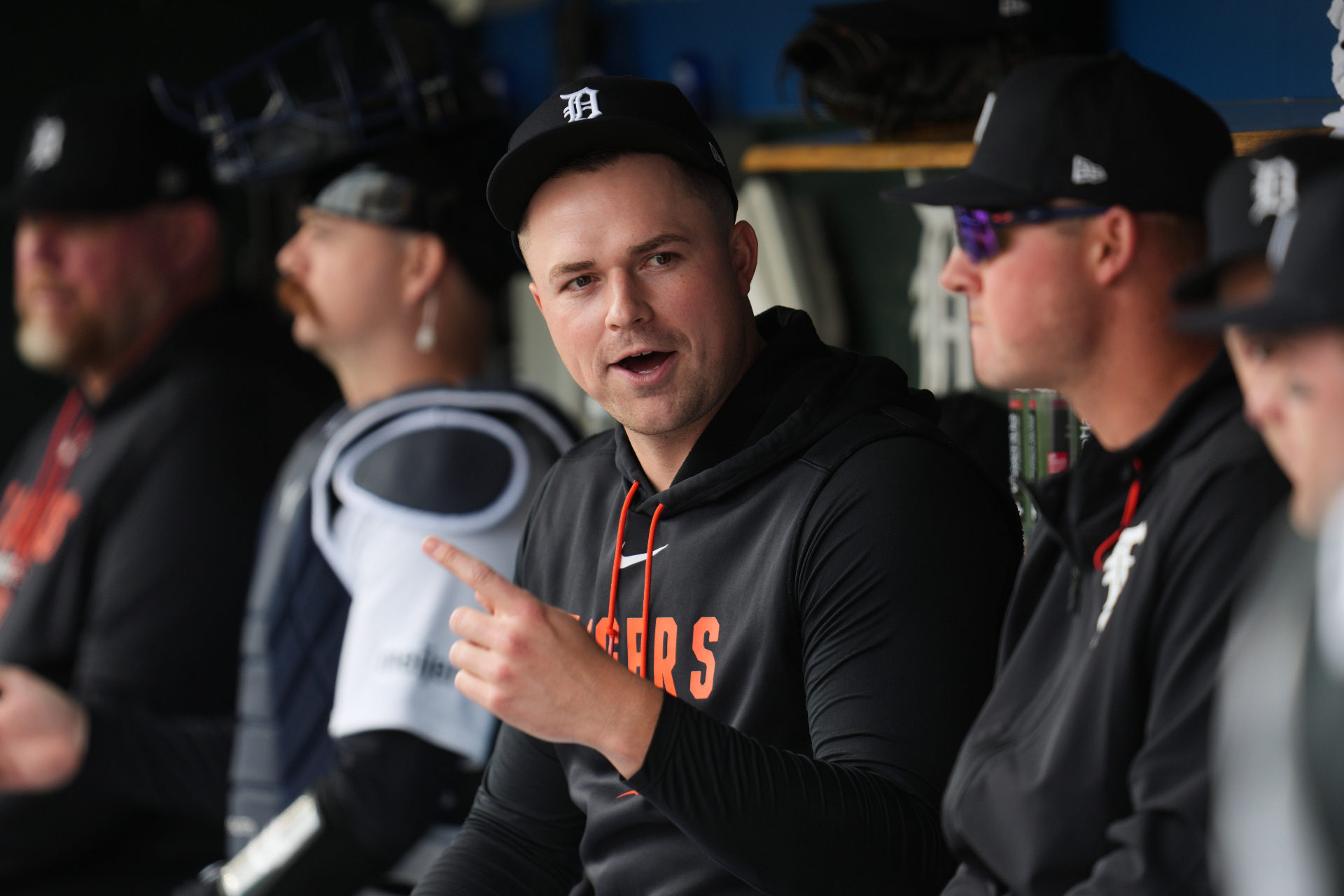
• What are you doing at 4:10 p.m. ET on Saturday? Set a reminder for the Tigers-Guardians game to witness Skubal’s return from the injured list. Tigers manager A.J. Hinch made the big announcement this morning: The reigning two-time AL Cy Young Award winner will be back on a big league mound just 38 days after undergoing surgery to remove a loose body from his left elbow. It’s obviously tremendous news for a Tigers team that has won seven of its first nine June games to pull within 5 games of a Wild Card spot.
• There were four walk-offs on Wednesday, but none more historic or zany than what took place in San Francisco between the Nationals and Giants. The Nats held a 9-1 lead in the bottom of the eighth. Game over? Think again! The Giants struck for five runs in that inning and five more in the bottom of the ninth to complete a crazy 11-10 comeback victory. It was punctuated by an “ultimate grand slam” from rookie Bryce Eldridge.
There’s a lot to take in, but in general, we can now see which pitchers/pitches disrupt hitters’ timing the most and create the most extreme whiffs.
Simply, we can see which pitches are the nastiest, the filthiest, the most unhittable in the sport. Mason Miller’s slider may very well be at the top of that list, but it’s far from the only pitch that can leave hitters shaking their heads in disbelief. Which other offerings stand out?
Welcome to The Pregame Lineup, a weekday newsletter that gets you up to speed on everything you need to know for today’s games, while catching you up on fun and interesting stories you might have missed. Today’s edition is brought to you by Brian Murphy.
“He missed that ball by a MILE.”
Every baseball fan has had that thought at some point or another, watching a hitter whiff hopelessly at a particularly nasty pitch.
Of course, hitters don’t literally miss the ball by a mile. But … how much DO they miss by?
For the first time ever, we can actually answer that question.
Baseball Savant has a brand new leaderboard for Swing Timing and Miss Distance. And there are a ton of cool new stats on there.
The biggest one is miss distance. And that measures, well, pretty much exactly what it sounds like: How far is the barrel of the bat from the ball on a swing-and-miss?
Thanks to Statcast’s tracking, we can also measure everything about where the bat is compared to the ball on a swing:
• Whether the hitter swings over the pitch, under the pitch or lines the pitch up
• Whether the hitter is late with his swing, early with his swing or right on time
• Whether the hitter gets jammed inside, flails at a pitch outside or centers the pitch on his barrel
These new stats let us answer all sorts of interesting questions. We can see which pitchers, and which pitch types, get hitters to whiff by the most. We can see which hitters have the best timing on their swings and perfectly make contact on the barrel. And much, much more.
Kershaw’s curveball was famously labeled “Public Enemy No. 1” by legendary Dodgers broadcaster Vin Scully, and even in his final season, that was still true. Kersh holds the honor of the biggest whiff tracked by Statcast thanks to his Cooperstown curve.
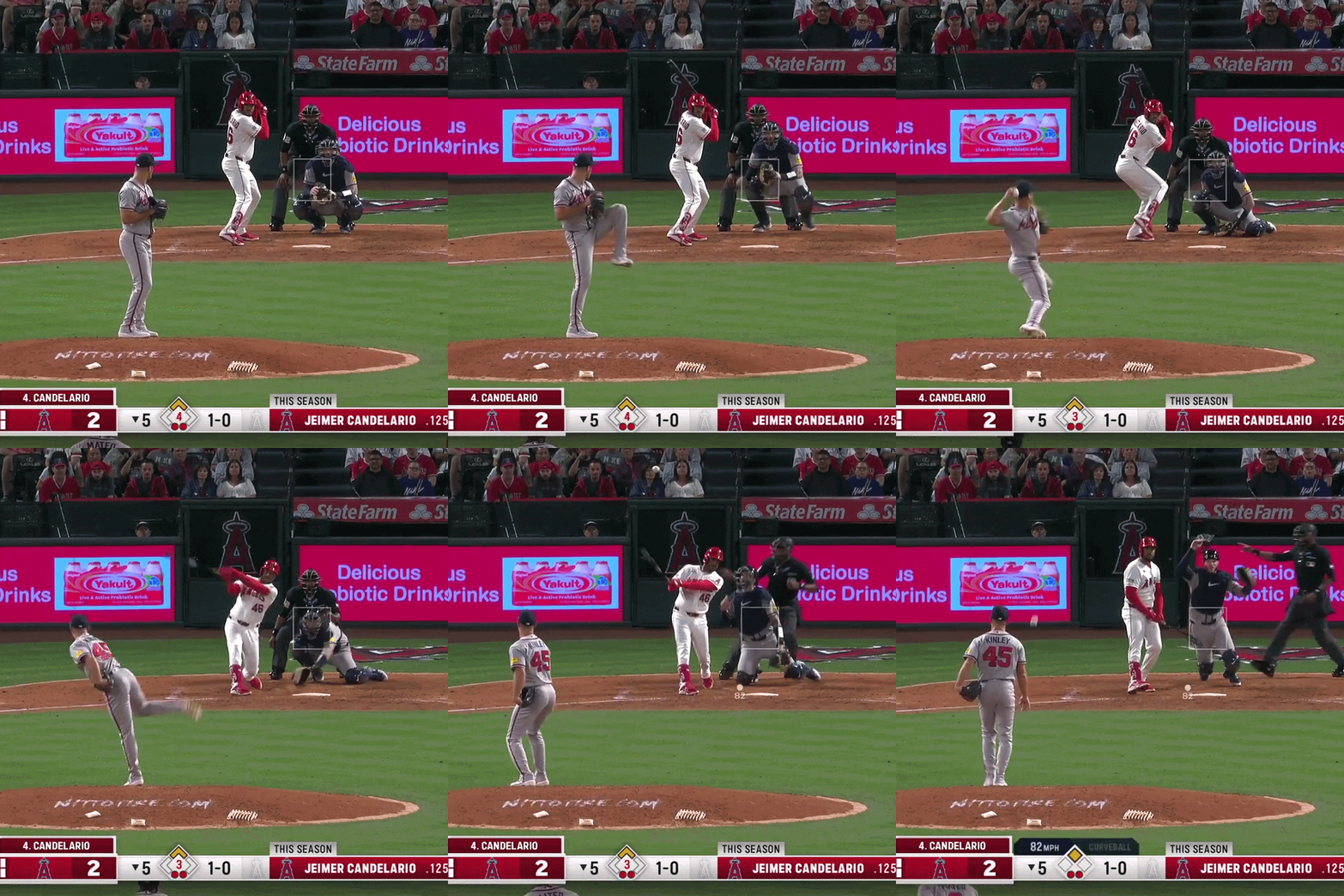
This one was a curveball in the dirt, too, and Candelario was just … looking for something else. He swung at this curve from Kinley like he was trying to hit a fastball down the middle. Heck, he probably was. He guessed, and he guessed VERY wrong. Hitting is hard.
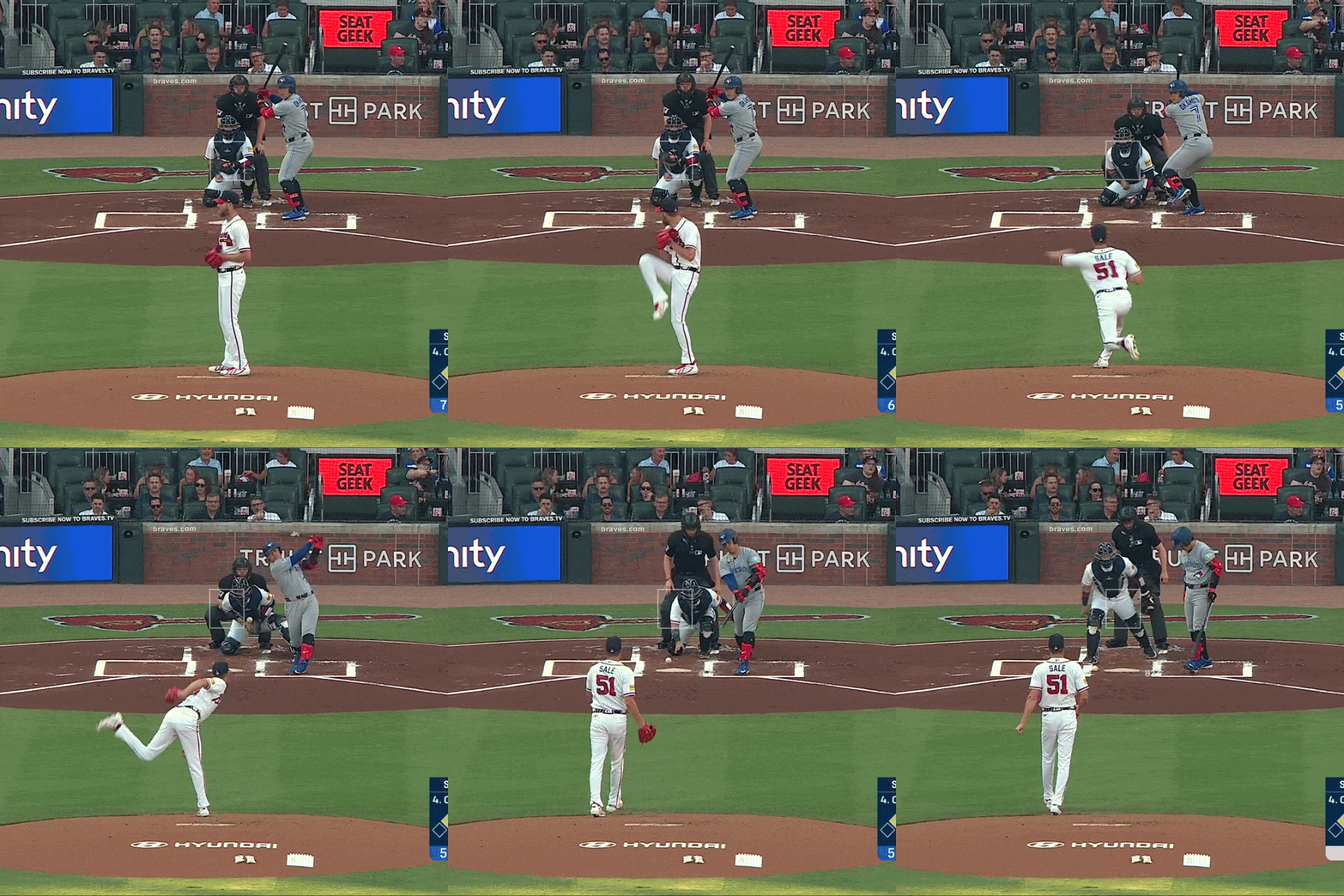
No. 3) Chris Sale: 47.8 inches vs. Kazuma Okamoto (June 4, 2026)
We’ve got two all-time great pitchers in the top 3 on the “biggest miss” leaderboard. You love to see it. The whiff here was on Sale’s slider, of course — the signature pitch for one of the best strikeout artists of this generation. Call it a “welcome to the Majors” moment for Okamoto.
Of course, it should be noted that this top-10 list was published on Tuesday. Several hours later, in the seventh inning of the Yankees-Guardians game, Cleveland reliever Tim Herrin buried a curveball in the dirt and completely fooled Paul Goldschmidt, who missed by a whopping 54.2 inches. That’s now the second-biggest miss on record, bumping Kinley.
Please excuse the, uh, miss. Goldy, we feel your pain.
“Everybody said we’d better get 500 more,” Freeman said after the win.
Five hundred more hits for one of baseball’s most consistent and durable batters certainly seems attainable. Since the start of 2018, the 36-year-old Freeman has played in 96.5% of possible games, and he is, naturally, MLB’s hits leader during that span. When might he get into the 3,000-hit club?
Freeman is on pace for 171 knocks this season, meaning he would end 2026 with 2,602 hits. Three more years of at least 150 knocks per year — something he has accomplished in every non-shortened season since ‘18 — would put Freeman at 3K sometime in 2029. And Freeman said recently that he intends to play through the ‘29 season.
“Hopefully, I can get there, but I only have one more year left on my contract, so you never know, and I also have four kids now,” he said Tuesday. “We’ll see what happens.”
Although Freeman is the first player to reach the 2,500-hit plateau since Robinson Canó in 2019, he may have company later this year; Astros star Jose Altuve is at 2,430 hits entering Wednesday. No other active player has as many as 2,300 hits.
GAMES OF THE NIGHT
Shohei Ohtani takes his 0.74 ERA to the mound in Pittsburgh tonight! But he’s not the only big-name pitcher we’ll be watching. For info on how to watch every game this season, go to MLB.com/Watch.
While Freeman continues his chase toward 3,000 hits, Shohei Ohtani looks to bolster his NL Cy Young case tonight. When we last saw him pitch, he was putting together a performance the likes of which we hadn’t seen in the Majors in more than 60 years. Those kinds of historic feats feel like just another day in the life of Ohtani, but we should never stop being amazed at his one-of-a-kind greatness.
Max Scherzer has waited about six weeks to get one monumental strikeout. That wait ends tonight, as he will make his first start since April 24 after dealing with right forearm tendinitis and left ankle inflammation. Scherzer’s next K will make him the 11th pitcher to reach 3,500 strikeouts. Only Justin Verlander (3,554) has more among active pitchers. The Phillies, who are 6-2 this month, will try to upset Mad Max.
Chris Sale vies for his ninth win of the season tonight against a lot of new faces wearing a very familiar uniform. The lanky lefty will face the White Sox, the team that made him a first-round Draft pick in 2010. This will be his second start against the White Sox since he became a Brave in 2024. (He did face them a handful of times with the Red Sox before that.) These young South Siders (35-31) could pose quite a challenge for the veteran ace, as their .772 OPS against southpaws ranks third in MLB.
AROUND THE LEAGUE
A storybook debut, another long ball barrage in Vegas and AUSL Opening Day headline a few more stories that you need to know.
• Here’s what White Sox outfielder Braden Montgomery, MLB’s No. 21 overall prospect, had to say about his big league debut last night against the Braves: “That was … I still don’t know what to say.”
You’ll forgive the 23-year-old for being at a loss for words since he had just become the fifth player to hit a walk-off home run in his first Major League game. Talk about making an immediate impact.
• After the Brewers and Athletics staged perhaps the wildest game of the season on Monday, the A’s went deep five more times in Tuesday’s victory in Las Vegas. There have been 17 home runs in the first two games between these clubs, so if you dig dingers, you’ve got to tune into tonight’s series finale from Las Vegas Ballpark (9:05 p.m. ET, MLB.TV).
• Back-to-back homers, including a grand slam. A championship rematch. A complete game. Franchise firsts for expansion teams. Those are just a few of the things that occurred during a tripleheader of games during the Athletes Unlimited Softball League’s Opening Day on Tuesday. Here’s your full recap.
Detmers posted a 6.70 ERA as a starter in 2024, then was moved to the bullpen the next year. This season, he has a 4.26 ERA across 74 innings. So, what’s the big deal for a guy who may soon be involved in a big deal?
ERA does not properly describe Detmers’ successful transition back into the rotation. Just consider where the 26-year-old ranks among qualified starters in MLB heading into his start tonight against the Astros (9:38 p.m. ET, MLB.TV, MLB Network):
7th in FanGraphs WAR (2.2) Tied for 5th in xERA (2.92) 8th in FIP (2.91)
Detmers’ strikeout rate (28.5%) is his best as a starter, while his walk rate (7.8%) is at a career low. And the former first-round Draft pick has not one, not two, not three, but four pitches that can leave batters swinging at nothing but air.
Brent Maguire has more on how Detmers has emerged as a pitcher to watch as we close in on the Deadline.
VOTE NOW FOR THE ALL-STAR GAME
Phase 1 of All-Star voting is open until Thursday, June 25, at noon ET.
“The aim of education is the knowledge not of facts but of values.”
— William Ralph Inge
Ivan Pentchoukov National Editor
Good morning! It’s Wednesday. Here are today’s top stories:
Benefits from the Supplemental Nutrition Assistance Program, commonly known as food stamps, went to 185,986 deceased people in 29, at an annual cost of $419.6 million, according to a new report from the federal government.
The House of Representatives passed a $72 billion bill on Tuesday to fund Immigration and Customs Enforcement and Border Patrol, sending it to President Donald Trump for his signature.
Democratic voters in Maine nominated oysterman and military veteran Graham Platner as their candidate to take on incumbent Sen. Susan Collins (R-Maine), locking in the nominees for one of the most critical Senate electionsof the 2026 cycle.
The United States launched retaliatory strikes against Iran on Tuesday after President Donald Trump accused Iran of downing a U.S. attack helicopter a day earlier.
🍵 Health: What no one tells you about contrast in CT and MRI scans.
A store displays a sign for Electronic Benefits Transfer (EBT) cards for Supplemental Nutrition Assistance Program (SNAP) purchases in New York City on Oct. 30, 2025. (Spencer Platt/Getty Images)
President Donald Trump’s anti-fraud efforts have brought renewed focus on issues plaguing the welfare system, including the millions of dollars in food stamps that are being sent to dead recipients.
The U.S. Department of Agriculture released a report last month stating that benefits from the Supplemental Nutrition Assistance Program, commonly known as food stamps, went to 185,986 deceased people in 29 states as of July 1 last year, at an annual cost of $419.6 million. It also reported an additional $3 billion in potential fraud, waste, and abuse.
On May 21, a federal jury convicted a man who stole the identity of Carlos Ramon Obregon, who was killed in a 1977 Los Angeles drive-by shooting. Decades after the 14-year-old’s death, the defendant used the dead teen’s identity to collect about $283,000 in government benefits, including SNAP benefits, Medicaid, Supplemental Security Income, and COVID-19 payments.
That’s just one example that the administration has outlined to highlight the issue. Here’s what to know about the problem of dead recipients, which has been lingering for decades.
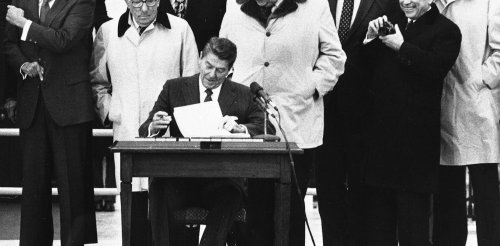
Trump directed federal agencies via executive order in March 2025 to ensure “unfettered access” to data from federally funded state programs such as SNAP, also known as food stamps.
In response, the USDA’s Food and Nutrition Service told state agencies on May 6, 2025, that all records associated with SNAP must be made available to the federal government.
“For years, this program has been on autopilot, with no USDA insight into real-time data,” Agriculture Secretary Brooke Rollins wrote in a letter to states.
Following the USDA’s demand for detailed information on food stamp recipients to review for fraud, a coalition of 21 states and the District of Columbia filed a federal lawsuit against the USDA, accusing the agency of unlawfully demanding massive amounts of sensitive SNAP recipient data. (More)
POLL
People shop at a grocery store in New York City on March 12, 2025. (Samira Bouaou/The Epoch Times)
Many Americans are concerned about the quality of the nation’s food supply. Questions have been raised about processed foods, sugar, food additives, genetically modified ingredients, and their potential impact on public health. The Epoch Times invites you to share your views on the state of American food and its impact on health and well-being.
The results will be featured in an article published this Saturday. (Take the Survey)
Steve Hilton speaks during a gubernatorial candidate forum in Sacramento, Calif., on April 14, 2026. (Godofredo A. Vásquez/AP)
POLITICS
Republican Steve Hilton secured enough votes in the race for California governor to advance to the general election in November. He will face Democrat Xavier Becerra.
Karmelo Anthony was sentenced to 35 years in prison over the fatal stabbing of 17-year-old Austin Metcalf during a high school track meet.
The Trump administration notified more than 500 hospitals that they must publicly post their prices as required by federal regulations or face fines that could reach $2 million per year.
The trust fund that Social Security uses to pay retirement benefits to tens of millions of Americans could run out by 2032 unless Congress acts, according to an annual trustees report released Thursday.
A Republican named Dan Sullivan is running against incumbent Republican Sen. Dan Sullivan for his Alaska Senate seat, and party officials are challenging the candidacy as an effort to help Democrat Mary Peltola.
LATEST NEWS
NASA and European Space Agency leaders gathered in Houston to unveil an all-star crew of astronauts assigned to the Artemis III mission and its challenge to bridge the gap between Artemis II’s historic lunar flyby and Artemis IV’s prospective lunar landing.
Texas is racing to contain a flesh-eating parasite that can infect animals and, more rarely, humans, causing horrific wounds that can be fatal if left untreated.
Artificial intelligence giant Anthropic released a “Mythos-class” model to the public on June 9, two months after the company rolled out the Mythos model only to a limited number of government and industry users over concerns it could be weaponized by the wrong people.
Prediction market platform Kalshi announced a series of upgrades to combat market manipulation and insider trading. The changes include employment verification requirementsfor certain bets and expanded whistleblower reporting tools.
Harley-Davidson is planning to move production of its Revolution Max engine back to the United States, years after shifting some of that work in Thailand.
Merck is settling a lawsuit that went to trial in 2025 and alleged its human papillomavirus vaccine caused a number of health problems, including Postural Orthostatic Tachycardia Syndrome.
A federal judge has deemed Decarlos Brown Jr. incompetent to stand trial for the fatal train stabbing of 23-year-old Ukrainian refugee Iryna Zarutska last year.
Advertiser’s Note:
From the moment of conception, the right to life should be protected.
For many Americans, there is no debate. Abortion is wrong, and every effort should be made to outlaw it.
Students for Life is conducting an urgent national poll to gauge the enthusiasm of pro-lifers as the 2026 Midterms heat up.
The Ateela 2 Oil Tanker boat navigates the sea on Qeshm Island, Iran, in the Strait of Hormuz, on April 28, 2026. Asghar Besharati/Getty Images
WORLD
The U.S. military disabled an oil tankerin the Gulf of Oman that violated its naval blockade of Iranian ports.
The population engaged in “flexible employment” in mainland China has exceeded 300 million, according to a recent report. Observers told The Epoch Times that by rebranding gig workers, temporary staff, and platform-based workers as those with “flexible employment,” China’s ruling Communist Party is using statistical rhetoric to downplay the persisting high unemployment issue.
OPINION
The Murder of Henry Nowak and the Poverty of the ‘Far-Right’ Explanation—by Patrick Keeney (Read)
The Life and Times of Igor Stravinsky’s Firebird Suite—by Jeffrey A. Tucker(Read)
The Iran Conflict Is Currently Neither War nor Peace, but One Side Holds All the Cards—by Conrad Black (Read)
The Executive Order That May Change the Vaccine Debate Forever—by Dr. Robert Malone (Read)
The Patrouille de France conducts a flyover above the Statue of Liberty in New York Harbor in commemoration of the 250th anniversary of American independence, in New York City, on June 9, 2026. (Angela Weiss / AFP via Getty Images)
📸 Day in Photos: 250th Independence Flyover in New York, Taiwan Army Rocket Exercise, and Capitol Hill Bear (Look)
🚽 (Sponsored) Waking up to pee every night?It may not be age. A new report reveals an overlooked cause of nighttime urgency and the simple approach adults are using to support better bladder control, fewer bathroom trips, and more restful sleep. Learn More *
🎙️ Podcast: Chinese Researcher Who Smuggled E. Coli Into US Gets 4 Months in Prison—Facts Matter (Listen)
💛 Inspiration: Set amidst majestic Himalayan peaks, this Tibetan dance expresses gratitude for life and a deep reverence for the divine. (Watch)
🎵 Music: Mozart – Sonata In B Flat, KV 31 (Listen)
📊 (Sponsored) You’ve been selected! Will you please participate in the urgent national poll right away? [POLL] Is Abortion Murder? Answer here >>
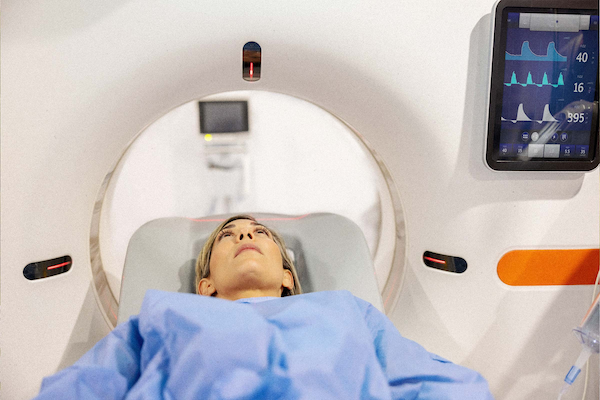
Regina Chennault felt the burningthe moment the contrast entered her vein. The MRI came after a devastating car crash on the way to MD Anderson Cancer Center. She and her 12-year-old son, who was battling Stage 4 cancer, had been driving to his treatment when a drunk driver slammed into their car. Chennault, a trauma surgeon, lost movement in her right arm and suffered multiple spinal injuries.
Over the next several years, she underwent 15 MRIs, 12 with gadolinium-based contrast. As her symptoms worsened, doctors ordered more tests, including CT scans with iodinated contrast. Her thinking became clouded. Simple tasks, such as tracking her son’s medications, became difficult. Her skin burned. Her hair fell out in clumps. Her kidneys slowed.
“I was told in medical school that gadolinium was safe, like ultrasound,” Chennault, who trained at the Texas Medical Center, told The Epoch Times. “That was a lie that lasted 25 years.”
Every year, millions of people undergo CT and MRI scans with contrast agents. These are not simply dyes but drugs, each with its own risks, clearance timeline, and trade-offs. Yet most patients leave the imaging center knowing almost none of this.
Lack of information about the drugs can make people wonder whether they need to “detox.” In most cases, they do not. The strongest protection is asking informed questions before the scan. Afterward, the best support is usually simple and includes knowing what to watch for.
For most people with healthy kidneys, iodinated CT contrast is eliminated rapidly—nearly all of it leaves the body in urine within about 24 hours, according to the American College of Radiology. The main concern is not long-term retention but whether the kidneys can handle the temporary load and whether an allergic reaction occurs. (More)
🎲 Games
Spot the Difference is our readers’ favorite. Play it here.
Our mailing address is: The Epoch Times, 129 West 29th Street, Fl 8, New York, NY 10001 | Contact Us
Our Morning Brief newsletter is one of the best ways to catch up with the news. Manage your email preferences here or unsubscribe from Morning Brief here.
*Disclaimer: The opinions expressed in this advertisement are exclusively those of the advertiser and do not represent our views or positions. This material is promotional in nature and should not be mistaken for news, research or editorial content.
Gosar Applauds Committee Passage of Yuma Defense Readiness Act
WASHINGTON, D.C. — Congressman Paul Gosar, DDS (AZ-09) issued the following statement after the House Natural Resources Committee approved H.R. 8686, the Yuma Defense Readiness Act, during today’s markup:
“The House Natural Resources Committee’s passage of H.R. 8686 is a major win for military readiness, national security, and Arizona.
The Yuma Proving Ground in my district is one of the premier testing and training facilities in the world and generates more than $1.1 billion in economic activity for western Arizona. As the only facility capable of supporting high-altitude flight testing for next-generation defense technologies, it is critical that our warfighters have the space and resources necessary to prepare for evolving threats.
My legislation expands the Proving Ground’s safety zone, establishes a clearer and safer boundary for Yuma residents, and strengthens America’s defense capabilities while supporting a vital economic engine for our region.
I thank Chairman Westerman and my colleagues on the Committee for advancing this commonsense, bipartisan legislation. I look forward to securing its passage on the House floor and urge my colleagues to support our brave servicemembers and this important national security measure,” stated Congressman Paul Gosar.
“A strong national defense begins with ensuring our military has the space and certainty needed to train and test the technologies that keep America safe. H.R. 8686 withdraws and reserves public lands adjacent to Yuma Proving Ground, helping support critical military operations while reducing conflicts with incompatible development. I appreciate Rep. Gosar’s efforts to strengthen military readiness and reinforce the long-term mission of one of our nation’s premier testing and training facilities,” added House Natural Resources Committee Chairman Westerman.
Background:
H.R. 8686 authorizes the withdrawal and reservation of approximately 22,000 acres of federal land adjacent to the Yuma Proving Ground to enhance military testing and training operations while improving public safety and land management.







































 RJ Hamster