I was born on 6 August 1956 in San Francisco, California to Janet and (the late) Richard Hovis.
I grew up in Santa Monica, California where I attended elementary, junior high school, and high school (graduating in 1974), in addition to involvement in sports and recreation (Little League +, the Boy’s Club ++). Further, it was in elementary school – St. Augustine’s By-the -Sea Parish School that I found, and made the choice to truly journey with God.
I attended Arizona State University from 1974 to 1977 – seeking to become an architect, however, I was not accepted, and, as such, I graduated with a Liberal Arts degree.
Upon graduation from Arizona State University, I attended Cal Poly San Luis Obispo and studied City and Regional Planning at the Master’s level. I successfully completed one (1) year in a two (2) year program – I did not complete the Master’s degree in City and Regional Planning – due to personal reasons.
I returned to Santa Monica where I started (October 1979) my career as graphic designer with Exxon Company, USA. I spent five years with Exxon Company, USA.
While working with Exxon Company, USA I was accepted into architectural school – Sci-Arc in Southern California, however, I did not attend preferring to stay with Exxon..
In 1982 I married Laura Flosi and in April 1983 we had our one and only child – Lauren Alain Hovis – a gift from God.
We moved to Phoenix, Arizona in 1984 from Los Angeles, where I went to work as a graphic designer with Kitchell CEM (from 1985 -1987).
From 1987 – 1995 I was an independent contractor, and a registered representative in mortgage finance, financial management, graphic design, and drafting.
Further, I attended the University of Phoenix and successfully obtained a Master’s in Business Administration (MBA) in 1982.
I was also a member of the Scottsdale Jaycees, where I became very involved in community events and projects.
In 1994, I accepted a cartography position with the Defense Mapping Agency in Reston, Virginia. As such, I relocated from Phoenix to Reston.
In 1998, I was accepted and worked as a Visual Information Officer with the Central Intelligence Agency. In 2002, I worked as a Support Officer until my retirement (due to a need for shoulder surgery) in September 2018.
Away from my Federal Government service, I have been involved in various organizations and activities in Northern Virginia.
In November of 2011, I married Rebecca Ouellette in Santa Monica, California. I reside in San Tan Valley, AZ with my two hamster - Jess and Timothy, our fish, our lizard - RJ Lizard., and our cats - Pearl and Grey.
As to hobbies, I enjoy playing sports, attending sporting events, mentoring individuals from financial management to hamsters, building models, photography, travel, multimedia design, managing partner for RJ Hamster, and jazz – smooth jazz to a samba or a bossa nova.
Love and God Bless,
Peter – aka RJ Hamster Jo hi
Happy Friday! You made it through another hot one. 🥤 Grab something cold, find a shady spot, and catch up on what is happening around the San Tan Valleu area. Here is your weekly roundup.
Did You Know?
Looking for something to do? Visit santanvalley.com/events to discover what’s happening throughout the San Tan Valley area.
The San Tan Valley Town Council set annual pay for the town’s future elected leaders at its July 15 meeting: $45,000 for the mayor, $35,000 for the vice mayor and $30,000 for each councilmember.
San Tan Valley area residents looking for work can spend a full day sharpening their job search and meeting employers at Get Hired 2026, a workshops-and-career-fair event hosted by ARIZONA@WORK Pinal…
Be sure to scroll down to the bottom of the page to see if there are any upcoming zoning meetings that you may be interested in.We’ve received a number of requests requesting information about…
The Town of San Tan Valley will hold a public hearing Wednesday on its first annexation request — about 3.3 acres at the southwest corner of Gantzel Road and Lone Star Lane, where developers want to…
Jack W. Harmon Elementary School will hand out more than 400 free backpacks, free haircuts and free school supplies at its annual Back to School Night on July 22.
San Tan Valley area families can shop for free clothing, shoes, backpacks and school uniforms at an annual community clothing drive Saturday, July 18 — and the nonprofit behind it needs donations and…
Dave Gilbert Loescher, 58, of Florence, is in custody for the hit-and-run crash that killed a 23-year-old woman Friday on Hunt Highway in the San Tan Valley area, the Pinal County Sheriff’s Office…
Dr. Karin Hilgersom will serve as interim president of Central Arizona College beginning Monday, July 13, the college’s Governing Board announced July 7. She will lead the college on a temporary…
Own a local business in the San Tan Valley area? Claim your free listing in our business directory. It takes about two minutes, and your listing goes live with our new site on August 1.
Love a local business?Forward this email so they get listed too.
🤣Friday Funnies🤣
Do you have a great Dad joke? 🤣
➡️ Reply back and your joke just might be featured next week!
Proud Community Partners
Looking for things to do in the upcoming week? Here are a few highlights from our events calendar. Don’t forget to check out the full events calendar at https://santanvalley.com/events to make sure you’re not missing out on anything.😀
We’ll be on the lookout for all kinds of evening-active critters, from skunks to spiders, snakes, fox, coyote, deer, owls and of course scorpions…DateThu, Jul 16, 07:30 pm
Come as you are! Our monthly come-and-go event is open to anyone in the community — no questions asked. Stop by anytime between 10AM–5PM and pick…DateSat, Jul 18, 10:00 am
Are you a Mahjong junkie? Have you played online and always wondered how it would be to take part in a live game? Join our fabulous group of Mahjong…DateSat, Jul 18, 11:00 am
Looking for a fun way to spend your Saturday afternoon? Bring the whole family and join the community for Family Game Day at the San Tan Valley…DateSat, Jul 18, 01:00 pm
San Tan FEASTival takes place every 3rd Saturday every month, right here in San Tan Valley, bringing together food, music, and family-friendly fun in…DateSat, Jul 18, 05:30 pm
Join Ranger Shaun for a desert excursion in the dark! Set off just after sunset to (hopefully) dodge the heat and catch the night shift showing up…DateSat, Jul 18, 07:30 pm
San Tan Leads is a San Tan Valley based, one-person per-industry professional business leads group. Founded in 2008, the group meets every Tuesday…DateTue, Jul 21, 07:30 am
Trader Chris Pulver says a new SEC document dropping the day-trading limit to $2,000 has created the biggest retail opportunity he has seen in over 30 years.
His strategy targets what he calls Flashpoints – moments when market makers must move billions of dollars on the S-P 500 in a narrow window. Research shows one recent signal would have returned 83.7% in 36 minutes and another 62.8% in 51 minutes.
Lance Ippolito flew to Utah for a full breakdown of the method.
Sean Allison is hosting a free presentation on what he calls the Zero-Dollar Trade Advantage – a trading approach designed to help everyday investors participate in the market more strategically.
Whether you trade daily or occasionally, this session is built to offer a concrete alternative perspective – not a pitch, just a method.
CompanyShare PriceAmount / PeriodYieldPrevious AmountPayout RatioPayable DateCATCaterpillar$892.18$1.63 quarterly0.76%$1.5130.1%8/19/26 CLColgate-Palmolive$93.64$0.53 quarterly2.37%$0.5382.5%8/14/26 DOCHealthpeak Properties$22.42$0.10 monthly5.65%$0.10381.3%7/31/26 GGGGraco$75.11$0.30 quarterly1.58%$0.3038.4%8/5/26 OCOwens Corning$144.06$0.79 quarterly2.47%$0.79-47.8%8/6/26 PNCThe PNC Financial Services Group$253.61$2.00 quarterly3.13%$1.7039.5%8/5/26 ZTSZoetis$75.84$0.53 quarterly2.66%$0.5335.2%9/1/26 Please note you must purchase shares of these companies by the market close today to receive the next dividend payment.[How To] Become Your Own Bank (ad)
On January 24th, 2022, Bank of America told Bloomberg something that should terrify every American with a savings account… The digital dollar is inevitable. Think about what this means… When the digital dollar goes live, every dollar you saved could suddenly be trackable at the transaction level.
Imagine the worst case scenario: You’re now subject to new digital withdrawal limits and spending restrictions. Your account can be frozen remotely without court approval.
But here’s what Bank of America didn’t say: There’s still a way to protect your wealth before this digital prison locks. While everyone else gets trapped in the digital system, my research team has been positioning members outside that reach… completely under their own control. No government tracking. No withdrawal limits. No remote freezing.
CompanyShare PriceAmount / PeriodYieldPrevious AmountPayout RatioPayable DateCARRCarrier Global$69.26$0.24 quarterly1.40%$0.2463.2%8/10/26 CMRECostamare$14.89$0.13 quarterly3.56%$0.1217.2%8/6/26 DACDanaos$126.82$0.90 quarterly2.87%$0.9012.7%7/30/26 DELLDell Technologies$397.52$0.63 quarterly0.62%$0.6320.0%7/31/26 Please note you must purchase shares of these companies by the market close tomorrow to receive the next dividend payment.You’ve Got to See This Pattern Before 2025 Picks Up… (ad)
Your Access to Private Market Briefings Begins Here
Stock Wire News delivers select early alerts typically seen only by advanced traders.
These briefings focus on speed, clarity, and high-urgency setups.
CompanyShare PriceAmount / PeriodYieldPrevious AmountPayout RatioPayable DateAPAAPA$34.72$0.25 quarterly2.54%$0.2523.3%8/21/26 LEVILevi Strauss & Co.$24.52$0.16 quarterly2.63%$0.1434.6%8/5/26 LOWLowe’s Companies$212.81$1.25 quarterly2.33%$1.2040.6%8/5/26 Please note you must purchase shares of these companies by the market close tomorrow to receive the next dividend payment.
Dividend Stock Ideas
This is a list of companies that meet common criteria that investors use to evaluate dividend stocks. This list contains companies that have dividend yields greater than 3%, payout ratios of less than 75% (or less than 100% for REITs), five-year average annual dividend growth of at least 1.5% and a minimum market cap of $1 billion.CompanyDividend YieldAnnual PayoutPayout RatioAnnual Dividend GrowthP/E RatioMarket CapTBCGTBC Bank Group PLC5.45%GBX 1,067.0141.39%5.29%1.83£2.60KFSKFS KKR Capital Corp.27.00%$1.68N/A1.81%N/A$3.06KBGEOLion Finance Group PLC4.54%GEL 1,622.5831.57%4.90%2.21GEL489.05KEFCEllington Financial Inc.11.39%$1.5693.98%4.36%8.16$1.70KWPPWPP plc5.47%GBX 31.90N/A4.75%N/A£3.03KPRGOPerrigo Company plc10.39%$1.16N/A5.21%N/A$1.48K
Thank you for subscribing to DividendStocks.com’s daily newsletter!
DividendStocks.com provides a daily email newsletter for dividend and income investors that covers ex-dividend stocks, new dividend declarations, dividend stock ideas, and the latest market news. DividendStocks.com is a subsidiary of MarketBeat Media, LLC and MarketBeat.com.
If you need assistance with your newsletter, please email our South Dakota based support team at contact@marketbeat.com.
Why Abbott Laboratories Stock Is Suddenly Winning Back Wall Street
Written by Thomas Hughes on July 16, 2026
Key Points
Abbott Laboratories posted solid Q2 results, with 13% reported growth and 4.8% organic growth, showing Exact Sciences integration is proceeding better than expected.
Adjusted EPS of $1.31 beat forecasts, and improved earnings guidance alongside limited margin contraction boosted investor sentiment and the share price.
Abbott maintains strong capital returns as a Dividend King with a 2.8% yield, supported by broad institutional buying and firming analyst price targets.
Abbott Laboratories (NYSE: ABT) gave the market what it wanted in its Q2 earnings report, affirming that the Exact Sciences acquisition was a good one. The critical takeaways are that comp growth is solid, the Exact Sciences business has traction, and the near-term margin impairment the acquisition brought is less than expected.
Looking forward, profitability metrics have improved, leading to improved guidance, strengthened market sentiment, and a robust rebound in the share price.
The share price rebound is an operative factor in the second half of 2026. Abbott’s market was overly depressed, given its historical value and capacity for capital returns, signaling a buying opportunity for investors.
The post-release surge not only confirms support at the existing lows but is also backed by MACD and stochastic signals, suggesting a full reversal is in play. The market completely misjudged the Exact Sciences deal, focusing too intently on near-term margin pressure and execution risk, rather than the long-term commercial impact on revenue, margins, and earnings.
Alexander Green bought Apple in 1996, recommended Nvidia at a split-adjusted 66 cents in 2004, and picked up Amazon and Netflix under $3 per share in 2005.
Abbott Laboratories Q2 Report a Balm for Frayed Investor Nerves
Abbott Laboratories’ Q2 report is solid, with reported growth of 13% and organic growth of 4.8%. Strength was underpinned by Exact Sciences and the 42.3% increase in Diagnostic services it brought, aided by an 8.4% increase in Established Pharmaceuticals and a 7.9% increase in Medical Devices. Nutrition, among the smaller segments, declined by 3.1%. Regionally, strengths were seen domestically and abroad.
Margin news was the catalyzing factor. The company’s margins contracted but less than expected, leaving gross margin, operating and net income above analysts’ forecasts. The critical takeaway is that $1.31 in adjusted earnings per share (EPS) outperformed by 235 basis points and is sufficient to sustain financial health while reinvesting and returning capital to shareholders.
Guidance is another catalyzing factor for back-half trading. The company maintained its forecast for organic revenue growth but improved the outlook for earnings, lifting the midpoint and narrowing the range for full-year results. With momentum building and results forecasted to accelerate in the back half, the guidance is likely to be cautious, setting the stage for additional catalysts by year’s end.
Abbott’s Capital Return Outlook Improves
Abbott’s capital return was never in any real danger, but the threat of margin compression and cash flow impairment was sufficient to weigh on sentiment. The takeaway from the Q2 release, however, is that concerns are misplaced. Capital returns will continue to flow, including the dividendand share buybacks, and buybacks may accelerate.
As it stands, Abbott is a Dividend King with nearly 55 consecutive increases to its credit, a manageable 70% payout ratio, and buybacks to offset the impact of annual increases and build shareholder leverage. The dividend yield is more than attractive, as of mid-July, at a historical high of approximately 2.8%, and Q2 buybacks reduced the count by 0.45%.
Gold is hitting record highs, but most investors are leaving income on the table. A $15 fund is quietly paying out up to $1,152 a month to regular investors – no mining stocks, no options, no physical metal required.
Analysts and Institutional Trends Reveal Optimistic Support for ABT Shares
Analysts’ trends reflect the dividend safety and deep value opportunity presented this year. While price targets have moderated, the market overreacted and moved below the low end of the target range. Price targets suggest a floor near $90, with potential for substantial upside at the consensus. Valuation metrics suggest the upside will run into the triple digits over time.
The likely outcome is that analysts’ price targets begin to firm, increasing conviction in the consensus and potential for a full stock price recovery. Until then, institutional activity suggests this group limits risk in 2026, owning more than 75% of the shares and buying on balance. Buying is broad-based, including funds, mutual funds, public retirement accounts, and private wealth managers.
Abbott’s risks center on legacy issues related to its baby formula business, competition in the MedTech sector, and the integration of Exact Sciences. Integration risks now appear limited, given the Q2 release and guidance update, leaving competition and legacy issues as the primary hurdles. Competition is being mitigated through pipeline investment, with numerous positive developments reported this quarter. Legacy issues relate to baby formula manufacturing processes, regulatory scrutiny, and the unresolved legal issues they bring.
This year’s catalysts include the successful integration of Exact Sciences, the revenue and margin boost from Cologuard, and the expansion of Medtech wearables. Libre Duo, the world’s first dual glucose/keytone monitoring system, received the EU’s CE Mark, enabling its sales throughout the region, while pipeline news includes advances in two critical cardiovascular devices. What the market gets wrong is that ABT isn’t just a legacy healthcare company and bond proxy but an innovative med-tech company expanding margins while investing in growth.
Thank you for subscribing to DividendStocks.com’s daily newsletter for dividend and income investors that covers ex-dividend stocks, new dividend declarations, dividend stock ideas, and the latest market news.
If you need help with your subscription, please don’t hesitate to contact MarketBeat’s South Dakota based support team at contact@marketbeat.com.
If you no longer wish to receive email from DividendStocks.com, you can unsubscribe.
Copyright 2006-2026 MarketBeat Media, LLC. All rights reserved. 345 N Reid Place, Sixth Floor, Sioux Falls, SD 57103-7078. United States of America..
Welcome to The Pregame Lineup, a weekday newsletter that gets you up to speed on everything you need to know for today’s games, while catching you up on fun and interesting stories you might have missed. Today’s edition is brought to you by David Adler.
So what’s the deal? For one thing, lefties are really on the rise. There used to be way more right-handed hitters than left-handed hitters around the Majors, but now the split is nearly 50-50.
And there just aren’t as many good right-handed hitters available as usual. Even some of the biggest names we thought might be available, like Mike Trout and Byron Buxton, probably won’t be after all.

So who is out there? Here are some potential options for those righty-needy teams:
Cardinals C/DH Iván Herrera: If he’s on the market, he’s a great bat to go get. The only problem is, the Cards are in the thick of the NL playoff race right now.
Orioles OF Taylor Ward: He’s reinvented himself from an all-or-nothing slugger into a high on-base guy, and is a clear trade candidate since he’s set to become a free agent at the end of the season.
Twins C Ryan Jeffers: He has a track record of being an above-average hitter and is a very obvious fit for the Yankees.
Giants OF Heliot Ramos: Left-handed-hitting teammate Luis Arraez is getting most of the trade buzz, but Ramos could fit the needs of even more teams as a righty slugger.
Angels OF Jo Adell: We don’t know if the Angels will operate as sellers, and Adell is a polarizing player, but his elite bat speed gives him high home run upside.
Now that we’re in the second half of the season, it’s really time to start thinking about the playoff races. And right out of the gate, we have a bunch of series this weekend with big postseason implications.
Brent Maguire ranks the biggest ones here. If you’re trying to decide which games to watch this weekend, start with these.
The 51-46 Guardians are neck-and-neck with the 50-45 White Sox for the AL Central lead. The surprising Pirates are 50-47 and just out of a Wild Card spot in the NL. Tonight’s series opener features Pirates fireballer Jared Jones against Guards ace Gavin Williams. Paul Skenes pitches Sunday’s series finale.
This four-game rivalry series at Fenway Parkgot underway this afternoon with the best team in the American League (the Rays) facing the hottest team in the American League (the Sox). Tampa Bay is trying to hold off the Yankees in the AL East race, while Boston ended the first half on a 14-2 run and is now just a half-game out of a Wild Card spot.
The Braves’ lead over the Phillies in the NL East has dwindled to 2 1/2 games, and even the Marlins aren’t far behind. The Rangers start the second half holding onto first place in a wide-open AL West, with the Mariners and Astros also jockeying for pole position.
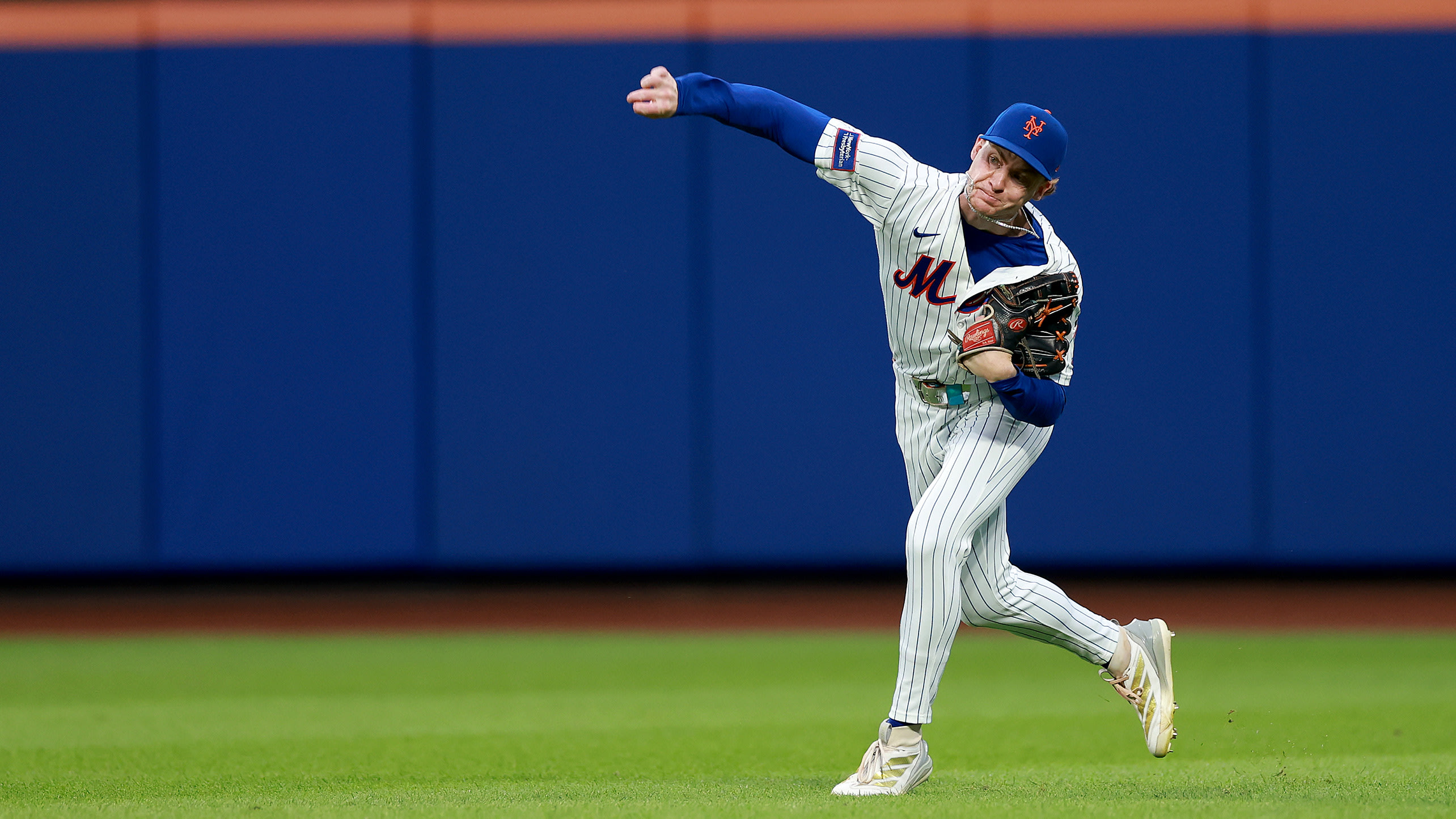
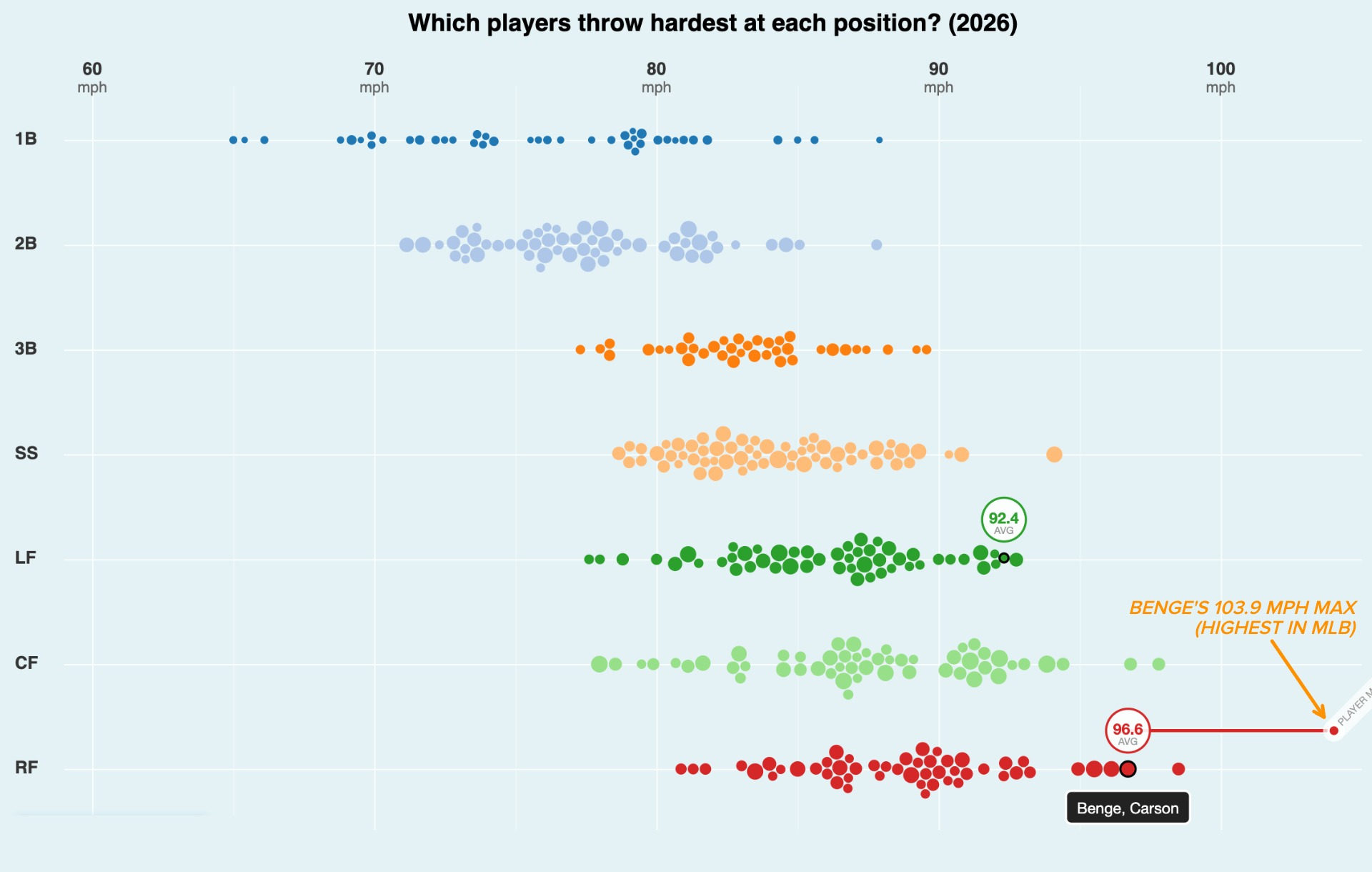
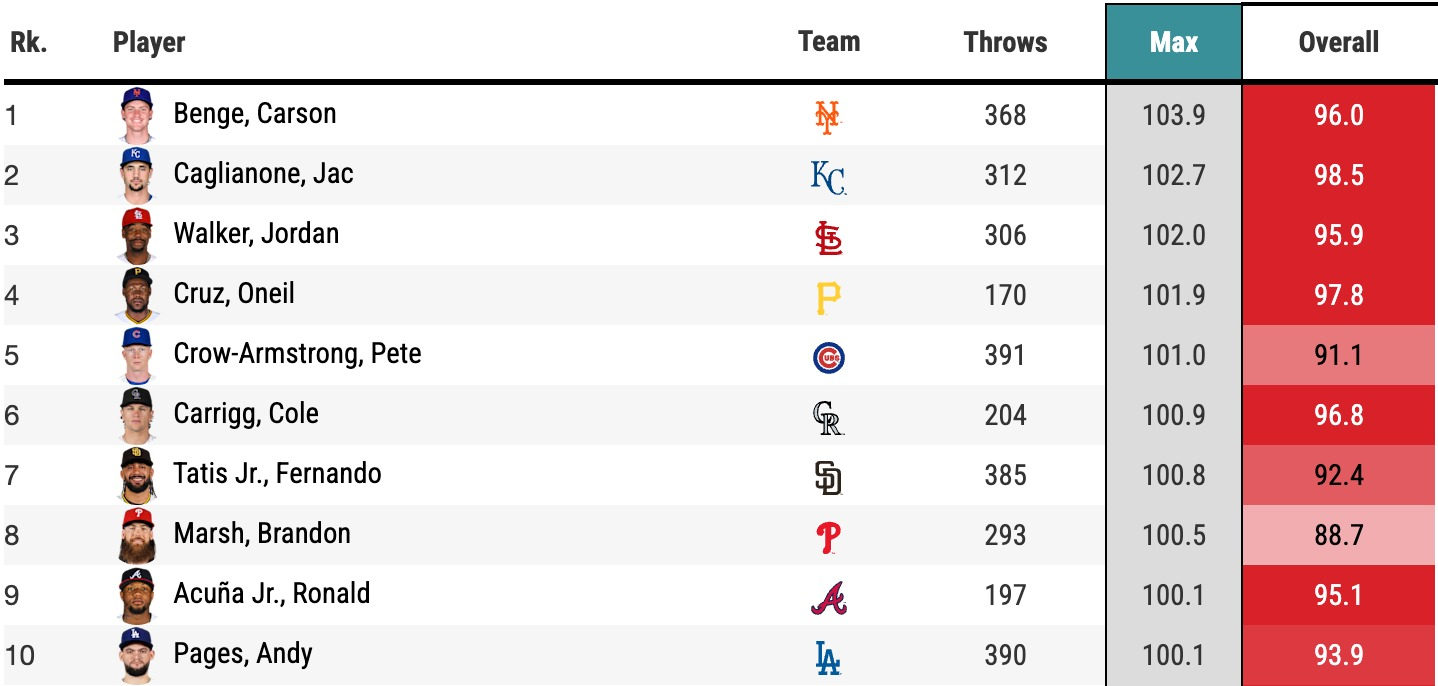
According to reports from SNY’s Chelsea Janes and MLB Network insider Jon Heyman, the Mets are reportedly willing to consider trading virtually anyone except superstar outfielder Juan Soto and youngsters Nolan McLean, Carson Benge, A.J. Ewing and Christian Scott.
New York even appears open to dealing superstar shortstop Francisco Lindor — although his lackluster 2026 production, sizable contract and full no-trade clause make a trade “very unlikely,” per Heyman, who also notes that a source close to Lindor said it’s “not happening.”
The biggest question is, will Tarik Skubal stay or will he go? But there are a lot of trade chips on these two teams — Casey Mize, Gleyber Torres, Jack Flaherty, Sonny Gray, Aroldis Chapman — and if Detroit and Boston keep winning, they might not be trading them.
Can the Padres pull out of their tailspin?
This could determine whether superstar closer Mason Miller gets dealt again, in what would be a second huge blockbuster in as many seasons.
It’s a thing now, thanks to what the Brewers pulled off in the first half. At the All-Star break, a Milwaukee pitcher was leading MLB in wins, ERA and strikeouts. Just not the same Milwaukee pitcher.
Wins: Aaron Ashby, 12
ERA: Jacob Misiorowski, 1.62
Strikeouts: Misiorowski, 167
So yes, we know a real Triple Crown is an individual achievement — that’s why it’s such a rare feat. The last pitcher to win an MLB-wide Triple Crown — not just the AL or NL — was Johan Santana in 2006. But the combo version is rare, too, even just for a half. It hadn’t been done in almost 50 years.
Misiorowski’s Brewers are the first team to lead the Major Leagues in all three Triple Crown categories at the All-Star break since Nolan Ryan’s Angels all the way back in 1977.
That year, Ryan led the Majors in wins (13) and K’s (234) at the break, and Frank Tanana led in ERA (2.15).
• Wednesday, March 24: The season will begin with a standalone Opening Night game. The matchup is still to be determined. (The Yankees and Giants played on Opening Night this year.)
• Thursday, March 25: Traditional Opening Day. This will be the earliest traditional Opening Day in Major League history (excluding special season openers and international openers), with 14 games on the schedule.
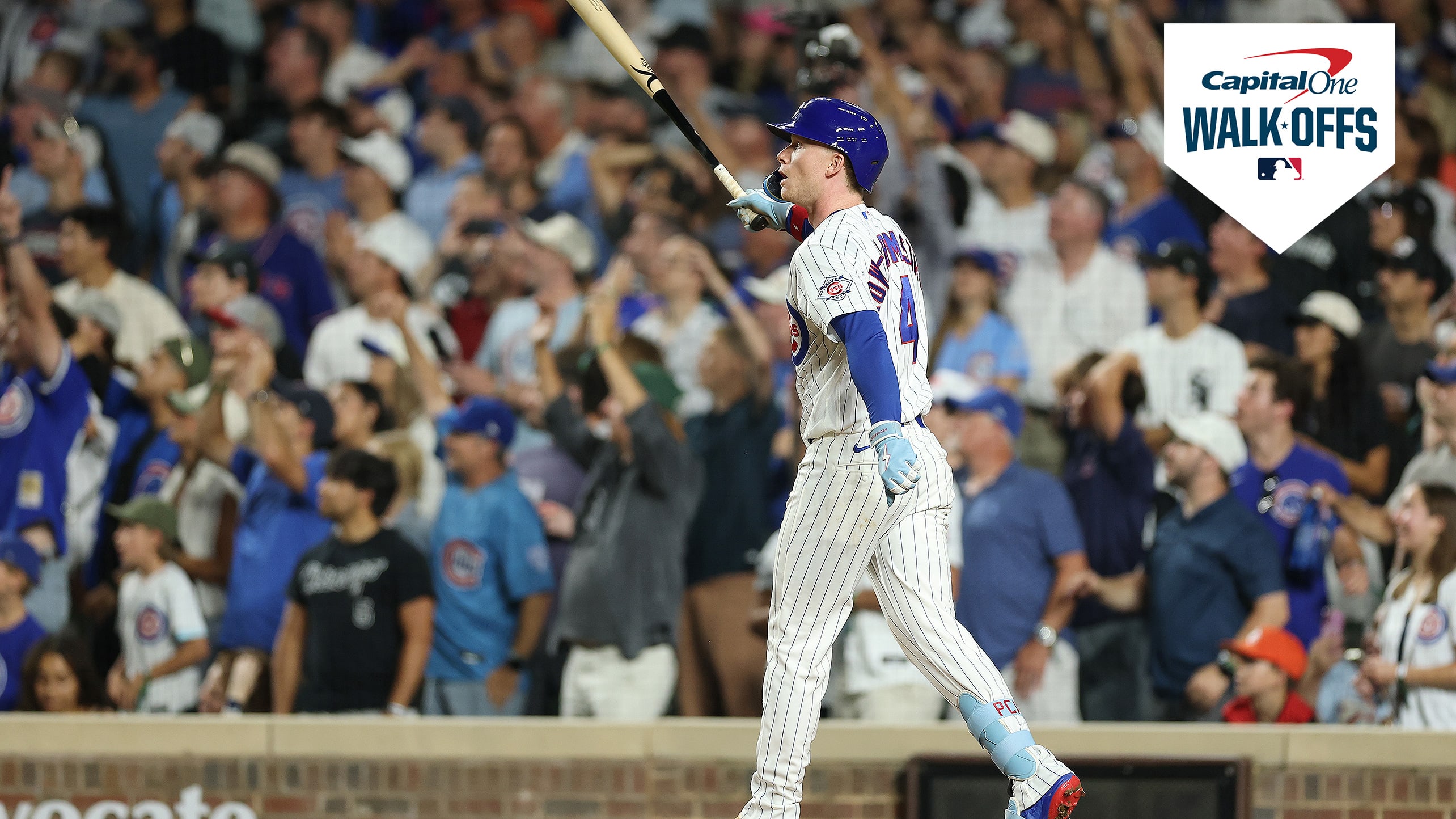
• Tuesday, July 13: The All-Star Game, at Chicago’s Wrigley Field. Wrigley will become the only active MLB stadium to host the Midsummer Classic four times (1947, 1962, 1990 and 2027). Cubs star Pete Crow-Armstrong is already pumped for it.
• Thursday, July 15: The second half kicks off with MLB’s third annual Rivalry Weekend, which will feature 11 series between Interleague rivals and four other regional showdowns.
• Sunday, Sept. 26: The final day of the 2027 regular season.
THIS SUNDAY! Join us at the FCP Euro Sunday Motoring Meet – VW, Audi, Porsche & Mercedes on track
UP NEXT: Radical Cup, GRIDLIFE Circuit Legends, Historic Festival
RACE HIGHLIGHTS: LIUNA 150 at Lime Rock Park
UPCOMING DRIVING EVENTS – Take Your Car on the FCP Euro Proving Grounds (or main circuit!) Plus, Karting!
THIS SUNDAY!
FCP Euro Sunday Motoring Meet 7/19 – VW, Audi, Porsche, & Mercedes On Track
Hosted by FCP Euro, the Sunday Motoring Meet series brings like-minded enthusiasts together to celebrate European cars and culture. It’s not just another Cars & Coffee, it’s a casual gathering where you can see incredible builds and connect with your favorite automotive brands.
All makes & models are welcome! VW, Audi, Porsche & Mercedes owners will be invited to park on track for the 7/19 edition of FCP Euro’s Sunday Motoring Meets.
Circuit Legends is back for a full weekend celebration of motorsports heritage and modern car culture. On track action includes TrackBattle, GRIDLIFE Touring Cup, GRIDLIFE GT, & more
Relive all the action from this past weekend’s LIUNA 150 NASCAR Craftsman Truck Series Race at the button below!WATCH NOW – RACE HIGHLIGHTS
UPCOMING DRIVING EVENTS
Test the limits of yourself & your car in a controlled environment with Autocross Lapping Days, or get a taste of both the LRP Circuit & FCP Euro Proving Grounds with Track Tapas!
Looking to learn to drive like the pros do? Our Intro to Racing pairs you with professional instructors in both a classroom & on-track setting, getting you your first real steps into racing.
& don’t forget Kart the Park, our arrive & drive karting program where you can race your friends on the FCP Euro Proving Grounds! Take home the ultimate bragging rights with one of our upcoming sessions at the link below.LEARN MORE & REGISTER – DRIVING PROGRAMS
Abbott Laboratories (NYSE: ABT)gave the market what it wanted in its Q2 earnings report, affirming that the Exact Sciences acquisition was a good one. The critical takeaways are that comp growth is solid, the Exact Sciences business has traction, and the near-term margin impairment the acquisition brought is less than expected.
Looking forward, profitability metrics have improved, leading to improved guidance, strengthened market sentiment, and a robust rebound in the share price.
The share price rebound is an operative factor in the second half of 2026. Abbott’s market was overly depressed, given its historical value and capacity for capital returns, signaling a buying opportunity for investors.
The post-release surge not only confirms support at the existing lows but is also backed by MACD and stochastic signals, suggesting a full reversal is in play. The market completely misjudged the Exact Sciences deal, focusing too intently on near-term margin pressure and execution risk, rather than the long-term commercial impact on revenue, margins, and earnings.
Abbott Laboratories Q2 Report a Balm for Frayed Investor Nerves
Abbott Laboratories’ Q2 report is solid, with reported growth of 13% and organic growth of 4.8%. Strength was underpinned by Exact Sciences and the 42.3% increase in Diagnostic services it brought, aided by an 8.4% increase in Established Pharmaceuticals and a 7.9% increase in Medical Devices. Nutrition, among the smaller segments, declined by 3.1%. Regionally, strengths were seen domestically and abroad.
Margin news was the catalyzing factor. The company’s margins contracted but less than expected, leaving gross margin, operating and net income above analysts’ forecasts. The critical takeaway is that $1.31 in adjusted earnings per share (EPS) outperformed by 235 basis points and is sufficient to sustain financial health while reinvesting and returning capital to shareholders.
Guidance is another catalyzing factor for back-half trading. The company maintained its forecast for organic revenue growth but improved the outlook for earnings, lifting the midpoint and narrowing the range for full-year results. With momentum building and results forecasted to accelerate in the back half, the guidance is likely to be cautious, setting the stage for additional catalysts by year’s end.
Abbott’s Capital Return Outlook Improves
Abbott’s capital return was never in any real danger, but the threat of margin compression and cash flow impairment was sufficient to weigh on sentiment. The takeaway from the Q2 release, however, is that concerns are misplaced. Capital returns will continue to flow, including the dividend and share buybacks, and buybacks may accelerate.
As it stands, Abbott is a Dividend Kingwith nearly 55 consecutive increases to its credit, a manageable 70% payout ratio, and buybacks to offset the impact of annual increases and build shareholder leverage. The dividend yield is more than attractive, as of mid-July, at a historical high of approximately 2.8%, and Q2 buybacks reduced the count by 0.45%.
Analysts and Institutional Trends Reveal Optimistic Support for ABT Shares
Analysts’ trends reflect the dividend safety and deep value opportunity presented this year. While price targets have moderated, the market overreacted and moved below the low end of the target range. Price targets suggest a floor near $90, with potential for substantial upside at the consensus. Valuation metrics suggest the upside will run into the triple digits over time.
The likely outcome is that analysts’ price targets begin to firm, increasing conviction in the consensus and potential for a full stock price recovery. Until then, institutional activity suggests this group limits risk in 2026, owning more than 75% of the shares and buying on balance. Buying is broad-based, including funds, mutual funds, public retirement accounts, and private wealth managers.
Abbott’s risks center on legacy issues related to its baby formula business, competition in the MedTech sector, and the integration of Exact Sciences. Integration risks now appear limited, given the Q2 release and guidance update, leaving competition and legacy issues as the primary hurdles. Competition is being mitigated through pipeline investment, with numerous positive developments reported this quarter. Legacy issues relate to baby formula manufacturing processes, regulatory scrutiny, and the unresolved legal issues they bring.
This year’s catalysts include the successful integration of Exact Sciences, the revenue and margin boost from Cologuard, and the expansion of Medtech wearables. Libre Duo, the world’s first dual glucose/keytone monitoring system, received the EU’s CE Mark, enabling its sales throughout the region, while pipeline news includes advances in two critical cardiovascular devices. What the market gets wrong is that ABT isn’t just a legacy healthcare company and bond proxy but an innovative med-tech company expanding margins while investing in growth. READ THIS STORY ONLINE
Headline earnings beats across money-center banks frequently mask deep divergences in net interest income sustainability and operational leverage. A rapid glance at big bank second-quarter 2026 earnings reports shows broad consensus beats across the board.
Analyzing this divergence can help investors identify the business models that are best calibrated to compound shareholder returns in a prolonged elevated-rate environment.
Investors seeking to navigate this terrain need to look past the top-line revenue to examine how efficiently these banks manage their liability costs and capitalize on secular growth trends. Understanding how these engines operate under pressure provides a clear roadmap for investing effectively.
How Bank of America Laps Wells Fargo
Bank of America provides a textbook example of a liability-insensitive balance sheet functioning optimally. The company grew second-quarter revenue 15% year-over-year to $31.6 billion.
The underlying engine of this success is 450 basis points of operating leverage generated in the first half of the year. Operating leverage occurs when revenue grows faster than expenses, signaling efficient core operations.
With net interest income reaching $16.2 billion, Bank of America management confidently revised full-year net interest income guidance to the upper end of its 6% to 8% growth target. Fixed-rate asset repricing against a loyal, low-cost deposit base creates a formidable margin-expansion engine that requires no pressure to chase high-cost deposits.
Bank of America improved its efficiency ratio to 59%, proving that traditional banking operations can thrive without aggressive risk-taking.
Conversely, Wells Fargo & Company faces a fundamentally different reality. Despite netting a 16.5% year-over-year increase in net income to $6.4 billion, Wells Fargo experienced a post-earnings drop as investors digested underlying net interest margin compression.
The catalyst keeping Wells Fargo competitive is the Federal Reserve’s 2025 removal of its $1.95 trillion asset cap. Unshackled from this regulatory constraint, the company expanded average loan balances by 12% year over year. Management expects margin stabilization by the fourth quarter of 2026.
Until that inflection point arrives, Wells Fargo remains reliant on raw loan origination volume to outpace the pricing pressures on its deposit base. The inability to seamlessly translate loan volume into expanding margins exposes inefficiencies relative to peers such as Bank of America.
Trading in the Fast Lane: Goldman Meets JPMorgan
When elevated rates place ceilings on consumer borrowing, dealmaking, and trading, volatility must step in to bridge the revenue gap. Goldman Sachs reported an exceptional 25.5% return on tangible equity, capitalizing heavily on the multi-trillion-dollar AI infrastructure capital expenditure cycle.
Corporate clients seeking scale are driving sector-wide consolidation, pushing Goldman Sachs advisory revenues up 17% and sending its investment banking backlog to a five-year high. Equities financing skyrocketed 91% year over year, driven largely by robust demand across Asia-Pacific.
Because Goldman Sachs holds minimal traditional net interest income exposure, its earnings quality relies heavily on this capital markets momentum. The company currently operates as a high-octane cyclical play, tethered directly to corporate restructuring and tech infrastructure financing rather than sustained interest rate spreads.
JPMorgan Chase & Co. offers a masterclass in balance sheet agility and revenue diversification. Generating a 23% return on tangible common equity on $16.9 billion in net income highlights a fortress balance sheet operating at peak efficiency.
While Goldman Sachs relies almost exclusively on capital markets, JPMorgan fired on all cylinders, with investment banking fees rising 30% and equities trading climbing 86%. Crucially, the company management matched this capital markets dominance by revising its ex-markets net interest income guidance upward to $96.5 billion.
This dual-engine approach insulates JPMorgan Chase from sudden drops in mid-cycle mergers-and-acquisitions activity while still capturing upside yield from traditional lending. Executive transitions that established Doug Petno and Troy Rohrbaugh as co-presidents set a clear succession framework, removing lingering leadership uncertainty from JPMorgan’s risk premium.
How Banks Provision for Potholes
Strong top-line revenue means little if a bank fails to provision accurately for future loan losses. Underlying consumer and commercial credit health remains the ultimate barometer of systemic stability. Bank of America recorded flat net charge-offs of $1.4 billion, accompanied by improving consumer card delinquency metrics.
JPMorgan Chase booked a highly calculated $149 million net reserve build alongside $2.4 billion in net charge-offs. These highly controlled provisioning metrics confirm that the consumer remains resilient. Standardizing delinquency rates across the sector represents a normalization from historic, stimulus-driven lows, rather than signaling acute macroeconomic deterioration.
A stabilizing regulatory environment also contributes to this sector-wide confidence. Commentary across earnings calls indicates an easing of headwinds regarding Basel III endgame adjustments and G-SIB surcharge methodologies. This regulatory clarity effectively lowers the risk premium previously priced into financial equities, allowing institutions to focus capital on client deployment rather than defensive hoarding.
Victory Lap: Dividends, Buybacks, and Strategic Positioning
Unprecedented earnings inevitably lead to aggressive capital return programs, and the second quarter of 2026 proved highly lucrative for shareholders. JPMorgan Chase intends to hike its quarterly dividend to $1.65 per share. Goldman Sachs approved a 25% bump, raising its payout to $5 per share while executing a $4 billion share repurchase program. Bank of America and Wells Fargo returned $8 billion and $3 billion, respectively, through aggressive buybacks and dividend payouts.
Investors building an allocation strategy for a prolonged higher-for-longer rate environment might prioritize JPMorgan Chase or Bank of America for core portfolio defensibility and proven margin expansion capabilities.
Those with a higher risk tolerance could add Goldman Sachs to their watchlist for exposure to the artificial intelligence infrastructure and dealmaking supercycle. Cautious investors may prefer to wait for clear stabilization of Wells Fargo’s net interest margin before taking a heavy position. READ THIS STORY ONLINE
OpenAI and Anthropic are moving closer to the public markets – and that shift could pull serious capital into AI infrastructure, chips, cloud, and data centers.
A fresh report breaks down 9 public AI stocks positioned to benefit before, during, and after this IPO wave – including a chip name tied to U.S. AI manufacturing, a cloud play with improving momentum, and a data analytics company with enterprise upside.REVIEW THE FULL 9-STOCK AI REPORT AND SEE WHO MAKES THE LIST
The gig economy once operated under a very simple, highly capital-intensive mandate: capture user market share at any cost. For years, mobility and delivery platforms set cash on fire to win individual zip codes. That era of localized land grabs has effectively concluded. Investors are watching a structural pivot unfold in real time.
For investors, identifying when a sector transitions from top-line revenue chasing to bottom-line yield optimization often separates casual observers from strategic market participants.
From Cash Burn to Cash Cows
Uber Technologies is seeking to absorb one of its most formidable European and Asian competitors in a deal valuing Delivery Hero at roughly $12.8 billion. Trading around $73, Uber reflects a market beginning to price in this new operational reality.
Valued between $37 and $43 per share, the acquisition would provide Uber with immediate, turnkey access to international markets without the friction of organic customer subsidization. The focus is shifting entirely to margin extraction, away from the cash-burning user-acquisition strategies of the past decade.
Quiet Calories: Accumulating a 37% Stake
Acquisitions require more than just capital allocation. They demand deep regulatory foresight. Leading up to these advanced negotiations, Uber executed a calculated tactical retreat, intentionally halting organic food-delivery expansion into five new European markets.
Casual observers might interpret a market pause as an indication of operational weakness. Looking closer, this was a deliberate maneuver to appease the European Commission regulators. By reducing geographical overlap before the bid, Uber proactively smoothed the path to antitrust approval.
Simultaneously, the execution of the initial equity stake build served as a masterclass in stealth accumulation. Before initiating formal takeover proceedings, Uber secured block trades from institutional heavyweights. Activist hedge fund Aspex Management offloaded a 14.6% position directly to Uber, while Prosus transferred an additional 4.5% equity tranche.
These targeted moves allowed Uber to quietly accumulate a near-blocking 37% minority stake. Securing this position through private block trades neutralized potential rival bids and successfully skirted immediate foreign investment review thresholds that trigger upon a full buyout offer.
From Price Cuts to Pricing Power
When a regional delivery brand gets absorbed into a larger platform, the local price war it was waging ends with it. The historical vulnerability of these operators has always been their reliance on elevated debt-to-equity ratios and negative free cash flow yields to fend off well-capitalized global networks. Delivery Hero generated $15.9 billion in trailing 12-month revenues across 70 markets, but remained structurally exposed to relentless subsidization wars.
Integrating these assets into Uber paves the way for near-term EBITDA margin expansion across Europe and the Middle East for Uber. The absolute jewel in this acquisition crown is Talabat, the dominant food-delivery brand across the Gulf. Bypassing the capital-intensive customer-acquisition phase in these regions enables Uber to compound its adjusted EBITDA margins, which recently expanded to 4.6% of gross bookings.
Consolidation also fundamentally alters the platform take-rate dynamic. When multiple delivery apps battle for market share in a single city, restaurant partners set the margin terms. When that market consolidates, the prevailing platform regains pricing power.
Fattening Up Core Operating Leverage
Retail investors frequently get lost in GAAP accounting distortions, missing the underlying profitability story. Recent net income for Uber appeared artificially depressed due to a $1.5 billion pre-tax mark on legacy equity investments. Peeling back the accounting layers reveals a far more robust fundamental reality. Actual core operating income rose 56.6% year-over-year to $1.92 billion.
A structural driver of this underlying profitability is a rapidly expanding recurring-revenue moat. Uber One subscriptions recently crossed the 50 million-member threshold. This sticky, recurring revenue base provides the stabilization required to seamlessly absorb 800 quick-commerce Dmart fulfillment centers without diluting near-term liquidity.
When a digital network scales to this magnitude, the incremental cost of delivering a new service or physical good to an existing captive audience drops dramatically. This dynamic accelerates long-term free cash flow generation and gave Uber management the confidence to authorize a record $3 billion share repurchase program in early 2026.
Wall Street Bets on a Heavier Uber
Market sentiment often previews realities before they formally hit the balance sheet. Derivatives data from early July 2026 indicates immense institutional conviction surrounding this consolidation thesis. Daily options volume on Uber spiked past 102,000 contracts with an 80.42% call-to-put ratio. This volume remains highly concentrated on near-term $76 strike calls, reflecting aggressive bullish positioning from funds prioritizing high-margin technology compounders.
Even with a shifting macro environment and structural changes, such as autonomous driving partner Waymo exiting the Uber application ecosystem in Phoenix, UBER only experienced a brief 4% depression. The robust free cash flow and captive recurring revenue base insulated Uber from long-term decay, proving the resilience of a diversified mobility and logistics network.
Digesting the Next Era of Mobility
Understanding the life cycle of technology compounders like Uber remains essential for identifying long-term value creation. The era of fractured, regional delivery startups battling over pennies is ending. In its place, localized monopolies possessing the scale to dictate take-rates and optimize global logistics networks are firmly emerging. As marketing spends plummet and network density increases, corporate focus shifts entirely to yield optimization and aggressive capital returns.
Investors analyzing the global logistics sector may want to evaluate how the elimination of regional subsidization wars impacts long-term free cash flow models. Those monitoring the technology and consumer mobility space might consider adding equities demonstrating expanding EBITDA margins and strong recurring revenue bases to their watchlists as international market consolidation continues to unfold. READ THIS STORY ONLINE
Trader Chris Pulver says a new SEC document dropping the day-trading limit to $2,000 has created the biggest retail opportunity he has seen in over 30 years.
His strategy targets what he calls Flashpoints – moments when market makers must move billions of dollars on the S-P 500 in a narrow window. Research shows one recent signal would have returned 83.7% in 36 minutes and another 62.8% in 51 minutes.
The Night Owl is a financial newsletter that provides in-depth market analysis on stocks of interest to individual investors. Published by MarketBeat and Early Bird Publishing, The Night Owl is delivered around 9:00 PM Eastern Sunday through Thursday. If you give a hoot about the market, The Night Owl is the newsletter for you.
The Phase 3 Failure That Sent Biotech Winners and Losers in Opposite Directions
Written by Jeffrey Neal Johnson on July 13, 2026
Key Points
Wainua failed its CARDIO-TTRansform Phase 3 trial by showing no additive benefit for patients already taking stabilizer drugs like Vyndamax.
Ionis Pharmaceuticals shares fell more than 9% on concentrated pipeline risk, while AstraZeneca’s much larger, diversified business barely felt the impact.
Rivals BridgeBio, Pfizer, and Alnylam Pharmaceuticals gained ground as the trial failure preserved their competitive positions in the amyloidosis treatment market.
When a late-stage clinical trial misses a primary endpoint, the market reaction rarely distributes evenly across the board. The fallout often reveals undeniable fundamental truths about single-asset exposure, pipeline diversification, and the competitive moats protecting established treatments. The July 9 announcement from AstraZeneca (NYSE: AZN) and Ionis Pharmaceuticals (NASDAQ: IONS) regarding the CARDIO-TTRansform Phase 3 trial provides a real-time masterclass in these market dynamics.
The investigational use of Wainua, also known as eplontersen, failed to achieve statistical significance on its primary composite endpoint of cardiovascular mortality and recurrent cardiovascular events at 140 weeks. The treatment targets transthyretin-mediated amyloid cardiomyopathy. This fatal disease causes misfolded proteins to build up in the heart muscle.
The clinical failure removes an anticipated competitor from a highly lucrative market and triggers an immediate capital rotation across the broader biotech sector.
AI doesn’t run on chips – it runs on natural gas. Analysts are now tracking roughly 100 gigawatts of new behind-the-meter gas generation lining up behind the AI buildout, and on June 22, one of the world’s largest energy companies signed a 20-year, 2.67-gigawatt deal to power a single data-center project.
Ken Griffin has reportedly put more than a billion dollars into this corner of the market. Porter Stansberry has identified two picks-and-shovels plays in AI’s power supply, plus 6 stocks to buy and 10 to sell – all detailed in a new documentary.Watch the documentary now to see all 16 stock positions
Unmasking the Trial: Stabilizers Block the Path
To truly understand why the market repriced these assets so aggressively, investors must look beneath the headline failure and evaluate the underlying subgroup data. The treatment landscape relies heavily on stabilizer medications like Vyndamax, manufactured by Pfizer (NYSE: PFE). In the CARDIO-TTRansform trial, patients already taking these baseline stabilizers accounted for 57% of the study population at the start of the program, and that proportion rose to roughly 80% by the conclusion of the study.
Wainua failed to demonstrate an additive treatment effect in this specific stabilizer subgroup. The drug did not improve outcomes for patients who were already receiving standard-of-care treatments.
In the monotherapy subgroup, which includes patients not taking any stabilizers, Wainua demonstrated a hazard ratio of 0.71, translating to a 29% risk reduction. While that figure aligns closely with competitor benchmarks, it offers very little commercial utility. A pharmaceutical product cannot successfully capture meaningful market share if it only works for the rapidly shrinking fraction of patients who are completely naive to standard-of-care treatments.
This data exposes a fundamental disparity between antisense oligonucleotides like Wainua and RNA interference therapies developed by competitors. Alnylam Pharmaceuticals (NASDAQ: ALNY)previously validated its competing RNA interference therapy, Amvuttra, across both monotherapy and combination with a stabilizer subgroup in its HELIOS-B trial. By failing to show that essential additive benefit, Wainua is effectively locked out of the most lucrative and pre-treated segment of the total addressable market.
Asymmetric Damage: Single Asset Squeeze
The financial damage stemming from this clinical miss was distributed quite unevenly, highlighting the stark contrast between concentrated pipeline risk and structural business diversification.
Ionis Pharmaceuticals absorbed the brunt of the impact. Shares fell by more than 9% in a single day, pushing the stock down more than 26% since the start of the year and compressing its total market capitalization to $9.63 billion.
Ionis Pharmaceuticals faces acute vulnerability due to its reliance on expanding the addressable market for Wainua. The current regulatory approval for ATTR-polyneuropathy covers fewer than 50,000 patients globally.
The cardiomyopathy indication would have unlocked a total addressable market of 300,000 to 500,000 patients.
Without that expansion, Ionis Pharmaceuticals faces a difficult fundamental reality. The developer currently generates negative earnings, with an earnings-per-share loss of 56 cents. First-quarter 2026 revenue surged to $246 million, an 87% increase year-over-year, but rapid commercial infrastructure expansion kept profit margins compressed, resulting in a net loss of $93 million.
While the company’s trailing return on equity remained deeply negative at -58.65%, its balance sheet risk softened substantially after Ionis eliminated $633 million in convertible debt using restricted escrow cash on April 1, 2026.
AstraZeneca tells a completely different fundamental story. AstraZeneca’s stock price fell briefly intraday before institutional buyers stepped in to support it. A $266.54 billion pharmaceutical sector giant does not live or die by a single indication expansion.
AstraZeneca generates $60.44 billion in annual sales, supported by blockbuster oncology franchises such as Tagrisso and Imfinzi. The company operates with a healthy 17.19% net margin, a robust 30.86% return on equity, and a conservative debt-to-equity ratio of 0.52.
Pre-trial models projected Wainua could reach peak sales of up to $6.5 billion with the ATTR-CM approval.
Analysts have since revised those estimates down to approximately $4 billion. Erasing a $2.5 billion premium certainly adjusts near-term valuation models, but it barely registers against AstraZeneca’s stated $80 billion top-line revenue target for 2030. The institutional market accurately perceived the drop as a temporary mispricing rather than a structural downgrade.
Gold is hitting record highs, but most investors are leaving income on the table. A $15 fund is quietly paying out up to $1,152 a month to regular investors – no mining stocks, no options, no physical metal required.
Markets dislike a vacuum. When Wainua was removed as an imminent competitive threat, capital immediately rotated into the rival drugmakers positioned to capture that unaddressed market share. The trial failure preserves the current duopoly and triopoly pricing power within the disease space.
BridgeBio (NASDAQ: BBIO) emerged as the most direct beneficiary, with shares up 16% to touch new 52-week highs following the initial announcement. BridgeBio is actively launching its newly approved therapy, Attruby.
Without Wainua entering the market to compress margins and force aggressive discounting, BridgeBio enjoys a heavily cleared commercial runway. BridgeBio recently secured a $1 billion Series A convertible preferred equity raise led by Sixth Street and KKR. This infusion provides a substantial capital buffer to execute an aggressive, unopposed commercial launch, funding sales force deployment without immediate dilution concerns.
Pfizer and Alnylam Pharmaceuticals also experienced immediate bid support. Pfizer maintains its multi-billion-dollar stronghold with Vyndamax, resting easy knowing that physicians will not have to weigh the transition of stable patients to a competing therapy. Alnylam Pharmaceuticals sustains its clinical momentum, as its RNA interference mechanism remains the only proven combination therapy that effectively stacks on top of existing stabilizers.
Discharging the Risk: Portfolio Lessons Learned
The failure of the CARDIO-TTRansform trial fundamentally rewrites the competitive map for amyloidosis treatments. It draws a hard line between therapies that can improve the standard of care and those that merely match it in isolation.
For the entities involved, the data reinforces the protective power of a diversified revenue base. AstraZeneca easily absorbs the setback through its oncology and metabolic divisions, while Ionis Pharmaceuticals faces prolonged fundamental pressure as it navigates elevated debt levels and stalled growth drivers. Investors evaluating biotech allocations might consider prioritizing developers with validated combination therapies or deeply diversified pipelines to mitigate these specific clinical risks.
The second half begins as the first half did — with the Dodgers at No. 1. But many of the other teams near the top worked their way up since Opening Day and could challenge the champs.
How do you go from unranked in the Starting Pitcher Power Rankings all the way to third? Nearly throwing a no-hitter and starting an All-Star Game did the trick for Dylan Cease.
Some teams are looking for a missing piece before the Trade Deadline while others are trying to build for the future, and our 30 beat reporters identified what each club should target.
The Dodgers are memorializing Andy Pages’ game-saving catch while colliding with Kiké Hernández during Game 7 of the World Series with a one-of-a-kind bobblehead.
Yankee Stadium is known for its short porch in right field, but those dimensions are cavernous compared to Nashville’s Sulphur Dell ballpark, where the right-field fence was 262 feet from home plate.
US Air Force Academy players visited All-Star Week as part of the Air Force and MLB partnership celebrating America’s pastime for America’s 250th birthday.