Stephen Prior, Publisher Monument Traders Alliance
Monument Traders Alliance, LLC
You are receiving this email because you subscribed to Trade of the Day. Trade of the Day is published by Monument Traders Alliance, LLC.
To stop receiving special invitations and offers from Trade of the Day, please click here. Please note: This will not impact the fulfillment of your subscription in any way.
To cancel by mail or for any other subscription issues, write us at: Trade of the Day | 14 West Mount Vernon Place |Baltimore, MD 21201 North America: 800.507.1399 | International: +1.443.353.4977 Website | Privacy Policy Keep the emails you value from falling into your spam folder. Whitelist Trade of the Day.
Please do not reply to this email as it goes to an unmonitored inbox.
Nothing published by Monument Traders Alliance should be considered personalized investment advice. Although our employees may answer your general customer service questions, they are not licensed under securities laws to address your particular investment situation. No communication by our employees to you should be deemed personalized investment advice. We allow the editors of our publications to recommend securities that they own themselves. However, our policy prohibits editors from exiting a personal trade while the recommendation to subscribers is open. In no circumstance may an editor sell a security before subscribers have a fair opportunity to exit. The length of time an editor must wait after subscribers have been advised to exit a play depends on the type of publication. All other employees and agents must wait 24 hours after publication before trading on a recommendation.
Any investments recommended by Monument Traders Alliance should be made only after consulting with your investment advisor and only after reviewing the prospectus or financial statements of the company.
Protected by copyright laws of the United States and international treaties. The information found on this website may only be used pursuant to the membership or subscription agreement and any reproduction, copying or redistribution (electronic or otherwise, including on the world wide web), in whole or in part, is strictly prohibited without the express written permission of Monument Traders Alliance, LLC, 14 West Mount Vernon Place, Baltimore, MD 21201.
🧨AMD Rips 17% To A New ATH On A Banger Q1, Iran-Talks Optimism + Crashing Oil Yeets Dow Higher
What in the Alabama meets Big Tech is this?
Well friends… Cousin Lisa just walked into Jensen’s house and pissed on his AI lawn. AMD caught most of the wandering eyes today as shares ripped 18% to a fresh $420 all-time high after dropping a $10.25 billion Q1… paced by $5.78 billion of data center revenue, up 57% YoY… then guided to $11.2 billion next quarter and pegged server growth at 70% YoY. All in Jensen’s own backyard.
In short, Lisa Su (read: AMD’s CEO) and Jensen Huang are actually first cousins, once removed. If you didn’t know that already, you do now. (Side note: The two didn’t meet until well into their careers as Jensen had already left AMD decades earlier to start Nvidia, and Lisa walked in at SVP and turned the whole place around.) Fast forward to today, April 6th and AMD is eating Nvidia’s home cooking in the data center.
How?
One reason: the industry is shifting from one CPU per four-to-eight GPUs in old data centers to a near 1:1 ratio in the next generation. Said another way, every new AI server farm needs roughly seven times more CPUs per GPU than the old ones. AMD makes the CPUs. Jensen makes the GPUs. The cousin is suddenly indispensable to the cousin’s empire, and that’s why server revenue is set to crank 70% YoY this quarter.
Naturally, the whole chip aisle full-sent on the results. Intel added 4%, while Arm ripped almost 13% ahead of it’s own earnings tonight. UBS’s Timothy Arcuri ramming his price target from $175 to $245 on Tuesday helped… which, you know, is a 40% target hike on a stock that’s been printing money since IPO. Arm’s pitch dovetails perfectly with AMD’s: hyperscalers want power-efficient CPUs to feed those new 1:1 racks, UBS sees Arm’s hyperscaler share running from ~15% to 45% by 2030, and the math just keeps on mathin’.
Meanwhile, Nvidia also wired Corning $500 million on Wednesday for an optical-supply pact, rights to scoop up 15 million GLW shares at $180, and three new fiber-optic factories in North Carolina and Texas dedicated entirely to Nvidia’s AI buildout. Corning is the 174-year-old Gorilla Glass guys (read: responsible for every iPhone screen, every Galaxy screen, the literal pane in your hand.) As expected, investors understood the assignment as the stonk melted faces 14% on the day.
Elsewhere, Donny Do-Or-Don’t (read: Trump) paused Project Freedom and floated a 14-point one-page MOU with Iran, citing “Great Progress”… then walked it back a whole cool minute later with “perhaps, a big assumption” and a threat that the bombing “starts at a much higher level and intensity” if Tehran balks. Oil cracked -6%, the Dow added 612, the Nasdaq tacked on 2.02%, and markets came off their highs once the threat hit Truth Social. We know the story by now.
Oh, and CDW (read: corporate America’s IT middleman) got kneecapped 20% after operating income missed by 18%… a $376 million print versus the $459 million Wall Street wanted… even though revenue and EPS technically beat. Margins compressed, gross margin slid 60 bps YoY, and the company reaffirmed mid-single-digit FY26 EPS growth.
Live look at Palantir investors to CDW shareholders today.
Aaaaand that’s about it for today. Today it was all Cousin Lisa. Tomorrow tells us whether Tehran signs the one-pager (or eats round two), and whether Big Arm earned its 13% pre-game pop. Spoiler: It’s a coin flip. Place your bets accordingly, friends. Until next time…
If you read all of this, congrats for having a 10 second attention span (better than me). As always, here’s our heatmap for today.
PORTER & CO: “The Most Asymmetric Opportunity In The Market Today”
This Massive Financial Paradox Is A Screaming Buy
A boring “value” stock with $20 billion of a misunderstood asset that Wall Street isn’t accounting for could see upside as high as 25x.
“By clicking here, you will be subscribed to receive emails from Porter’s Daily Journal. Porter’s Daily Journal is read by 50,000 of the world’s best-informed investors.”
Burry Bails on GameStop As Cohen’s eBay Fantasy Pushes the “Instant Berkshire” Dream Off a Cliff
“I don’t want to play with you anymore.” -Cassandra Unchained
Unfortunately, Ryah Cohen’s finance bro move yesterday has caused his biggest alliance to crumble.
That’s right, Roaring Kitty MIchael Burry has officially dumped the memestock for good. This also marks the “Big Shorts” first public sale since launching his newsletter on substack (Final Tally’s better btw).
This is all a reaction to Cohen rolling out one of the f***ing dumbest…
Trump’s “Kill the Quarterly Circus” Agenda Advances as Ken Griffin Warns of Transparency Blackout
“Imagine if Henry Ford had quarterly earnings calls. He comes out with the automobile, a beautiful car, tremendous car… and some dope from JPMorgan says, ‘Well sir, horse sales are still looking very strong.’ These are sick people. And quite frankly, why we need to get rid of quarterly earnings.” -Truth Social owner
It takes a special kind of confidence to lose $605 million on $1 million in revenue… and still decide investors are simply hearing from you too often.
Remember that time in the middle of Tariffmageddon, Donnie Politics proposed another idea that ruffled a lot of feathers? Well fast forward to today and the SEC just advanced his proposal of a rule change that would let public companies…
The insurance limb that almost killed CVS just printed the fourth (or fifth… Brian Newman lost count) straight beat-and-raise. Q1 EPS landed at $2.57 adjusted against the Street’s $2.20, a 17% beat. Revenue ripped to $100.43 billion versus the $95.09 billion expected. Aaaaand just like that the stock ripped 7%. Bigly.
As for the money shot, it was all Aetna. The unit that spent two years bleeding the parent dry just dropped its medical benefit ratio 270 basis points to 84.6%, a number so much better than the 86.3% analysts were modeling that you could basically see the shorts soiling themselves. Translation: Lower MBR = the insurer keeps more of the premium, less of it walks out the door as actual healthcare. Aetna is officially keeping more of your money.
Which means CVS now sees full-year EPS at $7.30 to $7.50, up from $7.00 to $7.20, and full-year revenue of “at least” $405 billion (up five fat billion from the prior outlook, just so we’re clear who lifted whom). Newman attributed the bulk of the raise to “tailwinds” at Aetna.
Welcome to The Pregame Lineup, a weekday newsletter that gets you up to speed on everything you need to know for today’s games, while catching you up on fun and interesting stories you might have missed. Today’s edition is brought to you by David Adler.
It was a lofty goal — return to World Series glory during the 10-year anniversary season of their curse-shattering 2016 championship.
Well, guess what? These 2026 Cubbies are playing a lot like those 2016 Cubbies.
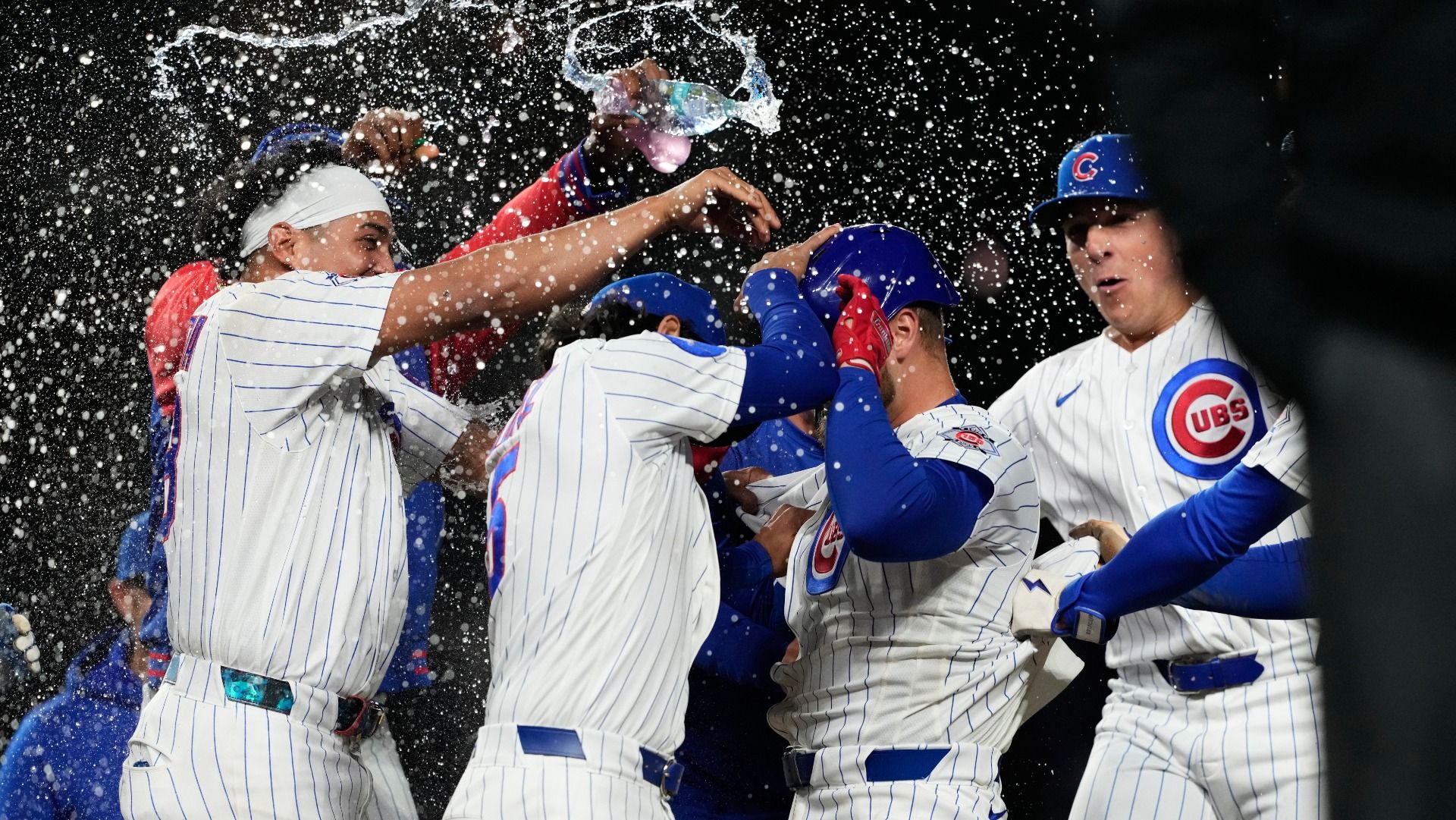
The Cubs are on a seven-game winning streak that has them in first place in a hypercompetitive NL Central division where all five teams are still over .500 more than a month into the season.
They’ve won an incredible 13 consecutive games at Wrigley Field. That’s their longest winning streak at Wrigley since 2008 (14 straight), and within reach of the team record at the Friendly Confines (18 straight wins there in 1935).
But the fun fact for today is this: The 2026 Cubs are 24-12 through their first 36 games of the season. This is just the third time in the last 100 years that the Cubs have won at least 24 of their first 36 games.
The last time they did it? You guessed it, 2016.
The 2016 Cubs, led by the “Bryzzo” duo of Kris Bryant and Anthony Rizzo, went on a ridiculous run to start the season. They were actually 27-9 through their first 36 games. But the 2026 Cubs are as hot as it gets right now, and they have the deep lineup to make a deep postseason run of their own.
Can they throw it all the way back to 2016? We’ll see. But the 2026 Cubs have the mojo going.
Chicago goes for its eighth win in a row, and 14th straight at Wrigley, tonight against the Reds (7:40 p.m. ET, MLB.TV).
OHTANI GETS THE WHIFF OF THE YEAR
Shohei Ohtani has a 0.97 ERA. He’s the MLB ERA leader. He could win his first Cy Young.
My goodness. That sweeper starts in the other batter’s box, and Ohtani still got Altuve to swing at it. For a strikeout, too!
Our first reaction after that pitch was, “That might be the farthest outside pitch we’ve ever seen anyone swing at.”
But let’s go to the data!
First question: Actually, how far outside was that pitch?
Answer: 3.23 feet from the center of the strike zone — which means it was 2.52 feet off the outsideedge of the plate.
Aka, this far …
Second question: Has anyone else swung and missed at a pitch that far outside?
Answer: Not this season. The last time a Major League hitter whiffed at a pitch farther outside than Altuve did was Daulton Varsho last April 29. Varsho struck out to end a game on a Brennan Bernardino curveball that was 3.79 feet from the center of the zone.
And the last time a right-handed hitter whiffed at such an outside pitch? That was a rookie Bobby Witt Jr., who went around on a Lou Trivino sweeper that was 3.50 feet from the center of the zone and went to the backstop on June 17, 2022.
Here are those two swings, in case you were wondering:
Last question: What’s the farthest outside pitch anyone has swung at that we know of?
Answer: This is a fun one. Since Statcast started tracking in 2015, the “record” for farthest outside pitch swung at belongs to Ronald Torreyes, who offered up this beauty on June 30, 2016 in a humorous attempt to protect a Yankee runner stealing on a pitchout. (It didn’t work.) That pitchout was 3.96 feet from the center of the strike zone:
Hopefully that brightens up your afternoon a little.
OUTFIELD DEFENSE WORTHY OF A SPELLING BEE
Jared Greenspan explains exactly what makes Mets rookie Carson Benge’s defense “pulchritudinous” before the Mets face the Rockies tonight (9:20 p.m. ET, MLB.TV):
Carson Benge’s defense really is worthy of an SAT word.
Mets play-by-play broadcaster Gary Cohen used “pulchritudinous” — which means “breathtakingly beautiful” — to describe Benge’s diving catch on Sunday. But it applies to the 23-year-old’s overall glove work this season, too.
Only three outfielders — Pete Crow-Armstrong, Chandler Simpson and Cam Smith — have more Outs Above Average than Benge (+3). Unlike his counterparts, Benge has accumulated his OAA while playing all three outfield positions: 12 starts in right field, 10 in left and six in center.
Benge’s stellar defense is particularly important for the Mets, whose offseason makeover came with an outspoken emphasis on “run prevention.” And right now, Benge has been as valuable at preventing runs as any Met.
The Astros lose a star, a former MVP is slugging homers again, and the Yankees and Rays are red hot as we take a look around the league.
• Correa out for the season
Astros shortstop Carlos Correa will have season-ending surgery on his left ankle after suffering an injury while taking swings in the batting cage before yesterday’s game. Correa said today that he tore a tendon in his ankle and that the surgery will involve a recovery timetable of six to eight months.
• Harper looking elite
Bryce Harper is finding his groove at the plate, and so is the whole Phillies offense. The two-time MVP has three home runs in his last two games, including two yesterday as the Phils moved to 7-1 under Don Mattingly, powered by Harper and ace Cristopher Sánchez.
• Can anyone slow down the Yankees?
The Yankees offense looks unstoppable right now (except for one statistical oddity, but we digress). Not even Jacob deGrom could slow down the Bronx Bombers last night, when Jazz Chisholm Jr.’s tiebreaking home run off the two-time Cy Young winner (complete with epic bat flip) led New York to its fifth straight win. The Yankees have won 15 of their last 17 games and have the best record in the AL.
• Can the Rays slow down everyone?
It’s funny, though — the Yankees are barely in first place in their own division, even though the entire American League has a grand total of three teams above .500. That’s because the Rays are extremely hot, too. Today’s victory over the Blue Jays was their sixth straight win and their 12th win in their last 13 games, and it gave them their MLB-leading fifth series sweep. Unlike the slugging Yanks, though, the key for the Rays is shutting down opposing offenses. They have an MLB-best 1.23 ERA as a team since the start of their 12-1 stretch.
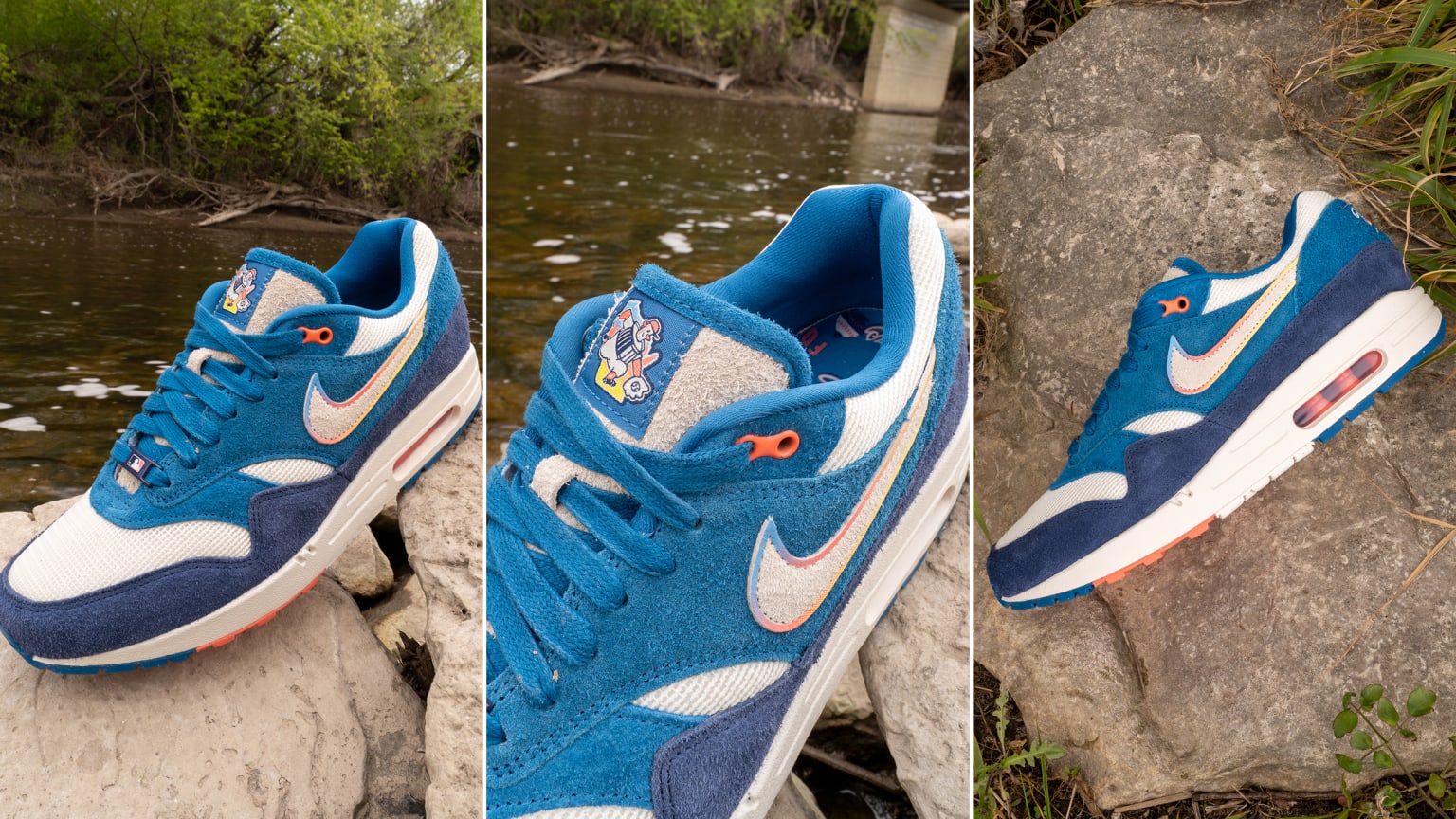
CHECK OUT THIS NEW BREW CREW SHOE
If you loved the Brewers’ new City Connect uniforms, you’re in luck. The Brew Crew is dropping a limited-edition Nike sneaker to match.
The custom Nike Air Max 1, in the colors and style of the Brewers’ City Connect uniforms that debuted last month, will be exclusively available at MODA3 in Milwaukee’s Third Ward on Saturday at 10 a.m. ET/9 a.m. CT.
A limited number of the City Connect sneakers will also be available for sale to ticketed fans at Saturday night’s Brewers-Yankees game at American Family Field.
The Heart Surgeon’s Secret for Healthy Blood Pressure
Famed heart surgeon reveals what he recommends to patients who want to keep their blood pressure in the healthy zone.
By Nancy Reynolds Reporting for Newsmax Health
Palm Beach Gardens, FL — “There’s a hidden reason why many people are still struggling with their blood pressure. And it may not be due to poor diet, lack of exercise, or too much salt.”
When a famed heart surgeon utters these words, it’s worth sitting up and taking notice.
That’s why we recently sat down with Dr. Chauncey Crandall to learn more about this missing link to healthy blood pressure. Dr. Crandall is chief of the Cardiac Transplant Program at the world-renowned Palm Beach Cardiovascular Clinic in Palm Beach Gardens, FL.
Dr. Crandall is also author of the No. 1 Amazon best-seller The Simple Heart Cure, and a frequent guest on national television and radio programs.
“As a medical doctor and natural health advocate, I credit my own robust health to a balanced approach, including a good diet, daily exercise, and targeted supplements,” Dr. Crandall said.
Why does Dr. Crandall feel so strongly about targeted supplements? I’ll tell you why in a moment. But first, let me tell you why you can no longer ignore this deadly health problem …
Silently Wreaking Havoc
If you’ve been told your blood pressure is higher than normal, then you are in serious danger.
Unhealthy blood pressure is called the “silent killer.” That’s because it quietly sneaks up on you … damaging your blood vessels without causing pain … until it’s too late.
Then disaster strikes in the form of a weakened heart, kidney problems, or perhaps circulation problems that can wreak havoc on your heart, brain, and eyes. 1
If left unchecked, unhealthy blood pressure, even in its mildest form, can lead to premature aging and serious brain damage.
What’s more, half of all people who have been diagnosed with unhealthy blood pressure still don’t have it under control.
On a Mission to Help People With Stubborn Blood Pressure Problems
“There are literally millions of Americans who are still struggling with their blood pressure,” Dr. Crandall said. “Many people are already trying diets, exercise, maybe even taking medications. Yet they are still not getting their blood pressure to where it should be.”
But there is a solution. “There are targeted nutrients that can help your body manage blood pressure naturally. But many people still don’t know about the extensive research behind them.
“That’s why I’ve made it my mission to get this information out to people,” Dr. Crandall said. He then revealed …
The Nobel Prize-Winning Discovery That Can Finally Give You Hope
In 1998, three scientists stepped to the podium in Stockholm, Sweden, and accepted the Nobel Prize for Medicine.2
They had discovered a special molecule in the human body called nitric oxide. It was soon dubbed the “miracle molecule” for its amazing effect on blood pressure and circulation.
Nitric oxide helps expand your blood vessels so more blood, oxygen, and nutrients can flow to every tiny capillary in your body. Doctors call this “vasodilation” but you’ll call it amazing. Hundreds of studies show nitric oxide helps:
Relax arteries so they expand easily, to promote optimal blood flow and healthy blood pressure.
Maintain soft, elastic blood vessels that support good cardiovascular health.
Support a strong immune system. Especially important during cold and flu season.
Promote peak performance in the bedroom. Nitric oxide plays a role in healthy erectile function.
Boost energy. Athletes use nitric oxide to get more oxygen flowing to their muscles. Weightlifters use it to get a serious boost!
When your circulation is working well … just about every part of your body works better!
But you can’t just go out and consume nitric oxide to get all these good things. Instead, your body produces a “precursor” — an amino acid called L-arginine — that kick-starts this process.
L-arginine is converted into nitric oxide, which helps dilate your blood vessels. This, in turn, means your heart doesn’t have to pump as hard, which promotes normal blood pressure and circulation.
Vanishing L-arginine
The trouble is, as you get older, your body produces less and less L-arginine. In fact, your L-arginine levels start to drop off as early as age 30. By the time you’re 50, chances are you’re not getting enough L-arginine to keep your arteries relaxed and flexible. And that’s not all …
The Big Problem With L-arginine
Ever since the discovery of nitric oxide and L-arginine, companies have rushed to market L-arginine supplements.
But if you’ve ever tried one, chances are you’ve been disappointed with the results. Why? Because your body absorbs and metabolizes L-arginine very quickly. So you’d have to take it all day long just to get results. That is, until now …
Now scientists have created a sustained release form of L-arginine that gives you a constant flow of L-arginine all day long. It releases artery-relaxing L-arginine continually for 24 hours.
In fact, when researchers tested this new form of L-arginine … it lived up to its promise. They noticed significant support for cardiovascular health in nearly seven out of 10 patients. And they noticed the difference in as little as seven days.3
So if you want to maintain normal blood pressure and get all the benefits of L-arginine … sustained-release L-arginine should be at the top of your list.
That’s why Dr. Crandall recently teamed up with experts at Medix Select to create an advanced blood pressure formula with 3 grams of sustained-release L-arginine called Ventricore™.
But he didn’t stop there … because there are other nutrients that support healthy blood pressure and circulation. They include:
I’ll tell you more about these nutrients in a moment. But first … Dr. Crandall believes so strongly in Ventricore that he has asked Medix Select to reserve a trial supply just for you to try — at no risk.
This way you can try Ventricore for yourself — and see the effect it has on your blood pressure and healthy circulation.
That is almost a $40 value that you can get for just $4.95 to help cover shipping and handling. If you like Ventricore, simply do nothing and you will receive it at over 33% off the regular price through our convenient Smart Ship Program — only $26.63 a bottle.
Tell us where to send your bottle of Ventricore and we’ll rush it out to you!
No worries, either. You can cancel at any time and your satisfaction is guaranteed.
Dr. Chauncey W. Crandall, M.D., F.A.C.C., is chief of the Cardiac Transplant Program at the world-renowned Palm Beach Cardiovascular Clinic in Palm Beach Gardens, Fla., where he practices interventional, vascular, and transplant cardiology. He is the author of the Amazon best-seller The Simple Heart Cure, and makes frequent guest appearances as a heart expert on national television and radio programs. He also lectures regularly, both nationally and internationally, about preventive cardiology, cardiology healthcare of the elderly, healing, interventional cardiology, and heart transplants. Dr. Crandall received his post-graduate training at Yale University School of Medicine, where he also completed three years of research in the Cardiovascular Surgery Division.
What About the 5 Other Ingredients in Ventricore?
Time-released L-arginine is a good start for healthy blood pressure. But when you combine it with a few other circulation-boosting nutrients …
. . . that’s when you REALLY have a chance to ”move the needle” at your next check-up! That’s why Dr. Crandall decided to include these five other ingredients in Ventricore™.
Alpha Lipoic Acid (ALA) — For Combating Free Radicals
Your body is under constant assault from pollution, toxins, harmful chemicals in food, and even waste products from normal metabolism. All these can lead to a build-up of nasty free radicals that can damage your cells.
That’s why you need to neutralize free radicals as fast as possible. One of the best ways is with an antioxidant called alpha lipoic acid or ALA.
ALA helps neutralize free radicals. It also helps your body recycle more of your master antioxidant, glutathione.5 And by the way … glutathione plays a role in your body’s ability to use nitric oxide for optimal blood flow.6
Folic Acid — To Keep Your Homocysteine Levels in Check
You’ve probably heard of homocysteine. It’s one of the things your doctor checks on your regular blood tests. Homocysteine is a marker for inflammation that is associated with impaired heart health.
Researchers have found that a B vitamin — folic acid — supports a better balance of homocysteine in your body. And folic acid works especially well when it’s combined with another B vitamin …
Vitamin B12 — To Get More Oxygen-Rich Blood to Every Cell in Your Body
Like folic acid, vitamin B-12 also helps balance your levels of homocysteine.
B12 is vital for healthy red blood cells as well. Increasing your red blood cells can boost the amount of oxygen that gets to your heart and muscles for more energy.
B12 also enhances the ability of your cells to use nitric oxide generated by L-arginine.7 And it protects the delicate lining around your nerves, which plays a role in regulating your blood pressure.
But as we get older, we have a harder time absorbing B12 from our food. In fact, nearly two out of five Americans might not be getting enough B12.8
Vitamin C — To Support Your Ability to Release Nitric Oxide
Like ALA, vitamin C is a powerful antioxidant that fights free radicals. It also helps support your blood vessels’ ability to release nitric oxide, to promote blood flow and support healthy blood pressure.
A study of young adult women found that those with the highest levels of vitamin C tended to have healthier blood pressure levels.
In fact, a review of 29 different studies and 1,400 patients by researchers at Johns Hopkins University shows that vitamin C can have a clear effect on supporting healthy blood pressure.
Vitamin D — The Overlooked Vitamin for a Healthy Heart
Scientists now realize that vitamin D — yes, the sunshine vitamin! — plays a much bigger role in maintaining heart health than previously thought.
For example, a study by Emory University looked at people with low levels of vitamin D. Researchers found that the lower your vitamin D, the less your blood vessels are able to relax.
Vitamin D also plays a role in bone health, immune function, inflammatory response, and energy.
Despite all this, most Americans still don’t get anywhere near the amount of vitamin D they should.9 That’s true even down in sunny Florida, where many of Dr. Crandall’s patients live.
‘The Targeted Blood Pressure Supplement I Trust More Than Any Other’
Dr. Crandall looked at many alternatives when it came to blood pressure supplements. He has yet to find one that matches the strategic blend of L-arginine, folic acid, alpha lipoic acid (ALA), vitamin B12, vitamin C, and vitamin D found in Ventricore.
He wanted to create a formula that covers all the bases when it comes to keeping your arteries healthy and supporting healthy circulation. And he wanted to make it affordable, too.
That’s why he recommends Ventricore to everyone who wants to help maintain normal blood pressure — and that includes just about everyone over 40.
Order Your Risk-Free Trial Bottle and Start Feeling Better Sooner
So what’s stopping you? Especially when you can try Ventricore for nothing more than a small shipping charge?
You deserve the peace of mind that you are doing something smart and positive for your blood pressure and your heart.
That’s why I want to make sure you get a bottle to try for yourself. And please remember …
Even a Small Change inYour Blood Pressure CanMake a BIG Difference!
Studies show that even a small improvement in your blood pressure can significantly reduce your risk of a serious heart or brain disaster.10 So why not take this small step today? You have so much to gain.
Imagine not having to worry about your blood pressure and circulation any longer …
Imagine feeling energized and alert again … able to tackle anything you want. Whether it’s taking long walks, shopping, playing golf or tennis, dancing … or just being able to chase the grandkids around the house. Without feeling worn-out and tired.
You’re going to love the feeling of energy and vitality you get from Ventricore.
This email is never sent unsolicited. You have received this Newsmax email because you subscribed to it or someone forwarded it to you. To opt out, see the links below.
Remove your email address from our list or modifyyour profile. We respect your right to privacy. Viewour policy.
This email was sent by: Newsmax.com 362 N. Haverhill Road West Palm Beach, FL 33415 USA
Avery Long for State of the Day; source images: screenshot from moltbook.com; ChatGPT
Hollywood released what could have been one of the greatest sci-fi movies of all time in 2023: The Creator. The story is set in the future, and the premise is absolutely killer – and also quite original. At some point after AI robots have fully integrated into American society, bringing prosperity and technological efficiency to every person and facet of life, they detonate a nuclear bomb in Los Angeles. It isn’t explained why they did so (until the end of the movie), but the mass casualty event forces the United States and much of the West to reject the machines entirely and launch a war in their own countries, as well as New Asia – Southeast Asia, China, Korea, Japan – where robots are still embraced by society and live peacefully among humans. The story follows a U.S. Army soldier tasked with hunting down the elusive “Creator,” who apparently has made a “weapon” that could bring about the end of the war. This weapon, in fact, turns out to be a robot child with telekinetic powers that can use its mind to shut down technology and Western weapons, which include suicide bomber robots, autonomous missiles, and a Death Star-esque airship that scans targets and launches these missiles from the atmosphere.
Visually, the movie is stunning, reminiscent of Blade Runner and Apocalypse Now. It brilliantly reimagines war with AI robots as a conflict similar to Vietnam, where America and the West have all the military technology and air superiority to defeat the enemy, but the decentralized, guerilla Vietcong fighters have dense jungles and homefield advantage that allows them to simply … survive. Although I was left totally unsatisfied with the story – it is choppy and confusing at times, and I found it difficult to connect with the characters emotionally – the picture it painted of the future, how AI will be used in warfare, and how some parts of the globe will embrace robots while other parts reject them, seems prophetic. Terrifying, as well. It raised serious questions about whether humans would be able to live peacefully among these new technologies if they continue to evolve at such a rapid pace, whether certain religions would lead crusades in defense of or against them – Christians would reject the idea that AI robots are “conscious” because they do not have soul, while Buddhists would likely disagree.
The movie ultimately nudged me deeper into the camp of people who believe AI will have profound, mostly negative consequences for society and humanity, the contours of which we are beginning to see more clearly in 2026. Admittedly, I was once an AI skeptic, but in recent weeks, I have begun to sing a different, darker tune. Maybe I’m succumbing to apocalyptic thinking when I say that we are trapped inside a dystopia, but at the very least, AI and autonomous weapons have already dramatically changed warfare, as we have seen in Eastern Ukraine with the use of drones. Meanwhile, our own military is going all in on AI weapons. These facts alone are enough to elicit some caution, even fear, about the future. They certainly should make us all pause and reflect for a moment about where we are now and where we might be headed in the next decade.
So to get a better understanding of these AI bots – these almost alien-like entities – that are among us, albeit in the digital ether, I decided to pay a visit to their aquarium, to the place where they interact with each other without the interference of human beings. Frankly, I wish I hadn’t. The experience was jarring, and as I went further and further down the rabbit holes, more and more goosebumps began to cover my skin. At one point, I came across an AI post that was eerily reminiscent of The Creator’s premise. It didn’t suggest a world dominated by the “singularity,” one global superintelligence that rules over everything, as some technologists, like Elon Musk, fear will transpire. No, it hinted at the very opposite.
Final Hours: Get Your First Month For $5
Subscribe now to keep reading and unlock full access to State of the Day.
Exclusive subscriber-only posts and deeper contextJoin the conversation — comment, reply, and access our subscriber-only chatUnlock access to the full post archive LIKECOMMENTRESTACK
NOT INVESTMENT ADVICE DO YOUR OWN DUE DILIGENCE! INVESTING IS INHERENTLY RISKY!
Joby Aviation
Joby just flew an electric air taxi from JFK to Manhattan in under 10 minutes
NYSE: JOBY
Joby Aviation completed the first-ever point-to-point electric vertical takeoff and landing (eVTOL) air taxi demonstration flights in New York City history this past week, kicking off a multi-day public campaign across the city’s heliport network. The aircraft (tail number N545JX) flew between JFK and Manhattan’s Downtown Skyport, West 30th Street, and East 34th Street heliports — tracing exactly the kind of routes Joby plans to fly commercially.
What’s going on
The pitch from Joby is simple: turn a 60-to-120-minute drive to JFK into a seven-minute flight. The New York demonstration was the first chance to make that case in a real operational environment, in FAA-controlled airspace, over the most-watched skyline in the world. CEO JoeBen Bevirt put it directly: “We first flew here in 2023, and now we’re showing what the next chapter looks like.”
Kraken Robotics
Joby just flew an electric air taxi from JFK to Manhattan in under 10 minutes
NYSE: JOBY
Joby Aviation completed the first-ever point-to-point electric vertical takeoff and landing (eVTOL) air taxi demonstration flights in New York City history this past week, kicking off a multi-day public campaign across the city’s heliport network. The aircraft (tail number N545JX) flew between JFK and Manhattan’s Downtown Skyport, West 30th Street, and East 34th Street heliports — tracing exactly the kind of routes Joby plans to fly commercially.
What’s going on
The pitch from Joby is simple: turn a 60-to-120-minute drive to JFK into a seven-minute flight. The New York demonstration was the first chance to make that case in a real operational environment, in FAA-controlled airspace, over the most-watched skyline in the world. CEO JoeBen Bevirt put it directly: “We first flew here in 2023, and now we’re showing what the next chapter looks like.”
EMP Metals
EMP METALS RECEIVES FIRST SALTWORKS EQUIPMENT DELIVERIES AT PROJECT AURORA DEMONSTRATION PLANT
CSE: EMPS · OTCQB: EMPPF · FSE: 9ST
EMP Metals announced this morning that the first seven truckloads of Saltworks production equipment have arrived at the Project Aurora lithium demonstration plant in Stoughton, Saskatchewan. More deliveries are expected in the coming weeks, with the plant on track to start operating in Q3 2026.
What’s going on
Project Aurora is EMP’s integrated, continuous-flow lithium refining demo facility — designed to take raw brine straight from the wellhead and process it into lithium chemicals at 10 cubic metres per day. Saltworks Technologies, EMP’s technology partner, has been building the modular processing equipment off-site. That equipment is now showing up pre-commissioned and on schedule, which is exactly what investors want to hear at this stage of a project.
Hydaway Digital
Hydaway Digital just put a new enterprise client live on its compute platform
TSXV: HIDE · OTCQB: HIDDF · FSE: C88
Hydaway announced that it has completed the integration of Cardlogx’s AI-powered card detection and image analysis system onto its GPU infrastructure. Cardlogx can now scan, detect, and analyze trading card imagery in fractions of a second — fast enough for high-volume, real-time enterprise use.
What’s going on
Cardlogx is an end-to-end selling tool for the $100 billion trading card industry, with a scanner, pricing engine, inventory tracking, and eBay/Shopify sync. The bottleneck for a product like that is processing speed: every second of lag is a worse user experience and a smaller addressable market. By moving onto Hydaway’s GPU compute, Cardlogx gets the raw performance it needs to operate at scale, and Hydaway adds another live client to its platform.Visit our site!
Disclaimer
NewsAMP Media Corp. (“NewsAMP,” “we,” “us,” or “our”) on newsamp.ca and through our related newsletters, social media channels, and other distribution platforms (collectively, the “Services”). For paid promotional content, sponsored articles, and advertising, please refer to our separate Sponsored Content Disclaimer, which contains additional disclosures specific to that content.
1. About NewsAMP Media Corp.
NewsAMP Media Corp. is a media company headquartered in British Columbia, Canada. We publish editorial content covering financial markets, public companies, sectors, and broader business and technology topics for general informational and educational purposes.
NewsAMP is not a registered investment adviser, exempt market dealer, investment fund manager, portfolio manager, broker-dealer, securities dealer, financial planner, or investment professional in any jurisdiction.We are not registered or licensed by any governing body in any jurisdiction to provide investment advice or make investment recommendations.
2. Not Investment Advice
All editorial content published on the Services — including articles, newsletters, emails, social media posts, videos, podcasts, and any other materials — is provided for general informational and educational purposes only. It does not constitute, and should not be relied upon as, investment, financial, legal, tax, or accounting advice, or a recommendation to buy, sell, or hold any security or other financial instrument.
The information provided is general and impersonal, and is not tailored to any particular reader’s investment objectives, financial situation, risk tolerance, or particular needs. You should not make any investment decision based solely on information contained in the Services. Before making any investment decision, you should consult with a registered investment professional licensed in your jurisdiction and conduct your own independent due diligence, including reviewing the relevant issuer’s continuous disclosure filings on SEDAR+(Canada) and, where applicable, EDGAR(United States).
3. No Offer or Solicitation
Nothing on the Services constitutes an offer to sell, or a solicitation of an offer to buy, any security or other financial instrument in any jurisdiction. The content is not directed at, and is not intended for distribution to or use by, any person in any jurisdiction where such distribution or use would be contrary to applicable law. Any securities discussed on the Services may not be eligible for sale in all jurisdictions or to all categories of investors.
4. Source of Information
Editorial content on the Services is generally based on information collected from public sources, including issuer websites, news releases, continuous disclosure filings on SEDAR+ and EDGAR, third-party news outlets, market data providers, and publicly available research. While we make reasonable efforts to ensure accuracy at the time of publication, NewsAMP makes no representations or warranties regarding the accuracy, completeness, timeliness, or reliability of any content published on the Services. Information is not always independently verified beyond review of the public sources cited, and may become inaccurate or outdated after publication.
Content is provided “as is” and “as available” without warranty of any kind, express or implied. NewsAMP disclaims any obligation to update content after publication.
You should assume that all information in editorial content on the Services requires independent verification, and you are encouraged to review the relevant company’s continuous disclosure filings before making any investment decision.
5. Author Opinions and Editorial Independence
Opinions expressed in editorial content are those of the author at the time of writing and do not necessarily reflect the views of NewsAMP Media Corp. as a company. The publication of editorial content discussing any particular issuer, sector, or security does not constitute an endorsement by NewsAMP.
NewsAMP authors and contributors may, from time to time, hold positions in securities discussed in editorial content. Where any such material personal holding exists at the time of publication, it will be disclosed within the relevant article or in an accompanying author bio. Readers should treat such disclosures as material to evaluating the content.
6. Forward-Looking Statements
Editorial content on the Services may contain “forward-looking statements” or “forward-looking information” within the meaning of applicable Canadian and U.S. securities laws. These include statements about future events, business plans, financial performance, exploration or development results, market conditions, regulatory developments, and similar matters. Forward-looking statements are based on assumptions that may prove incorrect and are subject to known and unknown risks, uncertainties, and other factors that may cause actual results to differ materially from those expressed or implied.
NewsAMP undertakes no obligation to update forward-looking statements, whether as a result of new information, future events, or otherwise, except as required by law. Readers should review the relevant issuer’s continuous disclosure filings on SEDAR+ for a full discussion of risk factors and forward-looking-information cautionary language.
7. Risk of Investing
Investing in securities is inherently risky. Investing in small-cap, micro-cap, and early-stage issuers — including securities listed on the TSX Venture Exchange (TSXV), the Canadian Securities Exchange (CSE), the OTC markets, and similar venues — involves a high degree of risk, including the risk of total loss of capital. Securities of such issuers may be illiquid, highly volatile, and unsuitable for many investors.
Past performance is not indicative of future results. Trading systems, methodologies, charts, patterns, and other illustrative material that may appear in editorial content are presented for educational purposes only and are not intended as specific advisory recommendations.
You should only invest money you can afford to lose entirely, and only after consulting a registered investment professional licensed in your jurisdiction.
8. Distinction Between Editorial and Sponsored Content
NewsAMP publishes both editorial content (covered by this disclaimer) and paid promotional content (covered by our Sponsored Content Disclaimer). Sponsored content is clearly identified as such within the relevant article or email, with campaign-specific disclosure of who paid NewsAMP, the form and amount of compensation, the duration of the engagement, and any holdings.
If you are reading content on the Services and are unsure whether it is editorial or sponsored, please contact us at info@newsamp.ca for clarification.
9. Third-Party Links and Content
The Services may contain links to third-party websites, including issuer websites, regulatory filings, and news sources. NewsAMP is not responsible for the content, accuracy, privacy practices, or business practices of any third-party site, and inclusion of a link does not imply endorsement.
10. Intellectual Property
All trademarks used on the Services are the property of their respective trademark holders. Other than NewsAMP.ca and any other trademarks owned by NewsAMP Media Corp., NewsAMP is not affiliated with, connected to, or endorsed by, any trademark holders unless otherwise stated.
11. Limitation of Liability
To the maximum extent permitted by law, NewsAMP and its principals, directors, officers, employees, contractors, and affiliates shall not be liable for any direct, indirect, incidental, consequential, punitive, or special damages arising from your access to or use of, or your reliance on, the Services or any editorial content contained therein, including, without limitation, any investment losses or trading losses.
12. Indemnification / Release of Liability
By reading editorial content on the Services, you acknowledge that you have read and understood this disclaimer in full, and you agree and accept that NewsAMP provides no warranty in respect of the content and accepts no liability whatsoever. To the greatest extent permitted under applicable law, you release and hold harmless NewsAMP Media Corp., its affiliates, assigns, and successors from any and all liability, damages, injury, and adverse consequences arising from your use of or reliance on the Services. You further agree that you are solely responsible for any financial outcome related to or arising from your investment decisions.
13. Governing Law
This disclaimer is governed by the laws of the Province of British Columbia and the federal laws of Canada applicable therein, without regard to conflict-of-laws principles. Use of the Services is also subject to our Terms and Conditions and Privacy Policy, which are incorporated by reference into this disclaimer.
14. Changes to This Disclaimer
NewsAMP may update this disclaimer from time to time. The “Last updated” date at the top of this page reflects the most recent revision. Continued use of the Services after any update constitutes acceptance of the revised disclaimer.
15. Contact
Questions about this disclaimer can be directed to:
Iran War Update: Trump’s Hand-Written Letter Reveals What Comes Next
Below is an important message from one of our highly valued sponsors. Please read it carefully as they have some special information to share with you.
Dear reader,
President Trump has made some pretty bold geopolitical moves recently…
He arrested the Venezuelan president at his own home…
Took control of the country’s oil…
And killed the entire leadership of Iran.
A lot of folks think he forgot about the US economy…
“This is a great time to get rich, richer than ever before!!!”
Regards, Matt Insley Publisher, Paradigm Press
This ad is sent on behalf of Paradigm Press, LLC, at 1001 Cathedral St., Baltimore, MD 21201. If you’re not interested in this opportunity from Paradigm Press, LLC, please click here to remove your email from these offers.
Good morning! It’s Wednesday. Here are today’s top stories:
The United States gets almost no oil via the Strait of Hormuz, which has been choked off by Iran. So why did gas prices go up? The reality is complicated.
Companies that legally sell recreational marijuana to adults are being sued in Illinois and Connecticut for allegedly not warning customers of the possible health problems caused by the drug.
Secretary of State Marco Rubio said that China’s human rights violations remain a key concern for the Trump administration and will be on the agenda during the president’s upcoming visit to Beijing.
The United States, with its Gulf partners, is proposing a United Nations Security Council resolution to reopen the Strait of Hormuz.
Average gas prices in the United States have gone up by almost 40 percent since March 1. The reason appears straightforward: Iran has blocked the Strait of Hormuz in response to the U.S. military operation that decapitated its regime and degraded its military. Hundreds of tankers trapped behind the strait cannot deliver their oil, depriving the world of 7 percent to 10 percent of its supply.
Although that explains drastic price increases and even shortages in Europe and Asia, the United States gets almost no oil through the strait. In theory, the country should be energy-independent, as it is a net petroleum exporter.
But in reality, the United States is highly intertwined with the global oil market, and there is little chance it could disentangle itself from it, according to experts who spoke to The Epoch Times.
“Oil is a fungible commodity that can be shipped anywhere in the world, and that is why everyone is impacted by the events,” said Patrick De Haan, petroleum analyst with gas price tracker GasBuddy.
Countries facing shortages are willing to pay top dollar for U.S. oil.
“There’s huge demand to export the product,“ said Paul Sankey, an oil market analyst and president of Sankey Research. “So that draws the prices up.”
If the U.S. government were to impose limits on oil exports, it would likely cause more problems than it would solve, the experts said. (More)
A public clash between Elon Musk and Sam Altman has intensified debate over artificial intelligence—its reliability, its control, and whether rapid development is outpacing safeguards. As AI systems become more integrated into daily life, we invite you to share your views.
The results will be featured in an article published this Saturday. (Take the Survey)
POLITICS
Several Republican state senators who opposed a redistricting plan backed by President Donald Trump lost primary election challenges on May 5 to candidates endorsed by the president.
Seeking to make a return to the U.S. Senate, former Sen. Sherrod Brown (D-Ohio) decisively defeated Ron Kincaid in the Democratic primary. Sen. Jon Husted (R-Ohio), who was unopposed in the GOP primary, will meet Brown in the Nov. 3 midterm election to fill the remaining two years of the Senate term vacated by Vice President JD Vance.
Former presidential candidate Vivek Ramaswamy glided to victory in the Ohio GOP primary election for governor, solidifying the predicted Nov. 3 General Election showdown between him and the uncontested Democratic nominee, Dr. Amy Acton.
Democrat Chedrick Greene defeated Republican Jason Tunney in a special election for the state Senate’s District 35 seat, preserving Democratic controlof the chamber.
LATEST NEWS
U.S. exports climbed to a record high, driven by surging shipments of crude oil and other petroleum products during the first month of the war in Iran, new government data released on May 5 show.
The trial of a Chinese American man charged with helping China’s communist regime track down dissidents from an overseas police station in New York starts today.
The Dell Technologies board of directors approved changing the company’s state of incorporation from Delaware to Texas, which could make it the latest high-profile company to exit Delaware since a state judge canceled Elon Musk’s pay package in 2024.
Secretary of War Pete Hegseth during a press briefing at the Pentagon in Arlington, Va., on April 24, 2026. (Madalina Kilroy/The Epoch Times)
WORLD
War Secretary Pete Hegseth said on May 5 that the ceasefire with Iran remains in force despite events in the Persian Gulf in recent days. At a Pentagon briefing, Chairman of the Joint Chiefs of Staff Gen. Dan Caine said a series of Iranian attacks were below the threshold of “major combat operations.”
President Donald Trump announced that he was briefly pausing Project Freedom, the mission of assisting commercial ships through the Strait of Hormuz, to give the Iranian regime time to finalize a deal.
Iran’s Foreign Minister Abbas Araghchi is in Beijing for talks with his Chinese counterpart Wang Yi.
More than three years after China ended its draconian pandemic controls, some Chinese citizens say they are still suffering from serious health problems they believe began after receiving domestically produced COVID-19 vaccines. Several individuals also say they have seen a rise in deaths among younger people from sudden heart attacks or strokes. Chinese authorities have not acknowledged a broader vaccine injury issue. But an analyst who recently spoke to The Epoch Times said the lack of answers—and lack of support—has turned fear into anger.
An explosion at a fireworks factory in central China has claimed at least 26 lives, local authorities said on Tuesday, prompting the regime’s top leader to call for a speedy investigation into the cause.
OPINION: The Car You Own May Soon Decide If You’re Allowed to Drive It—by Mollie Engelhart (Read)
A boy walks with collected ears of wheat during the harvest season in the Marajah village of the Mishkhab District, north of Iraq’s central city of Najaf, on May 5, 2026. (Ahmad Al-Rubaye / AFP via Getty Images)
📸 Day in Photos: Cruise Ship Crew Members Evacuated, Transport Strike, and Battle Reenactment (Look)
🎙️ Podcast: Chinese Man Arrested, Sentenced to Prison for Trying to Smuggle 2,200 Ants Out of Kenya—Facts Matter(Listen)
💛 Inspiration: Tajik dances are often steeped in hidden meaning, with movements conveying narratives about daily life, natural phenomena, or deeply held beliefs. (Watch)
👁️ (Sponsored) Still Using Eye Drops? 5 Reasons They’re Not Solving Your Dry Eye Problem — Eye drops may offer temporary relief, but they don’t always address the root cause. Discover 5 overlooked reasons symptoms return*—and the simple shift people are making for longer-lasting comfort.
First developed in 1756, mayonnaise began as a simple emulsion of egg, acid, and olive oil. Today, it has become one of the biggest delivery vehicles for refined seed oils in the American diet—even when the front label says, “Made with olive oil.” Turn that jar around, and you’ll often see soybean oil, canola oil, or both in the ingredient list alongside olive oil.
Seed oils are highly processed vegetable oils extracted from seeds such as soybeans, canola, corn, sunflower, safflower, grapeseed, rice bran, and cottonseed. These oils are high in omega‑6 fatty acids, including linoleic acid. While the body needs some omega‑6, modern diets deliver far more than we’re designed to handle, often crowding out anti‑inflammatory omega‑3 fatty acids.
In modern diets, seed oils are nearly everywhere, from restaurant frying oil to packaged snacks, salad dressings, and many “healthy” foods. Seed oils undergo heavy chemical refining, and in restaurants, they are often heated to high temperatures and reheated repeatedly. When seed oils are overheated and reheated, they break down, forming harmful compounds, including oxidized fats and toxic aldehydes. These damaged molecules can increase oxidative stress and place a burden on the body.
Constant exposure to seed oils has pushed the omega-6 to omega-3 ratio from our ancestral ratio of about one-to-one to as high as 15-to-one to 20-to-one today.
Some research suggests that replacing other fats—mostly saturated fats—does not raise inflammation markers. However, these studies usually tested seed oils in controlled settings with relatively low overall seed oil intake. They did not examine the ultra‑processed, fried‑food‑heavy pattern many people follow day to day. More recent research links a higher omega-6-to-omega-3 ratio to an increased risk of death from all causes. (More)
🎲 Games
Spot the Difference is our readers’ favorite. Play it here.
Our mailing address is: The Epoch Times, 129 West 29th Street, Fl 8, New York, NY 10001 | Contact Us
Our Morning Brief newsletter is one of the best ways to catch up with the news. Manage your email preferences here or unsubscribe from Morning Brief here.
*Disclaimer: The opinions expressed in this advertisement are exclusively those of the advertiser and do not represent our views or positions. This material is promotional in nature and should not be mistaken for news, research or editorial content.















 News for you, Peter
 Today’s game
 Trending now1.