What Happens When the AI Bubble Pops?

Everyone is talking about the AI bubble. Even people with no money in the markets are sounding the alarm.

Houston breaks down why in yesterday’s Daily below and what it means for the stocks sitting in your retirement account right now.

But here’s what most people aren’t talking about.


While the biggest tech stocks in the world swing violently on every earnings report, a handful of companies are quietly winning. They’re not the flashy AI names making headlines. They’re the ones building the infrastructure behind it all. The energy. The grid. The data centers.

And subscribers who got positioned in these stocks back in December are now outperforming the S&P 500 by 3x. One position already delivered a 139% win.

Another has 1,833% upside potential still ahead.

You don’t have to guess which AI stock wins. You just have to own the ones that get paid no matter what.

In case you missed it, here’s Big T’s Digital Asset Daily

You know it’s serious when the economic conversation spills over onto the usually “fun” side of social media.

A few days ago, a post crossed my Instagram feed with this warning: “The AI bubble is 17x larger than the dot-com bubble,” it read. “And 4x larger than the 2008 Financial crisis.”

People swarmed the comments. They wanted to know what happens to their savings… or the cash under the mattress… if the bubble pops.

“What if I’ve avoided AI this whole time?” one person asked. “How will it affect me?”

They’re not wrong to ask. If we look at the last two bubbles, the effects when they popped rippled beyond people’s stock accounts.

The dot-com crash contributed to an eight-month recession in 2001. By the spring of 2004, an estimated 403,300 jobs had been lost in the IT sector alone.

The effects of the 2008 crash were even deeper.

A Frontline article published in 2012 (four years after the stock market’s collapse) showed that:

  • There were still 12.5 million people out of work, not saving for retirement, and not contributing to the GDP.
  • The government had poured about $23 trillion into a host of programs and bailouts.
  • Real estate had lost roughly $7 trillion, stocks $11 trillion, and retirement accounts another $3.4 trillion.
  • The Census Bureau’s 2010 estimate said 46.2 million people were in poverty – the largest number in 52 years.

I’m not saying this to scare you. But with the AI bubble getting bigger each day, we can’t afford to bury our heads in the sand.

And what nobody mentioned in that discussion I read last week was the story we’ve been tracking in these pages. Yet it provides the clearest answer to the one question that kept coming up: What can I do about it?

One Market, Two Signals

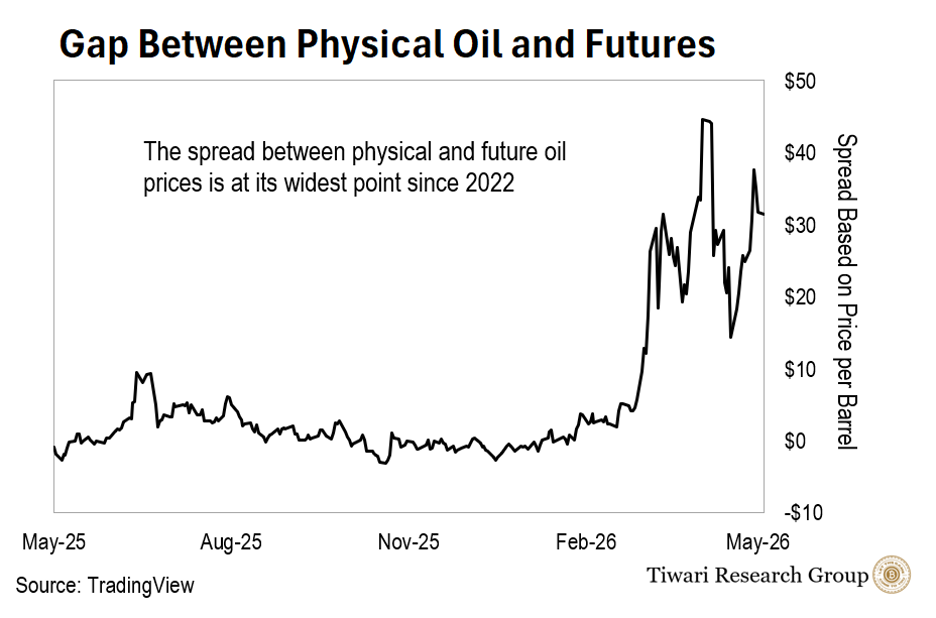
On April 17, I wrote to you about the Crude Oil Civil War we’re seeing. You can read that full essay here. The short version is this: There’s a civil war happening in the crude oil markets, and most people don’t know it’s connected to the AI bubble.

What’s happening is that the “right now” price for physical oil is telling a very different story than the “future” price traders expect to pay in the months ahead.

You can see that in the chart below, which shows the gap (or “spread”) between physical oil prices and futures prices.

That gap hasn’t been this high since 2022, when Russia invaded Ukraine.

What does it mean?

On one hand, the physical market is screaming “shortage.” Buyers need barrels NOW, and they’re paying anything to get them.

That’s because the Iran conflict has a chokehold on the Strait of Hormuz. That’s the narrow waterway through which roughly 20% of global oil supply passed before the war started in February.

On the other hand, traders are saying, “This is temporary. It’ll resolve soon.”

The problem is the market has been saying that for two months. And yet, as you can see, the gap is not really getting any smaller.

This matters because oil touches the price of everything we buy. The longer prices stay high, the more every airline, trucking fleet, chemical plant, and utility in the world will see its primary input cost rise.

And oil prices just hit fresh wartime highs on Friday.

Some of that exposure is hedged, but those hedges don’t last forever. It can take 6-12 months for the full effects to show up. By the time most people feel it, the damage is already done.

Why the “Smart” Money Is Trapped

The irony is that, at the exact moment oil is making historic moves, the institutions managing your retirement savings are legally handcuffed from owning it.

Take CalSTRS, one of the largest pension funds in America. It manages $368 billion in public equities. Between 2022 and 2025, it slashed its traditional (fossil fuels) energy weighting by 36% and moved $30 billion into low-carbon investments.

That’s exactly what I showed you on Wednesday. The “smart” money is being forced to follow ESG mandates in what could be one of the most profitable periods for oil.

Even when we zoom out to all of energy combined, it’s still one of the most underowned sectors in the market. In 2008, it represented 15% of the S&P 500.

Today, it sits at only 3.5%. Compare that to the IT sector, which represents an enormous 32% of the market.

That is a generational abandonment of energy in favor of tech. And history shows us what happens when an unloved sector gets an unexpected catalyst. It snaps back violently.

We saw this back in 2020, when energy hit a record-low weight of just 2% of the S&P 500. Most investors left it for dead after Covid lockdowns crushed oil demand.

That was a mistake. Energy went from the worst-performing sector in 2020 to the top performer in 2021. It gained 46% vs. the S&P 500’s 27%.

By 2022, energy was the only sector in the S&P 500 that finished positive, up 58%. Ten other sectors fell, and the broader index dropped 19%.

That’s a roughly 315% cumulative gain from the unloved bottom over two years, in the most hated sector in the market.

This time, with the physical oil market flashing stress signals, Daily Editor Teeka Tiwari believes we’ll see an even sharper snapback.

Just last week, Al Jazeera published a piece that asked, “When will the Strait of Hormuz be ‘safe’ for commercial shipping again?” The answer boiled down to: Not anytime soon. From that April 28 article:

About 2,000 ships remain stranded in the Gulf. Even if the strait reopens to all traffic, the United States has said it could take six months to clear mines it believes have been laid by Iran.

That is one reason maritime insurers cancelled “war risk” insurance for tankers traveling through the strait in March.

Al Jazeera reported this could push premiums up to 5% of hull value. Before the war, that number was only about 0.25%.

Hull value refers to what the ship itself is worth. Think of it like an insurance appraisal on the vessel, the same way your home has an appraised value before you can insure it. A 5% premium tells us insurers are still pricing the Strait of Hormuz like a war zone, not a shipping lane.

In other words, the crude market is only getting more fractured. And when oil sends mixed signals like this, it usually means the stress has not yet fully worked its way through the economy… and the household names in your retirement portfolio.

The “Paycheck” Strategy for This Market

This is where the oil story connects to the AI bubble.

If oil keeps rising, costs rise across the economy. That matters for every company. But it matters most for the companies already priced for perfection.

The first wave of AI gains went to the obvious names: Nvidia, AMD, Meta, Microsoft, and the rest of the high-flying tech giants.

But those stocks are now swinging violently. One day, investors are questioning whether AI companies will follow through on their promises. The next day, the same stocks are ripping higher.

We saw this with last week’s earnings. Meta and Microsoft beat analyst expectations, and yet they crashed 9% and 4%. Why? Because investors got spooked on AI spending.

That kind of volatility is exactly what we’d expect in a crowded trade. Teeka has been sounding the alarm on this since late last year. And in the January 6Daily, he wrote:

Right now, Alphabet, Amazon, Meta, Microsoft, Nvidia, and Tesla are trading at an average weighted earnings multiple of 56x. That means you have to be willing to pay up to $56 today for every $1 the company earns in a year.

These names are trading at more than 2.5x the entire S&P 500. If that’s not a red flag, I don’t know what is.

We’re not interested in chasing that. Instead, Big T believes the biggest winners from AI won’t necessarily be the flashy tech names everyone is buying today.

The real gains will come from blue-chip companies using AI to improve their margins, cut costs, and boost productivity.

That’s exactly what Teeka’s “Nvidia’s $16 Trillion Paycheck Program” is designed to do. It doesn’t involve buying a single share of Nvidia. It doesn’t involve chasing risky AI startups. And it doesn’t require you to guess which chatbot wins.

Instead, it focuses on a select group of blue-chip companies positioned to benefit from AI adoption while paying reliable dividends along the way. The next scheduled payout is May 15. You can learn more about it here before that deadline.

The bottom line is this: Even people with no money in the markets are starting to sound the alarm on the AI bubble. In times like these, you don’t want to play a high-stakes guessing game.

You want to own the companies built to win no matter what happens next… and get paid while everyone else is guessing.


Don’t Watch the Future Happen. Own It!


Houston Molnar

Update your email preferences or unsubscribe here

© 2026 Tiwari Research Group

1607 Ponce De Leon Ave
San Juan, Puerto Rico 00909, Puerto Rico

Your FOX One mobile app playbook

FOX One | FOMO, Solved. Explore the FOX One App
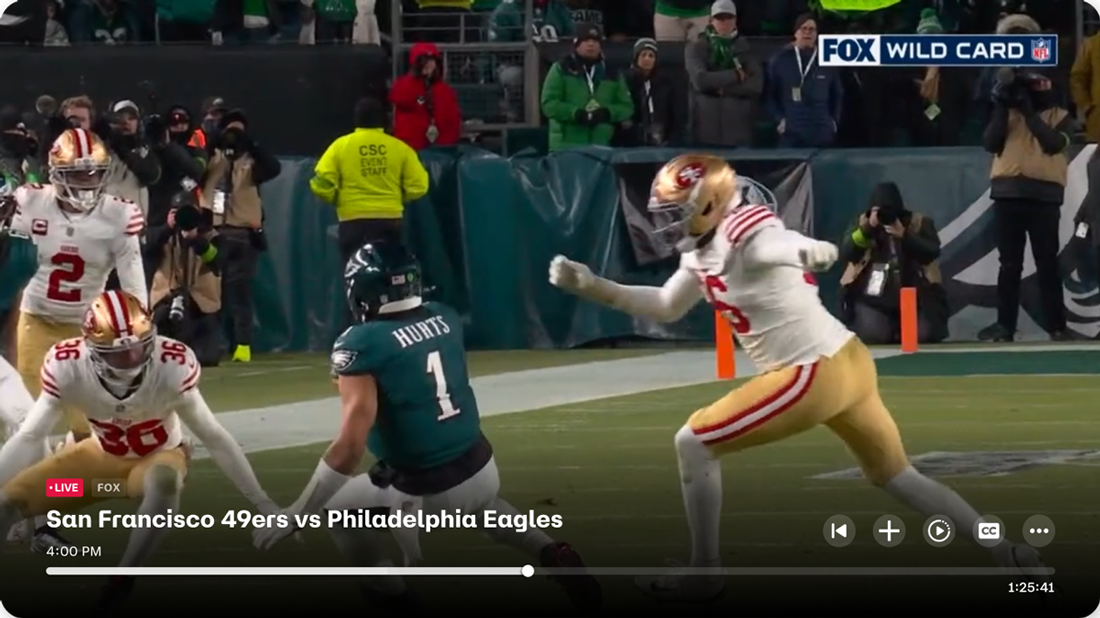
LIVE
Watch FOX One on the go

WATCH ON THE GOStream live and on-demand wherever you are.   

Cast
Cast FOX One to your TV

CAST TO YOUR TVStart watching in the FOX One app, then tap the Cast or AirPlay icon to continue on your TV.
Learn more   

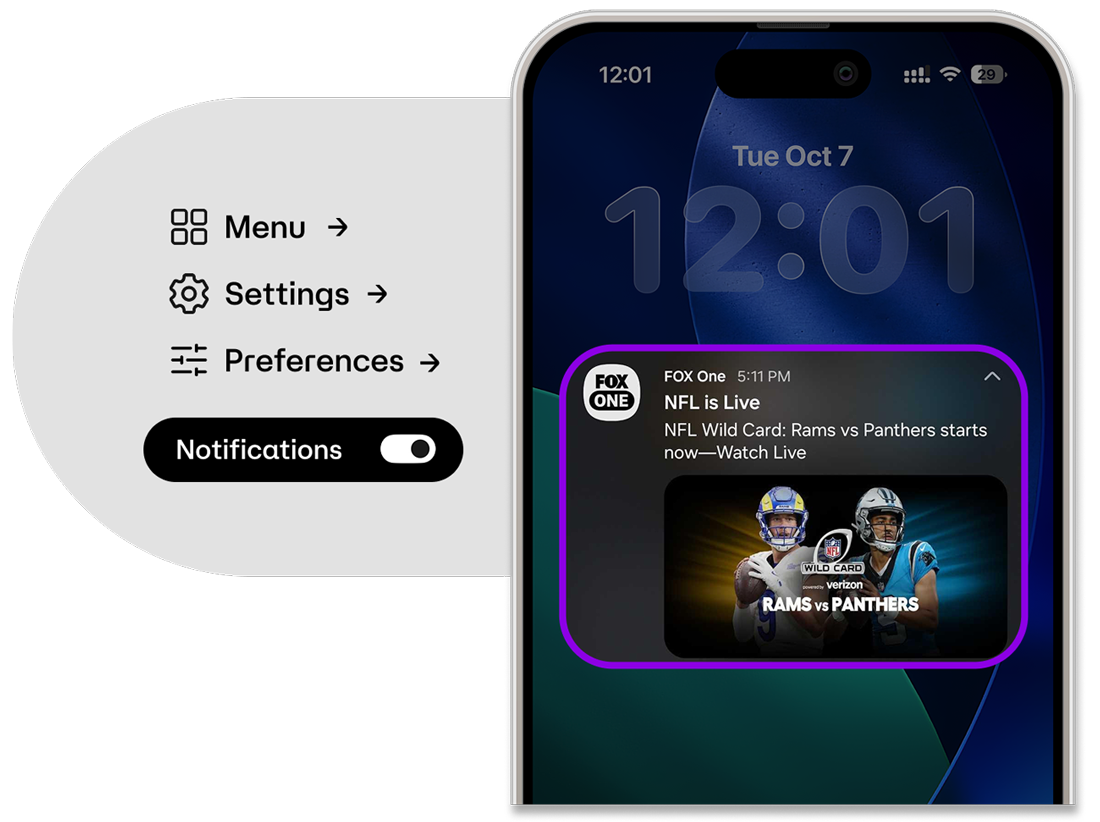
Alerts
Turn on FOX One notifications

STAY IN THE KNOWGet alerts when games start, breaking news hits and new episodes drop. Turn on notifications in Settings: Preferences.   

Shorts

FOX SHORTSSwipe through short clips to catch the biggest sports highlights, breaking news and must-see show moments in minutes.

Watch FOX Shorts on FOX One


My Stuff
On-Demand content on FOX One

MY STUFFRecord content to watch later or when traveling by clicking “+” on the shows, games or leagues you want to record. Watch recorded content on-demand under My Stuff.   

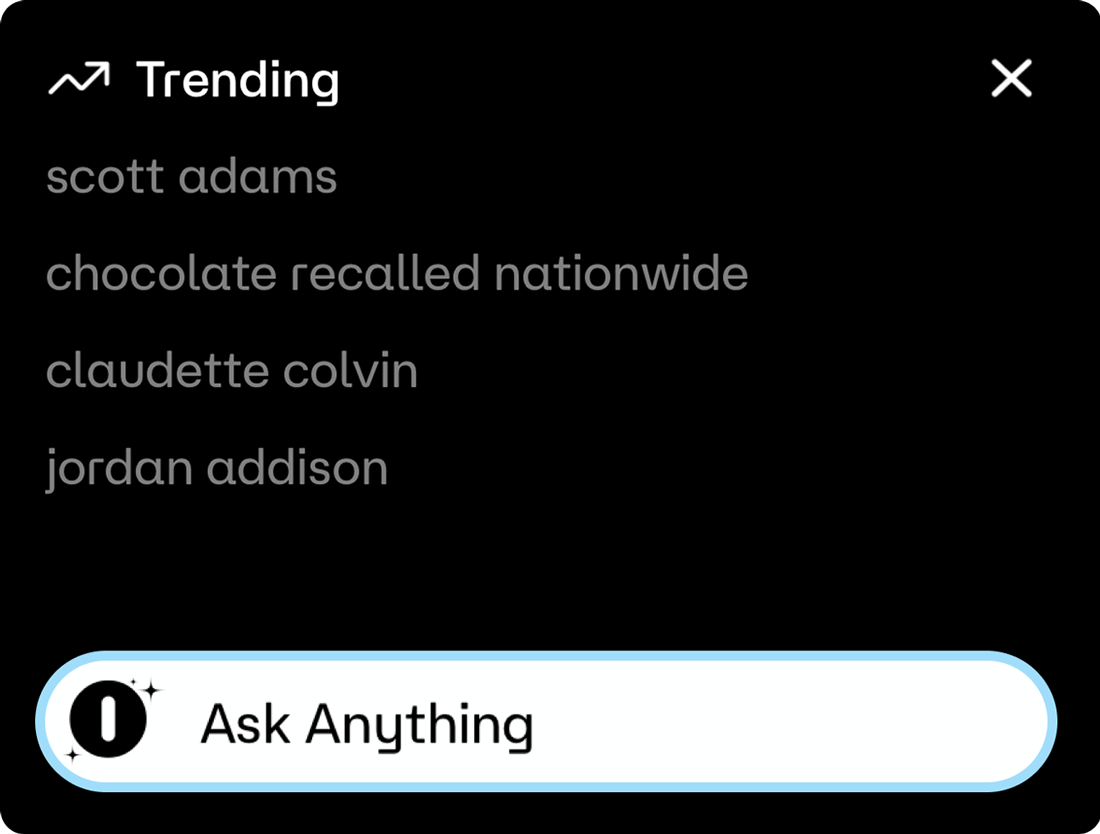
FOX AI
Ask FOX AI on FOX One

ASK FOX AISearch for what to watch, see what’s trending and get the help you need faster than ever.   

Preferences

AVOID SPOILERSHide game scores in the mobile app under Settings: Preferences.

Set Preferences in the FOX One App


FOX One | Explore the Mobile App

Explore the FOX One App to personalize your experience, catch up on highlights and stay connected on the go.

FOX One | Available Where You Watch

   AVAILABLE WHERE YOU WATCH

Download on the App Store
Get It On Google Play
Facebook
Instagram
X
TikTok
FOX One

   DOWNLOAD THE FOX ONE MOBILE APP   Follow Us:

Do you have a question? Click here to visit our Help Center. 
Please do not reply to this message. 

Unsubscribe | Manage Preferences | Terms of Use | Privacy Policy

™ and © 2026 Fox Media LLC. All rights reserved. 

Fox Digital Services LLC | PO Box 900, Beverly Hills, CA 90213-0900

Your Night Prayer

Learn More About The Calling of St. Matthew

Logo Truthly

Today’s Night Prayer is brought to you by Truthly

Catholic “AI for good.” Instant answers and guidance to any question or problem. Try free for 7 days.

A Night Prayer

Jesus Christ, my God, I adore You and thank You for all the graces You have given me this day. I offer You my sleep and all the moments of this night. I place myself and all my loved ones, wherever they may be, in Your sacred side and under the mantle of Our Blessed Mother. Let Your holy angels stand watch and keep us in peace. Amen.

Subscribe to the Morning Offering video podcast

Quote of the Day

“Ask Jesus to make you a saint. After all, only He can do that. Go to confession regularly and to Communion as often as you can.” -Dominic Savio 

Manual For Eucharistic Adoration

Today’s Meditation

Begin your time of Eucharistic adoration [any time of prayer] with a prayer of adoration. You can find one in a prayer book or simply gaze upon Our Lord with love and a simple invocation such as “My God and My All”…Then turn to reparation. This is a good time to make an examination of conscience, to ask God’s help in difficult areas of temptation. Pray an act of contrition. …The next kind of prayer may often be overlooked: prayers of thanksgiving. Compose your own personal litany of thanksgiving: for prayers answered, for graces received…. Finally, turn to prayers of supplication. Ask Our Lord humbly, simply and directly for the things you need, for the prayer requests entrusted to you by others, for all the intentions that are on your heart.

An excerpt from Manual For Eucharistic Adoration

What if your AI didn’t spy on you — and actually aligned with your faith?

With almost 250,000 downloads, Truthly is the Catholic AI app built to help you navigate the internet faithfully. Ask anything. Get answers you can trust — grounded in truth, not trends. 

Here’s what you can do with Truthly: 

  • Ask ANY question — from “What should I watch?” to “What does the Church teach about this?”
  • Respects your privacy — your questions stay yours. No creepy tracking. No selling your data.
  • Read daily Mass readings with helpful summaries and insights.
  • Study Scripture deeply — tap any verse (or verses) and explore its meaning instantly.
  • Find Mass, confession and adoration times (powered by our partners at Masstimes.org).
  • Use simple widgets that keep truth in front of you throughout the day.

Truthly is the fastest growing Catholic startup in the world, built in partnership with trusted Catholic voices like Matt Fradd and Lila Rose. 

Start your free 7-day trial.
No commitment. Cancel anytime.

Learn More 

Recommended Products

Black Wood Crucifix

Black Wood Crucifix

The Weird Catholic Handbook

The Weird Catholic Handbook

Examination of Conscience

The daily examination of conscience is an ancient Catholic practice. It’s very simple, and it’s designed to help us identify our sins and weaknesses so that we can improve and grow stronger in the spiritual life, while providing an excellent ongoing preparation for regular Confession. It consists of taking a few minutes at the end of the day to prayerfully review our actions in the light of God’s commandments, followed by the Act of Contrition.

 Reflect on the victories and losses

Actively reflecting on the high and low points of the day can help you live more intentionally and bring a renewed sense of resolve into the following day.

  • Review your actions, words, and thoughts today. Did you actively guard yourself against temptation? Where did sin creep in?
  • In what moments did you practice virtue and moral courage?
  • Were you attuned to the Holy Spirit’s promptings today? Where did you feel His inspiration?
  • Ask Him for the graces necessary to follow His Will more purposefully tomorrow.

 Act of Contrition

O my God, I am heartily sorry for having offended Thee, and I detest all my sins because of Thy just punishments, but most of all because they offend Thee, my God, Who art all good and deserving of all my love. I firmly resolve with the help of Thy grace to sin no more and to avoid the near occasions of sin. Amen.

 Practice gratitude

It is God’s love that has brought you into existence and to this exact moment. Practice looking for His hand in your day. 

  • Where did you feel His loving gaze upon you today?
  • What people or moments helped you see God in your life?
  • Thank God for all these moments!
  • Ask Him to help you recognize His blessings and providence tomorrow.

 Renew your commitment to Christ

Remember: our Faith is founded upon a Person—Christ! Renew your personal love and devotion to Him.

  • Thank God for the gift of His Son Jesus and our call to be His disciples.
  • Tell the Lord of your desire to know Christ more personally.
  • If possible, set an intention for your day tomorrow. Ask Our Lord to guide you in this act.
  • Pray a Hail Mary, Our Father, or another beloved prayer.

Rest with God

The Mighty One, God the Lord, speaks and summons the earth from the rising of the sun to its setting. — Psalm 50:1

Compline

Read Now 

Want to help your organization reach 2.6 million Catholics? Click here to consider sponsoring future Night Prayers!

Please add NightPrayer@goodcatholic.comto your address book or list of approved senders.

Unsubscribe | Privacy Policy | Contact Us

Can’t see this email? View in Your Browser

Good Catholic

A service of the Network

615 E Westinghouse Blvd Charlotte, North Carolina 28273 US

© 2026 Trinity Road, LLC. All rights reserved.

[Evening Verse] Overflow with Hope 🌟

BeliefnetOne Minute With GodGod Starts and Finishes your Day with Love
Evening Bible ReadingROMANS 15:1-13

We who are strong ought to bear with the failings of the weak, and not to please ourselves; let each of us please his neighbor for his good, to edify him. For Christ did not please himself; but, as it is written, “The reproaches of those who reproached thee fell on me.” For whatever was written in former days was written for our instruction, that by steadfastness and by the encouragement of the scriptures we might have hope. May the God of steadfastness and encouragement grant you to live in such harmony with one another, in accord with… 

Read moreTEST YOUR BIBLE KNOWLEDGEWho built the ark to survive the flood?MosesAbrahamNoahElijah Advertisement ©2026 Beliefnet
PO Box 219 Gloucester, VA 23061.
All rights reserved
Privacy Policy

Click here to unsubscribertb#1rtb#2rtb#3rtb#4rtb#5

Daily Movers: Jack Henry (NASDAQ:JKHY) Reports Strong Q1 CY2026

Daily recap of your portfolio performance - CLOSING BELL - PNG

Your recap for May 5, 2026 Top stories for youJack Henry (NASDAQ:JKHY) Reports Strong Q1 CY2026Saylor’s Strategy posts wider quarterly loss on bitcoin slumpStrategy Posts $12.5 Billion Q1 Loss as Bitcoin Slump Hammers Massive HoldingsGrowth in gaming accessories pushes Logitech’s fourth-quarter sales higher‘I of all people should have known’: Michael Burry bails on GameStop holdings after surprise eBay merg…View more storiesMy portfolio highlightsDay Change   +1.8%Top gainersSTXSeagate Technology771.01
+4.38%
SAHSonic Automotive78.79
+4.23%
FIXComfort Systems USA1,967.24
+3.98%
Top losersUURAFUcore Rare Metals3.89
-8.04%
EBAYeBay105.26
-3.72%
JKHYJack Henry & …149.34
-2.08%
Most activesGMEGameStop24.23
+1.64%
MSTRStrategy Inc186.9
+1.69%
DISThe Walt Disney C…100.48
-0.82%
View your portfoliosUS market highlightsS&P 500
+0.81%Dow 30
+0.73%Nasdaq
+1.03%Russell 2000
+1.75%Crude Oil
-3.6%Top gainersSTRL
Sterling Infrastr…806.0
+52.22%DOCN
DigitalOcean Hold…152.77
+40.4%CIFR
Cipher Digital Inc.22.1
+23.53%Top losersIPGP
IPG Photonics Cor…90.84
-25.74%ADEA
Adeia Inc.27.82
-17.26%OSIS
OSI Systems, Inc.234.74
-17.01%Most activesINTC
Intel Corporation108.15
+12.92%NVDA
NVIDIA Corporation196.5
-1.03%NOK
Nokia Corporation…13.42
+2.13%Yahoo Finance App: Portfolio performance, news and alerts, stock data and all you need in a finance app. Download now.

Privacy Policy | Customer Support | Unsubscribe

©2026 Yahoo Inc. All Rights Reserved.

770 Broadway, New York, NY 10003

New Alert [Wednesday @ 9:30am ET]

May 5, 2026 | Unsubscribe 

Hello!

Three winners in a row to start the month of May and we are just getting started. 

Friday’s alert surged +25% in 2 days.

Monday’s alert jumped +23% intraday.

And today’s alert is already pushing higher, up +6% so far as we continue to monitor it for further upside. 

Congratulations to everyone who benefited from these moves. 

Now it is time to focus on tomorrow – and this one caught our attention for good reason. 

We have a new NASDAQ alert coming tomorrow morning, Wednesday at 9:30 AM ET.

This upcoming alert trades under 0.50 and has a history of high volatility, which has previously led to very big rallies. 

We believe this new alert is an under-the-radar opportunity with a compelling chart setup. 

In addition, the company recently announced several big announcements. 

Low price. High volatility. Fresh catalysts. This is exactly the setup we look for. 

Be ready tomorrow morning, Wednesday at 9:30 AM ET.

To get all of our updates in real-time – Click hereto sign-up for free text alerts to your phone. (*We do not charge for this service, but standard carrier message and data rates may apply.)

Please make sure our emails are landing in your inbox, not spam, so you do not miss the alert. 

All alerts are released only during normal market hours to ensure all subscribers get the same fair access and to avoid after-hours volatility. 

See you tomorrow morning!

SmallCapStocks Team

DISCLAIMER:

You should read and understand this disclaimer in its entirety before joining the website or email/blog list of SmallCapStocks.com (the “Publisher”).  The information (collectively the “Advertisement”) disseminated by email, text or other method by the Publisher including this publication is a paid commercial advertisement and should not be relied upon for making an investment decision or any other purpose. The Publisher is engaged in the business of marketing and advertising the securities of publicly traded companies in exchange for compensation. The track record, gains, upside, and/or losses mentioned in the Advertisement, if any, should not be considered as true or accurate or be the basis for an investment. The Publisher does not verify the accuracy or completeness of any information included in the Advertisement. While the Publisher does not charge for the SMS service, standard carrier message and data rates may apply. To unsubscribe from receiving promotional text messages to your phone sent via an autodialer, using your phone reply to the sender’s phone number with the word STOP or HELP for help.You are receiving this report/release because you subscribed to receive it at our website or through a third-party site.  All our newsletters include an “unsubscribe” link, and you can remove yourself at any time from our newsletters by clicking on that “unsubscribe” link. You can also contact us at info@SmallCapStocks.com to change your information at any time. By your subscription to our profiles, the viewing of this profile and/or use of our website, you have agreed and acknowledged the terms of our full disclaimer and privacy policy which can be viewed at the following link: www.SmallCapStocks.com/Disclaimer and www.SmallCapStocks.com/Privacy-Policy

Update your email preferences or unsubscribe here

1969 South Alafaya Trail
Orlando, Florida 32828, United StatesPowered by beehiivTerms of Service 

Enter your spring birding era 🌸

Facebook
Instagram
Youtube
LinkedIn

Trouble viewing this e-mail? Try our web version.

National Audubon Society
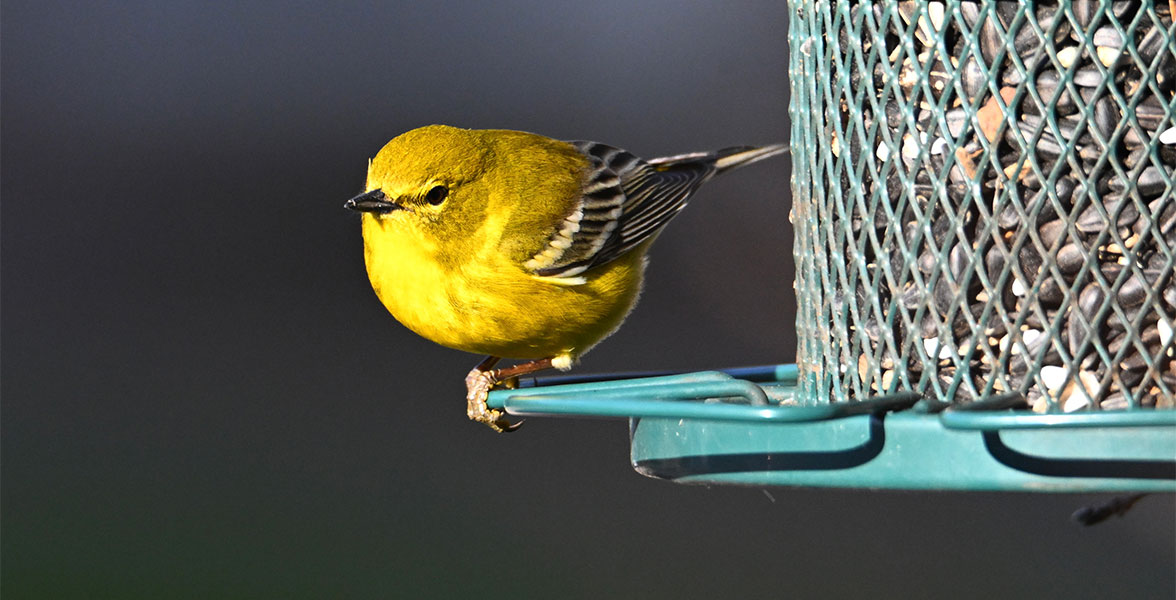
A Pine Warbler perches on a bird feeder.
divider line

Pine Warbler. Photo: Joan Risinger/Audubon Photography Awards

Welcome Birds Back with Bountiful Birdseed!Birds are on the move! Become birds’ favorite rest stop this migration season by filling your feeders with quality birdseed. Explore our birdseed, feed, and suet.

From Nyjer to dried cherry seed blends, our wide range of wild bird food can help you attract a variety of birds. Learn who likes what with our guide to birds’ seed and feed preferences. 

An Eastern Bluebird perches on a birdhouse.
divider line

Eastern Bluebird. Photo: Jessica Nelson/Audubon Photography Awards

Home Is Where the Nest Is

The bird housing market is rough, too. There aren’t enough hollows in dead trees, cracks in old buildings, and other natural cavities to go around. Help provide a safe place for birds to raise young this nesting season! We have birdhouses built for a range of species—from bluebirds to wrens—that are designed with bird safety in mind. Check out Audubon birdhouses.

A Common Yellowthroat sings while perched on a plant. They are surrounded by Black-Eyed-Susans.
divider line

Common Yellowthroat with Black-Eyed-Susan. Photo: Ryan Shean/Audubon Photography Awards

Join the “Less Lawn More Life” Challenge!

Did you know that lawns use more water and pesticides per acre than a farm? This spring, join thousands across America restoring nature in their own backyards by signing up for the Less Lawn More Life challenge! Over the course of 12 weeks, participants will be guided through a series of fun, free, and expert-led weekly challenges that show up in their inbox. Sign up at lesslawnmorelife.com.

Two people with binoculars bird in a woodsy area. The person on the left looks through their binoculars. The person on the right points at a bird.

Celebrate Spring at Our Brand Store

With beloved designs like our Let’s Go Birding Together and Share the Shore collections, our store is your one-stop shop for celebrating the joy of birds and nature. Whether you’re revving up for spring birding or looking to add more birds to your wardrobe, find all things birds at the Audubon Brand Store.Explore Audubon Marketplace

National Audubon Society
225 Varick Street
New York, NY 10014 USA
(844) 428-3826 | www.audubon.org

© 2026 National Audubon Society

Update your email preferences or unsubscribe

💥 America’s Most Radical Leftist

Ariel David

These pieces are usually reserved for paid readers, but we’ve made this one free so it can be shared with your friends and family. It’s important that people understand what’s at stake and what we’re up against. We hope you find it useful and pass it along. At the end, we’ll ask you to consider becoming a paid member to help us keep doing this kind of work. 

DEEP DIVE

Hasan Piker’s Horrifying Vision For America

Don’t call him a “useful idiot.” 

It was fashionable to be a communist in the 1930s. Intellectual and artistic circles adored the ideology, from the writers in New York to the budding celebrity hub of Hollywood. Many were card-carrying members of the Communist Party USA. 

But this was all before Senator Joe McCarthy’s Red Scare, which, despite its modern retelling as a pure witch hunt, did attempt to uncover real communistsoperating inside the United States government. More importantly, it was before ordinary Americans knew the full details of the brutal repression happening in the Soviet Union under the banner of communism. 

Some left the ideology entirely. Whittaker Chambers is the most famous example — a onetime Soviet spy who defected, named names, and became a conservative icon. Others kept the faith, convinced that real communism had simply never been attempted. They quietly dropped the label. “Progressive” and “democratic socialist” became popular replacements, often used interchangeably. 

Those people — during their years of defending and promoting Soviet communism — were classic “useful idiots,” a phrase commonly attributed to Vladimir Lenin. The term describes someone manipulated into serving a hostile cause without understanding what they’re actually advocating for. The Soviets knew they had foreign admirers and regarded them as disposable pawns — useful for now, irrelevant later. 

That term gets thrown around a lot today. Recently, it’s been aimed at Hasan Piker, a leftist online streamer who has become a surprising favorite of mainstream Democratic politicians and media figures. But there’s the problem with that label: calling someone a useful idiot is actually the most charitable interpretation available. The phrase implies naivety, strips away agency, and blames ignorance. 

But Piker, the young, wealthy streamer — rarely seen without designer clothing — makes little effort to conceal his views. By his own words, Piker knows exactly which policies he supports and which regimes he defends — and he doesn’t seem troubled by either. Yet despite that, he continues to be welcomed and actively boosted by left-of-center politicians and media figures into the American mainstream. 

That’s why it’s vital to examine: who is Hasan Piker, what does he actually believe, and what does the future he’s pushing for look like in practice? 

Hasan Doğan Piker was born in New Jersey in 1991 to Turkish parents, but grew up in Istanbul and was raised Muslim. His father belonged to the Turkish business elite, serving as vice president of one of the country’s largest conglomerates — a company whose asset value has reached roughly $10 billion in recent years. (Piker has said his family lost its wealth by the time he reached college.) 

His mother is a professor of art and architectural history at the New Jersey Institute of Technology. His uncle, Cenk Uygur, is more familiar to most readers — the longtime leftist commentator and founder of The Young Turks. Piker interned at his uncle’s media company before striking out on his own, eventually building one of the largest followings on Twitch through a shock-jock style of political commentary. (In 2019, during one of his seven-to-ten-hour streams, he told his audience: “America deserved 9/11, dude.”) 

He attracts young leftists who find him cool, attractive, and willing to say boldly what they all believe. In 2019, during one of his seven- to ten-hour streams, he told his audience: “America deserved 9/11, dude.” 

Streaming success was only the beginning. Piker has since found a warm reception from politicians and from foreign governments willing to have him carry their message. He has become a political operator in his own right, and his profile now reaches well beyond the streaming world. 

_AUTHORITARIANISM_

In November, before his recent Cuba trip in defense of the communist regime there, he flew to Beijing. While there, he sat for an interview on Chinese state television and praised the country at length, telling viewers that much of what they’d heard about the Chinese Communist Party (CCP) from Western sources was inaccurate — rumors, misunderstandings, lies he wanted to clear up. 

He was asked in another conversation whether any country in the world has implemented socialism in a form he admires. Piker passed over the obvious, socialist-lite, answers — Sweden, Denmark, Finland, the welfare states most American leftists point to — and offered an unexpected one. “China is probably the closest,” he said. He gestured at “plenty of issues within the Chinese system,” declined to identify any of them, and moved on to praise the country’s high-speed rail network. 

Piker has compared the Chinese annexation of Tibet to the Union’s defeat of the Confederacy during the American Civil War, and suggested the result was a kind of civilizing improvement for the region. He has drawn the same parallel between Taiwan and the Confederate States. 

Discussing China’s Uyghur camps in Xinjiang, he initially used the phrase “concentration camps” before correcting himself, settling on “re-education camps,” and adding that they “are all closed now.” Neither of those is true. 

When he was pressed about the lack of LGBT rights in China — because he’s a liberal and is expected to care — Piker described the country as “gay as hell” and explained the CCP’s prohibition on gay dating apps as a kind of digital privacy measure. 

It is worth pausing on what Piker is defending here. The Chinese state arrests citizens for symbolic protest — the now-famous blank sheets of paper held up during the 2022 protests being only one example. 

During the pandemic, the CCP physically sealed residents to die inside their apartment buildings. The forced labor system in Xinjiang involves Uyghurs on an industrial scale. Hong Kong’s political opposition has been dismantled. Independent Taiwan exists today only because the United States and its allies have made an invasion costly enough to defer. 

A common thread runs through all of his rhetoric. Piker offers loud, unembarrassed support for authoritarian and communist regimes that have used mass repression and violence as legitimate tools of statecraft. Paired with that is a steady contempt for the United States, which he describes as an imperial project that deserved the September 11 terrorist attacks, and whose economic system — capitalism — he believes, as Marx did, is a form of violence in itself. 

Speaking earlier this year at the Yale Political Union, Piker told the audience that “the fall of the USSR was one of the greatest catastrophes of the 20th century.” The audience at Yale heard nothing about Soviet famine, the labor camps, the deportations of entire ethnic groups, or the political executions that defined the regime he was eulogizing. 

During one of his livestreams, Piker described Mao Zedong as “one of the great leaders of this world.” Mao’s policies are responsible for tens of millions of deaths through famine, ideological purge, and forced collectivization. 

The ugliest moment in his recent record involves a Vietnamese woman named Bach Hac. In a video that resurfaced last year, in a stream, Piker was viewing a BBC interview of Bach Hac, a refugee, describing what her family endured under the communist government in Vietnam. Piker’s response, captured on stream, was the following: “F*** you, old lady. Shut the f*** up, you stupid, idiotic old lady. Suck my d***, old lady. God d***, Yo, f*** this refugee.” The rest of the interview includes a child of Vietnamese refugees, retelling how the communists forced her father to spend his childhood living in the jungle. 

Like his uncle, Piker spends an enormous amount of his airtime focused on Israel. He has refused to condemn Hamas — sayingthe group is “a thousand times better” than Israel — and has defended its actions on stream. 

He has celebrated Democratic candidate Graham Platner, who has a Nazi tattoo on his chest, on the grounds that Platner had also defended Hamas. When one of his own viewers condemned the October 7 attack, Piker responded by calling her a “bloodthirsty, violent pig dog” and telling her to “suck my d***.” 

Piker is direct about his own ideological position when asked. He defines communism as “the end stage … the final goal. It’s like the final evolution, a stateless, moneyless, classless society. A borderless society. We’ve never really had communism.” He treats the word “communist” as an accurate, even flattering, description of his views. 

_MORALITY_

A vision this radical requires discarding the means for the sake of the ends. The Soviets told their subjects exactly that — you have to break a few eggs to make an omelet. Their suffering was the price of utopia. Piker operates on the same logic. He has set aside traditional morality in service of a higher purpose, and the rules the rest of us live by are, to him, obstacles to the better world he believes is coming. 

Recently, The New York Times filmed a long group conversation that included Piker and New Yorker writer Jia Tolentino. Across that conversation, Piker said a series of things worth taking seriously rather than waving off as normal, if not hyperbolic, podcast banter. 

He defended the murder of UnitedHealthcare CEO Brian Thompson, arguing that Thompson had been responsible for what Piker called “a tremendous amount of social murder.” As in, Thompson had it coming because of the issues with our healthcare system. He said he would “steal a car” if he believed he could get away with it. He noted that stealing from “big corporations” was fine. 

A free society depends on a baseline rule that individuals are not allowed to decide unilaterally which other individuals deserve to be killed, and which businesses deserve to be looted. Once that rule becomes negotiable — once executives become legitimately murderable on the basis of their alleged role in “social harm,” once shoplifting becomes ethical and private property has no value — this framework collapses. 

Crucially, this moral framework that Piker chips away at is the bulwark that resists communism. A top-down forced collectivization that strips citizens of their private property, ownership, and freedom cannot happen unless Piker’s morality becomes the standard. That’s why he’s doing it, and it’s worth taking Piker at his word and asking what the country would actually look like if his politics were implemented. 

_HIS AMERICA_

Start with the thing most young Americans take for granted: the ability to build a life on your own terms. Under the systems Piker admires, that disappears. In Mao’s China, you did not pick your career — the state assigned it. You did not choose where you lived; you were given housing where the party needed you. You could not start a business, because there were no businesses to start. The shop your grandfather built was confiscated. The savings your parents put aside were worthless. Whatever you had imagined for yourself was replaced by whatever the state had imagined for you. 

In the Soviet Union, when Stalin ordered the collectivization of agriculture in the late 1920s, peasants who refused to surrender their land to the state were arrested, shot, or deported to Siberia. The kulaks — peasants whose only crime was farming a little better than their neighbors — were declared an enemy class and liquidated. Entire families were loaded onto trains and dumped in the Arctic to die. Their farms were absorbed into collectives whose mismanagement produced the famines that killed millions in the years that followed. 

The same logic was applied to anyone who had built a middle-class life before the revolution. Shopkeepers, small manufacturers, priests, former officials, and their children were classified as lishentsy — the “deprived ones” — a legal category created in the early Soviet constitution that stripped them of basic rights of citizenship. They could not vote. Their children were barred from universities. They were denied ration cards during food shortages, denied access to public hospitals, denied housing, denied jobs in state enterprises, which by then meant nearly all jobs. They were systematically excluded from society until many of them starved, fell ill, or were swept up in later waves of arrests. 

In Cuba, three generations have now grown up under the system Fidel Castro built. They have never known a free press. They have never voted in a real, meaningful election. They cannot criticize the government. The grandchildren of the men who built Cuba before the revolution inherited a country where ambition is pointless because the ceiling is set by the party. Just compare those who fled Cuba to America, and those who tragically stayed. Who’s better off? 

This is what Piker is asking young Americans to sign up for. 

_WARMLY EMBRACED_

If Piker were a marginal figure, none of this would matter. But he isn’t. Aside from his success in growing an audience online, Piker is being absorbed into mainstream American liberalism in real time, and the people doing the absorbing are not hiding it. 

This month, New York Times columnist Ezra Klein published a piece in defense of Piker, originally titled “Hasan Piker Is Not the Enemy.” Pod Save America, the Crooked Media flagship podcast founded by former Obama White House staffers, has hosted Piker as a guest. He has appeared frequently across the broader Crooked Media network and was a featured guest at their live event, Crooked Con. 

Politicians have moved into his orbit at a steady pace. Piker hosted Zohran Mamdani during Mamdani’s run for New York City mayor and was an invited guest at his victory party. He has interviewed progressive Representatives Ro Khanna (D-CA), Rashida Tlaib (D-MI), Ilhan Omar (D-MN), California gubernatorial frontrunner Tom Steyer, and New York congressional candidate Effie Phillips-Staley. 

Earlier this year, he attended a campaign event for Michigan Senate candidate Abdul El-Sayed. The question of whether to appear on his stream has become a recognizable signaling decision inside Democratic politics — a way for candidates to mark themselves as either willing to address the online Left or unwilling to legitimize him. 

Beyond his own interviews, he guests on Voxpodcasts. He does Instagram appearances for The New Yorker. He has been profiled — admiringly — in Vulture, Cosmopolitan, Wired, The New Yorker, Variety, and GQ. The tone of those profiles is, almost without exception, soft. The interviewers are interested in his apartment, his relationship history, his physique, his clothes. They are mostly not interested in why a man who calls Mao a great leader is being positioned as the future of progressive media. 

Are all of them useful idiots? Some, perhaps. Others, likely in agreement with Piker but have careers that require hiding their most extreme political views, certainly know what they’re doing. Either way, the answer doesn’t change much. Piker, simply put, does not have good intentions for this country or its people. And his mainstreaming into the Democratic Party reveals something about the party itself: its leaders are willing to platform fringe, radical elements, which should concern everyone. Let us know what you think →

Hasan Piker was supported by his wealthy family to spread his radicalism. The Young Turks, where he used to work, is funded by billionaires and venture capital. 

Upward News doesn’t have billionaire backers, and we certainly aren’t bankrolled by our families. We rely on reader support — so if you like what we’re doing and want to keep us independent, please consider becoming a paid member. Support our mission: 15% off →

We can only keep doing this work if you choose to support us. Help us keep this project alive. 

Thank you for being here. 

— Ariel 

❤️ If you think we’re doing a good job,please help us stay independent with a one-time donation. 

🔎 Tip line: Have a story from your campus, community, or company that needs exposure? Send tips, questions, or ideas to tips@upward.news. 

👋 To say hello, respond to this email. 

Update your email preferences or unsubscribe here

PO Box 960019
Inwood, NY 11096, United States Terms of Service 

Front-running the market’s biggest moves could become your hobby

Buried deep in the very fabric of every option’s price in the market… 
 
Lies a shocking phenomenon that gives an early signal when a stock is about to make a move in the coming days…
 
Giving any trader in the know a window to front-run triple-digit opportunities.
 
And it all starts with this Nobel Prize–winning formula. 

This formula is the backbone of how every single option is priced in the market. 
 
Options brokers have used this same formula for decades to assign a “fair value” to options, giving Wall Street a ridiculous advantage over you and me.
 
But the twist is… 
 
There’s a “mistake” in this formula that helps signal a stock’s potential move… 
 
Handing you and me a chance to jump in before the move hits the charts.
 
I discovered this secret when I was VP at a multi-trillion-dollar firm back in the day.
 
And this “mistake” helped us line our clients’ pockets and net a multi-million-dollar payday in one of the worst days of the Great Financial Crisis.
 
It doesn’t end there…
 
Just a while ago…
 
When Intel was in an ugly three-month tailspin…

And reports of massive new layoffs were hitting the workforce, nobody expected a reversal anytime soon.

But by tapping this “mistake” I’ll tell you about here…
 
You could have known Intel was about to take off in the coming days…
 
And that signal would have delivered 127% in less than a week based on research.

Or what about United Airlines, just weeks back in January this year?
 
Most airline stocks had a tough year in 2025.

But that didn’t matter on January 2nd… 
 
Because this “mistake” showed a big move in the future was on the cards. 
 
And sure enough, that signal would have delivered a 106% return in just a few days based on research.

Sure, there would have been smaller wins and those that didn’t work.
 
But this phenomenon can hand you shots at front-running triple-digit moves.
 
I recently went on camera with my good friend and former hedge fund manager, Roger Scott, to reveal the details…
 
From the genesis of this “mistake” to the powerful players on Wall Street controlling it…
 
To show you how you can take advantage starting with the next opportunity.
 
If you’re interested… 
 
Tap this link to get the entire breakdown.
 
Trade Smart,

Kane Shieh
 
The trades expressed today are based on signals from Kane’s NEW Dashboard with the benefit of 20/20 hindsight, unless otherwise stated, and must be considered hypothetical. According to a backtest of over 30 years of data, the scanner’s signals show it would have been up to 85.6% accurate on individual stocks… No strategy is perfect, and wins are not guaranteed. There’s bound to be winners and losers along the way. Since this new dashboard is a tool for traders and not a trading service, profits and performance will vary among users.


A TradingPub Publication  

ABOUT US:  We believe that the opportunity for financial literacy and freedom belongs to all people, not just those who already have years of investing experience. TradingPub provides an array of educational services and products that will help you navigate the markets and become a better investor. Trading is made simple through our online forum full of trading techniques to give you the best tools to kick-start your investing journey. We offer collaborative webinars and training; we love to teach. No matter the opportunity, we bring together a strong community of like-minded traders to focus on analyzing market news as it’s presented each day.
 
DISCLAIMER: FOR INFORMATION PURPOSES ONLY. The materials presented from TradingPub LLC are for your informational purposes only. Neither TradingPub nor its employees offer investment, legal or tax advice of any kind, and the analysis displayed with various tools does not constitute investment, legal or tax advice and should not be interpreted as such. Using the data and analysis contained in the materials for reasons other than the informational purposes intended is at the user’s own risk.
 
DISCLAIMER: TRADE AT YOUR OWN RISK; TRADING INVOLVES RISK OF LOSS; SEEK PROFESSIONAL ADVICE. TradingPub is not responsible for any losses that may occur from transactions effected based upon information or analysis contained in the presented. To the extent that you make use of the concepts with the presentation material, you are solely responsible for the applicable trading or investment decision. Trading activity, including options transactions, can involve the risk of loss, so use caution when entering any option transaction. You trade at your own risk, and it is recommended you consult with a financial advisor for investment, legal or tax advice relating to options transactions.  Please visit https://thetradingpub.com/terms-of-service/ ?mobile=1 for our full Terms and Conditions.
 
Unsubscribe
This email was sent to peter.hovis@gmail.com by TradingPub
101 Marketside Ave, Suite 404 PMB 318,
Ponte Vedra, Florida 32081, United States

What Happens When the AI Bubble Pops?

Everyone is talking about the AI bubble. Even people with no money in the markets are sounding the alarm.

Houston breaks down why in yesterday’s Daily below and what it means for the stocks sitting in your retirement account right now.

But here’s what most people aren’t talking about.


While the biggest tech stocks in the world swing violently on every earnings report, a handful of companies are quietly winning. They’re not the flashy AI names making headlines. They’re the ones building the infrastructure behind it all. The energy. The grid. The data centers.

And subscribers who got positioned in these stocks back in December are now outperforming the S&P 500 by 3x. One position already delivered a 139% win.

Another has 1,833% upside potential still ahead.

You don’t have to guess which AI stock wins. You just have to own the ones that get paid no matter what.

In case you missed it, here’s Big T’s Digital Asset Daily

You know it’s serious when the economic conversation spills over onto the usually “fun” side of social media.

A few days ago, a post crossed my Instagram feed with this warning: “The AI bubble is 17x larger than the dot-com bubble,” it read. “And 4x larger than the 2008 Financial crisis.”

People swarmed the comments. They wanted to know what happens to their savings… or the cash under the mattress… if the bubble pops.

“What if I’ve avoided AI this whole time?” one person asked. “How will it affect me?”

They’re not wrong to ask. If we look at the last two bubbles, the effects when they popped rippled beyond people’s stock accounts.

The dot-com crash contributed to an eight-month recession in 2001. By the spring of 2004, an estimated 403,300 jobs had been lost in the IT sector alone.

The effects of the 2008 crash were even deeper.

A Frontline article published in 2012 (four years after the stock market’s collapse) showed that:

  • There were still 12.5 million people out of work, not saving for retirement, and not contributing to the GDP.
  • The government had poured about $23 trillion into a host of programs and bailouts.
  • Real estate had lost roughly $7 trillion, stocks $11 trillion, and retirement accounts another $3.4 trillion.
  • The Census Bureau’s 2010 estimate said 46.2 million people were in poverty – the largest number in 52 years.

I’m not saying this to scare you. But with the AI bubble getting bigger each day, we can’t afford to bury our heads in the sand.

And what nobody mentioned in that discussion I read last week was the story we’ve been tracking in these pages. Yet it provides the clearest answer to the one question that kept coming up: What can I do about it?

One Market, Two Signals

On April 17, I wrote to you about the Crude Oil Civil War we’re seeing. You can read that full essay here. The short version is this: There’s a civil war happening in the crude oil markets, and most people don’t know it’s connected to the AI bubble.

What’s happening is that the “right now” price for physical oil is telling a very different story than the “future” price traders expect to pay in the months ahead.

You can see that in the chart below, which shows the gap (or “spread”) between physical oil prices and futures prices.

That gap hasn’t been this high since 2022, when Russia invaded Ukraine.

What does it mean?

On one hand, the physical market is screaming “shortage.” Buyers need barrels NOW, and they’re paying anything to get them.

That’s because the Iran conflict has a chokehold on the Strait of Hormuz. That’s the narrow waterway through which roughly 20% of global oil supply passed before the war started in February.

On the other hand, traders are saying, “This is temporary. It’ll resolve soon.”

The problem is the market has been saying that for two months. And yet, as you can see, the gap is not really getting any smaller.

This matters because oil touches the price of everything we buy. The longer prices stay high, the more every airline, trucking fleet, chemical plant, and utility in the world will see its primary input cost rise.

And oil prices just hit fresh wartime highs on Friday.

Some of that exposure is hedged, but those hedges don’t last forever. It can take 6-12 months for the full effects to show up. By the time most people feel it, the damage is already done.

Why the “Smart” Money Is Trapped

The irony is that, at the exact moment oil is making historic moves, the institutions managing your retirement savings are legally handcuffed from owning it.

Take CalSTRS, one of the largest pension funds in America. It manages $368 billion in public equities. Between 2022 and 2025, it slashed its traditional (fossil fuels) energy weighting by 36% and moved $30 billion into low-carbon investments.

That’s exactly what I showed you on Wednesday. The “smart” money is being forced to follow ESG mandates in what could be one of the most profitable periods for oil.

Even when we zoom out to all of energy combined, it’s still one of the most underowned sectors in the market. In 2008, it represented 15% of the S&P 500.

Today, it sits at only 3.5%. Compare that to the IT sector, which represents an enormous 32% of the market.

That is a generational abandonment of energy in favor of tech. And history shows us what happens when an unloved sector gets an unexpected catalyst. It snaps back violently.

We saw this back in 2020, when energy hit a record-low weight of just 2% of the S&P 500. Most investors left it for dead after Covid lockdowns crushed oil demand.

That was a mistake. Energy went from the worst-performing sector in 2020 to the top performer in 2021. It gained 46% vs. the S&P 500’s 27%.

By 2022, energy was the only sector in the S&P 500 that finished positive, up 58%. Ten other sectors fell, and the broader index dropped 19%.

That’s a roughly 315% cumulative gain from the unloved bottom over two years, in the most hated sector in the market.

This time, with the physical oil market flashing stress signals, Daily Editor Teeka Tiwari believes we’ll see an even sharper snapback.

Just last week, Al Jazeera published a piece that asked, “When will the Strait of Hormuz be ‘safe’ for commercial shipping again?” The answer boiled down to: Not anytime soon. From that April 28 article:

About 2,000 ships remain stranded in the Gulf. Even if the strait reopens to all traffic, the United States has said it could take six months to clear mines it believes have been laid by Iran.

That is one reason maritime insurers cancelled “war risk” insurance for tankers traveling through the strait in March.

Al Jazeera reported this could push premiums up to 5% of hull value. Before the war, that number was only about 0.25%.

Hull value refers to what the ship itself is worth. Think of it like an insurance appraisal on the vessel, the same way your home has an appraised value before you can insure it. A 5% premium tells us insurers are still pricing the Strait of Hormuz like a war zone, not a shipping lane.

In other words, the crude market is only getting more fractured. And when oil sends mixed signals like this, it usually means the stress has not yet fully worked its way through the economy… and the household names in your retirement portfolio.

The “Paycheck” Strategy for This Market

This is where the oil story connects to the AI bubble.

If oil keeps rising, costs rise across the economy. That matters for every company. But it matters most for the companies already priced for perfection.

The first wave of AI gains went to the obvious names: Nvidia, AMD, Meta, Microsoft, and the rest of the high-flying tech giants.

But those stocks are now swinging violently. One day, investors are questioning whether AI companies will follow through on their promises. The next day, the same stocks are ripping higher.

We saw this with last week’s earnings. Meta and Microsoft beat analyst expectations, and yet they crashed 9% and 4%. Why? Because investors got spooked on AI spending.

That kind of volatility is exactly what we’d expect in a crowded trade. Teeka has been sounding the alarm on this since late last year. And in the January 6Daily, he wrote:

Right now, Alphabet, Amazon, Meta, Microsoft, Nvidia, and Tesla are trading at an average weighted earnings multiple of 56x. That means you have to be willing to pay up to $56 today for every $1 the company earns in a year.

These names are trading at more than 2.5x the entire S&P 500. If that’s not a red flag, I don’t know what is.

We’re not interested in chasing that. Instead, Big T believes the biggest winners from AI won’t necessarily be the flashy tech names everyone is buying today.

The real gains will come from blue-chip companies using AI to improve their margins, cut costs, and boost productivity.

That’s exactly what Teeka’s “Nvidia’s $16 Trillion Paycheck Program” is designed to do. It doesn’t involve buying a single share of Nvidia. It doesn’t involve chasing risky AI startups. And it doesn’t require you to guess which chatbot wins.

Instead, it focuses on a select group of blue-chip companies positioned to benefit from AI adoption while paying reliable dividends along the way. The next scheduled payout is May 15. You can learn more about it here before that deadline.

The bottom line is this: Even people with no money in the markets are starting to sound the alarm on the AI bubble. In times like these, you don’t want to play a high-stakes guessing game.

You want to own the companies built to win no matter what happens next… and get paid while everyone else is guessing.


Don’t Watch the Future Happen. Own It!


Houston Molnar

Update your email preferences or unsubscribe here

© 2026 Tiwari Research Group

1607 Ponce De Leon Ave
San Juan, Puerto Rico 00909, Puerto Rico